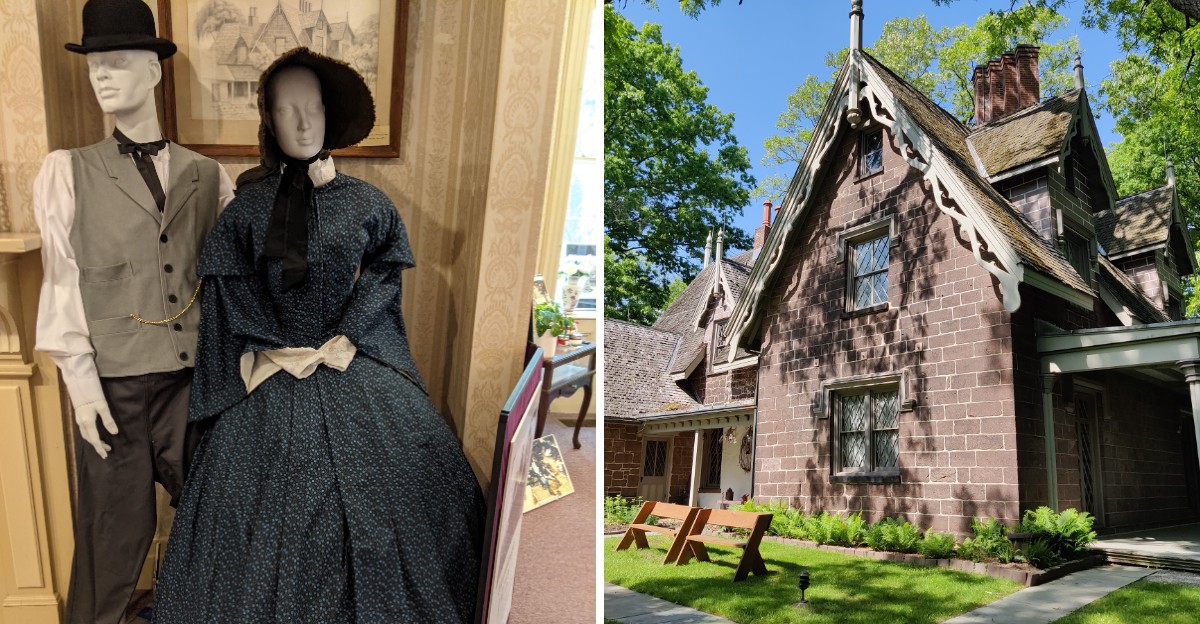
A wrong turn would be pretty lucky if it ended here.
Behind the unusual architecture sits more than 250 years of history, with stories stretching from the Revolutionary era through generations of one family.
This New Jersey landmark is a National Historic Landmark, yet it can still feel like the sort of place people pass without realizing what waits beyond the road.
The house itself is part of the attraction. Guided tours move through historic rooms while unpacking the people and events connected to them.
Outside, gardens and grounds offer room for a slower wander, and those grounds are open to the public daily.
It is not the loudest attraction on a travel itinerary. That is exactly the charm.
Sometimes the memorable detour is simply the place that makes you pull over and wonder, “What is that?”
An Architectural Showstopper Hiding In Plain Sight
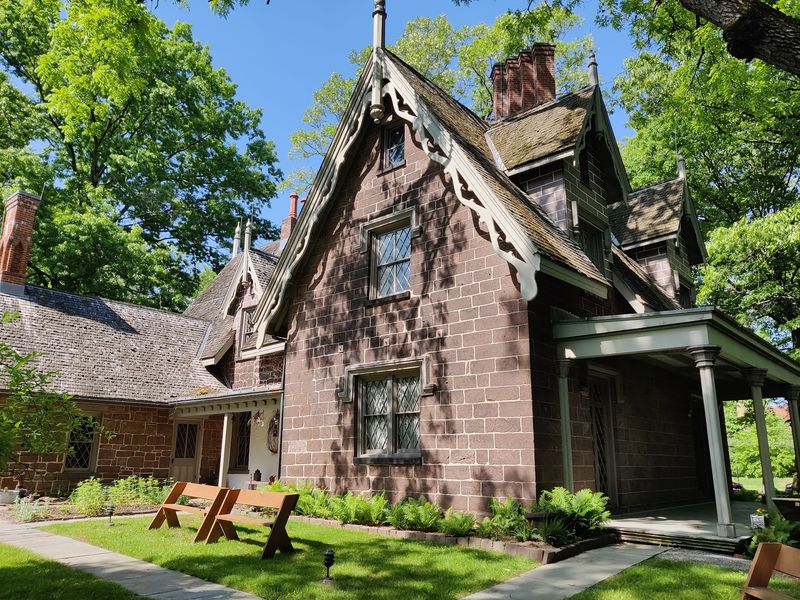
Most historic houses in the region lean colonial and tidy. Not this one.
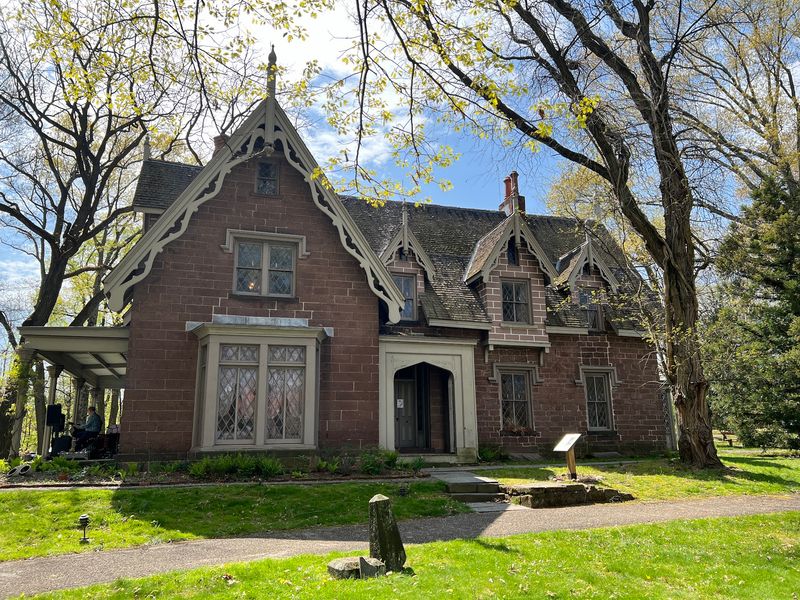
The Hermitage greets you with steep pointed gables, decorative trim, and a deliberately uneven, asymmetrical shape that feels almost theatrical.
Credit goes to a major remodel carried out in 1847 and 1848, when the earlier Dutch-American stone house was reworked into a fourteen-room Gothic Revival cottage by architect William H. Ranlett.
What I find clever is that the original 18th-century stone walls were not torn down. They were absorbed into the newer design, so two very different eras share the same footprint.
That layering is easiest to notice when you walk slowly around the outside, looking at where stone meets shingle and where rooflines shift direction.
The remodel brought comfort too, including a furnace for central heating and indoor plumbing, which was forward-thinking for the period.
Photographers, take note. Late afternoon light hits the gables beautifully and makes the whole facade look like an illustration come to life.
Washington Really Did Stop Here
Here is the detail that makes casual visitors pause mid-sentence. In July 1778, General George Washington and his troops stayed on this property for four days while traveling from the Battle of Monmouth Courthouse toward White Plains, New York.
The invitation came from Theodosia Bartow Prevost, whose British officer husband was away at war. That tangle of loyalties makes the story far more interesting than a simple plaque ever could.
Washington was not the only notable guest either. James Monroe, William Paterson, the Marquis de Lafayette, Alexander Hamilton, and Lord Stirling all passed through at various points.
Knowing that, the rooms start to feel different. You begin picturing conversations, maps spread across tables, and messengers arriving at the door.
The property was purchased by Ann Bartow DeVisme in 1767, so the household was already well established when the war reached this corner of the region.
For anyone who enjoys Revolutionary history, the site earns its reputation as a genuine stop rather than a footnote.
A Wedding That Changed American History
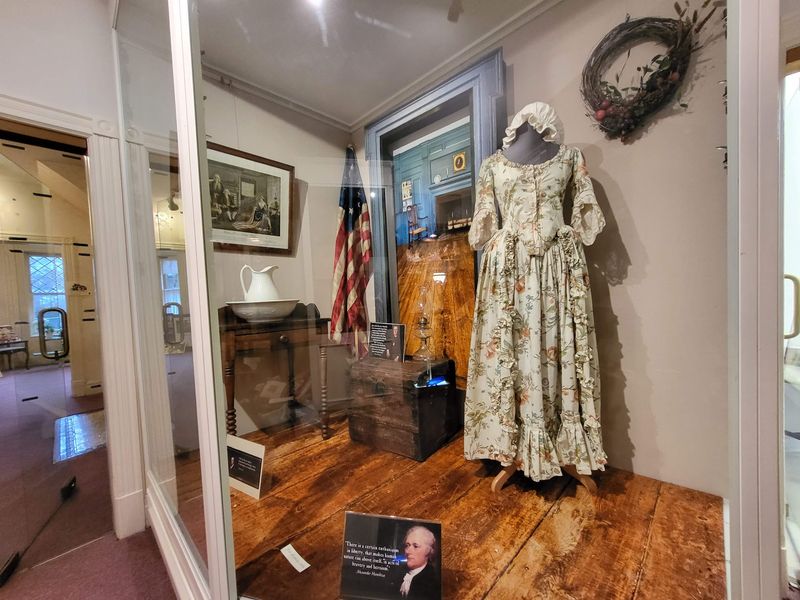
Love stories rarely come with this much political weight. After the death of her first husband, Theodosia Prevost married Aaron Burr on this very property in 1782.
Burr had become a frequent visitor, and the friendship between them grew during those wartime years. Their wedding tied the house permanently to one of the most debated figures in early American politics.
Hearing that during a visit gives the place a strangely intimate quality. It stops being a monument and starts feeling like somebody’s home, where ordinary life happened alongside national events.
I like how this single fact reframes the whole visit. Big history and personal history sat at the same table here.
It also explains why the site draws visitors who are not typically museum people. A wedding, a war, and a controversial vice president make for an unusually compelling combination.
Bring your curiosity, because the details raise more questions than they answer, and that is half the fun of a place like this.
Four Generations Under One Roof
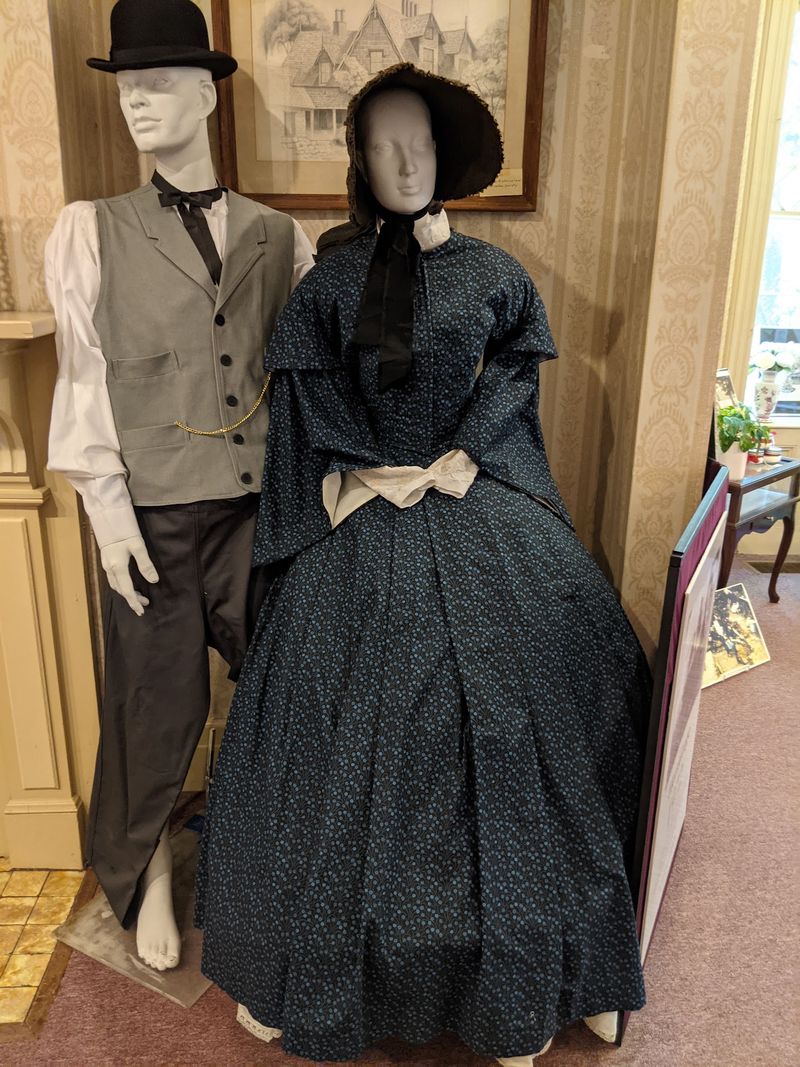
Long after the Revolution quieted down, one family settled in and stayed. The Rosencrantz family acquired the estate in 1807 and lived here for more than 160 years across four generations.
That kind of continuity is rare, and you can feel it inside. Rooms are furnished to reflect how the family lived during the second half of the 19th century, with everyday objects rather than museum-perfect staging.
The last heir, Mary Elizabeth, was born in the house in 1885 and lived there her entire life until 1970.
She left the property to the State of New Jersey, which is the reason anyone can wander through it today instead of peering over a fence.
Something about that decision sticks with me. One person’s choice preserved centuries of stories for everybody who follows.
Tours often highlight the women who managed and protected the estate through difficult periods, and those threads give the visit real emotional weight rather than just dates and furniture.
Grounds Made For A Slow Wander
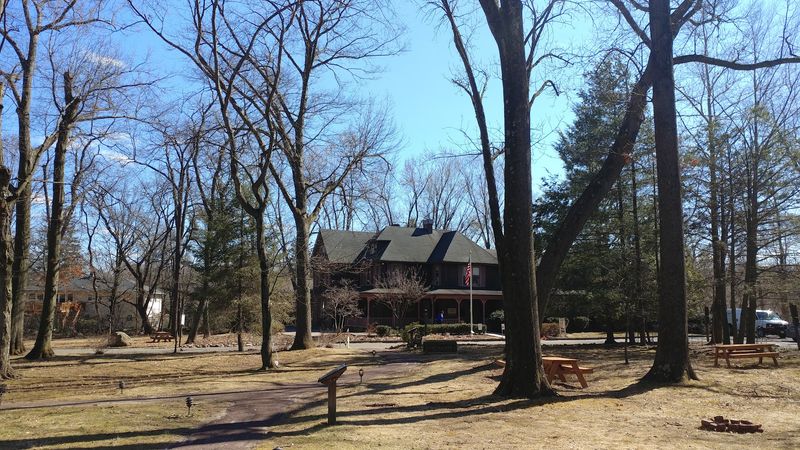
Not every visit needs to happen indoors. The estate covers roughly 4.9 scenic acres, a calm pocket that once belonged to a property spanning nearly 300 acres.
Paths wind past gardens and shade trees, and the noise of nearby roads fades faster than you would expect. It is the kind of green space where people slow their walking pace without deciding to.
The grounds are free and open to the public daily from 9:00 am to 5:00 pm, which makes this an easy stop even on a tight schedule.
Plant lovers tend to linger. There is a nice variety of flowers and greenery to notice as the seasons shift.
Benches and open lawn make it a decent picnic option too, especially if you are breaking up a long drive and want fresh air instead of a rest stop.
Honestly, a twenty-minute stroll here does more for road-trip fatigue than another cup of coffee ever could.
Mysterious Carved Stones On The Front Wall
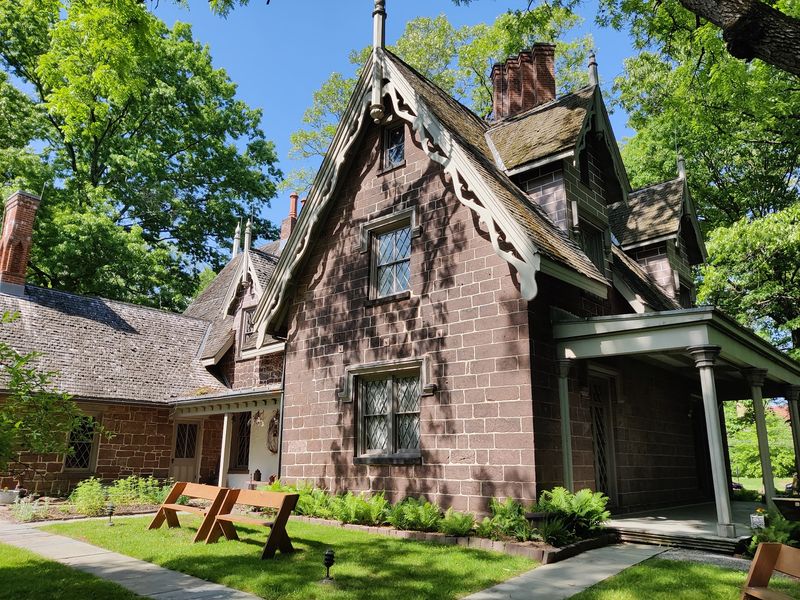
Look closely at the front wall and you will spot something odd. Two diamond-shaped stones are set into the masonry, each carved with symbols traditionally linked to Freemasonry.
One shows a T-square and dividers. The other displays a hammer and trowel.
What makes them interesting is that their exact meaning and origin are still not fully understood. Nobody can hand you a neat explanation, which somehow makes them better.
I walked past them twice before noticing, which says something about how easy it is to rush a historic site. Slow down and the details start showing up.
Guides often point them out during tours, and the moment always seems to spark questions from the group.
Small mysteries like these turn a house visit into a bit of a treasure hunt. Kids especially seem to enjoy hunting for the stones, and it gives restless young visitors something concrete to search for while the adults soak up the history.
Docent-Led Tours Worth Planning Around
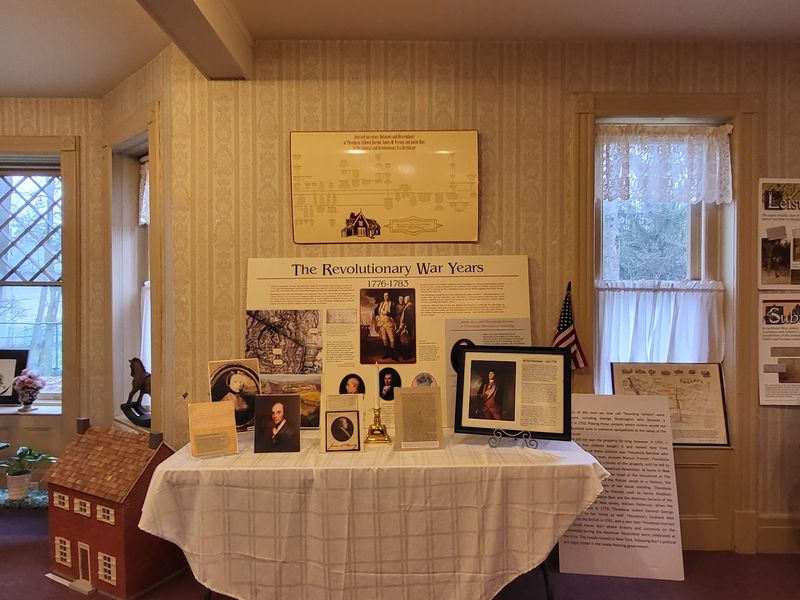
Guided tours are where this place truly opens up. Docents walk visitors through the stories of the Prevost and Rosencrantz families, connecting the rooms to the people who actually used them.
Tours run about an hour and are offered on Fridays, Saturdays, and Sundays at set times, so checking the schedule before you go saves disappointment.
What I appreciate is the depth. Guides cover the Revolutionary-era visitors, daily household routines, and small architectural quirks that you would never catch alone.
Questions are welcome, and the conversational style keeps things lively rather than lecture-like.
The museum itself holds additional artifacts and narratives, so budget a couple of hours if you want to see everything without rushing back to the car.
Visitors who arrive expecting a quick look often end up staying far longer than planned. That is usually a good sign, and it is exactly why The Hermitage works so well as an unplanned detour rather than a rushed photo stop.
Fourteen Rooms, Fourteen Different Moods
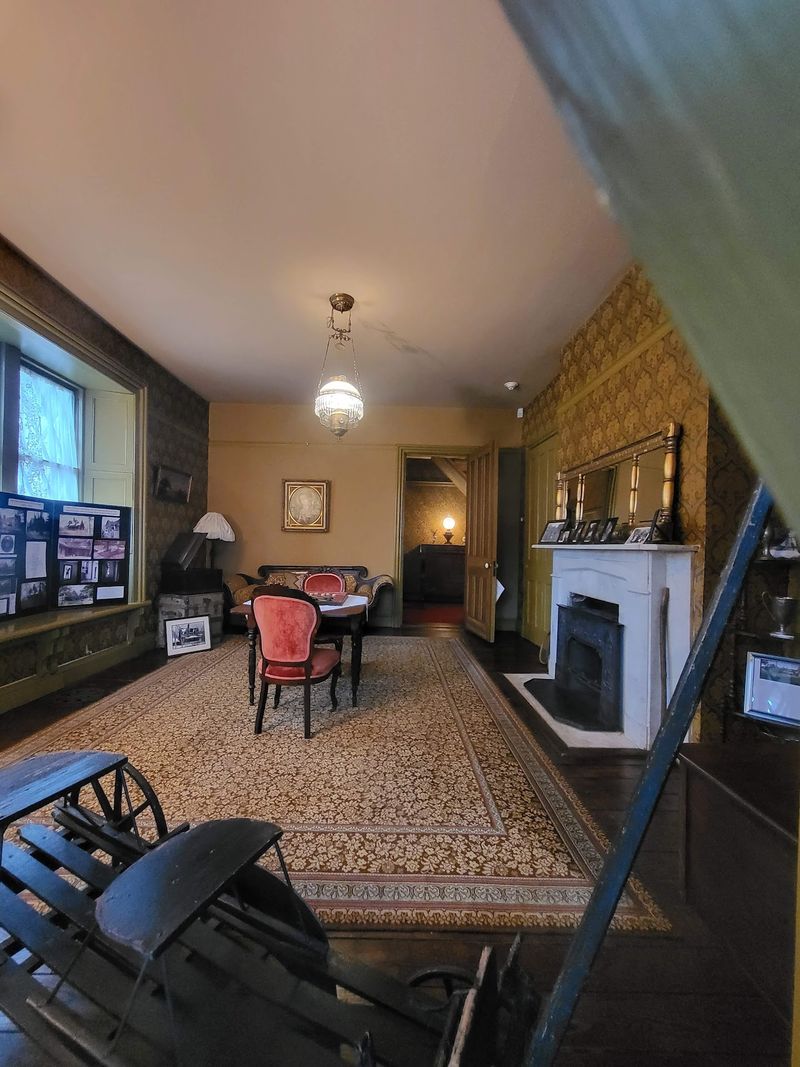
Each room inside carries its own personality. The fourteen-room layout means the tour keeps changing character, moving from formal spaces meant for guests to quieter corners built for family life.
Furnishings reflect the tastes and interests of the household during the later 1800s, and some pieces are original to the house itself.
Details are what stayed with me. Patterned wallpaper, arched window frames, and everyday household objects placed as though someone might return for them.
The Gothic Revival influence shows up inside as well, not just on the facade, which makes the interior feel unusually cohesive.
Photography rules and room access can vary, so it is worth asking at the start of your visit rather than guessing.
For anyone who enjoys old interiors, this is a satisfying walk-through. It never feels sterile or overly curated, and that lived-in quality is exactly what separates a memorable house museum from a forgettable one filled with roped-off displays.
Events That Bring The Lawn To Life
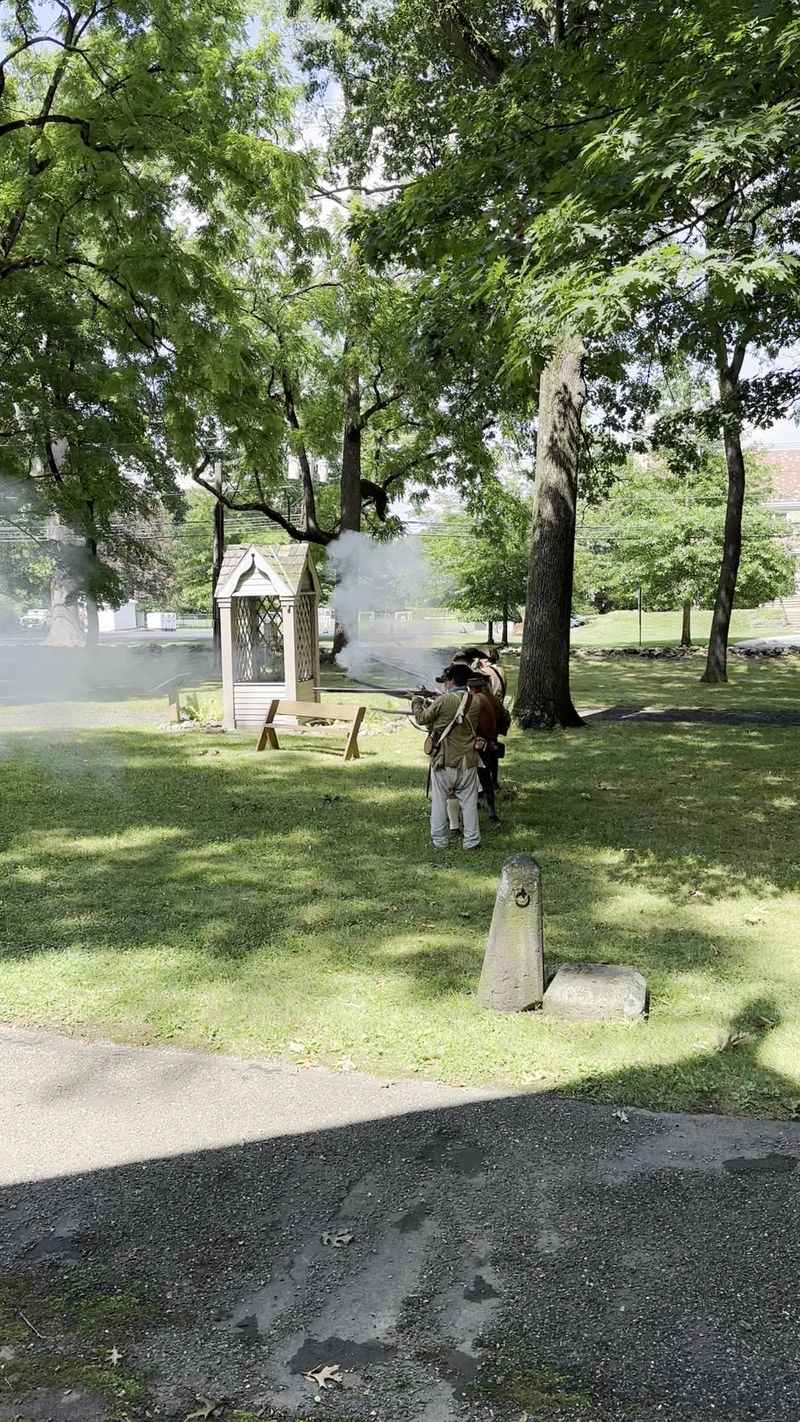
Timing your visit right can double the fun. Throughout the year the grounds host gatherings like craft fairs, car shows, maple syrup tapping demonstrations, food truck festivals, and Revolutionary War encampments.
On event days the property feels social and busy, with families spread across the lawn and vendors set up under white tents.
Some events include access to a shorter house tour, which is handy if you only have an hour to spare.
The reenactment days are especially good for younger visitors who learn better by watching than reading.
Quiet weekdays offer the opposite experience, calm and uncrowded, ideal if you want the rooms mostly to yourself.
Both versions are worth doing, honestly. Checking the calendar before heading out lets you choose the mood you are after, whether that is lively community energy on the grass or a peaceful morning wandering historic hallways with nothing but a guide’s voice for company.
A Landmark With Serious Credentials
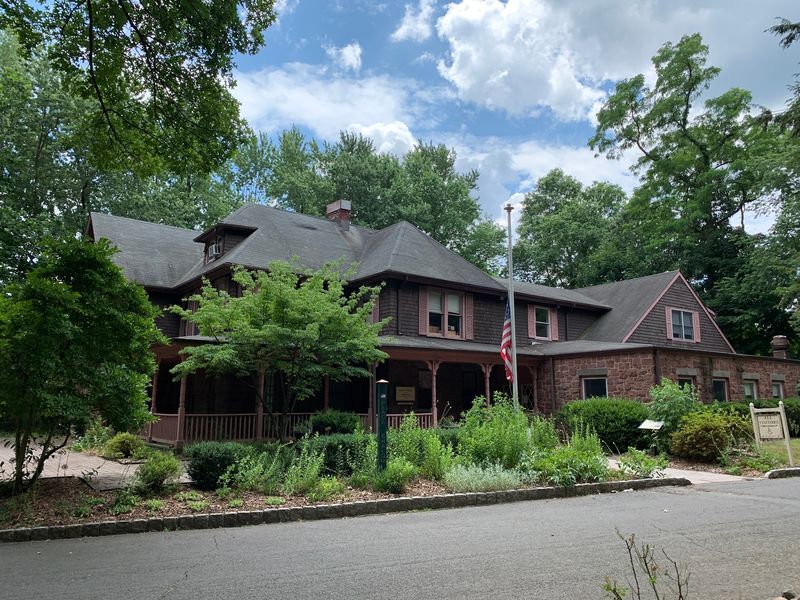
Plenty of old houses claim importance. Few have the paperwork to back it up.
Recognized as a National Historic Landmark for its architectural excellence, this site became the first National Historic Landmark in Bergen County.
That designation reflects both the quality of the Gothic Revival design and the layers of history packed into the property, from its colonial beginnings to its wartime role.
The museum also functions as an educational resource, offering tailored learning programs for school and community groups.
A small shop on site carries books, branded goods, and handcrafted items from local artisans, with proceeds supporting preservation work.
What makes the visit stick is the scale of it. One modest house managed to hold colonial farming life, a Revolutionary War moment, a controversial wedding, and 160 years of one family’s memories.
Plan your stop at The Hermitage, 335 North Franklin Turnpike, Ho-Ho-Kus, New Jersey 07423, and give yourself more time than you think you will need.
