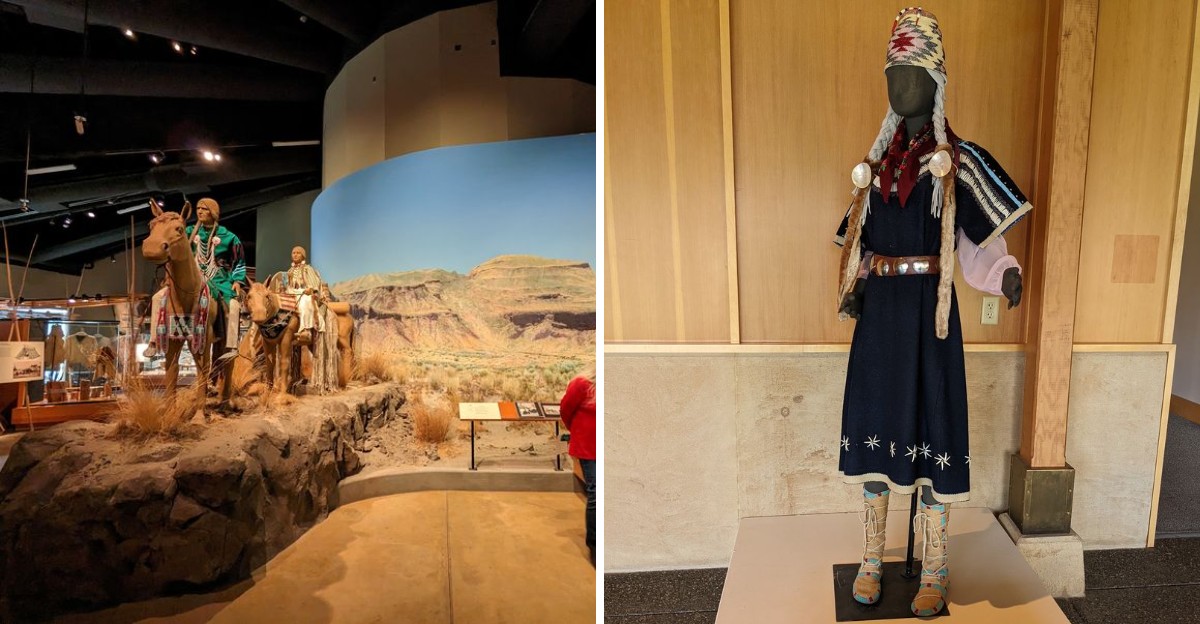
Most museums show you history from a distance. This Oregon museum invites you to step inside it. The story here belongs to the Cayuse, Umatilla, and Walla Walla tribes, told from their own perspective instead of the usual narrative.
The permanent exhibit is a journey through time, divided into three parts: We Were, We Are, and We Will Be. You’ll find artifacts, dioramas, and interactive displays that make the past feel present and alive.
The building offers sweeping views of the surrounding landscape, grounding you in the place where these stories have unfolded for thousands of years.
This isn’t a dry history lesson tucked away in a quiet corner. It’s a moving experience, and one you won’t forget. Oregon’s most powerful museum is waiting to change how you see the state.
A Museum Built and Run by the Tribes Themselves
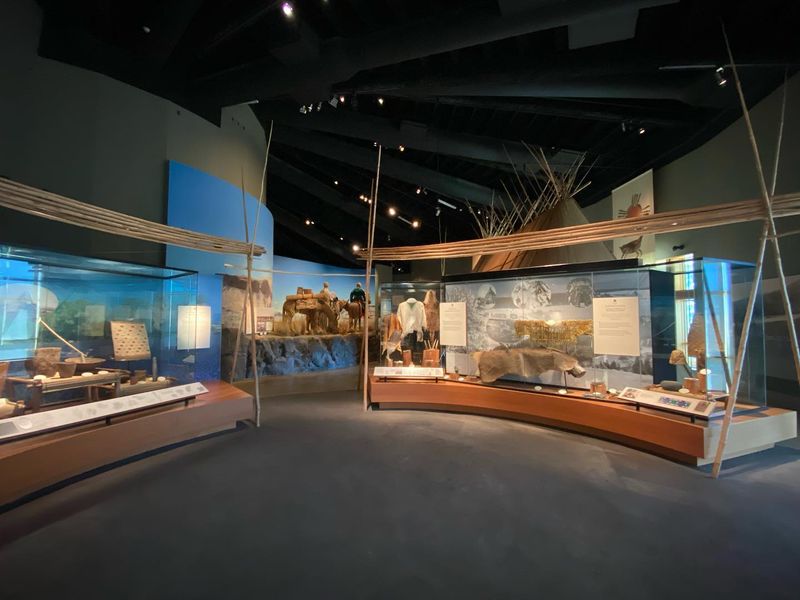
What sets this place apart is simple. The Confederated Tribes of the Umatilla Indian Reservation created it, own it, and tell their own story inside it.
That single fact changes everything about how the exhibits read. Instead of history written from the outside looking in, visitors get the perspective of the Cayuse, Umatilla, and Walla Walla people describing their own ancestors, their own land, and their own losses.
The name itself comes from the Sahaptin language and points to the idea of interpreting or translating, which fits the mission perfectly. Every label, every video, every carefully chosen object carries that intention.
I found myself slowing down more than usual because the tone felt personal rather than academic. There is no distance in the writing, no sense of a story being summarized from far away.
For anyone who grew up with a textbook version of westward expansion, the shift in viewpoint lands hard. That honesty is exactly why people leave recommending it to friends.
The We Were Gallery and Life Before Contact
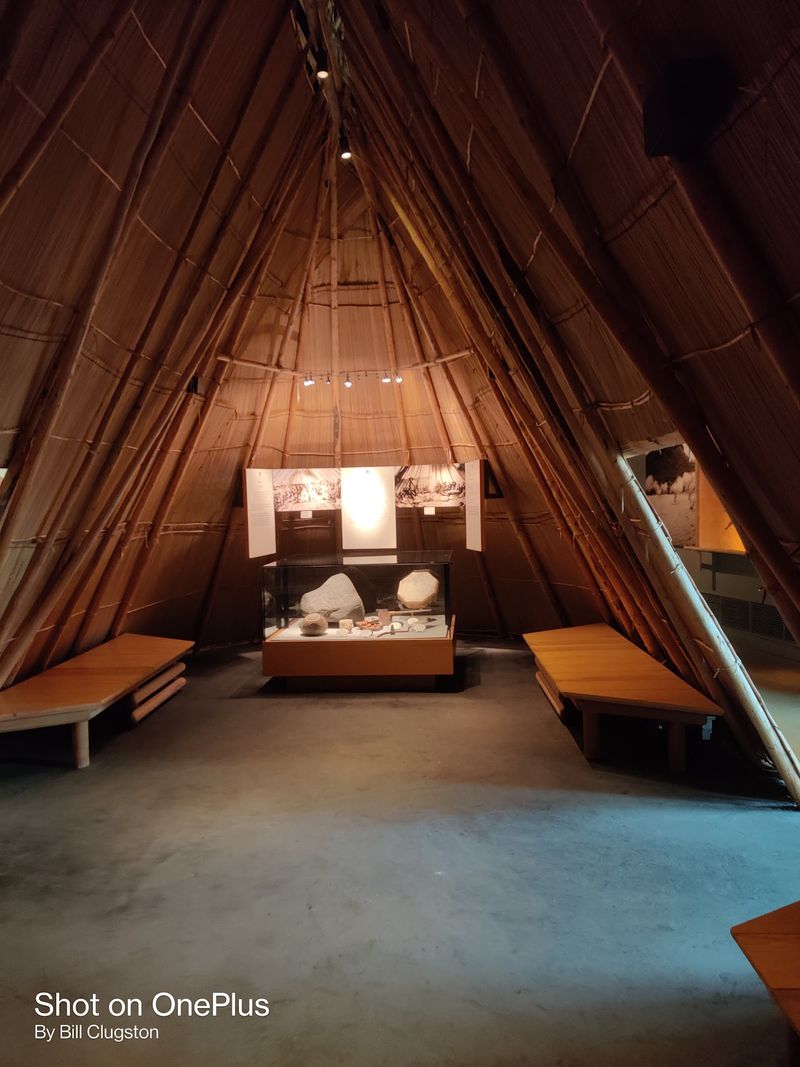
Ancient times come first, and the pacing is deliberate. Visitors enter through displays showing how the Plateau tribes lived long before wagons ever appeared on the horizon.
A traditional longhouse setup anchors this section, complete with woven mats and the everyday tools that kept families fed through every season. Nothing feels staged or dusty.
Root digging in spring, salmon fishing in summer, huckleberry picking in late summer, hunting in autumn. The seasonal round is laid out so clearly that the rhythm of the year becomes easy to picture.
What struck me was the sheer amount of knowledge packed into those cycles, from reading the rivers to knowing exactly when a certain root was ready.
Kids tend to gravitate toward the baskets and the fishing gear here, and honestly, so did I. There is something grounding about seeing objects made entirely from the land they came from.
Give this gallery real time, because everything that follows makes more sense once you understand what came before.
How the Horse Changed Everything
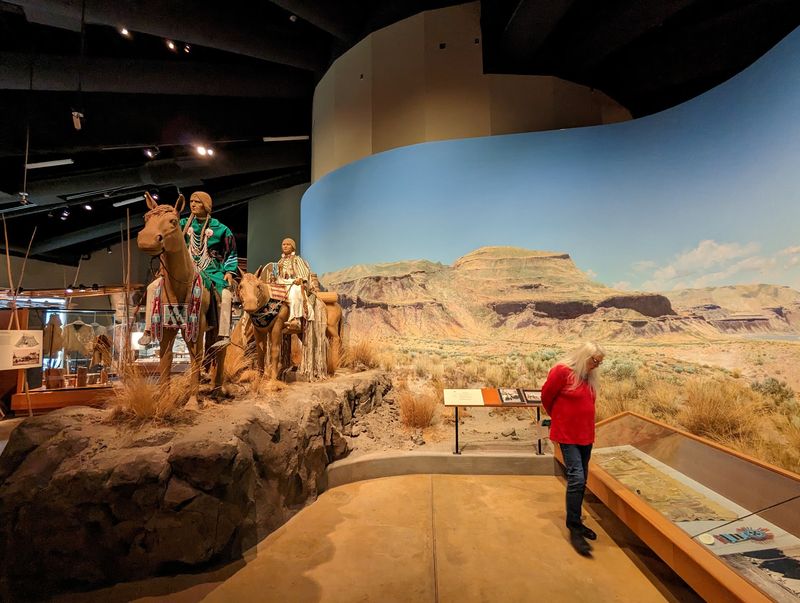
Horses arrived and the whole region shifted. The Cayuse became so closely tied to horse breeding that their name still attaches to a certain type of tough, capable pony.
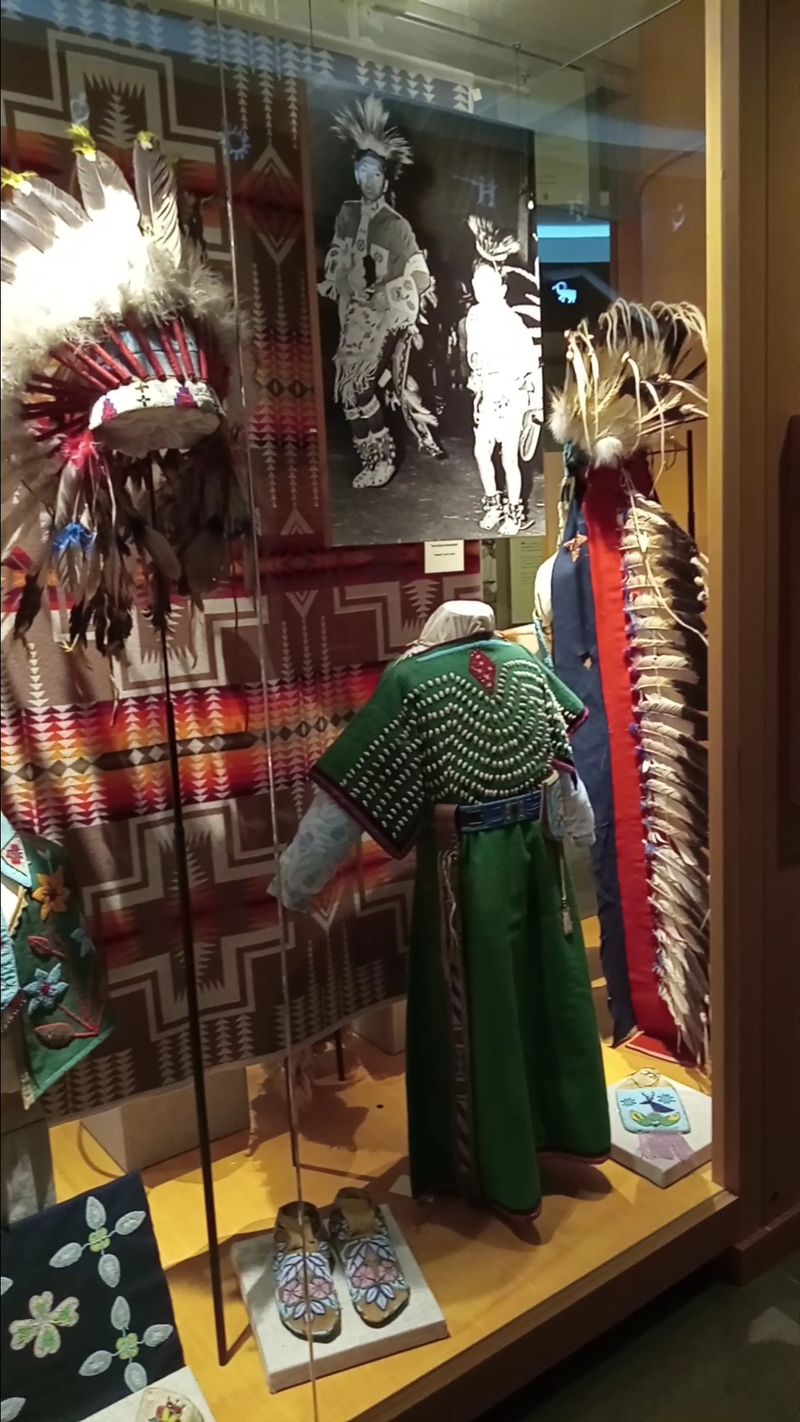
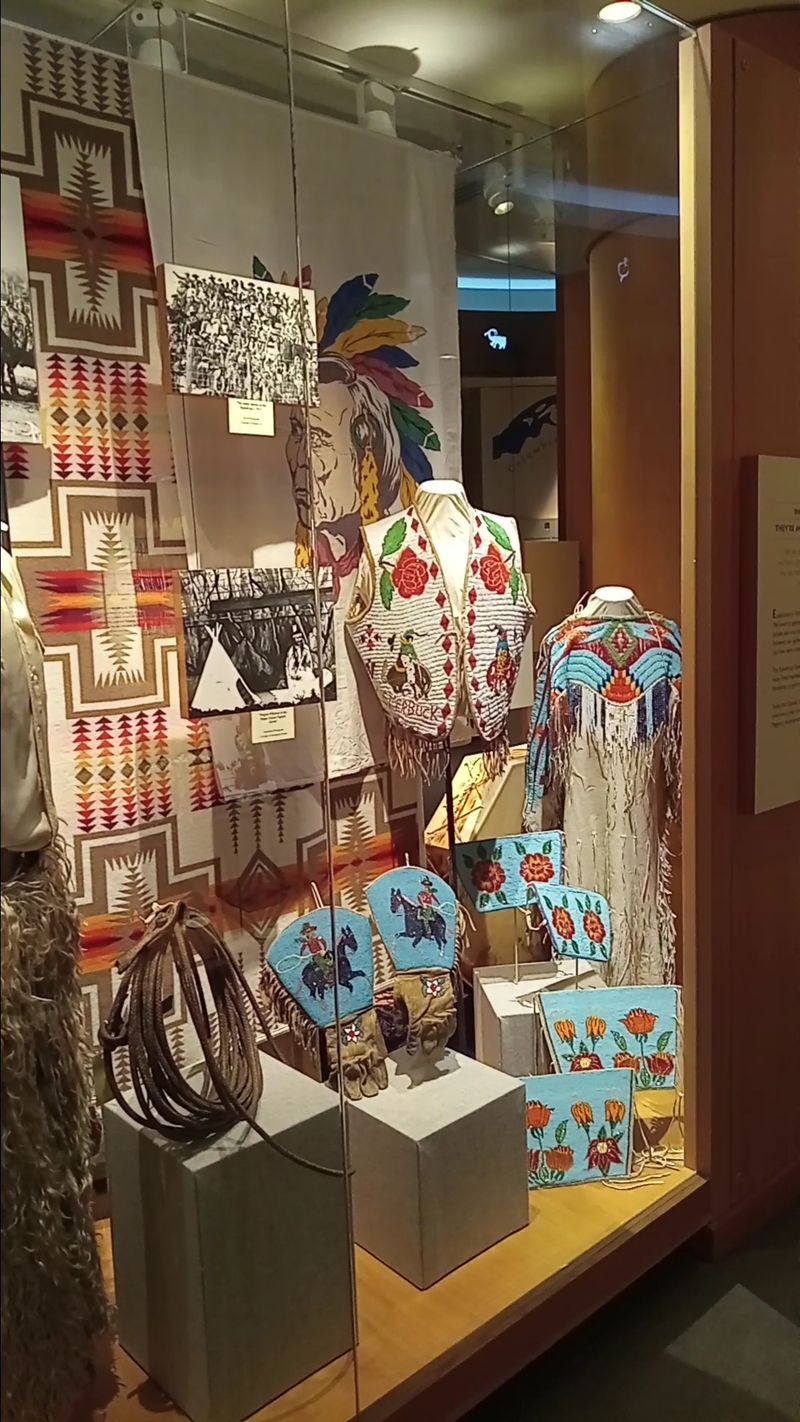
Displays here show the beadwork, the saddle gear, and the trappings that turned a horse into a statement of status and artistry. The colors alone are worth pausing over.
Longer travel became possible, trade routes widened, and hunting reached further east toward buffalo country. Wealth changed shape, too, measured in herds rather than stored goods.
I liked how this section avoids treating the horse as a simple footnote. It reframes the animal as a turning point that reshaped daily life, ceremony, and reputation across the whole Plateau.
The beadwork detail rewards a close look. Tiny glass beads arranged into floral and geometric patterns that took enormous patience to complete. Photographers, take note of the lighting in this area. It is one of the more visually striking corners of the entire museum.
When the Oregon Trail Came Through
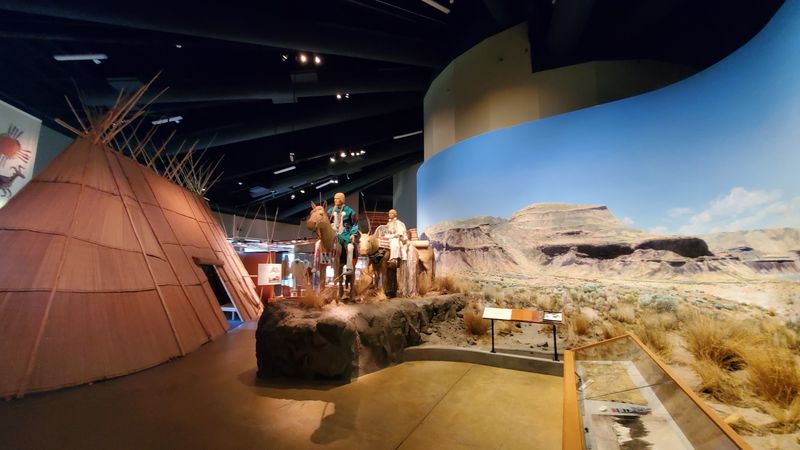
Most Oregon Trail stories focus on the pioneers. Here the camera flips around and the wagons are seen from the side of the road, by the people already living there.
Thousands of newcomers passed through ancestral homelands, bringing disease, livestock, and eventually permanent settlement. The exhibits do not soften what followed.
Treaty negotiations, land ceded under enormous pressure, and boundaries drawn by outsiders all get explained in plain terms. The 1855 treaty and the reservation that came from it sit at the center of this section.
Reading through it, I kept thinking about how differently this chapter gets taught in most classrooms. Same events, entirely different weight.
Several visitors mention leaving with a changed understanding of history they thought they already knew. That reaction makes complete sense once you walk this stretch. It is a heavy portion of the museum, and worth bracing for. But it is also the most necessary part of the whole experience.
The Boarding School Years Told Without Flinching
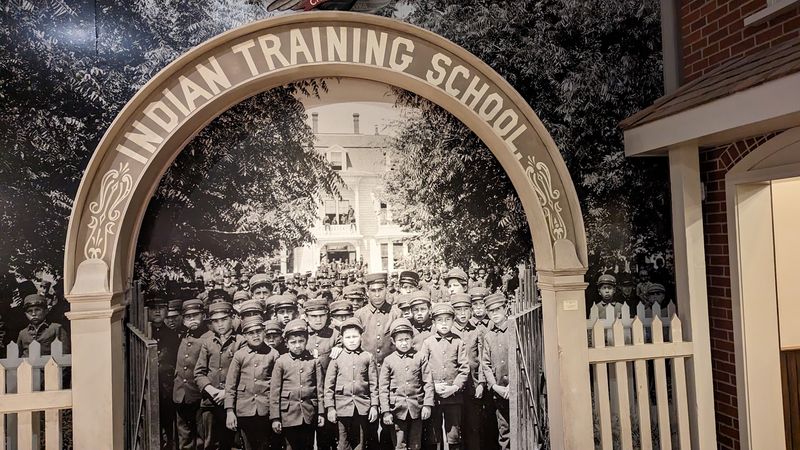
Some rooms ask you to sit with discomfort. Displays covering mission churches and federal boarding schools do exactly that, describing how children were pushed away from their language, clothing, and traditions.
Photographs, documents, and recorded voices carry the weight instead of dramatic staging. The restraint makes it hit harder.
Language loss gets particular attention, since Sahaptin, Walla Walla, and Nez Perce speech were actively discouraged for generations. That thread connects directly to modern revitalization work happening on the reservation today.
I noticed people slowing to a near stop through this stretch, reading every panel. Nobody talks much here. Parents visiting with younger children may want to read ahead and decide how much to explain. The content is handled respectfully, but it is honest about real harm.
What keeps the section from feeling hopeless is the clear signal that the story continues. Survival, memory, and return are all part of what comes next in the galleries.
We Are Right Now, the Living Present
Plenty of museums stop somewhere around 1900. Not this one. The final gallery pulls the story straight into the present, showing the Confederated Tribes as a working government, an economic force, and a community actively rebuilding language programs and cultural practice.
Salmon restoration on the Umatilla River, natural resource management, education, and enterprise all appear. The casino, hotel, and other ventures get context as part of a larger effort toward self-determination.
Seeing contemporary faces and current projects after the earlier heaviness genuinely lifts the mood. It reframes everything as ongoing rather than finished.
Contemporary artwork appears alongside historic pieces, which quietly makes the point that these traditions never became museum relics.
A visitor mentioned bringing kids here to learn about their own heritage, and that detail stuck with me. This is not just a place for outsiders to observe. It functions as a cultural anchor for the community that built it, which is a different thing entirely.
Videos, Voices, and Hands-On Corners
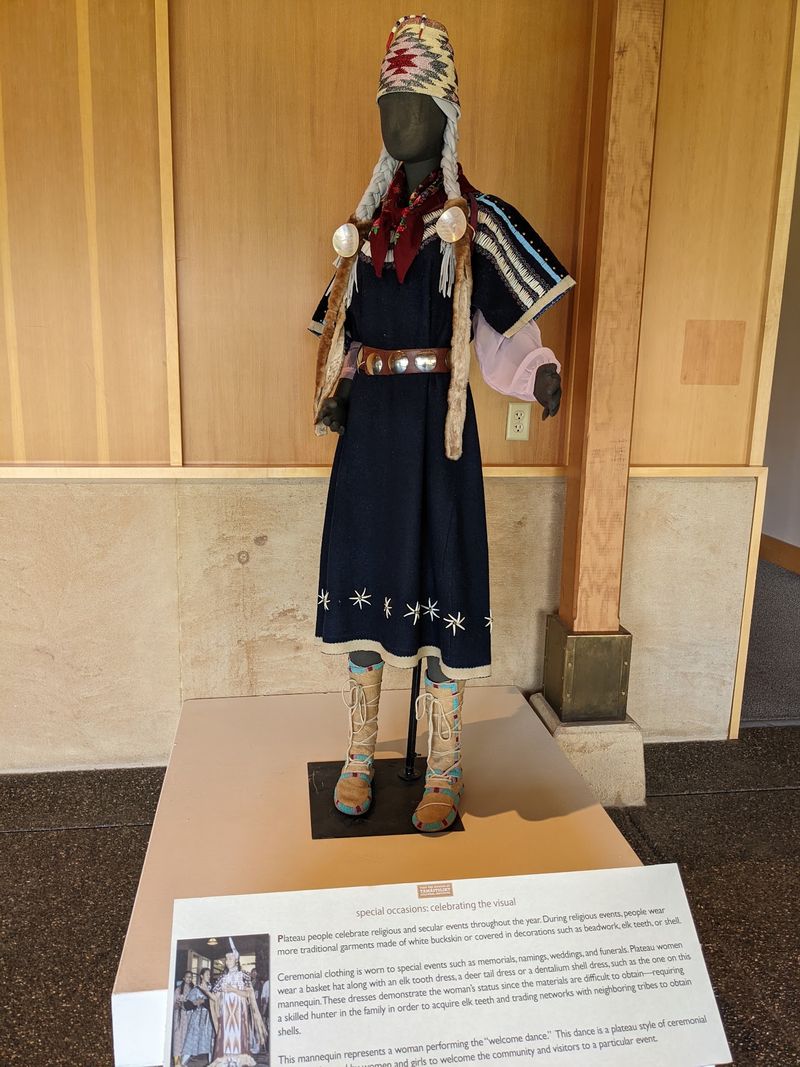
Screens are scattered throughout, and skipping them would be a mistake. Short films and recorded personal accounts fill in the emotional space between objects.
One reviewer mentioned watching all the videos and staying an hour longer than planned, which sounds about right. The storytelling is unhurried and often quite moving.
Interactive stations break up the reading nicely, especially for younger visitors who need something to touch. Audio elements let you hear the languages spoken aloud.
Budget extra time if you want the full experience. Two and a half hours before closing is a reasonable target for anyone planning to be thorough.
I ended up doubling back to catch a segment I had missed, which says something about how the layout invites wandering rather than a fixed march forward.
Benches appear at useful intervals. Small thing, but appreciated when a museum expects you to absorb this much. Guides on duty are knowledgeable and happy to answer questions.
The Gift Shop Worth Budgeting Time For
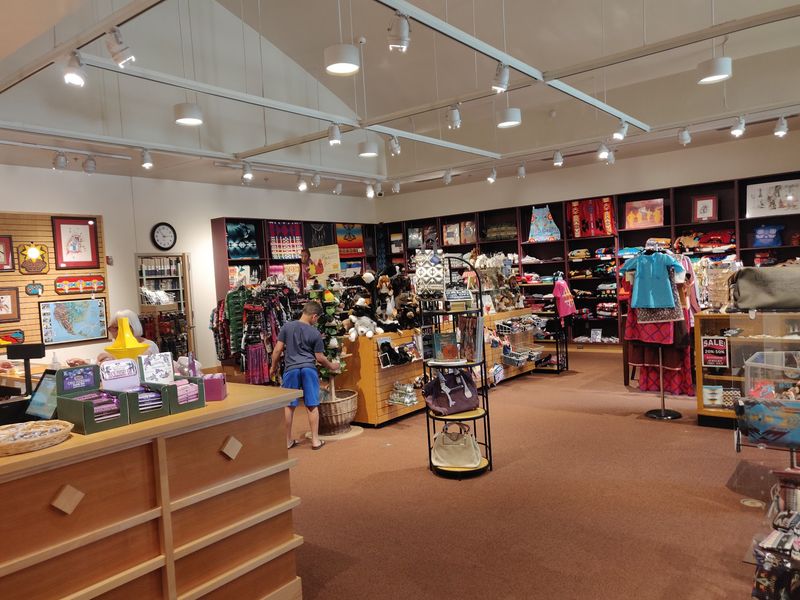
Gift shops usually get a polite glance. This one earns a proper browse. Beadwork and jewelry made by local artisans fill the cases, and the quality is noticeably higher than typical souvenir fare. Every piece connects back to something seen in the galleries.
Books take up serious shelf space, covering tribal history, language, and regional culture in far more depth than the exhibits alone allow. Readers could lose twenty minutes easily.
Stuffed animals and smaller items keep kids occupied while the adults look around, which is a practical detail worth knowing. Buying directly here means supporting tribal artists and the institute itself, so it feels less like shopping and more like participating.
I walked out with a book I had no intention of buying when I arrived. Zero regrets. Ask staff about the makers behind particular pieces if you are curious. They tend to know the stories and enjoy sharing them.
Kinship Cafe and a Bowl of Salmon Chowder
Lunch here surprised me. The small cafe inside serves food tied to the region, including fry bread and salmon chowder that visitors mention again and again. Cinnamon rolls have their own quiet following, judging by how often they come up.
One important catch: the cafe keeps short hours and typically closes around two in the afternoon. Arriving late means missing it entirely. Plan the visit around that window if food matters to you. Morning arrival works best, leaving time for the galleries first and a meal after.
Should the cafe be closed, staff cheerfully point people toward nearby options down the road. That kind of small helpfulness shows up constantly here. Portions are generous and the atmosphere is casual, with no pressure to hurry through.
Eating something rooted in the same salmon and roots described in the exhibits creates a nice full-circle moment. Food is history you can taste, after all.
Practical Notes for Planning Your Stop
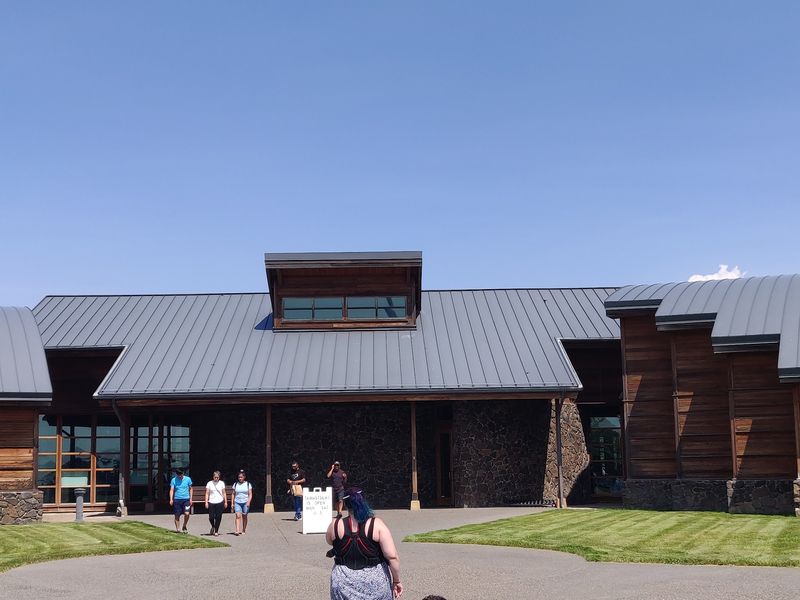
A few logistics make the visit smoother. Doors open at ten in the morning Tuesday through Saturday, and the museum stays closed Sunday and Monday, which trips up plenty of weekend travelers.
Parking is free, paved, and plentiful, with some spaces shaded by solar panel canopies. Reserved shaded spots for elders sit near the entrance, a detail I thought was genuinely thoughtful.
An admission fee applies, and senior discounts are available. Air conditioning and clean restrooms make summer visits comfortable. An outdoor walking trail loops nearby for anyone wanting fresh air before or after the galleries.
You will find it at 47106 Wildhorse Blvd, Pendleton, OR 97801, just off Interstate 84 east of town and easy to reach on any eastern Oregon road trip.
