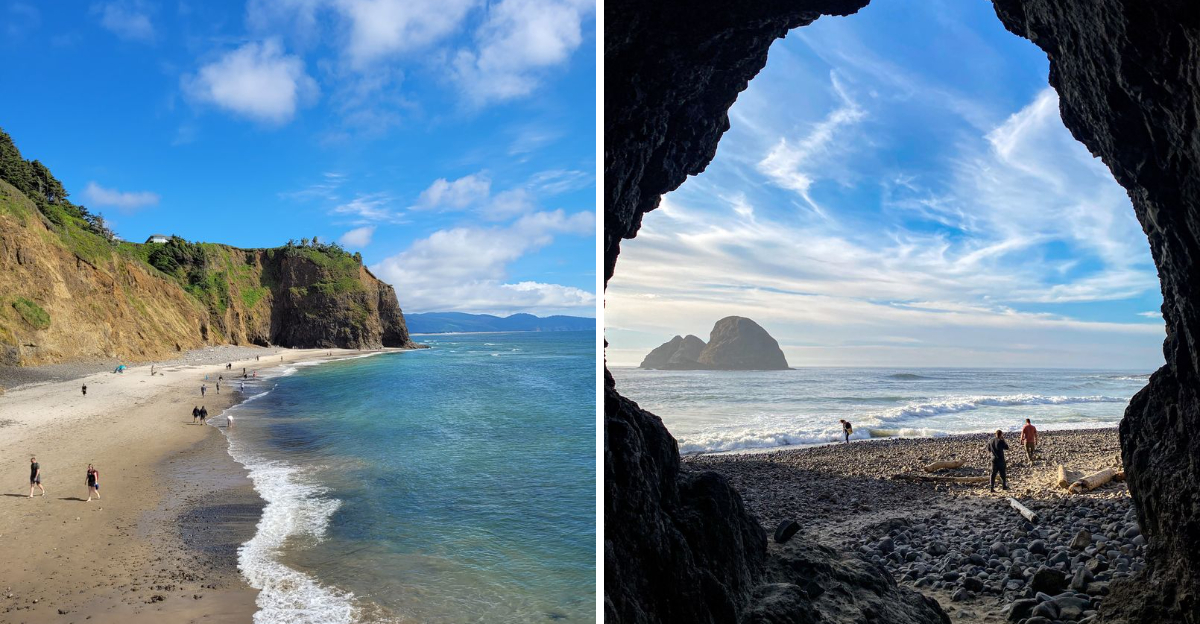
Walking through a pitch-black tunnel carved straight through solid rock might sound like something out of an adventure novel, but it’s actually your gateway to one of Oregon’s most extraordinary coastal secrets.
Tunnel Beach in Oceanside sits hidden behind a 90-foot passage that was hand-carved through basalt cliffs nearly a century ago, and reaching it feels like discovering your own private slice of the Pacific.
The moment you emerge on the other side, you’re greeted by crashing waves, towering rock formations, and a shoreline that seems worlds away from the main beach just minutes behind you. Whether you’re hunting for agates, exploring tide pools, or simply soaking in views of Three Arch Rocks National Wildlife Refuge, this hidden stretch of Oregon coastline delivers an experience that’s equal parts thrilling and peaceful.
The Man-Made Tunnel That Started It All
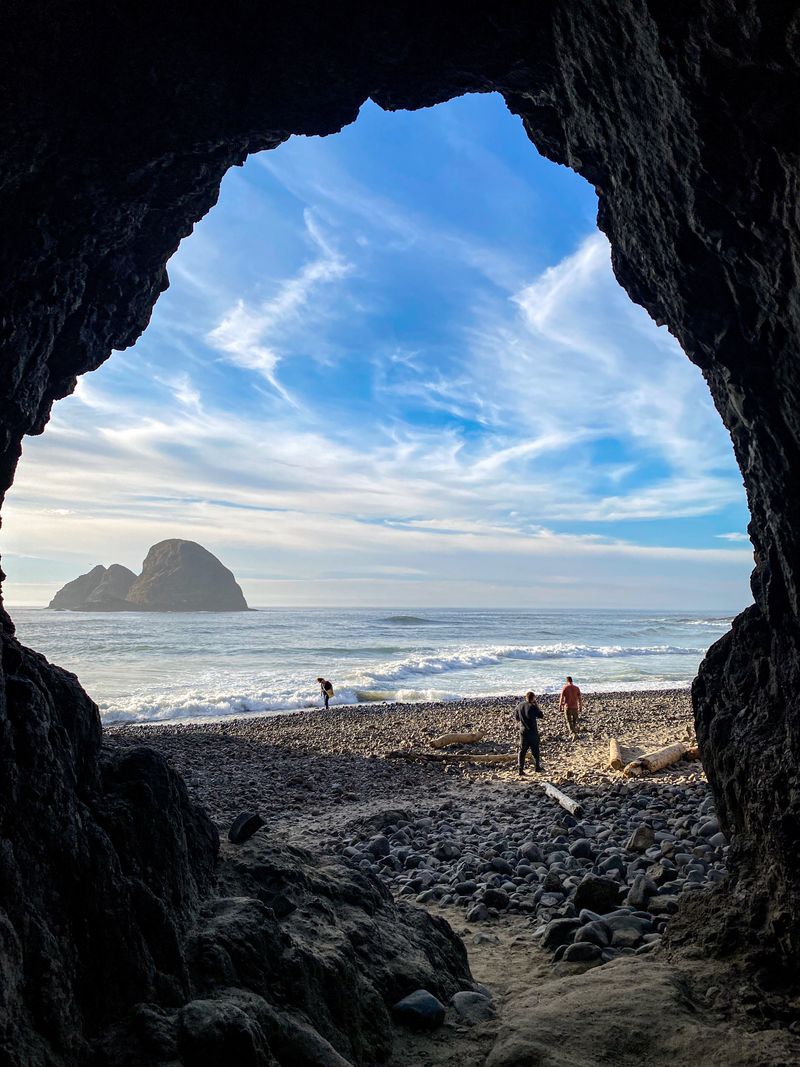
Carved by hand in 1926, the tunnel at Tunnel Beach wasn’t originally meant for public adventure. Resort owners commissioned the project to give their guests exclusive access to a private beach beyond the towering basalt cliffs that blocked the way.
Workers chiseled through 90 feet of solid volcanic rock, creating a passage that would become one of Oregon’s most distinctive coastal features.
The tunnel itself measures roughly 100 feet long and remains unlit, requiring visitors to navigate by natural light or flashlight. Concrete reinforcement near the entrance shows where modern safety measures were added, but much of the passage retains its original rough-hewn character.
The floor stays perpetually damp and uneven, with rocks and puddles requiring careful footing throughout.
After a landslide blocked the tunnel in 1979, it seemed lost forever. But nature had other plans when a powerful storm in 1999 naturally reopened the passage, giving new generations the chance to experience this unique coastal gateway.
Today, thousands walk through annually, retracing steps carved nearly a century ago.
Timing Your Visit With the Tides
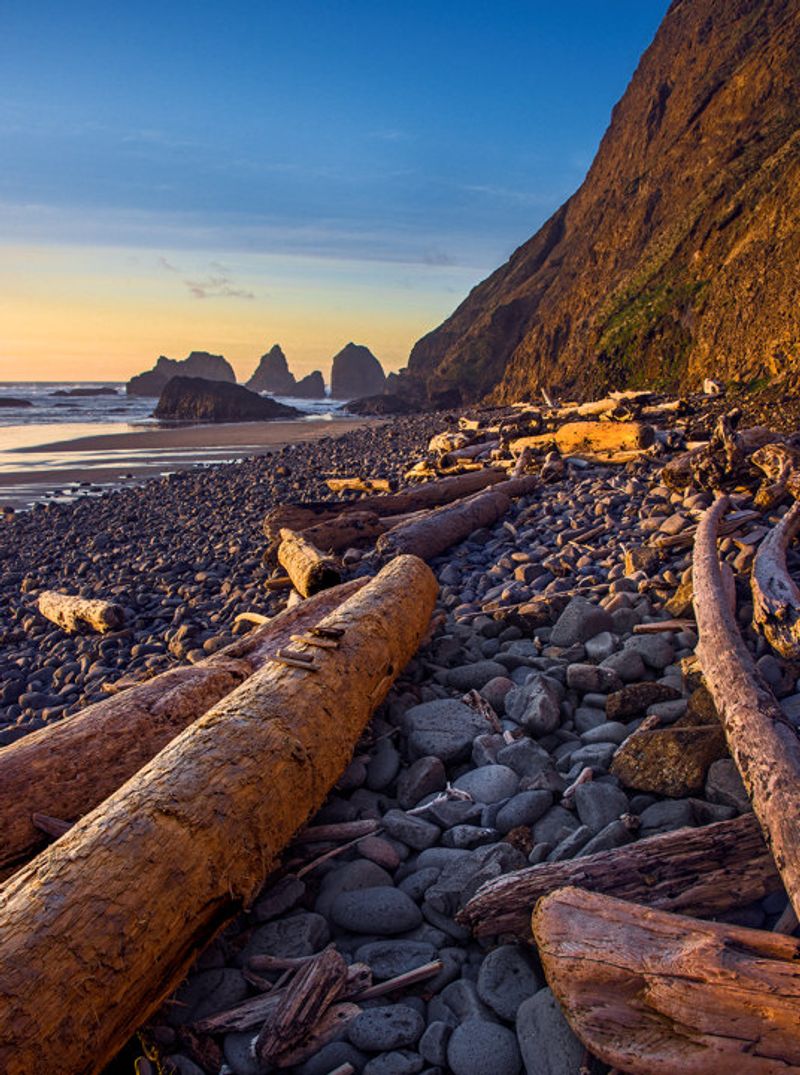
High tide at Tunnel Beach isn’t just an inconvenience. It’s a genuine safety concern that can trap unwary visitors on the wrong side of the tunnel.
The Pacific doesn’t negotiate, and when the tide rolls in, water can block one or both tunnel entrances, cutting off your return route to the main beach and parking area.
Local advice consistently emphasizes visiting during low tide, ideally within two hours of the lowest point. This timing not only ensures safe passage through the tunnel but also reveals the best tide pooling opportunities and expands the explorable beach area significantly.
High tide reduces the accessible beach to almost nothing, with waves crashing directly against the cliff faces.
Checking tide charts before your visit isn’t optional; it’s essential trip planning. Several visitors have reported anxious waits for water levels to drop enough for safe passage back.
The tunnel’s rocky floor becomes even more treacherous when wet from incoming waves, and rushing through rising water defeats the purpose of this peaceful Oregon coastal escape.
Agate Hunting Paradise
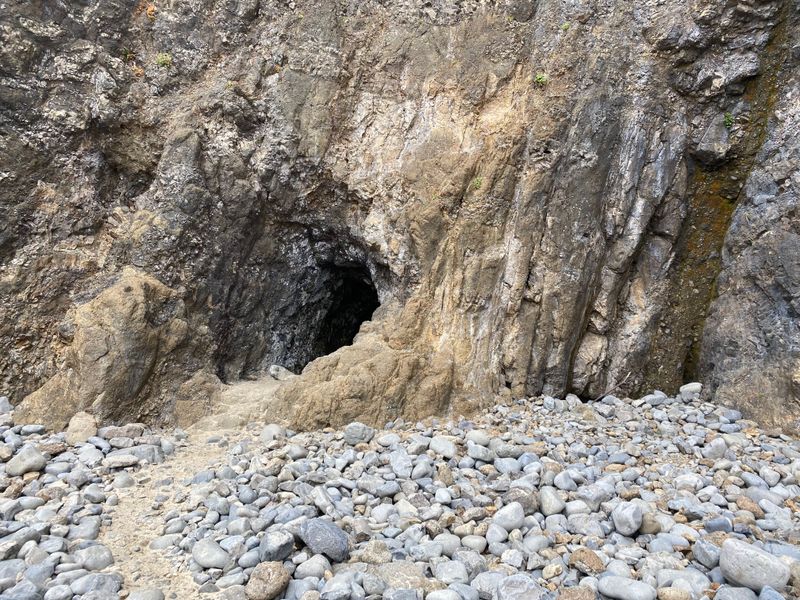
Rockhounds consider Tunnel Beach one of Oregon’s premier agate-hunting destinations, and for good reason. The beach consistently produces finds that send collectors home with pockets full of treasures.
After storms or during winter months, the turnover of beach material brings fresh agates to the surface, creating ideal conditions for discovery.
The rocky composition of both beaches surrounding the tunnel contributes to the abundance of finds. Unlike purely sandy beaches where stones get buried, the pebbly terrain here keeps agates visible and accessible.
Visitors report finding not just agates but also jasper, jade, and various crystalline formations that make every visit feel like a geological treasure hunt.
Early morning visits during low tide offer the best hunting conditions, when fewer footprints have disturbed the overnight deposits. Bringing a small bag or container proves wise, as does learning to identify agates when wet versus dry.
The translucent quality that makes agates special shows most clearly when stones are damp, helping you spot winners among the thousands of ordinary rocks.
Navigating the Dark Passage
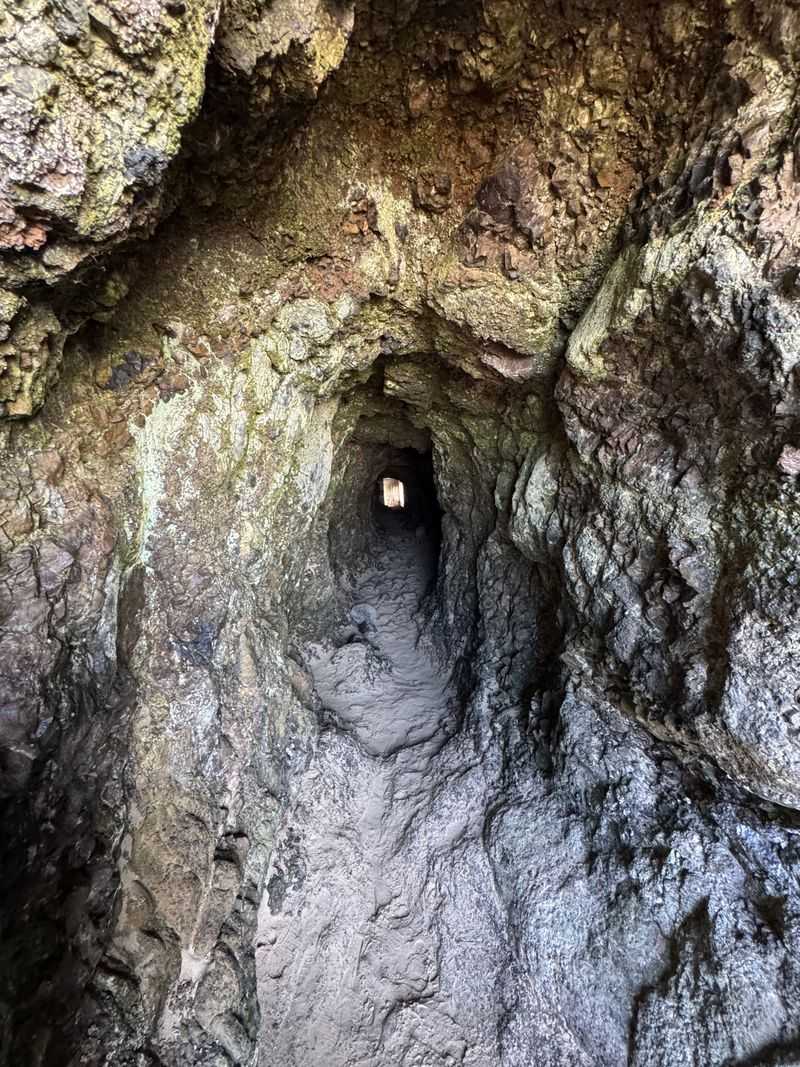
Stepping into the tunnel means leaving daylight behind for a stretch that feels longer than its actual 90 to 100 feet. Your eyes need time to adjust, and without artificial light, the middle section becomes genuinely dark.
Many visitors underestimate this and find themselves shuffling uncertainly over uneven terrain they can barely see.
Bringing a flashlight or using your phone’s light function transforms the experience from nerve-wracking to manageable. The beam reveals the rocky, irregular floor that requires attention with every step.
Ankle-turning hazards hide in shadows, and puddles appear without warning. The tunnel’s walls show the marks of its hand-carved origin, with rough basalt surfaces that feel cool and slightly damp to the touch.
During busy periods, the tunnel can become congested with visitors moving in both directions. Patience becomes essential when someone ahead moves slowly or stops to adjust to the darkness.
The confined space and limited visibility make passing difficult, so allowing extra time during peak season prevents frustration and maintains the adventure’s enjoyment.
The Hidden Beach Beyond
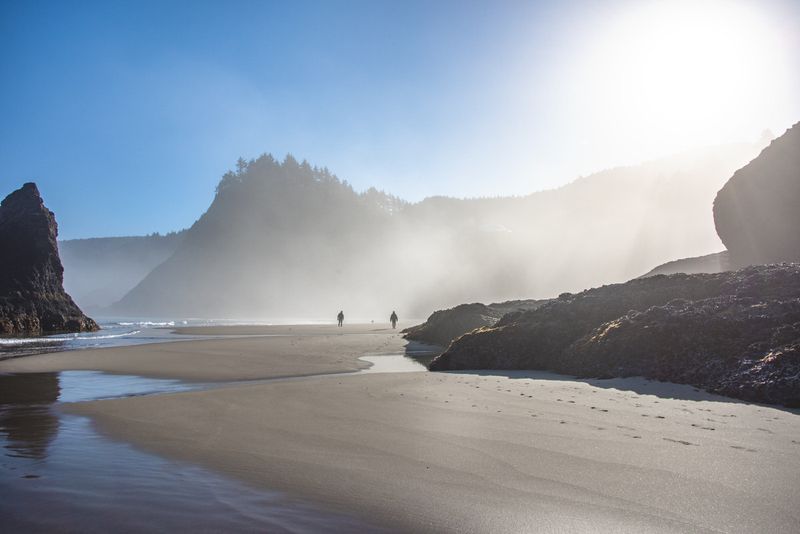
Emerging from the tunnel’s darkness into the secluded beach beyond creates a moment that catches first-time visitors off guard. The contrast hits immediately: from confined darkness to open sky, from silence to crashing waves, from anticipation to arrival.
This hidden stretch of Oregon coastline feels remarkably different from the main beach, more wild and less touched by daily crowds.
Massive rock formations dominate the landscape, creating natural sculptures that change character with shifting light and tide levels. Sea stacks rise offshore, while closer formations create caves, arches, and sheltered spots perfect for exploration.
The beach itself transitions from large rocks near the tunnel exit to finer sand and pebbles toward the water’s edge.
During quieter periods, especially winter weekdays, you might find yourself nearly alone on this hidden shore. The sense of discovery remains strong even knowing thousands have walked here before.
The beach rewards wandering, with new perspectives and hidden corners revealing themselves to those who take time to explore beyond the immediate tunnel exit.
Three Arch Rocks Wildlife Refuge Views
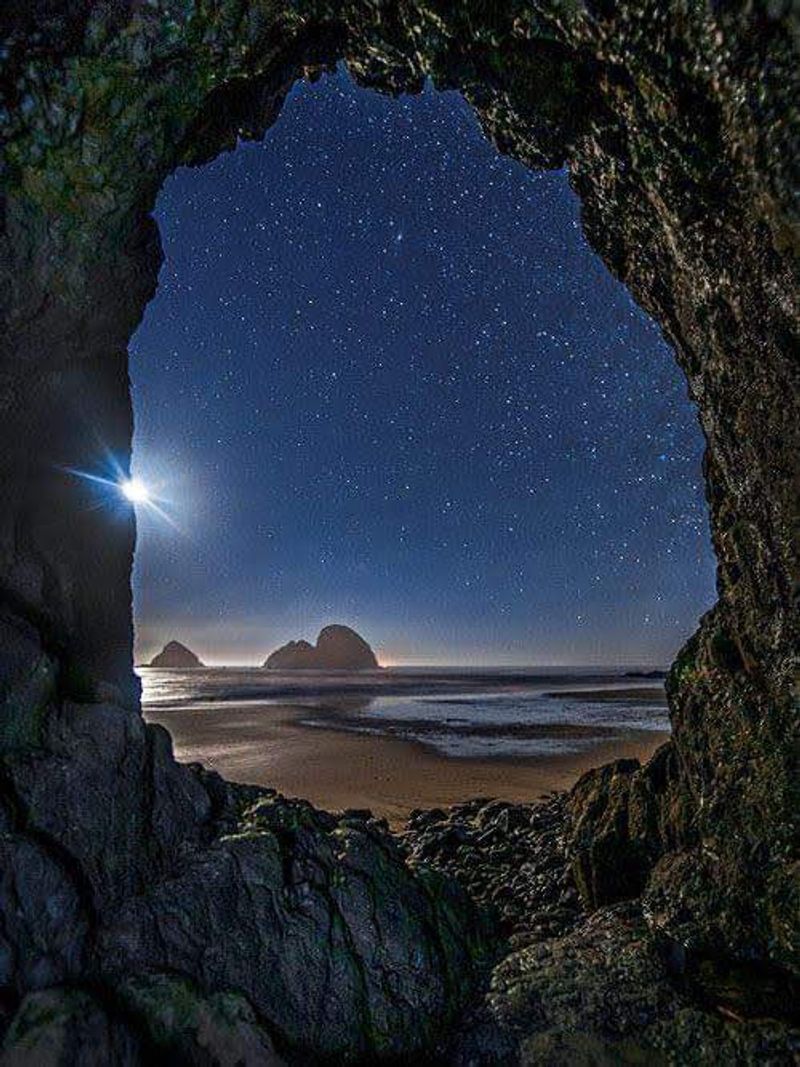
Looking northwest from Tunnel Beach, the distinctive silhouettes of Three Arch Rocks National Wildlife Refuge punctuate the horizon. These offshore formations serve as crucial nesting habitat for seabirds and haul-out spots for marine mammals, making them federally protected and off-limits to human access.
But viewing them from Tunnel Beach offers an excellent vantage point for observation and photography.
The refuge hosts one of Oregon’s largest seabird colonies, with thousands of common murres, tufted puffins, and various gull species utilizing the rocks seasonally. During spring and summer nesting periods, the rocks appear covered with birds, their calls carrying across the water.
Binoculars enhance the experience, revealing details impossible to see with naked eyes alone.
Harbor seals and sea lions frequently haul out on the rocks’ lower reaches, visible as dark shapes against the lighter stone. Patient observers might spot whales passing offshore during migration seasons, adding another dimension to the wildlife viewing opportunities.
The protected status of these rocks ensures the ecosystem remains vibrant and accessible to observation from shore.
Tide Pool Exploration Opportunities
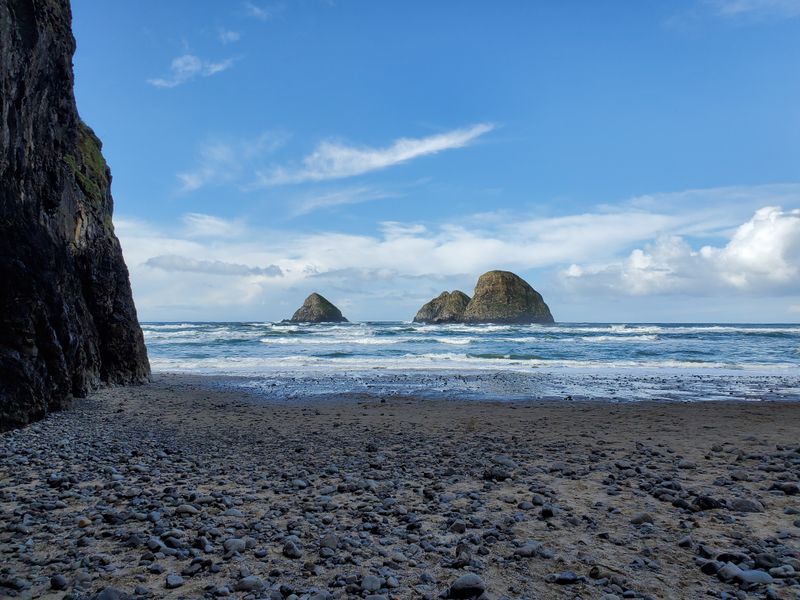
Low tide transforms the rocky areas around Tunnel Beach into an outdoor marine biology classroom. Tide pools form in depressions throughout the exposed rock formations, creating temporary aquariums filled with creatures adapted to the challenging intertidal zone.
Each pool hosts its own miniature ecosystem, complete with predators, prey, and the constant drama of survival.
Sea anemones wave their tentacles in the current, starfish cling to rock faces, and hermit crabs scuttle between hiding spots. Small fish dart through the shallow water, while sea urchins cluster in protected corners.
The diversity packed into these small spaces amazes visitors who take time to crouch down and observe carefully. Children especially find tide pooling captivating, offering hands-on nature education.
Responsible tide pool etiquette matters enormously in these fragile environments. Looking without touching preserves the delicate balance, and returning any displaced rocks to their original positions protects creatures sheltering underneath.
Oregon’s coastal ecosystems depend on visitors treating them with respect, ensuring future generations can enjoy the same discoveries.
Best Seasons for Visiting
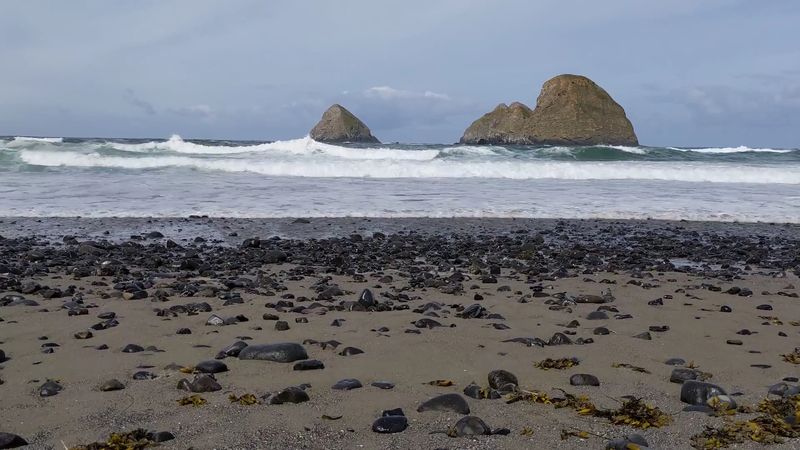
Summer brings the biggest crowds to Tunnel Beach, with families, tourists, and locals all converging on this Oregon coastal attraction. While the weather tends toward its most cooperative during these months, the experience can feel more like waiting in line than discovering a secret beach.
Dozens of people shuffling through the tunnel simultaneously diminishes the sense of adventure considerably.
Late fall through early spring offers dramatically different conditions. Storms refresh the agate supply, fewer visitors mean easier parking and solitary beach moments, and the raw power of winter waves creates spectacular viewing.
The tunnel remains accessible year-round, though weather conditions require more preparation and caution. Dressing in layers and bringing rain gear transforms potentially miserable conditions into invigorating coastal experiences.
Weekday visits during any season reduce crowds significantly compared to weekends. Even in summer, arriving on a Tuesday or Wednesday means encountering a fraction of the weekend traffic.
The beach reveals its true character when you’re not sharing the tunnel with a constant stream of others, allowing the peaceful, contemplative experience this special place deserves.
Photography Opportunities
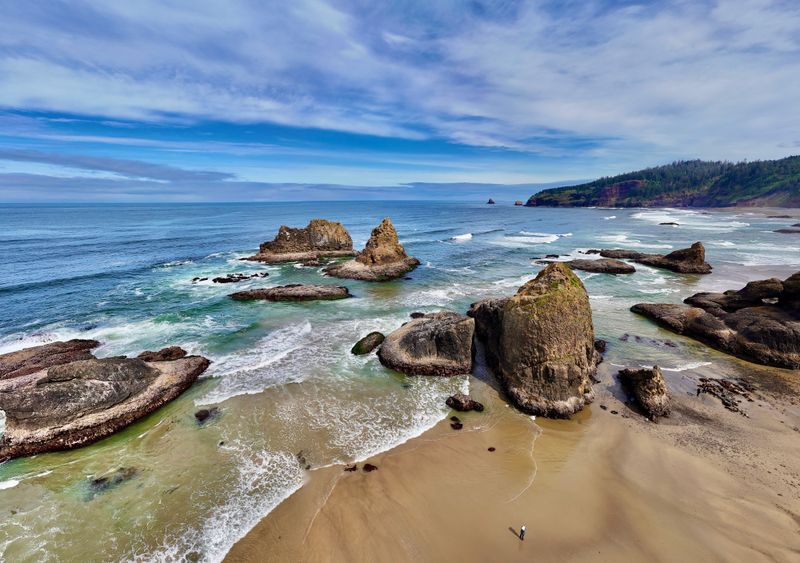
Photographers find endless inspiration at Tunnel Beach, from the dramatic tunnel entrance framing ocean views to the sculptural rock formations beyond. The interplay of light and shadow in the tunnel itself creates striking compositional opportunities, especially when backlit by bright beach openings at either end.
Silhouettes of people traversing the passage add human scale to the geological drama.
Golden hour transforms the hidden beach into something magical, with warm light painting the rock faces and creating long shadows across the sand. The westward ocean orientation means sunset shots work beautifully, though morning light offers its own advantages with fewer crowds and different atmospheric conditions.
Tide pool reflections, wave action against rocks, and distant views of Three Arch Rocks all provide varied subject matter.
Protecting camera equipment from sand, salt spray, and moisture requires attention, especially inside the damp tunnel. A lens cloth and protective bag prove their worth quickly.
The uneven terrain makes tripod use challenging but rewarding for long exposures of wave motion or low-light tunnel shots. Patience rewards photographers here, as does returning multiple times under different conditions.
The Local Oceanside Community
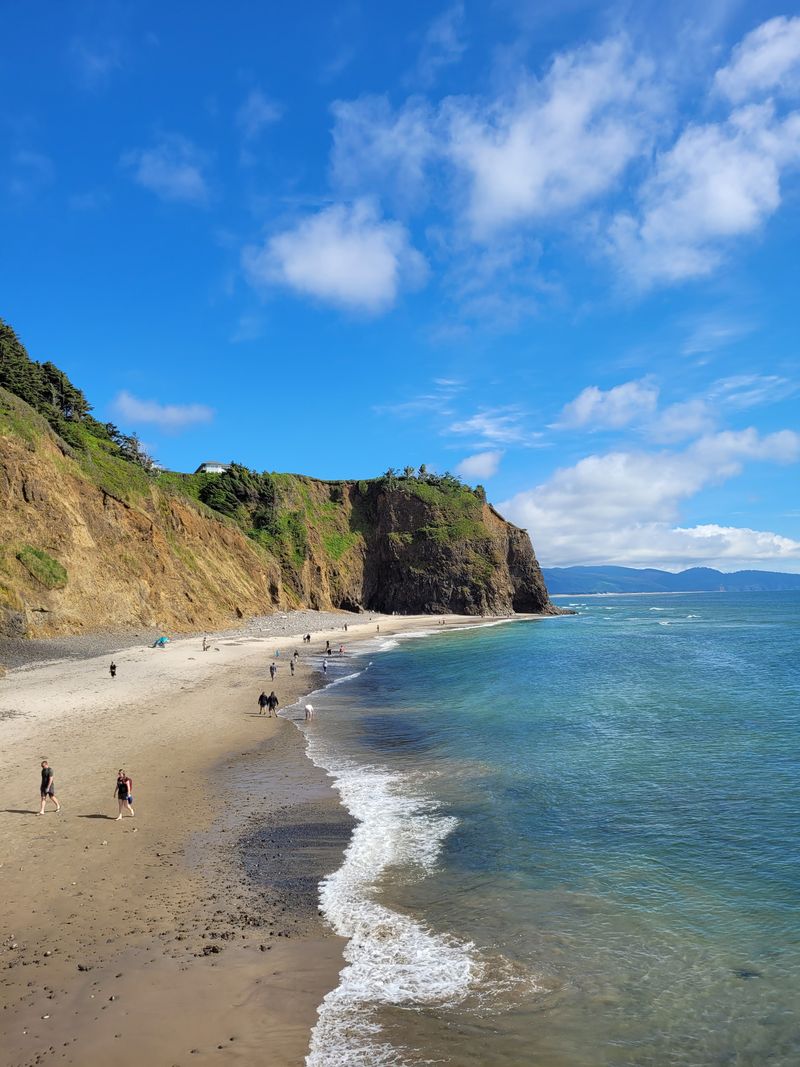
Oceanside itself remains refreshingly uncommercialized compared to larger Oregon coast destinations. This tiny community of a few hundred permanent residents maintains a quiet, authentic character that larger tourist towns have lost.
The lack of chain restaurants and souvenir shops creates an atmosphere where the natural setting takes center stage rather than competing with commercial development.
Local businesses cater to visitors without overwhelming the town’s residential feel. A handful of restaurants serve fresh seafood and casual fare, while a small store provides basic supplies.
Vacation rentals and a few lodging options allow overnight stays, giving visitors time to experience the beach during different tides and lighting conditions without rushing.
Respecting this small community means following parking regulations, keeping noise levels reasonable, and treating the area as the residential neighborhood it is rather than just a tourist destination. The locals’ willingness to share their remarkable natural resource with visitors depends on that resource not being loved to destruction.
Thoughtful tourism ensures Oceanside and its tunnel beach remain accessible and unspoiled for future generations of Oregon coast explorers.
Dear Reader: This page may contain affiliate links which may earn a commission if you click through and make a purchase. Our independent journalism is not influenced by any advertiser or commercial initiative unless it is clearly marked as sponsored content. As travel products change, please be sure to reconfirm all details and stay up to date with current events to ensure a safe and successful trip.
