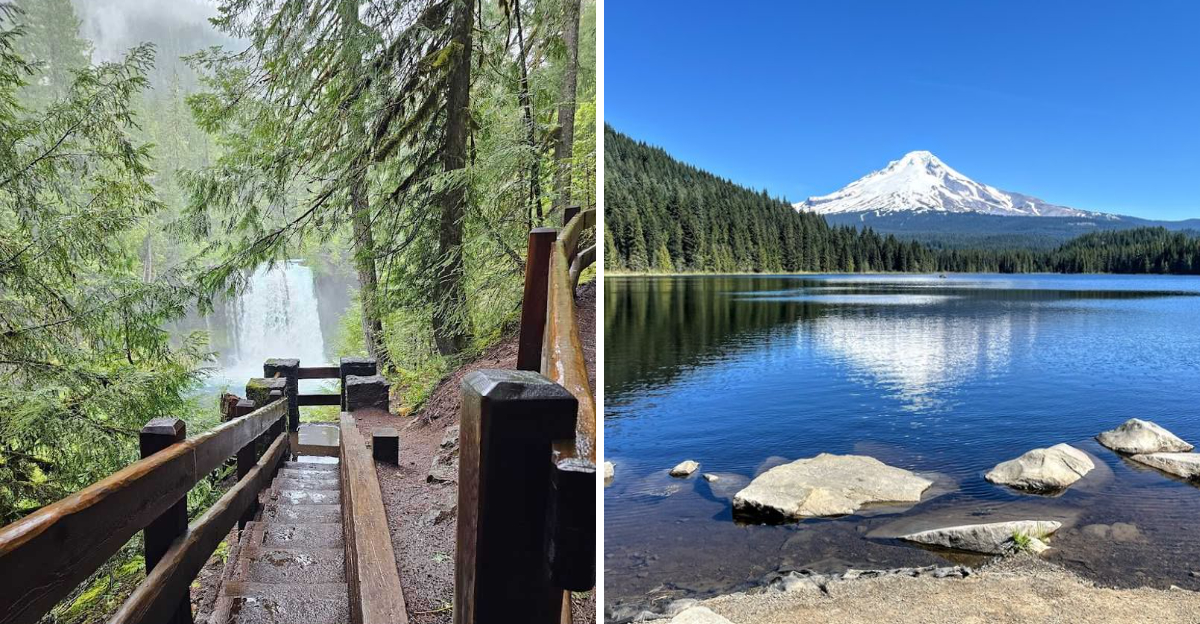
The best way to fall in love with Oregon is to lace up your boots and step into its wild, diverse beauty. For a true first taste, this state serves up an iconic menu of trails, from thundering waterfalls to volcanic peaks and rugged coastline.
A trip here isn’t complete without witnessing the famous waterfalls, where trails wind past cascades so powerful you can feel the mist on your face. Some paths lead you behind the falls, offering a perspective that feels like standing inside nature’s cathedral.
Others climb to sweeping viewpoints, rewarding your effort with panoramas that stretch for miles. If you crave dramatic high desert landscapes, there are trails that tackle steep ridges with stunning rock formations at every turn.
For a taste of alpine beauty, easy loops circle crystal clear lakes with snow capped peaks perfectly reflected in the water. The variety is staggering, from deep forest canyons to volcanic terrain that feels otherworldly.
Oregon is a land of stunning contrasts, and you can experience it all on foot. From the state’s lush forests to its volcanic peaks and dramatic coast, your first hike in Oregon is the beginning of an unforgettable adventure.
1. Trail of Ten Falls, Silver Falls State Park
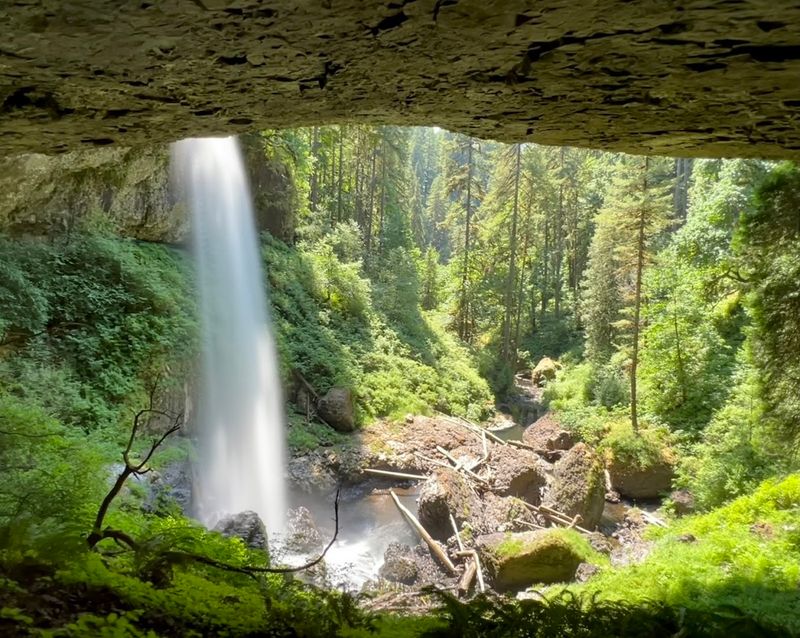
Walking behind a waterfall is the kind of experience that makes you stop and question why you waited so long to visit Oregon. The Trail of Ten Falls in Silver Falls State Park, near Silverton, is the crown jewel of Pacific Northwest hiking.
This 7.8-mile loop passes ten separate waterfalls, and several of those falls let you actually duck behind the curtain of water for a one-of-a-kind view.
The path winds through old-growth forest packed with towering Douglas-firs and bright green ferns at every turn. Mossy rocks and the sound of rushing water follow you for almost the entire route.
The good news for first-timers is that this trail is very flexible. You can shorten the loop and still catch the most impressive falls without covering all 7.8 miles.
South Falls, the tallest at 177 feet, is reachable within the first mile, making it a great turnaround point for families with young kids. The trail is rated moderate, so a reasonable fitness level is all you need to enjoy it fully.
Parking fills up fast on weekends, so an early morning arrival is strongly recommended. Silver Falls State Park is Oregon’s largest state park, and this trail alone is reason enough to make the drive.
2. Multnomah Falls, Columbia River Gorge
Oregon’s tallest waterfall has been drawing visitors since long before Instagram made it famous.
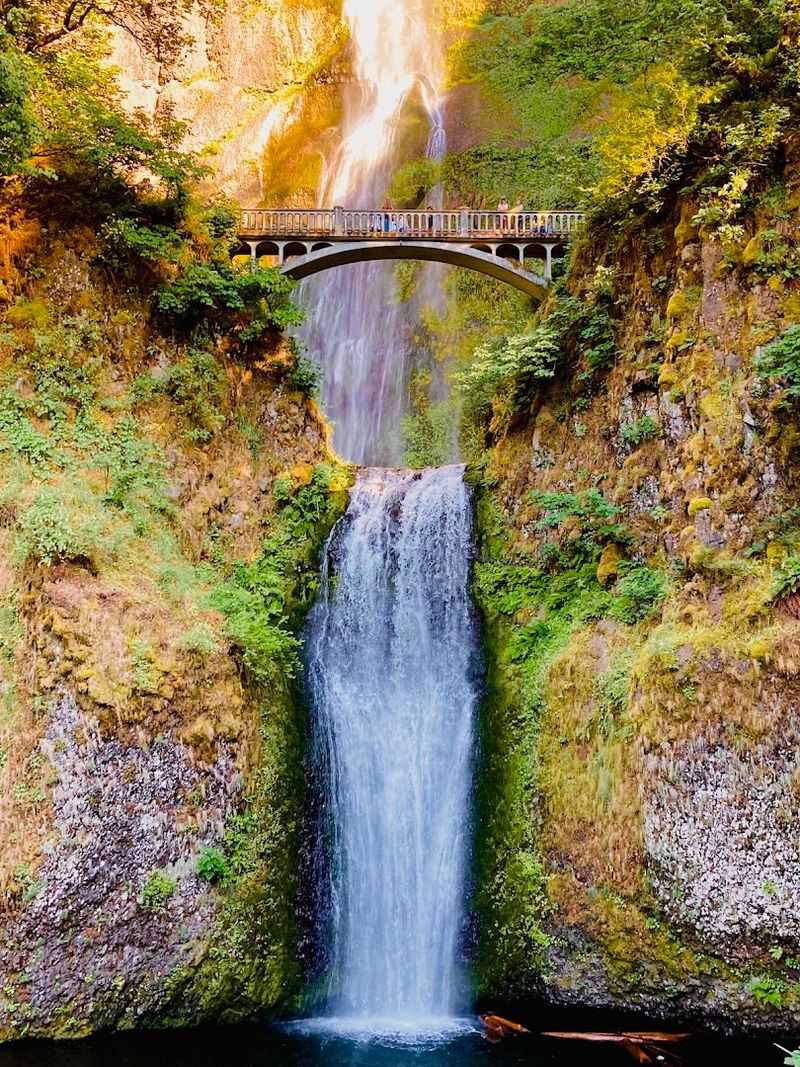
Multnomah Falls in the Columbia River Gorge drops a jaw-dropping 620 feet and sits just 30 minutes east of Portland. It is one of the most accessible natural landmarks in the entire Pacific Northwest.
The 2.4-mile trail starts at the historic 1925 Multnomah Falls Lodge, which is a beautiful stone building worth a look on its own. From there, the paved path crosses the iconic Benson Bridge, which frames the lower falls perfectly for photos.
The trail then switchbacks steadily upward to an upper viewpoint overlooking the Columbia River Gorge. Those panoramic views of the gorge from the top make the climb completely worth the effort.
The path is paved the entire way, which makes it manageable for a wide range of visitors. That said, the switchbacks do have a solid incline, so take your time and bring water. Because of its location near Portland, Multnomah Falls can get extremely crowded, especially on summer weekends.
Timed entry permits are required during peak season, so check the official website before you go.
Arriving at dawn rewards you with soft light, fewer crowds, and a truly magical atmosphere around the falls.
3. Rowena Plateau Trail, Columbia River Gorge
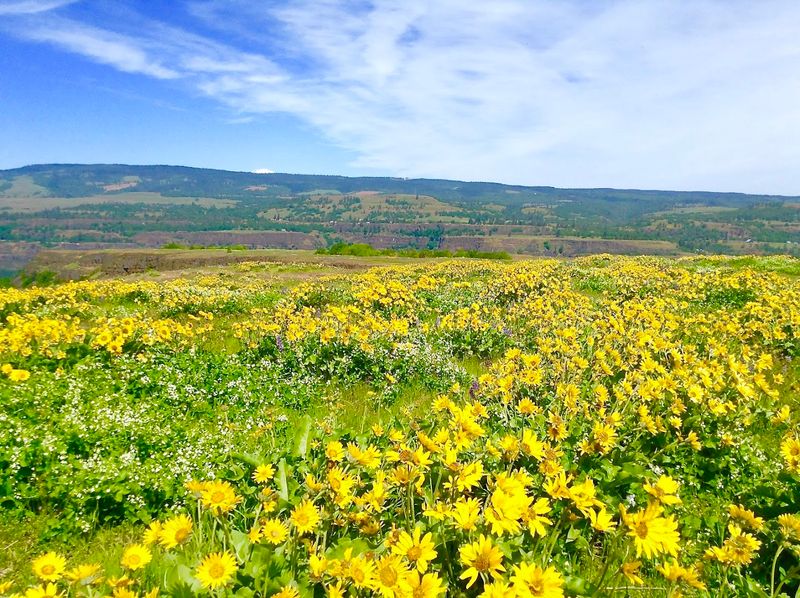
Spring turns this plateau into something that looks like a painting, and it is completely real. The Rowena Plateau Trail is a short 2.6-mile loop near Mosier, sitting on the eastern edge of the Columbia River Gorge.
What makes this hike stand out is the combination of wide-open views and seasonal wildflowers that carpet the plateau each spring.
Purple lupine and bright yellow balsamroot bloom across the open grasslands, creating a color display that stops most hikers in their tracks. The elevation gain is minimal, making this one of the more relaxed options in the entire gorge.
The trail starts at the Rowena Crest parking area, which also gives you an immediate bird’s-eye view of the famous Rowena Loops.
Looking down at those curves while standing on the plateau is a surprisingly cool moment that most visitors do not expect. Columbia River views stretch out for miles from multiple points along the route.
The eastern side of the gorge gets more sunshine and less rain than the western end near Portland, so conditions here tend to be drier and warmer. Peak wildflower season typically runs from late March through May.
This is a must-do for anyone who loves big views without a big physical commitment.
4. Trillium Lake Loop, Mount Hood
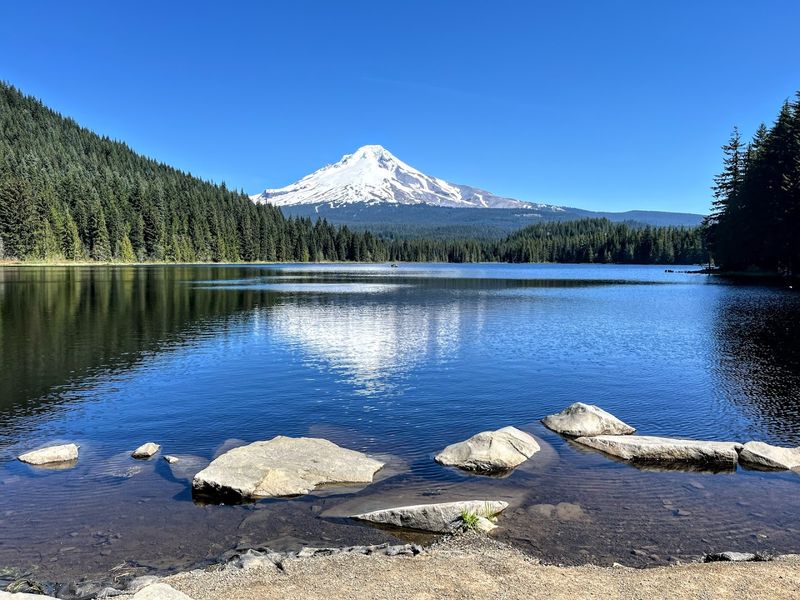
There is a photograph that almost every Oregon visitor eventually sees, and it features a snow-capped volcano mirrored perfectly in a still mountain lake. That photograph was taken at Trillium Lake, and the real thing is even better than the image.
The Trillium Lake Loop sits inside Mount Hood National Forest in northern Oregon and follows a 1.5 to 2-mile path around the perimeter of the lake.
The trail is mostly flat, running along a mix of paved paths and wooden boardwalks through meadows and quiet forest. Mount Hood rises dramatically to the north and reflects in the lake’s surface on calm mornings with almost mirror-like clarity.
Early morning visits offer the best reflection shots before afternoon breezes ripple the water’s surface.
Fishing is popular here, and the lake is stocked with rainbow trout, making it a great spot for families who want to combine a walk with some time on the water. The campground adjacent to the lake fills up quickly during summer, so reservations are essential if you plan to spend the night.
Fall brings golden colors to the surrounding trees, which adds a whole new layer of beauty to the already stunning scenery. This loop is genuinely one of the most rewarding easy walks in all of Oregon.
5. Smith Rock State Park, Central Oregon
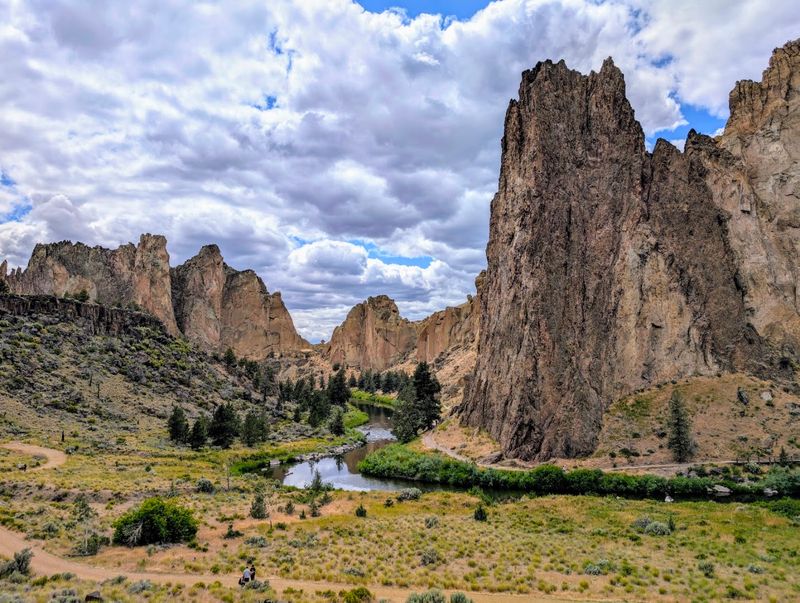
Central Oregon looks nothing like the rest of the state, and Smith Rock State Park is the best proof of that statement. Located near Terrebonne, this park sits in Oregon’s high desert and features towering volcanic rock formations that rise hundreds of feet above the canyon floor.
The landscape is bold, dry, and dramatic in a way that feels completely different from the green forests most people associate with Oregon.
Rock climbers from around the world travel to Smith Rock specifically to scale these famous spires, and watching them is entertaining all on its own. For first-time visitors who prefer to stay on the ground, the Crooked River Trail is the perfect introduction to the park.
This family-friendly 4.3-mile route follows the river at the base of the towering rock formations, offering incredible views without a brutal climb.
The more ambitious Misery Ridge Trail earns its name with a steep ascent but rewards hikers with views that stretch across Central Oregon. Golden eagles, mule deer, and river otters are commonly spotted throughout the park.
Summers here are hot, so early morning hikes are strongly recommended during July and August. Sunrise light on the orange rock spires is a photographer’s dream, and it is absolutely worth setting the alarm early.
6. God’s Thumb, Lincoln City
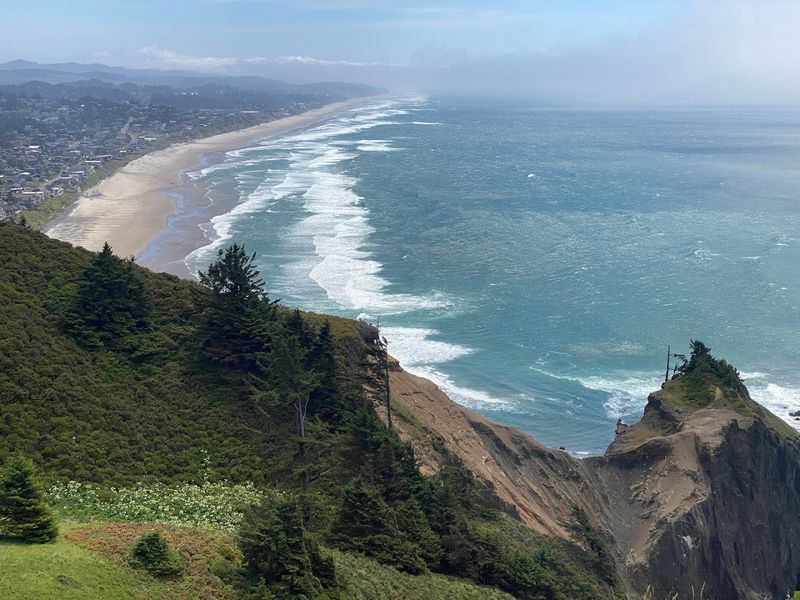
Not many hikes on the Oregon coast combine a genuine physical challenge with views this spectacular at the end. God’s Thumb is a short but steep trail near Lincoln City, that climbs to a distinctive grassy hilltop shaped unmistakably like an upward-pointing thumb.
The summit sits directly above the Pacific Ocean, and the panoramic coastal views from the top are some of the finest in the entire state.
The route passes through shaded forest, open meadows, and along dramatic cliff edges that make the whole experience feel wild and remote. It is genuinely surprising how few people know about this trail given how close it sits to town.
The round trip covers roughly 5 miles with about 900 feet of elevation gain, which gives it a bit of a workout feel compared to other coastal options.
Sturdy shoes are important here because some sections of the trail can be muddy and uneven, especially after rain. The Oregon coast receives significant rainfall throughout the year, so layering up is always a smart move.
Clear days reward hikers with ocean views stretching north and south for many miles along the coastline. If you only have time for one coastal hike during your Oregon visit, this one delivers a payoff that is hard to beat.
7. Cannon Beach, Oregon Coast
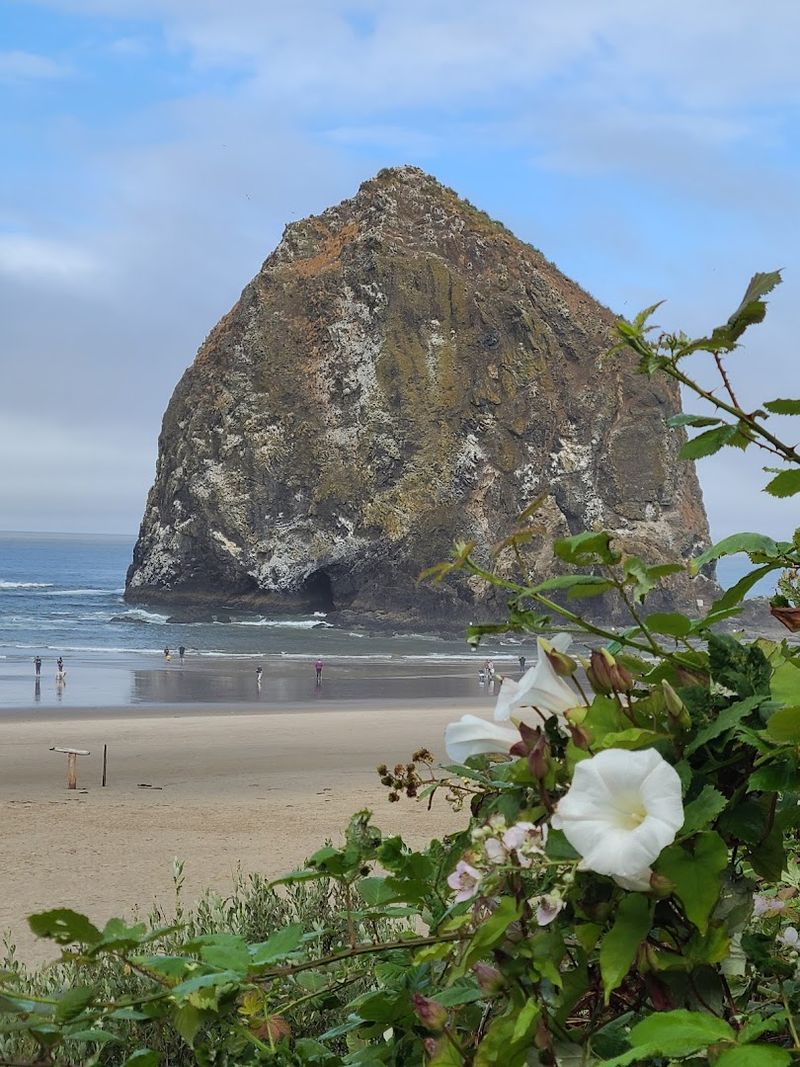
Haystack Rock is one of those landmarks that looks almost too dramatic to be real, and yet there it stands. Rising 235 feet straight out of the surf at Cannon Beach, this massive basalt monolith is one of the most recognizable natural features.
The beach walk here is easy to customize based on how far you want to go. The scenery changes constantly as you move along the shoreline. Sea stacks, headlands, and stretches of open sand keep the walk visually interesting from start to finish.
The real highlight for curious visitors is the tide pools clustered around the base of Haystack Rock at low tide.
Purple sea urchins, hermit crabs, bright green anemones, and the occasional sea star fill these rocky pools with life.
Checking a tide chart before your visit is a smart move because the pools are only accessible during lower tides. Tufted puffins nest on Haystack Rock from spring through summer, which adds a wonderful wildlife-watching element to the beach experience.
Cannon Beach town itself sits just steps from the shore and offers great spots to grab a warm meal after your walk. The combination of wildlife, scenery, and easy access makes this beach walk an absolute essential for first-time Oregon visitors.
8. Tom, Dick, and Harry Mountain, Mount Hood
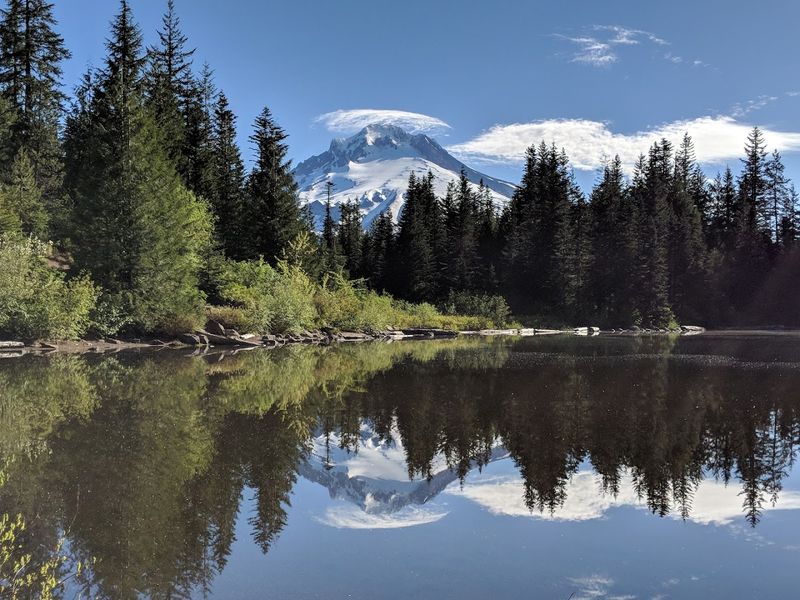
Few hikes in Oregon deliver this level of mountain scenery without requiring you to be an elite athlete.
Tom, Dick, and Harry Mountain sits near Government Camp. The 9-mile round-trip trail is one of the most rewarding moderate hikes in the entire Mount Hood area. The route passes through open forests and transitions into rocky alpine terrain as you gain elevation toward the summit ridge.
Mirror Lake appears about halfway through the hike and reflects Mount Hood’s snowy peak in its calm surface on clear days.
Continuing past the lake leads to the summit ridge, where the views expand dramatically in every direction. On clear days, Mount St. Helens and Mount Rainier are both visible to the north. It makes the summit feel like a front-row seat to the entire Cascade Range.
The trail gains roughly 1,900 feet of elevation over its full length. That gives your legs a solid workout without being unreasonably demanding. Snow lingers on the upper sections well into summer, so trekking poles and waterproof footwear are worth bringing along.
Late summer and early fall offer the clearest skies and the best conditions for those long-distance mountain views. This hike consistently ranks among Oregon’s best for a very good reason. Reaching that ridge for the first time never gets old.
9. Watson Falls, Umpqua National Forest
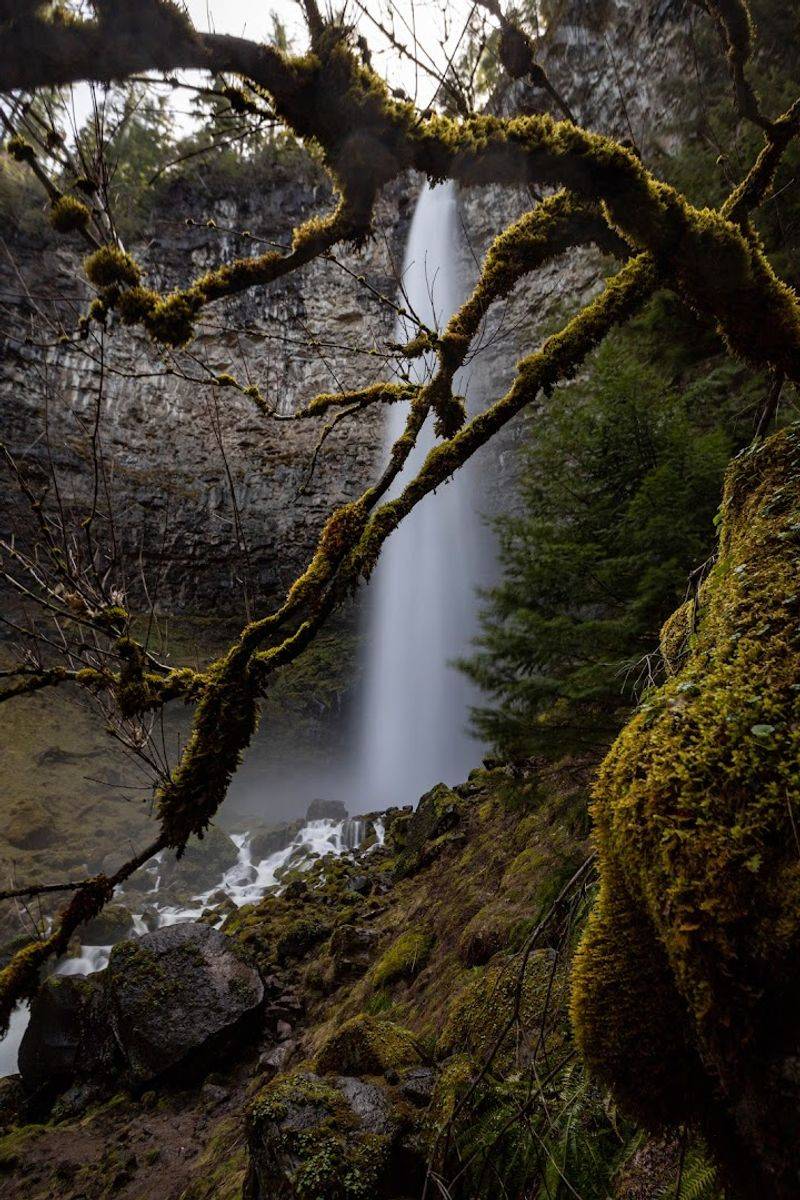
Some of Oregon’s best waterfall experiences require almost no effort at all, and Watson Falls is the perfect example. This 293-foot waterfall sits inside Umpqua National Forest near Glide, along Highway 138. It ranks among the tallest waterfalls in the entire state.
The hike to reach it covers just 0.8 miles out and back. It makes one of the most accessible big waterfall experiences in Oregon. The trail leads to three separate viewpoints, including one from a footbridge spanning the gorge and another right at the base of the falls.
Standing at the base with mist hitting your face and the roar of water surrounding you is a genuinely memorable moment. The surrounding forest is incredibly lush, with thick moss covering nearly every surface.
The atmosphere in this forest feels ancient and almost otherworldly, especially on overcast days when the mist hangs low.
Because the hike is so short, Watson Falls works perfectly as a stop along the Umpqua Scenic Byway. That connects several other natural attractions in the area.
Combining Watson Falls with nearby Toketee Falls makes for a fantastic waterfall-focused afternoon drive. Visit during spring when snowmelt feeds the upper watershed and the flow is at its most impressive.
10. Sahalie and Koosah Falls Loop, McKenzie River
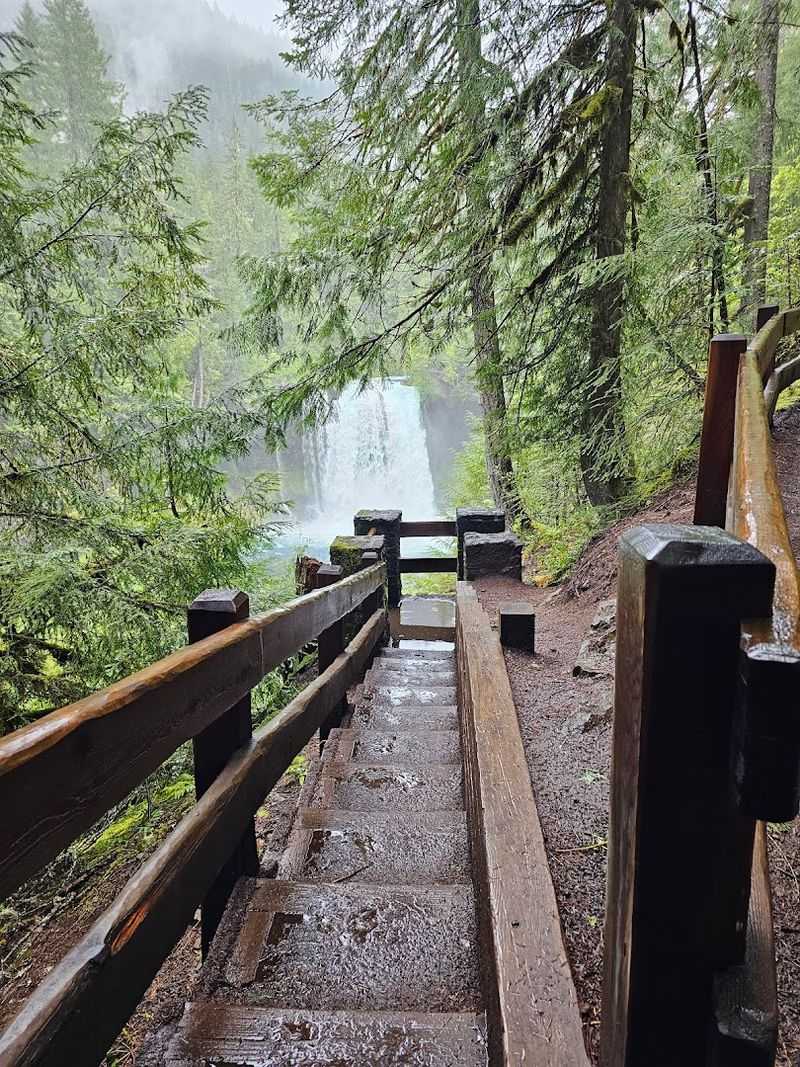
Turquoise blue water rushing over volcanic rock is not something you expect to find on a 2.6-mile easy loop. The McKenzie River delivers exactly that.
The Sahalie and Koosah Falls Loop runs through Willamette National Forest in central Oregon. It packs two stunning waterfalls into a short and very manageable trail.
Sahalie Falls is the first major stop, a 100-foot cascade that thunders over a basalt ledge and sends spray drifting through the surrounding trees. The water here glows with an almost unreal turquoise color caused by glacial minerals.
Koosah Falls comes next, a wider and more powerful drop that spreads across the river channel in a dramatic curtain of white water. The trail connects both falls by following the river through a beautiful old-growth forest.
The loop crosses the river on bridges at both ends, allowing you to experience both the east and west sides of the canyon.
This trail is genuinely accessible for most fitness levels, including families with older children and casual hikers.
Spring and early summer bring the highest water volumes and the most dramatic waterfall displays of the year. Few two-mile hikes anywhere in the country offer this much visual payoff in such a short distance.
