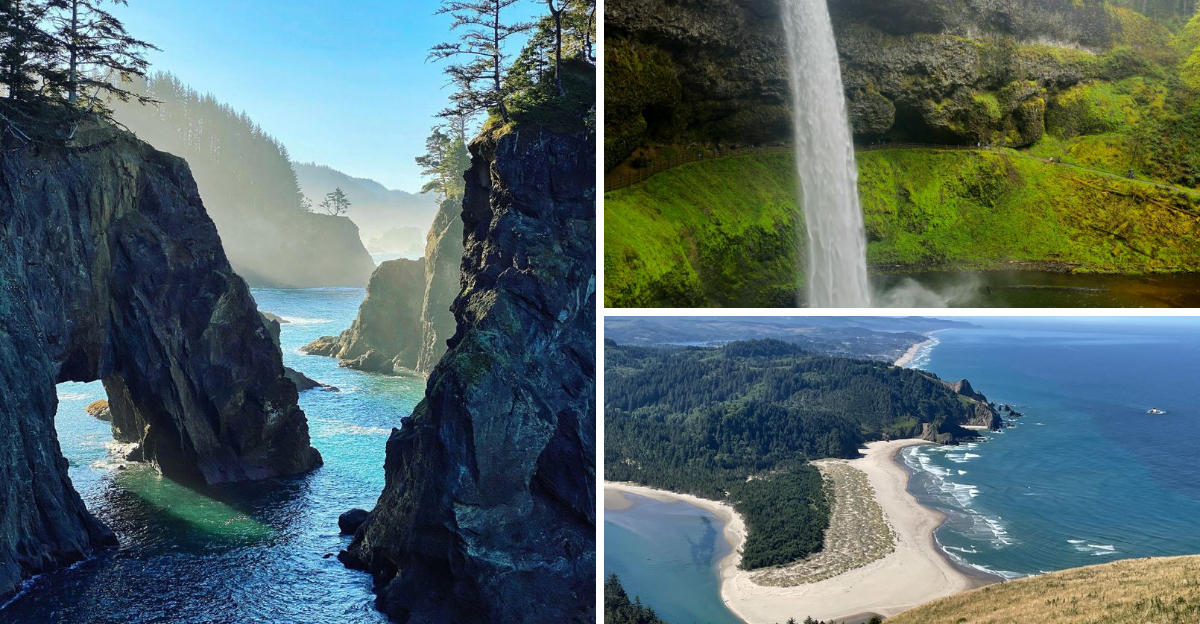
Oregon offers some of the most breathtaking hiking experiences in the Pacific Northwest, where rugged coastlines meet dense evergreen forests in spectacular fashion.
Travelers who crave the sound of crashing waves and the serenity of towering trees find exactly what they need along these trails.
Whether you’re drawn to dramatic cliff-side paths or peaceful woodland walks, the state delivers unforgettable scenery at every turn.
1. Cape Lookout Trail
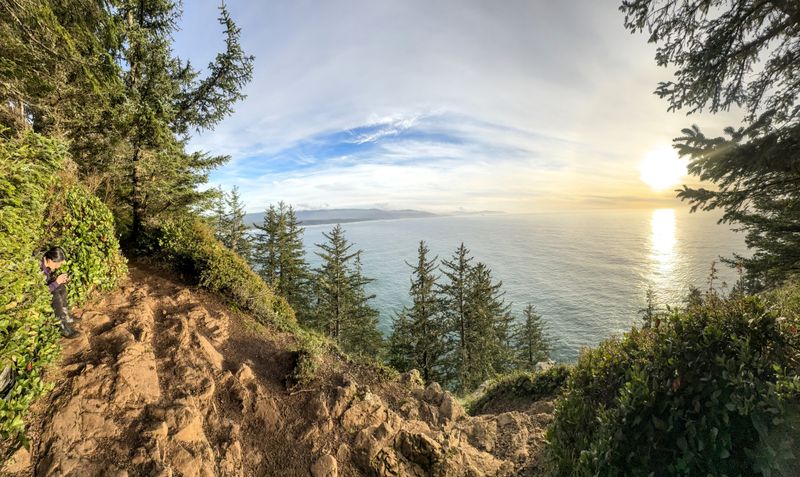
Cape Lookout juts dramatically into the Pacific Ocean like a giant finger pointing westward, offering hikers one of the most rewarding coastal experiences in Oregon.
The trail stretches five miles round trip through old-growth Sitka spruce forest before emerging at a windswept promontory where whales often pass during migration season.
Dense fog sometimes rolls in from the sea, wrapping the forest in mysterious layers that make the hike feel like stepping into another world.
Towering trees create a natural canopy overhead, filtering sunlight into soft golden beams that dance across the forest floor.
At the cape’s tip, sheer cliffs drop hundreds of feet to churning waves below, creating views that stretch endlessly across the Pacific.
Gray whales frequent these waters from December through June, and patient observers often spot their spouts and breaches from the viewpoint.
The trail remains accessible year-round, though winter storms bring dramatic wave action that transforms the experience entirely.
Wildflowers bloom along the path in spring, adding splashes of color to the already vibrant green landscape.
Benches placed strategically along the route provide perfect spots to rest and absorb the coastal atmosphere.
Families appreciate the moderate difficulty level, making it achievable for most fitness levels without being too demanding.
The parking area fills quickly on summer weekends, so arriving early ensures a peaceful start to your adventure.
Wildlife sightings include bald eagles, peregrine falcons, and various seabirds riding the ocean thermals.
Photography enthusiasts find endless opportunities here, from intimate forest details to sweeping ocean panoramas that capture Oregon’s wild beauty perfectly.
2. Oswald West State Park Trails
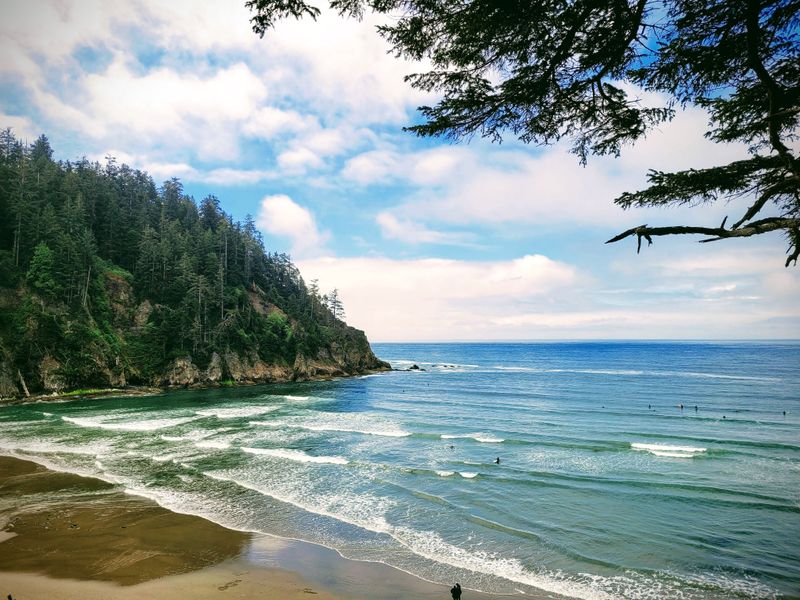
Tucked between Manzanita and Cannon Beach, Oswald West State Park protects a precious slice of coastal rainforest that feels untouched by time.
Multiple trails wind through this compact park, each offering distinct experiences ranging from secluded beaches to forested ridgelines.
The Short Sand Beach trail leads through a tunnel of massive Sitka spruce and western hemlock draped in emerald moss.
Wheelbarrows sit ready at the parking area for visitors hauling camping gear to the walk-in campground, a charming touch that reflects the park’s unique character.
Neahkahnie Mountain Trail climbs steeply from the highway, rewarding determined hikers with sweeping coastal views that justify every upward step.
Legend tells of Spanish treasure buried somewhere on the mountain, adding a layer of mystery to the already compelling landscape.
The forest here grows thick and lush, nourished by Oregon’s famous rainfall and coastal fog that keeps everything perpetually green.
Banana slugs glide slowly across the trail, bright yellow against the dark earth, fascinating younger hikers with their alien appearance.
Surfers often paddle out at Short Sand Beach, their colorful boards contrasting beautifully with the gray-green ocean.
Cape Falcon Trail branches north, offering four miles of coastal forest hiking with occasional ocean glimpses through the trees.
The entire park feels like a sanctuary where the outside world fades away beneath the forest canopy.
Winter brings solitude and dramatic storms that showcase nature’s raw power along this rugged coastline.
Photographers love the interplay of light and shadow in the dense forest, especially during early morning hours when mist softens everything beautifully.
3. Cascade Head Trail
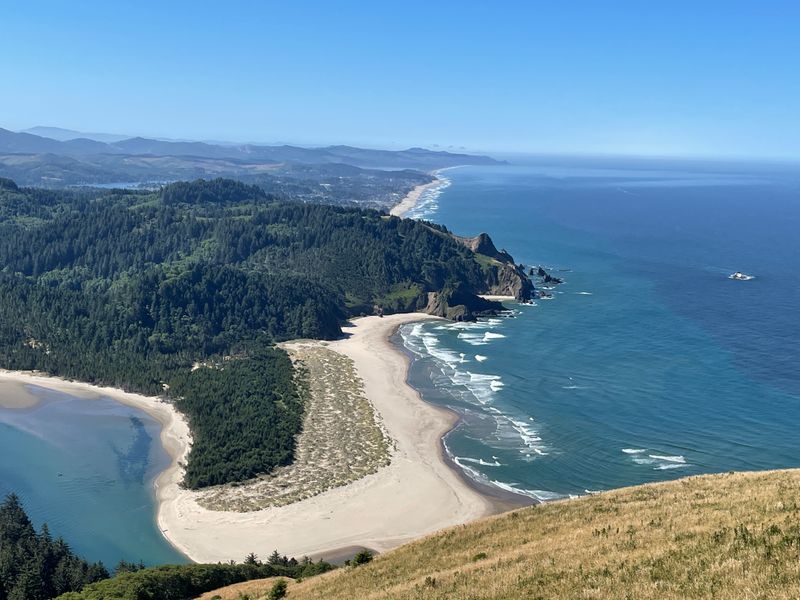
Rising abruptly from the ocean near Lincoln City, Cascade Head presents a striking contrast to typical forested coastal trails.
Open grasslands blanket the upper portions of this headland, creating sweeping vistas that extend from the Salmon River estuary to distant headlands.
The Nature Conservancy manages this special preserve, protecting rare prairie habitat that supports endangered Oregon silverspot butterflies.
Trail access varies seasonally to protect nesting birds, with the upper trail closed from January through mid-July each year.
Two trailheads offer different approaches, each providing unique perspectives on this remarkable landscape.
The lower trail begins near Three Rocks Road, climbing steadily through coastal forest before emerging onto the grassy slopes.
Wildflowers explode across the meadows in summer, painting the headland in brilliant purples, yellows, and oranges that complement the blue ocean beyond.
Wind constantly sweeps these exposed slopes, carrying the scent of salt and earth while bending the grass into rippling waves.
Elk sometimes graze on the headland, their presence reminding visitors that this remains wild country despite its accessibility.
The upper trailhead on Forest Road 1861 provides a shorter route but requires navigating a steep gravel road to reach the parking area.
Views from the summit meadows rank among Oregon’s finest, combining ocean, forest, river, and mountain in a single panoramic sweep.
Photographers time their visits for golden hour when slanting light transforms the grasslands into glowing fields of amber.
The trail’s moderate length makes it perfect for families seeking spectacular scenery without committing to an all-day adventure.
Interpretive signs along the route explain the unique ecology and conservation efforts protecting this precious headland ecosystem.
4. Heceta Head Lighthouse Trail
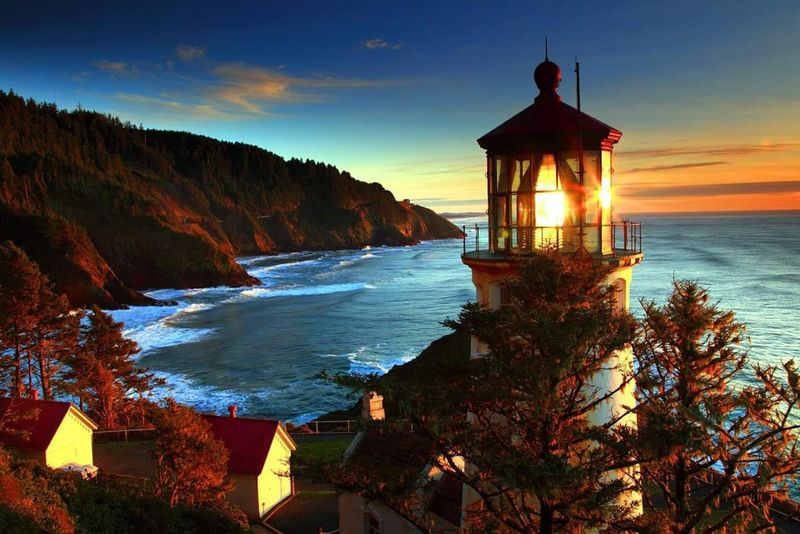
Perched on a dramatic cliff face north of Florence, Heceta Head Lighthouse has guided mariners since 1894 while captivating land-based visitors with its postcard-perfect setting.
The trail to the lighthouse climbs gently through coastal forest before emerging onto open slopes where the full majesty of the location becomes apparent.
Whitewashed walls and a red roof make the lighthouse pop against the deep blue ocean and green forested hillsides surrounding it.
Sea lions bark from rocks below, their voices carrying up the cliff face and adding a wild soundtrack to your visit.
The keeper’s house now operates as a bed and breakfast, offering overnight guests an unforgettable experience in one of America’s most scenic lighthouse settings.
Interpretive displays explain the lighthouse’s history and the challenging lives of keepers who maintained the beacon through storms and isolation.
Gray whales migrate past this headland twice annually, making it an excellent spot for whale watching from elevated vantage points.
The trail continues beyond the lighthouse to additional viewpoints where you can peer down at Heceta Head’s distinctive rocky profile.
Wildflowers cling to the steep slopes in spring, somehow finding purchase in the thin soil and constant wind.
Photographers consider this one of the most photogenic lighthouses in the entire country, with countless angles offering compelling compositions.
The relatively short distance makes this hike accessible to most visitors, including families with children eager to explore a working lighthouse.
Fog often shrouds the headland in summer, creating moody atmospheric conditions that transform the lighthouse into a ghostly beacon.
Parking areas fill quickly during peak season, so arriving early or visiting during shoulder seasons ensures a more peaceful experience.
5. Silver Falls State Park Trail System
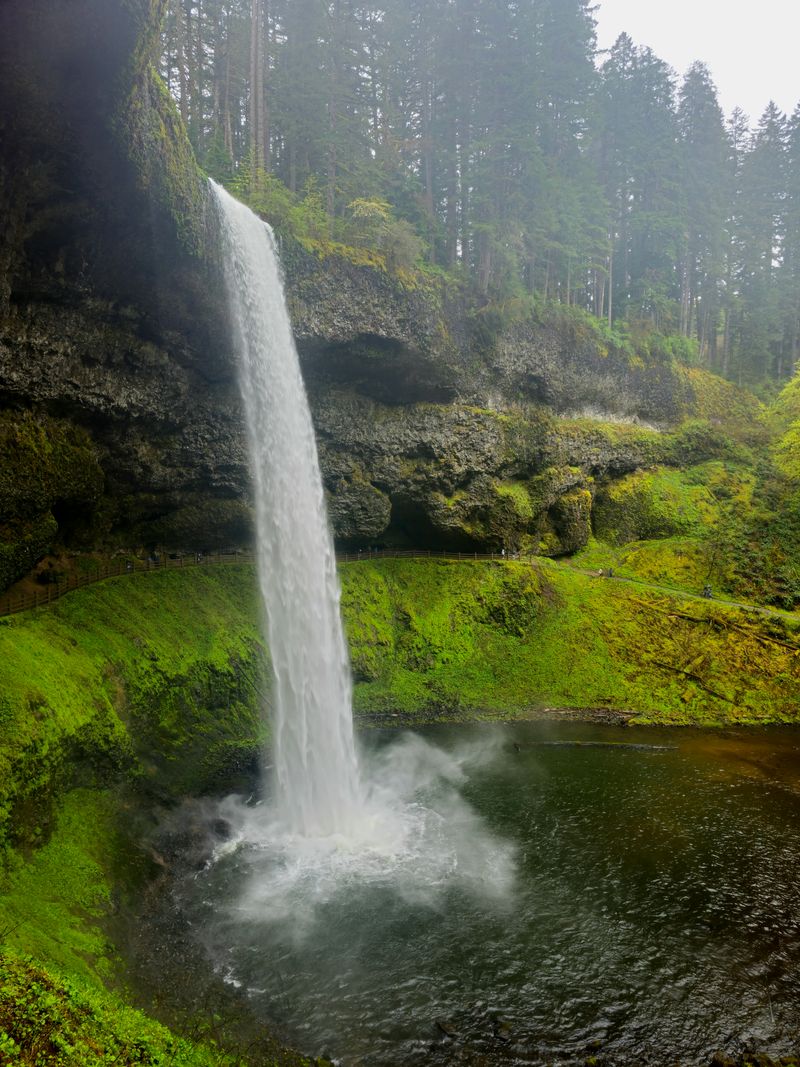
Oregon’s largest state park sprawls across nearly 9,000 acres of forested canyon country where ten major waterfalls create a hiking experience unlike any other.
The Trail of Ten Falls loops seven miles through old-growth forest, passing behind several waterfalls where you can feel the spray and hear the thundering water.
South Falls drops 177 feet into a moss-lined amphitheater, offering the park’s most iconic view and a perfect introduction to what awaits deeper in the canyon.
Walking behind these cascades provides a perspective few waterfalls allow, immersing you completely in the power and beauty of falling water.
Douglas fir, western hemlock, and western red cedar tower overhead, creating a cathedral-like atmosphere along much of the trail.
The canyon carved by Silver Creek reveals layers of ancient basalt, telling geological stories that span millions of years.
North Falls plunges 136 feet into a deep pool, its curtain of water concealing a spacious cavern where hikers pause to marvel at the spectacle.
Smaller waterfalls along the route each possess distinct character, from delicate ribbons to powerful torrents depending on the season.
Spring runoff brings maximum water flow, transforming the waterfalls into roaring displays of natural force.
Autumn paints the canyon in golden hues as bigleaf maples shed their leaves, creating a completely different but equally beautiful scene.
The park’s proximity to Salem makes it a popular destination, yet the extensive trail system distributes visitors well throughout the forested landscape.
Winter occasionally brings ice formations that decorate the waterfalls in spectacular frozen sculptures, though trails can become slippery and challenging.
Families appreciate the well-maintained paths and numerous access points that allow shorter hikes to individual waterfalls rather than the full loop.
6. Samuel H. Boardman State Scenic Corridor
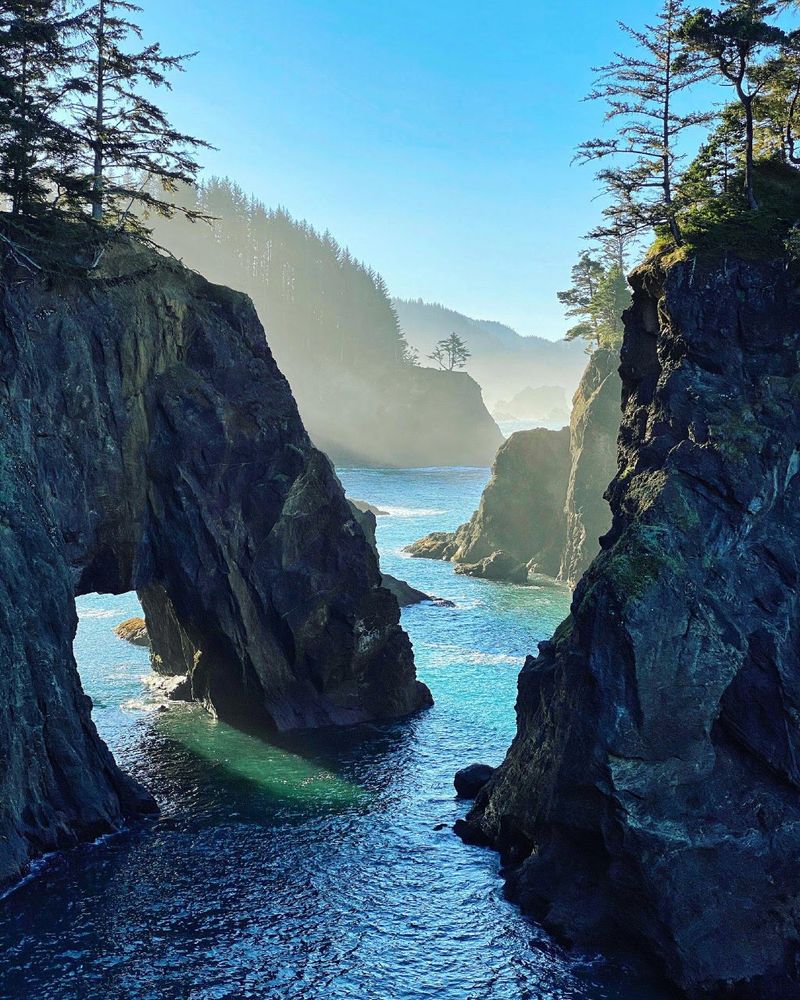
Stretching twelve miles along Oregon’s southern coast, this scenic corridor protects some of the most spectacular coastal terrain in the entire state.
Multiple trailheads provide access to different sections, allowing visitors to explore towering sea stacks, natural arches, hidden coves, and windswept headlands.
The Oregon Coast Trail runs the entire length of the corridor, connecting all the major viewpoints and creating opportunities for extended coastal hiking.
Natural Bridges Cove features a massive rock arch carved by relentless wave action over countless centuries.
Sitka spruce cling impossibly to rocky slopes, their twisted forms shaped by constant ocean winds into living sculptures.
Whaleshead Beach takes its name from a distinctive offshore rock formation that resembles a whale surfacing from the depths.
Thomas Creek Bridge soars 345 feet above the canyon below, making it Oregon’s highest bridge and a dramatic landmark along this scenic stretch.
Secret Beach lives up to its name, requiring a short steep descent through forest to reach a secluded cove surrounded by towering cliffs.
Tide pools teem with colorful sea stars, anemones, and other marine life during low tide, fascinating visitors who explore these natural aquariums.
The forest comes right to the cliff edge in many places, creating the classic Oregon coast combination of evergreen trees and crashing surf.
Indian Sands features wind-sculpted sandstone formations that look almost alien in their smooth, flowing shapes.
Photographers return repeatedly to this corridor, finding endless compositions in the interplay of rock, water, forest, and sky.
Weather changes rapidly along this exposed coastline, so layered clothing and rain gear ensure comfort regardless of conditions.
Each season brings different light and atmospheric conditions that transform the landscape’s appearance completely.
7. Saddle Mountain Trail
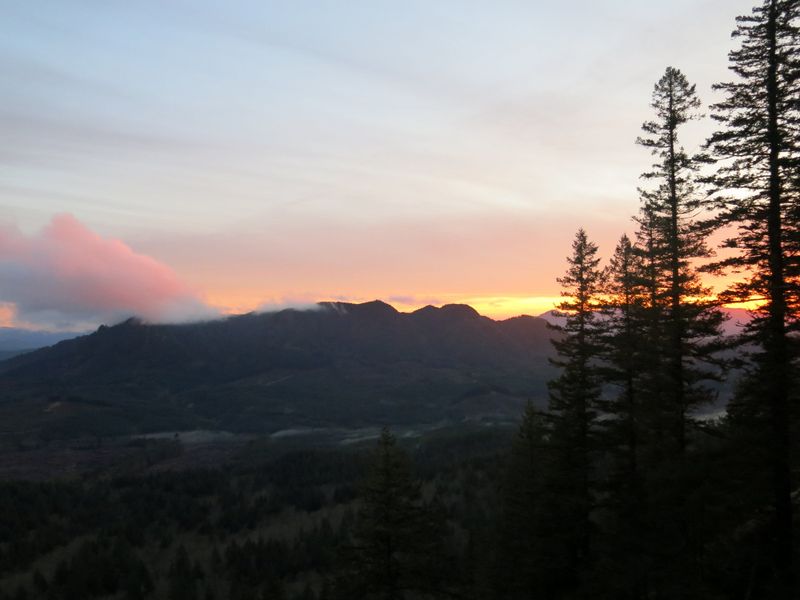
Rising like a pyramid from the northern Coast Range, Saddle Mountain presents Oregon’s most challenging coastal hike with rewards that match the effort required.
The trail climbs 1,600 feet in just 2.5 miles, gaining elevation quickly through steep switchbacks and rocky sections that demand attention.
Unique geology creates habitat for rare wildflowers found nowhere else, including species that survived the last ice age on this isolated peak.
Summit views stretch from the Pacific Ocean to the Cascade volcanoes on clear days, encompassing vast swaths of forested mountains and coastal plain.
Rope handrails assist hikers through the steepest upper sections where the trail narrows along exposed rocky ridges.
Early summer brings spectacular wildflower displays as the mountain’s rare plants burst into bloom across the rocky summit meadows.
Botanists treasure this mountain for its botanical diversity, with species combinations found nowhere else in the Coast Range.
The final summit scramble requires careful footing across loose rock, but the panoramic views make every careful step worthwhile.
Weather shifts rapidly at this elevation, with clouds and fog rolling in quickly to obscure views and chill unprepared hikers.
The trailhead sits at the end of a winding mountain road that climbs through dense forest before reaching the parking area.
Crowds remain lighter here than at more accessible coastal trails, rewarding those willing to tackle the challenging ascent.
Autumn transforms the surrounding forest into a tapestry of gold and orange, creating stunning foreground color for summit photographs.
The mountain’s distinctive profile makes it visible from many coastal locations, including Cannon Beach and other popular viewpoints.
Proper hiking boots prove essential on this trail, where loose rock and steep grades challenge inadequate footwear quickly.
Dear Reader: This page may contain affiliate links which may earn a commission if you click through and make a purchase. Our independent journalism is not influenced by any advertiser or commercial initiative unless it is clearly marked as sponsored content. As travel products change, please be sure to reconfirm all details and stay up to date with current events to ensure a safe and successful trip.
