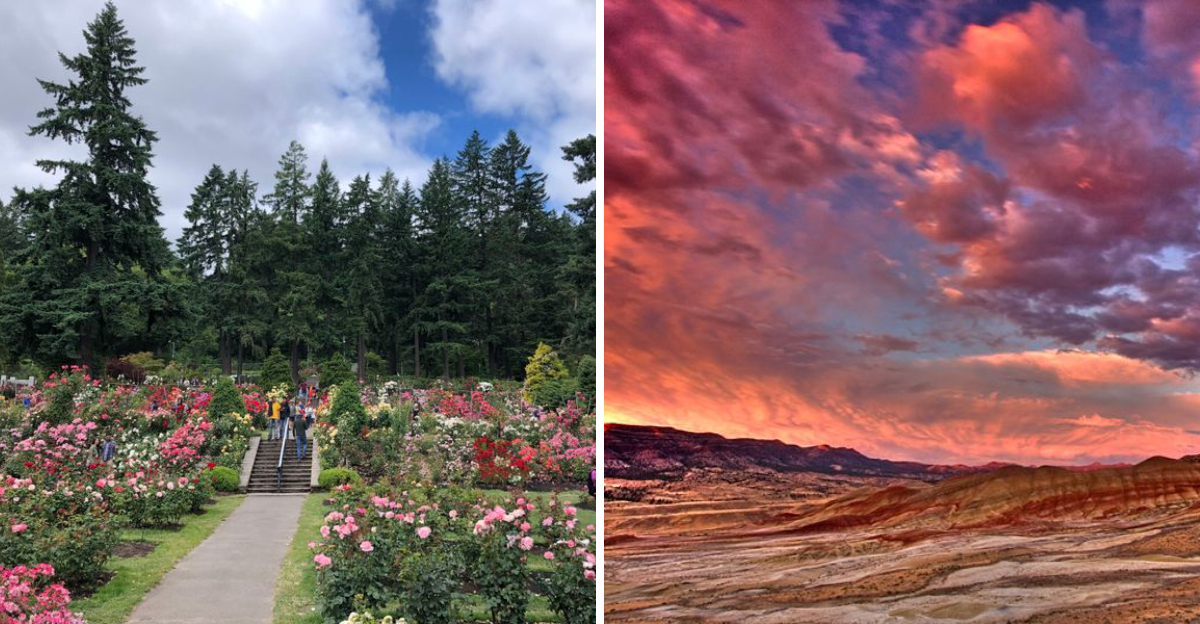
Oregon locals have figured out something visitors often miss: timing is everything. Certain places around the state truly come alive on specific days of the week, offering completely different experiences depending on when you show up.
A serene garden on a Tuesday morning can turn into a bustling photo session spot by Saturday afternoon, while a quiet coastal town midweek transforms into a lively hub once the weekend rolls around. Knowing when to visit these incredible destinations can make or break your Oregon adventure.
Want to walk behind waterfalls without dodging selfie sticks? Craving those iconic Crater Lake views without the parking lot chaos?
Ready to discover why locals swear by weekday mornings at Portland’s most famous gardens? Pack your sense of adventure and maybe a rain jacket, because Oregon’s best-kept timing secrets are about to transform how you explore the Pacific Northwest.
Get ready to experience the Beaver State like a true Oregonian, not just another tourist following the crowd!
1. Portland Japanese Garden & International Rose Test Garden
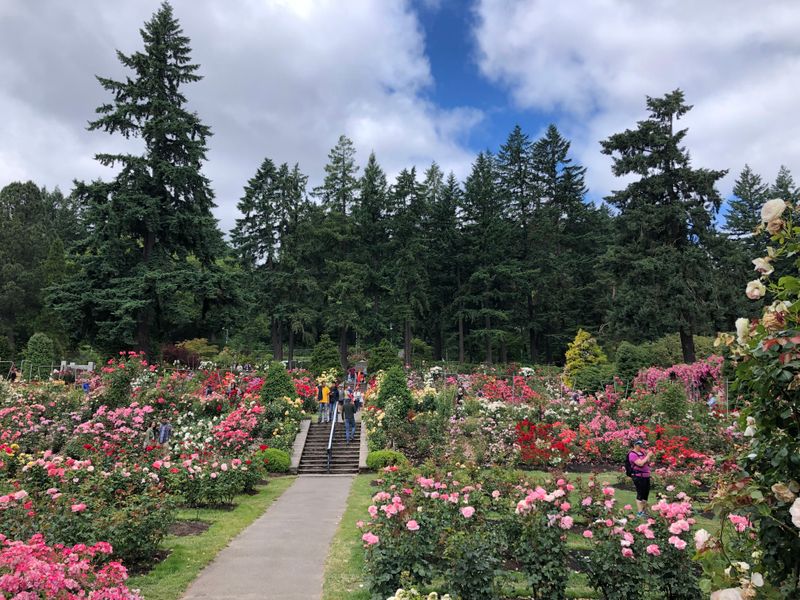
Weekday mornings at these iconic Portland gardens offer a completely different vibe than weekend afternoons. The Portland Japanese Garden sits peacefully on 12 acres overlooking the city, and when you arrive early on a Tuesday or Wednesday, you’ll have the winding paths and tranquil koi ponds practically to yourself.
The stillness lets you actually hear the bamboo rustling and water trickling, which gets drowned out by weekend crowds and professional photo crews.
Just down the hill, the International Rose Test Garden bursts with over 10,000 rose bushes representing more than 650 varieties. Locals know that weekday evenings, especially during golden hour, create magical lighting conditions without the Saturday wedding parties and engagement shoots.
You can stroll between the blooms, snap photos without photobombers, and actually read the plaques describing each rose variety without feeling rushed.
Both gardens peak during different seasons, with roses showing off from late May through September and the Japanese Garden offering year-round beauty. Spring brings cherry blossoms, fall delivers fiery maples, and winter provides stark, meditative landscapes.
Visiting on quieter days means you can linger at your favorite spots, practice meditation in the Sand and Stone Garden, or simply sit on a bench absorbing the meticulously designed landscapes. The Portland Japanese Garden is located at 611 SW Kingston Avenue, Portland, OR 97205, while the Rose Test Garden sits at 400 SW Kingston Avenue, Portland, OR 97205.
Weekday tranquility beats weekend chaos every single time at these botanical treasures.
2. Crater Lake National Park
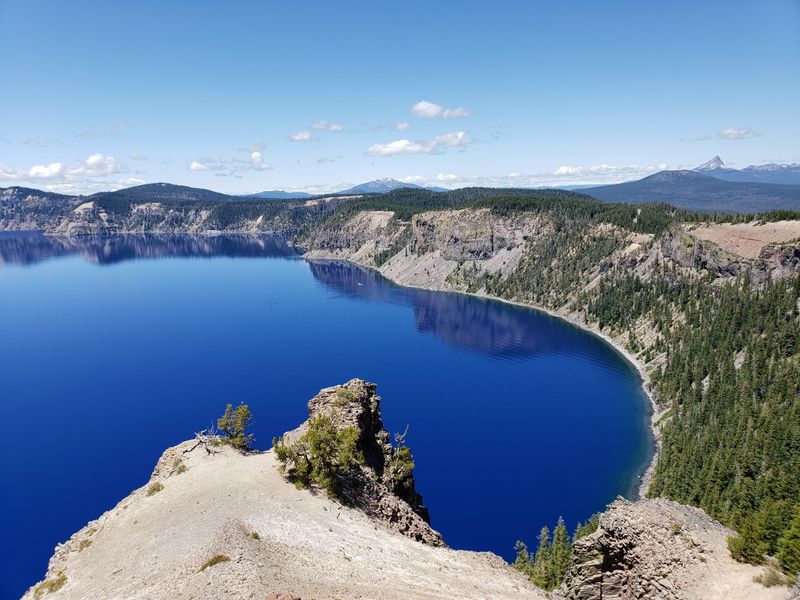
Late spring and early summer bring Crater Lake to life in ways that make locals giddy with excitement. When the snow finally melts, usually between late May and early July, the deepest lake in America reveals its impossibly blue waters surrounded by dramatic volcanic cliffs.
This ancient caldera formed 7,700 years ago when Mount Mazama collapsed, creating a natural wonder that still takes your breath away no matter how many times you visit.
Weekdays offer the best chance to experience Crater Lake without battling tour buses and crowded viewpoints. Rim Drive, the 33-mile scenic road circling the lake, becomes accessible once plows clear the winter snow, and midweek visits mean you can actually find parking at popular spots like Watchman Overlook and Cleetwood Cove Trail.
The only path down to the lake’s edge, Cleetwood Cove Trail drops 700 feet over just over a mile, and tackling it on a Tuesday means you won’t be stuck behind slow-moving groups.
Photography enthusiasts worship the golden hours here, when morning or evening light turns the water from deep sapphire to glowing cobalt. Rangers lead fascinating talks about the lake’s formation and ecology, and weekday programs tend to be more intimate and interactive.
Snow can linger well into July at this 7,000-foot elevation, so pack layers even in summer. The park entrance sits along Oregon Highway 62, with the main visitor facilities at Rim Village.
Experiencing this Oregon treasure on quieter days lets you truly absorb its volcanic majesty without distractions.
3. Multnomah Falls at Columbia River Gorge
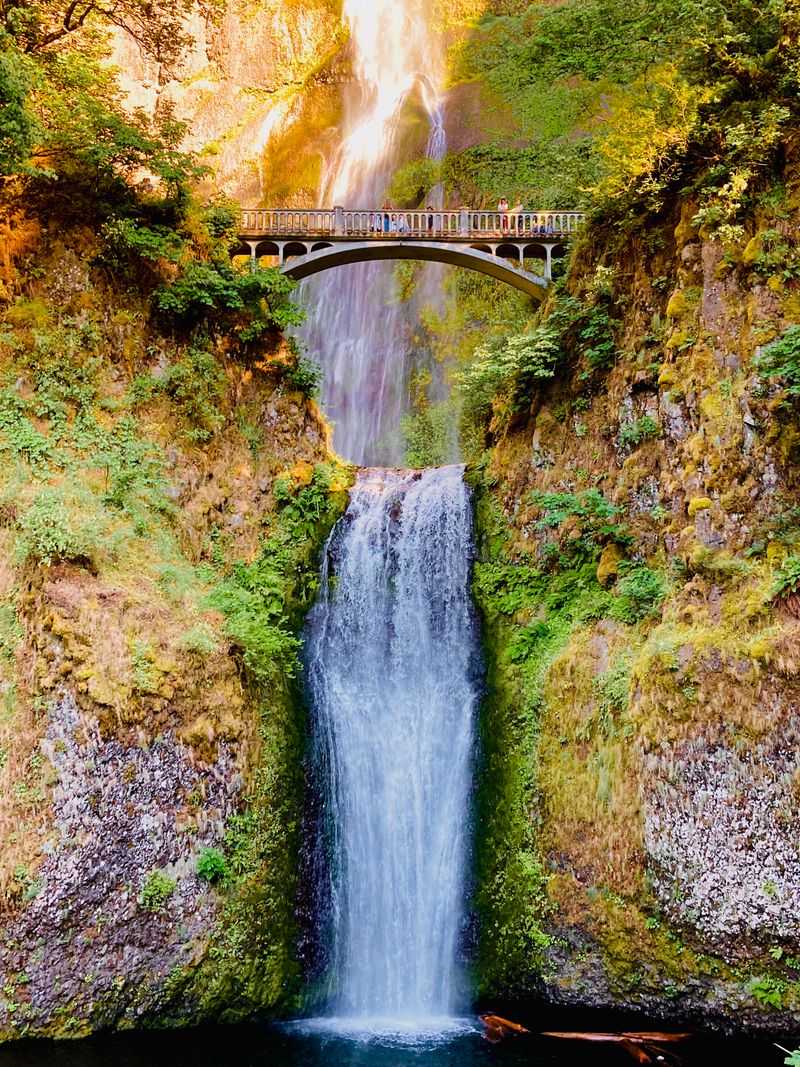
Oregon’s most photographed waterfall demands strategic timing if you want to actually enjoy it. Multnomah Falls plunges 620 feet in two major tiers, with the iconic Benson Bridge spanning the lower cascade at 105 feet up.
On summer weekends, this natural wonder becomes a human traffic jam, with parking lots overflowing and the viewing area packed shoulder-to-shoulder with tourists wielding selfie sticks.
Smart locals hit Multnomah Falls on weekday mornings, preferably arriving before 9 AM when the Historic Lodge opens for breakfast. Early arrival means you can snap photos without strangers’ heads in your frame and actually hear the thundering water instead of chattering crowds.
The mist from the falls creates rainbows during morning light, and you might spot one without a hundred other people blocking your view.
The paved trail to Benson Bridge takes just five minutes, but continuing up to the top requires a steeper mile-long hike with eleven switchbacks. Weekday mornings make this climb far more pleasant, with cooler temperatures and fewer people huffing past you on narrow sections.
The Columbia River Gorge offers dozens of other waterfalls nearby, but Multnomah remains the crown jewel and the busiest by far. Located at 53000 E Historic Columbia River Highway, Corbett, OR 97019, the falls flow year-round thanks to underground springs, though spring runoff from snowmelt makes them especially dramatic.
Visiting during off-peak times transforms this Oregon icon from frustrating tourist trap into the awe-inspiring natural wonder it truly is.
4. Cannon Beach & Haystack Rock
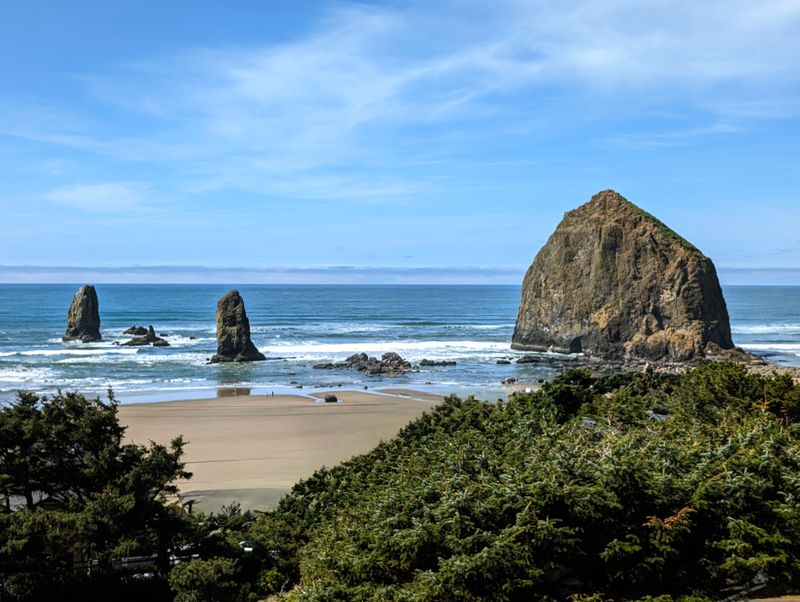
This charming coastal town offers two completely different personalities depending on when you visit. Haystack Rock, the 235-foot sea stack rising from the beach, remains stunning any day of the week, but the experience surrounding it changes dramatically.
Weekdays bring peaceful beach walks where you can explore tide pools teeming with sea stars, anemones, and hermit crabs without competing with crowds for viewing spots.
Low tide reveals the best tide pool action, and checking tide charts before your visit pays off big time. Rangers and volunteers from the Haystack Rock Awareness Program offer free educational talks about the marine ecosystem and nesting seabirds, and weekday sessions tend to be smaller and more interactive.
Tufted puffins nest on the rock from April through August, and spotting these adorable birds through binoculars becomes easier when fewer people are jostling for position.
Weekend visits deliver a completely different vibe, with the town’s galleries, boutiques, and restaurants buzzing with energy. The Saturday farmer’s market runs from late May through September, and art galleries host evening openings.
Charming cafes and seafood restaurants stay open later on weekends, and the beach takes on a festive atmosphere with families flying kites and building sandcastles. Some visitors prefer the lively weekend scene, while others treasure weekday solitude.
Cannon Beach sits along Highway 101 on Oregon’s north coast, about 80 miles from Portland. The town has mastered the balance between tourist destination and authentic coastal community, offering something special whether you crave quiet contemplation or bustling seaside energy.
5. Smith Rock State Park
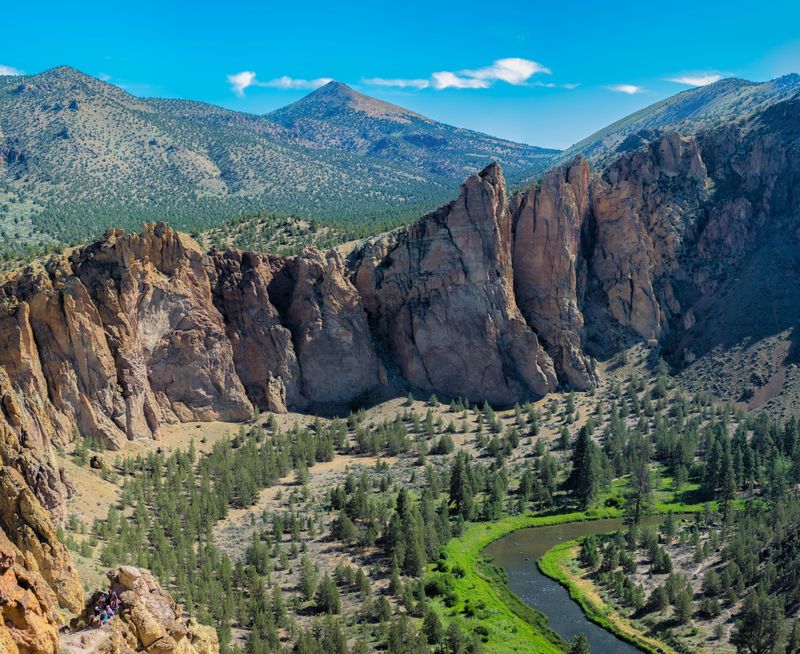
Climbers from around the world pilgrimage to Smith Rock, where towering volcanic rock formations create some of America’s best sport climbing routes. The park’s dramatic landscape features 600-foot cliffs of orange and red tuff and basalt rising above the winding Crooked River, creating scenery that looks like it belongs in Utah rather than central Oregon.
Timing your visit for cooler morning or evening hours makes all the difference between enjoyable adventure and miserable slog.
Central Oregon summers bring scorching heat, with temperatures regularly hitting the 90s and low 100s during midday. Smart visitors tackle the popular Misery Ridge Trail early morning, when temperatures stay comfortable and morning light paints the rock formations in gorgeous golden hues.
This challenging 3.7-mile loop gains 800 feet of elevation, and attempting it during afternoon heat lives up to its name. Evening visits offer similar temperature relief plus stunning sunset colors on the cliffs.
Rock climbers know the drill: start early, take a long lunch break during peak heat, then return for evening climbing sessions when the rock cools down. Even if you’re not climbing, watching skilled athletes tackle routes like Morning Glory Wall provides entertainment, and the park’s trails offer incredible viewpoints.
The Crooked River provides a cooling presence, and some brave souls even take quick dips in calmer sections. Smith Rock State Park is located at 9241 NE Crooked River Drive, Terrebonne, OR 97760, about 26 miles north of Bend.
Respecting the desert climate and visiting during cooler hours transforms this Oregon gem from brutal endurance test into absolutely magical outdoor experience.
6. Silver Falls State Park and Trail of Ten Falls
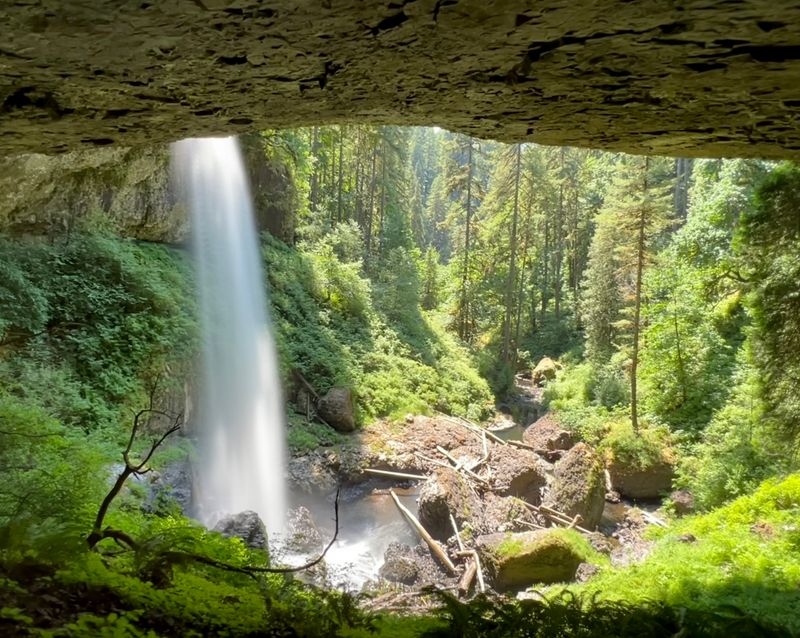
Walking behind waterfalls sounds like fantasy, but Silver Falls makes it reality on Oregon’s most spectacular hiking trail. The Trail of Ten Falls loops 7.2 miles through ancient forest, passing ten waterfalls ranging from 27 to 178 feet tall.
Four of these cascades feature trails that go behind the falling water, creating experiences you’ll remember forever. South Falls, the tallest at 177 feet, offers the most dramatic behind-the-falls moment as you walk through a natural amphitheater carved into the basalt cliff.
Weekend crowds can turn this magical trail into a frustrating parade, especially during summer and fall foliage season. Weekday visits transform the experience entirely, letting you linger behind waterfalls without feeling rushed by people waiting their turn.
You can actually hear the water’s roar echoing off the rock walls and feel the mist on your face without dodging around groups posing for photos. The trail’s narrow sections and wooden bridges flow much better without constant traffic.
Spring runoff makes the waterfalls most powerful, while autumn brings stunning foliage color contrasts against the falling water. Winter visits offer a completely different experience when falls partially freeze into crystalline sculptures, though trails can be icy and require traction devices.
The park sits in Oregon’s lush Cascade foothills, where Douglas fir and western hemlock create cathedral-like canopies. Silver Falls State Park is located at 20024 Silver Falls Highway SE, Sublimity, OR 97385, about 26 miles east of Salem.
Experiencing this waterfall wonderland on quieter weekdays lets you truly absorb the magic without the madness.
7. Newport and the Central Coast
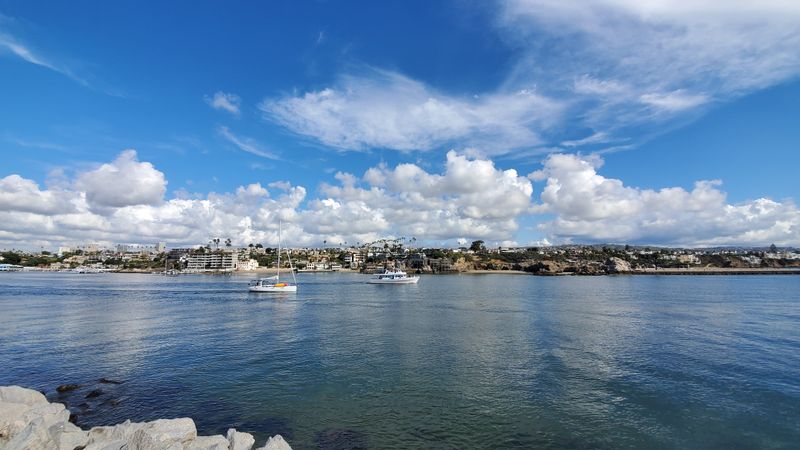
Newport serves up the perfect blend of working fishing port and tourist destination, with personality shifts depending on the day of the week. The Oregon Coast Aquarium ranks among the nation’s finest, featuring massive underwater tunnels through Passages of the Deep where sharks, rays, and rockfish glide overhead.
Weekdays mean shorter lines, less crowded exhibits, and better chances to chat with knowledgeable staff about the octopus, sea otters, and other marine residents. Kids can actually get close to touch pools without competing with dozens of other eager hands.
The Historic Bayfront district bustles with fishing boats, seafood markets, and casual restaurants serving fish and chips with ocean views. Weekday visits here feel more authentic, with working fishermen unloading catches and local characters hanging around the docks.
You can watch sea lions lounging on the piers without weekend crowds three-deep at the railings. Grab fresh fish directly from vessels or markets, and the folks working there actually have time to chat about cooking tips and what’s freshest that day.
Weekend Newport cranks up the energy with busier restaurants, more gallery openings, and a festive pier atmosphere. The Yaquina Head Outstanding Natural Area just north of town offers lighthouse tours and tide pools, and timing these for weekdays means parking availability and elbow room at the pools.
Newport sits along Highway 101 on Oregon’s central coast, about 140 miles from Portland. The Oregon Coast Aquarium is located at 2820 SE Ferry Slip Road, Newport, OR 97365.
Whether you prefer mellow weekday exploration or lively weekend coastal energy, Newport delivers authentic Oregon coast experiences year-round.
8. Klamath Falls and the Sunny Microclimate
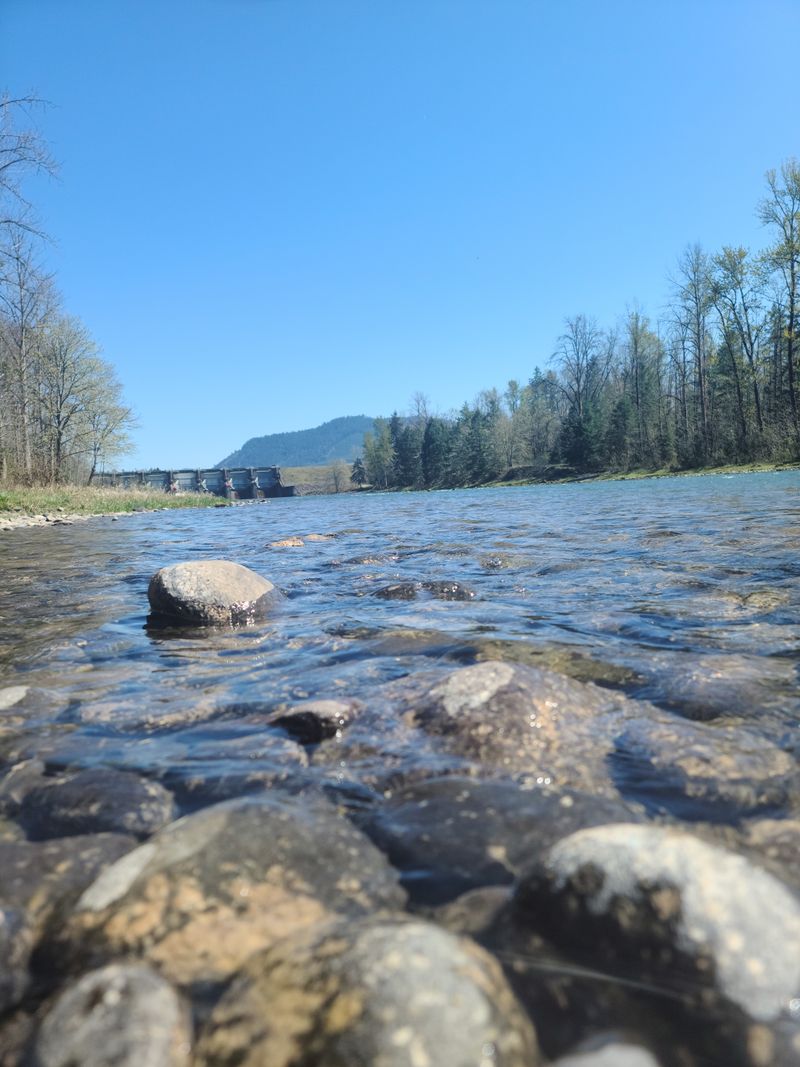
While the rest of Oregon deals with clouds and drizzle, Klamath Falls basks in unexpected sunshine. This southern Oregon city enjoys a unique microclimate that delivers over 300 sunny days annually, making it Oregon’s secret sunshine spot.
Locals joke that Klamath Falls is where Oregon goes to tan, and the statistics back it up. The rain shadow effect created by the Cascade Range means precipitation that drenches the Willamette Valley never makes it this far east.
Any sunny day works perfectly for exploring Klamath Falls, but the predictability of clear skies means you can plan outdoor adventures with confidence. The city sits at the southern tip of Upper Klamath Lake, Oregon’s largest freshwater lake, where world-class birding attracts enthusiasts hoping to spot bald eagles, white pelicans, and countless waterfowl.
Winter brings massive congregations of bald eagles feeding on spawning fish, creating one of the Lower 48’s best eagle-watching opportunities. Bundle up and head to spots like Veterans Park or Lake Ewauna for incredible wildlife viewing.
Summer temperatures regularly hit the 80s and 90s, perfect for paddling, fishing, or exploring nearby Crater Lake National Park just 60 miles north. The Running Y Ranch Resort offers golf with Cascade views, and downtown’s historic buildings house quirky shops and local eateries.
Klamath Falls also serves as the gateway to Lava Beds National Monument just across the California border, where you can explore volcanic caves and tubes. The sunny climate makes outdoor adventures reliable year-round, though winter nights get properly cold.
Klamath Falls sits along Highway 97 in south-central Oregon, proving that sunshine does exist in the Pacific Northwest if you know where to look.
9. Painted Hills at John Day Fossil Beds
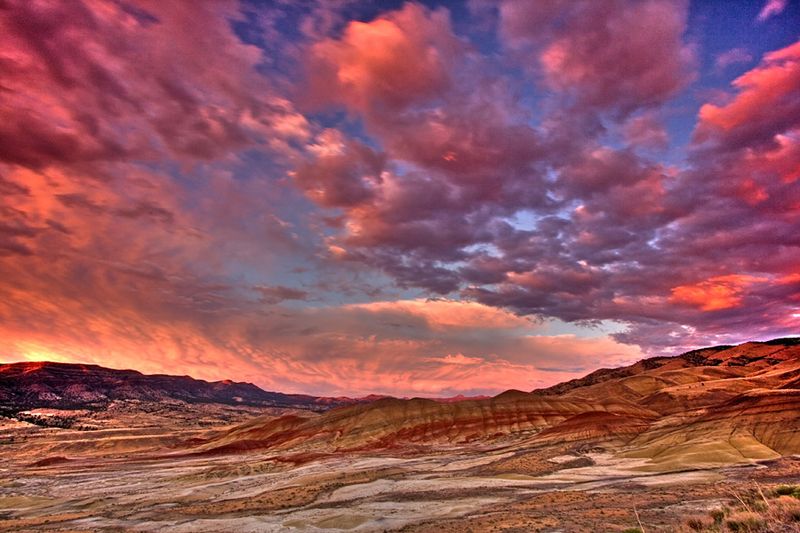
Colors shift and dance across these ancient hills depending on lighting conditions, making timing absolutely crucial for the full experience. The Painted Hills unit of John Day Fossil Beds National Monument showcases layers of volcanic ash and mineral deposits laid down over millions of years, creating striped hillsides in shades of red, gold, black, and tan.
These colors change throughout the day as sunlight hits the hills from different angles, but late afternoon delivers the most dramatic displays.
Midweek visits mean you can photograph these geological wonders without cars and people cluttering your shots. The hills look otherworldly, like something from Mars or a surrealist painting, and having them mostly to yourself amplifies the sense of stepping into another world.
The main viewing area features a short boardwalk trail protecting the fragile clay hills while offering perfect vantage points. Sunset timing brings out the deepest reds and golds, making the hills practically glow.
Spring adds another dimension when desert wildflowers carpet the valleys between the painted hills, creating color contrasts that seem almost unreal. The tiny yellow, purple, and white blooms pop against the mineral-rich earth, usually peaking in late April and May.
Summer heat can be intense in this high desert landscape, so bring water and sun protection. The Painted Hills unit sits in central Oregon near Mitchell, accessed via Highway 26.
The closest address for GPS purposes is the Painted Hills Overlook Trail at 96089 Bridge Creek Road, Mitchell, OR 97750. Visiting midweek during late afternoon transforms these ancient hills from interesting geological feature into absolutely mind-blowing natural art installation.
10. The Wallowas and Eagle Cap Wilderness
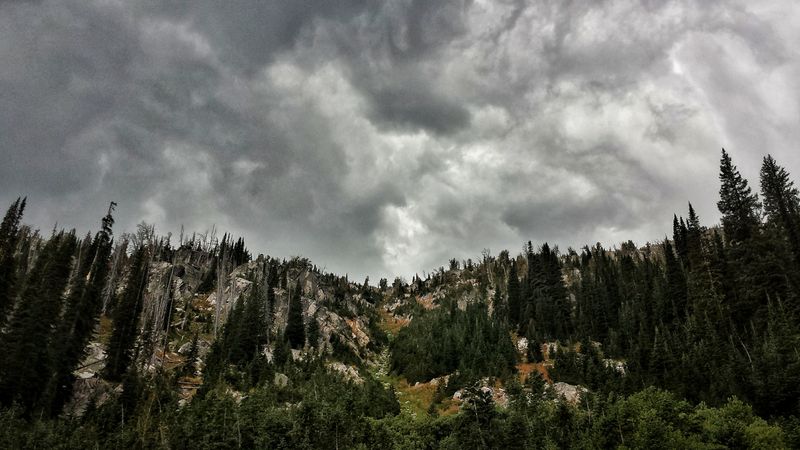
Northeast Oregon’s Wallowa Mountains rise so dramatically and majestically that locals call them the Alps of Oregon. Eagle Cap Wilderness sprawls across 360,000 acres of pristine alpine terrain, featuring glacier-carved valleys, crystalline lakes, and jagged granite peaks reaching above 9,000 feet.
Summer weekdays offer the best window for experiencing this mountain paradise without the weekend crowds that flock here from across the Pacific Northwest.
Over 500 miles of trails wind through the wilderness, from easy valley strolls to challenging peak scrambles. Lakes Basin remains the most popular destination, where a dozen alpine lakes nestle beneath towering peaks and meadows explode with wildflowers during July and August.
Weekday hikers can actually find camping spots at popular lakes like Mirror Lake and Moccasin Lake without arriving at dawn to claim territory. The solitude amplifies the wilderness experience, letting you truly disconnect and absorb the mountain majesty.
The charming town of Joseph serves as the main gateway, featuring excellent bronze sculpture galleries and local eateries worth exploring before or after wilderness adventures. Wallowa Lake sits just outside Joseph, where a vintage tramway whisks visitors 3,700 vertical feet to the top of Mount Howard for panoramic views without the hiking effort.
Summer brings perfect hiking weather with warm days and cool nights, though afternoon thunderstorms can roll in quickly. The Eagle Cap Wilderness is accessed from several trailheads around the Wallowa Mountains, with the Wallowa Lake Trailhead near Joseph being most popular.
Experiencing Oregon’s most spectacular mountain wilderness on quieter weekdays means more wildlife sightings, better camping spots, and the peaceful solitude these special places deserve.
Dear Reader: This page may contain affiliate links which may earn a commission if you click through and make a purchase. Our independent journalism is not influenced by any advertiser or commercial initiative unless it is clearly marked as sponsored content. As travel products change, please be sure to reconfirm all details and stay up to date with current events to ensure a safe and successful trip.
