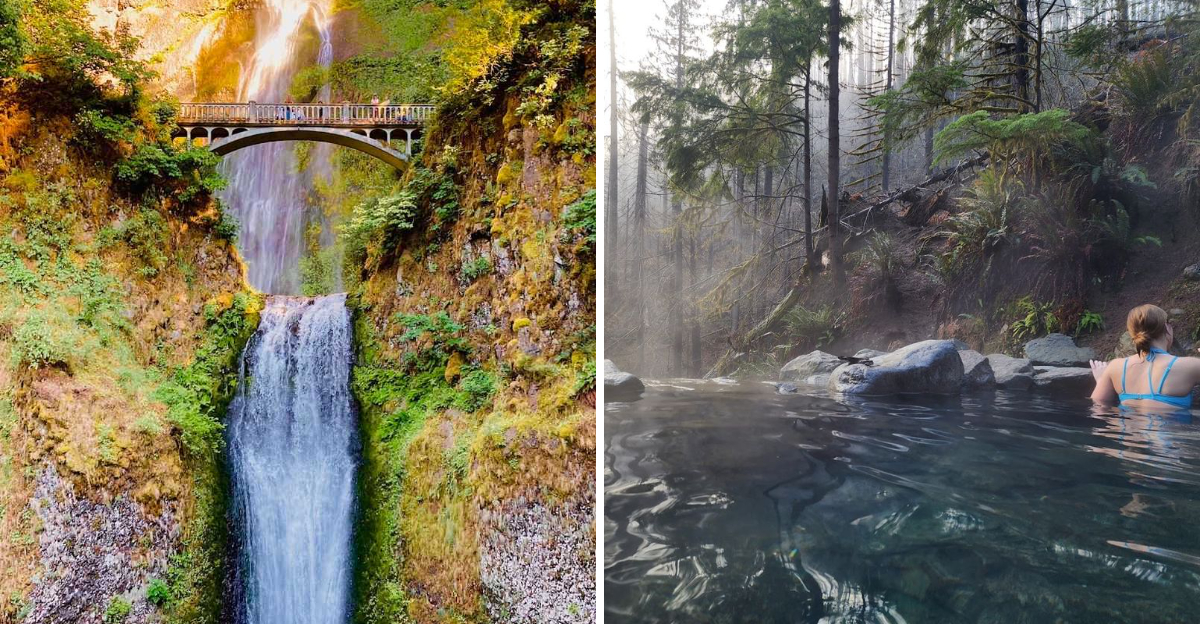
Oregon does something magical in spring. The rain-soaked hills burst into color, waterfalls swell with snowmelt, and coastal cliffs go from gray to a vivid, postcard-worthy green almost overnight.
I have traveled this state from the craggy Pacific shoreline all the way to the high desert, and nothing compares to seeing it wake up after winter.
The light gets softer, the air smells like pine and fresh earth, and wildflowers show up like they own the place.
Whether you are planning a weekend road trip or a longer adventure across the state, spring is genuinely the best time to make your move. The crowds are smaller, the temperatures are comfortable, and the scenery is at its most dramatic and alive.
These ten Oregon locations are the ones I keep coming back to every spring, and after reading this, I think you will understand exactly why.
1. Columbia River Gorge, Multnomah Falls, Oregon
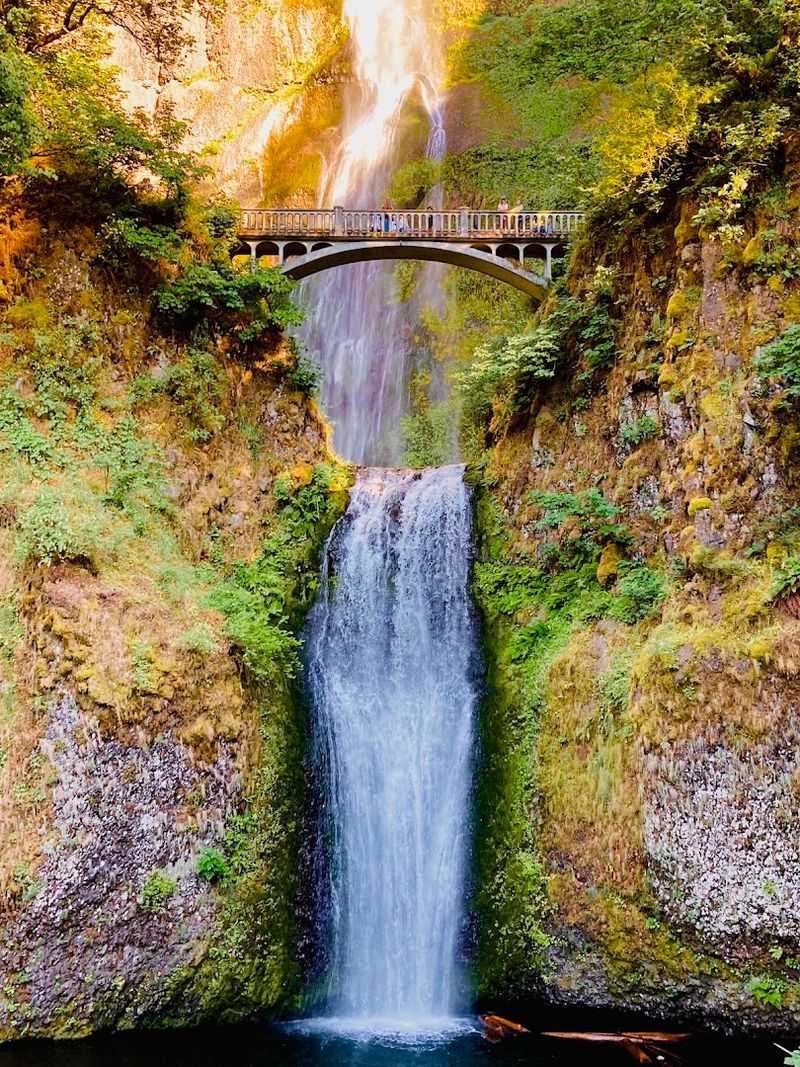
Few places in Oregon deliver a spring punch quite like the Columbia River Gorge, where snowmelt and steady spring rains push Multnomah Falls to its most jaw-dropping volume of the year.
Standing at 620 feet tall, Multnomah Falls is one of the tallest year-round waterfalls in the entire United States. In spring, the water roars down with an intensity that you can feel in your chest from the viewing bridge below.
The surrounding basalt cliffs turn a deep, velvety green as mosses and ferns soak up the moisture. Wildflowers dot the hillsides along the Historic Columbia River Highway, making the drive itself a highlight worth slowing down for.
The Gorge sits about 30 miles east of Portland, Oregon, making it an easy day trip or a solid base for a longer exploration. The Crown Point Vista House nearby offers sweeping panoramic views of the river canyon that are especially stunning on a clear spring morning.
Bring a rain jacket because spring showers are common, but they are also part of what makes this place so alive. Hikers can access several trails beyond Multnomah Falls to discover smaller, quieter waterfalls hidden deeper in the forest.
The Gorge is truly a place where spring does all the heavy lifting, and the results are absolutely worth the visit.
2. Painted Hills, John Day Fossil Beds, Oregon
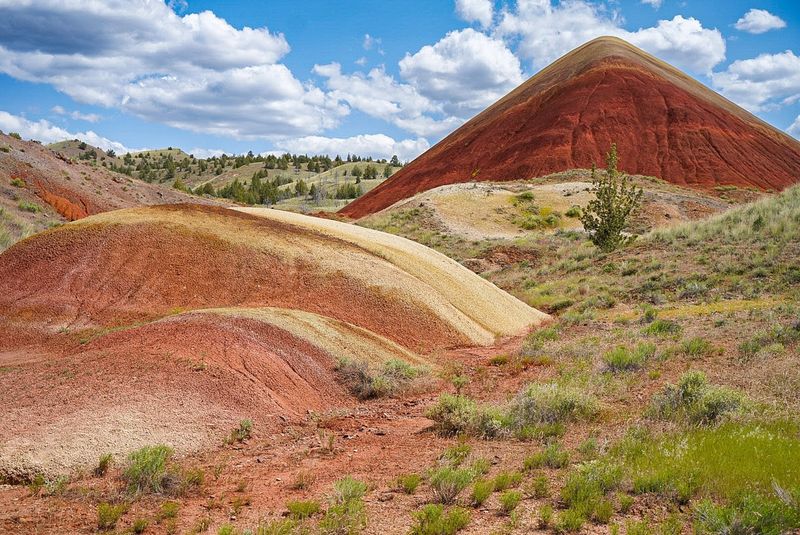
Out in the high desert of central Oregon, the Painted Hills look like someone took a giant set of watercolors and went absolutely wild on the landscape.
Part of the John Day Fossil Beds National Monument, this area sits near the small town of Mitchell, Oregon, roughly 75 miles from Bend. The hills are made up of ancient volcanic ash layers that have oxidized over millions of years into stunning bands of red, ochre, gold, and black.
Spring is the sweet spot for a visit. Temperatures are mild, usually in the 50s and 60s Fahrenheit, which makes hiking comfortable before the desert heat arrives in summer.
Occasional spring rains also intensify the colors of the hills, making them appear almost luminous against a bright sky.
The Painted Cove Trail is a short, flat loop of about half a mile that puts you right next to the most colorful formations. The Overlook Trail gives you a wider, elevated perspective that is hard to beat for photography.
Wildflowers like yellow desert parsley and purple phlox bloom around the base of the hills in April and May, adding another layer of color to an already spectacular scene.
Getting here requires a bit of a drive, but the reward is a landscape so unique it genuinely feels like another planet wearing its finest spring outfit.
3. Silver Falls State Park, Oregon
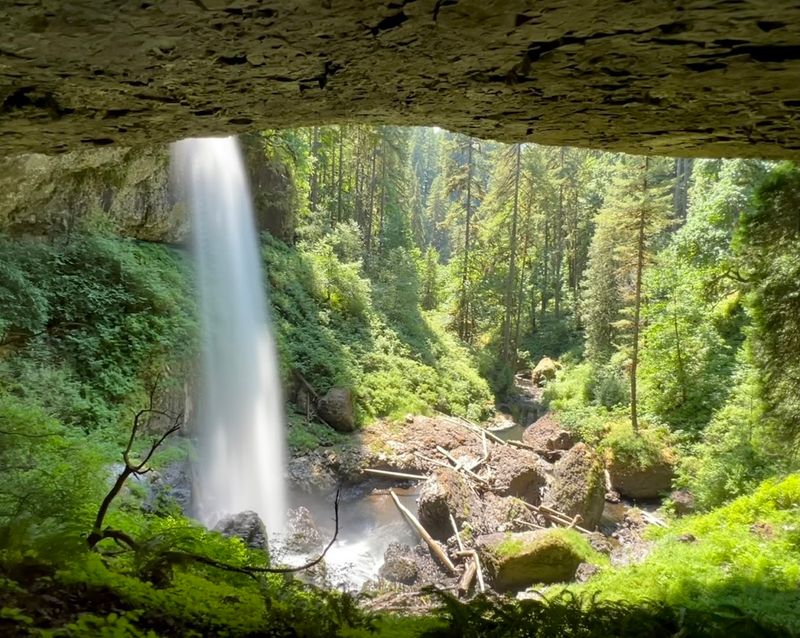
Oregon proudly calls Silver Falls State Park the crown jewel of its state park system, and honestly, spring is when that crown shines the brightest.
Located about 26 miles east of Salem in the Willamette Valley foothills, the park is home to the famous Trail of Ten Falls, a roughly 7.2-mile loop that passes behind and beneath ten separate waterfalls. In spring, increased water flow turns each of those falls into a thundering curtain of white water surrounded by vivid green forest.
South Falls, the largest at 177 feet, allows hikers to walk directly behind its cascading sheet of water. The sensation of standing inside that cool, misty cave while the falls roar in front of you is one of the most memorable experiences Oregon has to offer.
The forest understory explodes with trilliums, oxalis, and sword ferns in spring, carpeting the trail in shades of white and green. The rich smell of wet earth and moss makes the whole experience feel deeply refreshing.
Weekdays in spring tend to be quieter than summer weekends, so arriving on a Tuesday or Wednesday gives you a much more peaceful walk. The park also has a horse camp and picnic areas if you want to extend your stay.
Silver Falls in spring is the kind of place that makes you stop mid-trail just to take it all in.
4. Hood River Valley, Oregon
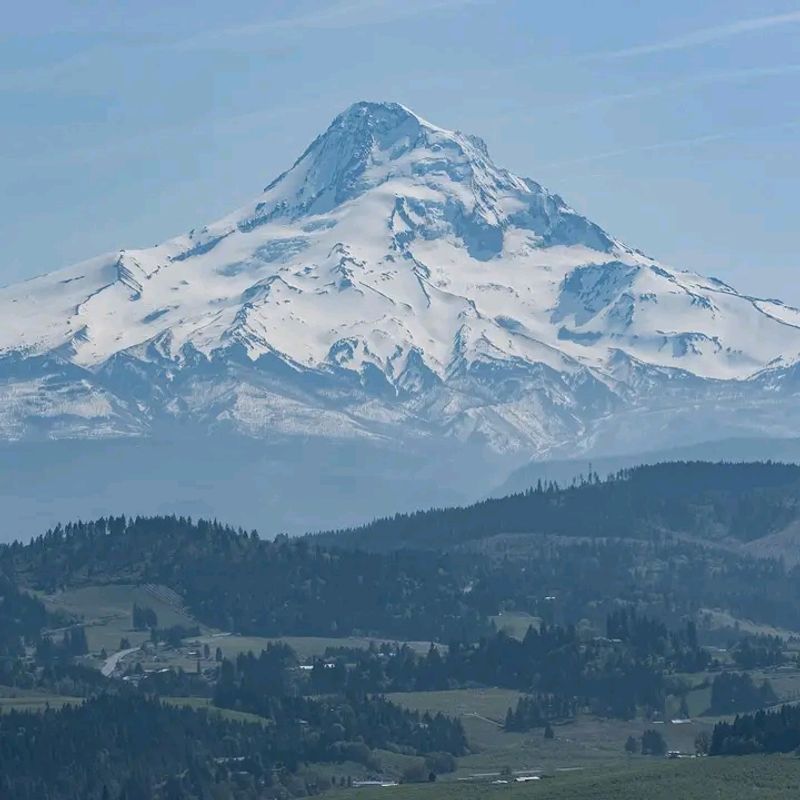
Every spring, the Hood River Valley transforms into one of the most photogenic places in the entire Pacific Northwest, and the drive through it feels like rolling through a living painting.
Situated between the Columbia River Gorge and the slopes of Mount Hood in northern Oregon, the valley is famous for its Fruit Loop, a 35-mile scenic route that winds past orchards, farms, and lavender fields. In April and May, apple and pear trees erupt into clouds of white and pink blossoms that contrast beautifully against the snow-capped peak of Mount Hood rising behind them.
The combination of mountain backdrop and blooming orchards makes this one of the most photographed spring scenes in Oregon. Early morning light on a clear day turns the whole valley golden, which is when the photos really come alive.
Many local farms open their stands and u-pick operations in spring, offering fresh produce and a chance to chat with the growers directly. Hood River town itself sits right on the Columbia River and has great coffee shops and local restaurants where you can refuel between orchard stops.
The valley is about 60 miles east of Portland, making it a perfect day trip. Wildflower meadows also begin to appear along the mountain roads leading up toward Timberline Lodge as the season progresses.
Spring in Hood River Valley is a reminder that some of nature’s best shows happen close to home.
5. Samuel H. Boardman State Scenic Corridor, Oregon
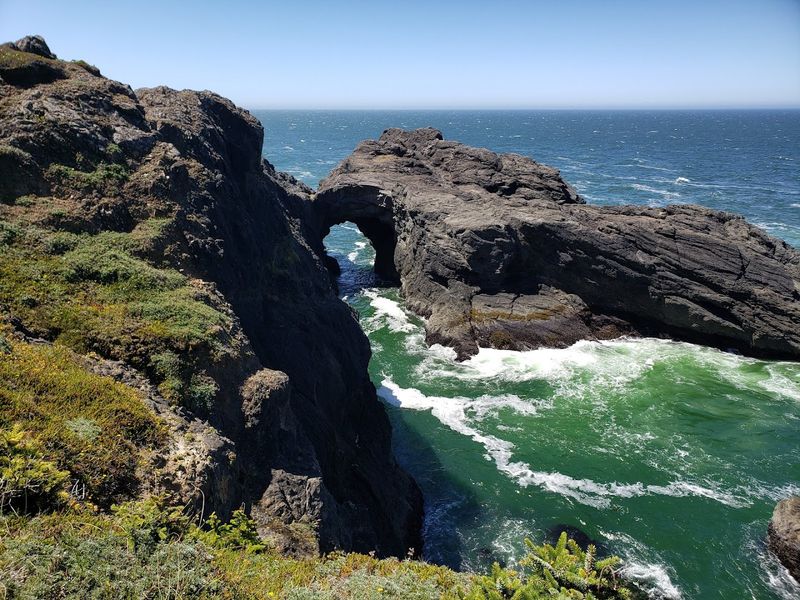
The southern Oregon coast does not get the same tourist traffic as Cannon Beach or the central coast, and Samuel H. Boardman State Scenic Corridor is perfectly fine with that arrangement.
Stretching about 12 miles along Highway 101 near the town of Brookings, this corridor is often called the most scenic stretch of the entire Oregon coast. In spring, the clifftops burst into bloom with sea thrift, yellow monkey flower, and coastal paintbrush, creating a wildflower display that frames the dramatic ocean views below.
The corridor features a series of short trails that lead to natural arches, hidden coves, and sweeping viewpoints. Natural Bridge Cove and Arch Rock are two of the most striking stops, where the green-capped cliffs drop sharply to the churning Pacific below.
Spring weather in Brookings is famously mild compared to the rest of the Oregon coast, sometimes reaching temperatures in the 60s while the rest of the state is still cold. The town even calls itself the Banana Belt of Oregon, which is a bold claim that the thermometer often backs up.
The coastal forest here is thick with Sitka spruce and Port Orford cedar, which stay brilliantly green year-round but look especially fresh and vivid after spring rains. Tide pools along the rocky shores are also active and full of life in spring.
Boardman is the kind of place that rewards slow driving and frequent stops.
6. Cannon Beach and Haystack Rock, Oregon
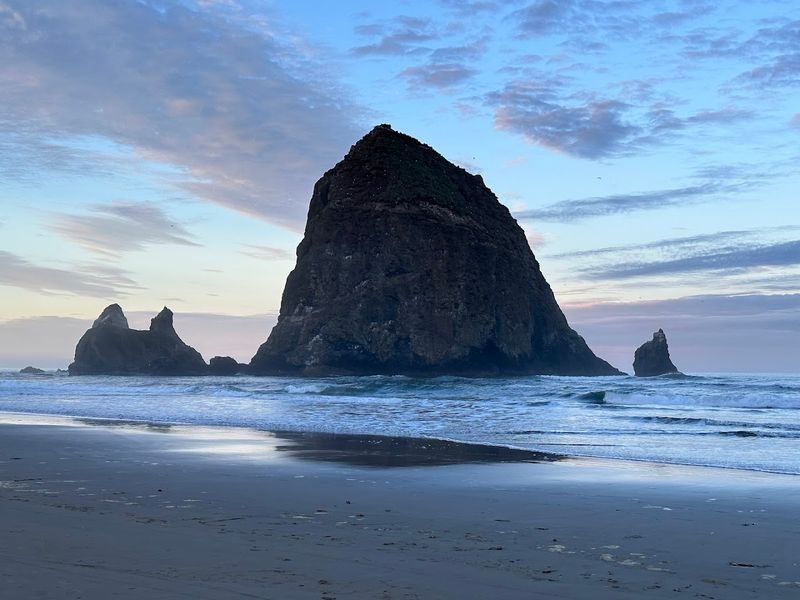
Haystack Rock has been standing guard off the shore of Cannon Beach for thousands of years, but spring is when it really gets to show off without a crowd blocking the view.
Located on the northern Oregon coast about 80 miles from Portland, Cannon Beach is one of the most recognized coastal towns in the Pacific Northwest. The 235-foot basalt monolith of Haystack Rock dominates the shoreline and serves as a protected Marine Garden, meaning the tide pools around its base are teeming with sea stars, anemones, and hermit crabs in spring.
Spring brings milder weather and longer daylight hours to the coast, with occasional sunny stretches that make the ocean sparkle in a way that feels almost tropical, at least for a few hours. The wide sandy beach is far less crowded than in summer, so you can actually spread out and enjoy it properly.
The town of Cannon Beach itself is a pleasant mix of art galleries, bakeries, and bookshops. Picking up a pastry and walking the beach at low tide on a spring morning is one of those simple pleasures that sticks with you long after you leave.
Tufted puffins also return to nest on Haystack Rock in spring, and the Haystack Rock Awareness Program volunteers are usually on the beach to help visitors spot them with binoculars.
Cannon Beach in spring is proof that the best version of a famous place is often the quieter one.
7. Rowena Crest Viewpoint, Columbia River Gorge, Oregon
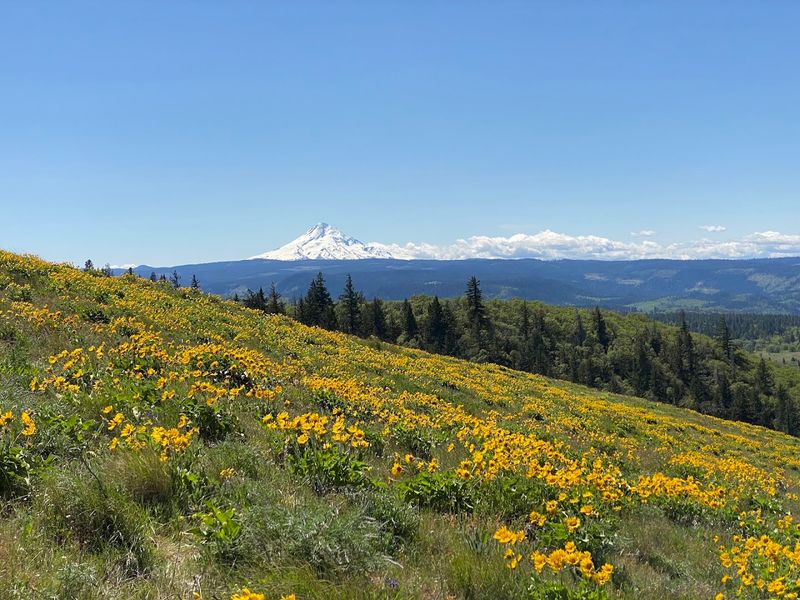
If you have never seen a hillside covered in bright yellow balsamroot wildflowers stretching all the way to the edge of a canyon with the Columbia River far below, then Rowena Crest needs to move to the top of your spring list immediately.
Sitting on the eastern edge of the Columbia River Gorge near the small town of Mosier, Oregon, Rowena Crest is accessed via the Historic Columbia River Highway. The viewpoint sits atop a series of dramatic switchbacks and rewards the drive with one of the most sweeping panoramic views in the entire state.
April and May are peak bloom time for the balsamroot, which covers the plateau in waves of yellow that are almost disorienting in the best possible way. Purple lupine and other native wildflowers mix in to create a color palette that looks almost too vivid to be real.
The Tom McCall Preserve, managed by the Nature Conservancy, is adjacent to the viewpoint and offers hiking trails through the wildflower meadows. The trails are short but the scenery is dense with detail, so plan to move slowly and look carefully.
On a clear spring day, Mount Hood is visible to the west, giving the view an extra layer of drama. The eastern Gorge also tends to be drier and sunnier than the western side, so spring days here often come with blue skies.
Rowena Crest is a wildflower experience that genuinely earns every superlative thrown at it.
8. Wallowa Lake and Mountains, Oregon
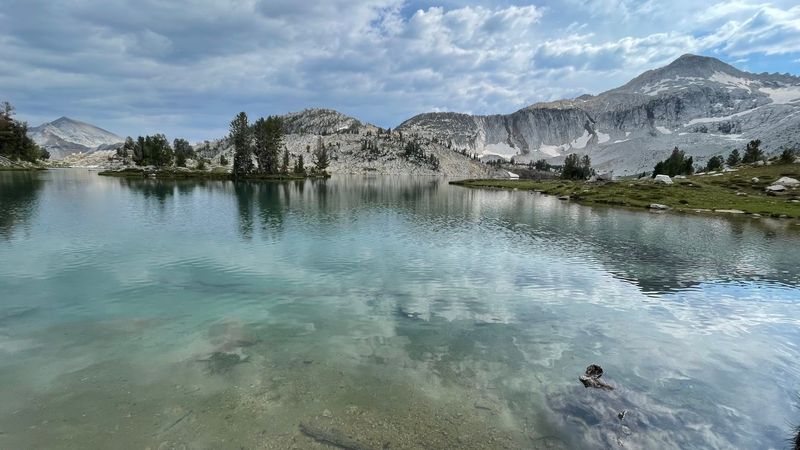
People in Oregon sometimes call the Wallowa Mountains the Alps of Oregon, and when you see the snow-capped peaks reflected in the crystal-clear water of Wallowa Lake on a spring morning, the nickname stops feeling like an exaggeration.
Located in the far northeastern corner of Oregon near the town of Joseph, Wallowa Lake sits at an elevation of about 4,400 feet. Spring arrives a little later here than on the coast, usually in May, but when it does, the valley transforms dramatically.
Snowmelt feeds the lake and surrounding streams, turning them a vivid glacial blue-green color that makes the whole scene look almost artificially beautiful. Wildflowers begin to carpet the meadows around the lake, and the surrounding forests of ponderosa pine and larch take on a fresh, bright green that is deeply satisfying to walk through.
The town of Joseph is worth exploring on its own, known for its bronze foundries and thriving arts community. Several galleries showcase work by local sculptors, and the main street has a genuine small-town warmth that is hard to manufacture.
Hiking trails into the Eagle Cap Wilderness begin near the lake and offer increasingly dramatic mountain views as you gain elevation. The Wallowa Lake Tramway also operates seasonally and lifts visitors to nearly 8,000 feet for views that stretch into Idaho and Washington.
Getting to Wallowa Lake takes commitment, but the remoteness is part of what makes it feel so rewarding.
9. Cape Perpetua Scenic Area, Oregon
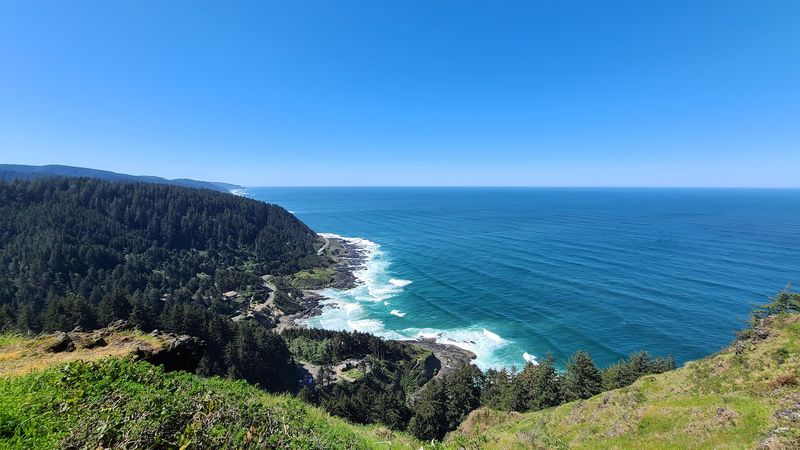
There is something almost theatrical about watching the Pacific Ocean funnel into Thor’s Well at Cape Perpetua, especially during a high spring tide when the sea is still energized from winter storms.
Cape Perpetua sits along the central Oregon coast near the town of Yachats, about 22 miles south of Newport. The headland rises 800 feet above the ocean and is one of the highest points on the Oregon coast accessible by car, offering sweeping views of the coastline in both directions.
Spring is an ideal time to visit because the tides are active and the marine life in the surrounding tide pools is at its most abundant. Sea anemones, purple urchins, ochre sea stars, and hermit crabs pack the rocky pools that line the base of the headland.
Thor’s Well, sometimes called the drainpipe of the Pacific, is a naturally formed hole in the basalt that fills and drains dramatically with each wave. Spouting Horn, nearby, shoots ocean water skyward through a crack in the rock during higher swells, which spring still delivers reliably.
The Sitka spruce forest that covers the headland is extraordinarily lush in spring, with a dense canopy that creates a cool, cathedral-like atmosphere on the trails above. The Giant Spruce Trail follows a creek through old-growth trees to a spruce estimated to be over 500 years old.
Cape Perpetua is where the Oregon coast feels most wild and most alive at the same time.
10. Terwilliger Hot Springs, Willamette Valley, Oregon
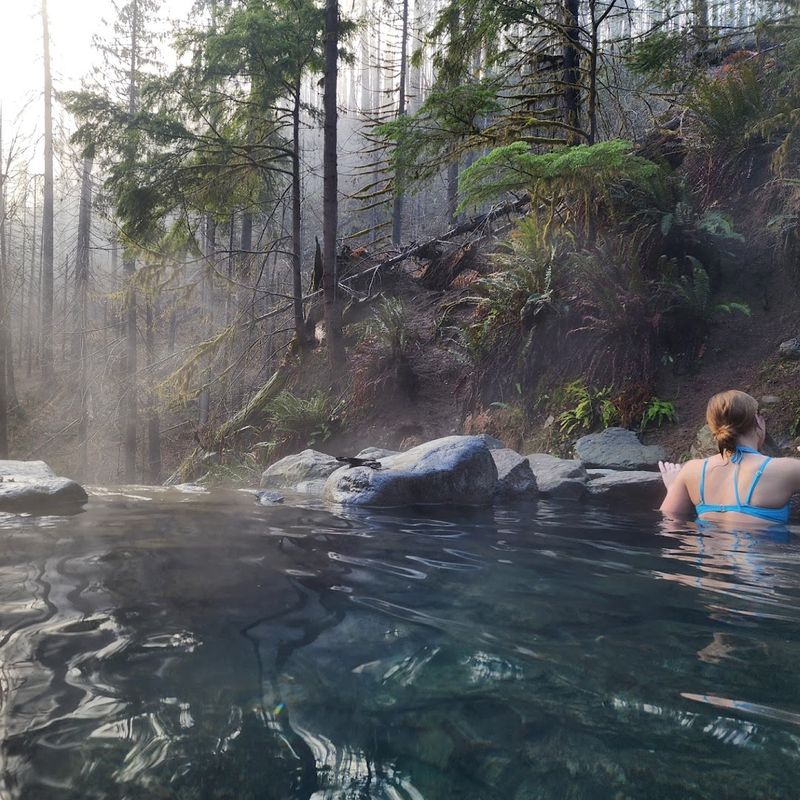
Soaking in a natural hot spring while the forest around you drips with spring rain and ferns unfurl in every direction is one of those experiences that resets something deep inside you.
Terwilliger Hot Springs, also known as Cougar Hot Springs, is located in the Willamette National Forest near the small community of Blue River, Oregon, about 50 miles east of Eugene. The springs are fed by geothermally heated water that flows through a series of natural rock pools, each one slightly cooler than the last as the water moves downstream.
Spring is a wonderful time to visit because the surrounding old-growth forest is at its most intensely green. Bigleaf maples leaf out in a vivid lime green, Douglas fir drips with moisture, and the forest floor is thick with trilliums and oxalis blooming in the filtered light.
The hike to the springs is about half a mile from the trailhead and passes through a genuinely beautiful stretch of forest that sets the mood perfectly before you even reach the pools. The trail follows a small creek lined with mossy boulders and ferns.
A Northwest Forest Pass is required for parking, so pick one up in advance or at a local outdoor retailer before heading out. Weekday mornings in spring are the quietest times to visit, when the pools are less crowded and the forest feels entirely your own.
Terwilliger is the kind of hidden reward that makes a long drive feel completely justified.
Dear Reader: This page may contain affiliate links which may earn a commission if you click through and make a purchase. Our independent journalism is not influenced by any advertiser or commercial initiative unless it is clearly marked as sponsored content. As travel products change, please be sure to reconfirm all details and stay up to date with current events to ensure a safe and successful trip.
