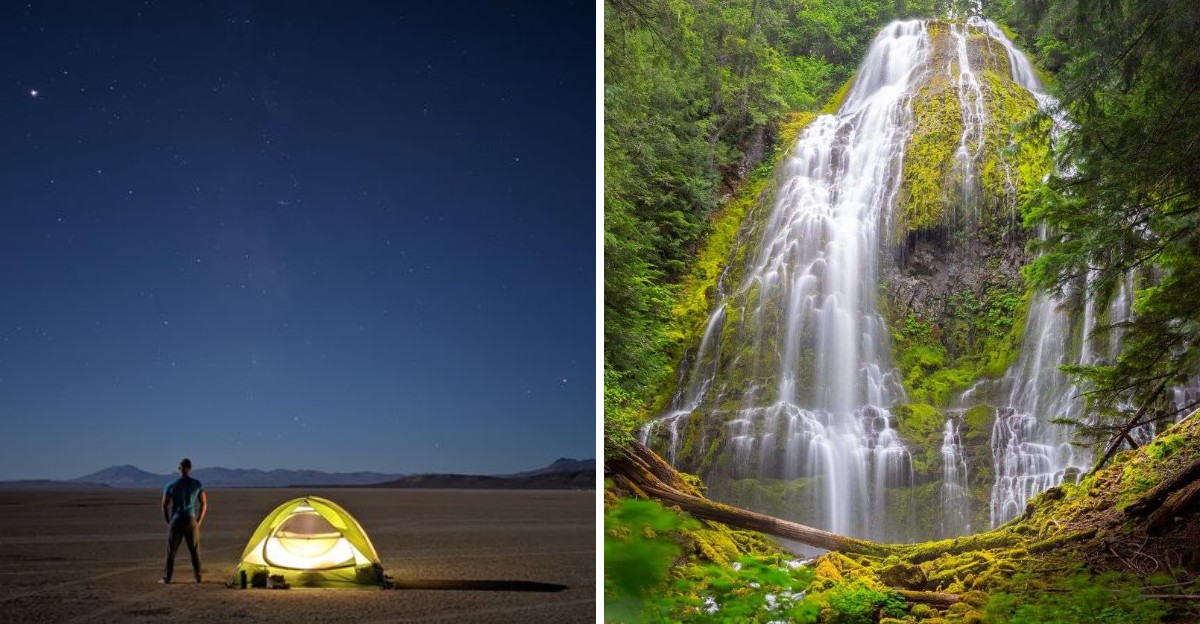
Photos usually undersell reality. Here, it works backward entirely, images looking almost too perfect to actually exist anywhere real.
Water in certain lakes reads unnaturally blue, more like a filtered photo than untouched nature. Even locals sometimes forget how strange these places look until a visitor reacts with genuine disbelief standing right beside them.
Convincing someone these spots are real usually takes actually bringing them there in person. Photos alone rarely settle the argument, mostly because skepticism feels reasonable given how staged everything appears at first glance.
Nature clearly didn’t consult anyone’s expectations when shaping these particular corners of Oregon. Seeing them firsthand remains the only way to fully believe what a camera keeps failing to fully capture.
1. Crater Lake National Park
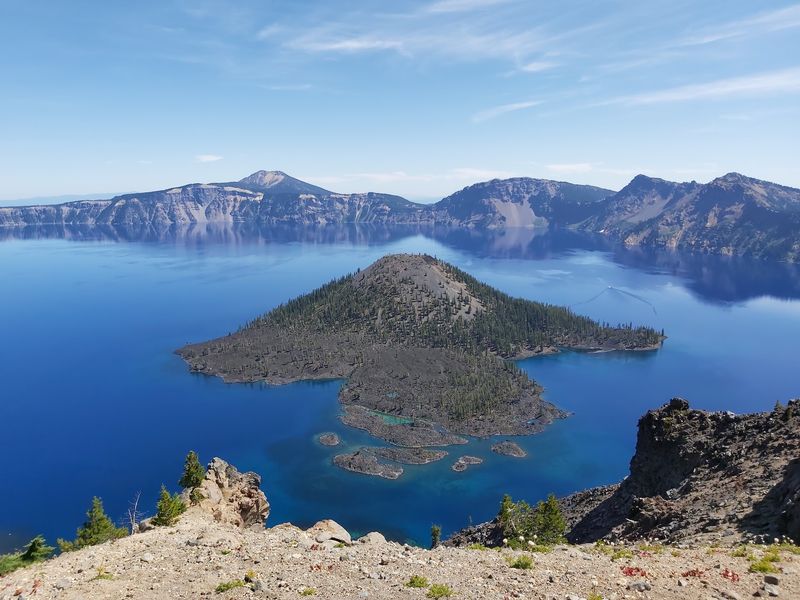
There are blue lakes, and then there is Crater Lake, a shade of blue so saturated it looks like someone poured ink into the earth. Formed over 7,000 years ago when a massive volcano collapsed in on itself creating the deepest lake in the United States.
No rivers flow in or out, which is part of why the water stays so remarkably clear.
The 183,224-acre park surrounding it offers rim drives, forested hiking trails, and picnic spots with views that don’t quit. Wizard Island rises from the center of the lake like something out of a fantasy novel, and on calm mornings, the reflection on the water is almost too perfect to believe.
Dogs are welcome in the park, and free parking is available at multiple access points. Morning visits tend to be quieter, and the light at that hour makes the blue look almost luminescent. It’s one of those places that genuinely rewards patience.
2. John Day Fossil Beds National Monument – Painted Hills Unit
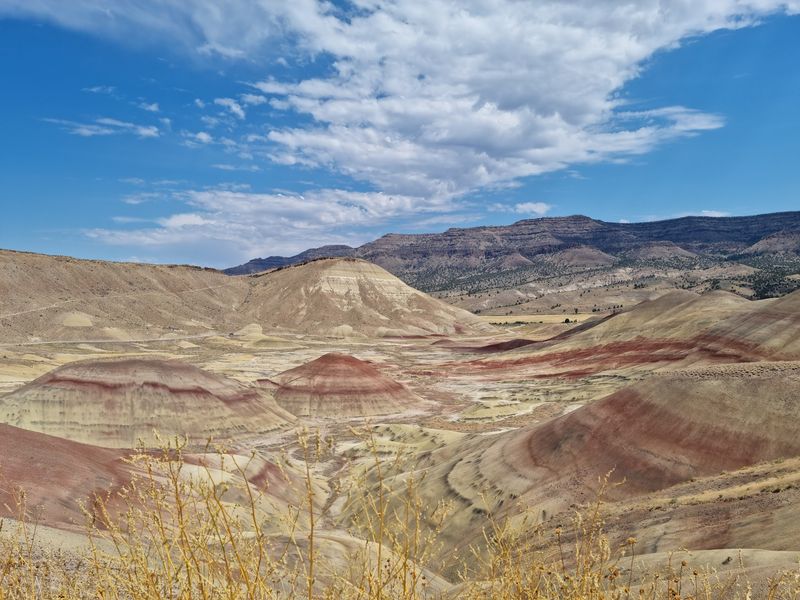
Picture a landscape that looks like it was painted by someone who couldn’t decide on just one color. The Painted Hills unit of John Day Fossil Beds National Monument presents layers of red, ochre, black, and gold mineral deposits draped across rounded hillsides in central Oregon.
The colors shift noticeably depending on the light and moisture in the air, which means no two visits look quite the same.
Short, well-marked trails make this accessible for almost everyone, and the self-guided experience works beautifully even without a visitor center open. Picnic tables and restrooms are available on site, and the whole area is genuinely family-friendly with kid-approved hikes that don’t require serious gear.
The surrounding high desert adds to the surreal quality of the scenery.
Early morning or late afternoon light tends to intensify the color contrast dramatically. If you can time your visit around golden hour, the hills practically glow. It’s the kind of spot that makes you stop and just stare for a while.
Address: 37375 Bear Creek Rd, Mitchell, OR 97750
3. Thor’s Well
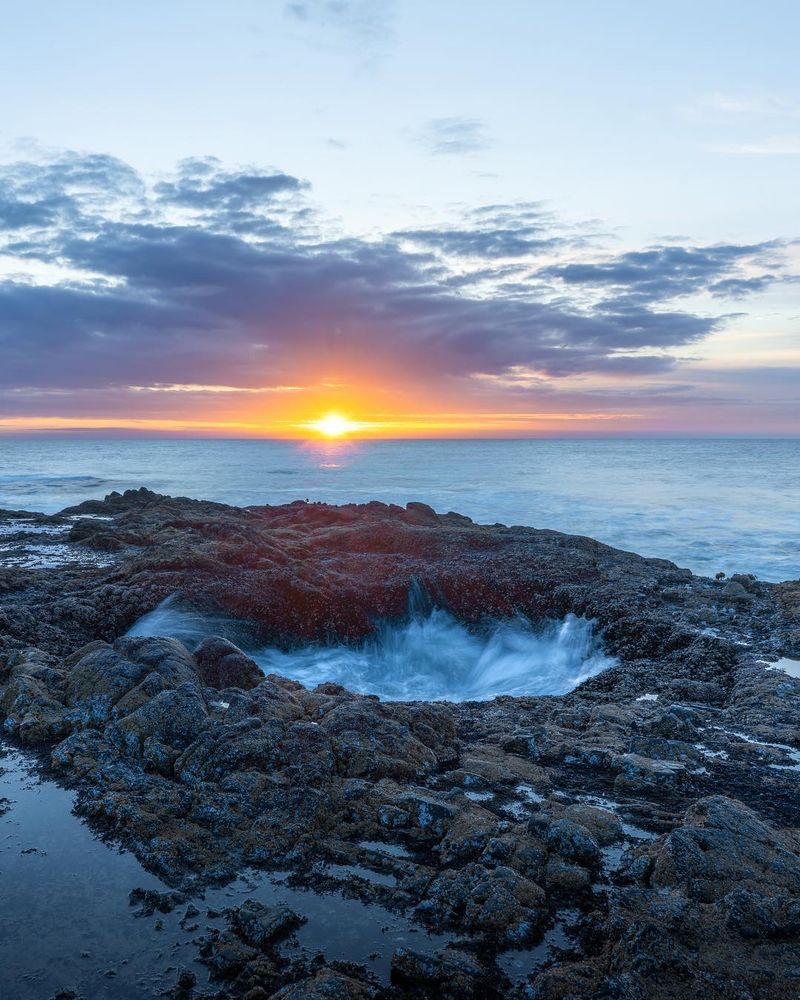
Nicknamed the Drainpipe of the Pacific, Thor’s Well is one of those coastal features that makes you feel like the ocean has a secret the rest of the world doesn’t know about. This natural sinkhole appears to swallow the sea during high tide.
The visual effect is genuinely hypnotic. Waves rush in, fill the hole, and then drain away in a swirling rush that photographers chase from every angle.
Short, paved and ADA-accessible trails lead to viewpoints with benches, making this one of the more approachable spectacles on the Oregon coast. Parking options range from free to paid depending on where you pull in.
Sunset timing is widely considered the best window for photography, when the light catches the spray and the horizon turns warm behind the churning water. Go at high tide for maximum drama. It never disappoints.
4. Tamolitch Falls (Blue Pool)
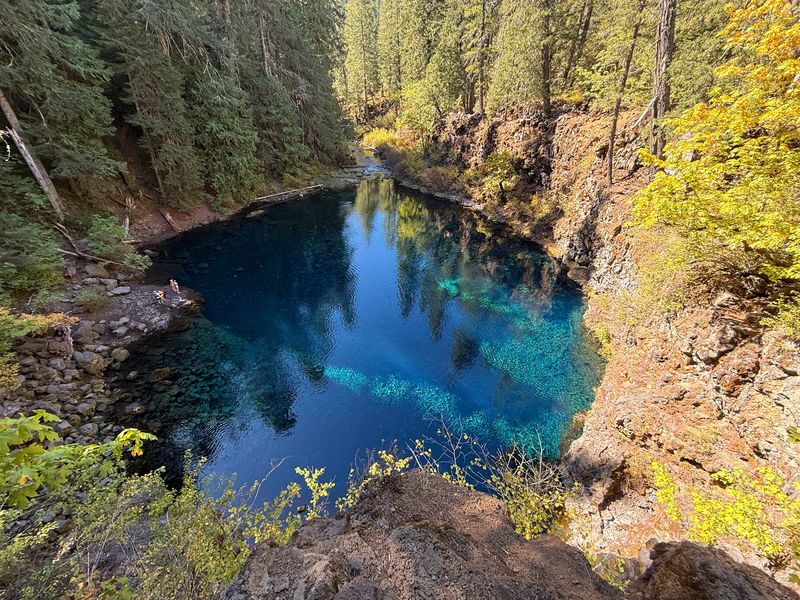
The color of the water at Tamolitch Blue Pool is the kind of thing you describe to people and they simply don’t believe you. This pool collects water that emerges directly from underground springs, giving it an almost glowing turquoise hue that looks digitally enhanced even in real life.
The trail to reach it runs about 4.2 miles round trip, following the McKenzie River through forested terrain before transitioning into a stretch of lava rock. The river itself often runs dry along this section because the water flows underground before reappearing at the pool.
Wooden bridges and riverside scenery keep the earlier part of the hike engaging and scenic. Dogs are welcome on leashes outside the immediate pool area. Arriving early on weekend mornings helps beat the crowds significantly.
The payoff at the end, that impossibly clear water surrounded by mossy basalt, makes every step worth it.
Address: National Forest Road 2672-655, McKenzie Bridge, OR 97413
5. Toketee Falls
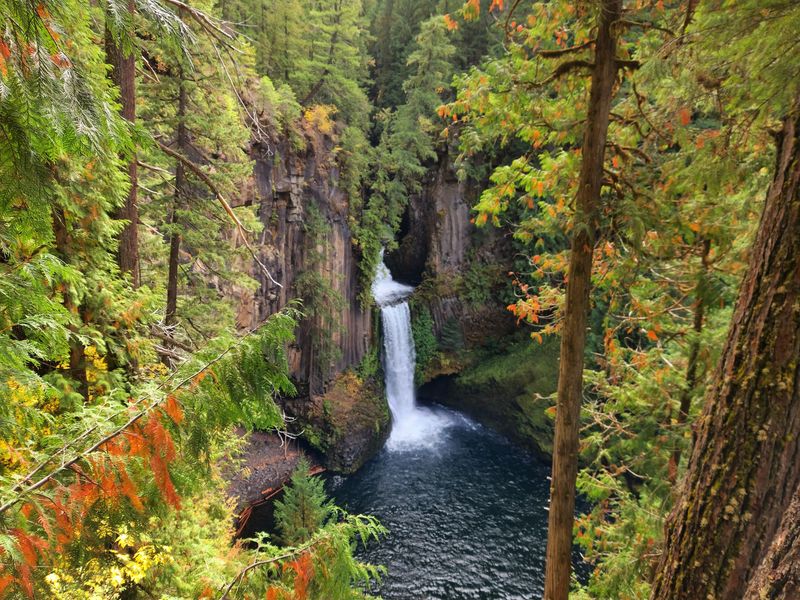
Toketee Falls has one of the most dramatic frames of any waterfall in Oregon, and that’s saying something in a state full of them.
The water drops in two tiers, first 80 feet and then another 40, pouring over perfectly formed columns of basalt that look almost architectural in their geometric precision. The rock itself is what makes this place so visually striking.
The trail leading to the viewing platform is short and well-maintained, winding through lush forest with the sound of the river building as you get closer. Stone steps add a bit of charm to the approach, and the platform at the end puts you at just the right angle to take in both tiers at once.
Restrooms are available near the trailhead, and the hike is genuinely manageable for most fitness levels. Families with younger kids tend to do well here since the trail is relatively forgiving. The waterfall itself is beautiful in every season, but the surrounding forest turns especially vivid in autumn.
6. Proxy Falls
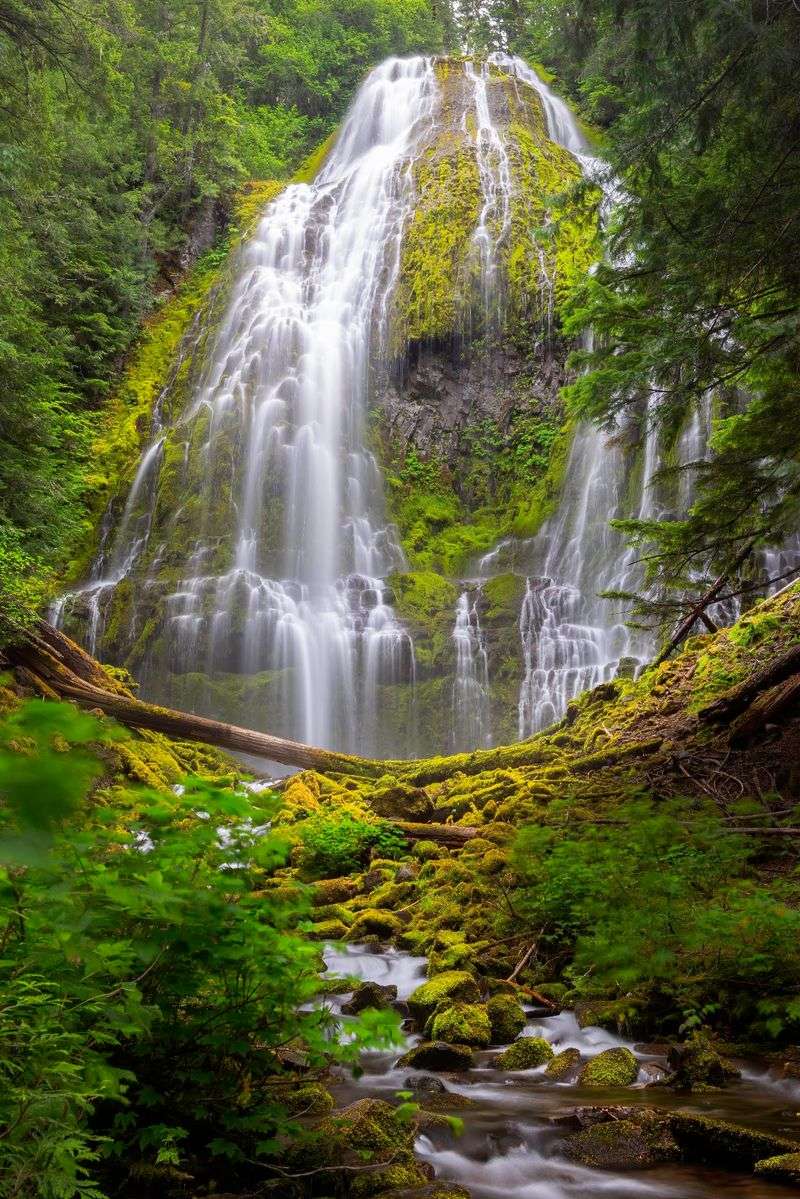
Proxy Falls earns its reputation quietly. Tucked into the western Cascades near Blue River, this pair of cascades spills over ancient lava rock in curtain-like sheets that seem to dissolve into the ground rather than collect in a pool below.
The water literally disappears into the porous basalt, which gives the whole scene an almost magical quality that’s hard to explain until you see it.
The 1.5-mile loop trail passes through lava fields and dense forest, offering two distinct waterfall viewpoints along the way. Some sections require stepping over logs and navigating uneven terrain, so sturdy footwear is a good call.
The lower falls involves a descent that’s a bit more demanding, but the view from the base is worth the effort.
Upper Proxy Falls tends to be the showstopper for photographers, with its wide, veil-like flow against dark mossy rock. The whole loop takes about an hour at a relaxed pace. It’s the kind of hike that feels like a genuine discovery even when you’ve read about it beforehand.
7. Alvord Desert
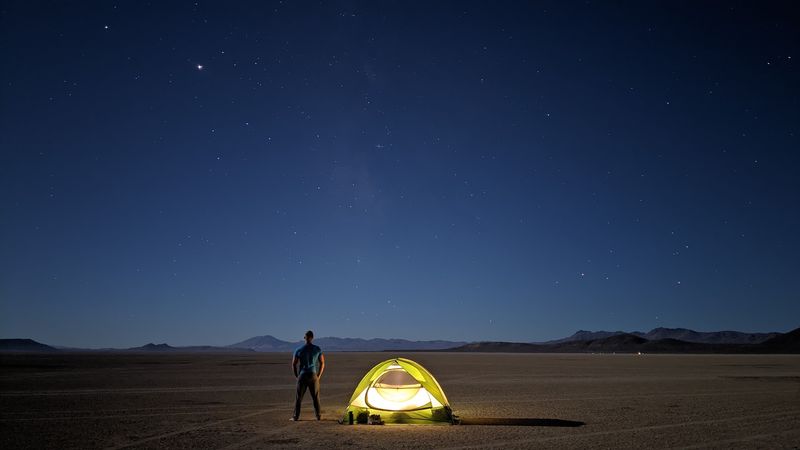
Southeastern Oregon holds one of the state’s best-kept secrets. Just flat, pale expanse of cracked earth that sits in the rain shadow of Steens Mountain and feels nothing like what most people picture when they think of Oregon.
The Alvord Desert playa stretches out in eerie silence, with the mountain escarpment rising behind it like a wall separating two completely different worlds.
On windless mornings, the surface of the playa reflects the sky in a thin film of water, creating mirror-like images that make the horizon disappear. At night, the lack of light pollution turns the sky into something that doesn’t look entirely real.
Camping here is primitive and wonderfully unfiltered, with nearby hot springs adding a surprisingly comfortable option after a day of exploring.
This is genuinely one of the best stargazing spots in the entire Pacific Northwest. The silence out here is the kind you feel in your chest. If getting away from everything is the goal, the Alvord Desert does it better than almost anywhere else in Oregon.
8. Smith Rock State Park
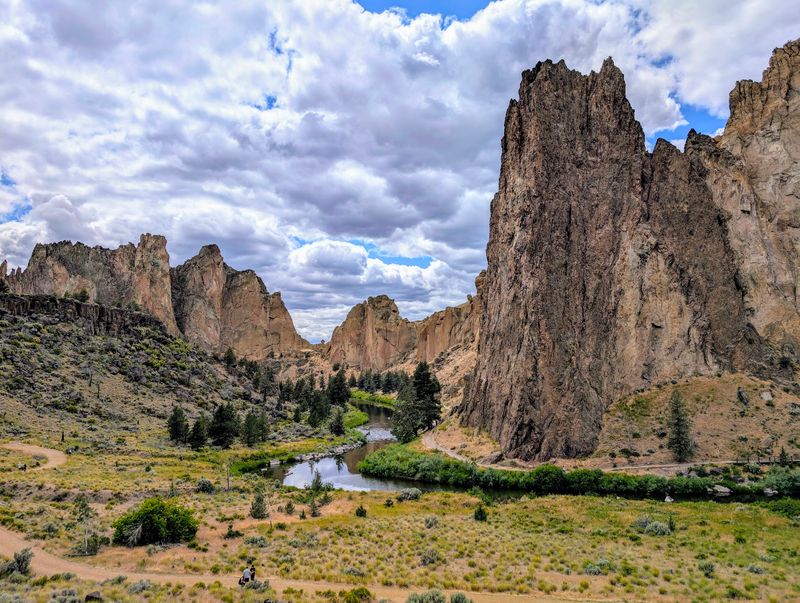
Smith Rock has a way of revealing itself all at once. You crest a viewpoint and suddenly the entire canyon drops away below you, with the Crooked River snaking through the bottom and jagged tuff and basalt spires shooting up from the canyon walls in shades of orange, tan, and rust.
It’s a landscape that genuinely earns the word dramatic.
The 650-acre park is a world-class rock climbing destination with over 2,500 mapped and anchored routes, but hikers and casual visitors are equally well served by the trail network that winds through the canyon and up to elevated viewpoints.
Cycling lanes, picnic areas, restrooms, and a playground make this a practical choice for families too. Dogs are welcome on leash.
The Misery Ridge loop is the classic route for good reason, offering sweeping views that stretch toward the Cascades on clear days. Parking fills quickly on weekend mornings, so arriving early is smart.
Smith Rock is the kind of place that makes Central Oregon feel like it belongs on a completely different planet.
Address: CROOKED RIVER, OR 97760
9. Neskowin Ghost Forest
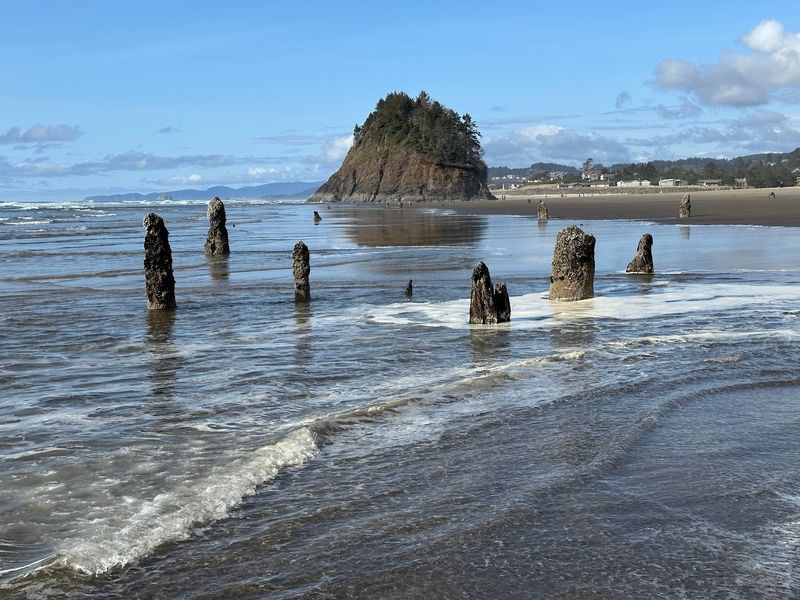
There’s something quietly haunting about the Neskowin Ghost Forest that photographs never quite capture fully. Around 2,000 years ago, a Sitka spruce forest was buried by a combination of land subsidence and sand accumulation.
The trees petrified over centuries, and now their stumps emerge from the ocean sand at low tide like a silent, dark congregation gathered at the water’s edge.
Getting there requires a short walk from the Neskowin State Park public parking lot, followed by a creek crossing that typically means rolling up your pants and going barefoot. Timing is everything here since the stumps are largely submerged at high tide and disappear entirely.
Low tide is the only window that gives you close access to the forest itself.
Foggy mornings add a particularly atmospheric quality to the whole scene, turning the stumps into shadowy silhouettes against a grey horizon. It’s genuinely one of the most unusual and visually striking coastal features anywhere on the West Coast.
Plan your visit around the tide chart and you won’t be disappointed.
10. Oregon Caves National Monument & Preserve
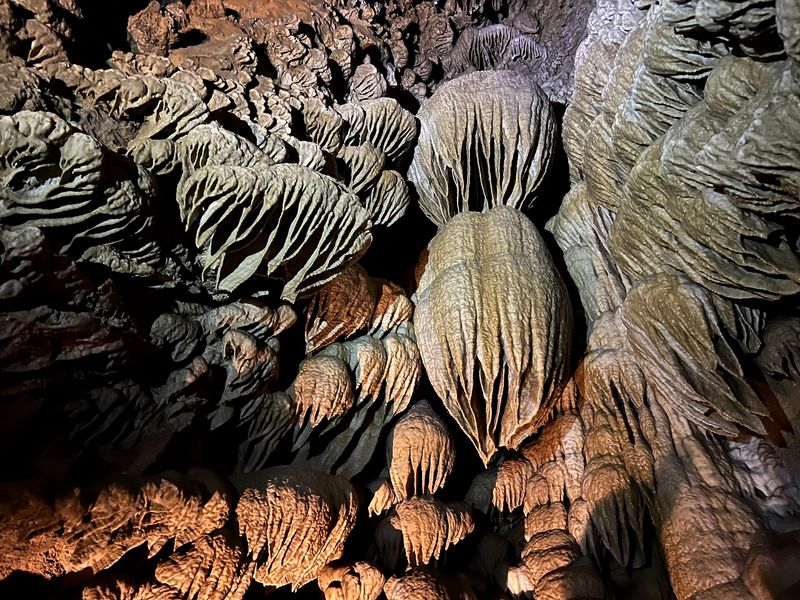
Oregon Caves is one of those places that reframes what you think you know about the state. The cave system winds through passages filled with stalactites, stalagmites, flowstone formations, and an active underground river.
It’s rare, genuinely rare, to find a marble cave of this complexity anywhere in the country.
Guided tours run regularly and cover the cave’s geological history while leading visitors through the narrow passages and dramatically lit chambers. The experience runs roughly 90 minutes and is appropriate for most ages.
Picnic tables and restrooms are available outside, and the surrounding forest makes the approach feel appropriately remote and adventurous.
Tickets are purchased at the visitor center near Cave Junction before making the drive up. The cave maintains a cool, consistent temperature year-round, so bringing a light layer is a smart move regardless of the weather outside. This one surprises almost everyone who visits.
Address: 21000 Caves Hwy, Cave Junction, OR 97523
11. Crack-in-the-Ground
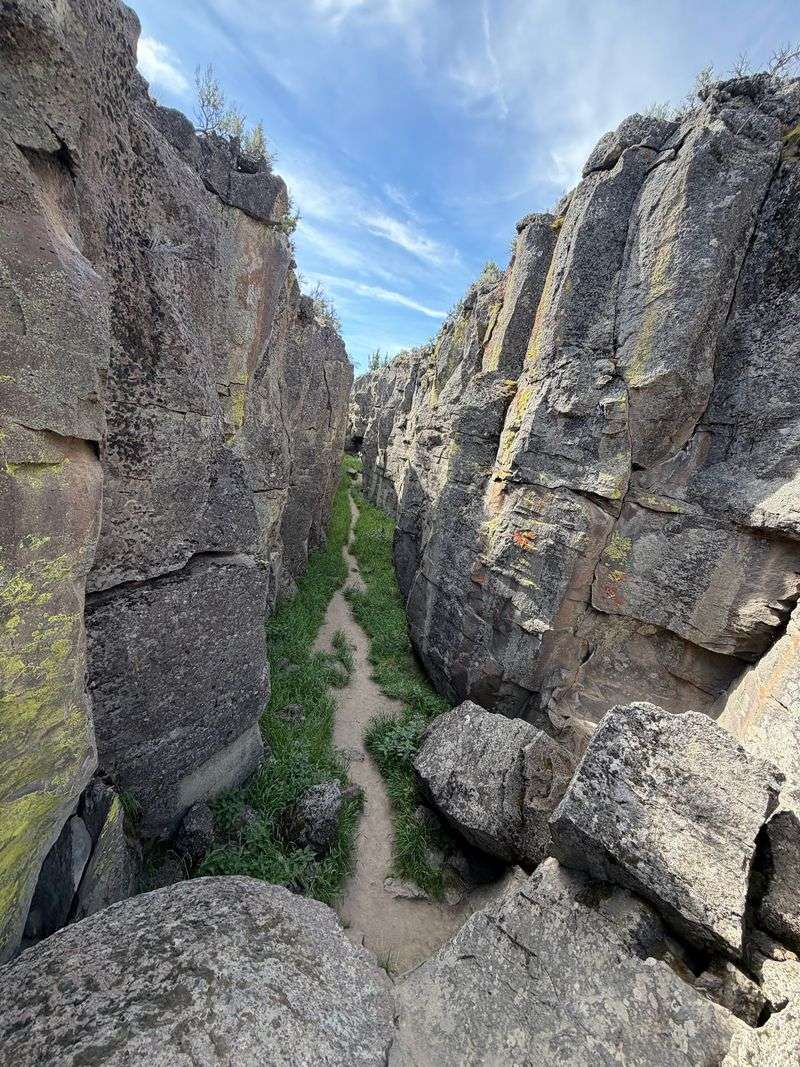
The name is blunt, almost comically literal, but nothing about the actual experience of Crack-in-the-Ground is ordinary. This volcanic fissure stretches roughly two miles through the high desert of central Oregon and plunges up to 70 feet deep.
On a hot summer afternoon, descending into it feels like opening a refrigerator door.
The hike to the entrance is smooth and level, making the initial approach easy enough for most visitors. Inside the crack itself, the walls close in dramatically, and the light filters down in thin, shifting bands.
A guest book near the entrance invites visitors to sign in, which adds a surprisingly charming old-school touch to the whole experience.
A picnic table and pit toilets are available at the trailhead parking area. Navigation tip: follow Crack in the Ground Road directly rather than relying entirely on mapping apps, which can sometimes route incorrectly. It’s a geological oddity that feels genuinely unlike anything else in Oregon.
Address: Crack in the Ground Rd, Silver Lake, OR 97638
12. Fort Rock State Natural Area
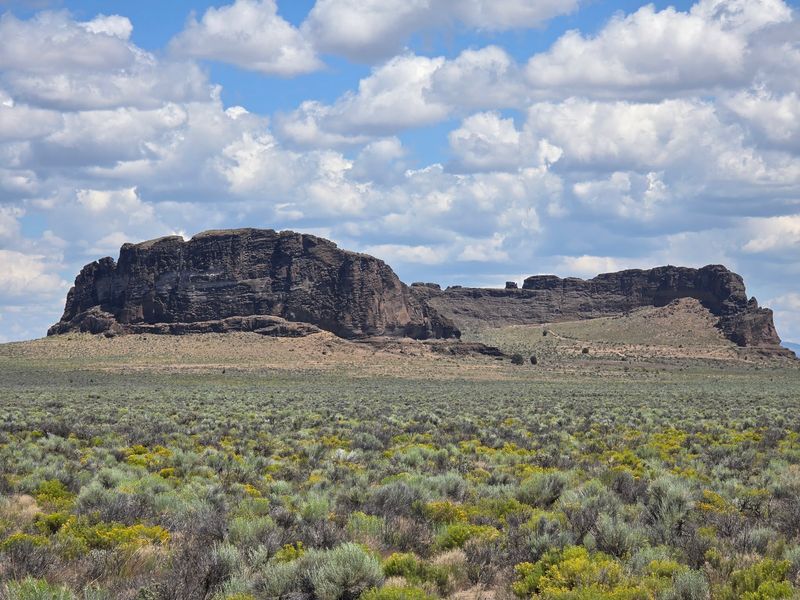
Rising from the flat Oregon high desert like a fortress built by the earth itself, Fort Rock is one of those formations that stops you cold the first time you spot it from the road. The ancient tuff ring stands roughly 200 feet tall and spans nearly a mile in diameter.
The result is a near-perfect circular wall of volcanic rock enclosing an open interior.
Trails wind around and through the formation, and the rear side offers a climb up to the natural wall with sweeping views of the surrounding desert basin. The terrain is accessible for most hikers, with short routes that work well for families and anyone who prefers a relaxed pace.
Picnic tables, restrooms, and free parking are all available on site. Dogs are welcome.
Archaeological discoveries inside the rock have added a layer of historical depth to the site, connecting it to some of the earliest human habitation in the Pacific Northwest. Fort Rock is quiet, uncrowded, and completely underrated. It deserves far more attention than it typically gets.
Address: Fort Rock Rd, Fort Rock, OR 97735
