Some landscapes just don’t match their surroundings at all. A handful of spots across Oregon manage exactly that, looking like they belong somewhere else entirely.
Cracked desert flats stretch out flat and endless in one corner of the state, while jagged rock formations rise dramatically along the coast in another. Neither scene fits the typical Pacific Northwest image most people already have fixed in their heads.
Distances play tricks too, mountains looking closer than they actually are, colors shifting depending on the time of day you happen to arrive. Photographers chase these exact spots specifically, knowing how rarely terrain this varied shows up within driving distance of each other.
Oregon rarely gets credit for landscapes this unpredictable. Visiting a few of these spots back to back feels less like one state and more like several countries stitched together.
1. Painted Hills, John Day Fossil Beds National Monument
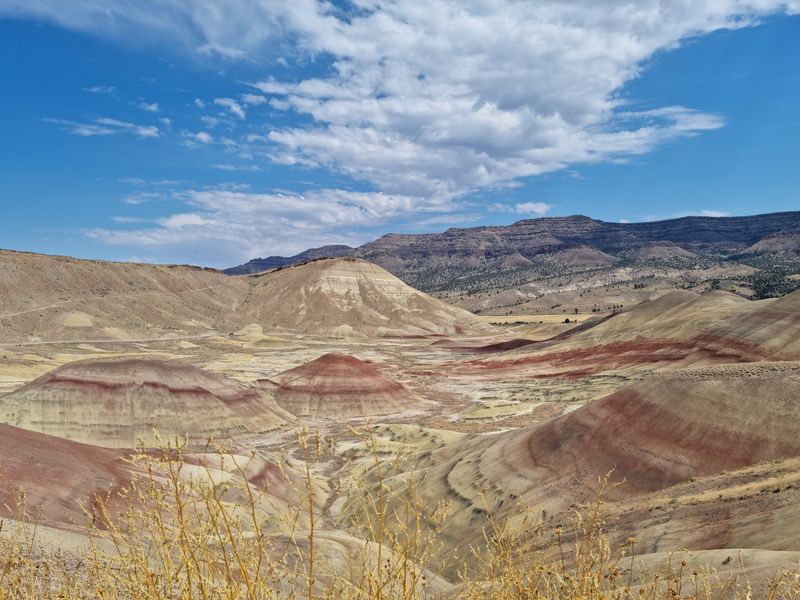
Nothing quite prepares you for the moment the Painted Hills come into view. The colors arrive before the shapes do, bleeding across the horizon in waves of red, gold, black, and tan that look more like a watercolor experiment than a real hillside. It feels almost rude to blink.
These hills formed over millions of years as ancient floodplains deposited layer after layer of volcanic ash and organic material. Each color tells a different chapter of geological history. The deep reds come from oxidized iron, while the black bands are rich with ancient plant matter.
Geologists love this place. So do photographers, hikers, and anyone who has ever wanted to feel genuinely small.
The trails here are short and well-marked, which makes it accessible for most visitors. Early morning light hits the ridges at an angle that makes the colors almost glow. Overcast days bring out the subtler tones in a completely different, almost moody way.
2. Crater Lake National Park
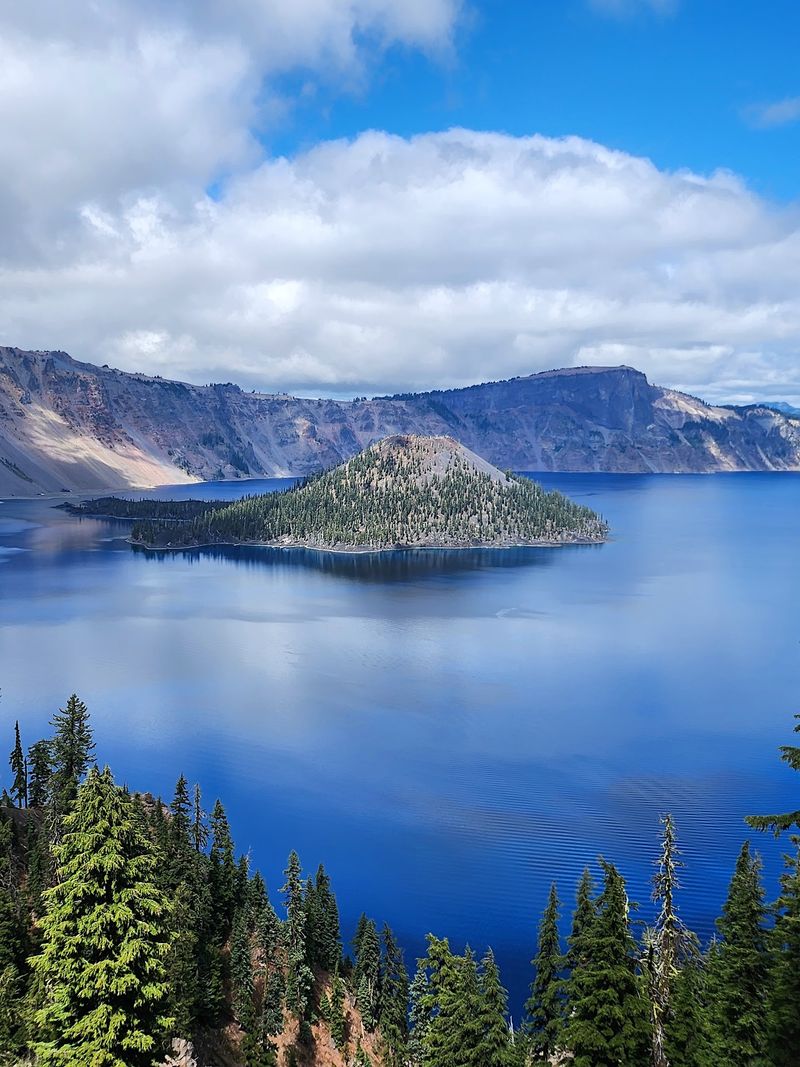
The blue here is not a color you see every day. Crater Lake holds a shade of deep, almost electric blue that seems too vivid to be natural, like someone turned up the saturation on the entire world. I have seen photos of it dozens of times and still was not ready for the real thing.
This lake sits inside the collapsed caldera of an ancient volcano called Mount Mazama, which erupted catastrophically about 7,700 years ago. With no rivers flowing in or out, the water stays remarkably clear and pure.
At nearly 2,000 feet deep, it is the deepest lake in the United States. That depth is part of what gives it that impossible color.
Wizard Island rises from the center of the lake like something out of a fantasy novel. The rim drive offers viewpoints that change dramatically with every mile, revealing new angles and new reasons to pull over.
Winter transforms the whole scene, burying the rim road in snow and turning the surrounding forest into something out of a fairy tale.
3. Oregon Dunes National Recreation Area
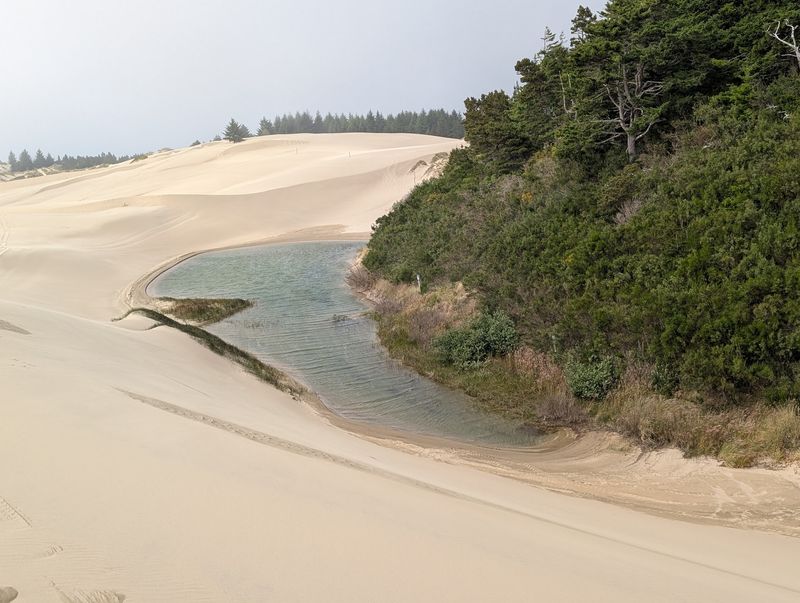
Sand dunes belong in the Sahara, not along the Oregon coast. That is the thought that kept running through my head the first time I crested a ridge and looked out over miles of shifting, wind-sculpted sand right next to the Pacific Ocean. It genuinely does not compute at first.
Stretching over 40 miles along the central Oregon coast, this is the largest expanse of coastal sand dunes in North America. The dunes reach up to 500 feet high in some places, which means you can climb to a peak and see the ocean on one side and dense forest on the other.
The area is popular with off-road vehicle enthusiasts, but there are also quieter hiking trails that wind through the dunes and into forested pockets where small lakes hide between the ridges. Spotting a freshwater lake tucked behind a wall of sand feels like discovering a secret.
The wind shapes the dunes constantly, so the landscape you see today will look different next month.
4. Alvord Desert
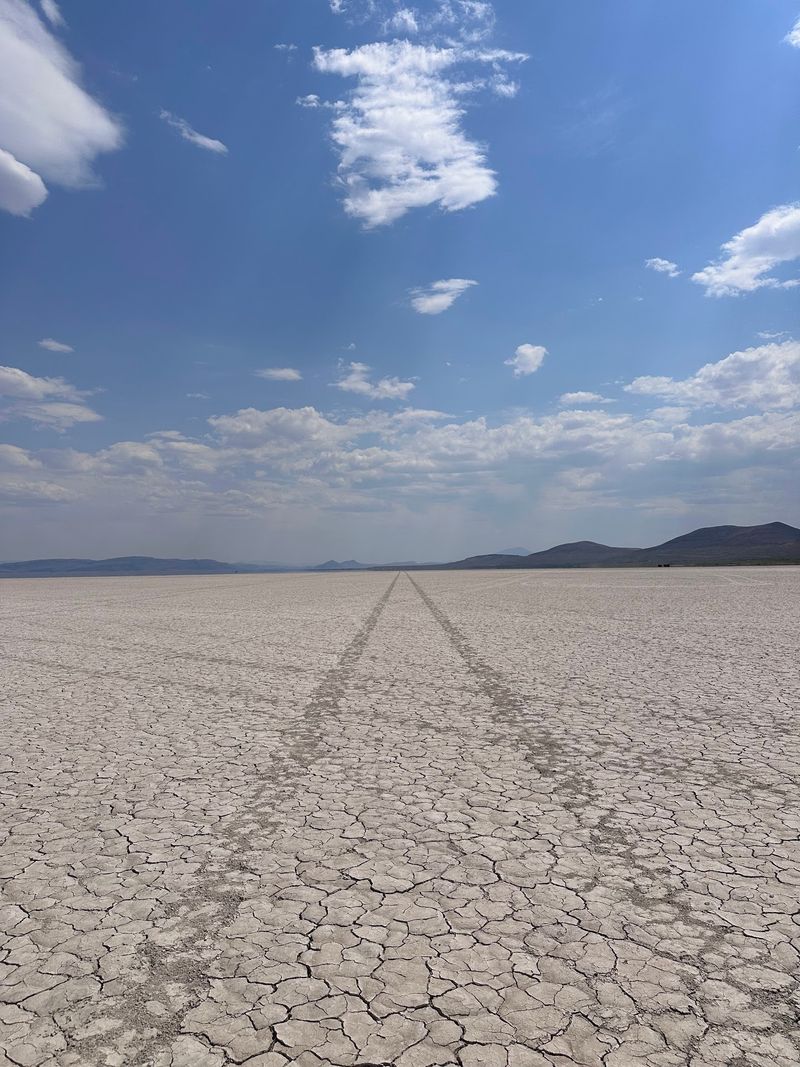
Southeastern Oregon keeps secrets well, and the Alvord Desert is one of the biggest. This ancient lakebed stretches across the horizon as a flat, blinding white expanse of cracked earth that has almost no business existing in the Pacific Northwest.
During dry months, the playa becomes a massive natural mirror when thin sheets of water collect on the surface. Reflections of the clouds and mountains appear below your feet, and the line between sky and ground disappears entirely. It is disorienting in the best possible way.
When the playa is dry, the cracked patterns in the earth create a texture that feels almost architectural.
Getting here requires some commitment. The roads leading to the Alvord are unpaved and occasionally rough, and the nearest towns are far away. That remoteness is actually the point.
Out here, light pollution is nearly nonexistent, which makes the night sky one of the most spectacular in Oregon. Bring a sleeping bag, a good map, and a sense of adventure.
5. Thor’s Well, Cape Perpetua
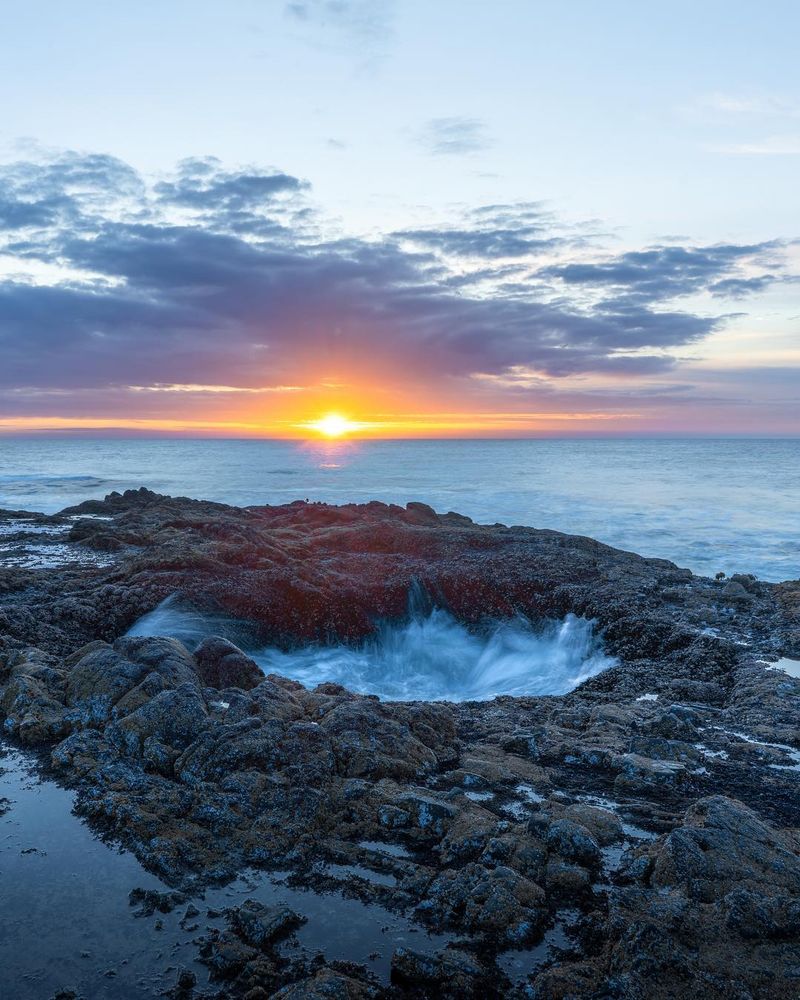
There is a hole in the Oregon coast that appears to drain the entire ocean. That is obviously not what is happening, but try telling your brain that when you are standing at the edge of Thor’s Well watching seawater surge in and then disappear into the rock like it is being swallowed whole.
This natural feature is a collapsed sea cave, and during high tide and rough surf, the effect is genuinely mesmerizing. Water rushes into the opening, fills it up, and then pulls back in a churning, foamy whoosh that repeats over and over.
At certain tide levels, it creates a perfect fountain effect, shooting water upward before it cascades back down. Photographers line up for this shot at dawn and dusk.
The surrounding area at Cape Perpetua is equally dramatic. Tide pools nearby are full of sea stars, anemones, and hermit crabs that make for slow, satisfying exploring. The forest above the bluff is old-growth Sitka spruce, and the hiking trails there offer sweeping coastal views.
A word of caution though: the rocks around Thor’s Well are slippery and the waves unpredictable.
6. Lava River Cave
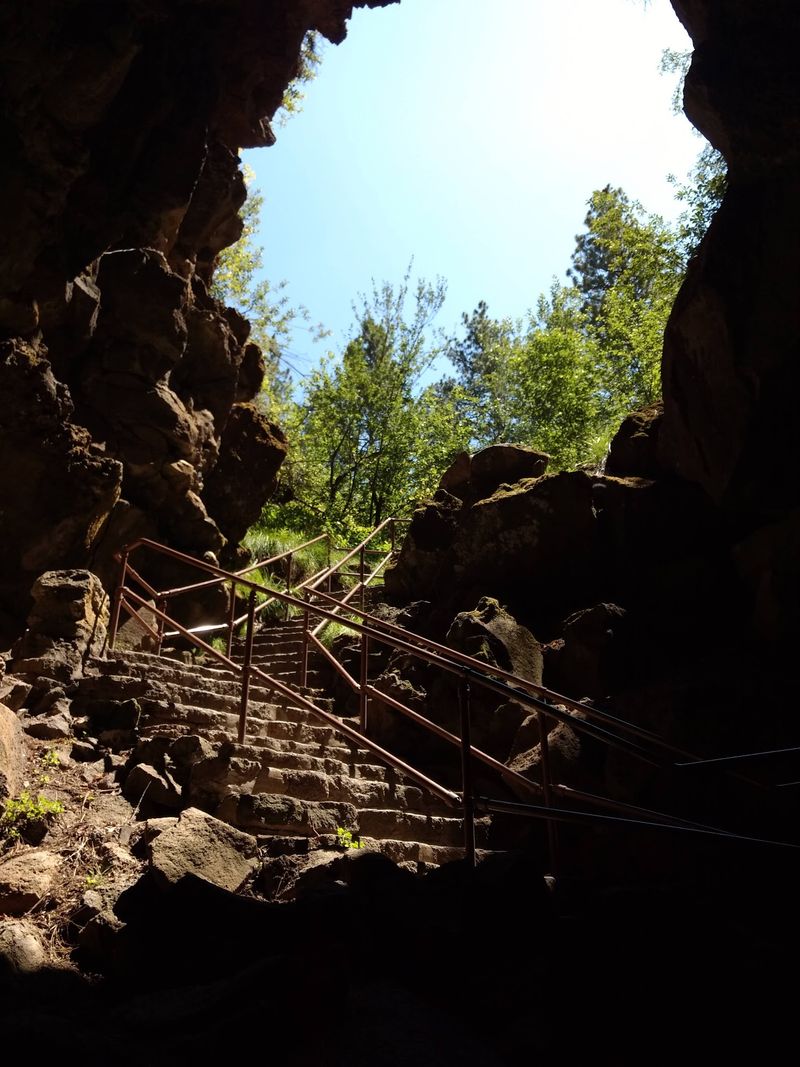
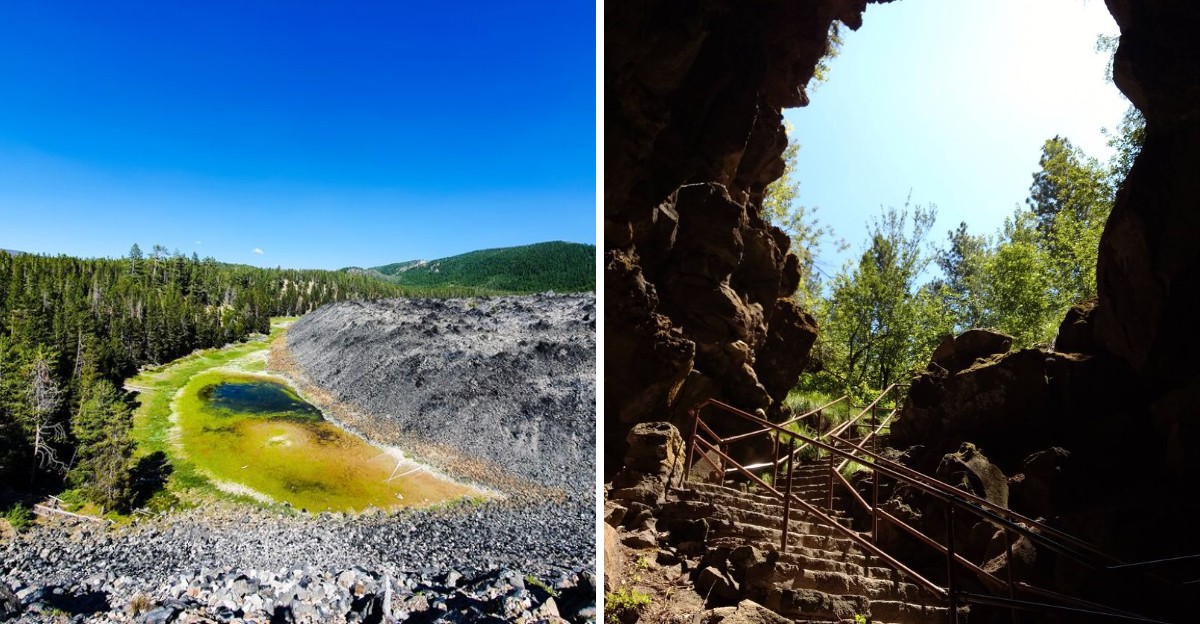
Most caves form slowly over thousands of years as water dissolves limestone. Lava River Cave formed in a matter of days. That speed is part of what makes it so strange, and walking through it feels like wandering inside the memory of a volcano that has been holding its breath.
At nearly a mile long, this is the longest uncollapsed lava tube in Oregon. It formed about 80,000 years ago when the outer shell of a lava flow cooled and hardened while molten rock continued flowing through the inside, eventually draining out and leaving behind this long, dark hollow tube.
The result is a passage with smooth, rounded walls and a floor that drops in unexpected places.
Visitors can rent lanterns at the entrance, which adds a genuinely old-fashioned feel to the whole experience. The temperature inside stays around 42 degrees Fahrenheit year-round, so a jacket is not optional, it is essential.
The cave is dark enough that without your lantern, you literally cannot see your hand in front of your face. Kids tend to find this both terrifying and thrilling in equal measure.
7. Opal Creek Wilderness
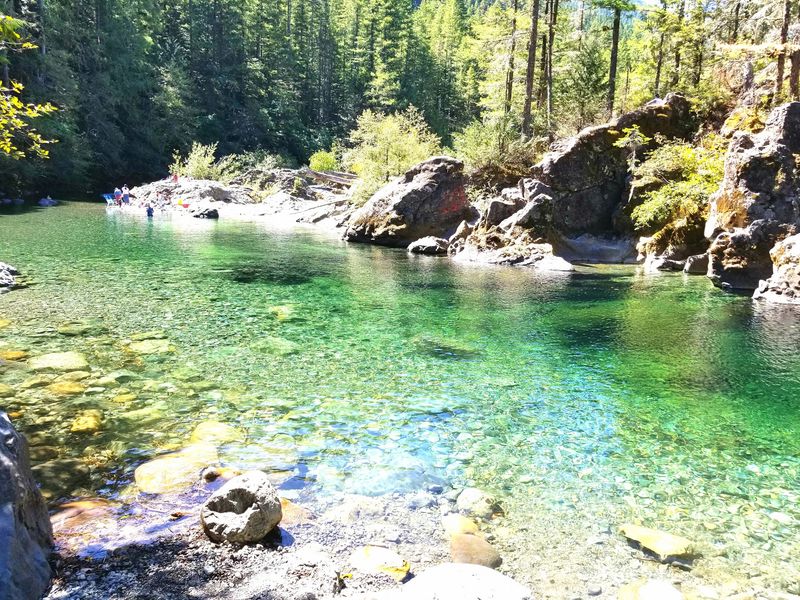
The water at Opal Creek is not supposed to look like that. It runs in shades of turquoise and jade green so clear you can count the pebbles on the bottom from several feet up, and it moves through an ancient old-growth forest so dense and quiet that the outside world feels very far away.
This wilderness area in the Willamette National Forest contains some of the oldest trees in the Pacific Northwest. Some of the Douglas firs and western red cedars here are over 1,000 years old, and they create a canopy so thick that even on a sunny day, the light filters down in soft, broken shafts.
The whole forest feels like it operates on a different timescale than the rest of the world.
The trail to the main swimming holes is about three miles each way, crossing old wooden bridges and passing through a ghost town called Jawbone Flats, which was once a mining settlement. The swimming holes are cold but irresistible in summer.
The color of the water comes from the mineral content and the clarity, not from any dye or trick of the light.
8. Crack in the Ground, Christmas Valley
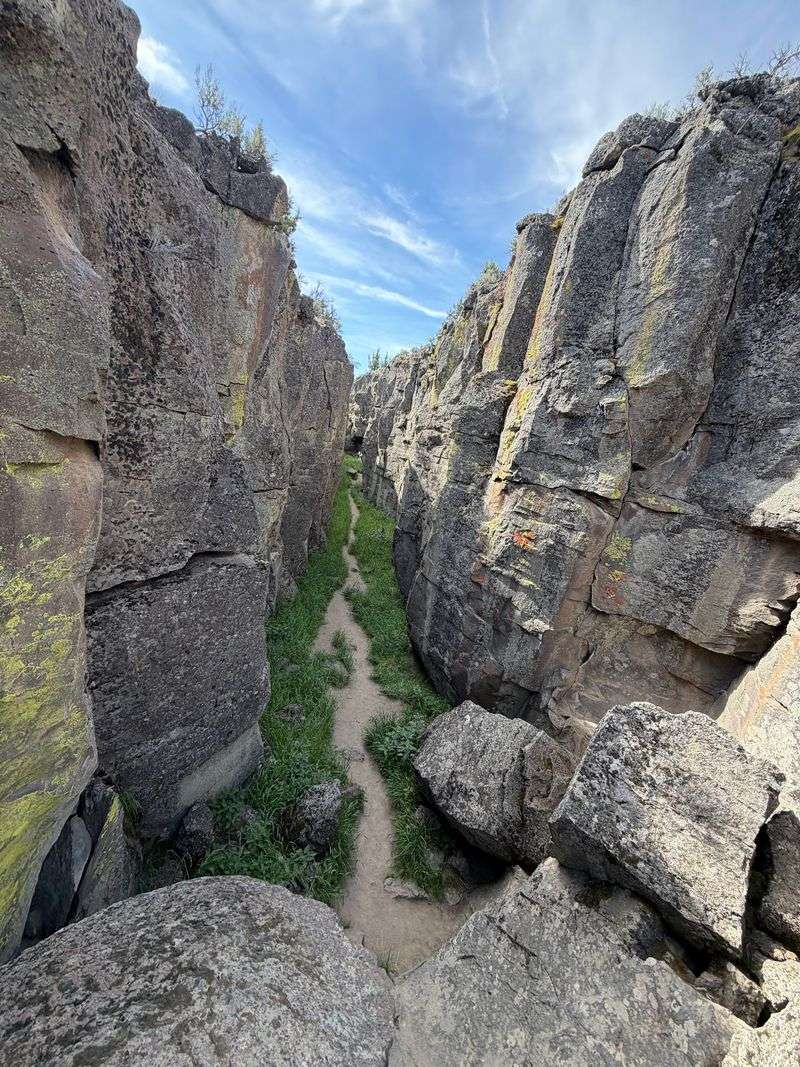
The name is blunt, but it earns it. Crack in the Ground is exactly what it sounds like: a long, narrow volcanic fissure that splits the high desert floor of Lake County open like someone took a blade to the earth and just kept pulling.
The crack stretches for about two miles and reaches depths of up to 70 feet in places, while the width stays narrow enough that you can touch both walls at once in some sections. Inside, the temperature drops noticeably, and ice sometimes lingers in the shadowed depths well into summer.
The contrast between the hot, dry desert above and the cool, dim interior below is immediate and a little surreal.
Getting here involves driving through Christmas Valley, a small high desert community surrounded by sagebrush and juniper. The road to the crack is unpaved but manageable for most vehicles. There are no guardrails, no gift shop, and no crowd.
Just a strange split in the earth that you can walk the length of, peering down into the dark and wondering what exactly you are standing on. It is a reminder that the ground beneath our feet is not nearly as solid or permanent as we tend to assume.
9. Heceta Head Lighthouse and Sea Lion Caves
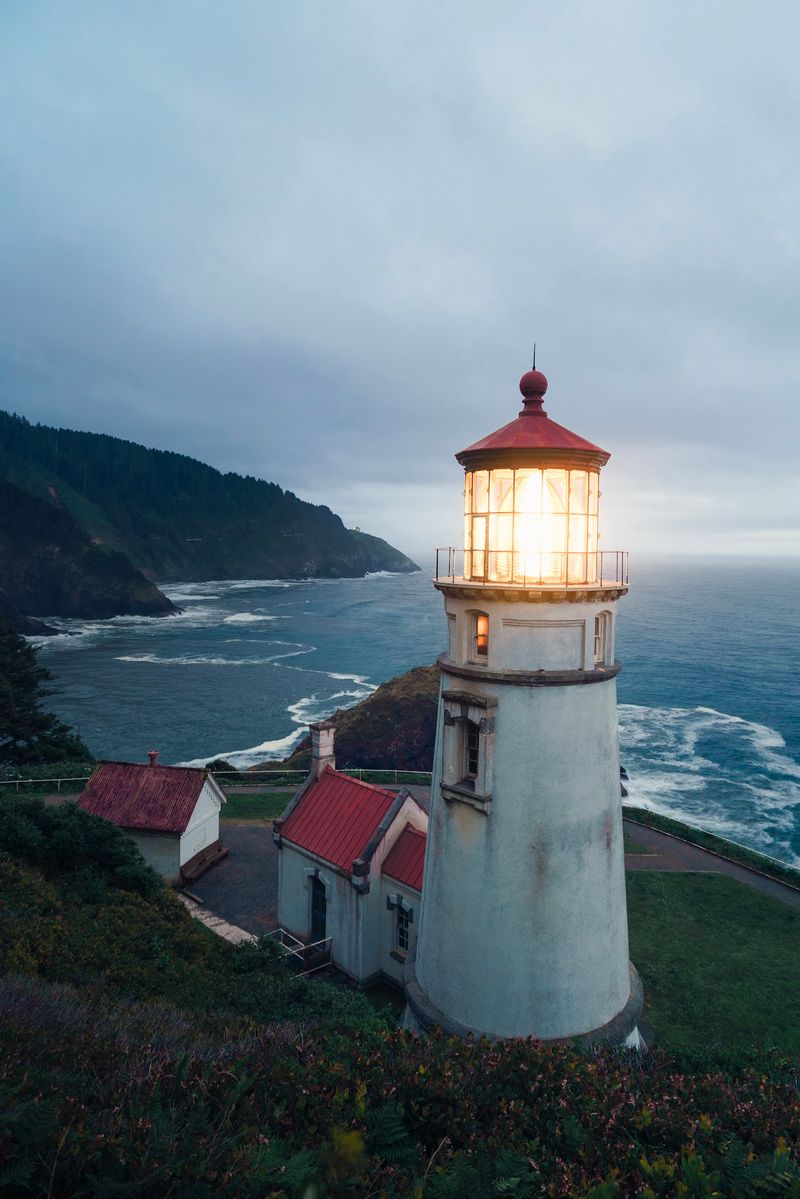
The lighthouse itself is beautiful, but the sea lions are the real spectacle. A short drive south of the lighthouse sits the Sea Lion Caves, a massive sea cavern carved into the coastal bluffs where Steller sea lions haul out by the hundreds during fall and winter.
The cave is one of the largest sea caves in the world, and it connects to the open ocean through a narrow channel that the sea lions navigate with surprising ease. An elevator takes visitors down through the cliff to a viewing platform inside the cave.
The smell is powerful and unforgettable. The sound is a constant, overlapping chorus of barking, growling, and splashing that bounces off the cave walls and fills the entire space.
Outside, the coastal scenery around Heceta Head is some of the most photographed in Oregon for good reason. The lighthouse sits on a dramatic headland above cliffs that drop straight into the surf, and the keeper’s quarters have been preserved as a bed and breakfast.
10. Steens Mountain
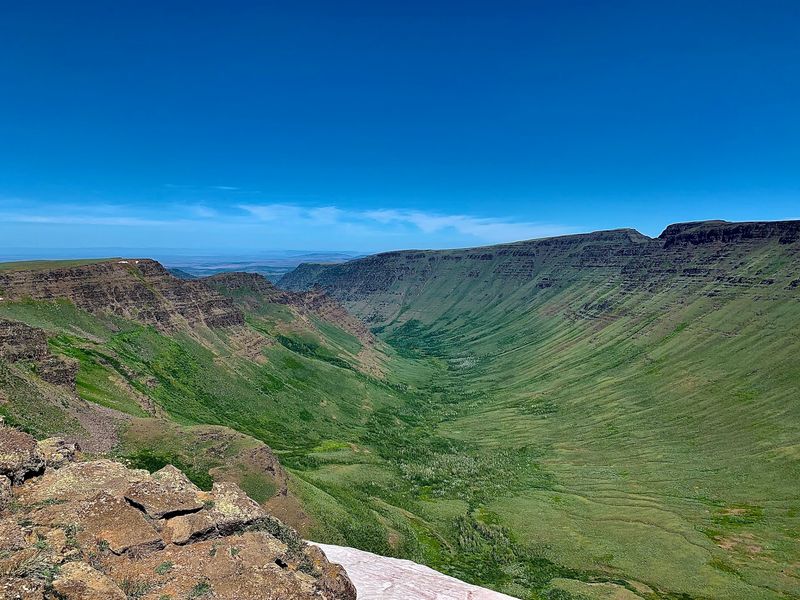
Steens Mountain does not look like it belongs in Oregon. It rises abruptly out of the high desert like a fault-block island, its eastern face dropping nearly a mile straight down to the Alvord Desert while the western slope descends in long, gradual curves carved by ancient glaciers.
The scale of it is genuinely hard to process from ground level.
The mountain tops out at just over 9,700 feet, and the summit road is the highest road in Oregon when it is open, typically from July through October. On a clear day, you can see into Nevada and Idaho from the top.
The views of the glacial gorges on the way up are some of the most dramatic in the state, with U-shaped valleys dropping away so steeply that looking over the edge requires a moment of courage.
Wildflowers blanket the slopes in early summer, and the aspen groves turn gold in September in a display that rivals anything in the Rocky Mountain states. Pronghorn antelope and wild horses roam the lower slopes, and golden eagles are a common sight riding thermals above the ridgeline.
11. Newberry National Volcanic Monument, Big Obsidian Flow
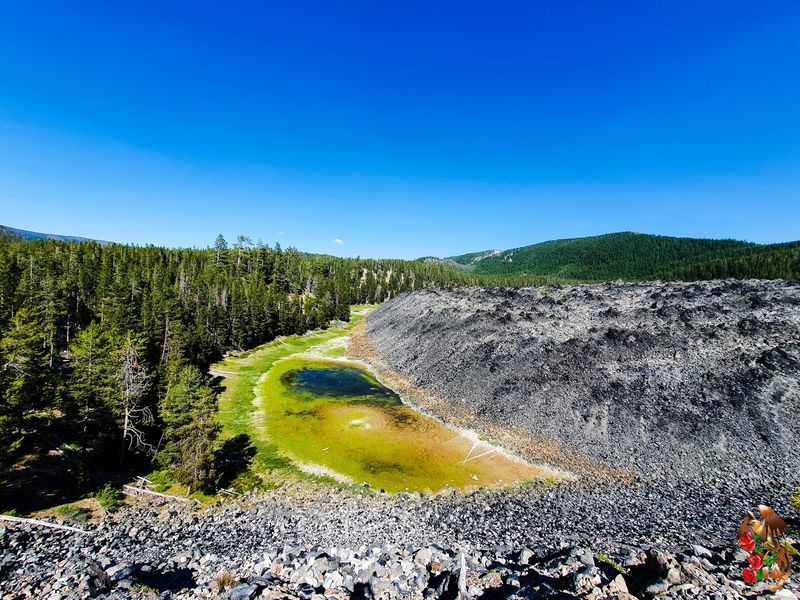
Shiny black glass covering acres of landscape sounds like something out of a science fiction film. The Big Obsidian Flow at Newberry National Volcanic Monument is entirely real, and walking across it feels like visiting a world that is still cooling off from some recent catastrophe.
This obsidian flow erupted about 1,300 years ago, making it one of the youngest lava flows in Oregon. The obsidian formed when silica-rich lava cooled so quickly that crystals never had time to form, creating a natural volcanic glass instead.
The result is a landscape of jagged, glittering black rock that stretches across the caldera floor in every direction. It is beautiful and slightly menacing at the same time.
A one-mile loop trail crosses the flow on a well-maintained path, because the obsidian is sharp enough to cut through boots and skin with very little effort. Native American tribes used obsidian from this area to make tools and weapons for thousands of years.
12. Samuel H. Boardman State Scenic Corridor
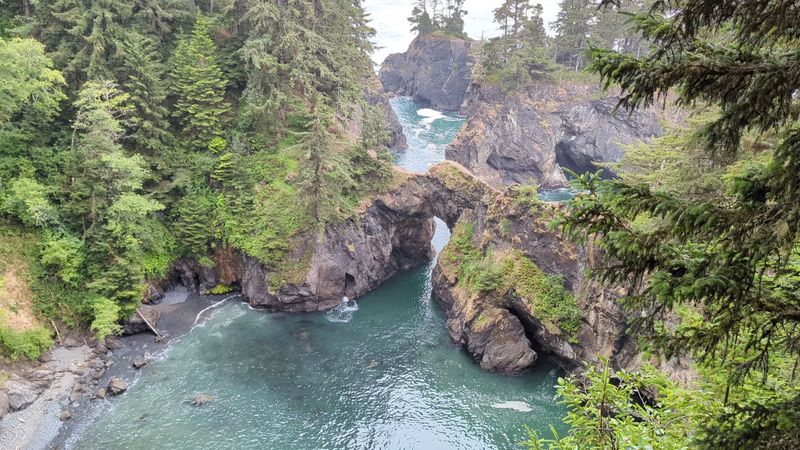
The southern Oregon coast is already one of the more beautiful stretches of coastline in the country, but the Samuel H. Boardman State Scenic Corridor takes that beauty and turns it into something that feels genuinely otherworldly.
Natural arches, towering sea stacks, hidden coves, and forested bluffs follow one another in such rapid succession that you start to feel like you are flipping through a geography textbook on fast-forward.
The corridor stretches for about 12 miles along Highway 101 between Brookings and Gold Beach. There are numerous pullouts and short trails that lead down to viewpoints, beaches, and arch formations.
Natural Bridges Viewpoint is a standout, where a series of sea arches frame views of crashing surf below in a way that seems almost too composed to be accidental. Whaleshead Beach offers a calm, sheltered cove with a distinctive offshore rock formation that gives the beach its name.
Because this stretch of coast sits far from Oregon’s major cities, it sees far fewer visitors than the more famous spots to the north. That relative quiet makes it feel like a discovery rather than a destination.
