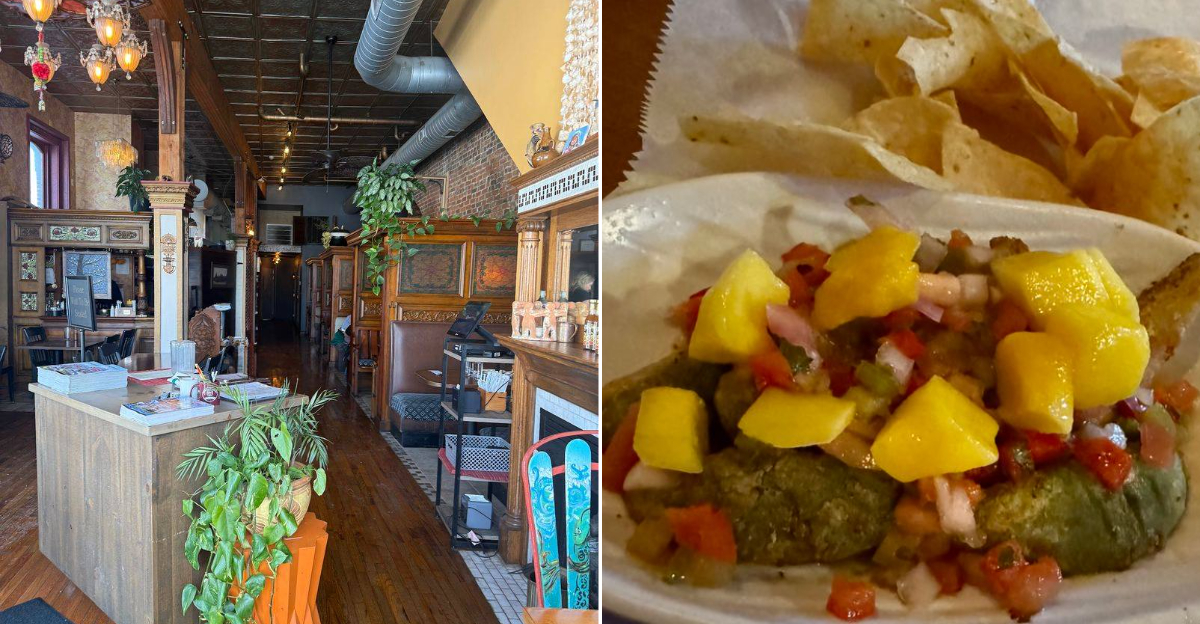
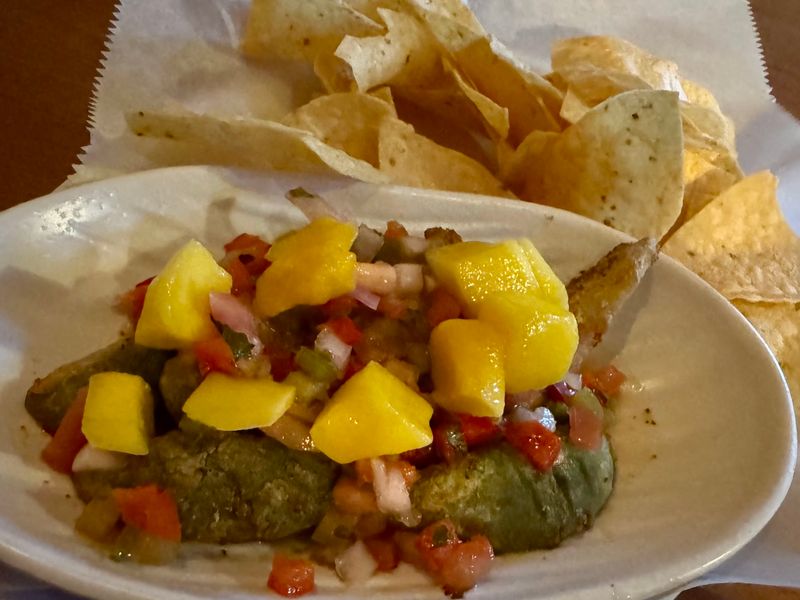
The building has witnessed over a century of history, from its origins as a doctor’s office and pharmacy to its current life as a vibrant Peruvian kitchen. The walls that once held shelves of patent medicines now host lively conversations over plates of fried guacamole, a creative twist on a classic favorite.
The flavors are bold and the atmosphere is electric, a perfect blend of old and new. This is not just a meal; it is a chance to taste the creativity and heritage of a place that has stood the test of time.
A visit here is a reminder that the most memorable meals often come with a story.
A Peruvian Kitchen In The Middle Of The Ozarks
Peruvian food in southwest Missouri is not something most people expect to find, and that surprise is honestly half the fun of Cafe Cusco. The menu leans on flavors from the Andes, so you get things like aji sauces, quinoa, plantains, and slow-cooked meats instead of the usual sandwich-and-fries routine.
What I like about the concept is that it does not try to be a museum piece about Peru. It borrows the ideas, the spices, and the general spirit, then builds a menu that feels approachable even if you have never eaten anything Peruvian in your life.
If you are the kind of person who freezes up when a menu has unfamiliar words on it, you will probably be fine here. The descriptions are clear, the staff are used to explaining dishes, and nothing on the menu is designed to trip you up or test how adventurous you are.
The best approach is to order one thing you recognize and one thing you absolutely do not, then share both across the table. That way you leave having actually tried something new rather than defaulting to whatever felt safest when you sat down.
Where To Point Your Car On C-Street
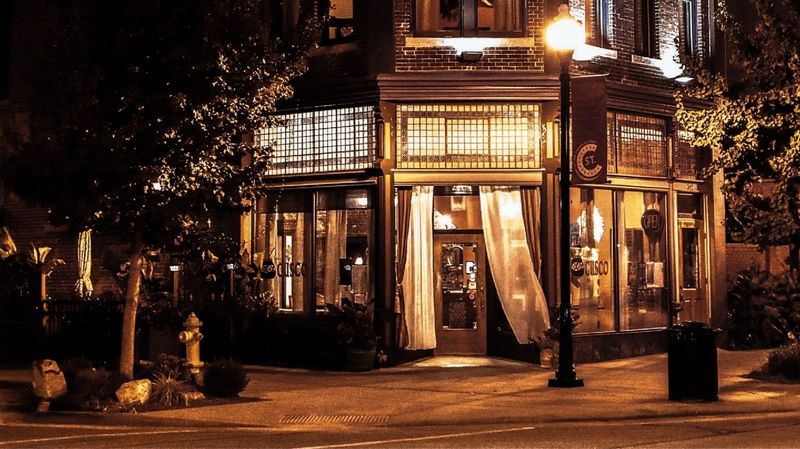
Finding the place is easy once you know that locals call the neighborhood C-Street, which is short for Commercial Street. The restaurant sits at 234 E Commercial Street, Springfield, MO 65803, right in the thick of the old brick storefronts.
Parking around there is generally street parking, and the stretch is walkable enough that you can leave the car once and wander for a while. That matters, because you will probably want to poke around the shops before or after you eat rather than driving off immediately.
One thing worth knowing is that Commercial Street is not the same part of town as the busier commercial strips people usually associate with Springfield. It sits north of the square and has its own separate personality, which is exactly why it feels like a small discovery.
If you are coming in from out of town, plan on arriving with a little extra time in your pocket. The whole area rewards slow walking, and getting there early means you can look at the buildings, read the historical markers, and figure out where you want to end up afterward without rushing anything.
Eating Inside One Of Springfield’s Oldest Buildings
Here is the part that gets me. The building that holds this restaurant is one of the oldest surviving structures in the entire city, and it went up back in the early eighteen hundreds era of Commercial Street’s boom.
Sitting inside a building that old does something to a meal. The walls have weight to them, the proportions feel different from modern construction, and you catch yourself noticing details that a newer space would never have bothered with.
Old buildings in Missouri did not always survive, which is what makes this one interesting. Plenty of nineteenth century storefronts across the state were torn down when they stopped being useful, so having one still standing and still full of people every night is genuinely unusual.
My advice is to take a minute before you look at the menu and just look around instead. Notice where the brick meets the wood, how the windows are set, and how tall the room actually is compared to a normal restaurant.
You do not need to know architecture to appreciate any of that. You just need to slow down long enough to see it.
Before The Food, It Was A Pharmacy
Two brothers with the last name Bartlet put this building up, and their plan had nothing to do with dinner. The downstairs held a pharmacy and the upstairs held a doctor’s office, which was a pretty sensible pairing back when you walked to your doctor and then walked down the stairs to fill the prescription.
Think about that setup for a second. Somebody was mixing medicine on the same floor where you might now be dipping a chip into mango sauce, and the bones of the building have watched both happen.
Buildings like this one usually cycled through a lot of uses over the decades, and each business left a little something behind. It is part of why the space does not feel like it was designed by a restaurant group with a mood board.
If you like this kind of backstory, C-Street is full of it, because most of the buildings on the block started life as something other than what they are today. Reading the plaques and signs as you walk turns a food trip into a low-effort history walk, and Missouri does that sort of thing well.
Restored First, Restaurant Second
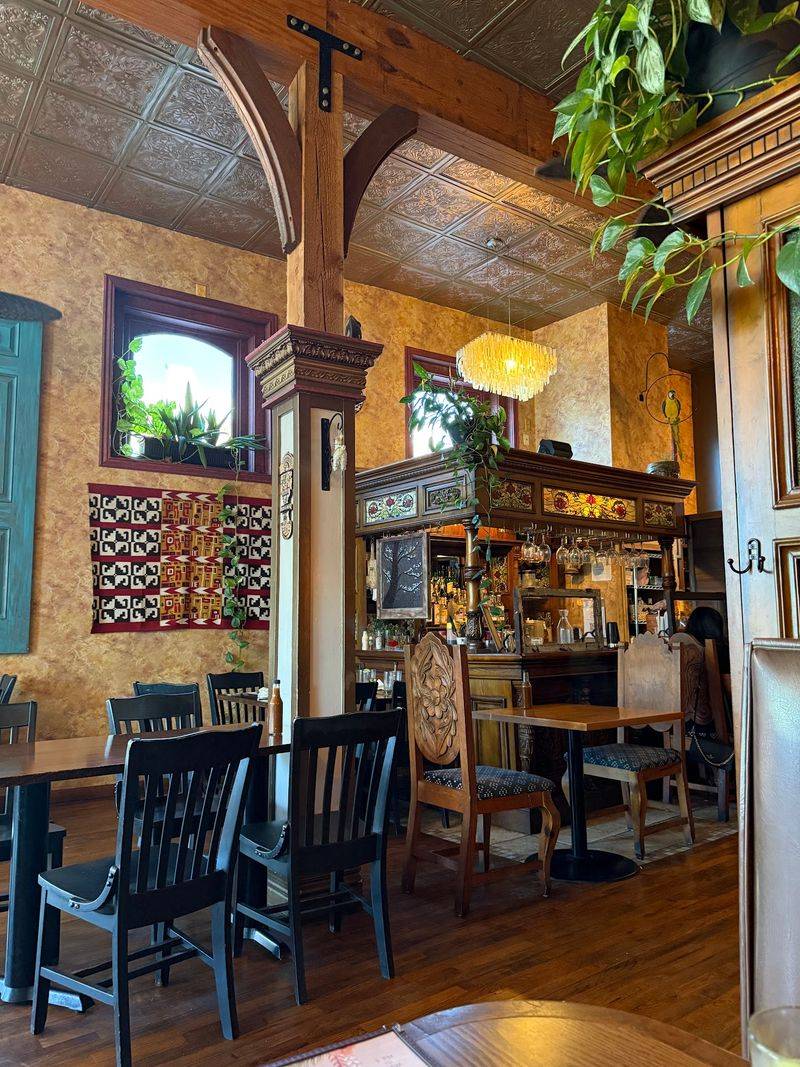
Something a lot of people miss is that the building got a full historic restoration before it ever served a single plate of food. Somebody had to care enough to fix the structure properly, and only after that did the restaurant open its doors.
That order of events matters more than it sounds. Restoration done first means the original materials were treated as the point rather than as decoration bolted on afterward, which is why the space reads as authentic instead of themed.
You can usually tell the difference when you walk into a room. Real old brick and real old wood have irregularities that nobody bothers to fake, and once you notice them you start spotting them everywhere.
For anyone who likes preservation stories, this is a good one to have in your back pocket. Across Missouri there are plenty of buildings that were saved right at the edge of being lost, and each save keeps a street from looking like every other street.
So when you sit down, you are basically eating inside a project that somebody fought for. That is not a bad thing to appreciate over a plate of fried avocado.
Look Up At Those Copper Ceilings
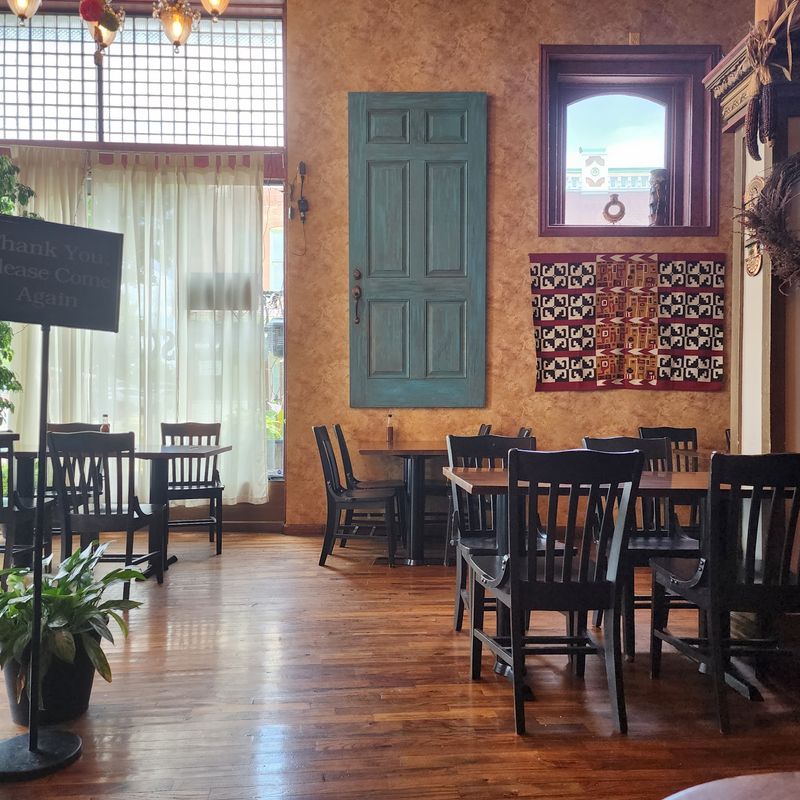
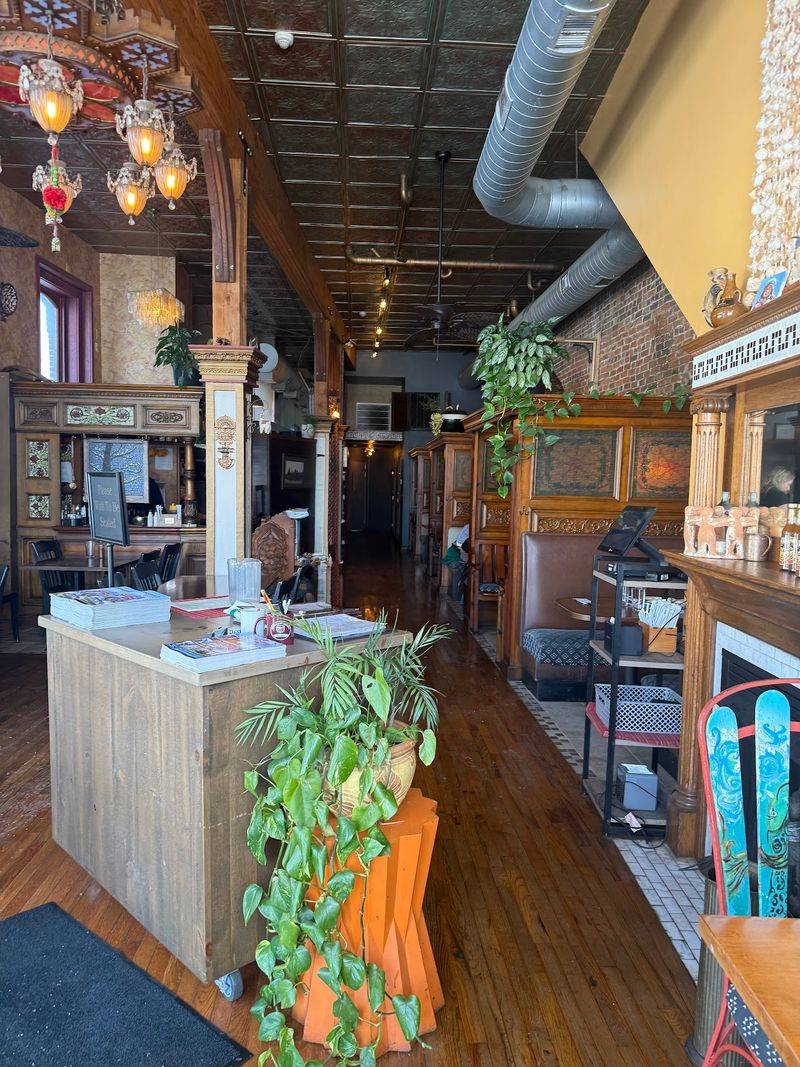
Nobody looks up in restaurants anymore, which is a shame, because the ceiling here is one of the best things about the room. It is copper-coated and high, the kind of pressed detail that used to be standard in nice commercial spaces and is almost never built new now.
Pair that with the extensive woodwork running through the space and you get a room that feels finished in a way modern builds rarely do. The trim, the framing, the depth of the details all add up.
Here is what I would actually do. Grab a table, get settled, and then spend a solid minute tracing the ceiling pattern with your eyes before your food arrives.
Photographers will like this room too, though the lighting is warm and moody rather than bright. Sitting near a window during daylight hours gives you a much better shot at capturing the copper and the woodgrain together.
These are the details that make eating inside an old building different from eating inside a new one. The craftsmanship was never meant to be the main attraction, and yet it kind of ends up being one anyway.
One Of The Prettiest Buildings In Town
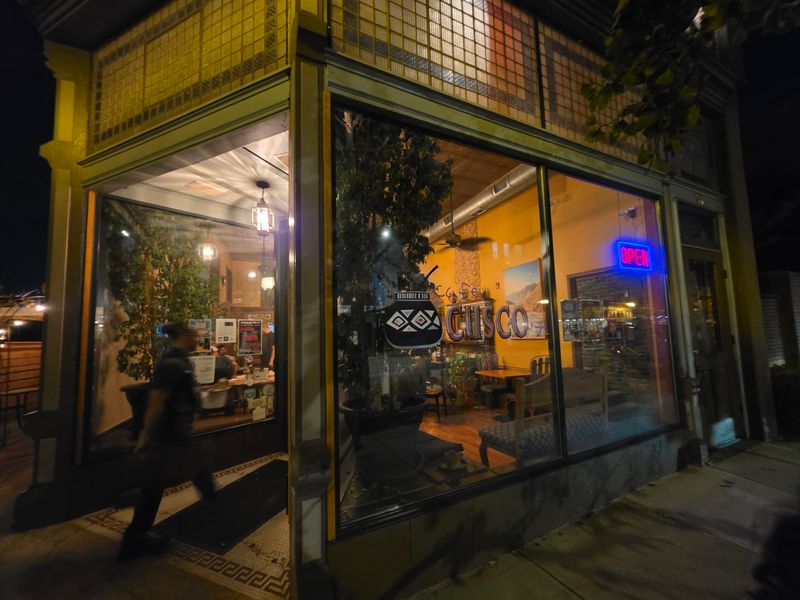
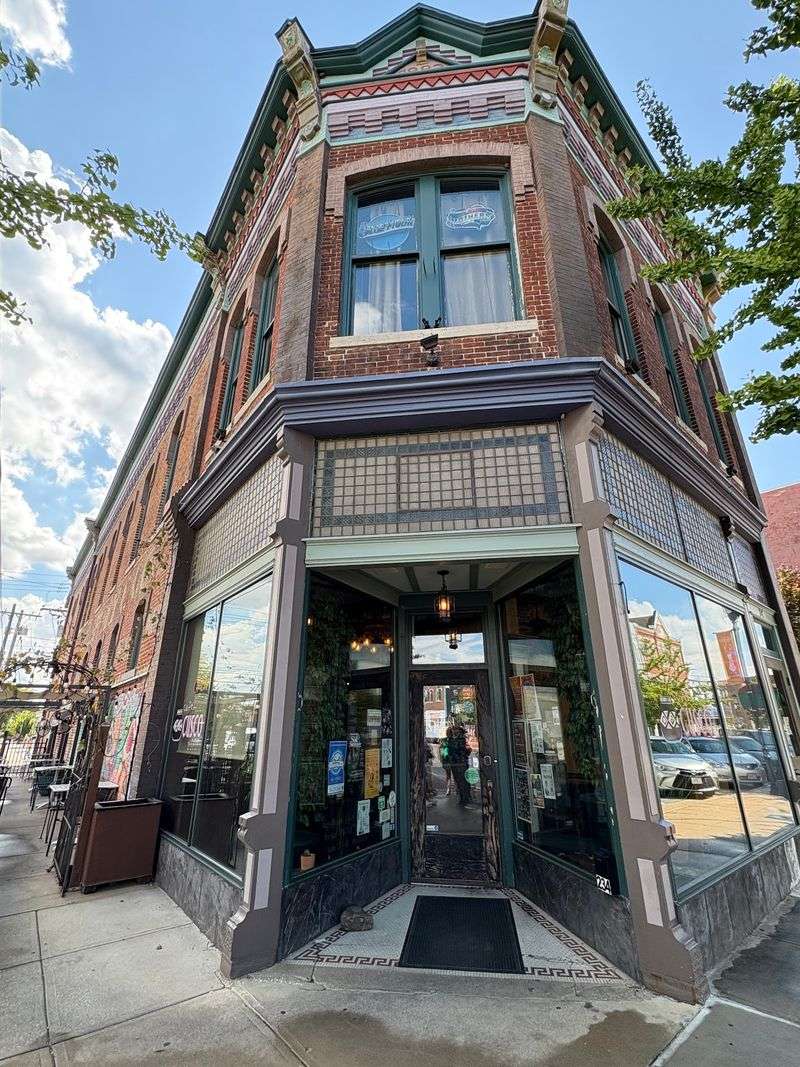
People around Springfield will tell you this is one of the most beautiful buildings in the city, and standing outside it you can see why they say that. The brickwork, the window proportions, and the trim along the top all hold up.
Beauty in old buildings usually comes from the fact that nobody was cutting corners on the parts you could see from the sidewalk. Facades were a kind of advertising, so they got attention that modern budgets skip right past.
Try to see the outside in two different lights if you can manage it. Daytime shows you the brick color and all the detailing, while evening light softens everything and makes the windows glow from inside.
The building also anchors the block visually, meaning it sets the tone for how the whole stretch of C-Street feels when you walk up. Take a few steps back across the street to get the full view before you head in.
Honestly, a lot of small cities lost buildings like this one. Getting to eat inside a survivor is part of what makes the trip feel like more than just dinner.
Make A Whole Afternoon Out Of The District
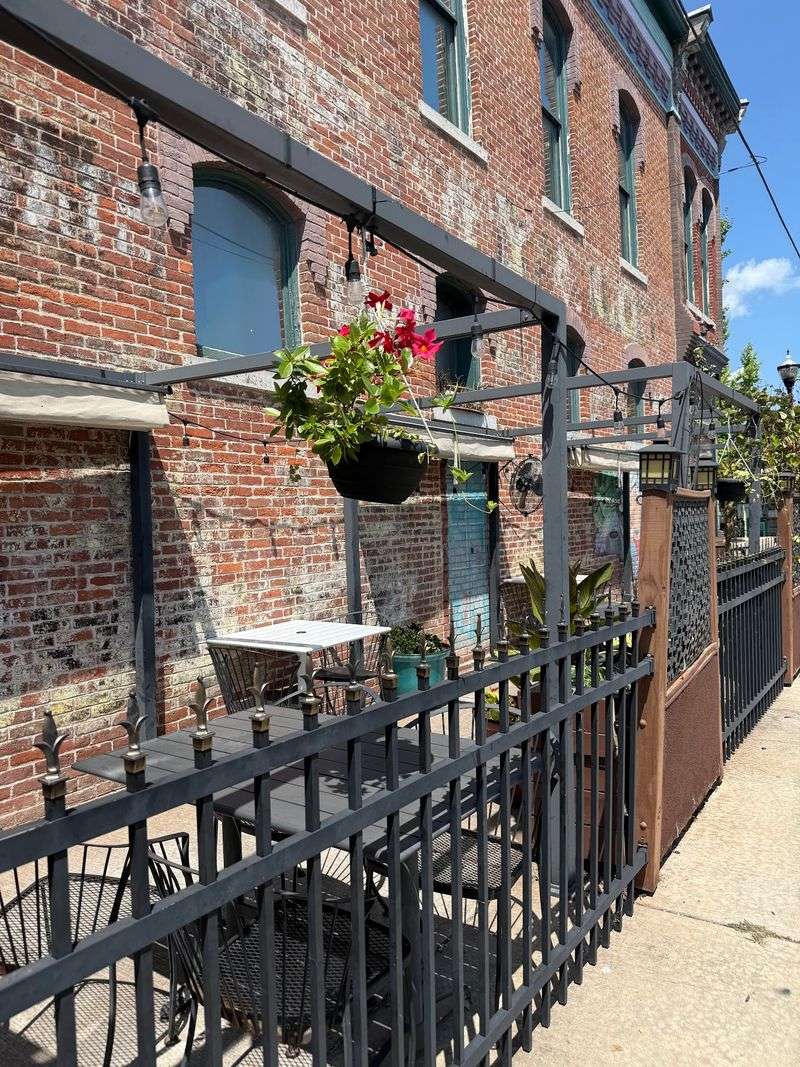
Do not treat this as a one-stop trip, because the surrounding neighborhood is officially a historic district and it has been coming back to life with independent shops and small businesses. Walking the block is genuinely part of the experience.
What you find along the way tends to be locally owned rather than familiar chains, which means the browsing feels different from a mall or a big shopping center. You end up talking to people and looking at things you would not see anywhere else.
My suggestion is to arrive well before you plan to eat, wander for a while, and let hunger build naturally. Then the meal becomes the payoff at the end of an afternoon instead of the only thing you did.
Comfortable shoes are the practical detail here, since sidewalks in old districts are uneven and you will cover more ground than you expect. Bringing a jacket is smart too, because those brick corridors catch wind.
Springfield gets overlooked by people driving across Missouri on the interstate, and C-Street is exactly the reason to pull off. It is a small, walkable slice of the state that actually rewards stopping.
