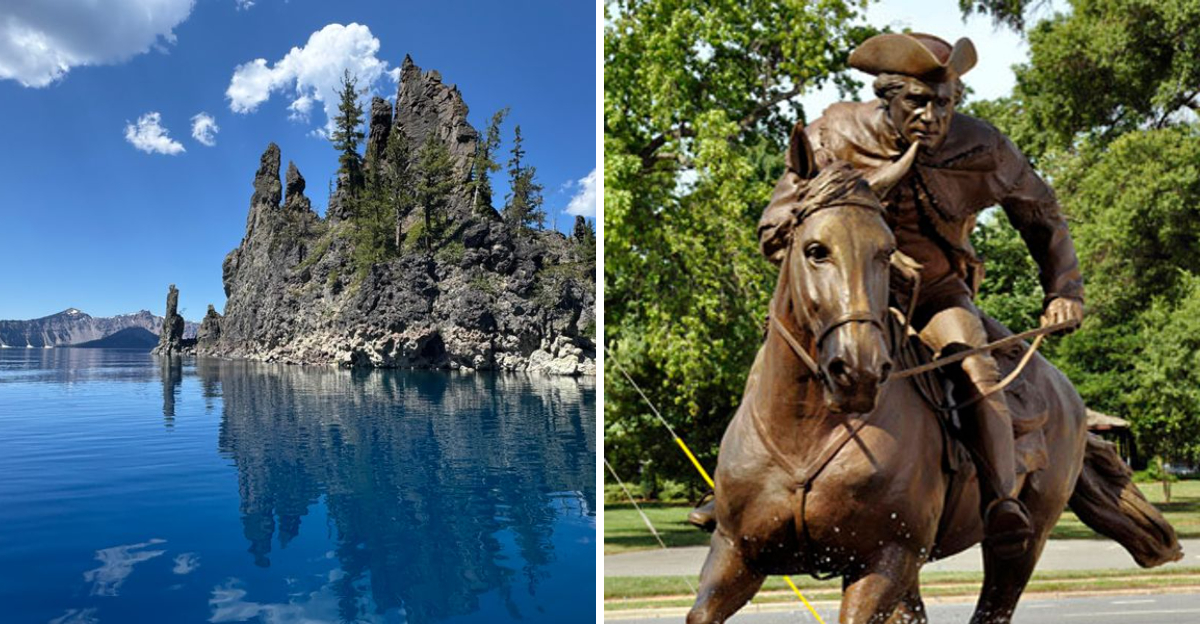
Oregon hides some of the most astonishing attractions in plain sight, tucked away in small towns that most travelers zoom past on their way to bigger cities.
From enormous wooden hangars that once housed wartime blimps to underground caves filled with barking sea lions, these secret spots offer adventures that feel like discovering buried treasure.
You won’t find them on the typical tourist maps, and that’s exactly what makes them so special. Locals guard these gems carefully, whispering about shipwrecks frozen in time on windswept beaches and turquoise pools that glow like liquid sapphires in the forest.
Ready to explore Oregon like you’ve never seen it before? Pack your sense of wonder and leave the guidebook at home because these eight towns are about to blow your mind.
Think you’ve seen everything the Pacific Northwest has to offer? Wait until you peer into Thor’s Well during a storm or stand inside a sea cave echoing with wildlife.
This isn’t your average road trip; this is the Oregon adventure you’ll be bragging about for years!
1. Tillamook: Giant Blimp Hangar Turned Aviation Museum
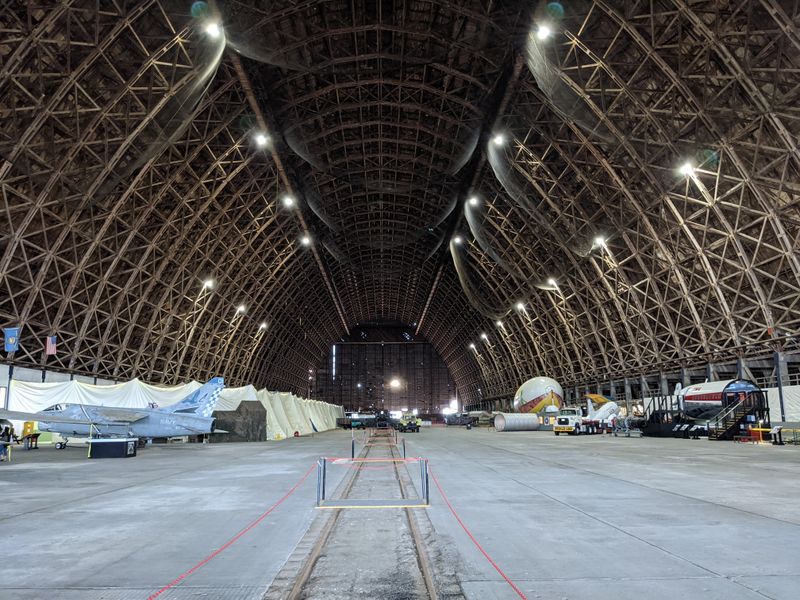
Standing before the Tillamook Air Museum feels like stepping into a scene from a sci-fi movie because this colossal wooden structure was built during World War II to house massive US Navy blimps. The hangar stretches over seven acres and ranks among the largest clear-span wooden buildings on the planet, making it an engineering marvel all by itself.
Inside, you’ll find dozens of vintage aircraft suspended from the ceiling and parked on the floor, ranging from nimble fighter planes to hulking bombers that tell stories of wartime bravery.
Walking through the museum gives you a front-row seat to aviation history, with exhibits explaining how these blimps patrolled the Oregon coast searching for enemy submarines. Kids and adults alike geek out over the chance to climb into cockpits and imagine what it felt like to soar through the clouds decades ago.
The sheer scale of the hangar makes every plane look small by comparison, which adds to the wow factor.
Located at 6030 Hangar Road, Tillamook, OR 97141, this museum operates year-round and offers plenty of space to wander without feeling crowded. Photography enthusiasts love the dramatic lighting that filters through the hangar doors, casting long shadows across the polished aircraft.
You can easily spend a couple of hours exploring every corner, reading plaques, and marveling at the craftsmanship of these flying machines.
Don’t miss the gift shop, where you can snag model planes and aviation-themed souvenirs to remember your visit by.
2. Florence: America’s Largest Sea Cave Sanctuary
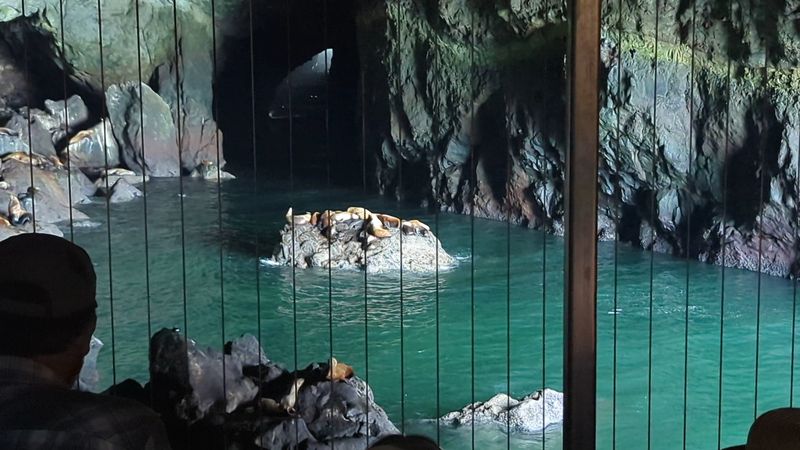
Sea Lion Caves sits carved into the coastal cliffs just north of Florence, creating a thunderous underground amphitheater where hundreds of wild Steller sea lions gather to bark, bellow, and bask.
This natural wonder claims the title of America’s largest sea cave, and when you descend the elevator 208 feet down into the echoing chamber, the noise and smell hit you like a wave.
During winter months, the population swells as sea lions seek shelter from Pacific storms, transforming the cave into a raucous marine mammal metropolis.
The cave formed over millions of years as ocean waves relentlessly pounded the basalt rock, hollowing out this cathedral-sized space that now serves as a wildlife sanctuary. Visitors peer down from observation platforms, watching sea lions jostle for prime spots on the rocky ledges while pups play in the shallow pools below.
The acoustics amplify every sound, so the combined chorus of hundreds of sea lions creates an unforgettable symphony of grunts and roars.
You’ll find this attraction at 91560 US-101, Florence, OR 97439, where it operates daily regardless of weather, though winter visits offer the most dramatic sea lion gatherings. Spring and summer see many sea lions lounging on the exterior rocks instead, giving you a different but equally impressive viewing experience.
The facility includes interpretive displays explaining sea lion behavior, biology, and conservation efforts. Dress warmly because the cave stays cool and damp year-round, and bring your camera with a good zoom lens to capture these magnificent creatures in their natural habitat.
3. Yachats: The Saltwater Fountain Called Thor’s Well
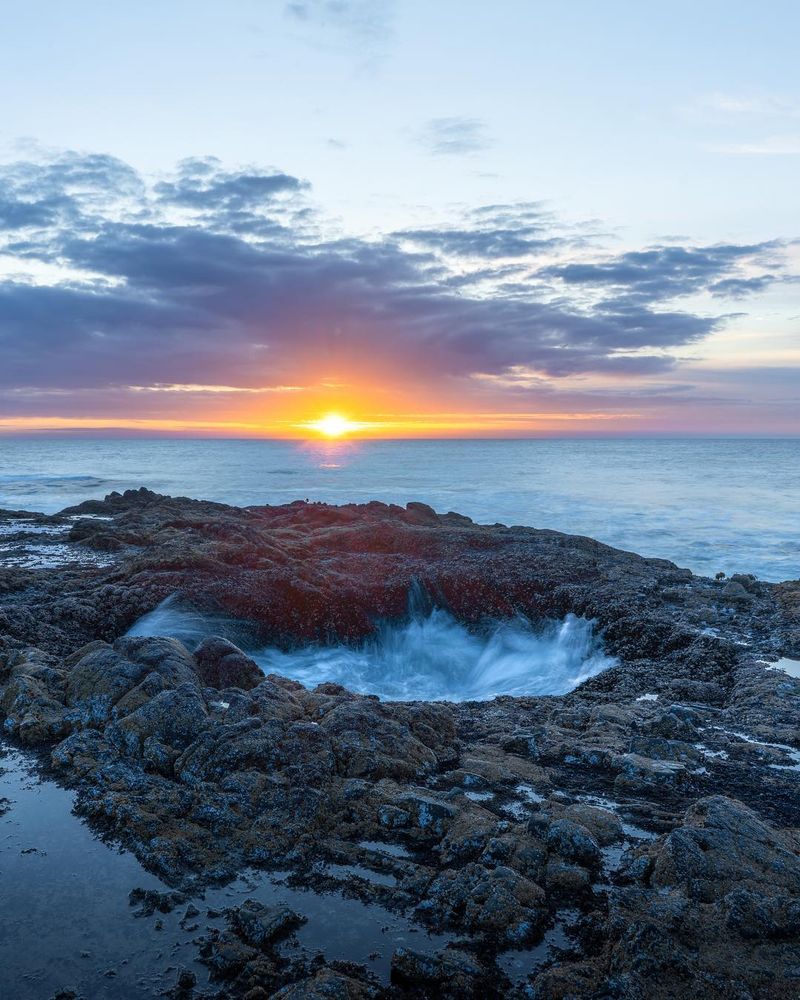
Thor’s Well earned its ominous nickname as the gate to hell because this gaping sinkhole in the coastal rock appears to drain the entire Pacific Ocean into an endless abyss. Located in the Cape Perpetua Scenic Area near Yachats, this natural saltwater fountain creates a mesmerizing display when waves crash over the rim and swirl violently before seemingly vanishing into the earth.
High tide and stormy conditions produce the most spectacular shows, with water erupting skyward in explosive plumes that photographers dream about capturing.
The geological formation is actually a collapsed sea cave with a hole in its roof, creating the illusion of a bottomless pit when viewed from above. Timing your visit requires checking tide charts and weather forecasts because calm seas produce disappointing trickles while winter storms deliver heart-pounding drama.
Adventurous visitors brave the slippery rocks to get close-up views, but extreme caution is necessary since rogue waves have swept people off the ledges in the past.
You can access Thor’s Well via the Captain Cook Trail near milepost 167 on Highway 101 south of Yachats, though no specific street address exists for this natural feature. Plan to arrive about an hour before high tide to watch the transformation from quiet pool to churning cauldron as the ocean rises.
The surrounding tide pools host colorful sea stars, anemones, and other marine life worth exploring between wave sets.
Oregon’s rugged coastline delivers countless photo opportunities, but few match the raw power and mystery of watching the ocean seemingly disappear into Thor’s Well.
4. Wolf Creek: Haunted Inn and Ghost Town Mysteries
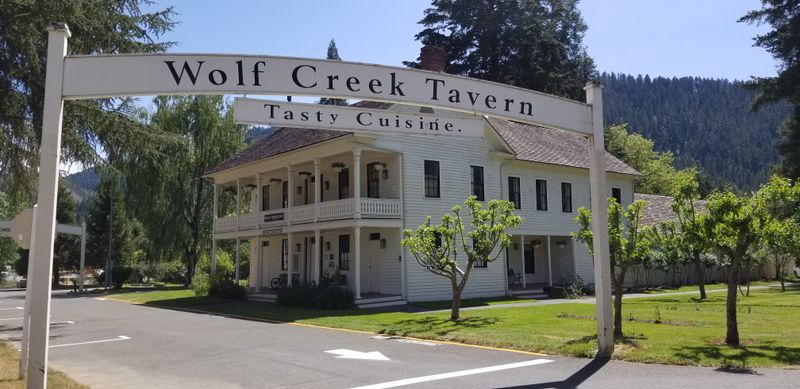
Wolf Creek Inn stands as Oregon’s oldest continuously operating hotel, welcoming travelers since 1883 with creaky floors, antique furnishings, and more than a few reported ghost sightings. Famous guests like Jack London once signed the register, and local legends claim his spirit still wanders the upstairs hallways late at night.
The inn underwent careful restoration to preserve its Victorian charm while adding modern comforts, creating a unique blend of historical authenticity and cozy hospitality that transports you back to the gold rush era.
Just down the road, the Golden State Heritage Site reveals the skeletal remains of a once-thriving mining settlement that boomed and busted within a few decades. Weathered buildings lean at precarious angles, their empty windows staring out like hollow eyes across the overgrown landscape.
Exploring this ghost town feels like stepping onto a movie set, except the history here is absolutely real, with rusted mining equipment and crumbling foundations telling stories of fortune seekers who chased dreams into these remote Oregon hills.
The inn sits at 100 Front Street, Wolf Creek, OR 97497, offering overnight stays in rooms that maintain their period character complete with quilts and oil lamps as decor. Dining in the restaurant downstairs lets you sample hearty comfort food while soaking up the atmosphere of a bygone era.
Paranormal enthusiasts book rooms specifically hoping for supernatural encounters, though skeptics find plenty to appreciate in the architecture and history alone.
Combine your inn visit with a hike to the nearby ghost town ruins for a full day of stepping back through Oregon’s colorful past.
5. Oakridge: The Other Crater Lake You’ve Never Heard Of
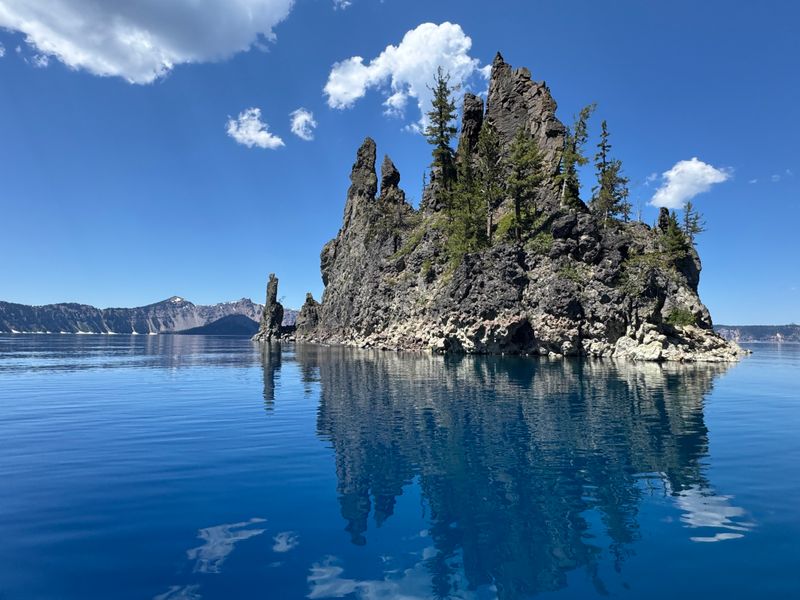
Little Crater Lake glows with such impossibly bright turquoise water that first-time visitors assume someone dumped dye into the pool as a prank. This hidden geological wonder near Oakridge has nothing to do with the famous Crater Lake in southern Oregon except for sharing a name and equally stunning blue hues.
The crystal-clear spring maintains a bone-chilling 34 degrees Fahrenheit year-round, fed by underground aquifers that bubble up from deep within the earth to create this 45-foot-deep sapphire jewel in the forest.
A wooden boardwalk encircles the pool, allowing visitors to peer straight down through the transparent water to see fallen logs and rocks resting on the bottom decades after they sank. The extreme cold prevents swimming, though that doesn’t stop a few brave souls from taking quick dips during summer heat waves before scrambling out with chattering teeth.
Surrounding old-growth forest creates a cathedral-like setting, with towering trees filtering sunlight into dappled patterns that dance across the water’s surface.
You’ll find Little Crater Lake along Forest Road 58 near the Clackamas River, accessible via a short, easy trail suitable for all ages and fitness levels. No formal street address exists since this natural feature sits on National Forest land, but GPS coordinates or forest service maps guide you directly there.
The site includes a primitive campground nearby if you want to wake up to this magical view, though the pool looks equally enchanting during day visits.
Pack layers because the forest stays cool even in summer, and bring a camera to capture this secret slice of Oregon paradise that most people drive right past without knowing it exists.
6. Joseph: Bronze Sculptures in an Unexpected Art Town

Joseph transformed itself from a sleepy ranching community into an unlikely art destination, with massive bronze sculptures appearing on street corners and in galleries throughout this eastern Oregon town.
The Wallowa Lake area provides a stunning backdrop of glacier-carved valleys and snow-capped peaks, but the real surprise comes from discovering world-class foundries producing sculptures that end up in museums and private collections worldwide.
Walking down Main Street feels like touring an outdoor gallery, with life-sized cowboys, Native American figures, and wildlife frozen in bronze poses that capture the spirit of the American West.
Several bronze foundries operate in Joseph, offering tours where you can watch artisans pour molten metal into molds and chase intricate details into cooling sculptures. The Valley Bronze Foundry and others have attracted artists from around the globe who appreciate the combination of technical expertise and artistic vision concentrated in this remote location.
Gallery openings and art walks happen regularly, giving visitors chances to meet sculptors and learn about the complex process of creating these monumental works.
Main Street runs through the heart of Joseph, lined with galleries, cafes, and shops showcasing everything from bronze miniatures to furniture-sized installations. The town sits at approximately 101 N Main Street, Joseph, OR 97846 as a general downtown reference, though individual galleries have specific addresses worth exploring.
Plan to spend several hours wandering between studios, watching demonstrations, and maybe commissioning a piece to take home. Nearby Wallowa Lake offers hiking, boating, and scenic tramway rides that complement your art-focused visit.
Oregon’s cultural diversity shines brightest in unexpected places like Joseph, where cowboy heritage meets contemporary artistry in bronze.
7. Cottage Grove: Where Covered Bridges Star in Movies
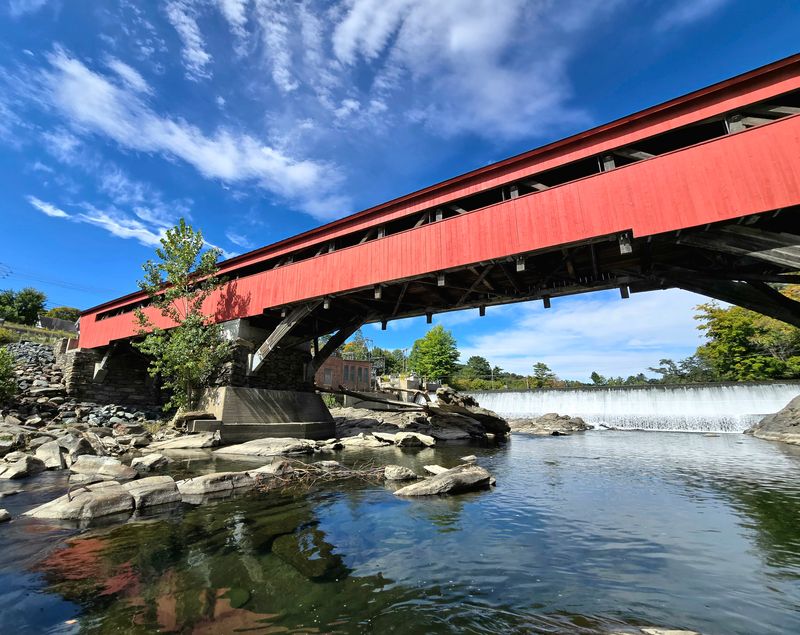
Cottage Grove earned its nickname as the Covered Bridge Capital of the West by preserving six historic wooden bridges that span creeks and rivers throughout the surrounding countryside. These photogenic structures date back to the early 1900s when covered roofs protected the wooden roadbeds from Oregon’s relentless rain, extending their lifespan by decades.
Movie fans recognize the Chambers Railroad Bridge from the classic film Stand By Me, where young actors walked the tracks in one of cinema’s most memorable coming-of-age scenes.
Each bridge displays unique architectural details and paint schemes, making a self-guided driving tour feel like a treasure hunt through rural Oregon landscapes. The Centennial Bridge stretches 180 feet across the Coast Fork Willamette River, while the shorter Currin Bridge features bright white paint that practically glows against the surrounding greenery.
Local volunteers maintain these structures with pride, organizing annual festivals and tours that celebrate this quirky claim to fame.
Pick up a covered bridge tour map at the Cottage Grove Visitor Center located at 700 E Gibbs Avenue, Cottage Grove, OR 97424, which provides directions and historical background for each bridge.
Most bridges remain open to vehicle traffic, though some now serve only pedestrians and cyclists, allowing you to walk through and examine the hand-hewn beams and wooden pegs holding everything together.
Photography enthusiasts visit during fall when maple trees explode in golden and crimson colors, framing the rustic bridges in seasonal splendor. Spring brings wildflowers carpeting the roadside meadows, creating equally stunning compositions.
Small-town Oregon charm radiates from every weathered board and hand-painted sign directing you to the next covered bridge on your route.
8. Antelope: Ghost Town with a Wild Cult History
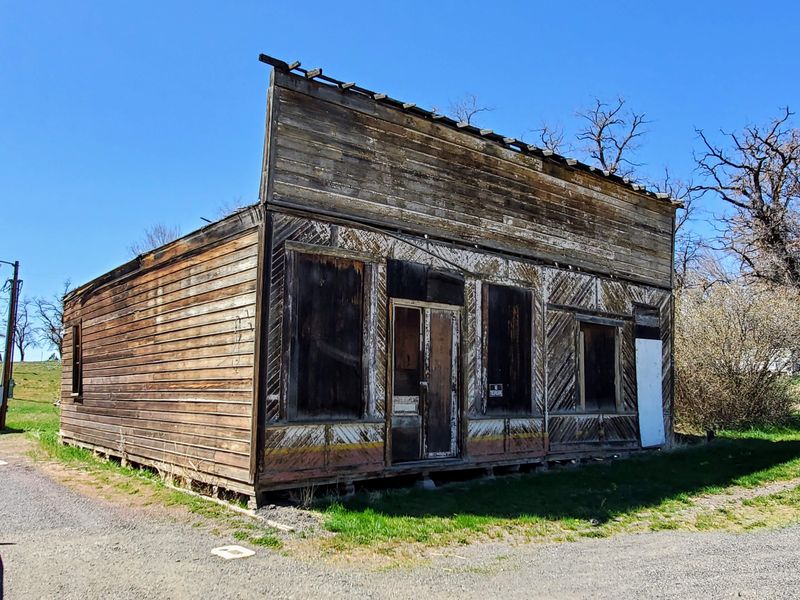
Antelope carries one of the strangest stories in Oregon history, having been temporarily taken over in the early 1980s by followers of the controversial guru Bhagwan Shree Rajneesh who established a massive commune nearby.
The tiny town of fewer than fifty residents suddenly found itself outnumbered and outvoted as commune members moved in, renamed the town Rajneesh, and painted buildings in the guru’s signature colors.
When the commune collapsed amid criminal investigations and legal battles, the renamed settlement reverted to Antelope, leaving behind empty buildings and bizarre memories of that surreal chapter.
Today, Antelope functions as a quiet ranching community again, though remnants of the Rajneeshpuram commune still dot the landscape around the former Big Muddy Ranch. The experience transformed into an educational opportunity, with some facilities now serving as a youth camp that teaches leadership and outdoor skills.
Visitors curious about this wild period of Oregon history find few physical traces remaining, though locals occasionally share stories about the strange years when thousands of red-clad followers flooded their isolated corner of the state.
The town sits along Highway 218 in remote Wasco County, with the main intersection serving as the de facto center at approximately Antelope, OR 97001 for mailing purposes. No formal tourist facilities exist, making this more of a drive-through historical curiosity than a destination with amenities.
Documentary films and books have chronicled the Rajneeshpuram saga in detail, providing context that makes visiting the actual location even more surreal. Oregon’s high desert landscape stretches endlessly in all directions, emphasizing how isolated this community was when it became ground zero for one of America’s most controversial intentional communities.
Dear Reader: This page may contain affiliate links which may earn a commission if you click through and make a purchase. Our independent journalism is not influenced by any advertiser or commercial initiative unless it is clearly marked as sponsored content. As travel products change, please be sure to reconfirm all details and stay up to date with current events to ensure a safe and successful trip.
