Oregon is full of surprises waiting around every bend, especially when you lace up your hiking boots and hit the trails.
Some paths lead to waterfalls, others to mountain peaks, but a few special trails seem to open doors to something more magical.
These aren’t your ordinary walks in the woods; they’re adventures that transport you to landscapes so stunning they feel like portals to another world.
Whether you’re seeking hidden caves, ancient forests, or coastal wonders, Oregon’s trails offer gateways to experiences you’ll never forget.
From moss-covered wonderlands to dramatic cliffs overlooking the Pacific, each trail on this list holds its own secret magic.
Pack your sense of wonder along with your water bottle, because these seven Oregon trails might just lead you somewhere extraordinary.
Get ready to explore paths that blur the line between reality and fantasy, where every step feels like crossing into a realm of pure adventure.
1. Eagle Creek Trail – Columbia River Gorge
Imagine walking along a narrow path carved into a cliff face, where waterfalls tumble from heights that make your heart skip a beat.
Eagle Creek Trail delivers exactly this kind of jaw-dropping scenery, making it one of the most photographed hikes in the entire Pacific Northwest.
The trail winds through old-growth forest where Douglas firs tower overhead like ancient guardians of a forgotten realm.
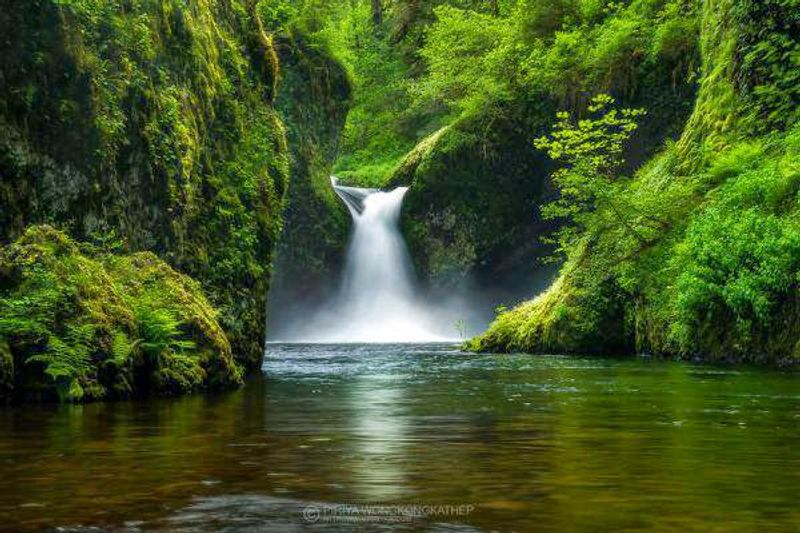
Within the first two miles, you’ll encounter Metlako Falls and Punch Bowl Falls, each one more stunning than the last.
The real magic happens when you reach Tunnel Falls at about six miles in, where the path actually goes behind the waterfall itself.
Walking through that misty tunnel while water crashes just feet away feels like stepping through a portal into a fantasy novel.
The trail continues for over thirteen miles if you’re feeling ambitious, but even a short journey rewards you with unforgettable views.
Cable handrails bolted into the cliff face add a touch of adventure, though they also remind you to watch your step.
Spring brings the most dramatic water flow, when snowmelt swells the creek into a thundering spectacle.
Wildflowers bloom along the trail in late spring, painting the forest floor in purple, yellow, and white.
Remember to grab a permit before you go, as this popular trail requires reservations to protect its delicate ecosystem.
The trail reopened in 2022 after fire damage, and nature has been busy reclaiming its beauty.
Pack layers because the temperature drops near the waterfalls, where mist creates its own microclimate.
This trail doesn’t just show you beautiful scenery—it immerses you in an adventure that awakens your inner explorer.
2. Oneonta Gorge Trail – Columbia River Gorge
Ever wondered what it’s like to hike through an actual river canyon where the walls close in so tight you can touch both sides?
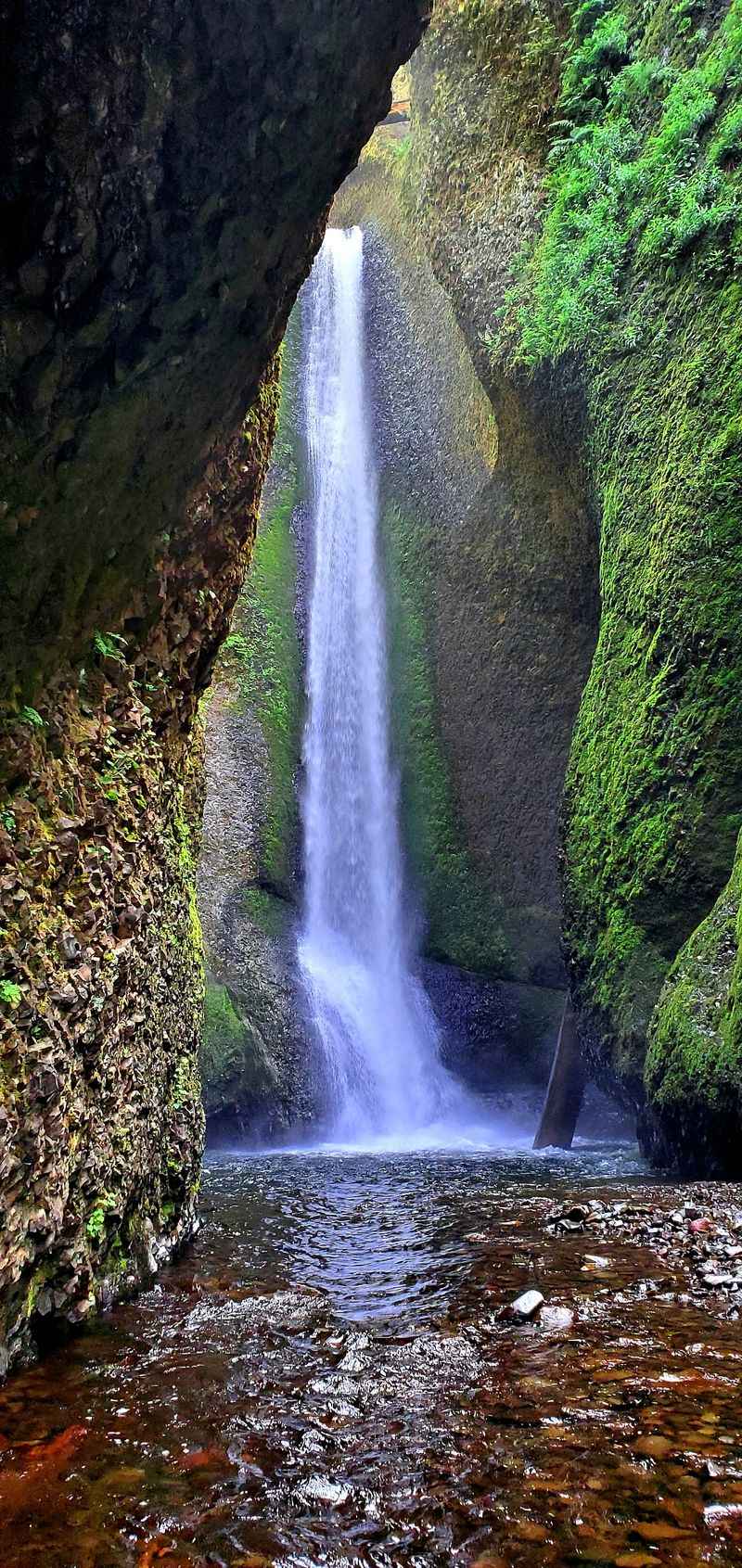
Oneonta Gorge offers exactly that experience, requiring you to wade through waist-deep water to reach a hidden waterfall.
This isn’t your typical forest trail; it’s more like an aquatic obstacle course through a prehistoric-looking slot canyon.
Towering basalt walls rise on either side, draped in emerald moss and delicate ferns that thrive in the constant mist.
The water stays cold year-round, so most hikers wait until summer when temperatures make the chilly wade more bearable.
You’ll need to scramble over a logjam partway through, which adds an element of challenge that makes reaching the waterfall even more rewarding.
The journey is only about half a mile, but it takes time because you’re literally walking upstream against the current.
When you finally round the last bend, Lower Oneonta Falls appears like a secret treasure hidden from the outside world.
Water pours down a 100-foot cliff into a pool surrounded by walls that seem to glow green with life.
The acoustics in the narrow gorge amplify the sound of falling water into a symphony of nature.
Bring water shoes with good grip because the rocks underfoot can be slippery and unpredictable.
Leave your phone in a waterproof bag unless you fancy buying a new one.
The gorge can close during high water or when logjams become dangerous, so check conditions before you go.
This short but intense adventure proves that sometimes the best portals to magic require getting a little wet and wild.
3. Tamolitch Blue Pool Trail – McKenzie River
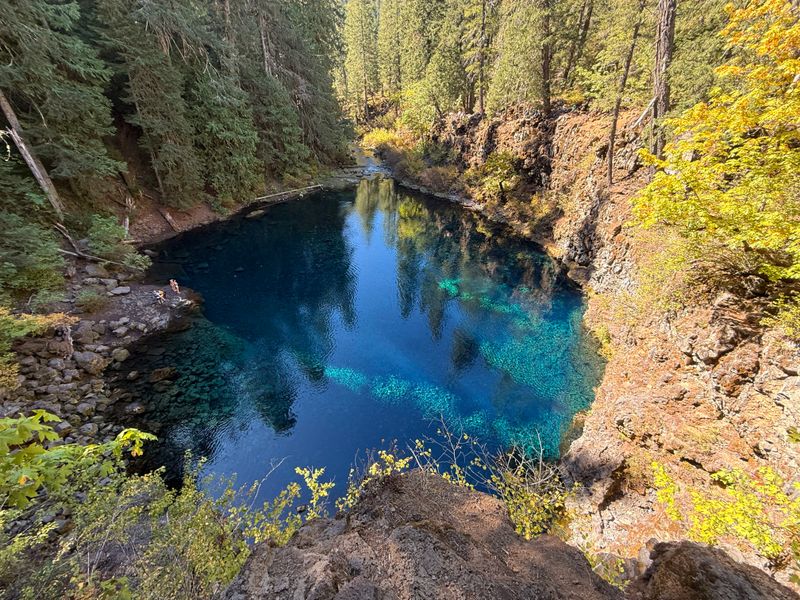
Picture a pool of water so impossibly blue it looks like someone poured liquid sapphire into a forest clearing.
Tamolitch Blue Pool, also called the Blue Pool, sits along the McKenzie River Trail and stops hikers in their tracks with its otherworldly color.
The truly bizarre part? No visible water flows into this pool; the river disappears underground three miles upstream and mysteriously reappears here.
The phenomenon creates a spring-fed pool that maintains a constant temperature of about 37 degrees year-round.
That frigid temperature keeps the water crystal clear, allowing you to see straight to the bottom despite its depth.
The hike to reach this natural wonder is relatively easy, covering about four miles round trip through old-growth forest.
Ancient lava flows shaped this landscape thousands of years ago, creating the underground channels that make the magic possible.
Moss-covered trees and nurse logs line the trail, giving the whole area a fairytale atmosphere even before you reach the pool.
When you finally arrive, the contrast between the vibrant blue water and the dark lava rocks creates a scene that doesn’t look quite real.
Swimming is technically allowed, but the icy water means most visitors just dip their toes and snap photos.
The pool changes appearance depending on light and season, sometimes glowing turquoise, other times appearing deep sapphire blue.
Visit on a weekday if possible because this Instagram-famous spot attracts crowds on weekends.
The trail continues beyond the pool if you want to extend your adventure deeper into the forest.
Bring a camera with a polarizing filter to truly capture the intensity of that impossible blue.
This trail offers proof that Oregon’s geology creates natural portals to beauty that seems almost too magical to be real.
4. Proxy Falls Loop – McKenzie Pass
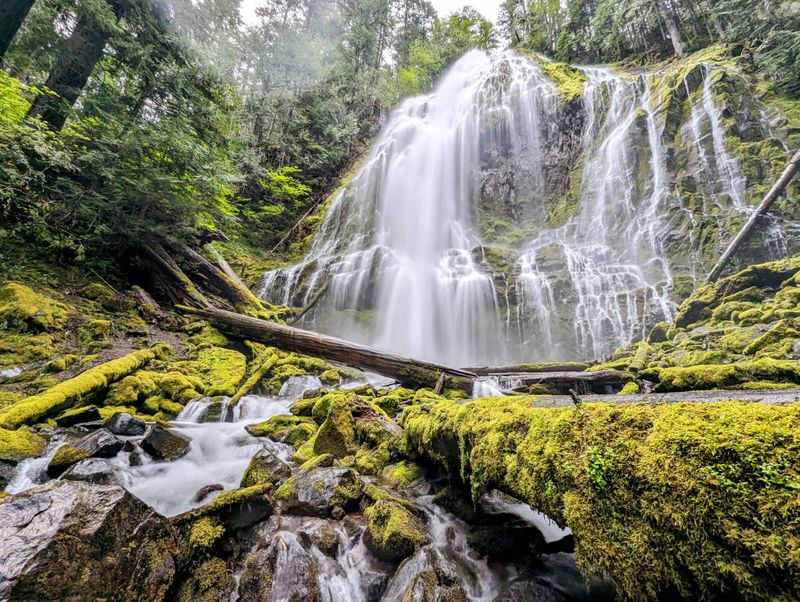
Some waterfalls thunder down into pools, but Proxy Falls does something different—it disappears into the ground like water draining through a giant sieve.
This short loop trail takes you to not one but two spectacular waterfalls, each with its own personality and charm.
The hike is only about 1.5 miles total, making it perfect for families or anyone who wants maximum beauty with minimal effort.
Lower Proxy Falls is the show-stopper, a 200-foot cascade that spreads across moss-covered lava rock like a bridal veil.
The water doesn’t collect in a pool at the bottom; instead, it vanishes into the porous volcanic rock, creating an eerie and fascinating sight.
Boardwalks and well-maintained paths make the trail accessible while protecting the delicate moss gardens.
Upper Proxy Falls is narrower and more concentrated, plunging straight down in a powerful column of white water.
The forest surrounding both falls feels primeval, with old-growth trees and a thick understory of ferns and huckleberry bushes.
July through September offers the best hiking conditions, after snowmelt has cleared the access road.
The volcanic soil here supports a unique ecosystem where plants seem to grow directly out of solid rock.
Photographers love the soft light that filters through the forest canopy, especially in early morning or late afternoon.
The sound of falling water follows you throughout the entire loop, creating a peaceful soundtrack to your adventure.
Despite being close to the highway, the trail feels remote and magical once you’re surrounded by trees.
Pack bug spray during summer because mosquitoes appreciate this moist environment as much as the plants do.
This easy trail proves that adventure portals don’t always require extreme effort—sometimes magic waits just a short walk away.
5. Cape Perpetua Coastal Trail – Oregon Coast
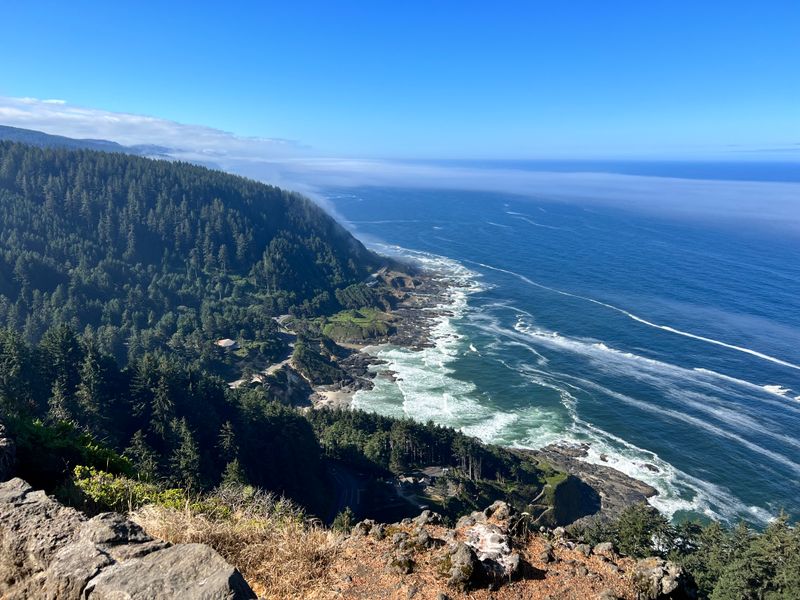
Where the land meets the Pacific Ocean, Cape Perpetua rises 800 feet above the waves, offering views that stretch to the horizon and beyond.
The coastal trail system here winds through ancient Sitka spruce forests before emerging onto rocky headlands where waves explode against volcanic rock.
Thor’s Well, a seemingly bottomless sinkhole in the rocks, churns with incoming waves like the drain at the bottom of the ocean.
During high tide and rough seas, water shoots up through the hole in dramatic fountains that can reach surprising heights.
The Spouting Horn, another geological wonder along the trail, blasts seawater skyward through a narrow crack in the basalt.
Tide pools scattered along the shore create miniature worlds where sea stars, anemones, and hermit crabs go about their business.
The forest section of the trail feels like walking through a natural cathedral, with massive trees that have weathered centuries of coastal storms.
Interpretive signs along the way explain how indigenous people lived here for thousands of years, harvesting shellfish and plants.
The Cape Perpetua Scenic Area Visitor Center offers exhibits about the area’s natural and cultural history.
Multiple trail options mean you can customize your adventure from a short stroll to an all-day expedition.
Winter storms create the most dramatic wave action, though summer offers easier hiking and calmer seas for tide pool exploration.
Watch for migrating gray whales between December and June as they pass close to shore.
The Captain Cook Trail takes you through a tunnel under the highway to reach pristine tide pool areas.
Bring binoculars because bald eagles, peregrine falcons, and seabirds patrol these cliffs regularly.
This trail complex offers multiple portals to adventure, from forest mystique to the raw power of the Pacific Ocean.
6. Sahalie and Koosah Falls Loop – McKenzie River
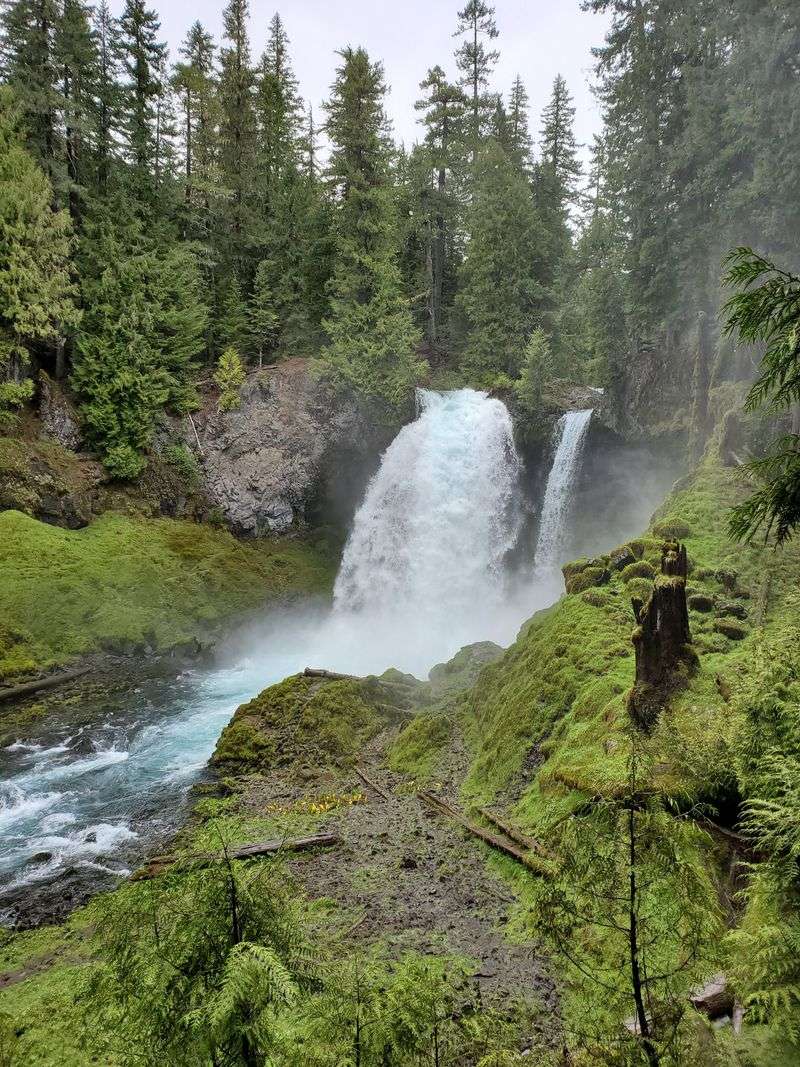
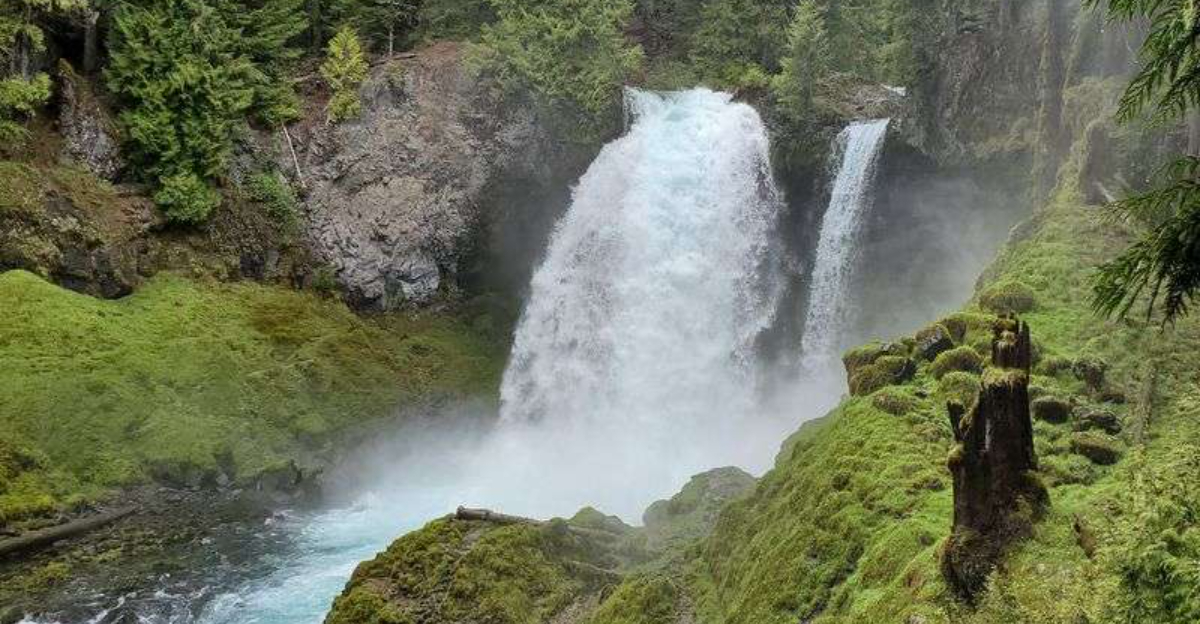
Did you know that “Sahalie” means “high” and “Koosah” means “heaven” in the Chinook language? These twin waterfalls live up to their celestial names.
The loop trail connecting them is only 2.6 miles, but it packs more waterfall power per mile than almost anywhere else in Oregon.
Sahalie Falls drops 100 feet in a thundering curtain of white water that you can feel in your chest from the viewing platform.
The mist from the falls creates rainbows on sunny days, adding an extra touch of magic to the already spectacular scene.
A short walk downstream brings you to Koosah Falls, which spreads wider and flows more gently over a series of lava ledges.
The contrast between the two falls; one powerful and concentrated, the other broad and graceful; shows nature’s range of artistic expression.
Between the falls, the McKenzie River flows the color of blue Gatorade, thanks to glacial minerals and the clarity of the water.
The trail follows the river through old-growth forest where trees grow to massive proportions in the rich volcanic soil.
Moss covers every surface, creating a green tapestry that makes the forest feel enchanted.
Carmen Reservoir sits just upstream, and the trail system connects to longer routes if you want to extend your exploration.
Autumn transforms the forest into a gallery of gold and amber when vine maples turn color.
Winter brings snow that decorates the falls with ice sculptures, though the trail can be challenging without proper footwear.
The trail is paved and accessible in many sections, making these powerful waterfalls available to most visitors.
Arrive early during summer weekends because this popular loop fills up fast.
These waterfalls offer a portal to Oregon’s volcanic past, where ancient lava flows shaped the landscape into platforms for falling water.
7. Painted Hills – John Day Fossil Beds
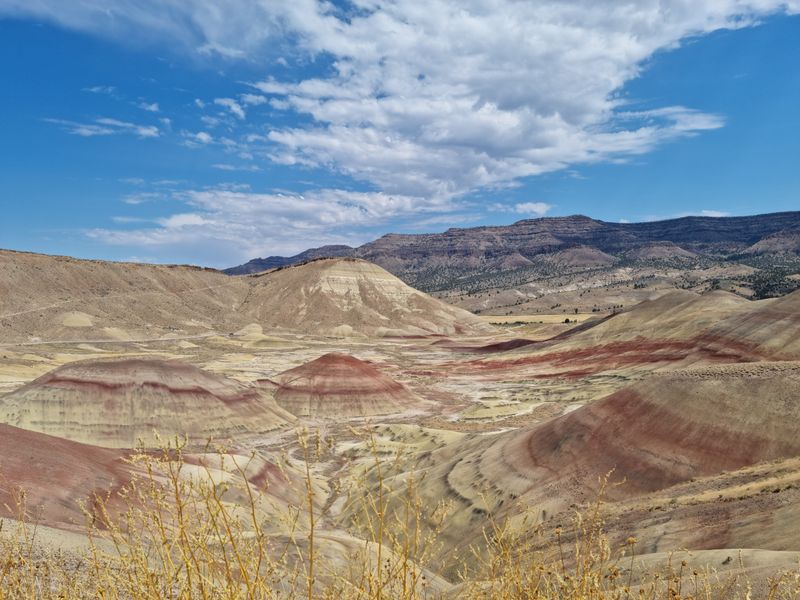
Stepping onto the trails at Painted Hills feels like walking onto another planet, where the ground itself is painted in stripes of red, gold, black, and bronze.
These aren’t ordinary hills; they’re layers of ancient volcanic ash that settled here over millions of years, each color representing a different climate era.
The Painted Hills Overlook Trail is the shortest option at just half a mile, but it delivers views that photographers travel across the country to capture.
The colors shift throughout the day as the sun angle changes, with late afternoon light making the reds and golds absolutely glow.
After rain, the colors intensify dramatically as moisture brings out the minerals in the claystone.
The Carroll Rim Trail offers a longer 1.5-mile hike that takes you above the hills for a bird’s-eye perspective of the striped landscape.
Painted Cove Trail, a quarter-mile boardwalk loop, takes you directly among the colored hills where you can see the layers up close.
The clay soil here doesn’t support much plant life, creating an almost Martian landscape that contrasts sharply with Oregon’s usual greenery.
Scientists have found fossils of ancient plants and animals in these hills, revealing what life looked like 30 million years ago.
The area is part of the John Day Fossil Beds National Monument, which preserves one of the world’s most complete records of plant and animal evolution.
Summer temperatures can soar here since there’s little shade, so bring plenty of water and sun protection.
Spring wildflowers bloom on the surrounding hills, adding splashes of purple and yellow to frame the painted landscape.
The remoteness of this location means you might have the trails largely to yourself on weekdays.
No camping is allowed in the monument itself, but nearby areas offer places to stay.
This trail system opens a portal to deep time, where the Earth’s history is written in colorful layers you can read with your own eyes.
Dear Reader: This page may contain affiliate links which may earn a commission if you click through and make a purchase. Our independent journalism is not influenced by any advertiser or commercial initiative unless it is clearly marked as sponsored content. As travel products change, please be sure to reconfirm all details and stay up to date with current events to ensure a safe and successful trip.
