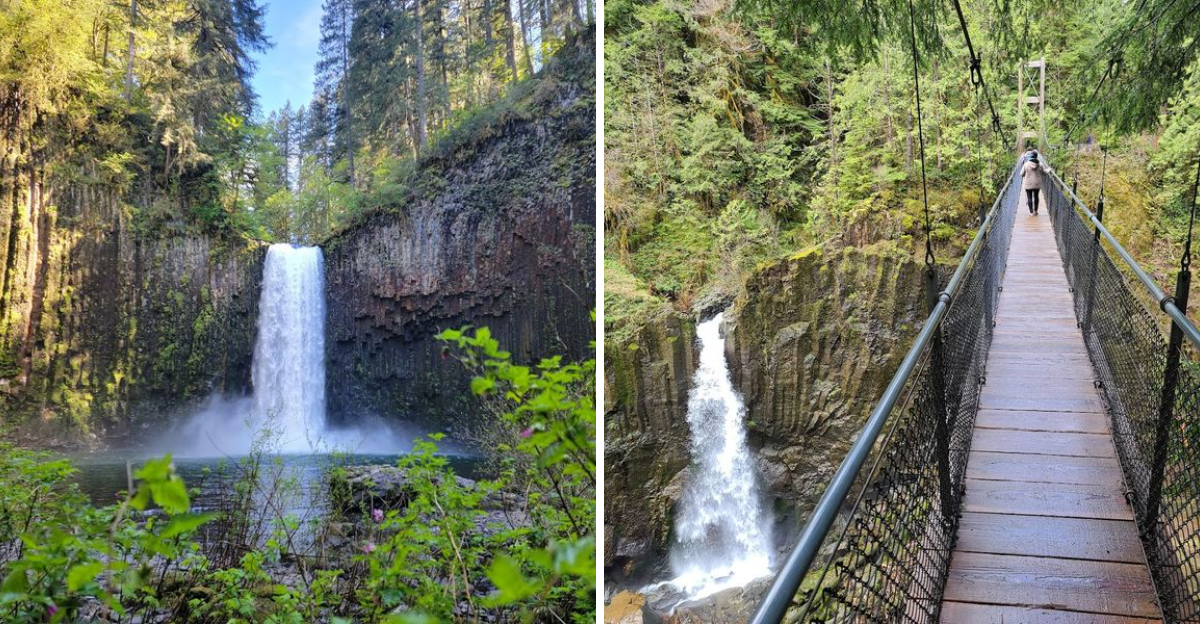
Multnomah Falls gets all the attention but sometimes the quieter trails offer even bigger surprises. I have stood at the bottom of famous waterfalls and found myself looking around at crowds instead of the view.
Oregon has short little hikes that take less than an hour and deliver pure magic at the end. The path might be only a mile but the waterfall waiting there makes every step feel completely worth it.
Water crashes into pools that shimmer with mist and rainbows that appear just when you need them. I took off my shoes and let my feet dangle into cool water while the spray cooled my face.
These trails are short enough for little legs and grandparents and everyone in between to enjoy together. Oregon really packed dramatic beauty into hikes that do not require a full day of commitment at all.
You can visit three or four of these in one afternoon and still be home for dinner easily. Big drama comes in small packages and these Oregon waterfalls prove that point with every roaring drop.
1. Proxy Falls, Three Sisters Wilderness, Oregon
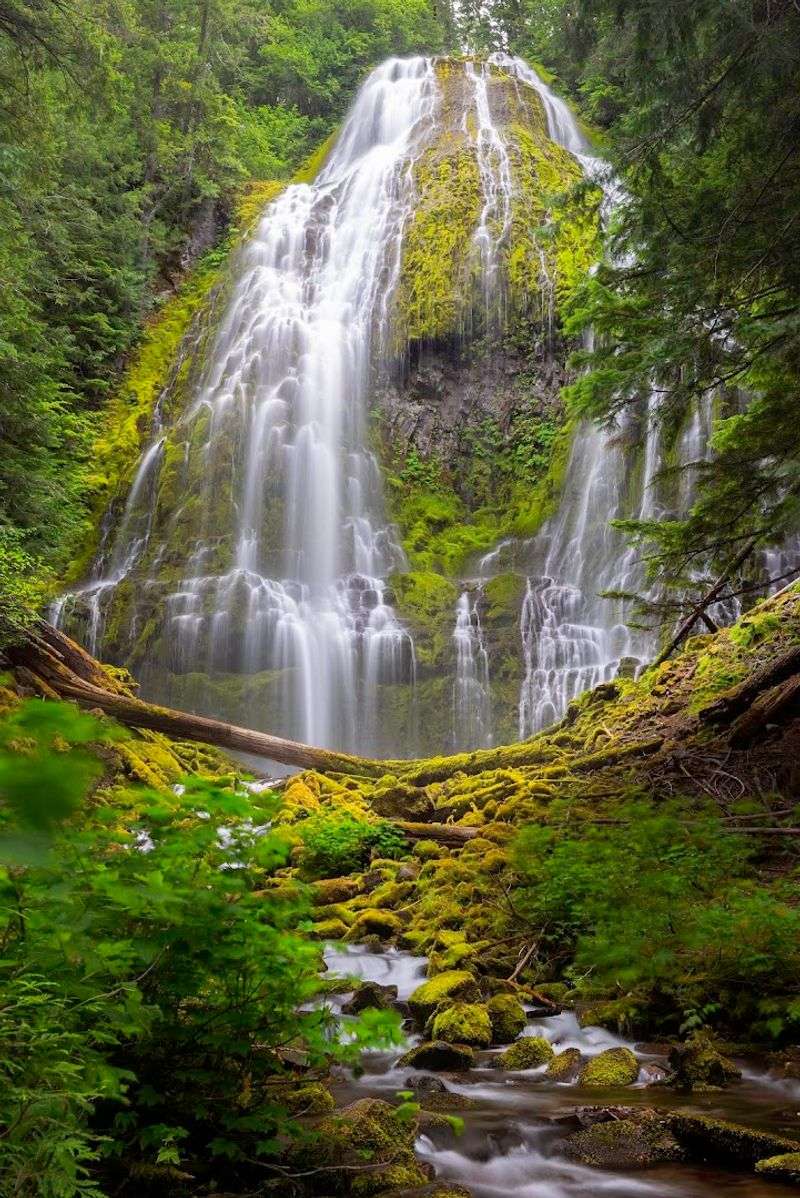
Proxy Falls might be the most photogenic waterfall in Oregon that no one argues about.
Located in the Three Sisters Wilderness near Sisters, Oregon, this hike is a 1.6-mile loop that rewards you with not one but two completely different waterfalls.
Upper Proxy drops in a narrow curtain over a mossy cliff. Lower Proxy fans out wide across a wall of dark volcanic basalt, spreading like a bridal veil caught in slow motion.
The lava rock here is so porous that the water simply vanishes into the ground at the base. There is no pool, no stream, just water disappearing into ancient rock.
That geological quirk alone makes this place feel like something out of a fantasy novel. The trail itself is easy and well-maintained, making it accessible for most hikers.
Peak wildflower season in July adds bursts of color along the path. Fall visits bring golden vine maple leaves that frame the falls in warm amber tones.
The trailhead sits along Highway 242, the McKenzie Pass-Santiam Pass Scenic Byway, which closes in winter. Plan your visit between late June and October for the best experience.
Crowds are lighter here than at Multnomah, especially on weekday mornings.
2. Ramona Falls, Mount Hood National Forest, Oregon
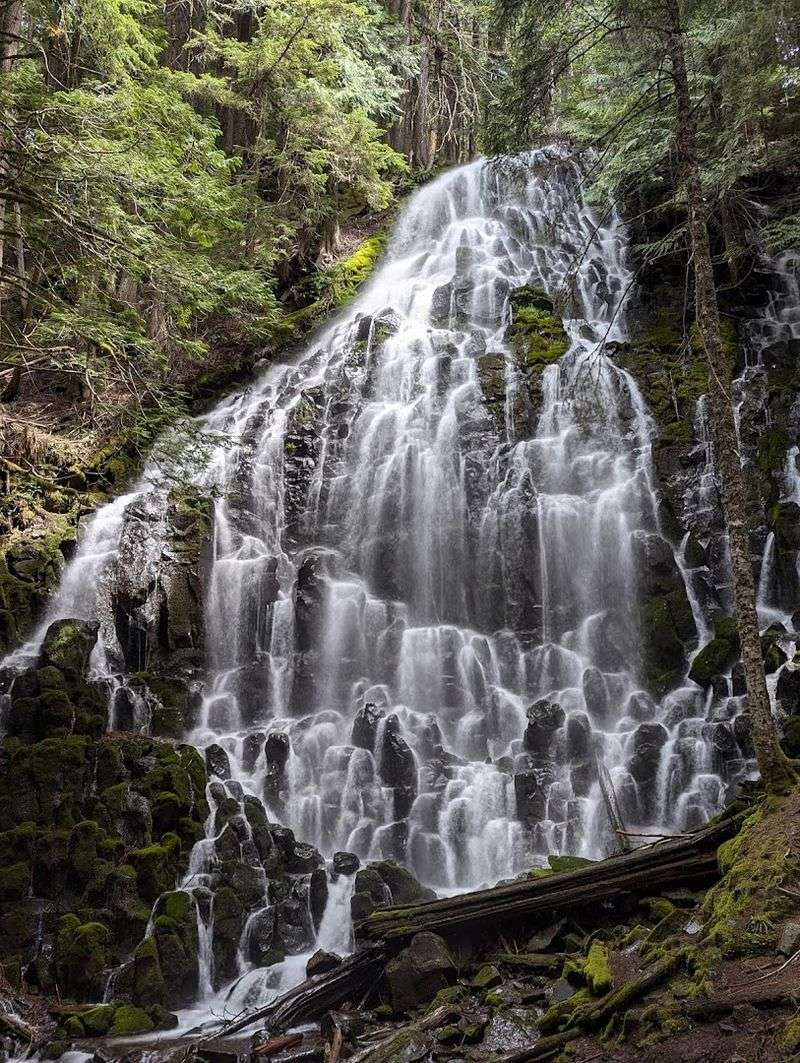
Standing in front of Ramona Falls feels like discovering a secret the rest of the world forgot to mention.
This stunning waterfall sits inside Mount Hood National Forest near Rhododendron, Oregon. The round-trip hike runs about 4.4 miles, but the falls themselves are so spectacular that every step feels worth it twice over.
The water tumbles down a wide, mossy wall of columnar basalt in dozens of separate streams. It looks less like a single waterfall and more like a living curtain made entirely of white silk.
The trail crosses the Sandy River twice, so trekking poles are helpful during high water in spring. Old-growth Douglas firs line the path, their massive trunks creating a cathedral-like atmosphere before you even reach the falls.
Rhododendrons bloom along the route in late May and early June, adding bursts of pink and purple to the already green landscape. This is one of the most quietly dramatic hikes on the entire mountain.
A Northwest Forest Pass is required for parking at the trailhead on Ramona Falls Trail Road. Arrive before 9 a.m. on summer weekends to snag a spot without circling the lot three times.
3. South Falls, Silver Falls State Park, Oregon
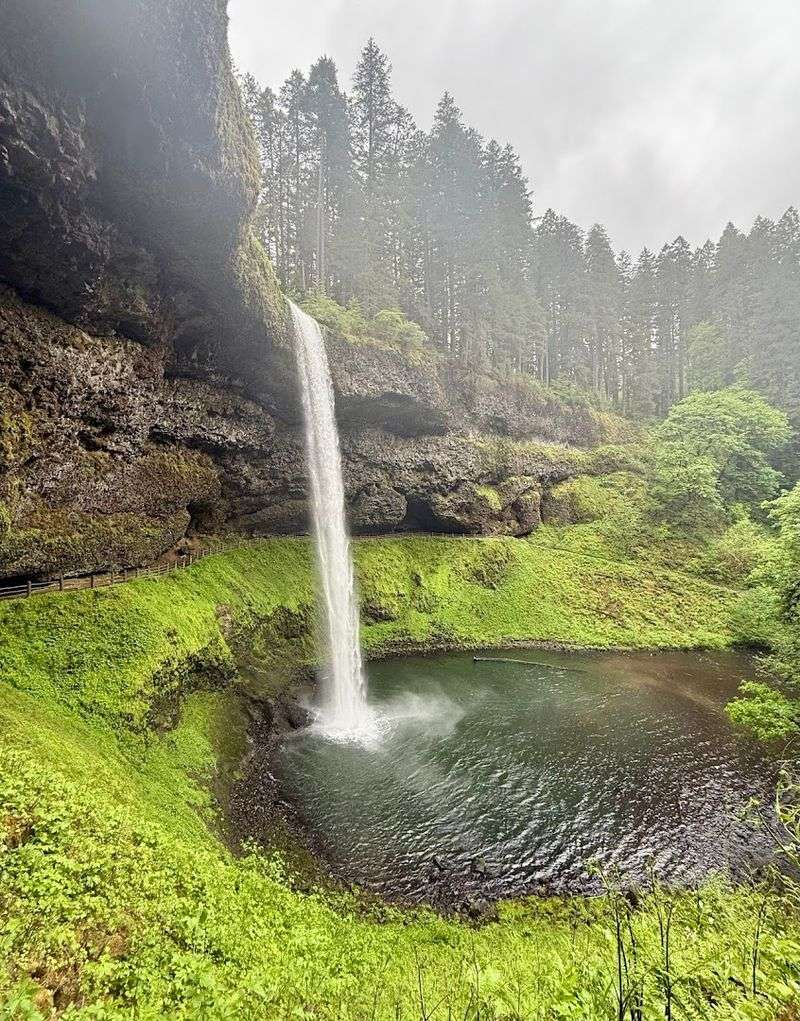
Walking behind a 177-foot waterfall is not something most hike descriptions can promise and actually deliver.
South Falls at Silver Falls State Park near Sublimity, Oregon does exactly that. The trail dips behind the curtain of falling water, giving you a view of the canyon from inside the falls itself.
The roar is enormous. The mist hits your face before you even see the water.
It is the kind of sensory moment that genuinely stops your feet mid-step.
South Falls is the crown jewel of the famous Trail of Ten Falls loop, but you can reach it on a short out-and-back in well under two miles. The basalt amphitheater that frames the falls was carved by ancient lava flows and shaped by centuries of erosion.
Silver Falls State Park is Oregon’s largest state park, covering over 9,000 acres of old-growth forest and canyon terrain. The park sits about an hour south of Portland, making it an easy day trip from the city.
Parking fills fast on summer weekends, so an early start is strongly recommended. The park charges a day-use fee, and the roads leading in are well-signed from Highway 214.
Late October brings golden big-leaf maple leaves tumbling down alongside the water.
4. Toketee Falls, Umpqua National Forest, Oregon
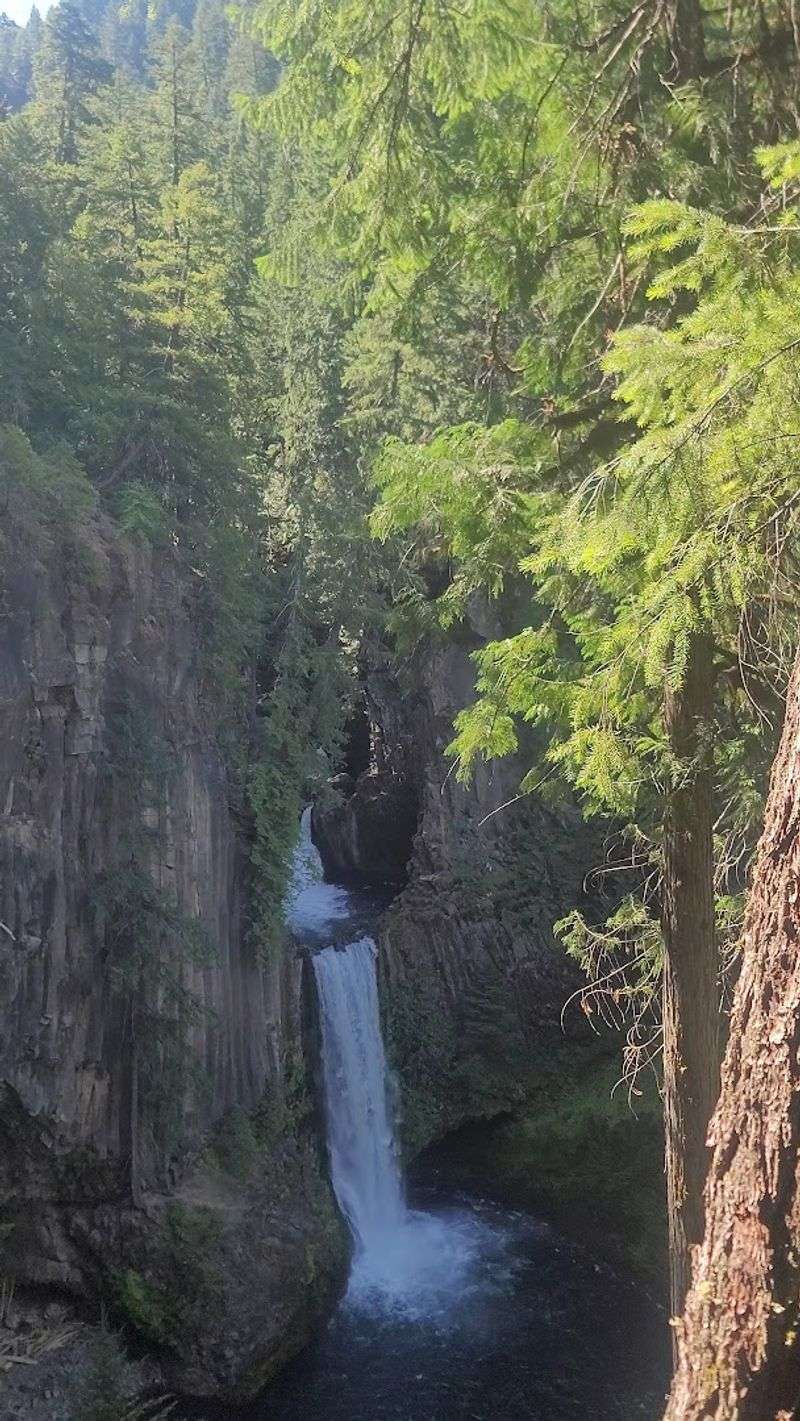
Some waterfalls are pretty. Toketee Falls is architectural.
Located in the Umpqua National Forest near Idleyld Park, Oregon, this two-tiered waterfall drops a combined 120 feet into a pool of blue-green water so vivid it looks digitally enhanced.
The real showstopper is the geology. Perfectly symmetrical columns of basalt frame the falls like a set of ancient stone pipes, creating a backdrop that looks more like a sculpture than a natural formation.
The hike to the viewpoint is only 0.8 miles round trip, making it one of the shortest big-payoff walks in the entire state. A wooden boardwalk and staircase lead you through dense forest before opening up to a fenced overlook platform above the plunge pool.
Swimming is not permitted at the main viewpoint, but the visual reward more than compensates. The name Toketee comes from a Chinook word meaning graceful or pretty, which is accurate but perhaps a bit understated.
The North Umpqua River corridor that surrounds this area is itself a scenic drive worth taking slowly. Highway 138 traces the river through miles of old-growth forest and past several other waterfalls.
Visiting on a cloudy day actually improves the photography here. Overcast light eliminates harsh shadows on the basalt columns and makes the pool color look even more surreal and vivid.
5. Wahclella Falls, Columbia River Gorge, Oregon
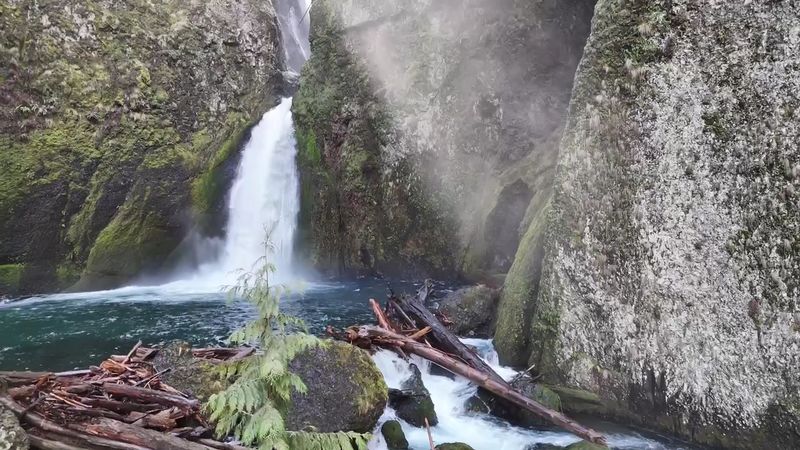
The Columbia River Gorge gets crowded fast, but Wahclella Falls earns its spot on every serious hiker’s list.
This 1.8-mile round-trip hike starts at the Bonneville Trailhead east of Cascade Locks, Oregon. It follows Tanner Creek through a narrow basalt canyon that grows more dramatic with every quarter mile.
The falls themselves drop in two tiers into a deep, churning pool ringed by mossy cliff walls. The canyon is so tight that the sound bounces off the rock and surrounds you completely.
Spring runoff in April and May turns Wahclella into a full-force spectacle, with spray drifting back up the canyon like fog. The trail can be muddy during this season, so waterproof boots are a smart call.
The path crosses a small footbridge midway through the hike, offering a great view back toward the creek below. Moss-covered boulders and cascading side streams keep the scenery interesting well before you reach the main event.
A Columbia River Gorge Scenic Area day-use permit is required for parking at this trailhead from March through October. The permit system helps manage crowds and keeps the trail in better condition.
Wahclella is far less trafficked than nearby Eagle Creek or Multnomah, which makes it feel like a genuine find even on a sunny Saturday. The canyon walls close in around you in the best possible way.
6. Abiqua Falls, Scotts Mills, Oregon
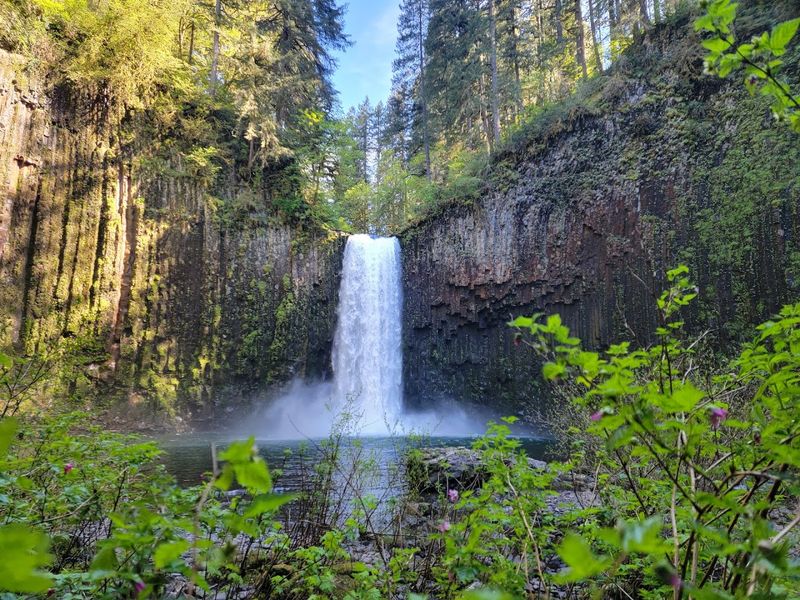
Getting to Abiqua Falls requires some effort, and that effort is exactly what keeps it wild.
Located near Scotts Mills in the Willamette Valley foothills of Oregon, this 92-foot waterfall drops into a perfectly circular basalt bowl that looks like it was carved by hand. The curved walls of columnar basalt surround the pool on three sides, creating a natural amphitheater of stone.
The access road is rough and often requires a high-clearance vehicle. Once you park, the hike down to the falls involves scrambling over rocks along the creek, so sturdy footwear is essential.
But when you step into that basalt bowl and tilt your head back, the effort evaporates immediately. The falls thunder down from above while mist swirls around the enclosed space like a private weather system.
Abiqua is not managed as a formal trailhead, which means no restrooms, no signs, and no crowds on most days. That raw, unmanicured quality is a big part of its appeal.
Late winter and early spring bring the highest water flow, which makes the falls most dramatic but the road most challenging. Summer visits offer calmer conditions and the chance to wade into the shallow edges of the pool.
This is one of those places that Oregon locals quietly keep to themselves. Once you visit, you will completely understand why they do.
7. Drift Creek Falls, Siuslaw National Forest, Oregon
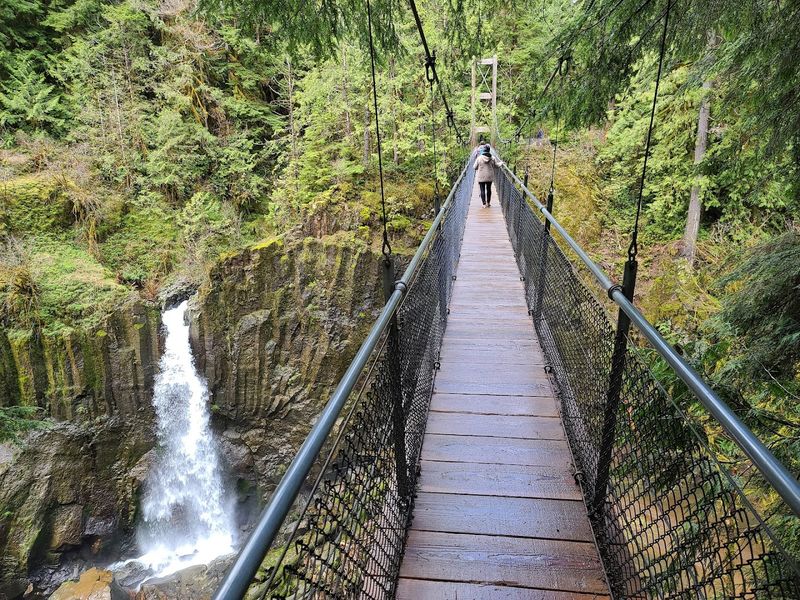
A suspension bridge hanging 100 feet above a canyon is already a good reason to show up.
Drift Creek Falls in the Siuslaw National Forest near Lincoln City, Oregon adds a 75-foot waterfall at the bottom of that canyon, making the whole experience feel like two adventures stacked on top of each other.
The 3-mile round-trip trail winds through second-growth coastal forest before reaching the bridge, which sways gently underfoot as you cross. Looking down through the bridge grating at the creek far below gets the adrenaline moving in a pleasant way.
From the bridge, a short descent leads to the base of the falls and the wide green pool below. The coastal forest here is thick and lush, fed by the heavy rainfall of Oregon’s Coast Range.
The trail is well-maintained and suitable for older children and most adults. Mud is common in fall and winter, so trekking poles add welcome stability on the return climb.
A Northwest Forest Pass is required for the parking area off Forest Road 17. The trailhead is located about 10 miles east of Lincoln City, making it a natural pairing with a coast trip.
Visiting in late November through February means you will likely have the trail almost entirely to yourself. The waterfall runs strongest during the rainy season, which in coastal Oregon means it is genuinely impressive.
8. Punchbowl Falls, Eagle Creek, Columbia River Gorge, Oregon
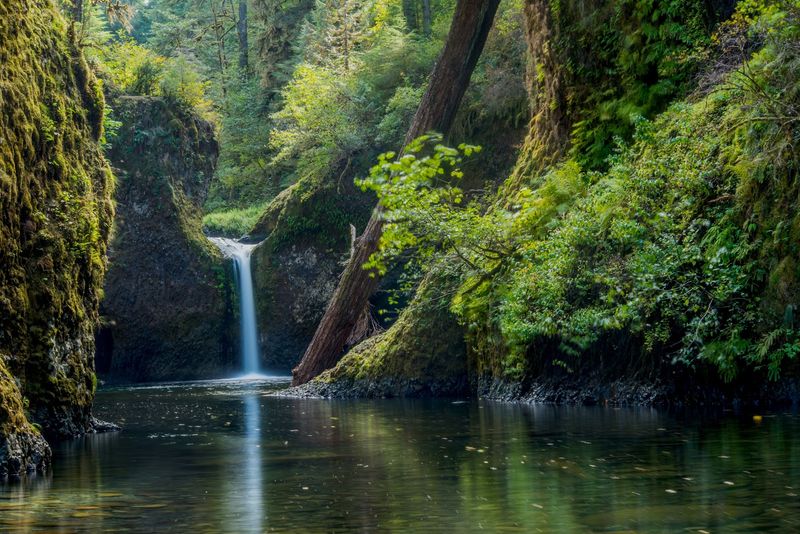
Few swimming holes in Oregon can match the pure visual impact of Punchbowl Falls.
Located along the Eagle Creek Trail in the Columbia River Gorge near Cascade Locks, Oregon, this waterfall pours over a wide lip of basalt into a large, circular emerald pool that practically glows on sunny days.
The round trip to Punchbowl is about 4.2 miles, but the first 2 miles follow the creek past smaller cascades and dramatic cliff walls. Each bend in the trail offers something new before you even reach the main event.
The pool at the base of the falls is one of the most photographed swimming spots in the entire Pacific Northwest. On warm summer days, the flat rocks around the pool fill with hikers cooling off after the trail.
Swimming is popular here but requires caution, as the water stays cold year-round and the current near the falls can be strong. Always check conditions before entering the water.
Eagle Creek Trail requires a timed-entry permit from May through September, which can be reserved through Recreation.gov. The permit system was introduced after wildfire damage in 2017 and helps protect the recovering landscape.
The gorge walls above the pool are draped in ferns and moss, giving the whole scene a lush, overgrown look that feels more like a rainforest than a Pacific Northwest canyon. Punchbowl rewards every single visit.
9. Watson Falls, Umpqua National Forest, Oregon
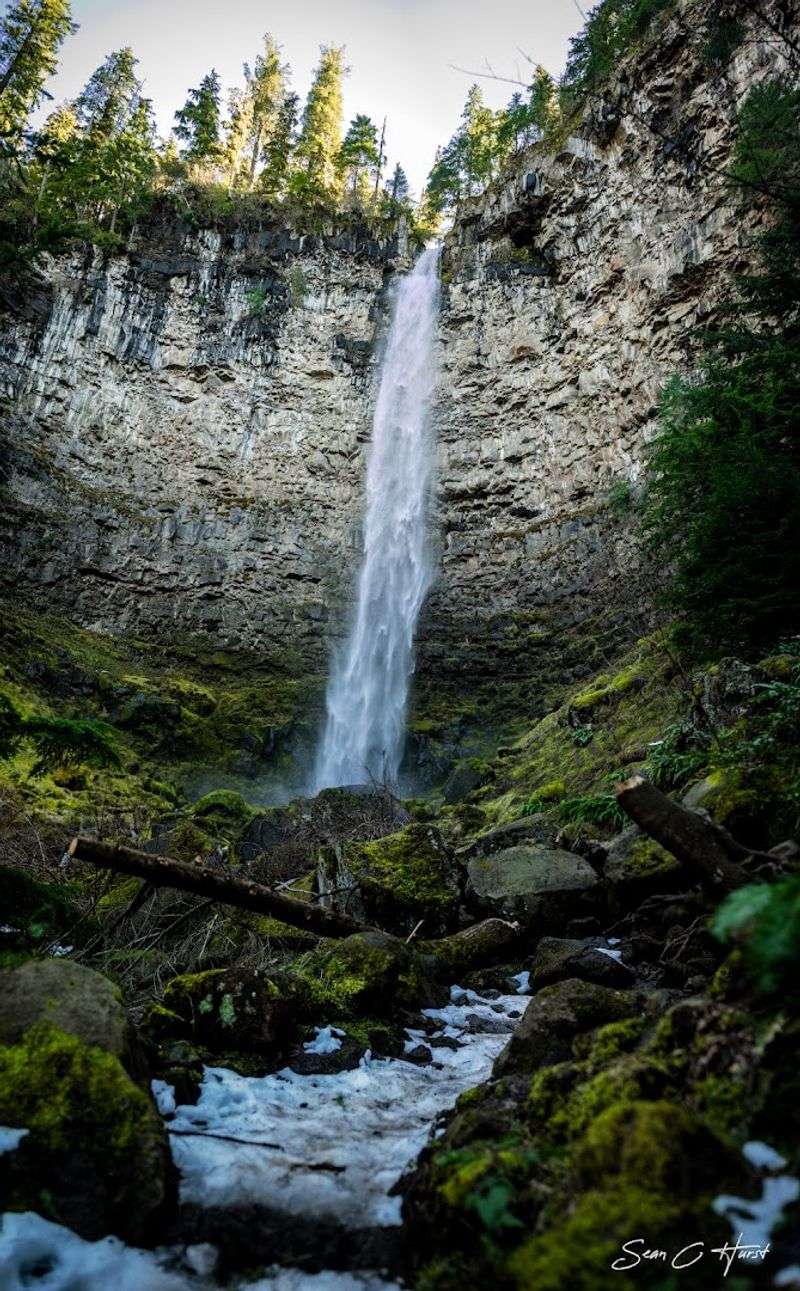
At 272 feet, Watson Falls is the third-tallest waterfall in Oregon, and most people have never heard of it.
Located in the Umpqua National Forest near Toketee, Oregon, the round-trip hike to the viewpoint is only 0.9 miles. That ratio of effort to reward is almost unfair to every other hike on this list.
The trail climbs steadily through old-growth Douglas fir forest before reaching a bridge and viewpoint directly in front of the falls. The single plunge drops in one clean, uninterrupted stream, creating a column of white water that disappears into mist long before it reaches the pool.
Spring and early summer bring the heaviest flow, when the falls roar loud enough to feel in your chest. By late summer the volume decreases, but the height alone keeps the scene striking and worth the short walk.
Watson Falls sits just a few miles east of Toketee Falls along Highway 138, making it easy to combine both into a single half-day outing. The North Umpqua corridor is one of Oregon’s most rewarding waterfall drives.
The parking area is small and fills quickly on summer weekends. Arriving before 10 a.m. gives you the best chance of a quiet, crowd-free experience at the viewpoint.
Standing at the base of a 272-foot freefall inside a cathedral of old-growth trees is the kind of moment that resets your sense of scale entirely.
10. Sahalie and Koosah Falls, McKenzie River, Oregon
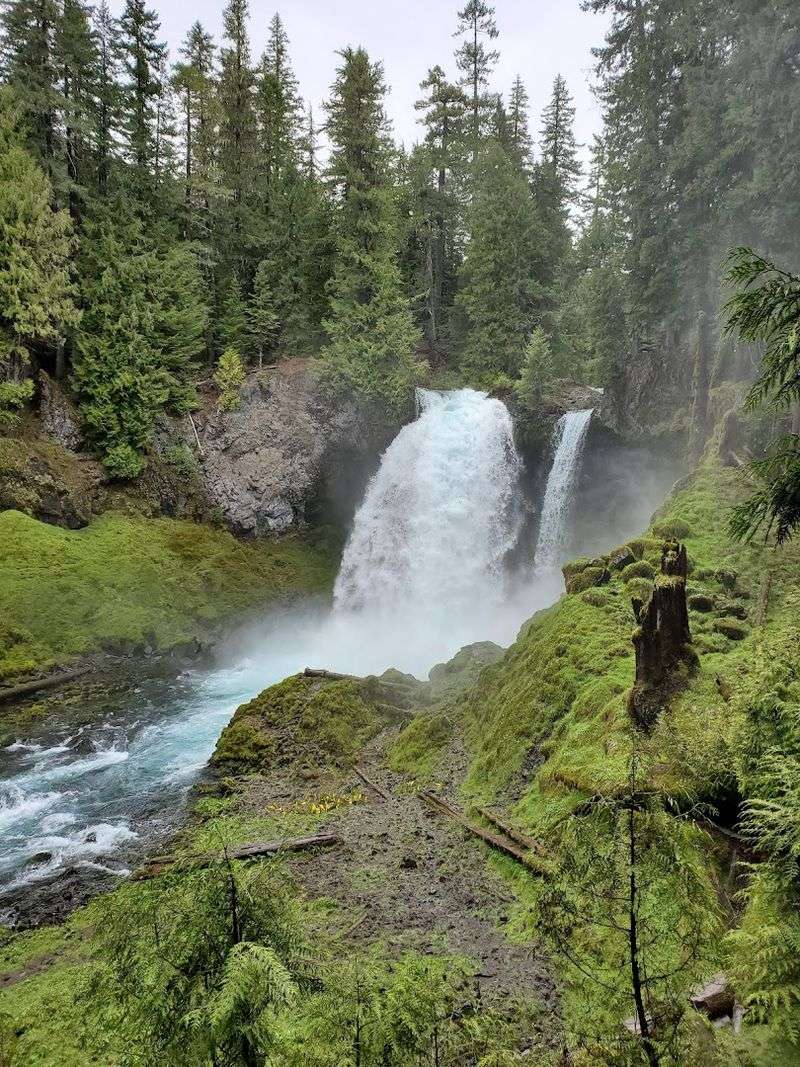
The McKenzie River runs the color of glacial turquoise, and Sahalie Falls turns that turquoise into thunder.
Located near Clear Lake in the Willamette National Forest east of Eugene, Oregon, Sahalie and Koosah Falls sit just half a mile apart along the McKenzie River Trail. A short 2.6-mile loop connects both falls with river views in between.
Sahalie drops 100 feet in a wide, roaring curtain over a basalt ledge. Koosah, just downstream, is smaller at 70 feet but sits inside a narrow canyon that amplifies the sound into something almost overwhelming.
The river gets its color from the cold, clear water emerging from underground lava tubes fed by nearby Clear Lake. That volcanic plumbing system gives the McKenzie its signature blue-green tint year-round.
The loop trail is paved for the first section near Sahalie, making it accessible for strollers and wheelchairs on the upper portion. Wooden viewing platforms at both falls provide safe, close-up vantage points above the gorge.
Fall is particularly spectacular here, as vine maples along the trail turn bright orange and red against the dark basalt and white water. The contrast is sharp enough to stop any photographer mid-stride.
The trailhead has a large parking area off Highway 126, roughly 60 miles east of Eugene. Two world-class waterfalls on a single short loop is an offer Oregon rarely makes so openly.
