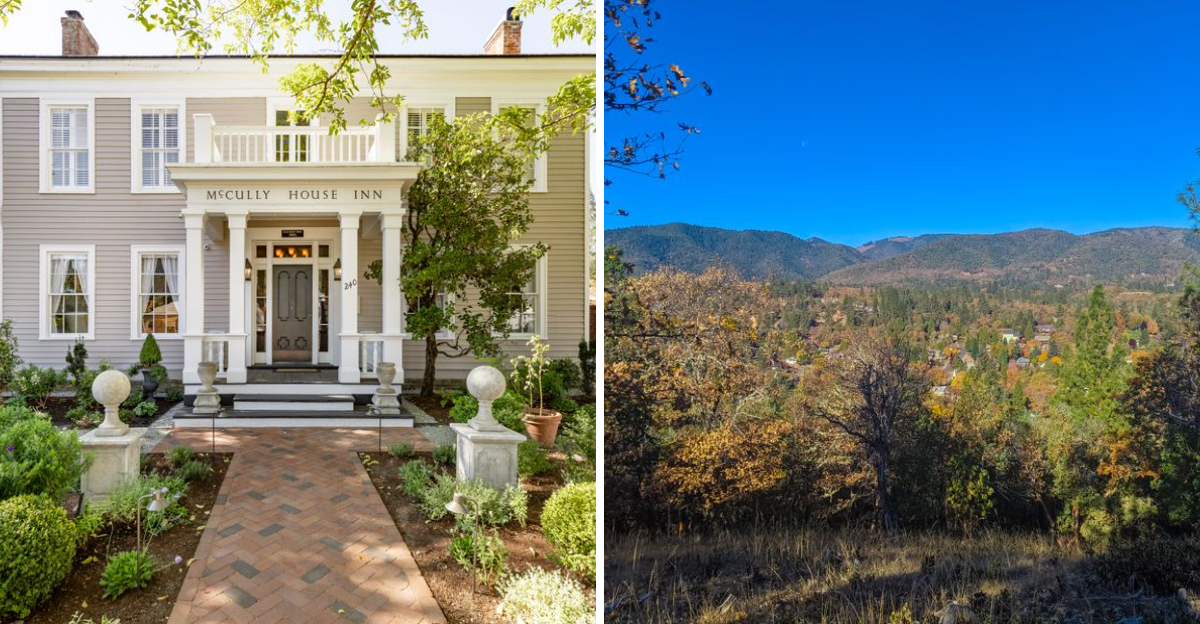
Jacksonville, Oregon sits quietly in the Rogue Valley, a small town that appears to have stopped the clock somewhere around the Gold Rush era.
Walking through its streets feels like stepping onto a movie set, except everything here is real, from the brick storefronts to the wooden boardwalks that echo with each footstep.
This National Historic Landmark district has preserved over 100 buildings from the 1800s, creating an atmosphere that draws travelers seeking an authentic glimpse into Oregon’s pioneer past.
Visitors come to experience what life might have been like when gold fever gripped the West and fortunes were made and lost in dusty mining camps.
We’ve based this piece on historical records, on-the-ground observations, and the impressions of our travel team. Descriptions reflect atmosphere and character at the time of writing and may change over time. This assessment is unavoidably subjective.
Historic Downtown That Refuses to Modernize
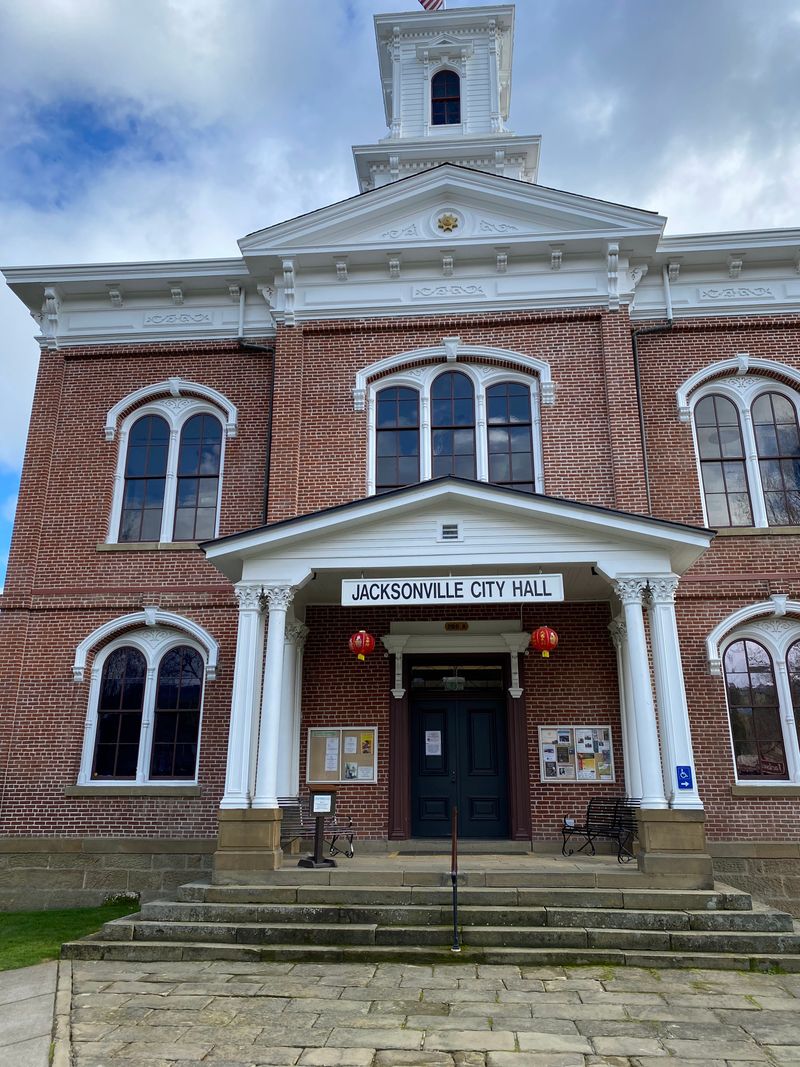
California Street forms the backbone of Jacksonville’s historic district, and every building along it tells a story from another century.
The brick facades haven’t been updated with modern glass and steel, and that’s exactly the point.
Shop owners maintain the original architecture with careful restoration rather than renovation, keeping window frames, doorways, and even paint colors faithful to their 19th-century origins.
Walking these blocks means encountering structures that housed Wells Fargo offices, general stores, and saloons when Jacksonville served as Jackson County’s seat of government.
The town lost that status to Medford in 1927, which ironically saved it from the demolition and development that transformed other Oregon communities.
Today, antique shops, galleries, and cafes operate inside these time capsules, but the buildings themselves remain the main attraction.
Wooden boardwalks still line portions of the street, creaking underfoot just as they did when miners walked them after striking gold in nearby creeks.
No chain stores interrupt the visual continuity, and even modern businesses must conform to strict preservation guidelines.
The National Park Service designated the entire downtown a National Historic Landmark in 1966, recognizing its exceptional architectural integrity.
Photographers find endless subjects here, from ornate ironwork to hand-painted signs that advertise businesses in elegant Victorian lettering.
Evening light casts long shadows across these streets, and it becomes easy to imagine stagecoaches arriving with mail and passengers from distant settlements.
This isn’t a recreated theme park but a living town that simply chose preservation over progress.
The Beekman Bank Building’s Frozen Fortune
Cornelius Beekman arrived in Jacksonville during the gold rush and established a bank that became the financial heart of southern Oregon.
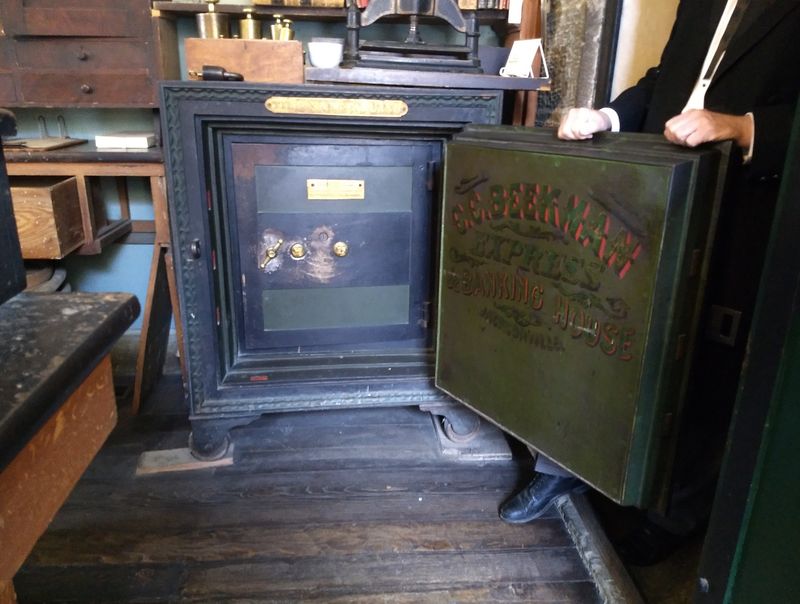
His 1863 bank building at 101 West California Street still stands, and inside, the original vault holds artifacts from an era when gold dust served as currency.
The Jacksonville Museum now operates within these walls, but the banking fixtures remain exactly where Beekman installed them over 150 years ago.
Visitors can peer into the massive iron safe that once protected miners’ fortunes and examine ledgers written in careful script documenting transactions from the 1870s.
Beekman’s success extended beyond banking into ranching and transportation, making him one of Oregon’s wealthiest citizens by the 1880s.
The building’s thick brick walls and barred windows speak to security concerns in a frontier town where fortunes changed hands regularly.
Period furnishings fill the rooms upstairs where Beekman conducted business, including his desk, correspondence files, and even personal items that reveal daily life in Victorian-era Oregon.
Exhibits detail how the bank operated, from assaying gold samples to issuing loans that funded ranches, businesses, and mining operations throughout the region.
The floor plan hasn’t changed since construction, allowing visitors to move through spaces as customers once did, from the public banking hall to private offices where deals were negotiated.
Photographs on the walls show Jacksonville at its peak, when this bank building represented stability and prosperity in an otherwise uncertain frontier economy.
Standing inside feels like interrupting a business day that paused mid-transaction and never resumed.
Pioneer Cemetery’s Silent Stories
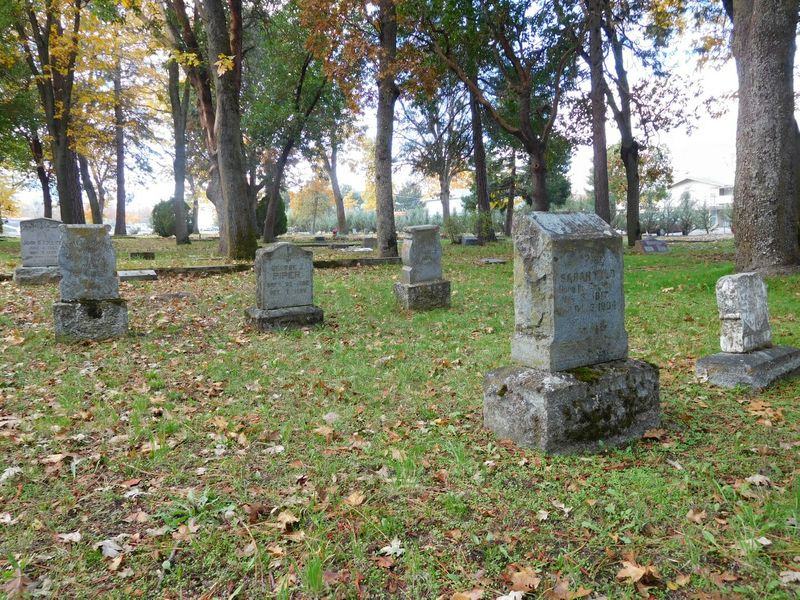
Above the town on a gentle hillside, Jacksonville Pioneer Cemetery holds residents who built this community from wilderness.
Headstones date back to the 1850s, their inscriptions weathered but still legible, marking graves of miners, merchants, children, and women who made the difficult journey west.
Some markers are elaborate Victorian monuments with carved angels and ornate borders, while others are simple wooden crosses or fieldstones with names scratched into the surface.
Walking these rows reveals the harsh realities of frontier life through dates showing infant mortality, mining accidents, and epidemics that swept through the young settlement.
Many graves belong to people born on the East Coast or in Europe who traveled thousands of miles seeking opportunity in Oregon’s goldfields.
The cemetery’s layout reflects social divisions of the era, with separate sections for Chinese immigrants who worked the mines and built the community alongside white settlers.
Iron fences surround family plots, some maintained by descendants who still live in the area, others gradually being reclaimed by grass and wildflowers.
Epitaphs tell compressed life stories in a few lines, mentioning beloved husbands, devoted mothers, and children taken too soon by diseases now preventable.
Oak trees planted generations ago now tower over the grounds, their roots intertwining with the history buried beneath.
From this elevation, visitors can look down at the town spread below and imagine how different the view appeared to those first buried here when Jacksonville consisted of canvas tents and rough timber structures.
The cemetery receives regular visitors who come not to see specific graves but to connect with the broader story of western migration and settlement.
Britt Gardens Summer Music Under Stars
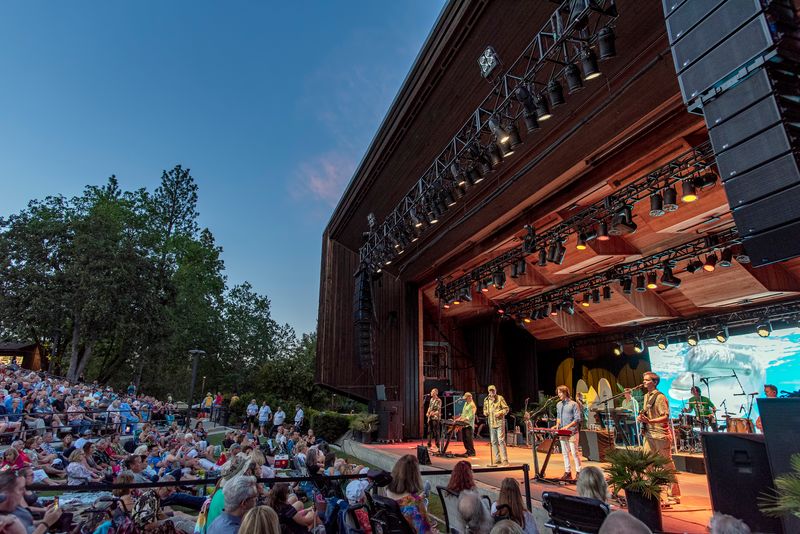
Peter Britt, a Swiss immigrant and pioneering photographer, chose a hillside above Jacksonville for his estate in the 1850s.
Today, his former gardens host one of the West’s premier outdoor music festivals, though the venue itself maintains a natural, understated character that complements the town’s historic atmosphere.
The Britt Music and Arts Festival runs throughout summer, bringing classical, jazz, blues, and contemporary musicians to perform in an amphitheater surrounded by towering ponderosa pines and madrone trees.
Unlike modern concert venues with permanent structures and amenities, Britt Gardens keeps things simple with a stage, basic seating, and hillside lawn areas where audiences spread blankets under the stars.
Peter Britt himself was Jacksonville’s Renaissance man, operating the first photography studio in the Pacific Northwest, cultivating experimental orchards, and documenting life in southern Oregon through thousands of photographs.
His original estate included elaborate gardens with plants imported from around the world, and some of those specimens still survive among the native trees.
Attending a performance here means experiencing music the way 19th-century audiences might have, outdoors in a natural setting rather than in climate-controlled halls.
Cool evening air flows down from the surrounding hills, and between musical sets, the sounds of the forest take over with rustling leaves and distant bird calls.
The festival deliberately limits audience size to preserve the intimate atmosphere, making each concert feel like a private gathering rather than a mass event.
Britt’s legacy as an artist and horticulturist continues through these performances, connecting contemporary culture with the town’s creative heritage.
Jacksonville Cemetery’s Chinese Section
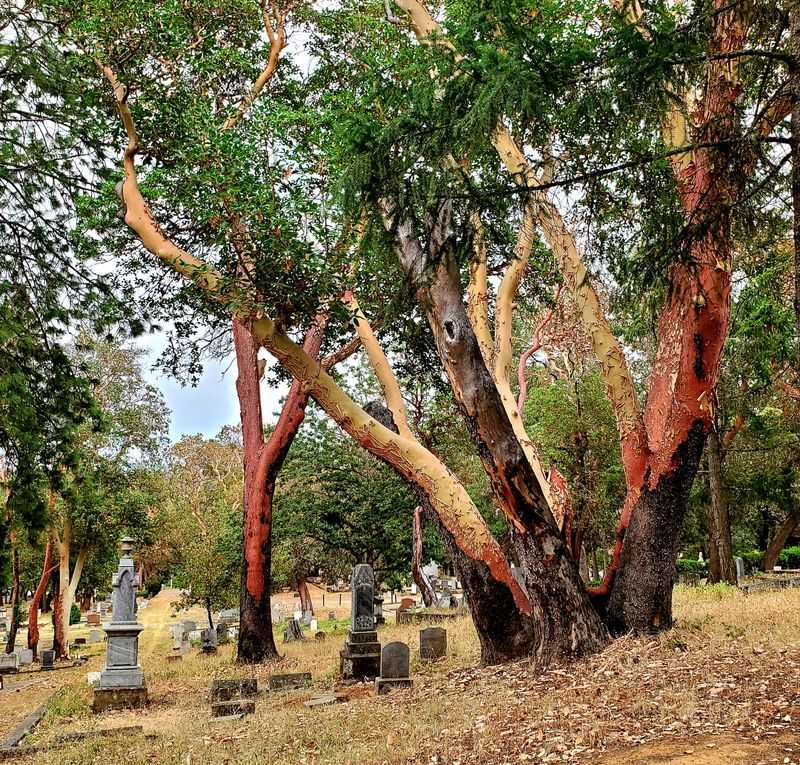
Gold attracted fortune seekers from around the world, including thousands of Chinese immigrants who worked Oregon’s mining districts despite facing severe discrimination and restrictive laws.
Jacksonville’s Chinese section within the main cemetery documents this often-overlooked community through distinctive headstones and burial practices that differ from the surrounding plots.
Many markers feature Chinese characters alongside English text, recording names, home provinces, and associations that provided support to immigrants far from their homeland.
The section’s layout follows traditional feng shui principles where possible, with graves oriented to face auspicious directions and positioned to harmonize with the natural landscape.
During Jacksonville’s peak years, Chinese residents operated laundries, restaurants, and mining operations, forming a distinct neighborhood along what became known as China Ditch.
Oregon’s exclusion laws and violent anti-Chinese sentiment made life precarious for these immigrants, yet they established lasting communities throughout southern Oregon’s gold country.
Some graves show evidence of traditional practices including offerings and ceremonial items placed for the deceased, though most of these customs ended as the community dispersed or assimilated.
Historians have worked to identify individuals buried here and connect them with documented Chinese residents who appear in old census records and business directories.
The section serves as a reminder that Jacksonville’s history extends beyond the white settlers usually featured in frontier narratives.
Many bodies were eventually exhumed and returned to China for burial in ancestral villages, a common practice among Chinese immigrants who intended their American residence to be temporary.
Empty plots and disturbed earth mark where these repatriations occurred, adding another layer to the cemetery’s complex story of immigration, death, and cultural identity.
Autumn Colors Along the Historic Streets
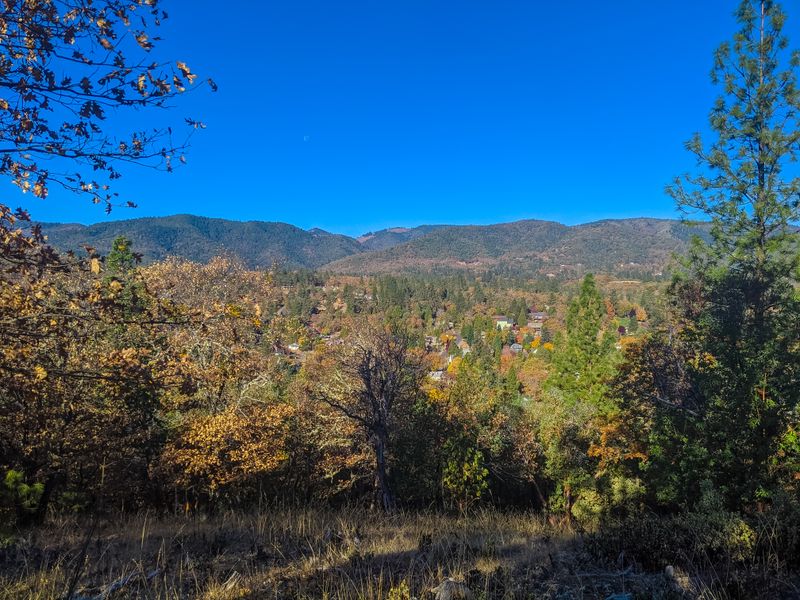
October transforms Jacksonville into a study of gold and crimson as deciduous trees planted by 19th-century residents reach peak autumn color.
The historic district’s tree-lined streets become corridors of yellow and orange, with leaves drifting down onto brick sidewalks and wooden boardwalks.
Photographers arrive specifically for this seasonal display, capturing Victorian buildings framed by branches heavy with autumn foliage.
Many of Jacksonville’s trees date back to the town’s earliest years when residents planted them for shade and beautification, not realizing they were creating a future attraction.
Maples, oaks, and ash trees predominate, species chosen because they reminded settlers of eastern forests they left behind when migrating west.
The combination of historic architecture and seasonal color creates scenes that appear lifted from 19th-century paintings, especially on overcast days when light softens and colors deepen.
Cool autumn air carries the scent of fallen leaves and wood smoke from chimneys, completing the sensory experience of a town seemingly detached from contemporary life.
Local businesses embrace the season with harvest displays and decorations that suit the Victorian setting better than modern Halloween commercialism.
Walking tours become particularly popular during autumn weeks when weather remains pleasant but summer crowds have departed.
The surrounding hillsides also change color, creating a broader landscape context where Jacksonville appears nestled in a bowl of autumn fire.
This seasonal transformation emphasizes the town’s connection to natural cycles and agricultural rhythms that governed life when Jacksonville was founded.
Visitors often remark that autumn here feels more authentic than in cities where seasonal changes compete with urban development and artificial landscapes.
McCully House Inn’s Preserved Elegance
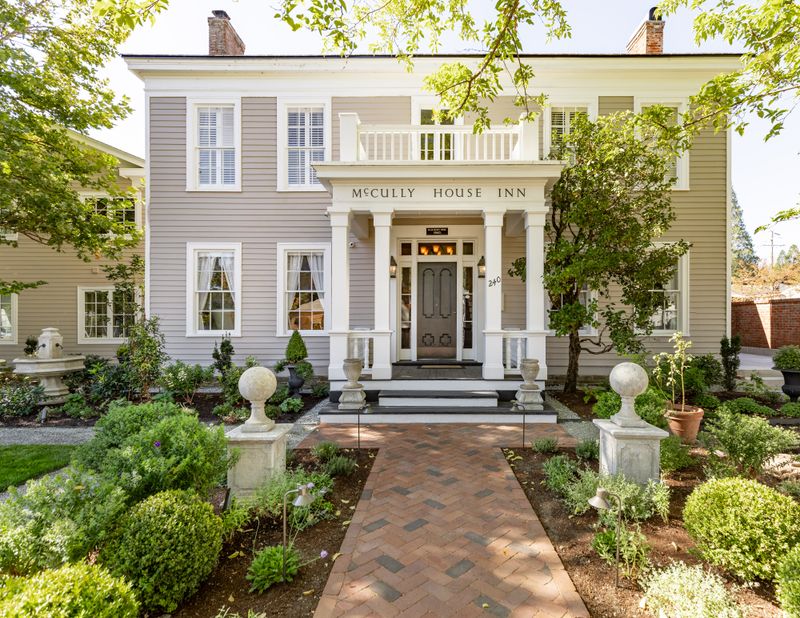
Dr. John McCully built his Italianate mansion in 1861 when Jacksonville was flush with gold money and successful residents constructed homes reflecting their prosperity.
The house at 240 East California Street represents the height of Victorian residential architecture adapted to Oregon’s frontier conditions.
Today operating as a bed and breakfast, the McCully House maintains its original floor plan, decorative details, and even some furniture pieces from the family’s occupation.
Tall windows with original glass provide views of gardens that follow the layout established over 160 years ago, though plant varieties have changed with available species and modern tastes.
Interior spaces feature period wallpapers, light fixtures converted from gas to electricity, and woodwork that showcases the craftsmanship available even in remote Oregon settlements during the 1860s.
Dr. McCully served Jacksonville’s medical needs during decades when physicians treated everything from mining injuries to epidemic diseases with limited resources and knowledge.
The house survived Jacksonville’s long decline through various owners who maintained rather than modernized it, preserving architectural details that might have been removed in other circumstances.
Guest rooms occupy spaces that once served as family bedrooms, sitting rooms, and nurseries, each retaining distinctive features like marble fireplaces and built-in cabinetry.
Staying here offers a more upscale historical experience than the United States Hotel, reflecting the difference between merchant-class lodging and elite residential architecture.
The building demonstrates how quickly wealth accumulated in successful gold rush towns and how that prosperity translated into substantial, lasting construction.
Gardens surrounding the house provide quiet spaces where guests can sit among heritage roses and flowering shrubs while contemplating life in Jacksonville’s golden age.
Dear Reader: This page may contain affiliate links which may earn a commission if you click through and make a purchase. Our independent journalism is not influenced by any advertiser or commercial initiative unless it is clearly marked as sponsored content. As travel products change, please be sure to reconfirm all details and stay up to date with current events to ensure a safe and successful trip.
