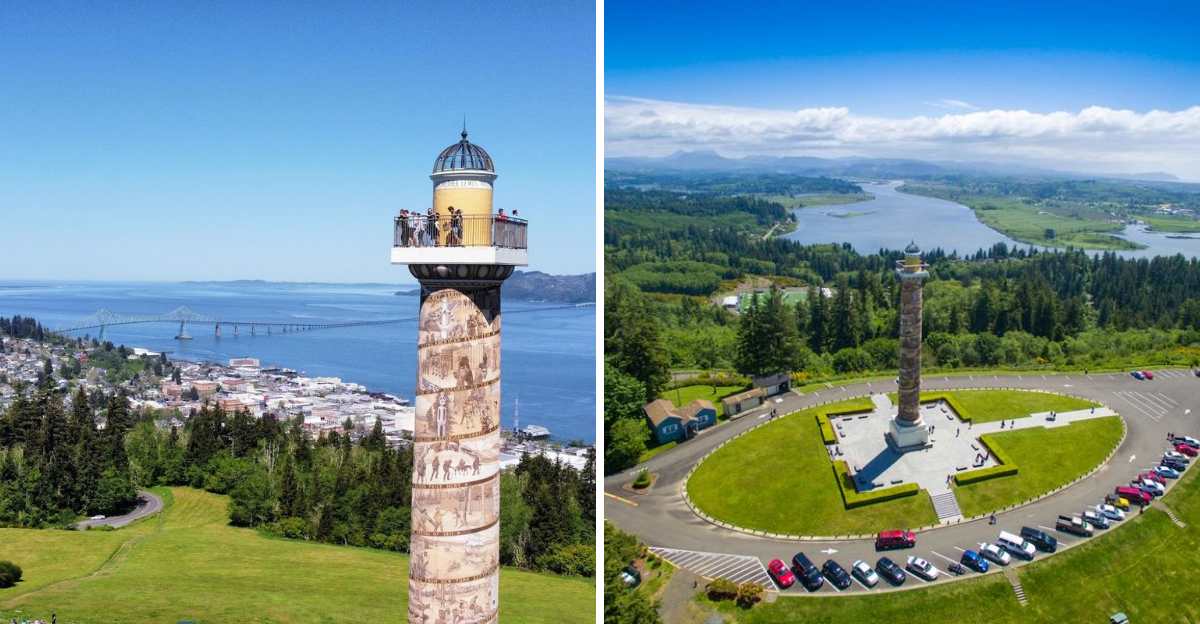
Oregon’s iconic 125-foot column just hit the big 1-0-0, and yes, it’s still stealing the show. I stopped in and couldn’t believe how something so tall and historic makes you feel both tiny and inspired at the same time.
For a century, it’s watched over the Pacific Northwest like a silent, stone superhero. Locals treat it like an old friend, waving at it – or maybe just admiring it from afar.
Every angle is picture-perfect, and I may have taken far too many selfies pretending I could touch the top. Its history is wild, dramatic, and packed with stories that make you appreciate Oregon even more.
Honestly, celebrating 100 years feels like throwing a party for a celebrity that never goes out of style – and I was here for it.
A Tower Built to Last a Century
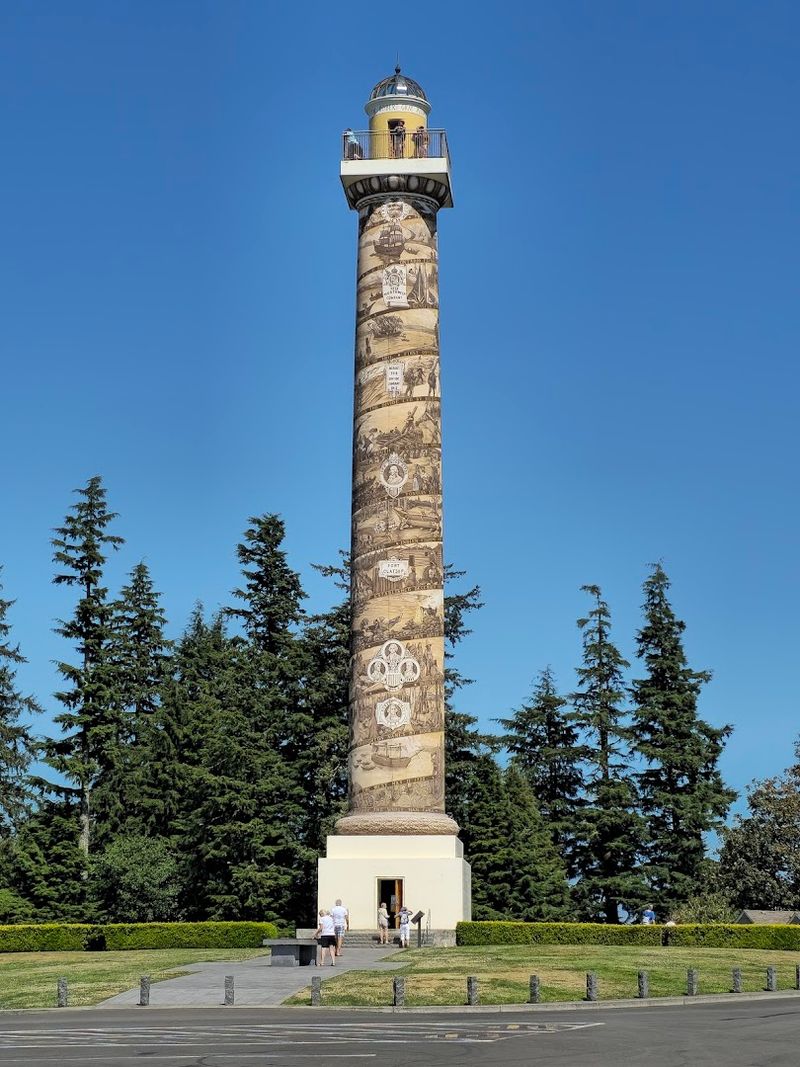
Some buildings age quietly. The Astoria Column ages with pride.
Completed in 1926, this 125-foot concrete tower was designed to celebrate the history of the Pacific Northwest. It sits on top of Coxcomb Hill, one of the highest points in Astoria, Oregon.
The column was a joint effort between the Great Northern Railway and Vincent Astor. They wanted a monument that would honor the explorers, settlers, and Native peoples who shaped this region.
That vision still stands strong today.
Reaching its 100th anniversary in 2026, the column has become one of Oregon’s most beloved landmarks. Nearly a century of wind, rain, and coastal weather has not worn it down.
It looks just as striking today as it must have in the 1920s.
Visitors come from across the country to see it. The site is open daily from 5 AM to 9 PM.
Standing at its base and looking straight up, you feel the weight of everything it represents.
The Spiral Mural That Tells Oregon’s Story
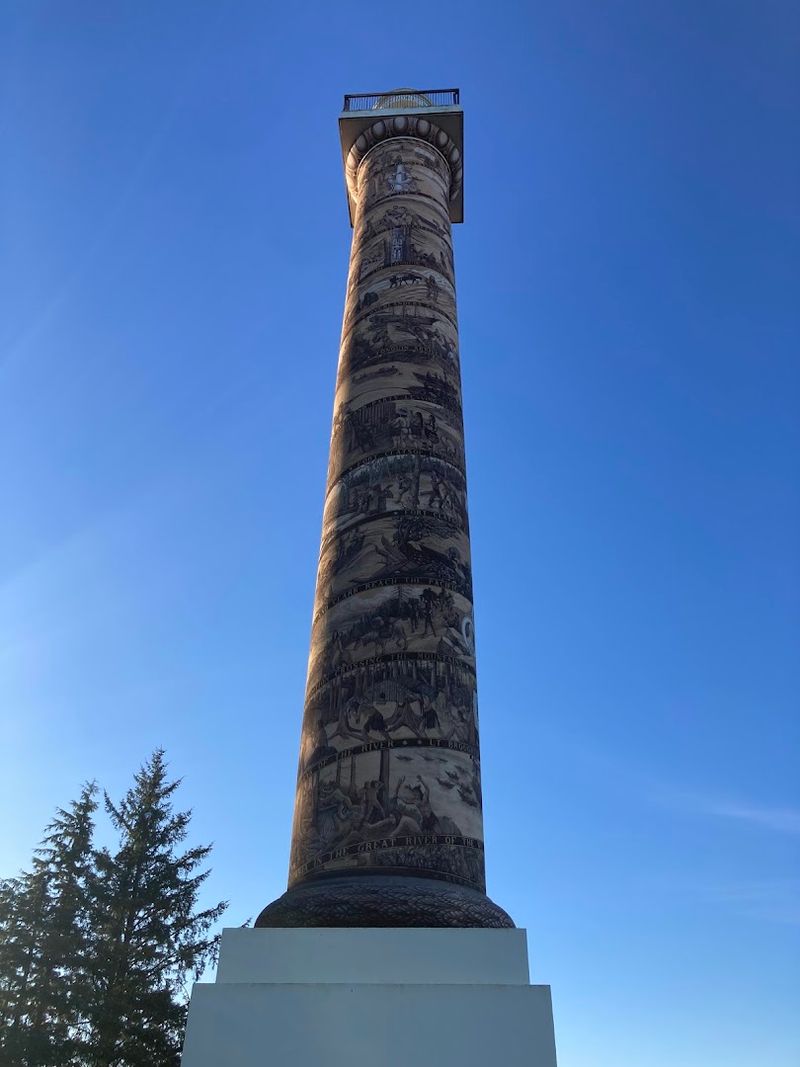
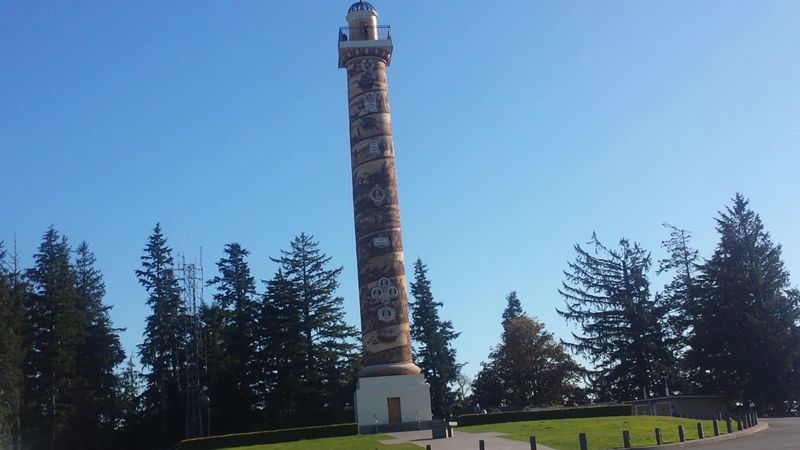
The outside of the Astoria Column is not just concrete. It is covered in a continuous spiral mural that winds from the base all the way to the top.
The artwork was created using a technique called sgraffito, where layers of plaster are carved to create raised images.
Italian artist Attilio Pusterla created the mural. It depicts key moments in Pacific Northwest history, starting with Native American life and moving through the arrival of explorers like Lewis and Clark.
Each scene connects to the next like chapters in a book.
Walking slowly around the base and following the mural upward is a surprisingly moving experience. The detail in each carved figure is remarkable.
You can spot canoes, ships, forests, and figures that represent real moments in time.
The mural has been carefully restored over the decades to keep it sharp and readable. Looking at it up close, you realize this is not decoration.
It is a history lesson carved into stone, meant to last forever.
Climbing 164 Steps to the Top
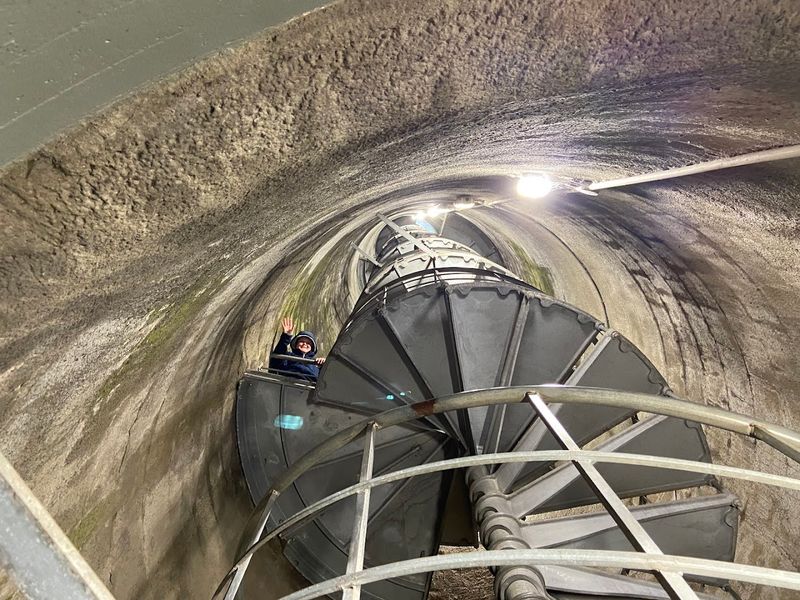
The climb is the heart of the experience. Inside the column, a circular staircase winds upward through 164 steps.
It is narrow, a little dim, and completely worth every single step.
Rest landings appear every 32 steps. That is a thoughtful design detail, especially for younger visitors or anyone who wants to catch their breath.
The climb takes maybe 10 to 15 minutes at a relaxed pace.
My legs felt it by step 100. But the sound of the wind growing louder above me kept me moving.
Each landing offers a small pause and a chance to look at the column walls up close.
Reaching the open-air platform at the top is a genuine rush. The air hits you fast.
The view opens up in every direction, and suddenly the climb makes total sense. Some visitors say the staircase feels a bit rickety, but it is well-maintained and safe.
Go at your own pace. There is no race to the top, and the reward is absolutely worth the effort.
360-Degree Views That Stop You Cold
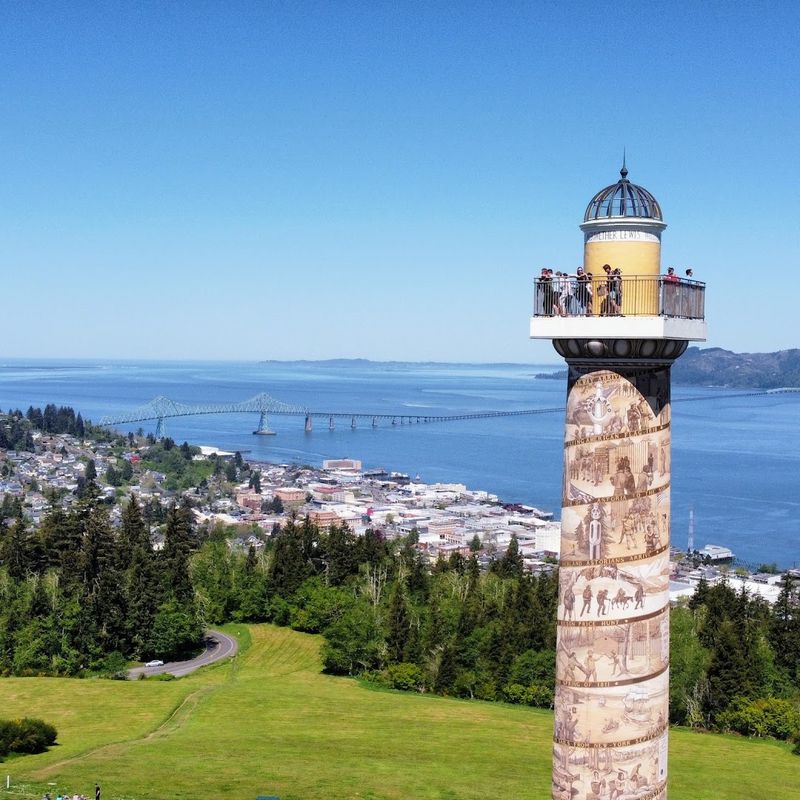
Nothing quite prepares you for the view at the top. The Columbia River stretches wide to the north.
The Astoria-Megler Bridge cuts across the water like a thin gray line. Green forest rolls in every direction, broken only by the town below.
On a clear day, you can see Saddle Mountain, Youngs Bay, Warrenton, and even hints of the Pacific Ocean on the horizon. The view rotates around you as you slowly walk the narrow platform.
Every angle reveals something new.
I stood up there for a long time. The wind was constant and cool.
A few clouds drifted low over the hills, casting moving shadows across the landscape below. It felt cinematic in the best possible way.
The platform is open-air with a railing, so it feels exposed but not unsafe. Morning visits tend to offer clearer skies.
Late afternoon light turns the river into something golden and glowing. Whenever you go, budget extra time at the top.
Leaving feels harder than the climb itself.
The Famous Balsa Wood Glider Tradition
There is a tradition at the Astoria Column that visitors absolutely love. You buy a small balsa wood glider from the gift shop, carry it to the top, and launch it into the open air.
Watching it catch the wind and spiral down toward the green hillside below is genuinely delightful.
Kids go absolutely wild for this. Adults too, honestly.
The gliders are lightweight and inexpensive. They fly surprisingly well from that height, riding the coastal breeze in long, lazy arcs before landing in the grass.
Some visitors run back down to retrieve their glider and climb up again for another launch. It sounds simple, but it creates one of those rare moments of pure, unfiltered fun.
There is something about watching a toy airplane soar from a 100-year-old tower that just feels right.
The gift shop stocks the gliders regularly, so they are almost always available. Grab one before you climb.
Do not skip this part of the visit. It is one of those small things that turns a good trip into a great memory.
The Gift Shop and Visitor Experience
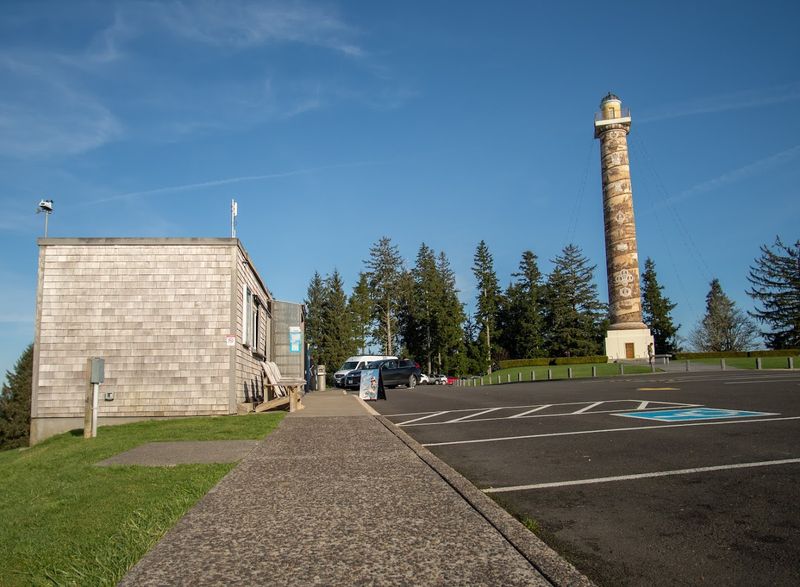
The gift shop at the Astoria Column is compact but well-stocked. It carries souvenirs, postcards, hats, and of course the iconic balsa wood gliders.
Staff there are friendly and genuinely happy to answer questions about the column’s history.
I picked up a few postcards and a small magnet. The shop has that honest, small-town charm that big tourist centers often miss.
Nothing feels overpriced or gimmicky. It is just a nice little space filled with things that actually connect to the place.
Clean restrooms are available on-site, which is a detail worth knowing before the climb. The surrounding grounds are well-maintained.
There are benches and open grassy areas perfect for sitting after the descent.
A brass relief map stands just outside the column. It shows the estuary and surrounding geography in raised detail.
Running your fingers over it gives you a tactile sense of the landscape you just looked down upon. The whole visitor setup feels thoughtfully designed without being over-commercialized.
It respects the landmark it exists to support.
History Etched in Every Detail
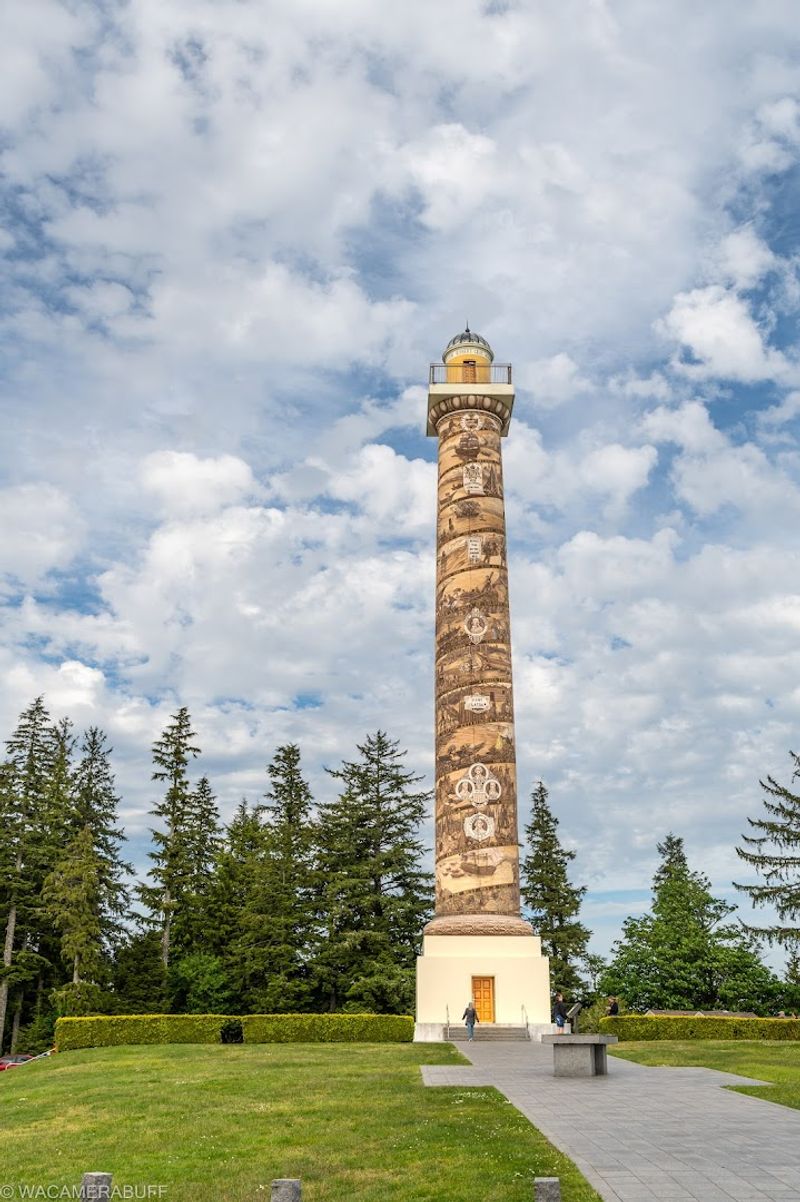
The Astoria Column does not just stand in history. It actively tells it.
The mural wrapping its exterior covers roughly 300 years of Pacific Northwest events. Native cultures, the Lewis and Clark Expedition, the arrival of settlers, and the founding of Astoria are all depicted in sequence.
Astoria itself holds the distinction of being one of the oldest American settlements west of the Rocky Mountains. The column was built to honor that legacy.
Standing beside it, that weight of history feels tangible and real.
The brass relief map outside adds another layer of context. It maps the Columbia River estuary and the surrounding region with impressive detail.
Visitors use it to orient themselves before or after the climb.
The column was designed by architect Electus Litchfield. Its construction took place over several months in 1926.
Every element, from the mural to the observation deck, was intended to communicate meaning. A century later, that intention has not faded.
The Astoria Column remains one of the most historically rich landmarks on the entire West Coast.
Best Times to Visit and What to Expect
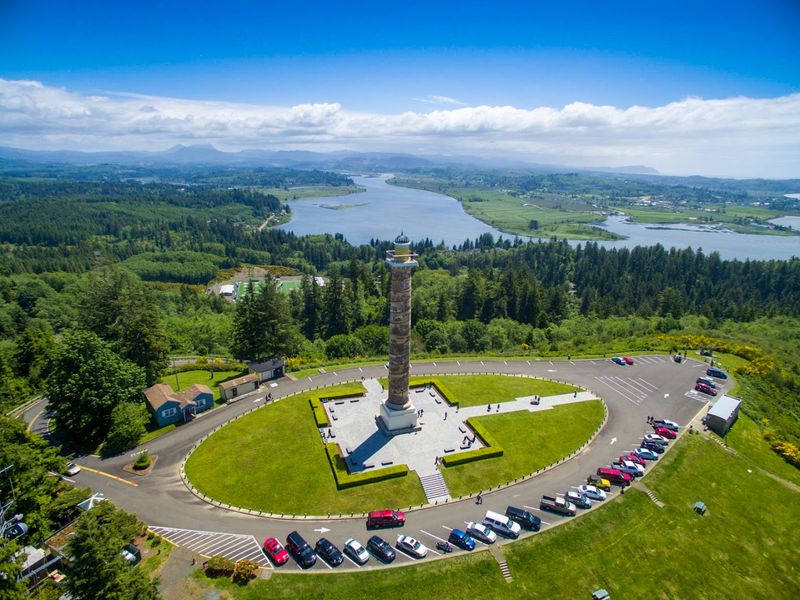
Timing your visit makes a real difference here. Early mornings on weekdays are the quietest.
Weekends draw more visitors, especially during summer months. The site handles crowds reasonably well, but the staircase is narrow.
Patience helps. Going up and coming down at the same time requires a little coordination with other climbers.
The column is open daily from 5 AM to 9 PM. Evening visits offer a different kind of magic.
The nighttime view of Astoria and the Columbia River lights up in a way that daytime cannot replicate. One visitor noted the after-dark view as spectacular, though daylight is recommended for the full panoramic experience.
Dress in layers. The hilltop is reliably windy, even on warm days.
Comfortable shoes are a must for the climb. The parking fee is small and goes directly toward site upkeep.
Plan at least 90 minutes for the full experience.
Astoria as a Destination Beyond the Column
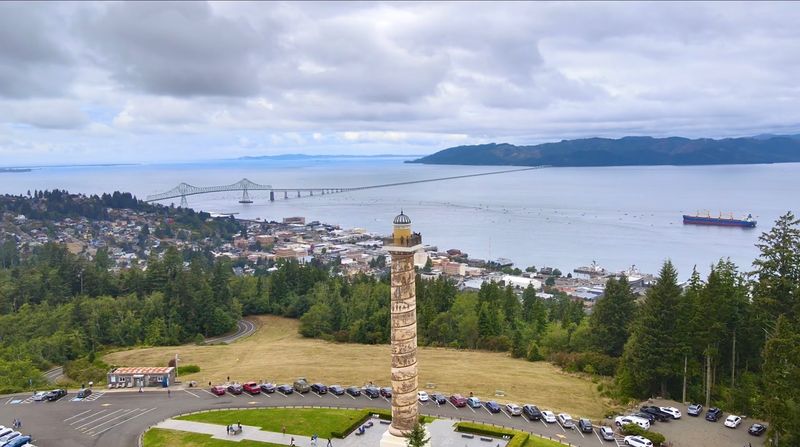
The column is the highlight, but Astoria itself deserves more than a quick stop. The city sits where the Columbia River meets the Pacific Ocean.
That geography alone makes it one of the most visually dramatic towns on the Oregon coast.
Astoria has a deep film history. Movies like The Goonies and Kindergarten Cop were filmed here.
Walking the streets, you spot locations that feel familiar even if you have never visited before. The town leans into that legacy with good humor and genuine pride.
The waterfront is worth exploring on foot. Victorian-era homes climb the hillsides above the river.
The Astoria-Megler Bridge, visible from the column’s top, is even more impressive up close. It is the longest continuous truss bridge in North America.
Local shops, bakeries, and small restaurants fill the downtown area. The community feels lived-in and welcoming rather than purely tourist-focused.
Spending a full day or two in Astoria gives the column visit real context. The town and the tower belong together in the same story.
Why the Centennial Matters and What Comes Next
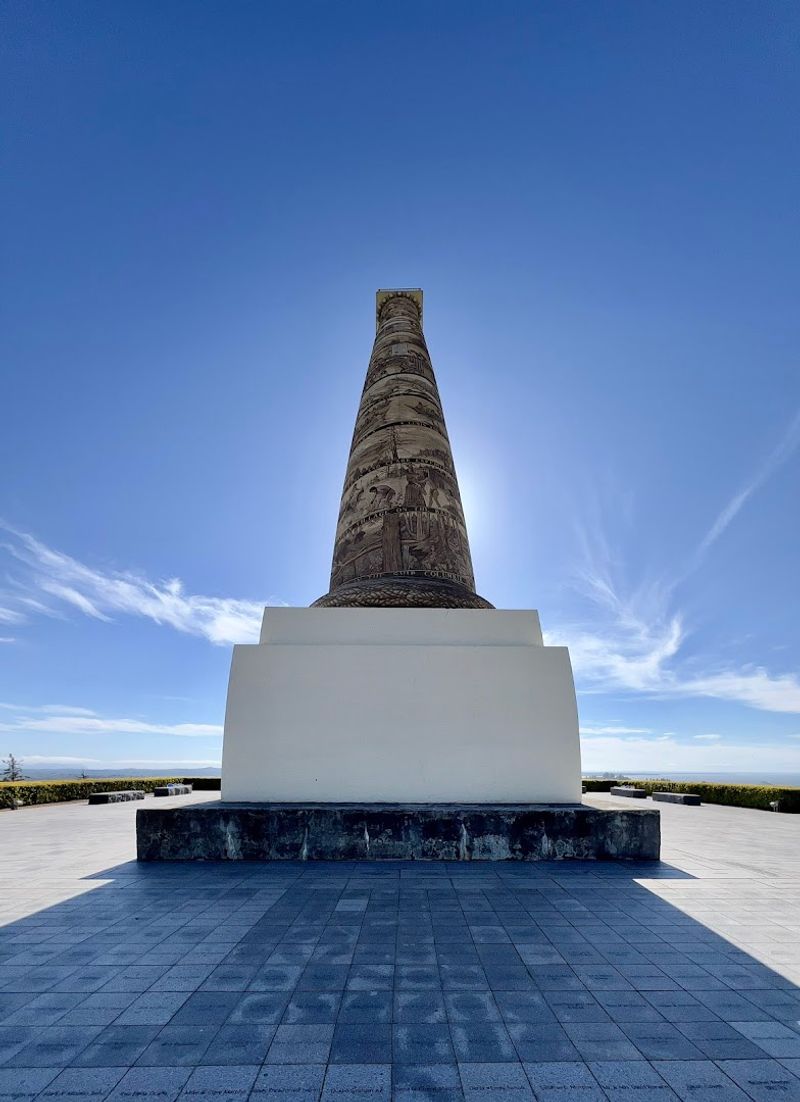
Reaching 100 years is not something every landmark achieves with such grace. The Astoria Column turns 100 in 2026, and the anticipation around that milestone is building steadily.
For a structure built on a windswept hill in a small Oregon city, that longevity says something powerful.
Preservation efforts have kept the mural sharp and the structure sound. The site is managed with clear respect for what it represents.
Visitor fees support ongoing maintenance, keeping it accessible for future generations without heavy commercialization.
The centennial is an invitation to see the column in a new light. It is not just a historical artifact.
It is a living landmark that people still climb, still photograph, and still feel moved by every single day. That emotional connection is what makes it worth celebrating.
Planning a visit in the centennial year feels like the right time to go. The column has been telling the story of the Pacific Northwest for a century.
Showing up to mark that moment, even just by climbing those 164 steps, feels like participating in something that genuinely matters.
Address: 1 Coxcomb Dr, Astoria, OR 97103
Dear Reader: This page may contain affiliate links which may earn a commission if you click through and make a purchase. Our independent journalism is not influenced by any advertiser or commercial initiative unless it is clearly marked as sponsored content. As travel products change, please be sure to reconfirm all details and stay up to date with current events to ensure a safe and successful trip.
