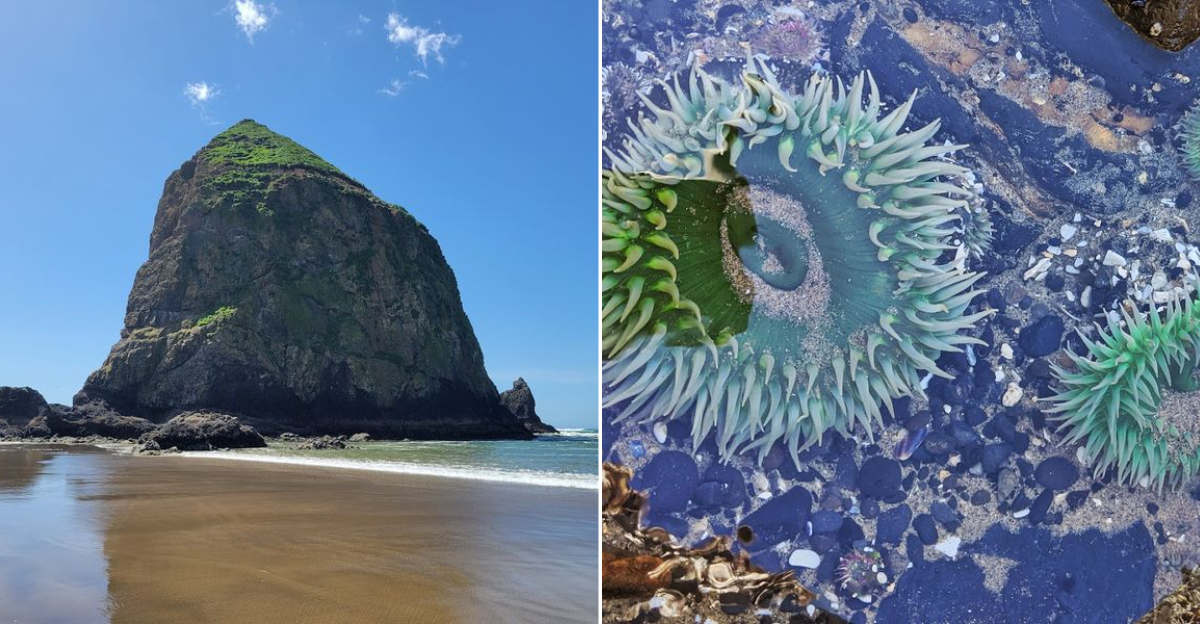
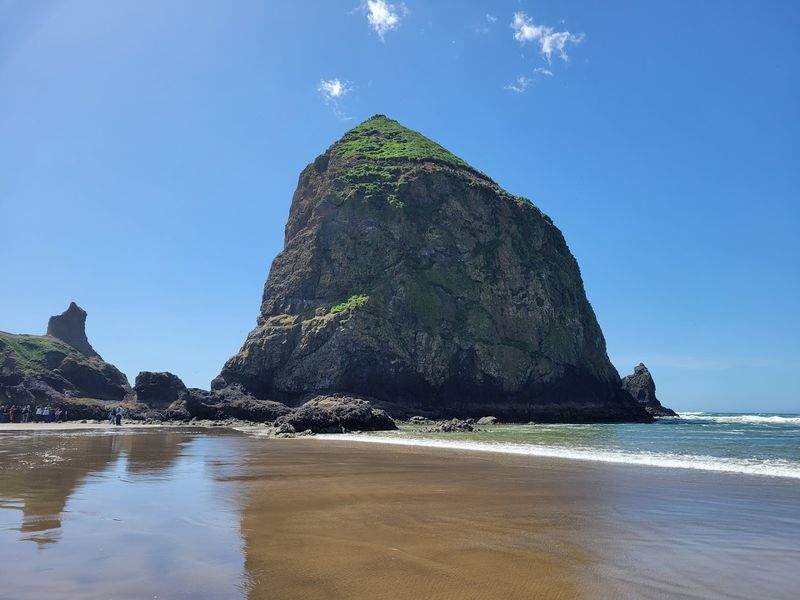
As you stand on the cool, wet sand, your camera frame fills with a 235-foot tower of ancient basalt, and you suddenly understand why photographers return here again and again.
This is Haystack Rock, Oregon’s most photographed landmark, a massive sea stack that looks like it belongs on another planet.
It was formed by lava flows about 15 million years ago and has been a star of postcards, novels, and even the movie The Goonies ever since.
During low tide, you can walk right up to its base and explore a hidden world of colorful tide pools filled with sea stars, anemones, and scurrying crabs.
Above the waterline, the rock becomes a busy nesting site for tufted puffins, which return each spring with their bright orange beaks and golden head tufts. The whole area is a protected marine garden and wildlife refuge, so look closely but touch nothing.
So which Oregon beach delivers an unforgettable photo op, a living tide pool classroom, and a front?row seat to puffin acrobatics all in one afternoon? Grab your camera, check the tide charts, and see for yourself.
That First Look From The Sand
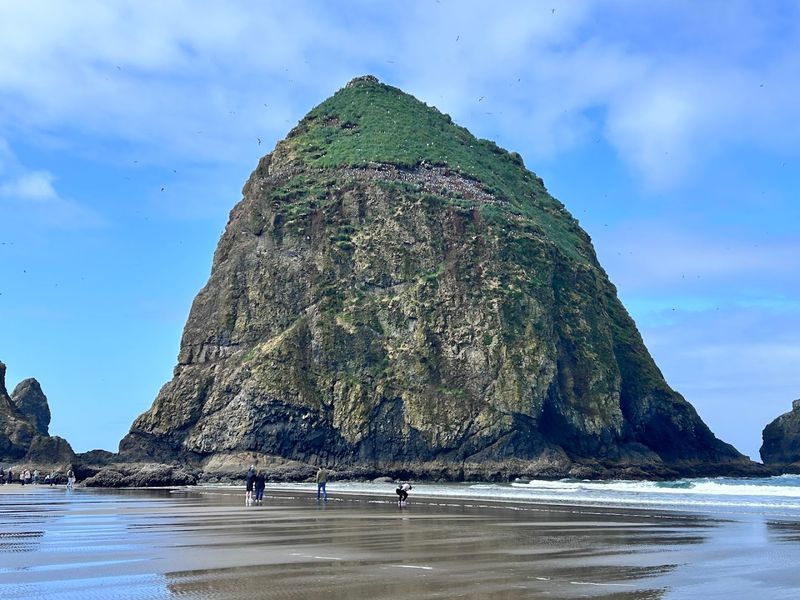
The thing that gets me every time is how Haystack Rock does not sneak up on you at all, and somehow it still feels surprising when you step onto the beach and really see it. It rises straight out of the sand and surf with this heavy, weathered presence that makes the rest of the shoreline feel suddenly small.
Even if you have seen photos before, the real scale lands differently when the wind is moving and the ocean is making all that noise around you.
What makes that first approach so good is the long, open stretch of Cannon Beach, because nothing blocks the view and nothing rushes you either. You can walk slowly, stop whenever you want, and watch the shape of the rock change a little with every few steps you take.
In Oregon, that combination of drama and ease is harder to find than people think, which is probably why this spot sticks in your head.
I would give yourself a minute before charging straight to the tide pools, because the wider scene is part of the whole experience. The rock, the gulls, the mist, and that huge sweep of beach all work together, and you feel it best when you let the place introduce itself.
It is big, a little moody, and honestly kind of mesmerizing.
Where To Find It Without Overthinking It
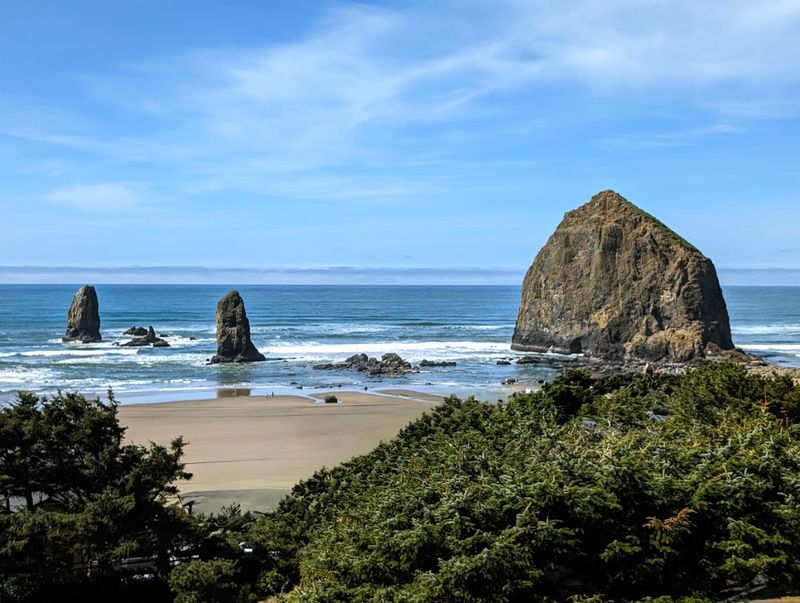
If you are the kind of person who likes knowing exactly where you are headed before your shoes hit the sand, this part is for you. Haystack Rock is at Haystack Rock, Cannon Beach, Oregon, and once you are near the beachfront access in town, the whole thing becomes pretty obvious.
You are not hunting for some tiny marker or trying to guess whether you parked at the right overlook, because the rock itself does most of the directing.
What helps is that Cannon Beach is easy to move through on foot once you are close, and that keeps the mood relaxed from the start. You can leave the busy part of town behind in just a few minutes, hear the surf getting louder, and then step out onto that broad beach with the basalt stack waiting ahead.
Oregon has plenty of beautiful coastline, but not many places feel this instantly recognizable the second you arrive.
I like this stretch because it gives you options without making the visit complicated, and that matters more than people admit. You can wander, take the direct route, or pause and watch the shoreline open up in front of you.
By the time you reach the sand, the day already feels like it is going well.
Why Low Tide Changes Everything
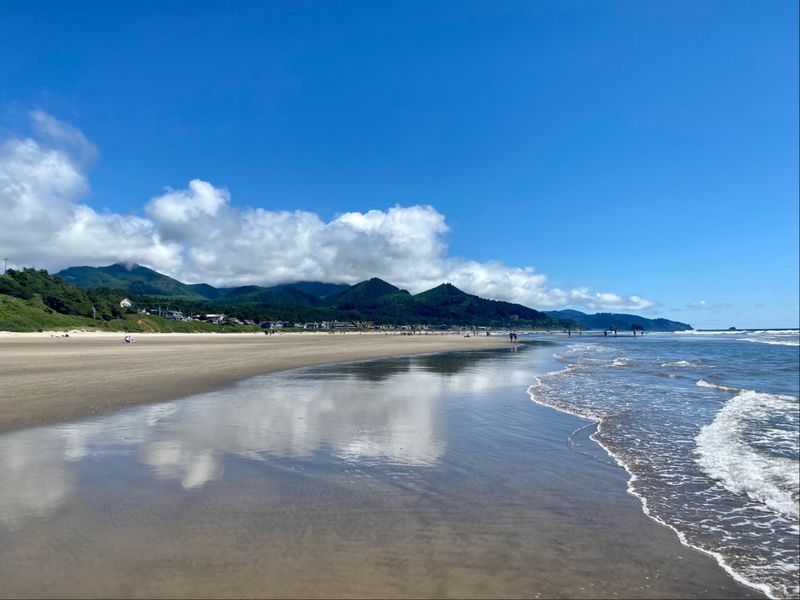
Here is where the whole place shifts from pretty to genuinely fascinating, because low tide lets you walk out toward Haystack Rock instead of just admiring it from a distance. The beach opens, the sand firms up, and suddenly you are moving into a space that was underwater not long before.
That feeling alone is worth timing your visit, since it makes the shoreline feel active and changing instead of just scenic.
When the water pulls back, little pools start catching the sky, the rock, and all kinds of tiny movement that you would miss at a regular beach stroll. You notice textures first, then color, then the small living things tucked into cracks and shallow pockets around the base.
It turns into one of those walks where you naturally slow down, because every few steps there is something else to lean over and look at.
I would really check the tide before you go, because this is one of those places where timing is the difference between nice and unforgettable. The best window usually starts before the lowest tide, when the pools are exposed and the route out feels comfortable.
In Oregon, that little bit of planning pays you back fast, and Haystack Rock is the perfect example.
The Tide Pools Are The Real Rabbit Hole
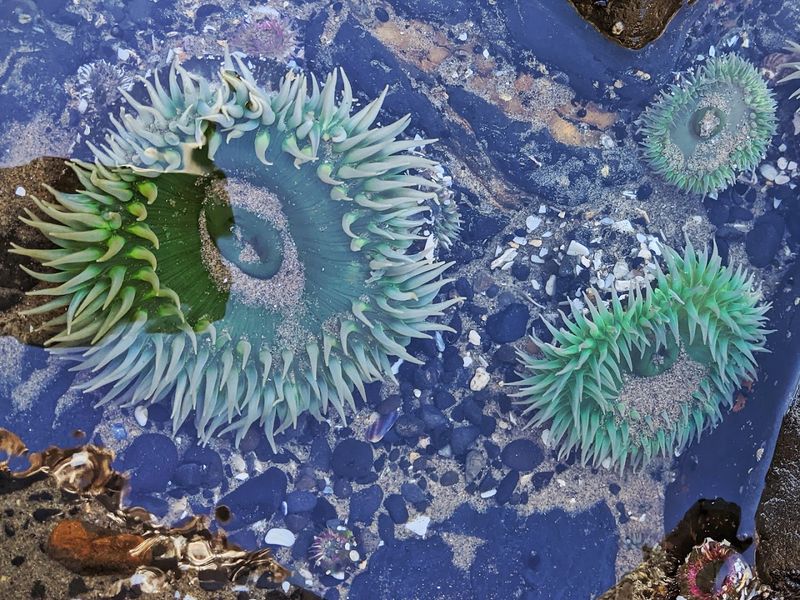
I always think I am just going to take a quick look at the tide pools, and then somehow a lot of time disappears without me noticing. Around Haystack Rock, the pools are packed with small details that keep pulling your attention closer, from anemones waving gently in the water to little crabs slipping under edges of stone.
It is one of those rare places where looking down is just as rewarding as looking up.
The fun part is that nothing feels staged or distant, because the intertidal life is right there if you move slowly and pay attention. You start spotting sea stars, limpets, chitons, and all kinds of shapes and colors that blend into the basalt until your eyes adjust.
Then the whole area begins to feel less like scattered puddles and more like a tiny living neighborhood exposed by the tide.
What I appreciate most is how easy it is to enjoy without needing to turn it into a big mission or a science lesson. You can simply wander, crouch down, and let curiosity take over for a while.
Oregon does this especially well, where a beach walk can casually become the most interesting part of your whole day just because the water stepped back.
Watching For Puffins Feels A Little Unreal
If you have never seen a Tufted Puffin in the wild, Haystack Rock can make you feel weirdly lucky even before one shows up. There is something about standing on a beach in Oregon and knowing these bright, unmistakable birds are nesting out there that makes the whole scene feel almost made up.
Then one flies past, fast and direct, and suddenly the day has a completely different kind of energy.
This is one of the most accessible places in the Pacific Northwest to look for them, which still feels kind of amazing considering how charismatic they are. During their nesting season, they use the grassy areas high on the rock, and patient viewers sometimes catch quick flights or moments of activity around the slopes.
You usually need a little luck, a little time, and the willingness to stand still longer than you planned.
Even when the puffins are not obvious right away, the search itself is part of the fun because your eyes stay on the rock in a more attentive way. You begin noticing murres, cormorants, gulls, and the constant movement around the basalt face.
It turns wildlife watching into something casual and absorbing, which honestly suits Cannon Beach better than any big, overly planned excursion could.
The Light Keeps Changing The Mood
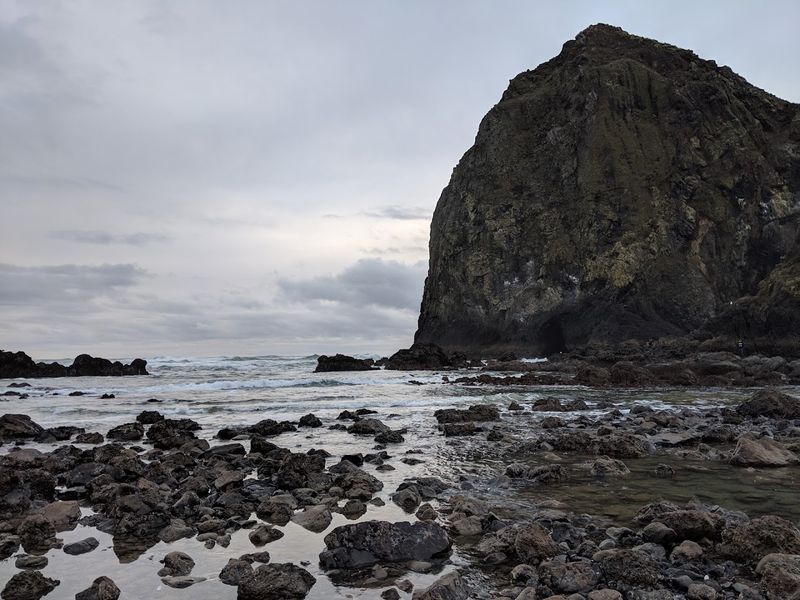
What surprises me most about Haystack Rock is how many different moods it can have in a single day without changing anything except the light. Early on, it can look soft and silver against a muted sky, then later it turns darker and more dramatic as the clouds move and the wet sand starts reflecting everything back at you.
The same beach walk can feel calm, cinematic, or quietly eerie depending on when you show up.
That is probably one reason photographers keep coming back, because the rock does not flatten into one familiar image once you have seen it. Mist can blur the edges, sunshine can sharpen every line, and evening light can make the whole sea stack feel warmer than you would expect on the Oregon coast.
Even a gray day works in its favor, since the basalt seems to absorb the weather instead of fighting it.
I would not stress about chasing ideal conditions here, because part of the charm is letting the beach be whatever it is that day. If the clouds are thick, lean into it.
If the sky opens up, enjoy the glow on the water and all those shifting reflections around Cannon Beach, because they make a famous place feel fresh again.
It Is Easy To Pair With Town Without Losing The Magic
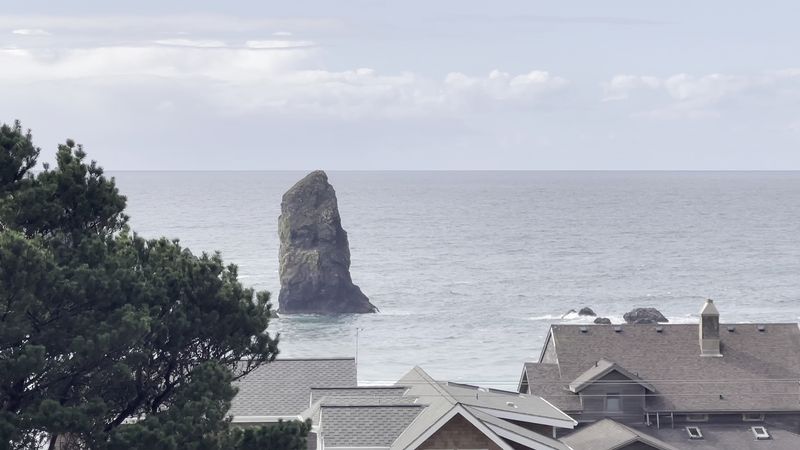
Some coastal landmarks feel amazing for a few minutes and then leave you wondering what to do next, but this one slides easily into a whole day. Because Haystack Rock sits right by Cannon Beach, you can go from tide pools and seabirds to a walk through town without the transition feeling forced or abrupt.
That mix makes it great if you want nature to be the main event while still keeping everything low effort.
I like visiting places where the big scenery does not require a complicated schedule, and this stretch of the Oregon coast understands that balance really well. You can spend time on the sand, head back for a dry off, wander the neighborhood streets, and then return to the beach when the mood or the light changes.
It feels flexible in the best possible way, like the day can expand or contract depending on how much energy you have.
The nicest part is that the rock still feels like the emotional center even when you step away from it for a bit. You keep seeing it from different angles, and each glimpse pulls your attention back toward the ocean.
That makes Cannon Beach feel connected rather than split between town and shoreline, which is harder to pull off than it sounds.
Why People Keep Coming Back To This One
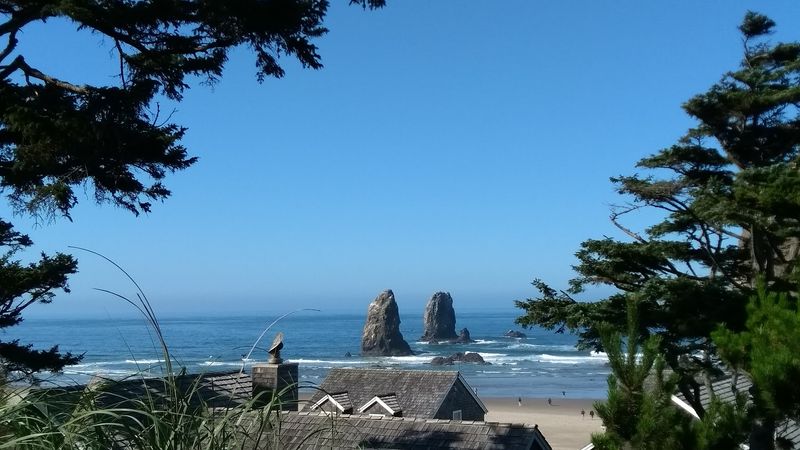
I think the reason Haystack Rock stays with people is that it gives you more than one kind of memory at once. You remember the big obvious thing first, which is that enormous sea stack planted in the surf, but then smaller details keep surfacing later, like puffins crossing the sky, tiny creatures in a pool, or the look of the sand when the tide pulled away.
It lingers because it is both dramatic and intimate, and that combination is not common.
There is also a nice lack of fuss to the whole experience, which makes it easier to love. You do not need special gear, advanced hiking legs, or some complicated plan to feel like you had a real encounter with the coast.
You just need a little time, decent timing with the tide, and enough patience to let the place reveal itself at its own pace.
If a friend asked me where to go for a beach day that actually feels memorable, this would be high on the list without much hesitation. Oregon has a lot of beautiful shoreline, and plenty of it deserves the praise it gets, but Haystack Rock has a pull that feels unusually personal.
You leave with photos, sure, though what sticks is the feeling of having been genuinely there.
