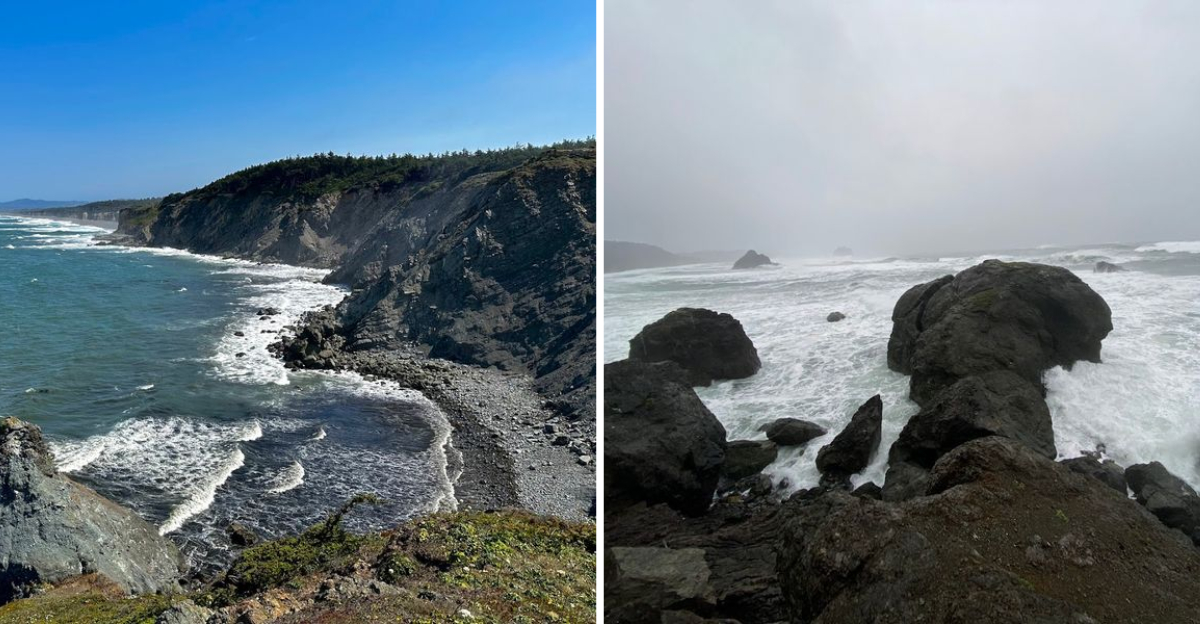
You expect crowded sands and packed parking lots when you think of an Oregon beach. This one has none of that.
The sand here is dark, almost black, made from ancient volcanic rock that crunches under your boots. Sea caves dot the cliffs at the northern end, carved by waves over thousands of years, accessible only when the tide is low enough to let you scramble across the rocks. I walked for over a mile without crossing another set of footprints.
Just the ocean, the caves, and the sound of my own breathing. Oregon has plenty of famous coastlines, but this spot feels like it belongs to a different state entirely. The kind of place you do not tell anyone about because you want to keep it for yourself.
The Hike In, A Trail That Earns Its Reward
Most great beaches do not require effort. Blacklock Point is different, and honestly, that difference is the whole point.
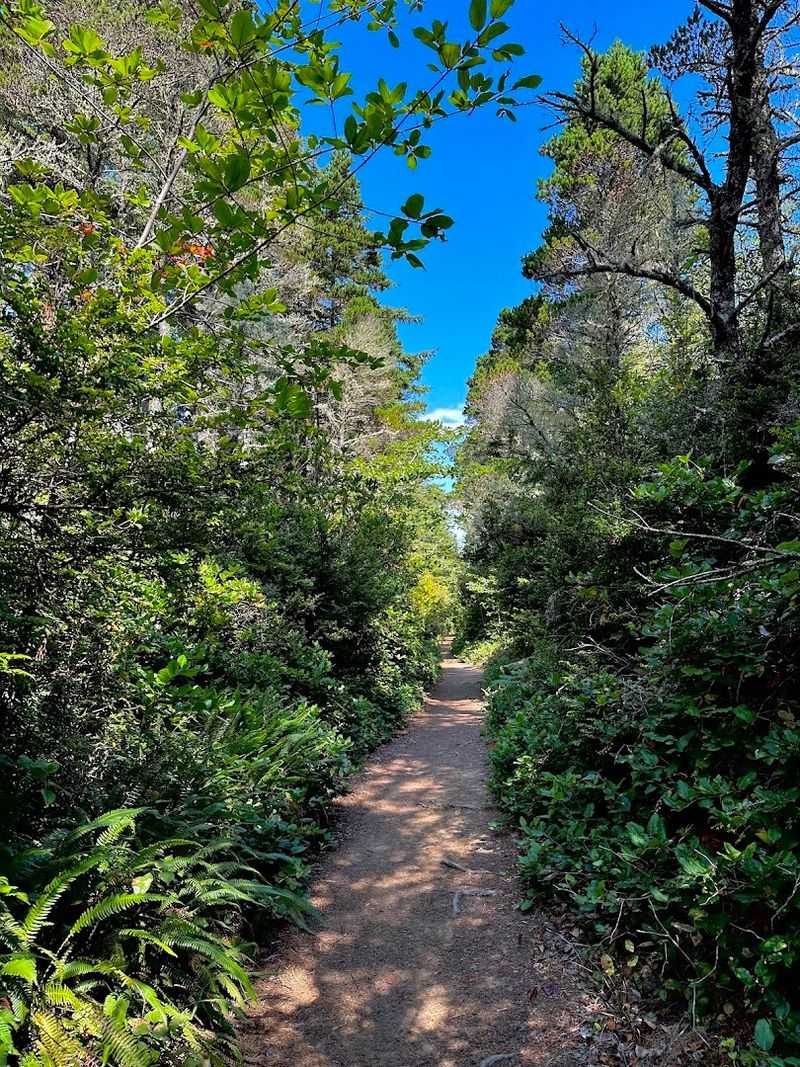
The trailhead off Airport Road in Sixes drops you into a coastal pine forest that feels immediately quieter than the world you left behind in the parking lot.
The route to Blacklock is roughly 3.2 miles round trip from the Airport Road trailhead, and the elevation stays mostly flat until the final push toward the cliffs. Boardwalks have been built at the muddier sections, keeping your feet reasonably dry even after a rainy week.
Follow the signs marked for Blacklock specifically, not Floras Lake, or you will end up on a longer detour.
Late spring and early summer tend to offer the driest conditions underfoot, though the trail is passable year-round with waterproof boots. The forest shifts as you get closer to the coast, pines giving way to more open scrub, and suddenly the sound of waves replaces the sound of wind through branches.
That transition alone is worth the walk.
Dark Sand and Dramatic Geology Up Close
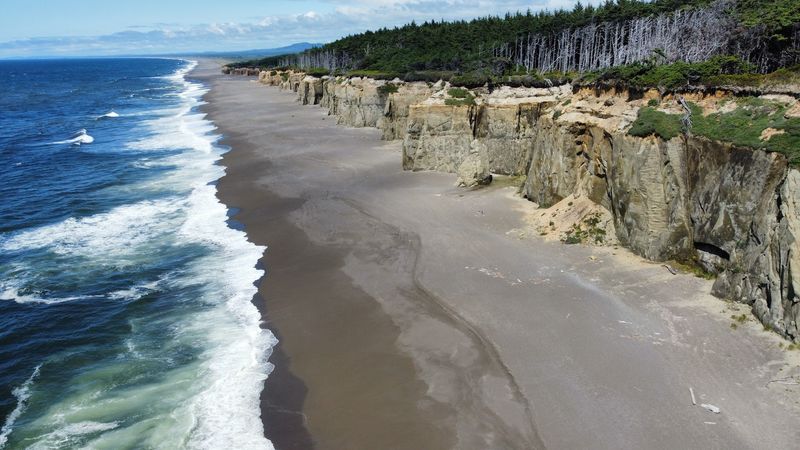
Reaching the beach at Blacklock Point feels like arriving somewhere that geography forgot to make easy to find. The sand here is dark and coarse, mixed with fallen boulders and loose debris from the towering sandstone walls above.
It does not look like any other Oregon beach, and that contrast is striking.
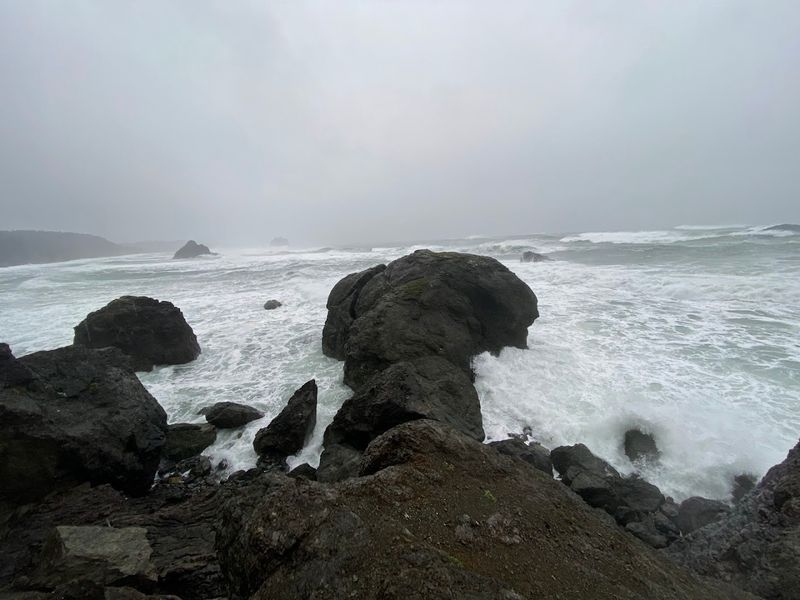
The bluffs rise dramatically above the shoreline, their layered faces carved by centuries of wind and water. Jagged rock formations jut into the surf at odd angles, creating natural barriers and channels where the ocean funnels into narrow gaps with surprising force.
Sea stacks sit just offshore, barnacled and weathered, with cormorants perched on top like small statues.
Geologically, this stretch of coastline tells a long story. The sandstone here is ancient, shaped by pressure and erosion into forms that look almost sculpted.
Running your hand along the bluff face, you can feel the texture of compressed layers, each one representing thousands of years of sediment. There is nothing manicured or curated about this beach.
It is raw in the best possible way, and that rawness makes every visit feel genuinely unrepeatable.
Sea Caves Carved by the Pacific
Not every Oregon beach can claim sea caves worth writing home about. At Blacklock Point, the caves are not just a side note, they are one of the main reasons to visit.
The Pacific has been working on these sandstone walls for a very long time, and the results are genuinely impressive.
The caves appear along the base of the cliffs, some shallow enough to peer into from dry sand, others accessible only at low tide. Timing matters here.
Checking a tide chart before you go is not optional if you want to explore safely. High tide can cut off sections of beach entirely, and the surge inside cave openings can be unexpectedly powerful even on calm days.
At low tide, the cave floors reveal tide pools full of sea anemones, purple urchins, and small crabs navigating the rocky surface. The light inside shifts depending on cloud cover and sun angle, turning the cave walls from pale tan to deep amber.
I spent longer than planned just watching waves push through a narrow arch nearby, the sound echoing off the stone in a way that is hard to describe but easy to remember. Bring waterproof shoes if you plan to explore these areas closely.
The Waterfall That Drops Straight Onto the Beach
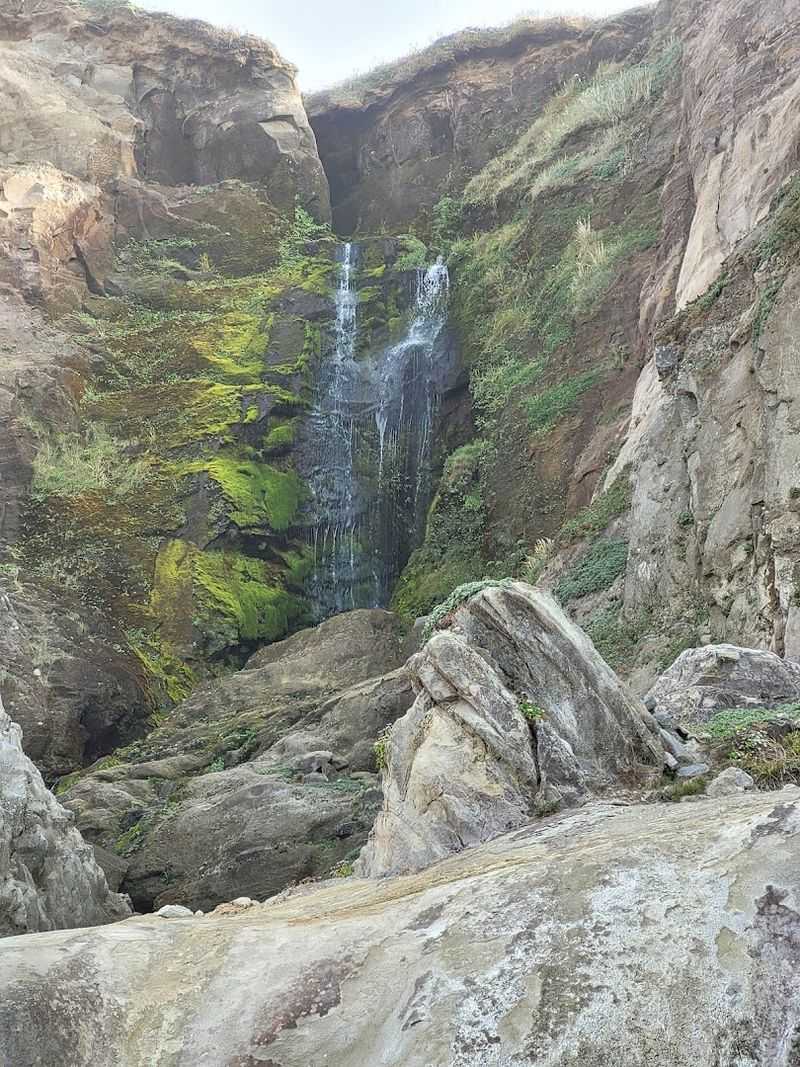
A waterfall that empties directly onto a beach is not something you expect to find, and yet Blacklock Point has exactly that. A roughly 150-foot cascade tumbles off the edge of a coastal bluff and lands on the sand below, just a short walk from the ocean.
It is one of those features that sounds made up until you are actually standing near it.
The waterfall is fed by runoff from the forests and hillsides above, so flow varies by season. Late winter and spring bring the strongest output, when the stream above is swollen from rain.
By late summer, the flow slows considerably, but it rarely disappears entirely. Even a trickle against that bluff face looks dramatic from the beach below.
Getting close requires some careful footing over wet rocks and loose sand, but the effort is minimal compared to what you get in return. The spray catches the light on sunny days, and the sound of falling water mixing with breaking waves creates an oddly calming combination.
A smaller secondary waterfall is also visible nearby, though it is easy to miss if you are focused on the main cascade. This is the kind of detail that makes Blacklock Point feel more like a discovery than a destination.
Wildlife Along the Cliffs and Shore
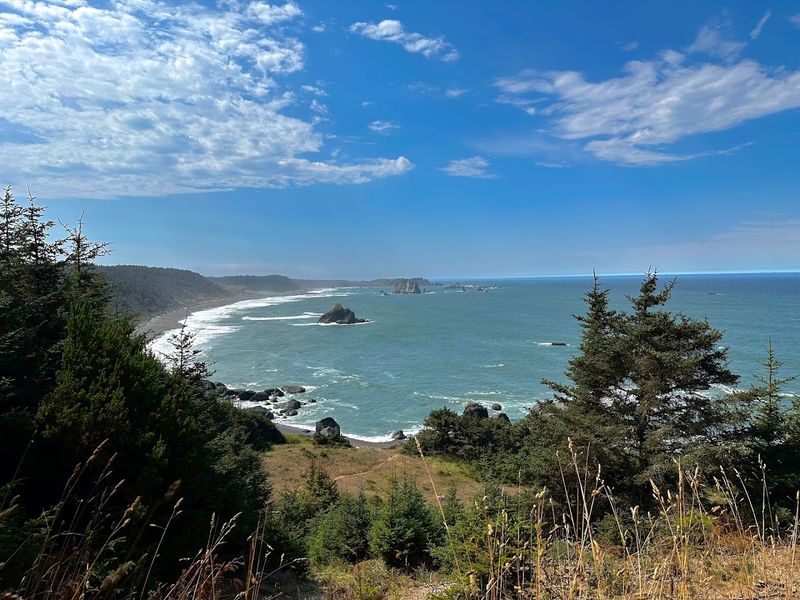
The wildlife at Blacklock Point does not perform for visitors. It simply exists here, going about its routines with total indifference to whoever happened to hike in that day.
That quality makes every sighting feel earned rather than arranged.
Harbor seals and California sea lions use the rocky outcroppings near the point as haul-out spots, particularly during calmer weather. From the clifftop, you can look down and spot them sprawled across the rocks below, occasionally jostling for position or sliding back into the surf.
Binoculars make a real difference here, since getting close to the animals is neither safe nor encouraged.
Shorebirds work the tide line constantly, and cormorants occupy the sea stacks offshore in rotating shifts. The forest trail itself offers a different set of sightings, with woodpeckers audible in the canopy and the occasional deer visible through the trees.
Spring brings rhododendrons blooming along the trail edges, adding unexpected color to an otherwise green-and-gray palette. The combination of forest, cliff, and beach creates overlapping habitats that support an unusually varied mix of species for a single hike.
Patience and quiet movement reward you more than any amount of searching.
Why Almost Nobody Is Here
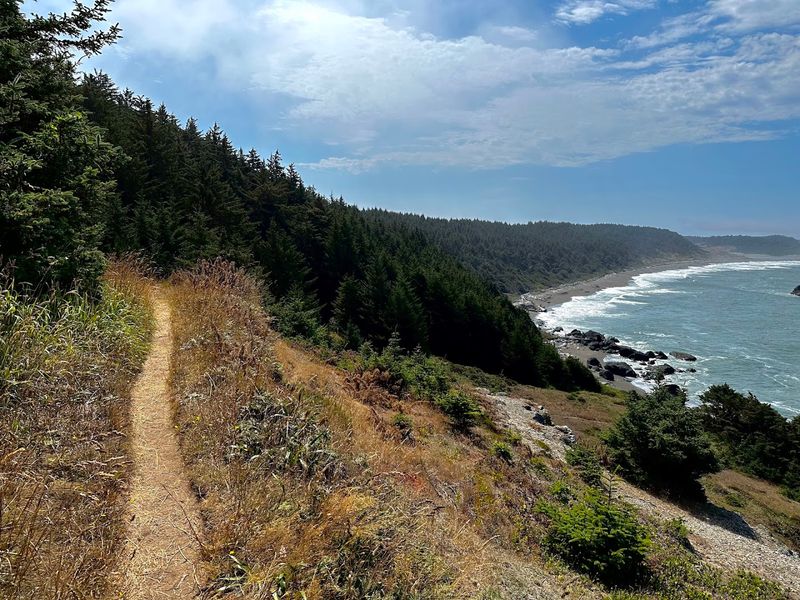
Part of what makes Blacklock Point so compelling is the absence of people. On a weekday visit, it is entirely possible to reach the beach and find no other footprints in the sand.
Even on weekends, the crowd rarely exceeds a handful of fellow hikers spread across a large stretch of coastline.
The access route is the primary reason. There is no roadside pullout, no paved path, and no signage visible from the highway.
Reaching the point requires a deliberate decision, a trailhead lookup, and a willingness to hike roughly an hour each way through forest. That filters out casual drive-by visitors almost entirely.
The parking area off Airport Road is small and easy to miss if you do not know what you are looking for.
There is also no cell service along most of the trail, which is either a drawback or a feature depending on your perspective. Personally, the disconnection is part of the appeal.
No notifications, no noise from other groups playing music, just the forest and then the ocean. Some of Oregon’s most visited beaches can feel more like outdoor shopping malls on summer weekends.
Blacklock Point feels like what the coast used to be before anyone thought to put a gift shop near it.
Planning Your Visit, What to Know Before You Go
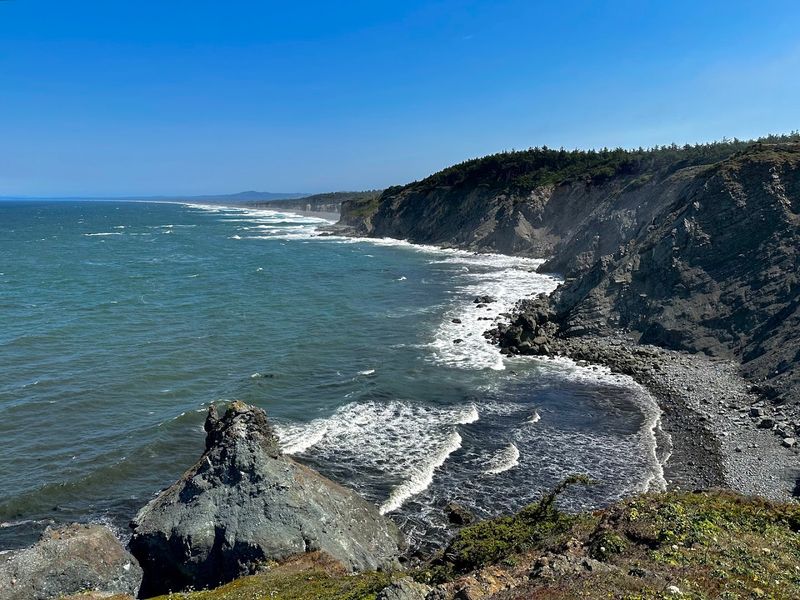
Getting to Blacklock Point takes a little planning, but nothing complicated. The most popular starting point is the trailhead on Airport Road in Sixes, which sits just off Highway 101 between Port Orford and Bandon.
The road name refers to a former airstrip, and the trailhead area has a slightly unconventional feel as a result, but the trail itself is well-marked once you are on it.
Waterproof hiking boots are strongly recommended, especially between October and May when the trail holds moisture and some sections become genuinely muddy. The boardwalks help, but they do not cover every wet stretch.
Bring enough water for the round trip, since there is nothing available along the trail or at the beach. A tide chart is essential if you plan to explore the caves or walk along the base of the cliffs.
The hike is appropriate for most fitness levels given its relatively flat profile. The final descent to the beach is steeper and requires a bit of care, but it is manageable for anyone comfortable on uneven terrain.
Dogs are welcome on leash. There is no fee to park at the Airport Road trailhead, though nearby Boice Cope Park may charge a day-use fee depending on your access route.
Address: 92200 Airport Rd, Sixes, OR 97476.
