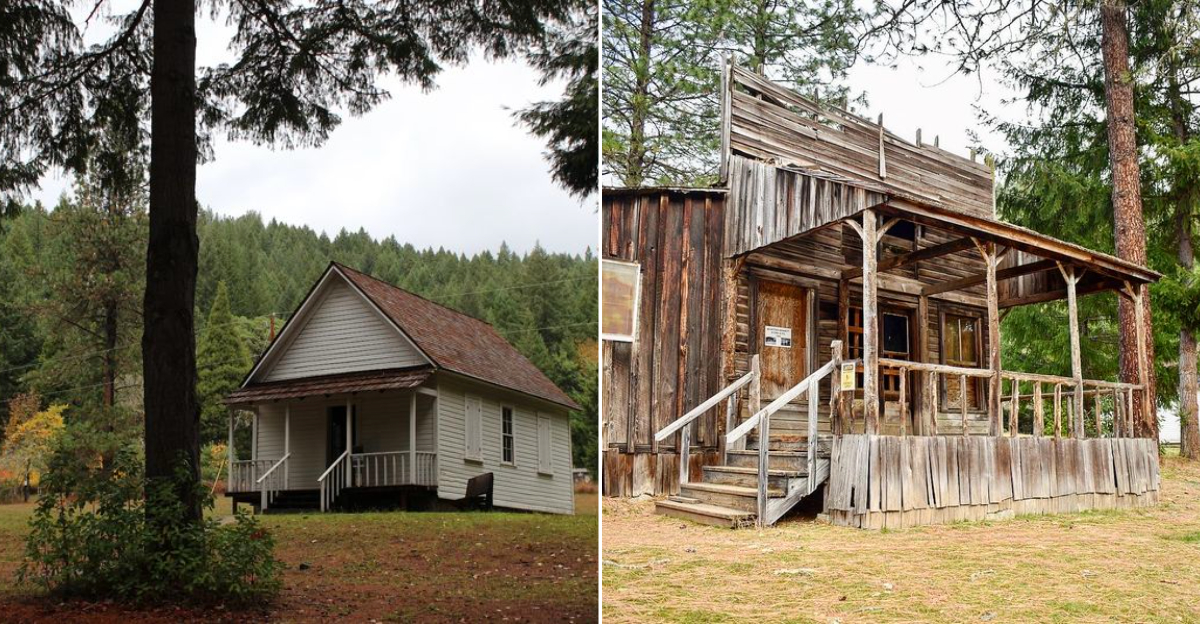
Imagine a ghost town so quiet that the only sound is the wind rattling through a church door that hasn’t opened in a century. That is exactly what you will find at this forgotten Oregon mining site, where just four buildings remain standing.
No gift shop. No entrance booth. No crowds. Just a weathered church, a hollowed general store, a modest home, and a dusty shed.
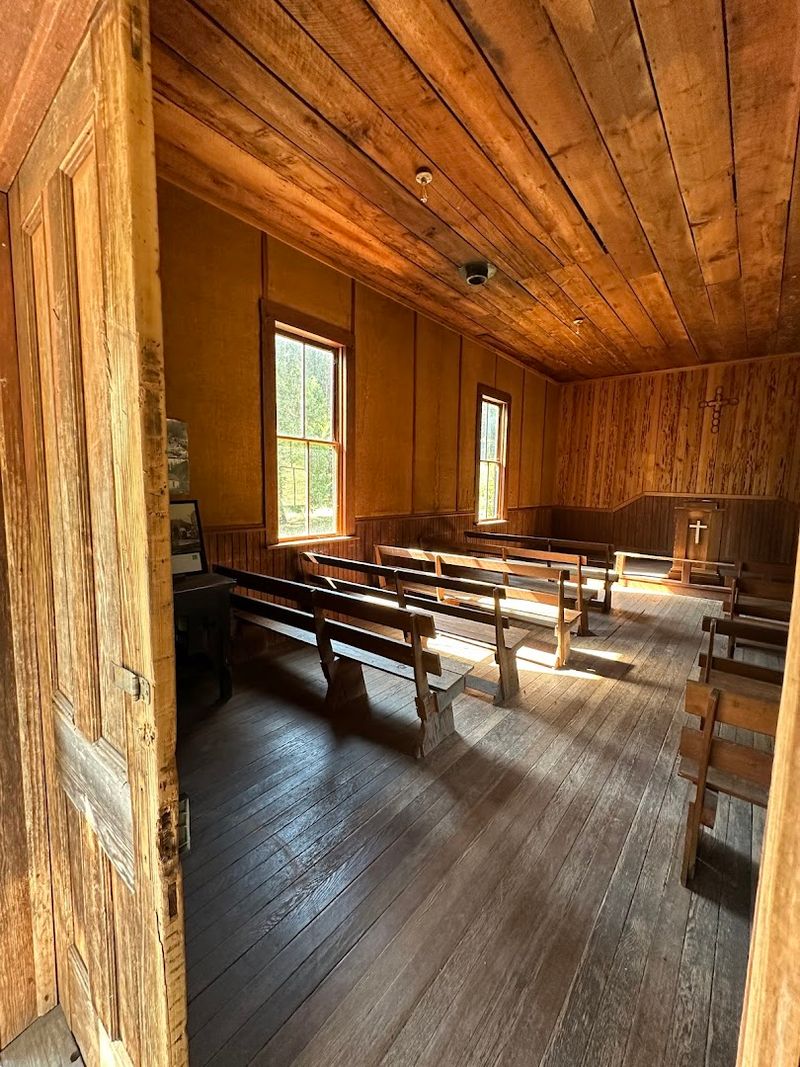
These wooden structures are all that survive of a community that once buzzed with gold rush energy. You can walk right up to the church where paranormal investigators once felt cold spots, peer through the store’s grimy windows, and imagine the reverend’s wife who vanished here in 1901.
The place is listed on the National Register of Historic Places, but it feels more like an abandoned movie set than a museum.
So which unusual Oregon landmark offers a true ghost town experience without a single ticket booth?
Pack a camera, wear sturdy shoes, and go find the driest ghost town in the West.
Why Golden Feels So Different Right Away
The first thing that hit me about Golden was how calm it felt, and not in that overly polished historic-site way where everything seems arranged for a photo. It felt real, a little fragile, and strangely intimate, like the town had simply stepped back and left a few traces behind for you to notice.
When you pull in, you are not walking into a crowded main street or a giant collection of ruins, and that is exactly why it lands so hard.
Most ghost towns try to impress you with scale, but Golden gets you with absence, which is somehow more powerful. There are only a few surviving structures, and the open space around them does a lot of the storytelling because you start imagining the homes, the voices, the routines, and the ordinary afternoons that used to fill this valley.
Southern Oregon has plenty of beautiful drives, but this one carries a different kind of quiet.
I think that is what makes Golden one of the most unusual historic places in Oregon. You are not there to check off a list of attractions, and you are not being pushed through an exhibit.
You are just standing in a former mining town, letting the stillness do its work, and honestly, that feels harder to forget.
Where You Actually Find It
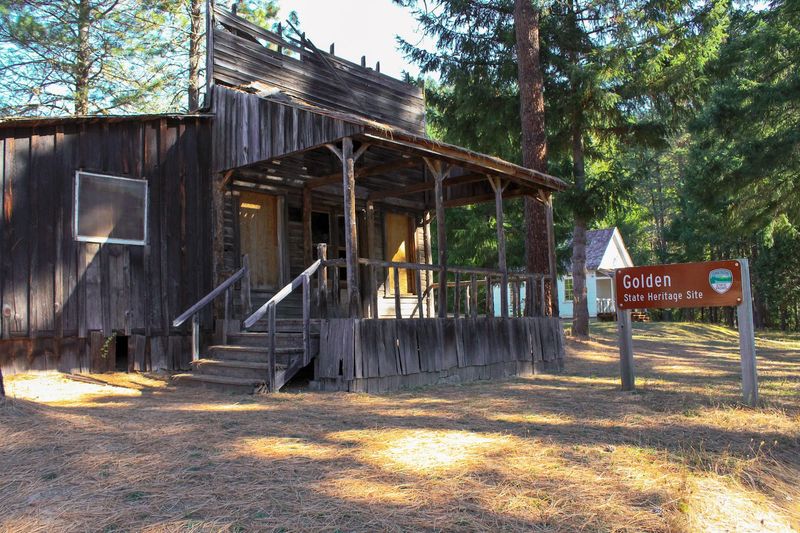
Getting to Golden is part of the mood, because the route slowly trades highway speed for a quieter, more tucked-away stretch of southern Oregon. The site is at Golden State Heritage Site, Coyote Creek Road, Wolf Creek, OR, and once you turn off toward it, everything starts feeling a little more remote in the best possible way.
You are not heading toward a flashy destination, and the landscape gives that away early.
That drive matters because it helps you understand why this place feels preserved and vulnerable at the same time. The hills, trees, and open land around the old town make it easy to picture how people once built a life here, even when the nearest conveniences were not exactly close by.
By the time you arrive, the setting has already done half the storytelling for you.
I would not rush this part, honestly, because Golden works better when you let the transition happen slowly. You move from modern Oregon into a place where the pace changes almost without asking your permission.
When the buildings finally come into view, they look small against the landscape, and that contrast makes the whole place feel even more haunting and human.
The Four Buildings That Hold The Whole Story
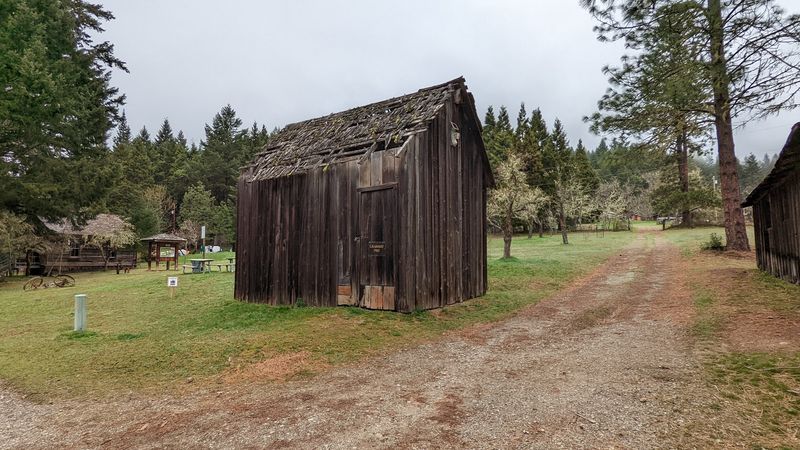
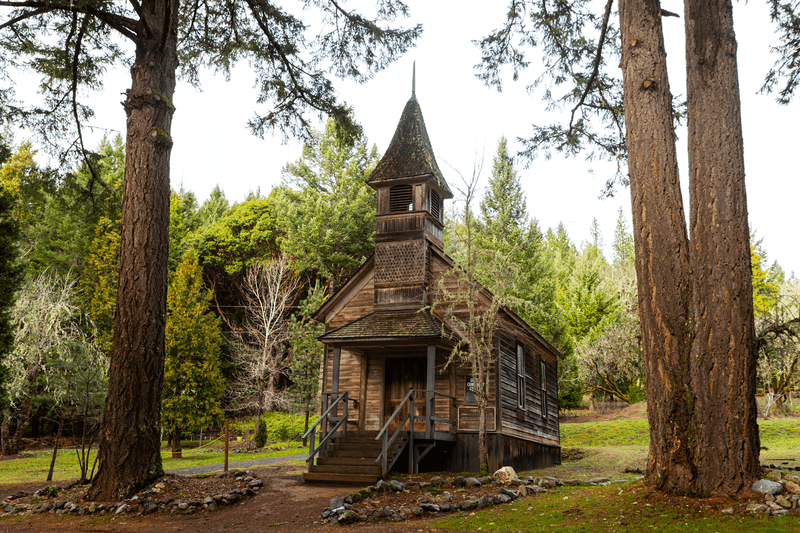
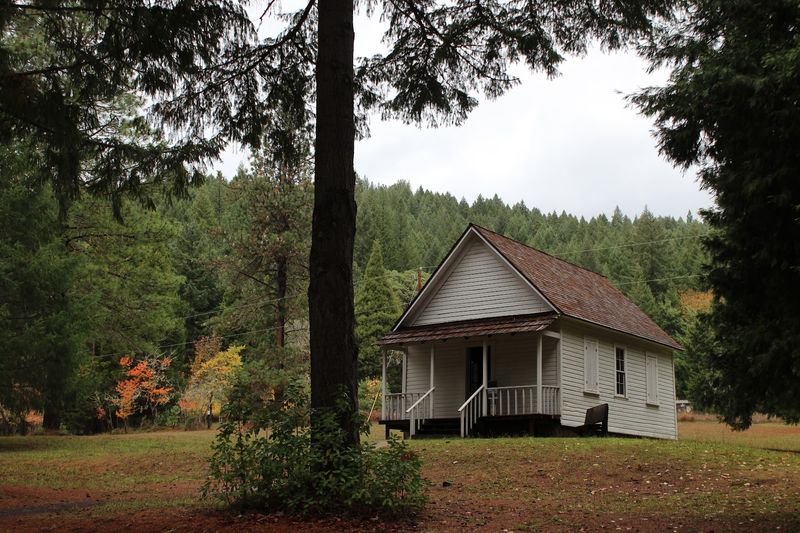
Here is the part that really stays with you: the whole emotional weight of Golden rests on just four standing buildings. There is a church, a house, a shed, and the old building that once served as the post office and general store, and somehow that small collection says more than a whole row of reconstructed storefronts ever could.
Each one feels less like a display piece and more like a witness.
Because there are so few structures left, you notice details you might ignore somewhere bigger. The weathering on the wood, the way the buildings sit in relation to the land, and the empty spaces between them all start to matter because your mind fills in what no longer stands there.
You are not just looking at architecture here, you are looking at what survival looks like when time has taken almost everything else.
I kept thinking about how unusual it is that so little can communicate so much. In a larger ghost town, you might spend your energy trying to see everything, but Golden asks you to slow down and really look at what remains.
That simplicity gives the place a surprising emotional force, and it makes every building feel essential.
The Church Is The Heart Of It
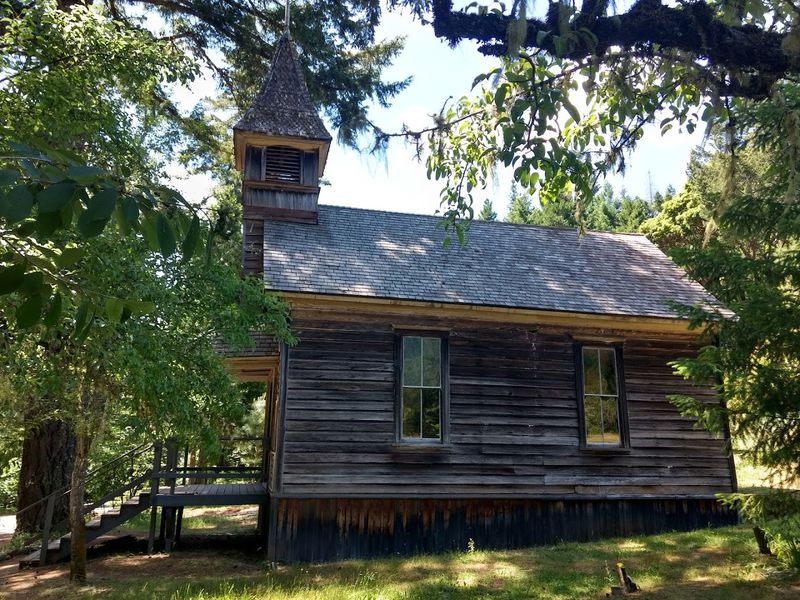
If one building pulls your attention first, it is probably the church, and that makes sense the second you see it. It has that plain, upright presence that feels both gentle and stubborn, like it knows exactly how much history has passed through this valley and does not need to prove anything.
Even from outside, it carries a kind of stillness that changes the way you move around the site.
What I like about it is that it reminds you Golden was not only a mining camp chasing quick luck. People gathered here for regular life, for community, for shared beliefs, and for the routines that make a place feel like home instead of a temporary outpost.
That detail softens the whole story, because it brings the town back down to human scale.
Golden has long stood apart from the rougher stereotype people tend to attach to mining places, and the church helps explain why. You can feel that this was a community with its own values and rhythms, not just a cluster of claims and cabins.
Standing near it, I did not think about boomtown myths so much as families trying to build something lasting in Oregon.
The Orchard Story Makes It Feel Personal
Once you learn that Golden also had a large orchard, the place stops feeling like an abandoned mining story and starts feeling much more personal. Orchards suggest patience, routines, and the kind of long view people take when they expect to stay, which tells you a lot about how this community once saw itself.
That one detail changes the emotional temperature of the whole site.
I kept thinking about what it means to plant and tend trees in a place most people now remember for gold. It says the town was never only about striking it rich, because orchards belong to daily life, family life, and future life.
You can almost feel that quieter ambition still hanging in the landscape around the surviving buildings.
That is part of what makes Golden stand apart from other historic places in Oregon. The old structures tell one story, but the land tells another, and together they create a fuller picture of a town that wanted permanence.
Even when the buildings look weathered and spare, the orchard history adds warmth, and suddenly the site feels less like a ruin and more like a place where people once planned ordinary tomorrows.
It Matters That Oregon Protects It
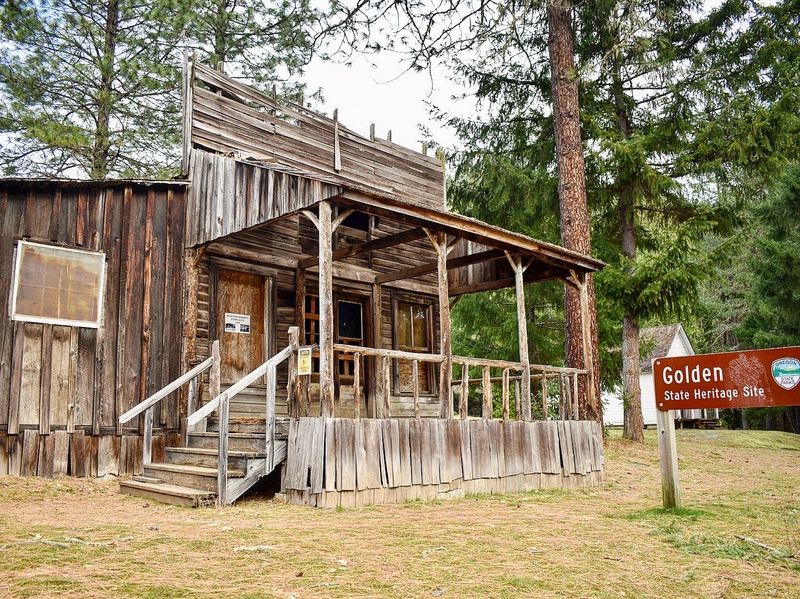
There is something reassuring about knowing Golden is not just sitting out there forgotten, even if the place still feels fragile. It is protected as an Oregon State Heritage Site and listed on the National Register of Historic Places, which means the story has been formally recognized instead of left to slowly disappear without notice.
You can feel that care in the way the site is presented, even though it still keeps its rough edges.
What makes that especially interesting is that Golden is the only former mining community owned and managed by the Oregon Parks and Recreation Department. That gives it a particular kind of importance, because the state is not preserving some theatrical version of the past here.
It is preserving a real, weathered place that asks visitors to meet history on its own terms.
I like that approach because it suits Golden perfectly. The town does not need heavy-handed polishing or too much interpretation to make its point, and honestly, that would probably weaken the experience anyway.
Oregon seems to understand that the power of this site comes from its honesty, and that decision lets visitors feel close to the place instead of being kept at a safe museum distance.
What It Feels Like To Walk Around
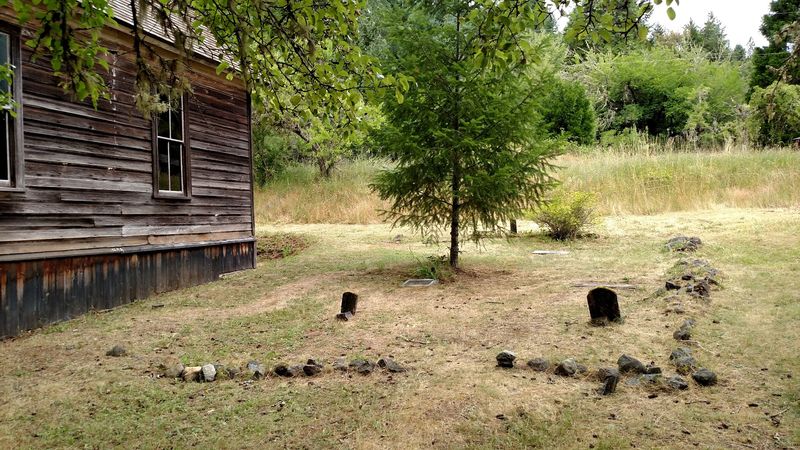
Walking around Golden feels less like sightseeing and more like easing into someone else’s memory without wanting to disturb it. The site is not large, so you are never far from the surviving buildings, but the emotional experience feels bigger than the footprint would suggest.
Every few steps, something shifts in the way you are paying attention, and the quiet starts to feel almost conversational.
I found myself slowing down without planning to, which is usually a good sign that a place is working on you. You notice little things, like how the spacing between buildings shapes your sense of the missing town, or how the stillness makes even ordinary sounds from the surrounding landscape seem sharper.
Nothing here is trying to entertain you, and that is exactly why it becomes absorbing.
If you are the kind of traveler who likes places with a strong atmosphere, this one really delivers in a low-key way. Golden does not demand a lot from you beyond patience and curiosity, but it gives back a surprisingly reflective kind of experience.
By the time you circle through the grounds, the town can feel both deeply gone and oddly present at the same time.
The Best Reason To Go Is The Feeling You Leave With
What stays with you after Golden is not just the history, although the history is obviously the reason the place matters. It is the feeling of having stepped into a version of Oregon that still speaks quietly through a few buildings, an open landscape, and a lot of absence.
That combination is hard to fake, and maybe that is why it settles in so deeply.
I would tell a friend to go here not because there is a long list of things to do, but because the experience feels unusually human. Golden does not overwhelm you with facts or spectacle, and it does not need to, because its power comes from how directly it connects you to the lives that once filled this little valley.
You leave thinking less about mining legends and more about community, effort, belief, and time.
That is a pretty rare thing for any historic site to pull off, especially one so small. In a state full of dramatic coastlines, forests, and mountain views, Golden still manages to carve out its own kind of memorability.
It is quiet, spare, and a little haunting, and somehow that makes it one of the warmest history stops you can make in Oregon.
