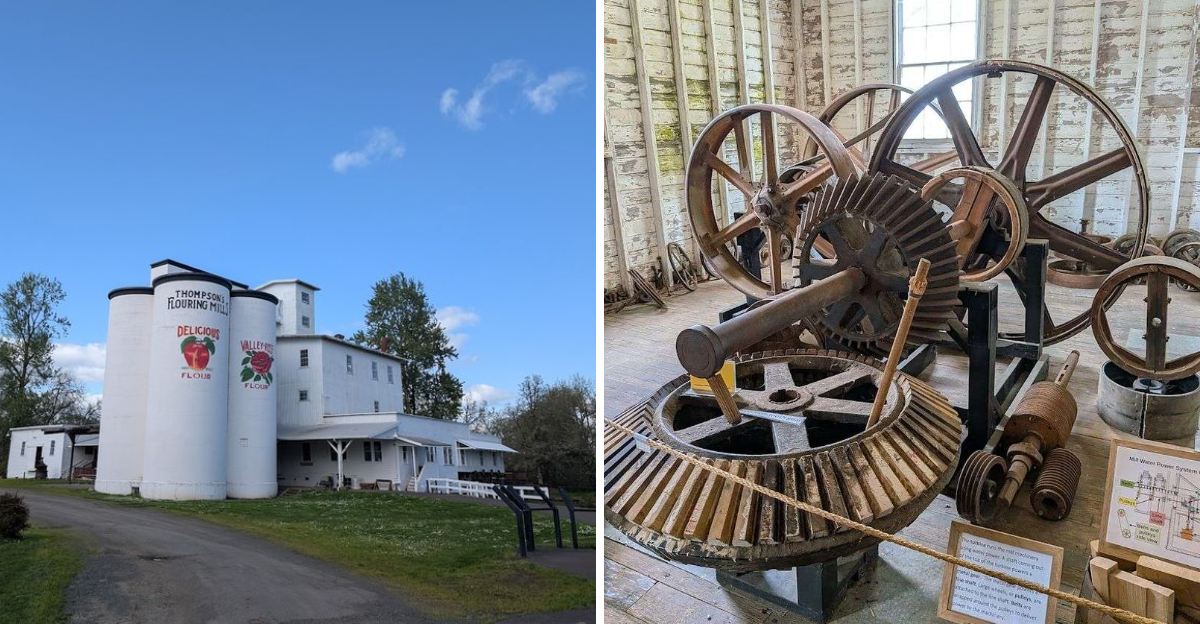
The water rushes through the flume with the same urgency it did back in 1858, a sound that has echoed here for more than 160 years. This is Oregon’s oldest standing water-powered grain mill, a survivor that predates statehood itself.
You can walk through its weathered six floors and see the massive hand-hewn beams, some of which were placed while Lincoln was still in office. Guided tours bring the machinery to life.
They raise wooden gates to send a torrent of water through the turbines and bringing the ancient clatter back to the building. This structure was once part of a bustling mill town.
That town vanished when the railroad passed it by, but the building adapted – first producing flour and feed, then even generating electricity. Today, it stands as a beautifully preserved time capsule, a hidden piece of Oregon’s rural history that is finally open for everyone to explore.
A Mill Built to Last
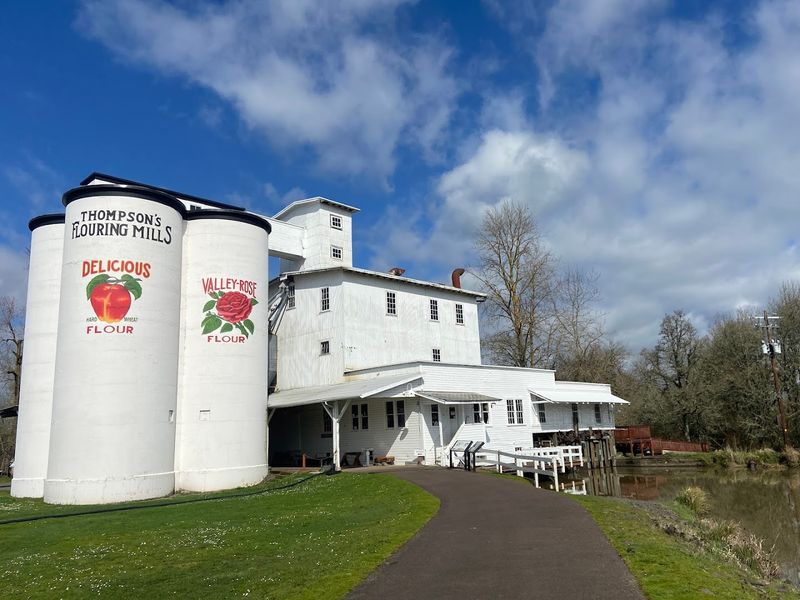
Back in 1858, a working grain mill rising from Oregon’s Willamette Valley was no small achievement. Thompson’s Mills was built to serve a growing farming community that desperately needed reliable grain processing.
The land around Shedd was rich, flat, and perfect for wheat and oat crops that settlers brought westward.
The original builders channeled water from the Long Tom River to power the mill’s heavy grinding stones. That engineering decision turned out to be remarkably forward-thinking for its era.
Water power was consistent, renewable, and free, making the mill economically strong for generations of owners.
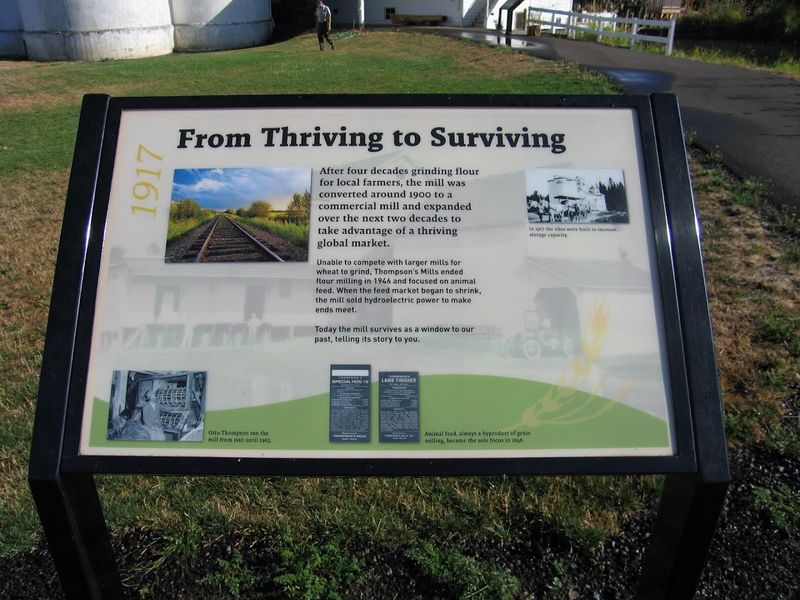
Today, walking the grounds feels like reading a chapter from Oregon’s agricultural past. The buildings have been carefully preserved to reflect their original purpose and appearance.
Visiting this site means stepping into a story that stretches well beyond 160 years of continuous Oregon history.
How Water Does the Heavy Lifting Here
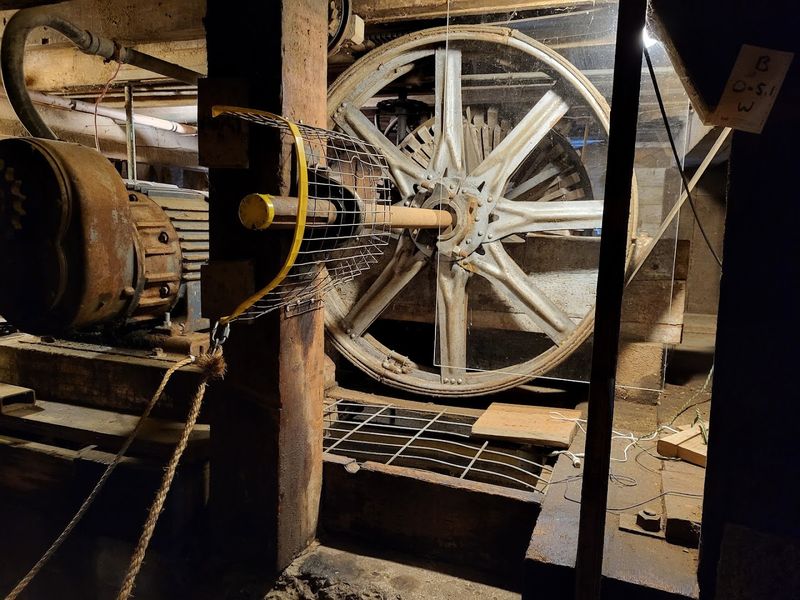
Watching water power an entire mill is genuinely impressive, even for someone who grew up around machines. The millrace at Thompson’s Mills channels water from the Long Tom River with careful precision.
That flowing water spins wooden mechanisms that eventually turn the heavy grinding stones inside.
One visit to the working demonstration shows exactly how much force moving water can generate. Volunteers activate the water source during tours so visitors can see the gears actually turning.
The sound of rushing water mixing with creaking wood creates a surprisingly satisfying sensory experience.
Oregon’s early settlers relied on this exact technology to process their harvests efficiently and feed their families. Understanding how the system works makes you appreciate the ingenuity of 19th-century mill engineers.
The water-powered design is also why Thompson’s Mills earns its title as Oregon’s oldest standing water-powered grain mill still in operation today.
The Grounds and Setting Along the Long Tom River
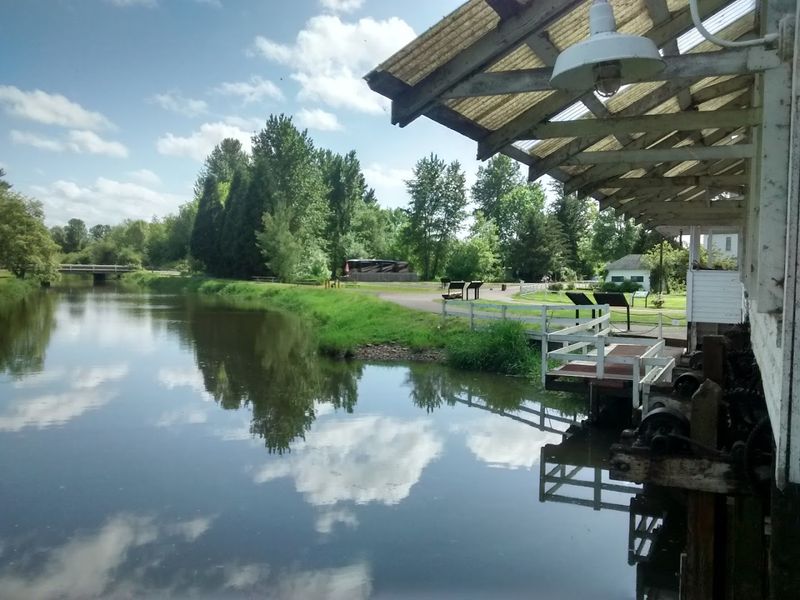
The property surrounding Thompson’s Mills is as beautiful as the mill itself, maybe even more so on a clear Oregon morning. The Long Tom River runs along the edge of the grounds, adding a natural soundtrack to the entire visit.
Tall trees shade the pathways and create a cool, peaceful atmosphere worth lingering in.
The open green spaces around the buildings make Thompson’s Mills a genuinely pleasant place to simply walk around. Families with young children find plenty of room to roam between the historic structures.
The setting feels rural and unhurried in a way that downtown attractions rarely manage to replicate.
Sitting near the river after a tour, watching the water move quietly past the old mill walls, feels restorative. The combination of natural beauty and human history creates a layered experience that rewards slow exploration.
Few heritage sites in Oregon offer this kind of peaceful, picturesque environment alongside so much educational value.
Perfect for a Picnic
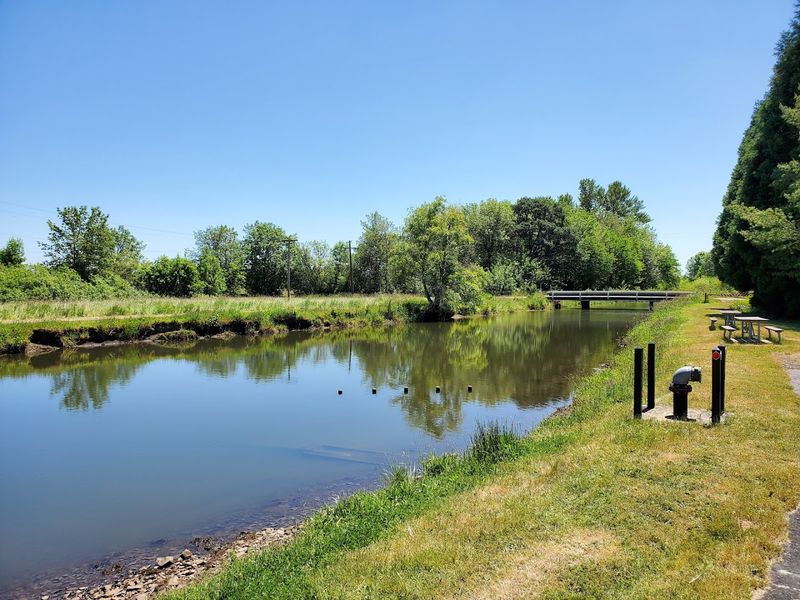
Packing a picnic lunch before heading to Thompson’s Mills turns a good visit into a genuinely great one. The grounds offer shaded spots and open grassy areas that feel tailor-made for outdoor dining.
Spreading out a blanket near the river while the mill hums quietly in the background is a rare kind of afternoon.
Local visitors from Corvallis and Albany often make Thompson’s Mills a destination for a relaxed family outing. Bringing fresh Oregon produce, local cheeses, or homemade sandwiches fits perfectly with the agricultural spirit of the site.
Eating outdoors here feels connected to the farming heritage the mill was built to support.
The site has no food vendors on the property, so arriving prepared makes the experience smoother and more enjoyable. Planning your meal around local Oregon flavors adds a food-travel dimension that enriches the whole trip.
A picnic at Thompson’s Mills is a simple pleasure that pairs beautifully with the history surrounding you.
The Tour Experience
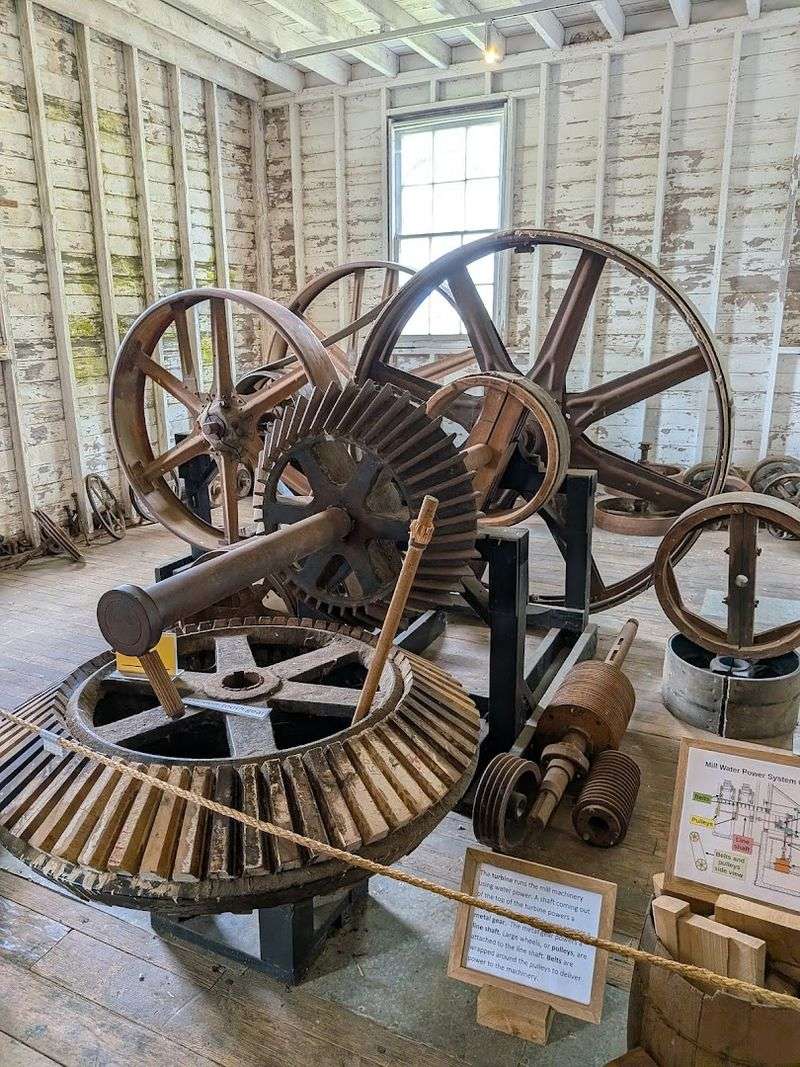
Tours at Thompson’s Mills run on the hour and they are completely free, which makes the experience even more rewarding. Volunteer docents lead guests through the mill buildings with genuine enthusiasm and deep knowledge.
Every corner of the site has a story attached to it, and the guides know them all.
The tour covers the mechanical workings of the mill, the history of Oregon grain farming, and the families who operated this site across generations. Guides actually turn on the equipment during the tour so visitors experience the mill in motion.
Seeing the gears engage and the stones begin to turn is an unforgettable moment for all ages.
Self-guided tours are also available for visitors who prefer to explore at their own pace. Informational displays throughout the property provide clear and engaging historical context.
Either way, leaving Thompson’s Mills without learning something genuinely new is nearly impossible.
A Seasonal Celebration Worth Planning Around
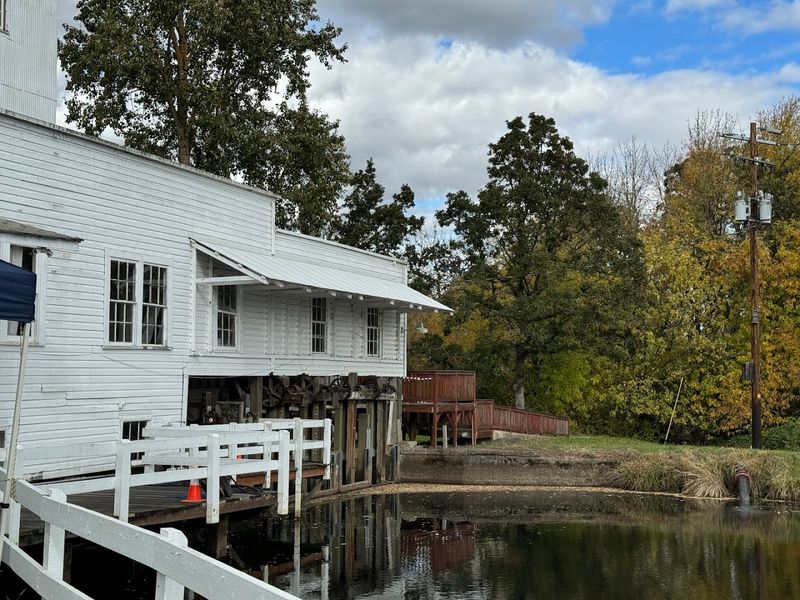
Cider press days at Thompson’s Mills are among the most beloved seasonal events the site hosts each year. Visitors come specifically for these events, driving from across the Willamette Valley to participate in the hands-on experience.
Pressing apples into fresh cider using heritage equipment connects people to old Oregon farm traditions in a tactile, joyful way.
The energy during cider press days is warm and community-driven, with families and curious visitors gathered around working equipment. Children especially love seeing raw apples transform into something delicious right before their eyes.
The sweet, sharp scent of fresh apple juice fills the autumn air around the mill grounds.
Planning a visit around one of these events adds a seasonal food dimension that makes the trip extra memorable. Check the Thompson’s Mills website or Oregon State Parks listings for upcoming cider press dates.
It is the kind of event that locals return to year after year without hesitation.
Nature and History Working Together
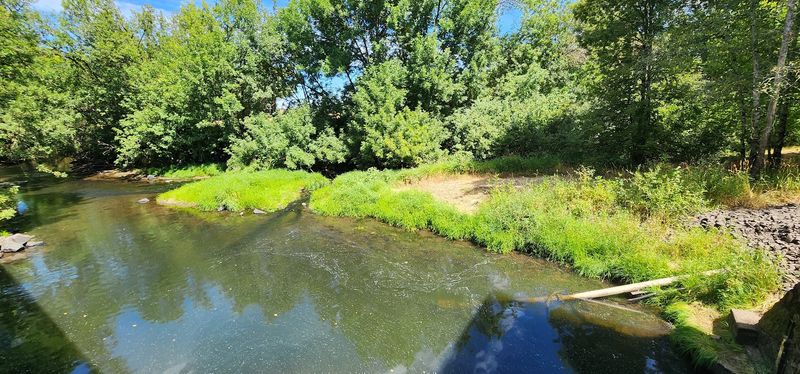
Thompson’s Mills is not just a place frozen in history, it is also actively engaged in restoring the natural environment around it. The Long Tom River restoration project is an ongoing effort connected directly to the site’s stewardship mission.
Native plants have been reintroduced along the riverbank to support local wildlife and improve water quality.
Visitors who take time to walk along the river will notice interpretive signs explaining the restoration work in accessible language. The connection between healthy waterways and working mills is a central theme throughout the site’s educational programming.
Understanding that relationship adds environmental depth to what might otherwise seem like a purely historical visit.
Oregon State Parks manages Thompson’s Mills with a clear commitment to both preservation and ecological responsibility. The dual focus on heritage and habitat makes this site stand out among Oregon’s many historical landmarks.
Seeing both missions working side by side feels genuinely inspiring rather than performative.
Interactive Displays and Hands-On Learning for All Ages
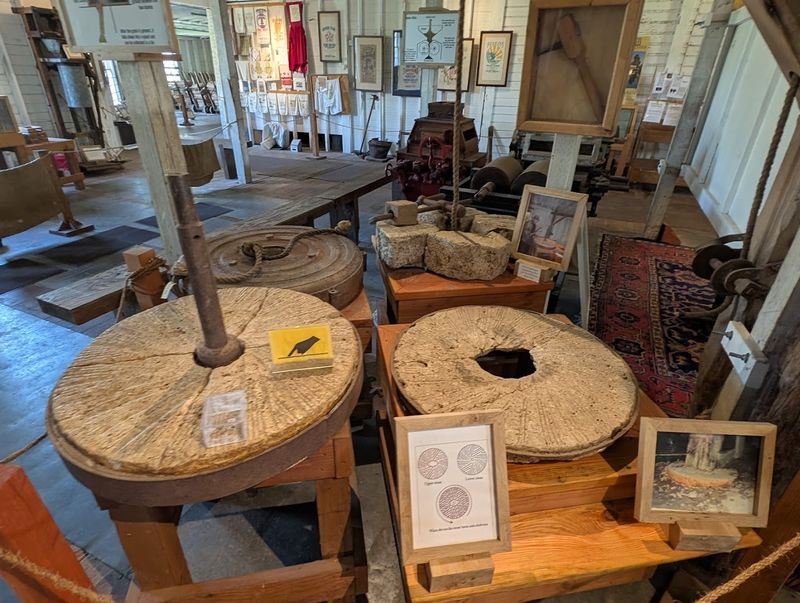
Thompson’s Mills does not rely solely on words on a wall to tell its story, and that makes a real difference. Interactive displays throughout the site let visitors engage with the history in a more physical and memorable way.
Touching replica tools, examining grain samples, and following the milling process step by step keeps attention sharp.
Kids who might tune out a traditional museum find themselves genuinely engaged here thanks to the hands-on approach. The displays are designed to be approachable for younger visitors without feeling dumbed down for adults.
That balance is harder to achieve than it sounds, and Thompson’s Mills gets it right.
School groups regularly visit the site for educational field trips that align with Oregon history curriculum standards. The combination of live demonstrations and static displays creates a layered learning experience that sticks with visitors long after they leave.
Coming here with curious kids is one of the best decisions you can make on a weekend trip.
Feeding the Chickens (A Charming Bonus After the Tour)
One of the most unexpectedly delightful parts of visiting Thompson’s Mills comes right at the end of the guided tour. Guests get the chance to feed the resident chickens, and it turns out that simple activity is a genuine crowd-pleaser.
Children absolutely love it, but plenty of adults find themselves smiling just as wide.
The chickens roam a section of the grounds and have clearly become part of the site’s identity over time. Watching them scramble toward a handful of feed is the kind of simple, joyful moment that makes a place feel alive rather than merely preserved.
It adds a farm-life authenticity that fits perfectly with the mill’s agricultural heritage.
After a tour full of fascinating history and mechanical demonstrations, the chicken feeding offers a lighthearted landing point. Families leave with full minds and warm memories, which is exactly what the best heritage sites aim to create.
This small detail says a lot about the thoughtfulness behind Thompson’s Mills.
Planning Your Visit
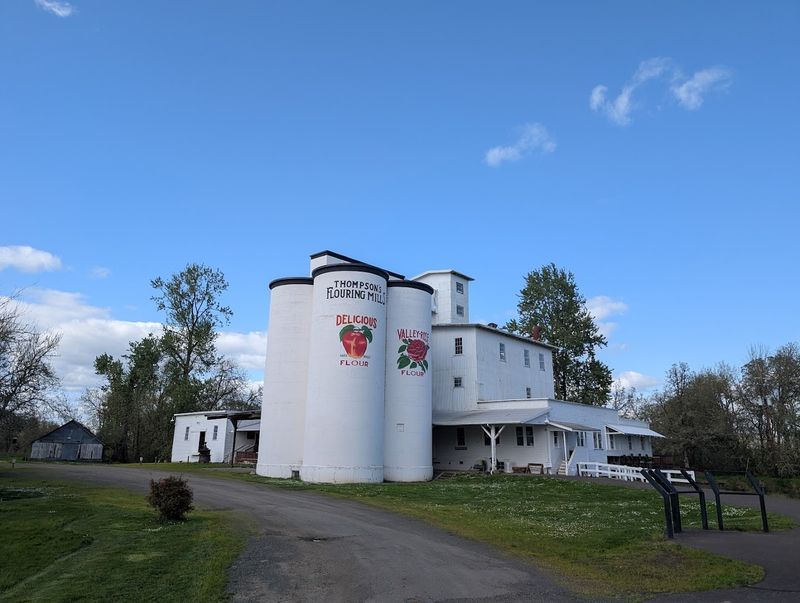
Thompson’s Mills is open every day of the week from 9 AM to 4 PM, making it easy to fit into almost any travel itinerary. Admission is completely free, which makes it an accessible destination for families, solo travelers, and history enthusiasts on any budget.
Arriving early gives you the best chance of catching a guided tour without a long wait.
The site is located at 32655 Boston Mill Dr in Shedd, Oregon, about a short drive from Corvallis. Parking is available on-site and the grounds are easy to navigate on foot.
Comfortable walking shoes are recommended since the property includes both indoor and outdoor areas worth exploring thoroughly.
Calling ahead at 541-491-3611 or checking the Oregon State Parks website helps confirm tour times and any seasonal event schedules. The staff and volunteers are consistently welcoming and genuinely happy to answer questions.
