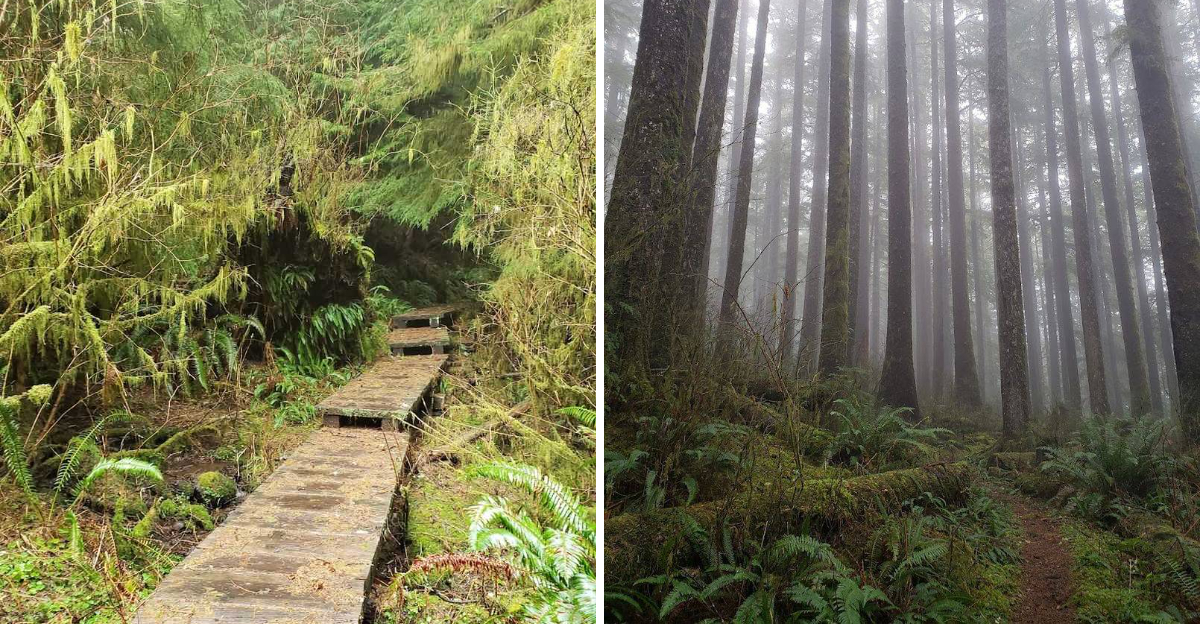
The ground wiggled beneath my feet like a giant water bed today. I looked down and realized the entire bog was shaking slightly.
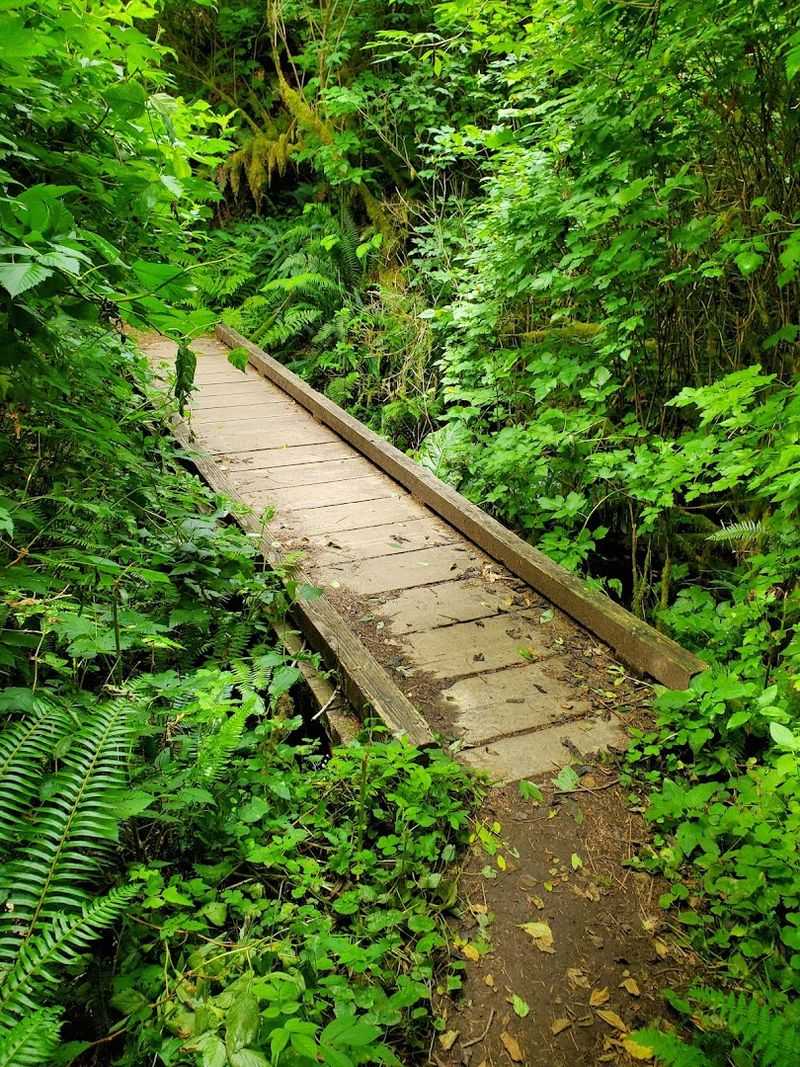
A wooden boardwalk keeps you from sinking into the spongy mess below. With every step I took the trail bounced back up again gently.
My brain kept telling me solid ground should not move like this ever. The moss around me looked thick enough to swallow a small child whole.
I grabbed the railing and laughed because nothing felt normal anymore honestly. The views at the top made the wobbly walk completely worth all effort.
Standing still felt weirder than walking which makes no sense at all. I have never been so entertained by a moving floor in my whole life.
The Quaking Bog Boardwalk: Where the Ground Moves Under You
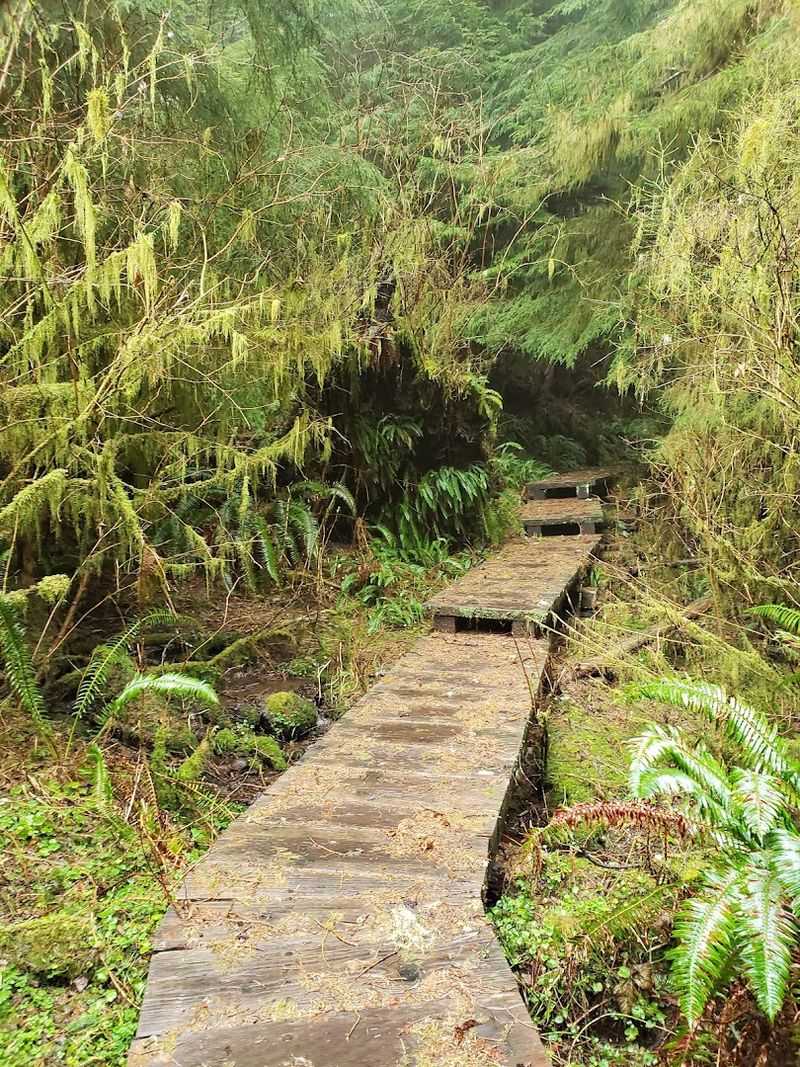
Walking onto the boardwalk here feels like stepping onto a giant sponge. The ground actually ripples.
You can feel the vibration travel through the wood as other hikers step nearby.
A quaking bog forms when layers of peat and vegetation float over waterlogged ground. The surface is alive in the most literal sense.
Stomp once and watch the ferns around you tremble.
This section of Cascade Head Trail is the only one of its kind in Oregon. Most people do not expect it.
You hear about ocean views and rainforest canopy, then suddenly the earth moves beneath your boots.
Kids absolutely love this part. Adults do too, even if they pretend to stay calm.
The boardwalk keeps your feet dry while giving you full access to that wobbly, surreal feeling.
Go slow here. Take a moment to just stand still.
The bog has a quiet energy that rewards patience more than speed.
The Rainforest Canopy: A World Draped in Green
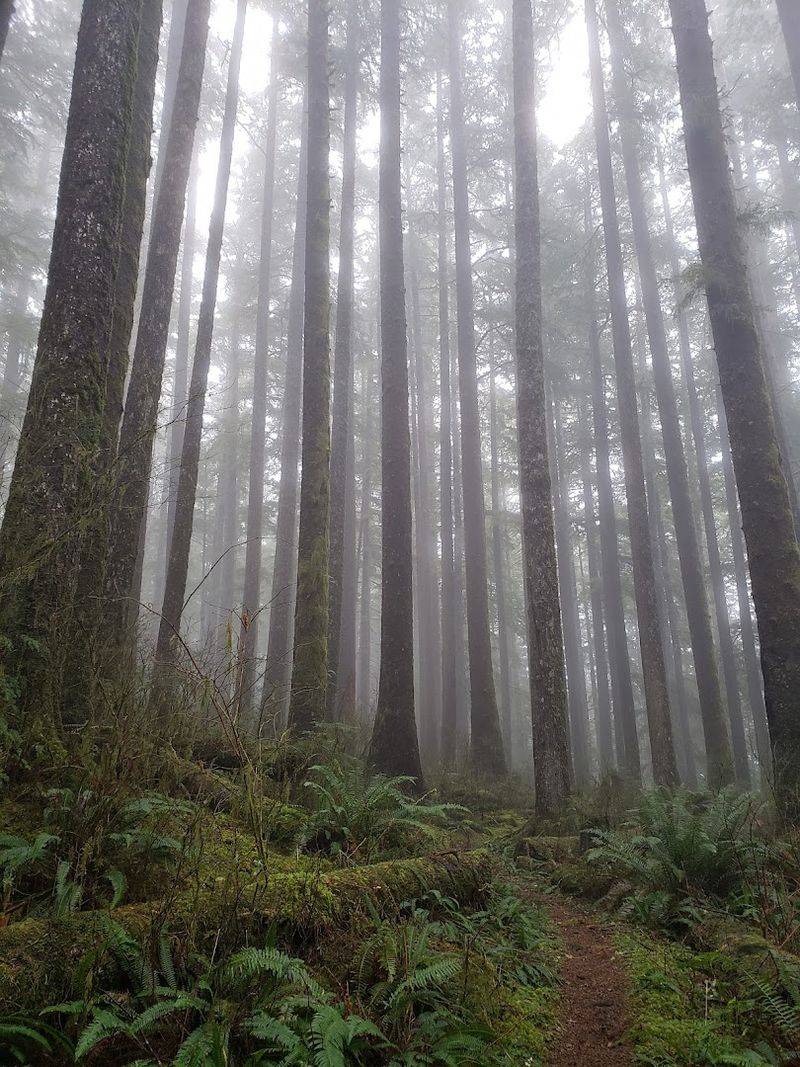
Stepping under the canopy at Cascade Head feels like entering a cathedral built entirely from ferns and fog. Every branch overhead is wrapped in thick green moss.
The light filters down in soft, diffused beams.
This is a true Pacific coast rainforest. It gets heavy rainfall, and the trees show every drop of it.
Bigleaf maples stretch wide, their bark completely hidden under layers of lichen and moss.
One visitor described walking from below fern level to above it. That is a real thing here.
The trail climbs through distinct vegetation zones, and you notice the shift in texture and temperature as you move upward.
The smell is one of the first things that grabs you. Damp earth, fresh greenery, and something faintly sweet from the decaying wood on the forest floor.
It is not unpleasant at all.
Bring a camera with good low-light settings. The forest floor is dim and gorgeous, full of tiny details that reward a slow pace and a curious eye.
The Elevation Gain: A Real Climb Hiding in Plain Sight
Nobody warns you quite enough about the climb.
The first section feels manageable. The forest is beautiful and distracting.
Then the trail tightens, the root staircases appear, and your legs start having opinions.
Tree roots act as natural stairs along the steeper sections. They are uneven and sometimes slippery when wet.
Trekking poles make a real difference here, especially on the descent.
The second half is noticeably harder than the first. Visitors consistently mention this.
Going up slowly and stopping often to look around is actually the smartest strategy, not just the most enjoyable one.
Fit hikers can summit in about two hours. Coming down takes less time but demands more knee attention.
Wear solid footwear with grip and give yourself more time than you think you need.
The effort is absolutely worth it. Every steep step leads to something more beautiful than the last.
The Trailhead and Parking: What to Know Before You Go
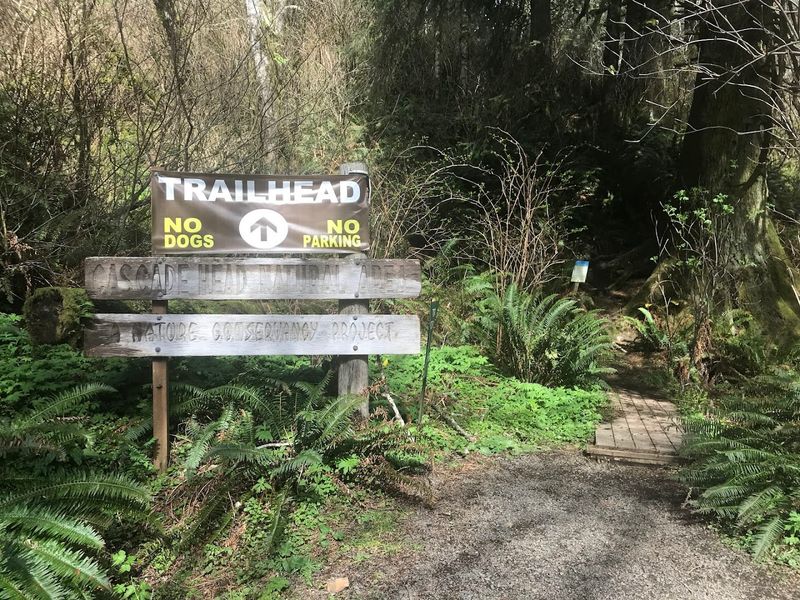
Getting to the trailhead is part of the adventure. The gravel road leading in is narrow and winds through dense forest.
There are a few pullout spots, but patience is required.
The parking area is small. Arriving early is the best way to guarantee a spot.
The trail opens at 6 AM daily, and morning visits tend to be quieter and cooler.
The trailhead is located off N 3 Rocks Road in Otis, Oregon. There is no large sign marking it, which catches some visitors off guard.
A downloaded map or offline GPS helps significantly.
One visitor noted the lack of clear signage made them turn back early. Doing a little research before arrival saves that frustration.
The Siuslaw National Forest website has useful trail information.
Dogs have been reported as both allowed and not allowed depending on the season. Check current regulations before bringing your pet.
Rules can change, and a quick phone call to the ranger station at (503) 392-5100 clears up any confusion.
The Salmon River Estuary Views: A Reward Worth Every Step
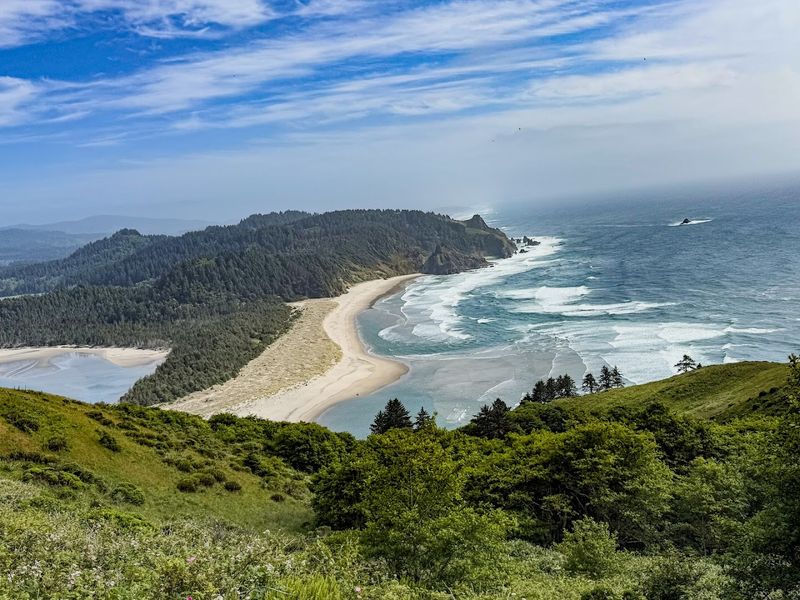
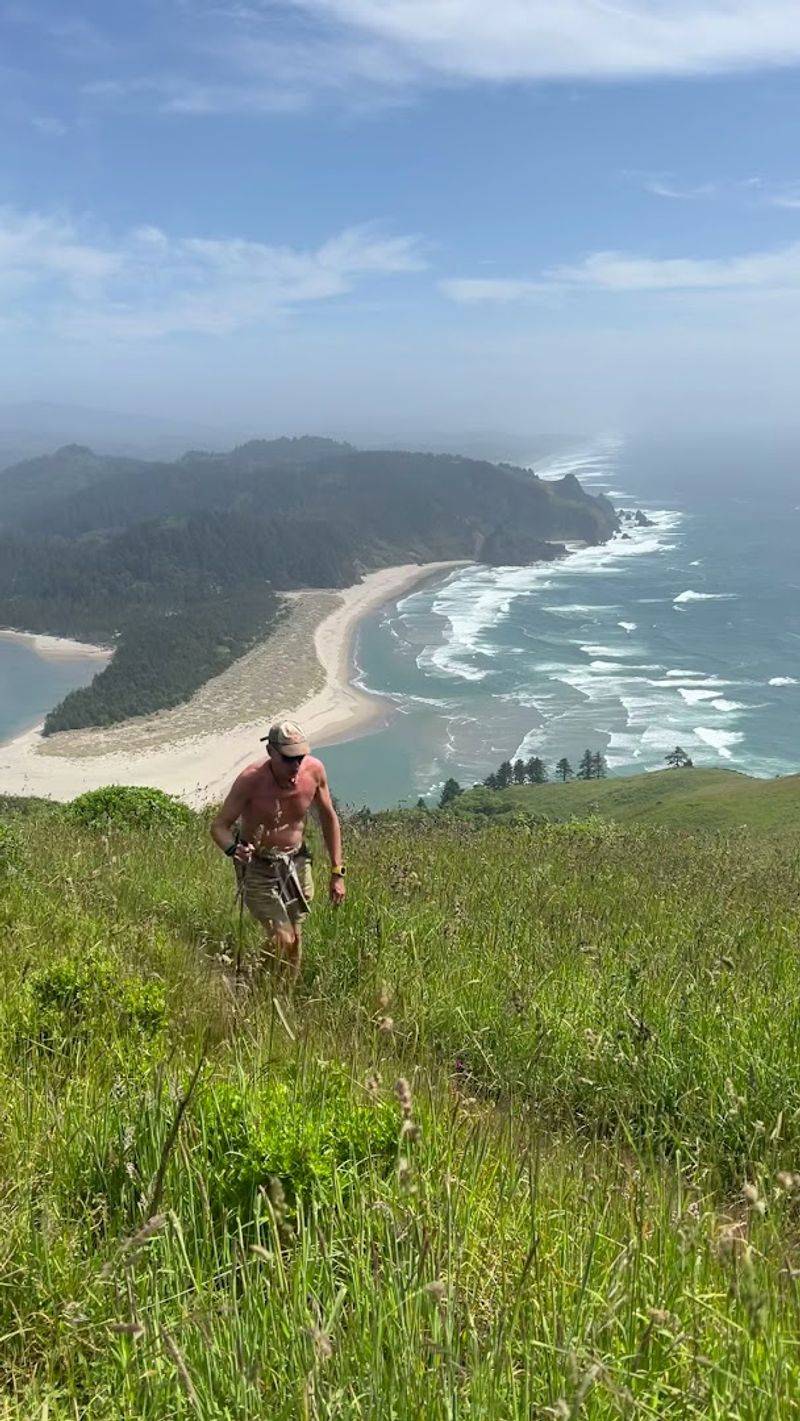
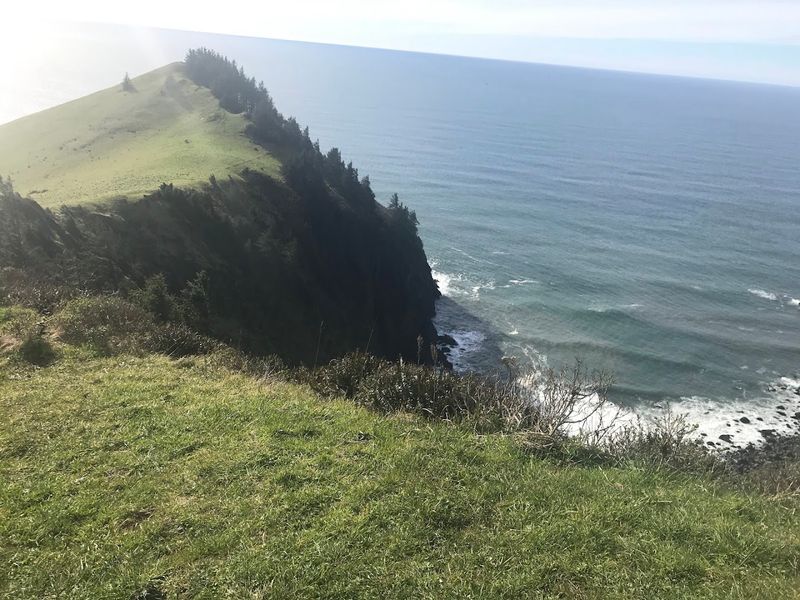
At the top of the first trail segment, the forest opens up suddenly. The view hits you before you are ready for it.
Below, the Salmon River estuary curves through a wide green valley toward the Pacific.
The contrast is striking. You have spent the last hour inside a dark, enclosed forest.
Then suddenly the sky opens and the water glitters far below. It feels earned in the best possible way.
This vista sits at around 1,217 feet in elevation. On a clear day, the ocean stretches beyond the estuary in a wide blue line.
The Three Rocks area is visible from here too.
Fog rolls in regularly on the Oregon Coast. A foggy day still makes for a moody, atmospheric view.
But a clear morning visit rewards you with colors and depth that photographs cannot fully capture.
Sit down here for a few minutes. Eat something.
Let the view settle in. The trail continues beyond this point, but this meadow overlook is a destination all on its own.
Wildlife on the Trail: Elk, Snakes, and Surprises
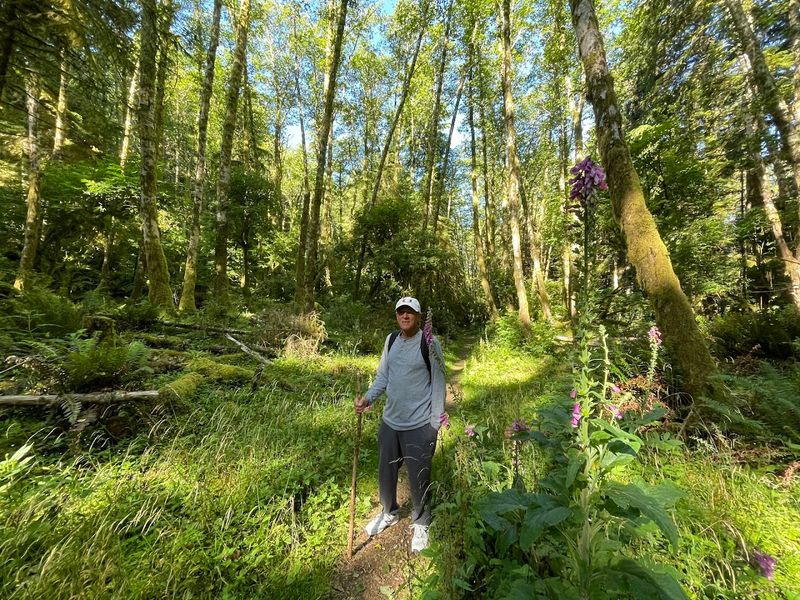
The wildlife sightings here are genuinely exciting. Elk herds have been spotted grazing in the fields along the road near the trailhead.
One visitor saw a large herd just before reaching the parking area.
Inside the forest, snakes are common. Rabbits and frogs also make appearances.
None of this should be alarming, but it is worth knowing so you stay alert and respectful.
Elk are the showstoppers. Roosevelt elk are large, calm, and breathtaking to watch from a safe distance.
Seeing them in the morning mist along the roadside before a hike sets a powerful tone for the day.
Birdsong fills the forest constantly. The canopy is thick with activity even when you cannot see the birds themselves.
Standing still for a moment reveals just how alive this place really is.
Leave the trail as you find it. Do not approach wildlife, especially elk.
They are wild animals and deserve space. Watching quietly from a distance is always the right call here.
The Mud Factor: What Wet Weather Does to This Trail
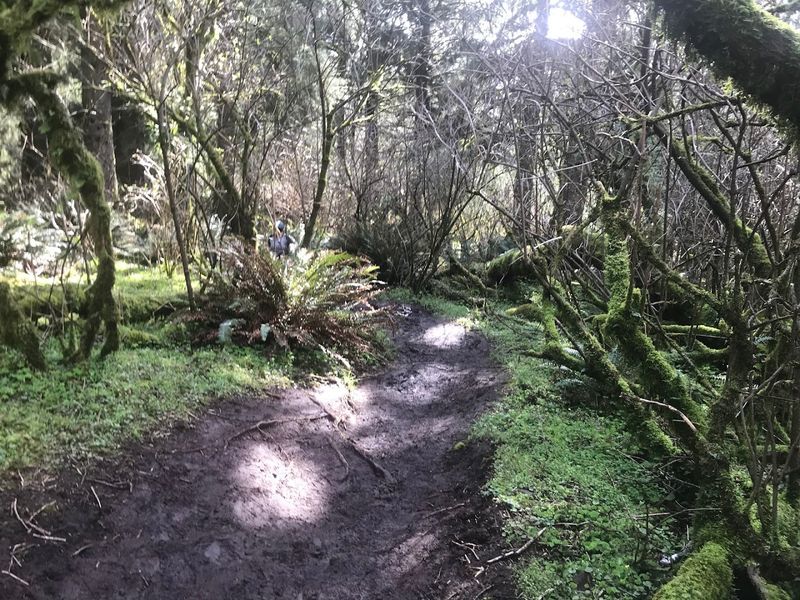
Rain is not a rare event on the Oregon Coast. It is basically a permanent resident.
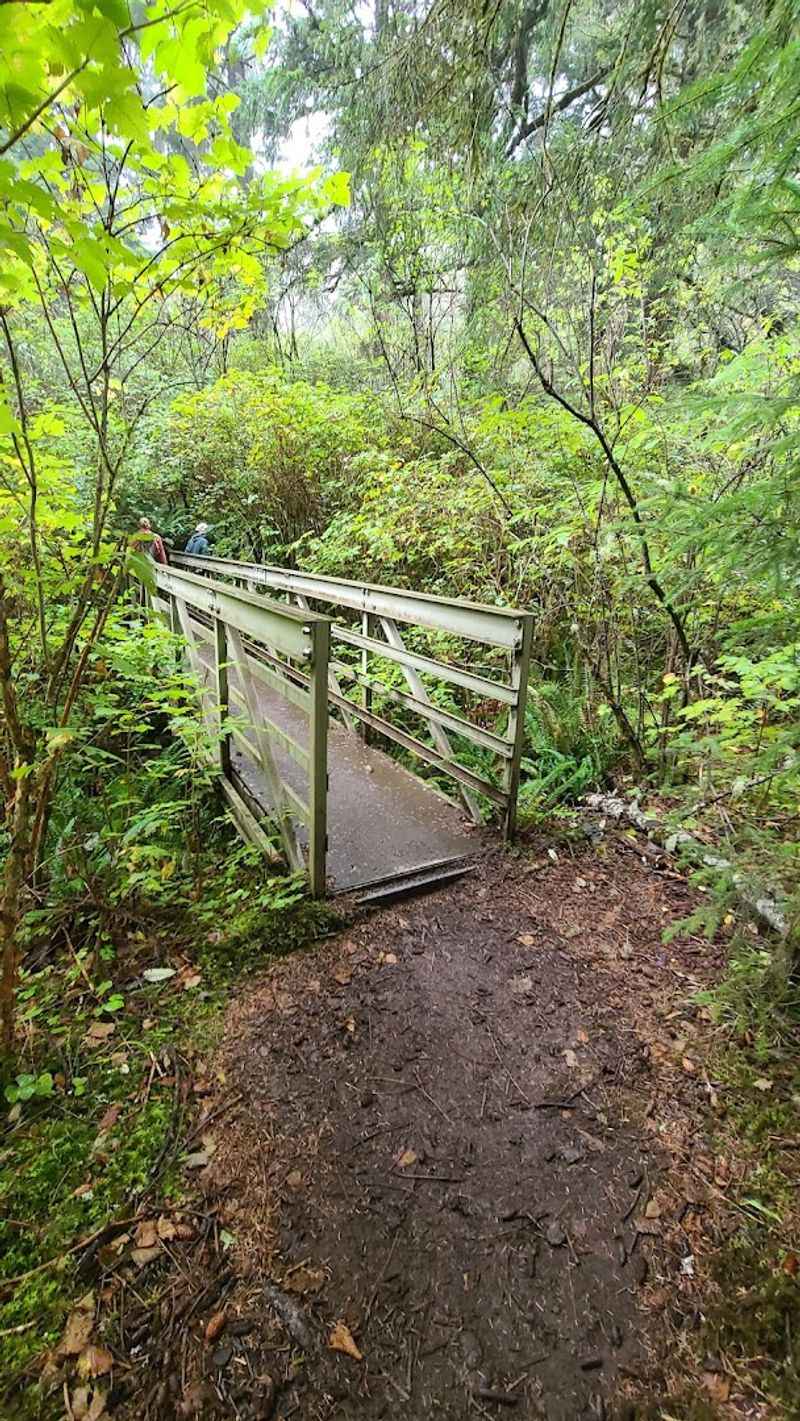
The trail at Cascade Head reflects that reality with some seriously muddy stretches after wet weather.
Low-lying sections collect puddles. The overgrown parts get slippery.
Waterproof boots are not optional here. They are the single most important piece of gear you can bring.
Gaiters are a nice bonus if you have them.
The mud is part of the experience, honestly. There is something satisfying about squelching through a rainforest trail in proper gear.
It feels authentic in a way that manicured paths never do.
The forest looks its most dramatic in wet conditions. Moss glows brighter.
The air is heavier with scent. Even on a drizzly day, this trail delivers something worth showing up for.
Pack a dry bag for your phone and camera. Moisture finds its way into everything out here.
The Three Trail Segments: How the Hike Actually Flows
Cascade Head Trail is not one single path. It breaks into three distinct segments, each with its own personality.
Understanding the layout before you start makes the experience much smoother.
The first segment moves through deep forest. It is enclosed, green, and shaded.
This is where the bog boardwalk lives, and where most of the dramatic root staircases appear.
The second segment opens things up. The canopy thins.
Meadows begin to appear and the sky becomes visible again. Views of the estuary and ocean start to reveal themselves here.
The third segment drops toward the ocean and offers a different kind of terrain. It is less traveled and more rugged.
Not every visitor reaches this section, and that is perfectly fine.
Most hikers turn around at the first meadow overlook near 1,217 feet. That point alone justifies the entire trip.
Going further rewards those with extra energy and sturdy footwear.
Knowing where you are in the sequence helps you pace yourself and decide how far to push on any given day.
What to Pack: Gear That Actually Makes a Difference Here
A jacket is non-negotiable. The rainforest shade keeps temperatures cool even in summer.
Trekking poles earn their weight on the descent. The steep root sections are manageable going up, but coming down on wet roots without support is genuinely risky.
Pack them if you have them.
Waterproof boots have already been mentioned, but they deserve another note. The combination of mud, puddles, and bog moisture means regular trail runners will be soaked within the first mile.
Bring more water than you think you need. The climb is deceptive.
The cool air makes you feel less thirsty than you actually are. Dehydration sneaks up on people here.
Snacks matter on a 1,200-foot climb. Something with protein and carbohydrates keeps energy steady.
The meadow overlook makes a perfect lunch spot if you time it right.
A downloaded offline map is one of the smartest things to bring. Cell service is unreliable along the trail and the signage is minimal at best.
Why Cascade Head Trail Stays With You Long After You Leave
Some hikes are beautiful. This one is memorable in a different way.
It gets under your skin a little. The ground moves, the forest hums, and the views come as a genuine surprise.
There is a quality to this trail that feels rare. It is not perfectly groomed or heavily trafficked.
It has overgrown sections, muddy stretches, and unmarked moments where you feel genuinely off the beaten path.
That rawness is exactly what makes it special. The trail feels like it belongs to the forest, not the other way around.
You are a visitor in something much older and wilder than yourself.
The bog boardwalk alone would make this trip worthwhile. Add the elk, the estuary views, the root staircases, and the rainforest canopy, and you have something that stacks up against any hike in the Pacific Northwest.
People come back here. Visitors say they would do it again without hesitation.
That kind of loyalty from hikers says more than any scenic description ever could.
Address: Cascade Head – Rainforest Trailhead, N 3 Rocks Rd, Otis, OR 97368
