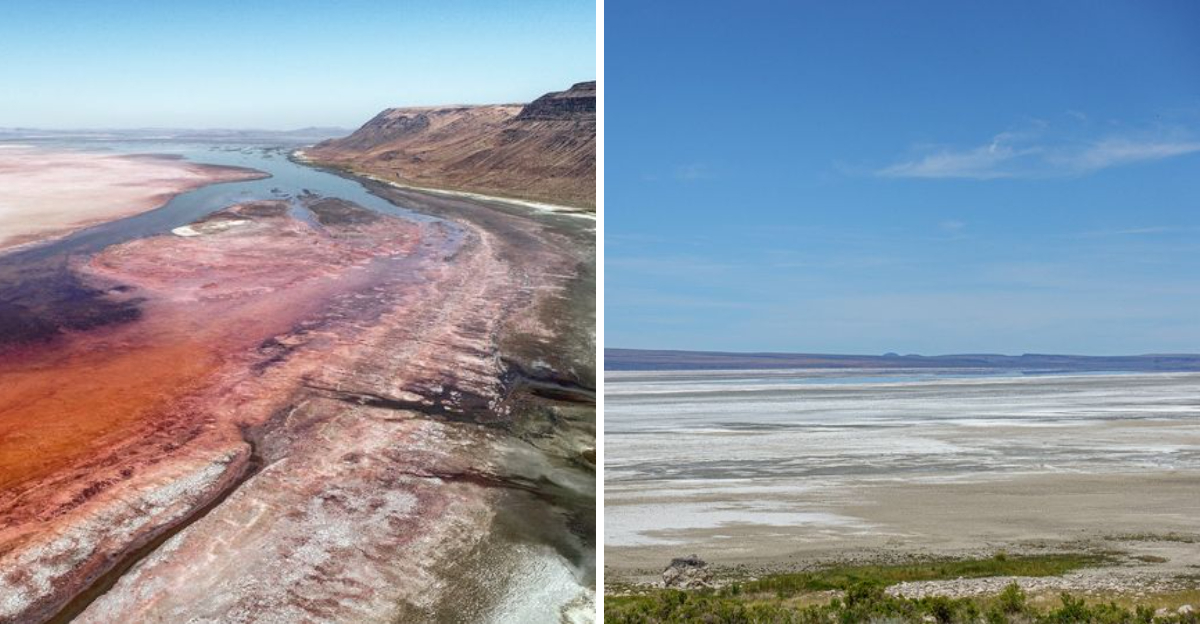
A lake that has existed for thousands of years is shrinking before our eyes. Oregon’s only saltwater lake looks different now than it did a decade ago, much different.
The water level has dropped so low in recent years that scientists say the lake may never fully recover. You can walk across dry cracked ground that used to be under several feet of water.
The salty white shoreline has expanded outward like a warning sign written in mineral deposits. Birds that once stopped here during migration have started flying further to find food.
The shallow remaining water turns pink or red in summer heat, a beautiful but troubling sign of imbalance. Locals remember swimming here as children.
Their grandchildren will probably never have that chance. The causes are complex, drought, water diversion, and climate change all play a role.
Scientists monitor the situation closely but hope is fading. Oregon has lost natural spaces before, but this one hits different because you can watch it happen in real time.
A slow motion disappearance that most people never notice until it is too late. You can still visit and see what remains.
The Towering Giant: Abert Rim
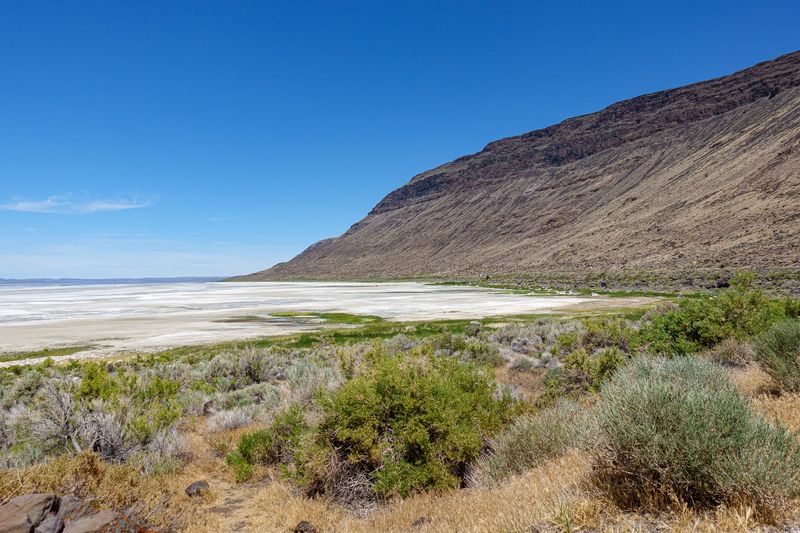
Abert Rim is one of those geological features that stops you mid-sentence. It rises nearly 2,500 feet above the lake’s surface, making it one of the highest fault scarps in North America. That stat alone is worth pausing on.
The cliff face is dark basalt, ancient volcanic rock that formed millions of years ago. At sunset, the whole wall turns golden and amber.
I kept staring, half-convinced the light was changing the rock itself.
The rim stretches roughly 30 miles along the eastern edge of the lake. Hikers can access the top via a rough BLM trail, and the views from up there are nothing short of staggering.
You can see the lake far below, looking almost like a mirror left on the desert floor. The scale is hard to grasp until you are actually standing in it.
Bighorn sheep have been spotted navigating those rocky ledges with casual ease, which feels both impressive and slightly unfair to anyone attempting the same climb on foot.
Why the Lake Is Shrinking
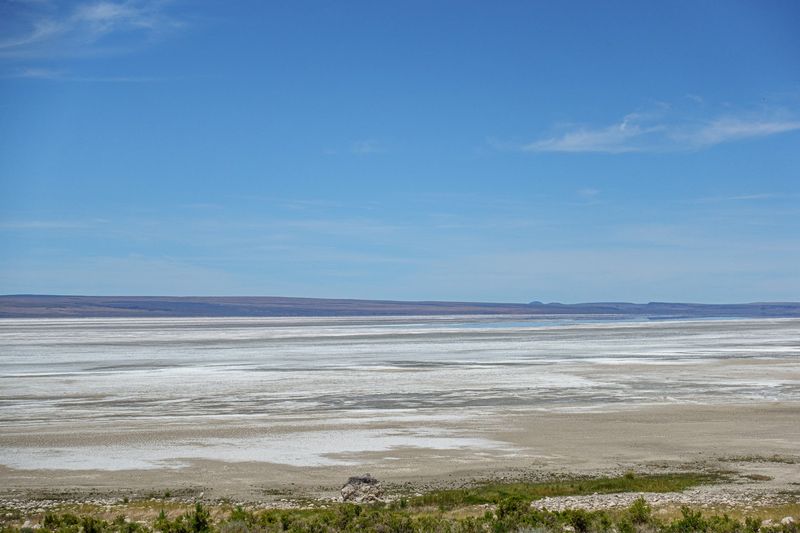
The shrinking of Lake Abert is not a simple story. Climate change plays a role, but researchers say it does not explain everything.
Upstream water diversions, prolonged drought cycles, and reduced snowpack have all contributed to the lake’s dramatic decline.
Historical records show the lake once covered far more surface area. Old high-water marks are still visible along the hillsides, like bathtub rings carved into the landscape.
The contrast between those old lines and today’s water level is genuinely unsettling.
A dirt road near the viewpoint used to lead visitors right to the water’s edge. Now that road ends well before the waterline.
The lake has pulled back considerably, leaving behind pale, cracked salt flats. Local observers and BLM staff have documented the retreat over decades.
Some scientists have suggested that even with improved rainfall, the hydrological system may be too disrupted to fully recover. That possibility makes visiting Lake Abert feel less like sightseeing and more like bearing witness to something fragile and irreplaceable.
Birdwatching at Its Most Unexpected
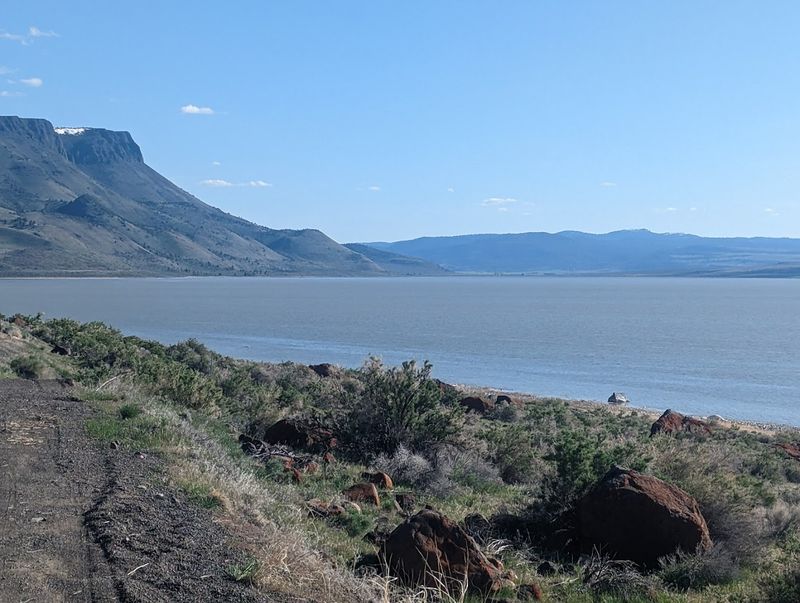
Before visiting, I had no idea Lake Abert was considered one of the most important migratory bird stopover sites in the entire Pacific Flyway. That changed quickly.
Within minutes of stepping out of the car, birds were everywhere.
Eared grebes, Wilson’s phalaropes, American avocets, and various sandpiper species use the lake as a critical refueling stop during migration. The brine shrimp and alkali flies provide a calorie-dense food source that birds need before continuing their journeys. It is a relationship built over thousands of years.
Binoculars are highly recommended. The birds tend to gather near the shallower edges where food concentrates.
Early morning visits offer the best light and the most activity. The sheer number of birds moving across the water’s surface is something you feel as much as see.
It gets loud, and the air hums with wings. For birdwatchers, this spot holds a kind of quiet magic that is hard to find elsewhere in the region, especially this close to a public highway.
Bighorn Sheep and Desert Wildlife
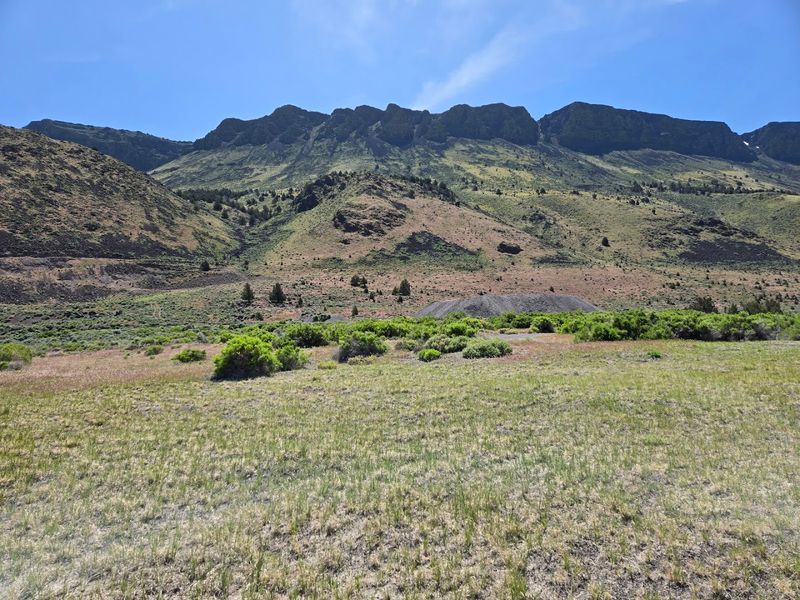
Bighorn sheep have made Abert Rim their home, and spotting one feels like a genuine reward. They move along those steep rock faces with a confidence that seems almost theatrical.
Watching one pick its way across a vertical-looking ledge is something you do not forget quickly.
The wildlife area is managed by the Bureau of Land Management, and the habitat supports more than just birds and sheep. Pronghorn antelope graze the sagebrush flats near the lake’s western shore.
Mule deer are also commonly spotted, especially in the cooler hours of early morning or late afternoon.
Coyotes pass through regularly, and golden eagles have been seen riding thermals above the rim. The desert here feels alive in a way that surprises people expecting emptiness.
Patience matters more than luck at this site. Sitting quietly near the viewpoint for even twenty minutes often rewards visitors with sightings they did not anticipate.
Bring a good pair of binoculars and scan the rim face slowly. The sheep blend into the rock better than you would expect.
What Makes Lake Abert So Unique
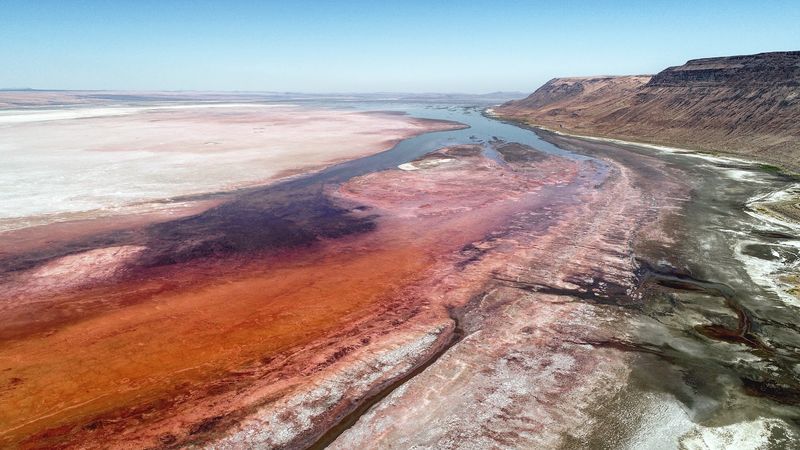
Most people drive past Lake Abert without realizing they are looking at something found nowhere else in Oregon. It is the state’s only natural saltwater lake, a closed basin with no outlet to the sea.
Water flows in but never drains out, leaving behind concentrated salts that build up over time.
The result is a lake that supports almost no fish but thrives with brine shrimp and alkali flies. Those tiny creatures fuel entire food chains.
Thousands of migratory birds stop here specifically because of them.
The lake sits at roughly 4,255 feet in elevation, tucked between the Warner Valley and the dramatic face of Abert Rim. The highway runs right along its western edge, so you get an almost unobstructed view for miles.
Standing close to the water, you notice the salt crust along the shore. It crunches underfoot like packed snow.
That sound alone makes the place feel strangely alive, even as scientists warn the lake is slowly disappearing from the landscape.
Walking on Salt
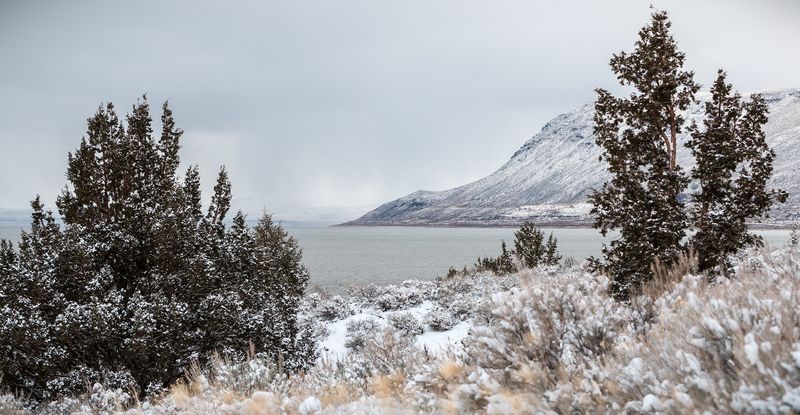
Nothing quite prepares you for the sensation of walking on the salt crust at Lake Abert. Each step makes a satisfying crunch, somewhere between fresh snow and dry crackers.
It feels strange and wonderful at the same time.
The white salt deposits form a thick crust in drier areas near the shore. Closer to the water, the ground softens dramatically.
More than a few visitors have discovered this the hard way, sinking ankle-deep into silty mud that hides beneath a deceptively solid-looking surface. Staying on rocky patches is strongly advised.
The smell near the water is distinctly briny, sharp and mineral in a way that hits the back of the throat. It is not unpleasant, just very present.
The colors shift as you move along the shore, from white salt to dark wet mud to pale blue water. Looking back toward the rim from the shoreline, the scale of the cliff above you suddenly doubles.
It is one of those moments where a place feels genuinely ancient and completely indifferent to your presence.
The Drive Along US-395
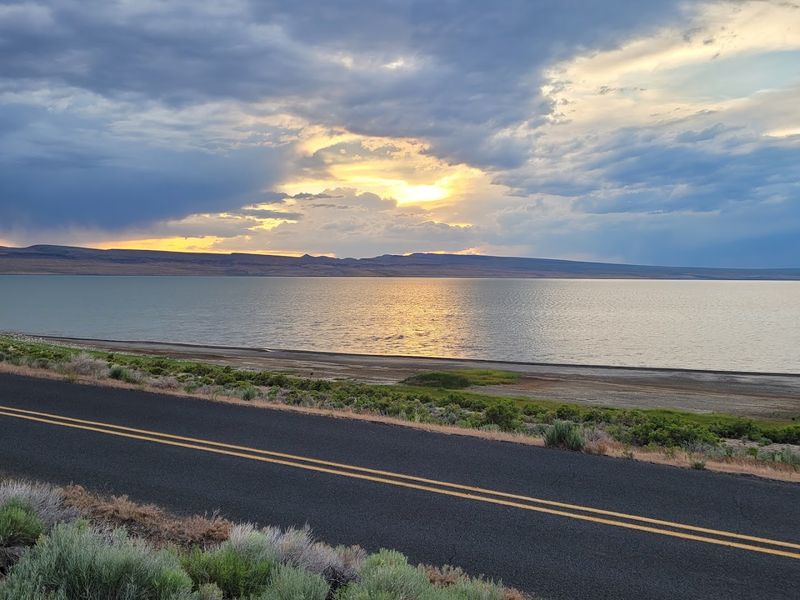
The highway itself is part of the experience at Lake Abert. US-395 threads right along the lake’s western edge for several miles, giving drivers an almost continuous front-row view of the water and the rim.
It is one of the more dramatic road stretches in the entire state.
Turnouts are available, and the BLM has installed informational plaques at the main viewpoint. The signs explain the geology, the wildlife, and the history of the lake in clear and engaging language.
They are worth reading slowly rather than skimming.
The speed limit along this section runs at 65 mph, and traffic does not slow much. The viewpoint can appear quickly if you are not watching for it.
Arriving from the south, the lake opens up gradually as you come around a wide bend. That reveal is genuinely cinematic.
Driving through at dusk is particularly memorable. The water catches the fading light and the rim glows in shades of orange and rust.
Pull over every chance you get. This stretch rewards the unhurried traveler more than almost anywhere else nearby.
Geology Written in Rock, Millions of Years on Display
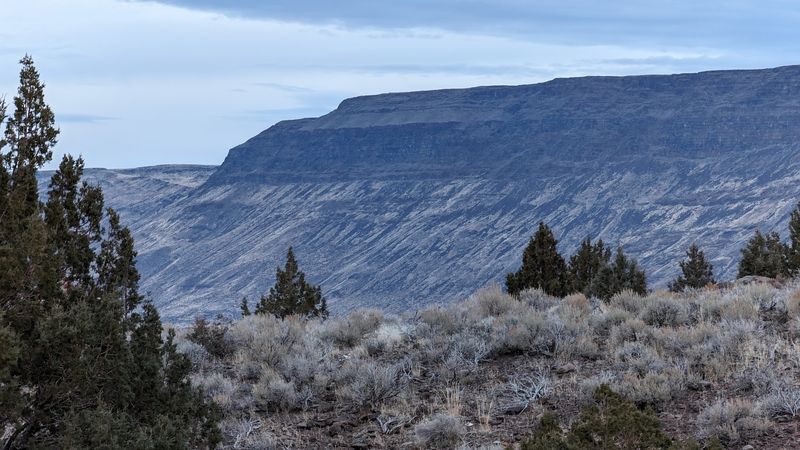
Abert Rim is essentially an open geology textbook. The basalt layers visible in the cliff face represent millions of years of volcanic activity, stacked one on top of another like pages in a very old book.
Geologists have studied this escarpment extensively.
The rim formed through a process called normal faulting, where one block of the earth’s crust dropped relative to another. Lake Abert sits in the resulting basin.
The whole region is part of the Basin and Range Province, a vast geological zone stretching across much of the American West.
Standing at the base of the rim and looking up, you can sometimes pick out individual lava flows in the cliff face. Each dark band represents a separate eruption event.
The oldest rocks here date back tens of millions of years. That kind of deep time is hard to hold in your head, but the rim makes it feel tangible.
Even without a geology background, something about staring at those ancient layers feels quietly profound and surprisingly grounding in the best possible way.
When to Visit and What to Bring
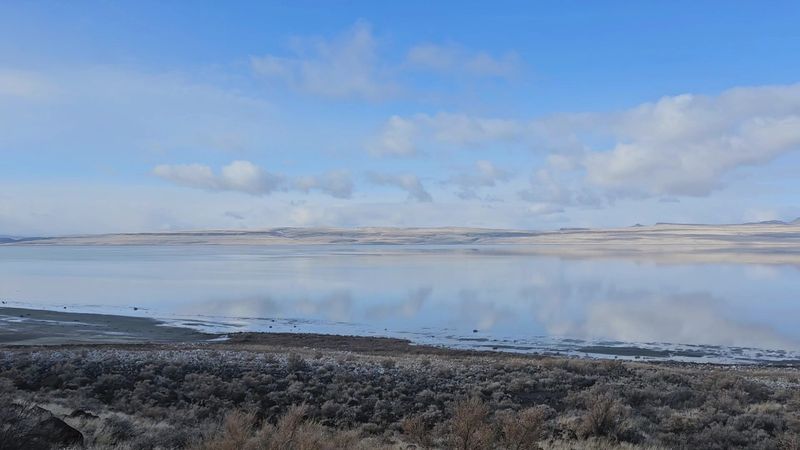
Timing matters at Lake Abert more than at most stops along US-395. Spring and early fall bring the highest concentrations of migratory birds, which makes those seasons especially rewarding for wildlife watching.
Summer visits are still worthwhile but can feel intensely hot and exposed.
There are no formal facilities at the main viewpoint. No restrooms, no water, and no shade structures.
Pack everything you need before arriving, including plenty of water, sunscreen, and a hat. Wind can be strong and relentless, especially near the shoreline.
Sturdy shoes are a genuine necessity if you plan to walk near the water. The salt flats look solid but hide soft mud in unexpected places.
A light jacket is useful even in summer, since afternoon winds off the lake can drop the temperature quickly. Binoculars and a camera with a decent zoom lens will serve you well here.
The BLM website at blm.gov/visit/lake-abert-and-abert-rim has current conditions and access information. Checking it before your visit can save time and prevent surprises, especially during wet seasons when access roads may be impassable.
A Place Worth Saving
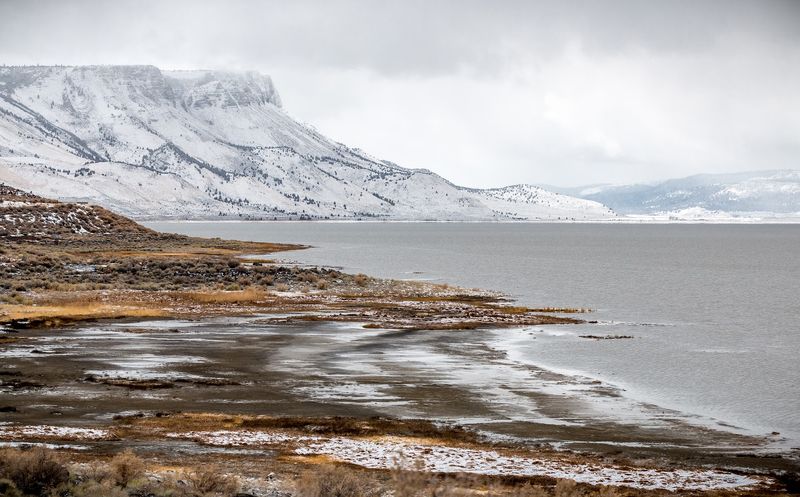
Lake Abert is more than a scenic stop on a long road trip. It is an ecosystem, a migration hub, and a geological landmark all compressed into one remarkable place.
The fact that it is visibly shrinking gives every visit an urgency that is hard to shake.
Conservation groups and researchers have been working to better understand the lake’s decline. The Bureau of Land Management oversees the area and provides public access and educational resources.
Advocacy for sustainable water use in the broader watershed remains an ongoing conversation among scientists and land managers.
Visiting the site and engaging with the interpretive materials is one small but real way to stay connected to what is at stake. Sharing the story of Lake Abert with others matters too.
Places like this often disappear quietly, without fanfare, until one day the water simply does not return.
