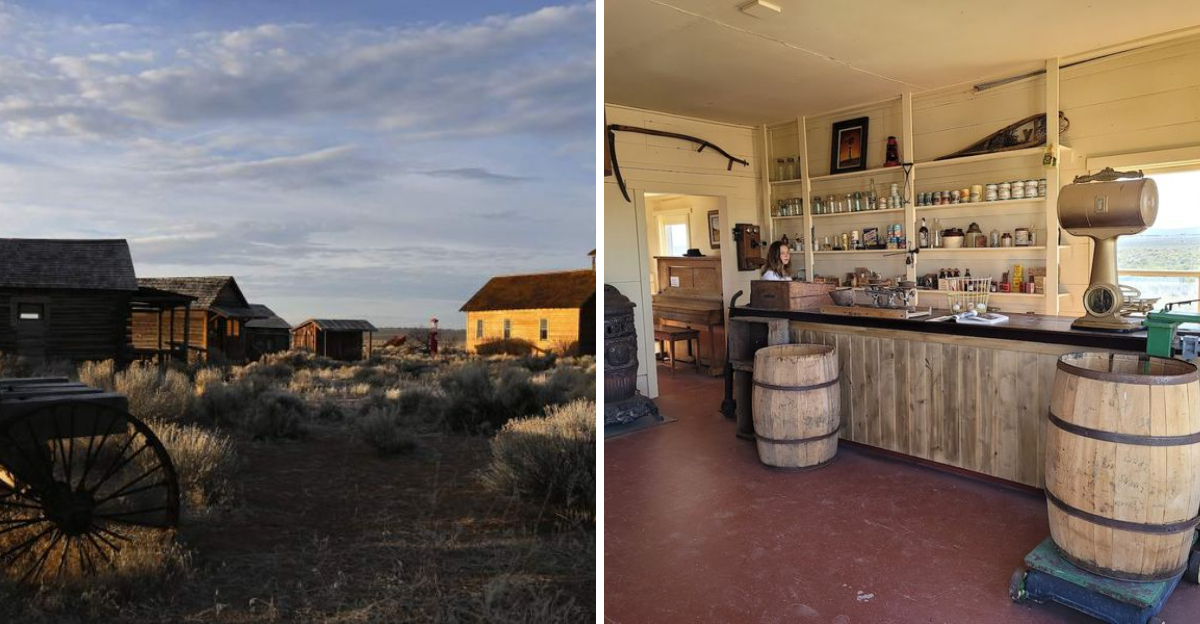
Step off the dusty path and suddenly you are not in the present anymore. The creak of wagon wheels, the smell of woodsmoke, and the sight of pioneers going about their daily chores surround you completely.
This is not a collection of artifacts behind glass, this is a living, breathing village that feels genuinely frozen in time. You can wander into a one room schoolhouse and almost hear the scratch of chalk on slate.
The blacksmith’s hammer rings out across the yard as sparks fly and metal bends to his will. A farmhouse kitchen welcomes you with herbs drying above the stove and fresh bread cooling on the counter.
Kids love trying their hand at old fashioned chores, pumping water or feeding chickens like it is 1890. The volunteers dress the part and stay in character, answering your questions as if they have lived here their whole lives.
Oregon has a deep pioneer history, and this place honors it with remarkable care and authenticity. It is the kind of time travel that does not require a machine, just an open mind and a willingness to step back.
A Living Open-Air Museum Unlike Any Other
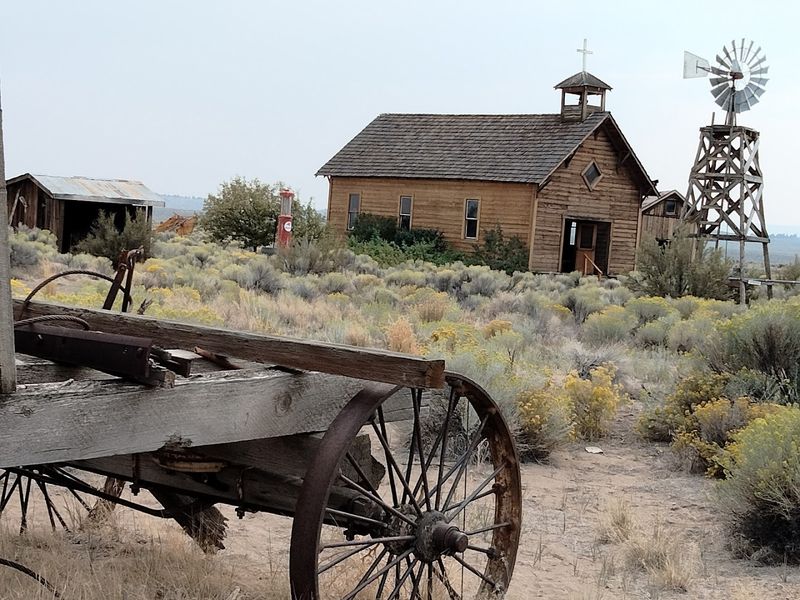
Fort Rock Homestead Village Museum is not your typical indoor exhibit. The whole experience unfolds outside, under the wide Oregon sky.
Walking through the grounds feels more like stepping into a preserved neighborhood than visiting a standard museum display.
Buildings were collected from real homesteads scattered across eastern Oregon. Each structure was carefully relocated and restored to stand here together.
That effort alone says something remarkable about the community behind this place.
The open-air format lets you move at your own pace. You can linger inside a log cabin or stand quietly near a weathered storefront.
There is no rush, no guided timeline, and no velvet rope keeping you at arm’s length from history.
Visitors often describe the grounds as surprisingly immersive. The desert setting adds to that feeling in a big way.
Fort Rock itself is visible in the distance, jutting dramatically from the flat plains just minutes down the road.
The Historic Buildings That Anchor the Village
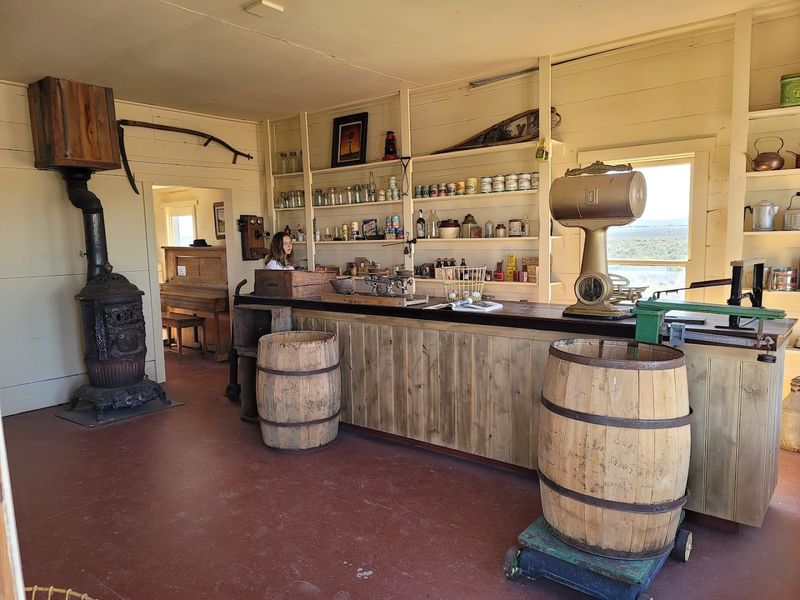
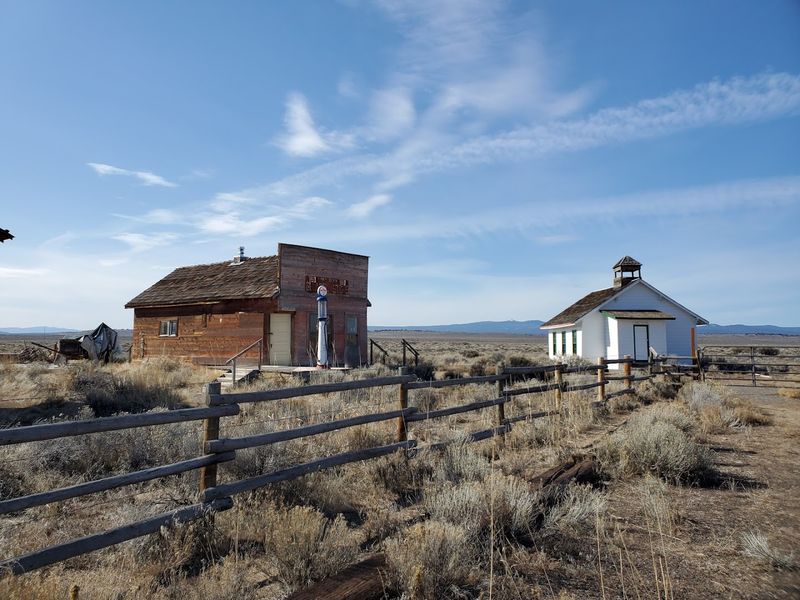
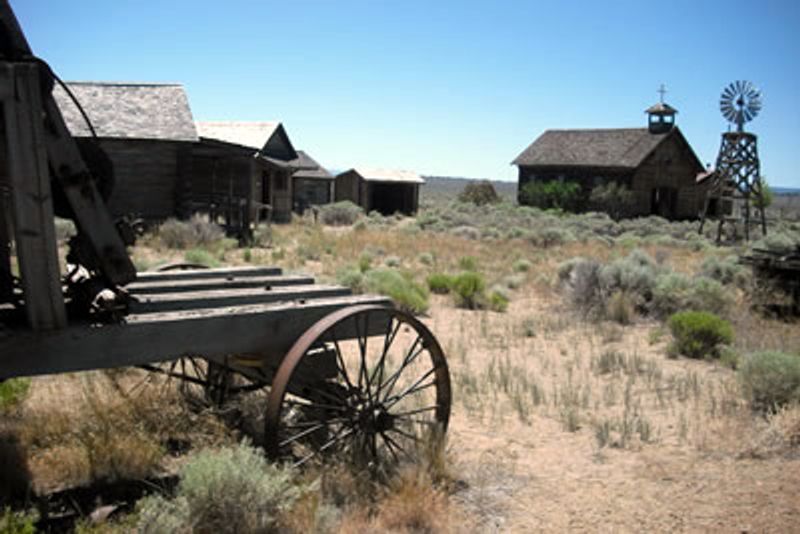
Every building at Fort Rock Homestead Village Museum tells a story rooted in real Oregon history. Log cabins, a church, old storefronts, and family homes all stand together on the same grounds.
Seeing them side by side gives you a genuine sense of what a small frontier community once looked like.
These structures were not built as replicas or reconstructions. They were moved here from actual homestead properties across the region.
That authenticity is something you can feel the moment you step inside any one of them.
The craftsmanship in the old woodwork is striking up close. Thick-hewn logs and hand-fitted joints speak to the practical skills settlers carried with them.
Nothing was built for show back then; everything had a purpose.
Walking from building to building, you notice how each one has its own personality. Some feel cozy and domestic, while others feel rugged and working-class.
Together, they paint a layered picture of homestead life in the Oregon high desert.
Artifacts That Bring Everyday Pioneer Life Into Focus
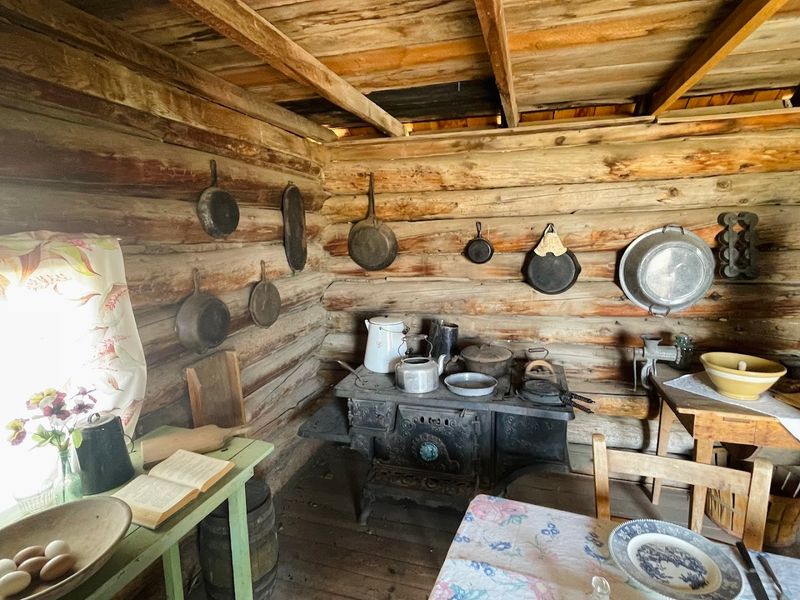
Stepping inside any of the village structures means coming face to face with the objects pioneers relied on daily. Tools, furniture, kitchen equipment, and farm implements fill the rooms in a way that feels lived-in rather than staged.
Nothing here looks like it was arranged for a photo opportunity.
One particularly memorable find is a large piece of steel equipment used for straightening saw blades. It is the kind of object you would never recognize without context.
A small sign nearby explains its purpose clearly and simply.
Many visitors have noted that the artifacts triggered personal memories. Older items like cast iron cookware or hand-cranked tools often connect people to their own family histories.
That emotional thread is part of what makes this place resonate so deeply.
The collection spans a wide range of homestead activities, from farming to domestic life. Each item is well-preserved and genuinely museum-quality.
Seeing intact pieces rather than broken fragments makes a real difference in understanding how settlers actually lived.
The Self-Guided Walking Tour Experience
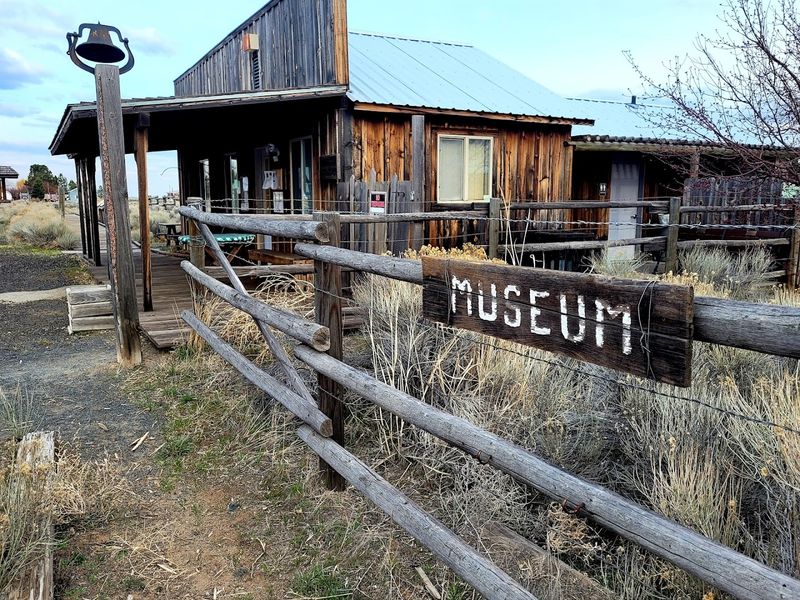
The self-guided walking tour at Fort Rock Homestead Village Museum is one of its most appealing features. You pick up information at your own speed, reading signs and exploring each building without any pressure.
That kind of freedom makes the visit feel personal rather than programmed.
Informational signs are placed throughout the grounds near each structure. They explain the origin of each building, who lived or worked there, and what daily life looked like in the region.
The language is accessible and genuinely interesting, not dry or overly academic.
The tour path winds naturally between buildings, with the desert landscape always visible around you. On a clear day, the views stretch far across the flat plains toward Fort Rock State Park.
That backdrop gives the whole experience an almost cinematic quality.
Even visitors who arrive when the museum is closed have found value in walking the perimeter. The exterior views and posted signage offer a meaningful glimpse into the collection.
Of course, going inside when it is open adds a whole other layer of discovery.
The Gift Shop and What You Can Take Home
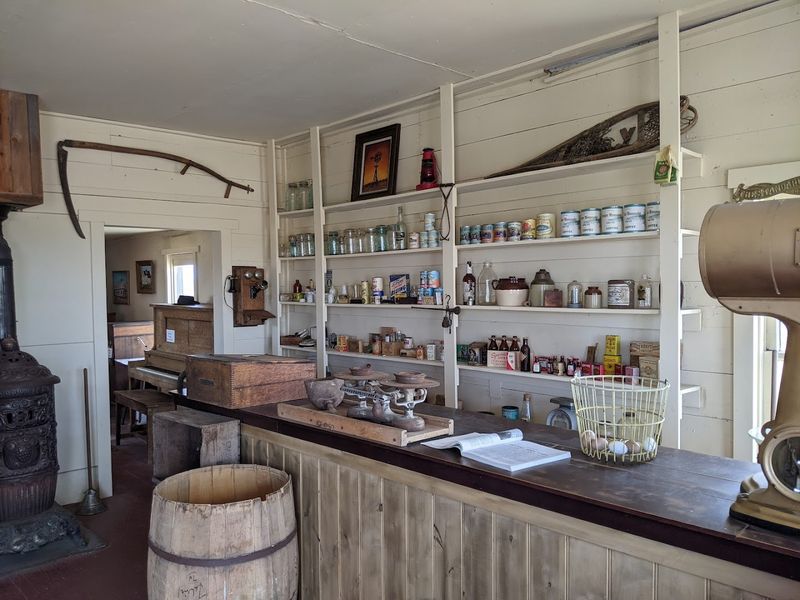
Tucked within the museum grounds is a small but charming gift shop that rounds out the visit nicely. It carries souvenirs tied to the Fort Rock area and the museum itself.
Picking up something here feels like a genuine keepsake rather than a generic tourist purchase.
The shop reflects the same care and character found throughout the rest of the property. Items tend to be locally relevant, which gives them more meaning than what you might find at a highway rest stop.
It is a good place to grab something small to remember the trip.
For families traveling with kids, the gift shop offers a fun final stop after exploring the grounds. Children who just spent time imagining pioneer life often enjoy finding a small item that connects to what they just saw.
That follow-through helps the experience stick in memory.
The shop is modest in size but thoughtfully stocked. Staff on-site have been consistently described as friendly and welcoming.
That warmth carries all the way from the entrance to the final farewell at checkout.
Picnic Tables, Views, and the Surrounding Desert Landscape
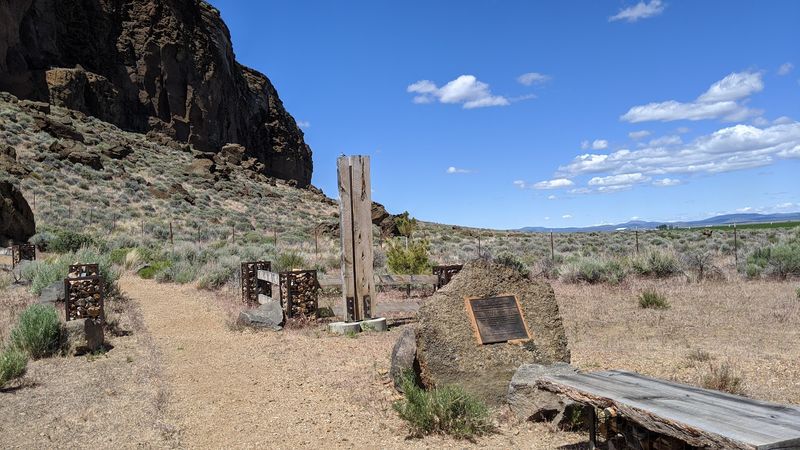
Before you even enter the museum grounds, the setting itself is worth pausing for. Picnic tables near the parking lot offer a great spot to take in the landscape before or after your tour.
The high desert stretches out in every direction with a kind of quiet grandeur.
Fort Rock, the ancient volcanic formation the town is named after, is clearly visible from the museum property. Seeing it rise abruptly from the flat plains is genuinely dramatic.
It adds a powerful geological context to the human history you are about to explore inside the village.
The air out here has that clean, dry quality that the Oregon high desert is known for. On a calm day, the silence around the museum is almost total, broken only by wind and the occasional bird.
That stillness makes the whole experience feel more reflective and unhurried.
Bringing a packed lunch and sitting at those picnic tables is a simple but satisfying idea. The combination of natural scenery and historical surroundings makes for a memorable midday stop.
It is one of those spots that rewards slowing down.
Getting There: The Road Trip to Fort Rock
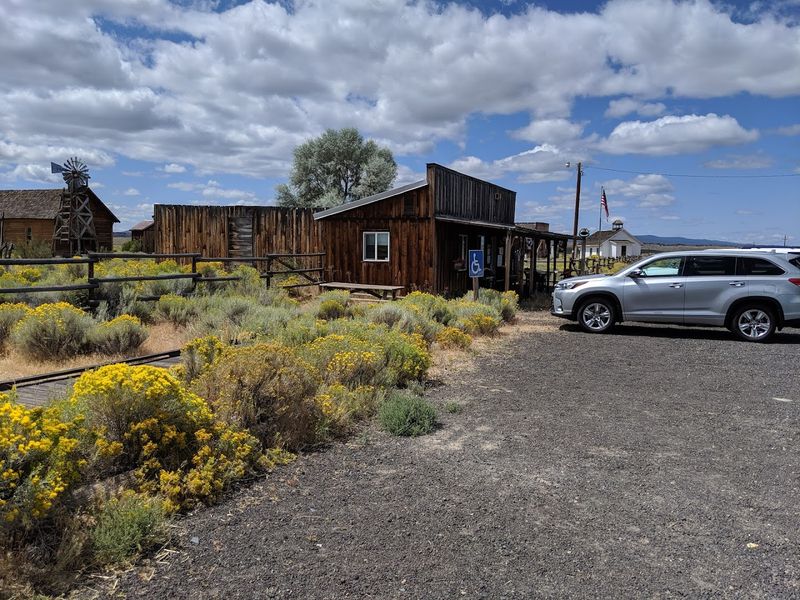
The drive to Fort Rock Homestead Village Museum is part of the experience itself. From Bend, Oregon, the route takes roughly an hour and a half through a shifting landscape.
You pass through forested areas before the terrain opens suddenly into wide, open desert.
That transition from trees to plains is genuinely striking. The moment the forest gives way to flat sagebrush country, you feel like you have crossed into a different Oregon entirely.
Then Fort Rock appears on the horizon, and the anticipation builds quickly.
The museum sits right along Fort Rock Road, making it easy to spot as you approach. The cluster of historic buildings is visible from the road, and the barbed wire fencing around the perimeter gives it a preserved, protected feeling.
Even passing visitors tend to slow down for a second look.
For road trippers exploring central Oregon, this stop pairs naturally with Fort Rock State Park just down the road. Planning both in the same afternoon is very doable.
The Community Effort Behind Preserving This History
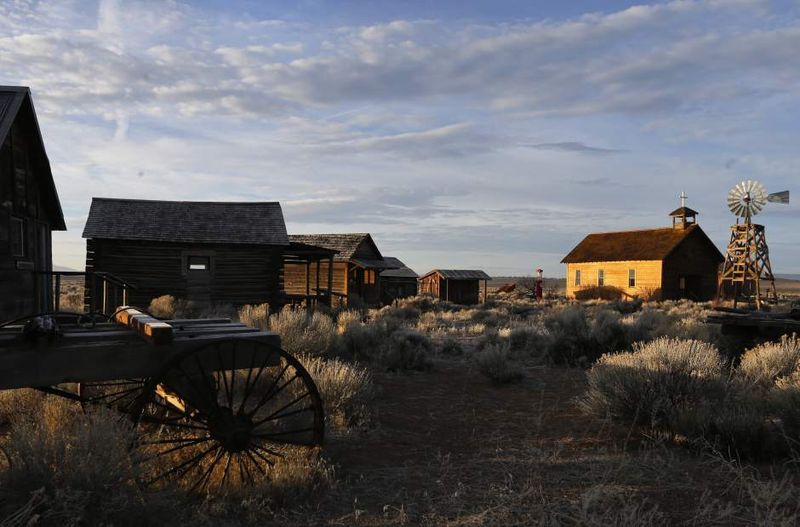
Fort Rock Homestead Village Museum did not happen by accident. It exists because a dedicated local community made a deliberate choice to save these buildings before they were lost forever.
That kind of foresight is rarer than it should be, and it deserves real recognition.
The structures were sourced from actual homesteads across eastern Oregon, not manufactured for display. Relocating and restoring old buildings takes significant time, resources, and knowledge.
The result is a collection that feels authentic precisely because it is authentic.
Visitors consistently comment on how well-maintained everything is. The grounds are tidy, the buildings are stable, and the artifacts inside are treated with genuine care.
That level of upkeep reflects ongoing pride in what has been built here over the years.
The museum also takes security seriously. The property is fenced and alarmed to prevent unauthorized access, which shows real commitment to protecting what is inside.
Hours, Planning Tips, and When to Visit
Fort Rock Homestead Village Museum is open Thursday through Sunday from 11 AM to 5 PM. It is closed Monday through Wednesday, so planning ahead is genuinely important before making the drive out.
Arriving outside those hours means you will only see the exterior, which, while interesting, is not the full experience.
The museum also has seasonal closures, so checking the website or calling ahead is always a smart move. The official website is fortrockoregon.com, and the phone number is 541-576-2251.
A quick check before heading out can save a lot of unnecessary disappointment.
The best time to visit is on a clear, dry day when the desert views are at their sharpest. Mornings can be cool and breezy in the high desert, so a light jacket is worth having on hand.
Afternoons tend to warm up quickly and offer great light for exploring the outdoor grounds.
Pairing this visit with Fort Rock State Park nearby makes for a well-rounded day trip. Both sites are close together and complement each other beautifully.
Why Fort Rock Homestead Village Museum Is Worth the Detour
Some places earn their reputation quietly, without billboards or big marketing campaigns. Fort Rock Homestead Village Museum is exactly that kind of place.
The combination of real historic buildings, intact artifacts, and stunning desert scenery makes this stop genuinely hard to replicate. You are not looking at photographs or reading about history behind glass.
You are standing inside the actual spaces where people once cooked, slept, worked, and built lives.
For families, the hands-on nature of the tour makes history feel accessible and real to kids, for history enthusiasts and architecture lovers, the building collection alone is worth the trip.
For anyone simply passing through central Oregon, it is the kind of unexpected discovery that defines a memorable road trip.
The museum sits at 64696 Fort Rock Rd, Fort Rock, OR 97735, right in the heart of this remarkable high desert landscape.
