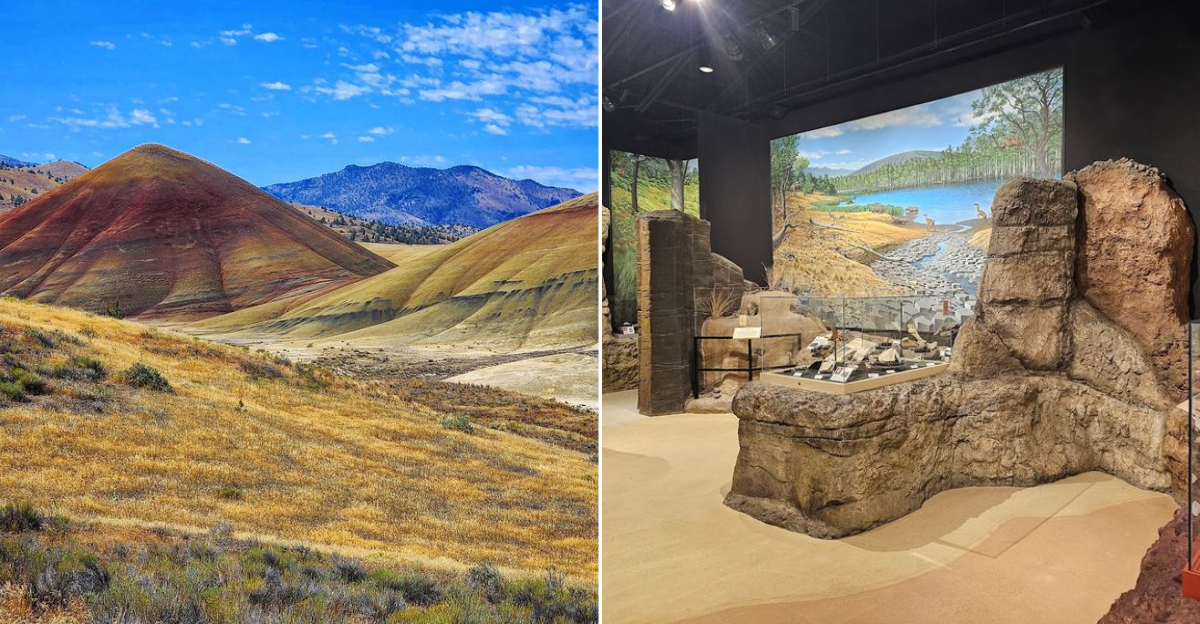
The rusty stripes look like something a rover should be photographing. You half expect the ground to be red sand and the sky to be pink.
But then you touch a low hill, and the crumbly clay feels ancient, not alien. That is the surprise of Oregon’s Painted Hills: a landscape that screams Mars but whispers 50 million years of Earth history.
Scientists study 40,000 fossils here, including early cousins of elephants and rhinos. The red layers come from a wet, tropical climate that turned iron to rust.
The yellows and golds mark drier times. You can walk a short trail to an overlook, listen to the quiet, and realize you are standing on an ancient floodplain where three?toed horses once roamed.
The hills are fragile, so stay on the path. But let your imagination run.
You are not on another planet. You are in Oregon, and the view is older than almost anything you will ever touch.
The First Look At Painted Hills Overlook
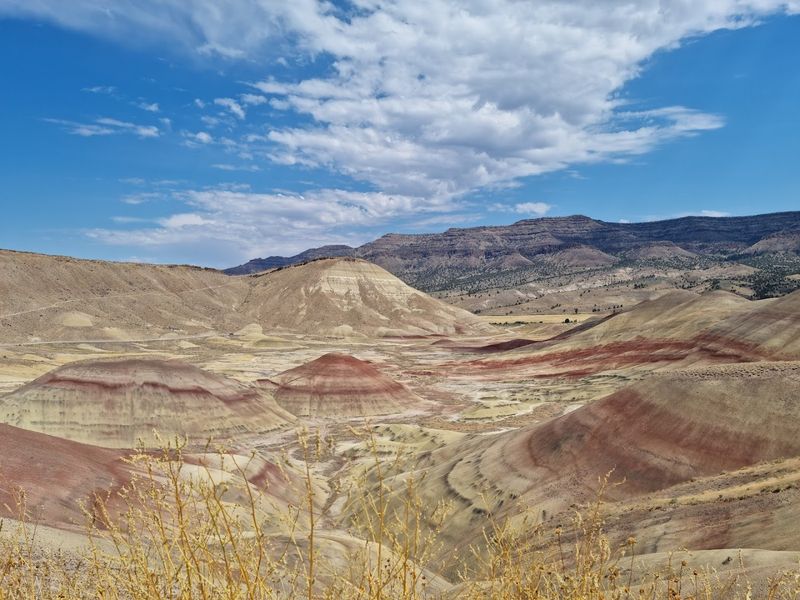
The first look really does scramble your sense of place a little, because nothing about these hills feels normal at first glance. The stripes look painted on, the curves look too smooth, and the whole view lands somewhere between desert, sculpture garden, and science fiction set.
When you stand still for a minute, though, it stops feeling strange and starts feeling unbelievably old.
That is the part that got me, honestly, because the color is flashy but the age is what makes your chest go quiet. These bands were built by shifting climates, ancient soils, and layers of ash that settled here long before anybody would have called this part of Oregon home.
You are not just looking at a pretty hill, you are looking at a long record of change pressed into clay.
Light matters here more than you expect, and even a passing cloud can change the whole mood of the slope. Reds deepen, gold turns softer, and the darker streaks suddenly stand out like brush marks.
I kept staring because every few minutes the hills looked a little different, like they were rearranging themselves without moving.
If you come here tired, distracted, or halfway in your own head, this view fixes that fast. It asks for your attention in a very quiet way.
By the time you turn back toward the trail, you already feel like the day got bigger.
Finding The Turnoff Near Mitchell
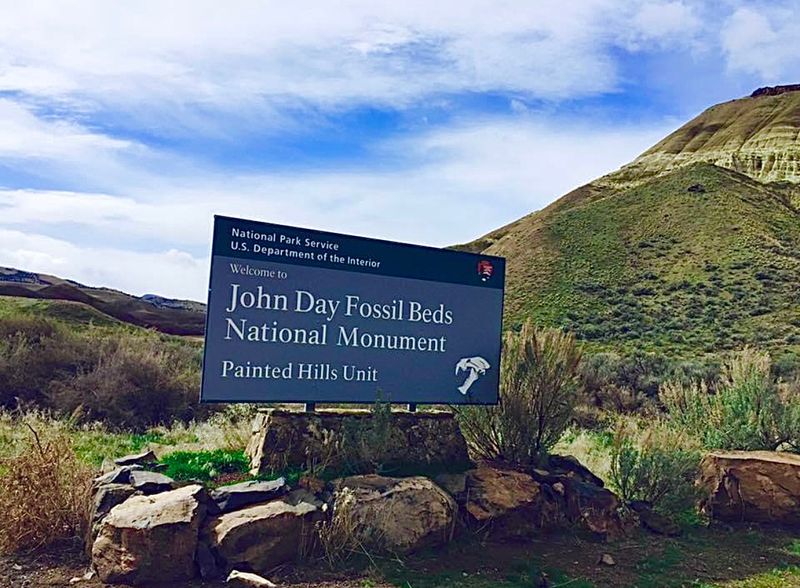
You know that satisfying moment when a place already feels remote, and then the road gets even quieter? That is the approach out near Mitchell, where the landscape opens up and your attention slowly shifts away from whatever was on your mind.
The Painted Hills Unit of John Day Fossil Beds National Monument is at 3265 one Highway 26, Mitchell, Oregon, and somehow even the drive there feels like a transition into another pace.
Mitchell itself is tiny in the best possible way, and the country around it gives the hills room to arrive properly. There is no dramatic city build up, no cluttered strip of distractions, and no sense that you are being pushed through an attraction.
You just ease into the high desert and let the land do the talking.
I liked that the turnoff did not overstate anything, because the hills do not need hype once you are close. Oregon has plenty of beautiful drives, but this one carries a kind of hush that suits the monument.
By the time you reach the parking area, you are already paying attention differently.
If you are like me, you will probably slow down without even realizing it. The air feels drier, the sky looks wider, and the whole scene gets simpler.
It is a good reminder that some places work best when nothing around them competes.
Walking The Painted Cove Trail
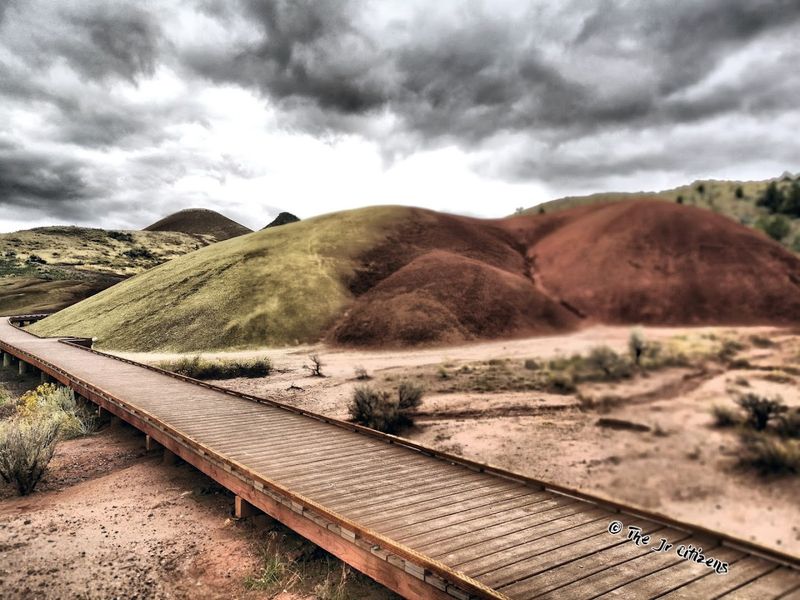
This is where the place goes from impressive to oddly personal, because the boardwalk puts you right inside the colors. Painted Cove Trail is not long, but it feels intimate in a way the big overlook does not.
You are close enough to see texture, tiny ridges, and those weirdly soft looking slopes that you absolutely should not step on.
The clay has this dry, velvety look that makes you want to reach out, even though the better move is keeping your hands respectful and your feet where they belong. Staying on the marked path matters here because the ground is fragile, and erosion does not need any extra help from us.
Once you know that, the boardwalk feels less restrictive and more like a quiet agreement.
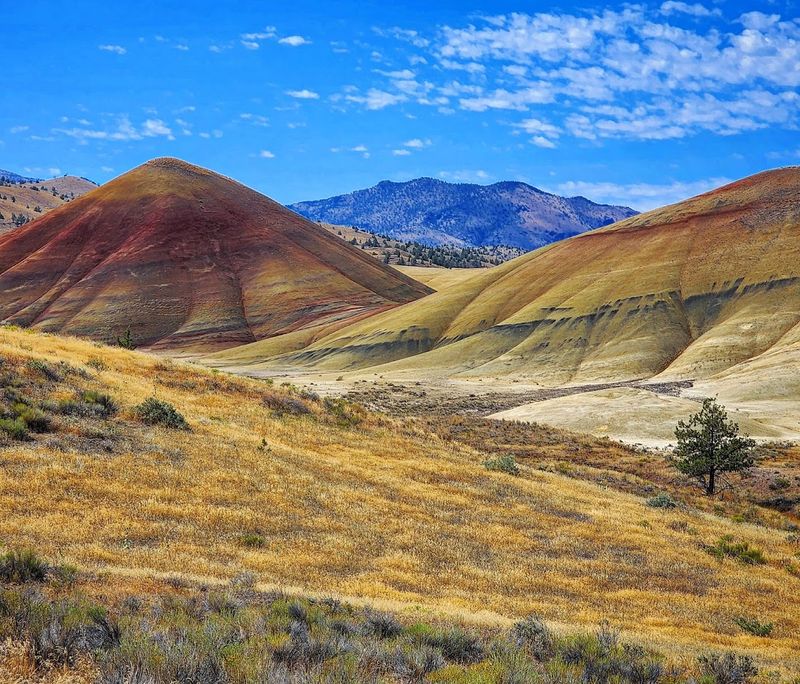
What I loved most was how the colors stop blending once you are near them. The reds feel earthy and warm, the yellows brighten up under sun, and the darker bands cut through everything with real drama.
It is the closest I got to understanding why people compare this place to Mars, even if Oregon still feels more alive somehow.
You move slowly here without trying, and that is part of the whole charm. Every bend gives you another angle, another fold in the hillside, another reason to pause.
By the end, the trail feels less like a walk and more like being let in on something delicate.
Climbing Up Carroll Rim Trail
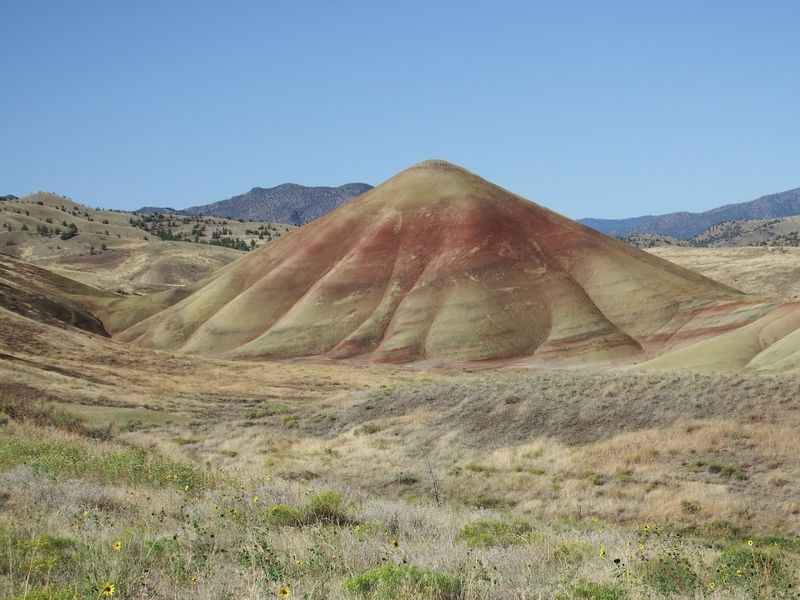
If you want the view that makes you laugh a little under your breath, this is probably the one. Carroll Rim Trail gives you that satisfying climb where the landscape keeps widening behind you, and every few steps make the hills look stranger and more beautiful.
It is the kind of trail that quietly rewards patience.
From higher up, the Painted Hills stop looking like isolated mounds and start reading like a whole system of weather, color, and time. The contours become clearer, the folds feel more dramatic, and the surrounding high desert of Oregon settles into the background like a frame.
You can see how exposed everything is, which somehow makes the place feel even more ancient.
I also liked how the climb changes your relationship to the silence. Down low, you notice texture and color first, but up here you notice space.
There is so much sky, so much open ground, and so little visual clutter that your mind gets surprisingly quiet without any effort.
This is the trail I would tell you not to rush, even if you think you are in a hurry. Stop when the view asks you to stop, because it will.
When you finally turn around and head back down, the hills keep pulling your eyes over your shoulder.
Slowing Down At Leaf Hill Trail
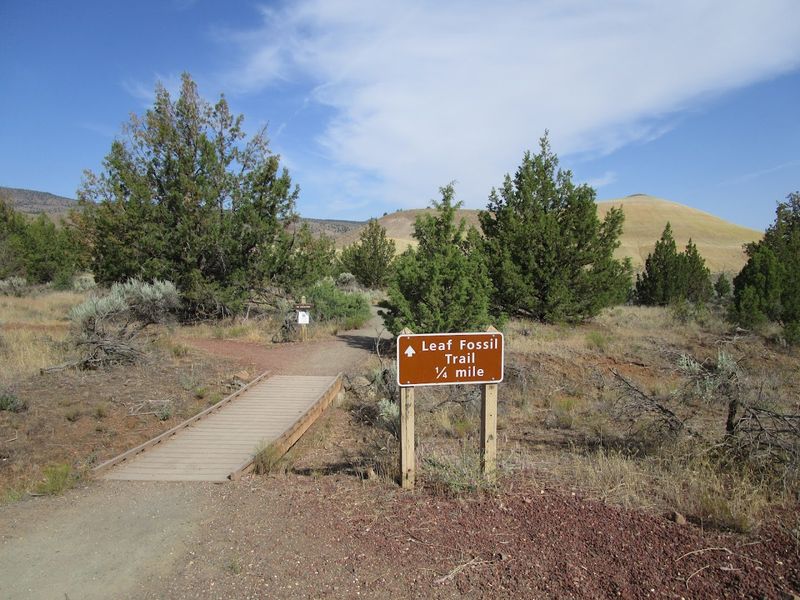
Leaf Hill Trail feels gentler right away, and I mean that in the best possible way. Instead of trying to impress you with drama, it pulls you in with small details and lets the story unfold more quietly.
That worked on me fast, because the fossil side of John Day Fossil Beds becomes easier to picture when the pace softens.
This trail is tied to some of the monument’s early fossil discoveries, which gives the whole walk a deeper kind of presence. You start imagining ancient plants, older ecosystems, and a version of Oregon that looked nothing like the dry country around you now.
Suddenly the hills are not just colorful landforms, they are evidence.
I think that shift matters, because it changes how you look at the ground beneath your shoes. The place stops being just scenic and starts feeling archival, almost like an open notebook written in soil and stone.
Even the quieter slopes seem loaded with information, whether you understand all of it or not.
If you usually connect more with stories than landscapes, this trail might be the one that really lands. It gives your imagination something solid to hold onto.
By the time you leave, you are not just remembering colors, you are carrying a whole vanished world around in your head.
Making Sense Of It At Thomas Condon Paleontology Center
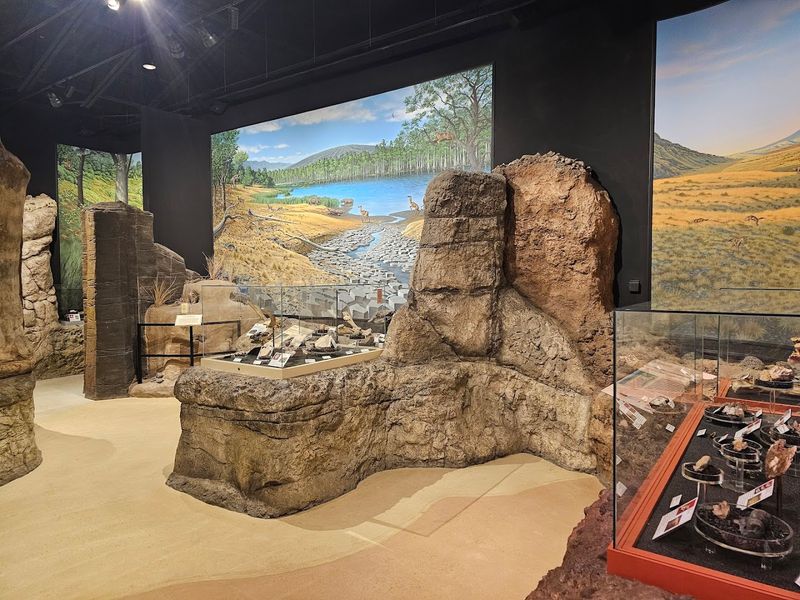
If the hills leave you with a head full of questions, this is where things click into place. The Thomas Condon Paleontology Center, over in the Sheep Rock area of John Day Fossil Beds, helps connect the colors, fossils, and shifting climates into one story you can actually follow.
I loved having the scenery translated without losing the wonder.
Inside, the monument stops being abstract and starts feeling populated by real ancient life. Fossils of plants and animals make the deep past tangible, and suddenly those exposed layers out in the landscape seem less mysterious in a good way.
You begin to understand that the hills are not only beautiful, they are part of a much bigger record.
What stayed with me was how clearly the exhibits show change over time without making it feel dry or distant. Warmer periods, wetter periods, cooler periods, and whole ecosystems shifting in response become easier to picture.
The science adds texture to the trip instead of flattening it.
I would not skip this if you want the full John Day Fossil Beds experience. It gives context to everything you have already seen, and it sharpens what you notice afterward.
Once you head back outside, the land looks familiar, but also richer and far more legible.
Heading Over To Blue Basin
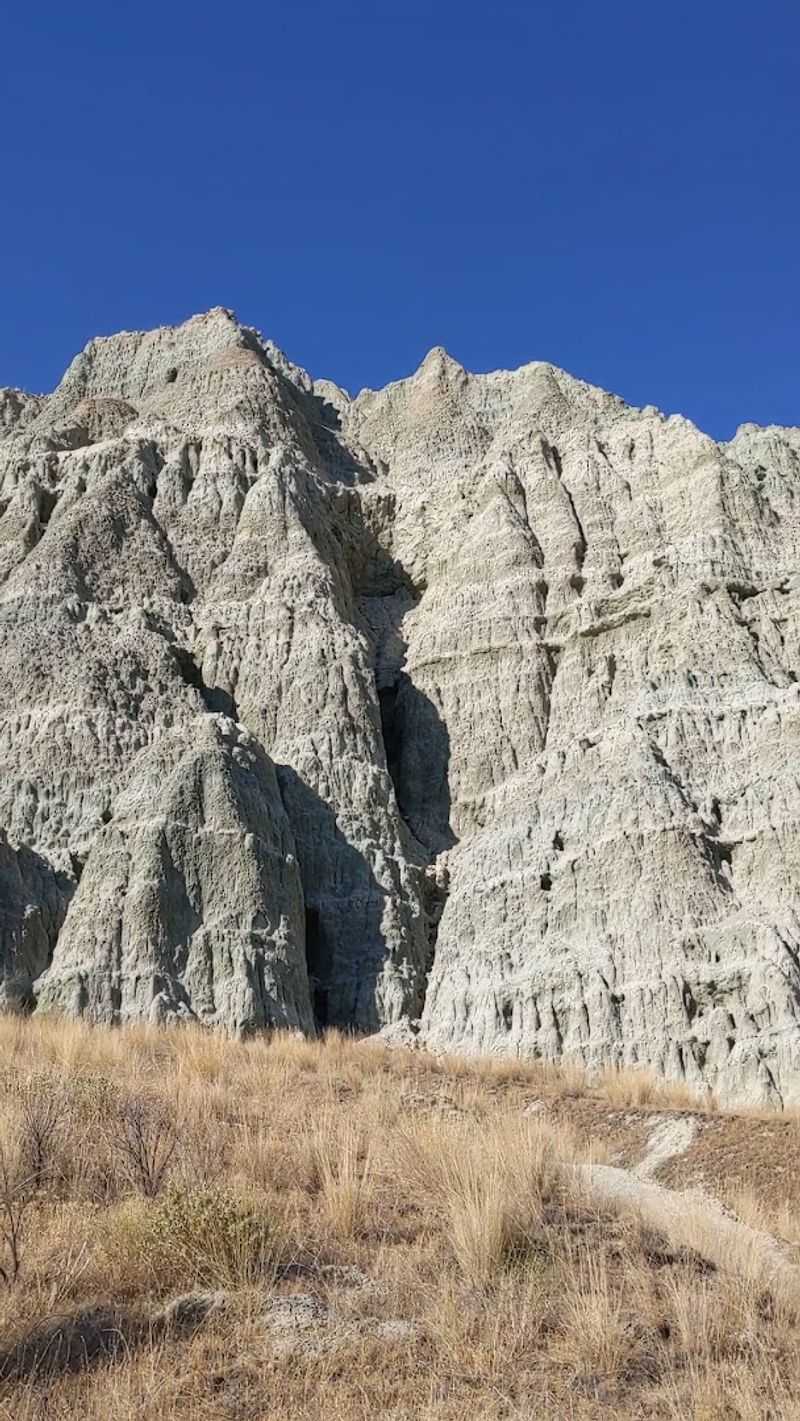
If you have time to keep going, Blue Basin changes the mood in a really satisfying way. The colors are different, the formations feel more pale and ghostly, and the whole place carries a softer but still otherworldly look.
It is still John Day Fossil Beds, yet it does not feel like a repeat of the Painted Hills.
I like this stop because it widens the conversation the monument is having with you. Instead of one spectacular view doing all the work, you start seeing how many different faces this landscape can wear.
The basin feels carved, hushed, and full of old secrets, even before you understand the geology behind it.
Walking here, I kept thinking about how easy it is to flatten Oregon into one image at a time. Forests get the spotlight, the coast gets its share, and then places like this remind you the state also has terrain that feels almost lunar.
That contrast makes the monument feel bigger in your memory.
If Painted Hills hits you emotionally first, Blue Basin sneaks up on you more slowly. The shapes keep drawing your eyes deeper into the folds and pale walls.
By the end, you start to appreciate that the monument is not one miracle, but several different ones speaking in the same language.
Watching The Light Change On The Hills
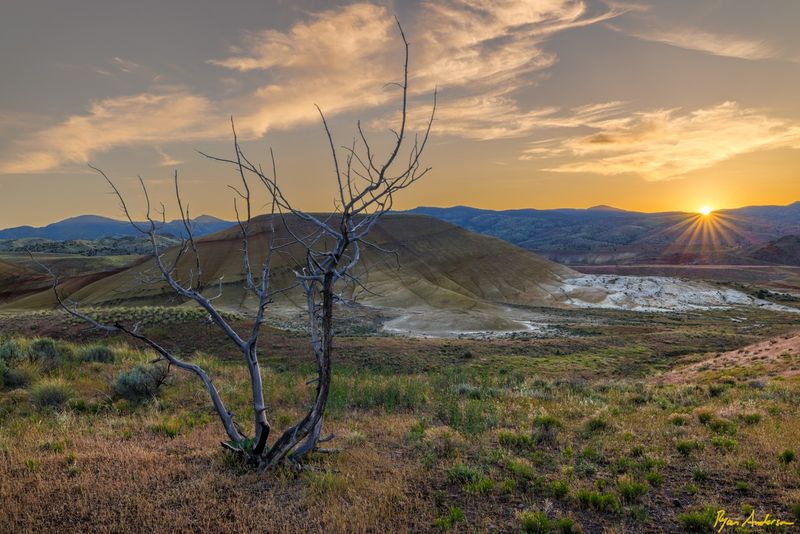
This might sound dramatic, but the hills almost behave like living things when the light shifts. Morning, afternoon, or a cloud passing through can change the tones so much that the same slope feels newly introduced every time you look up.
I did not expect light to matter this much, and then it completely took over the experience.
The red bands can go from rusty and dense to almost glowing, while the yellow areas turn creamy or bright depending on the sun. Darker layers suddenly sharpen and then soften again, like somebody keeps adjusting contrast in real time.
It makes you realize that seeing the Painted Hills once is never really seeing them just one way.
That constant change also keeps the place from feeling static, even though the land itself has been sitting here through ages of climate shifts. There is a weird comfort in that contrast.
Something ancient and slow is still capable of surprising you minute by minute.
If you are choosing between rushing through and lingering a little, always choose lingering here. Give your eyes time to notice the small changes, because they become part of the memory.
What stays with you later is not just the color, but the way the color kept moving through the day.
Ending The Day Back In Mitchell
By the time you roll back into Mitchell, the whole day has a slightly unreal afterglow to it. You have been staring at ground that looked alien and turned out to be ancient, and somehow a small Oregon town feels like the right place to land afterward.
The scale shifts back down, which is exactly what your brain needs.
I always like when a big landscape is paired with somewhere modest and grounded nearby. Mitchell does not compete with the monument, and that is part of why the rhythm works.
After all that geologic drama, ordinary streets and quiet buildings help the experience settle instead of snapping shut.
It also gives you space to replay what actually stuck with you. Maybe it was the boardwalk at Painted Cove, maybe it was the wide view from Carroll Rim, or maybe it was simply the strange feeling of touching dust and thinking about deep time.
Whatever it was, the memory starts organizing itself here.
That is probably my favorite thing about visiting John Day Fossil Beds. The place feels enormous while you are in it, and then surprisingly personal once you leave.
You carry the colors back with you, along with that lovely little realization that Oregon still knows how to completely catch you off guard.
