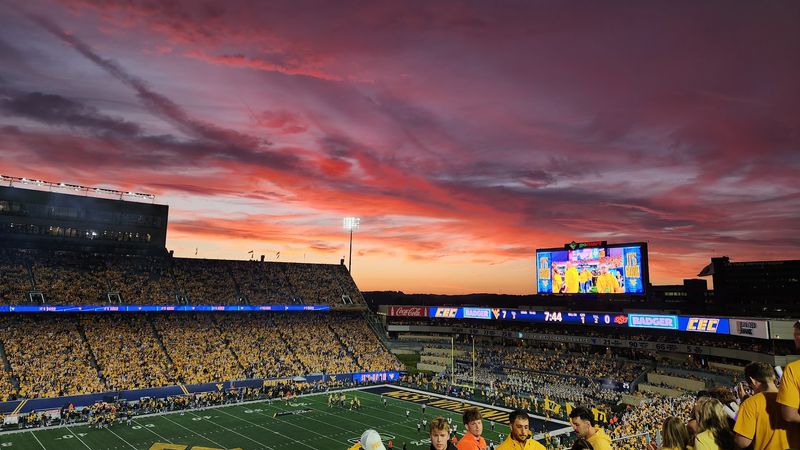
From a distance it looks like plenty of other big concrete bowls tucked into the hills of West Virginia. Then a fall Saturday rolls around, the smell of grills drifts across the parking lots, and the whole hillside starts to hum.
You walk in expecting a football game and walk out feeling like you just joined the biggest family reunion in the state. Some places hold a game, but this one holds generations of memories.
A Concrete Bowl in the Hills of North-Central West Virginia
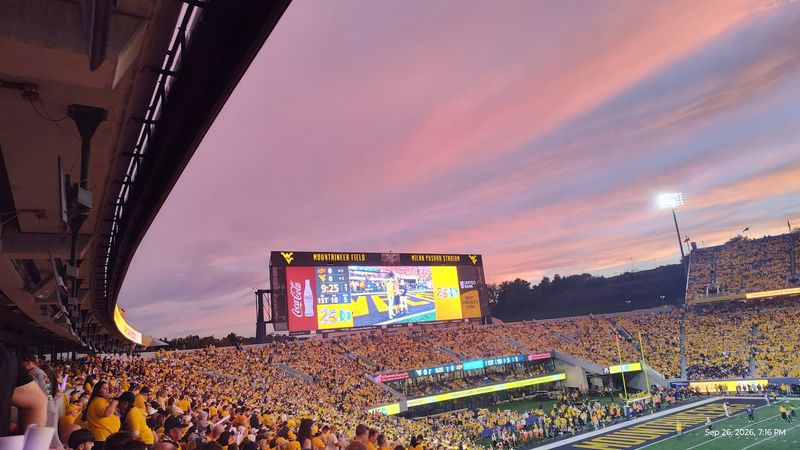
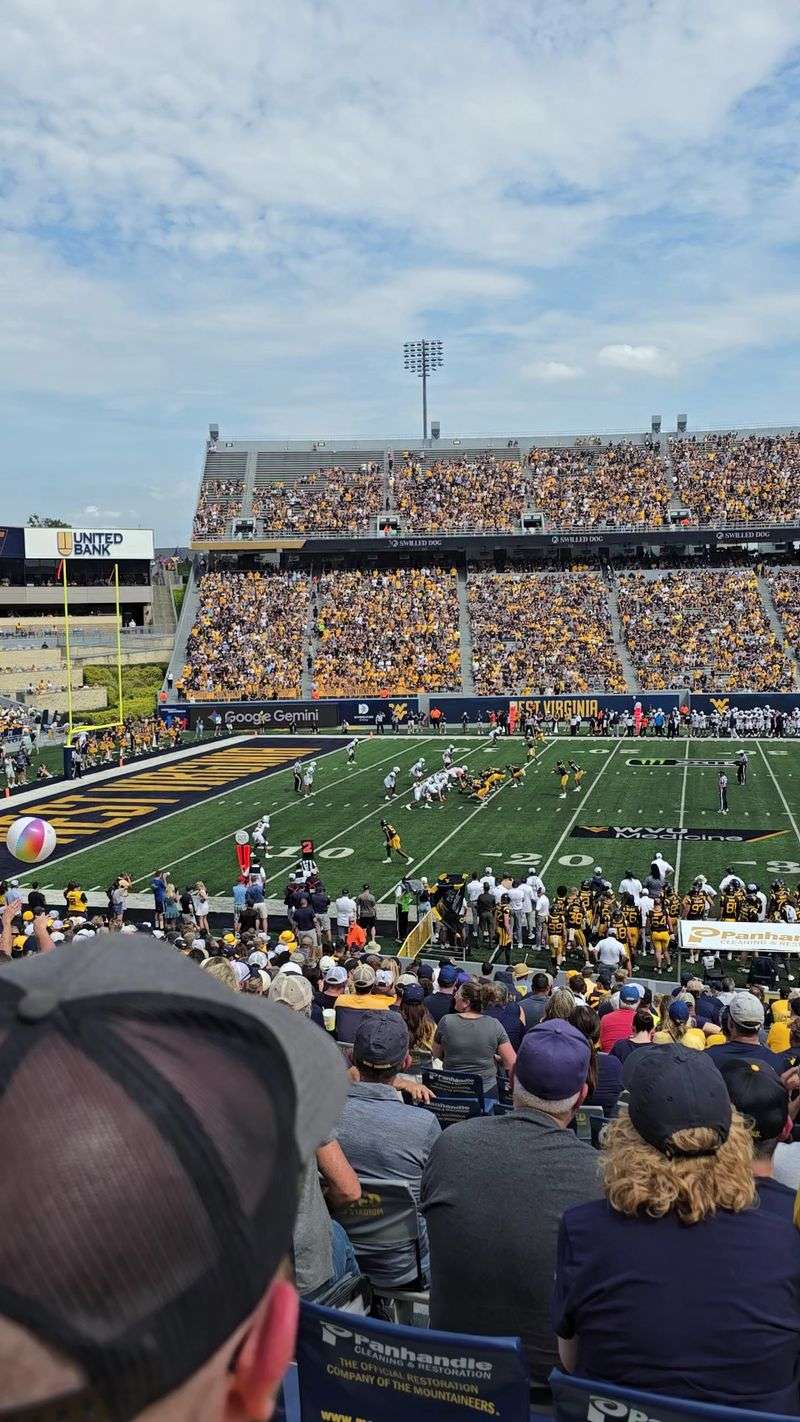
Picture a steep bowl of seats carved into a green hillside, ringed by autumn trees that turn the color of the home team’s jerseys. That is the first sight that greets most visitors to Milan Puskar Stadium, home of Mountaineer Field and West Virginia University football.
The stadium sits on the university’s Health Sciences campus, close to the busy medical center, and it has hosted Mountaineer football since 1980. Its official seating capacity is listed at 60,000, though crowds have reportedly topped that number on special days.
For a state where many towns could fit inside its walls several times over, that is a remarkable gathering spot.
On a typical home Saturday, the stadium becomes far more than a sports venue. Folks from every county pile into cars, trucks, and buses, and the surrounding area swells so much that it reportedly becomes the largest city in West Virginia by population for a few hours.
Whether you are a lifelong fan, a curious traveler, or someone who simply loves a good crowd, this place offers a front-row view of the state’s heart. And as the next sections show, the story here started long before the current seats were poured.
Roots in the Old Falling Run Horseshoe
Ask an older Mountaineer fan about the good old days, and you may hear about a stadium most young fans never saw. The first Mountaineer Field opened on September 27, 1924, in a natural valley at the Falling Run site, between the Sunnyside neighborhood and the original downtown campus.
Its square-cornered horseshoe shape earned it a lovely nickname, the Jewel of the Mountains. Seating started around 34,000 and grew to about 38,000 over the years.
Generations of families climbed those bleachers, and many locals still talk about games they watched there as kids.
The old field’s final game came on November 10, 1979, when a record 38,681 fans packed in to say goodbye. By then it had served 55 seasons.
Sadly, its tight spot in the valley left no room to grow, so the program needed a new home.
The historic structure was finally taken down in 1987. Fans did not forget it, though.
In 2005, a horseshoe-shaped monument went up at the old stadium’s former southwestern corner, giving visitors a spot to pause and remember where it all began.
Opening Day 1980 and a New Era
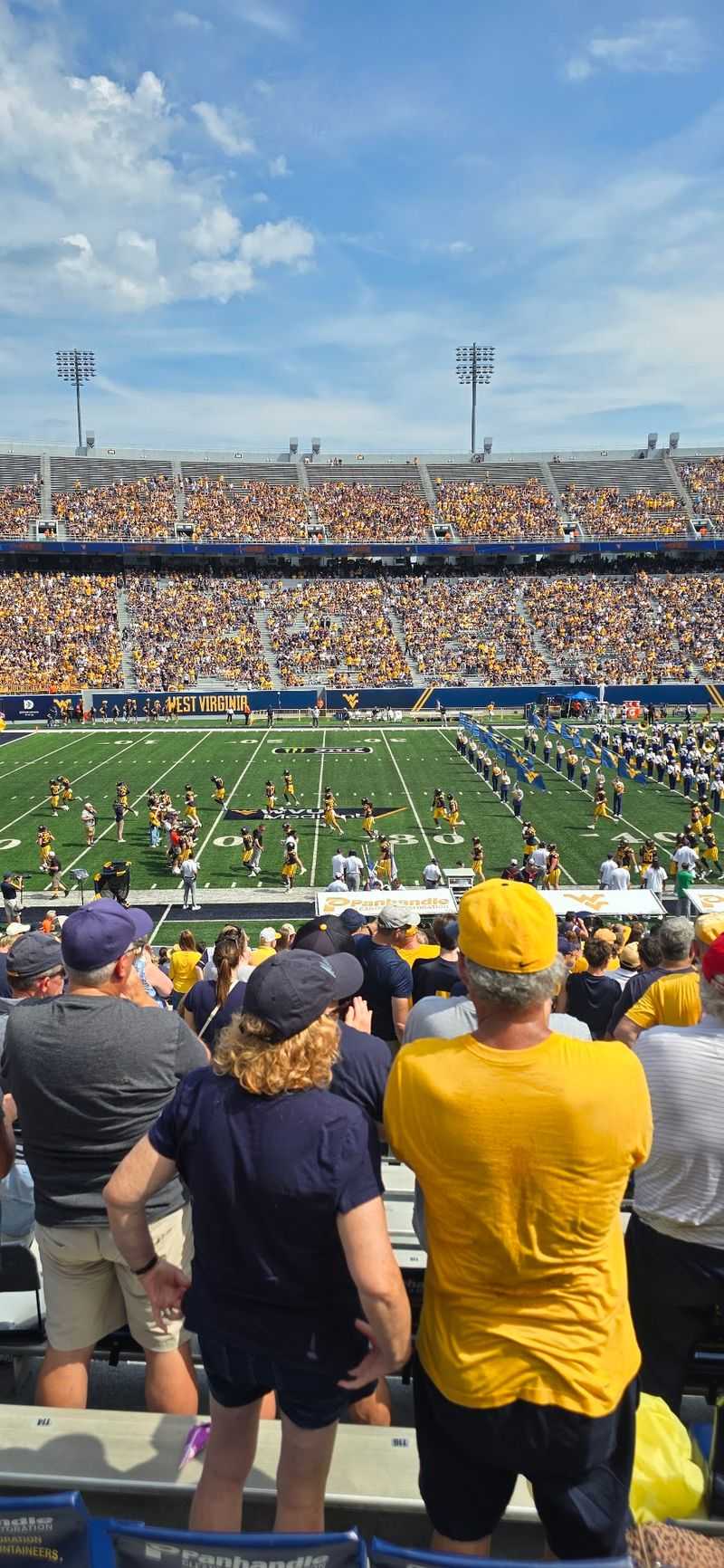
September 6, 1980, might be the most important birthday in West Virginia sports. That afternoon, the new Mountaineer Field opened its gates, and the home team beat Cincinnati 41-27 to christen the place properly.
Construction had started on May 3, 1979, on the grounds of the former Morgantown Country Club. Architects Finch-Heery designed the stadium, and contractor Huber, Hunt and Nichols built it for about $22 million.
When it opened, it held roughly 50,000 fans, which felt enormous after the cozy old horseshoe.
That same game marked the debut of coach Don Nehlen, who went on to become the winningest coach in Mountaineer history. Fans who were there still recall a magical extra touch.
John Denver himself performed Country Roads during the opening ceremonies, a moment that has become part of local legend.
The name changed in 2004. After Milan Puskar donated $20 million to the university, the facility was renamed Milan Puskar Stadium, home of Mountaineer Field.
Most fans still just call it Mountaineer Field, and nobody seems to mind either way.
Bigger Seats, Brighter Screens
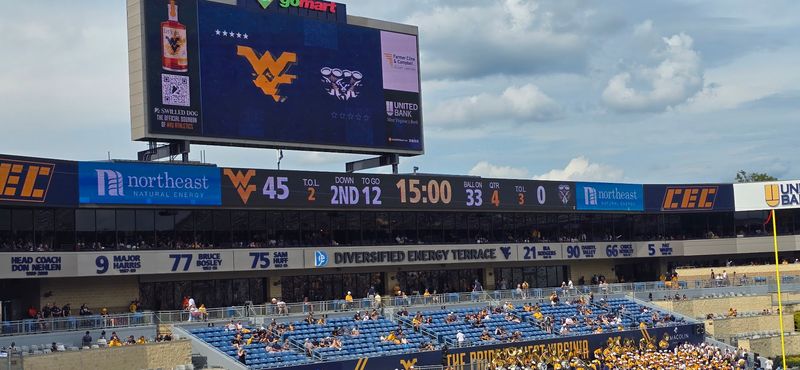
Growth came quickly once the new stadium opened. In 1985, crews added 7,500 seats to the south end zone, and another 6,000 went into the north end zone the following year.
That pushed seating past 60,000.
Luxury skyboxes arrived in 1994, offering a higher, quieter view of the action. In 1998, the Caperton Indoor Facility gave the team a place to practice no matter what the mountain weather threw at them.
Some north end zone seats were later removed in 2004 to make room for 18 suites and premium seating. That trimmed the count slightly, settling the official capacity at 60,000.
Newer touches include large video screens in both the north and south bowls, plus a lighting system built for televised night games.
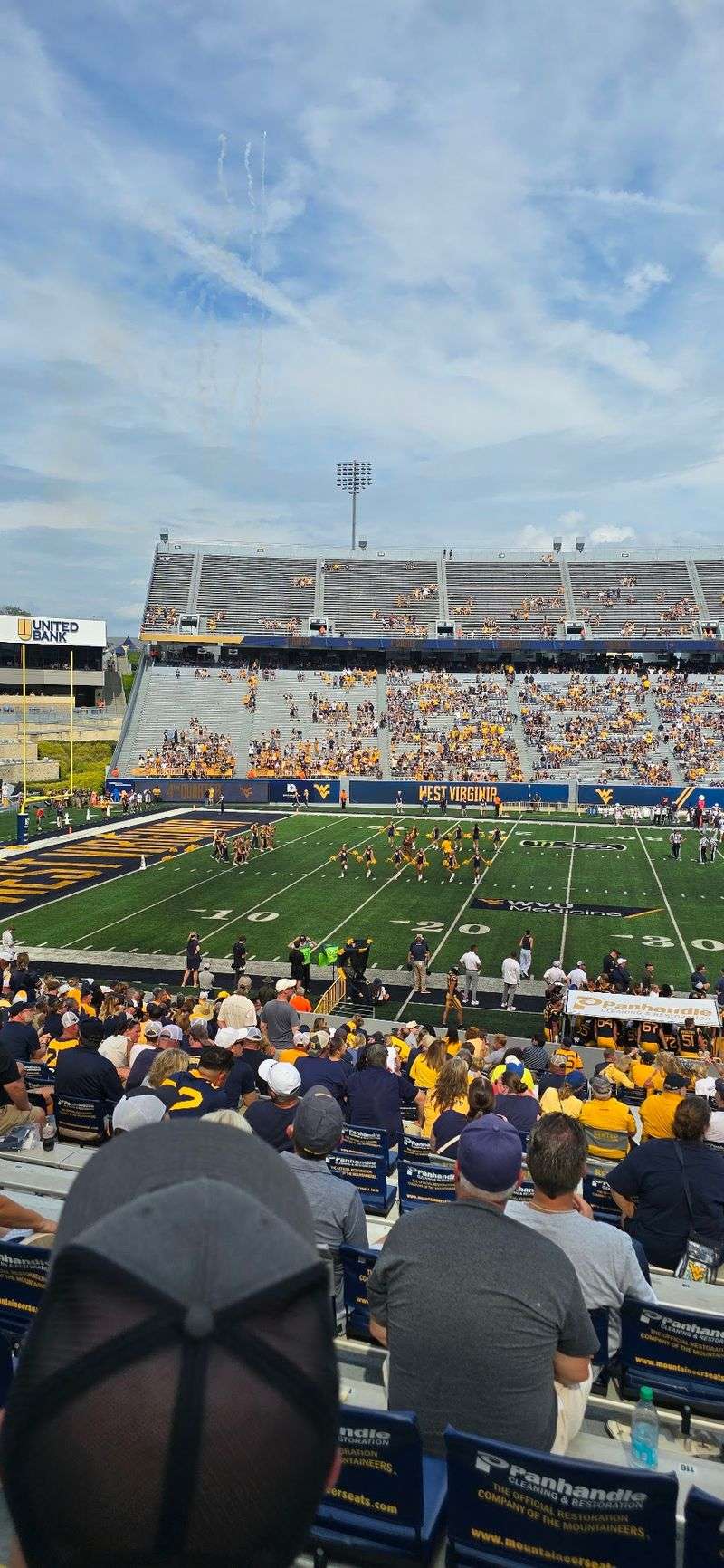
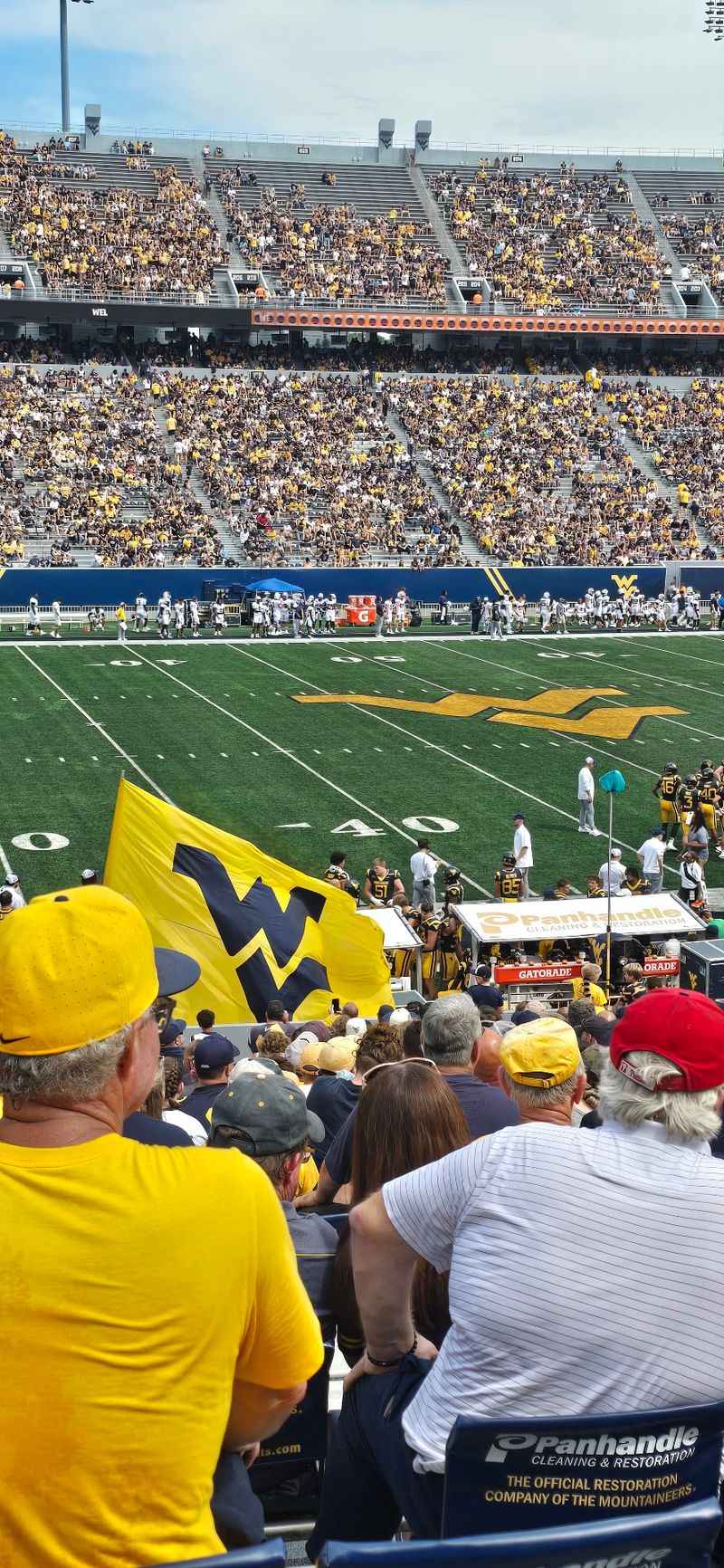
The layout itself deserves praise. A lower deck wraps the entire field, while upper decks rise on the east and west sides, creating a steep, tight feel that can rattle visiting teams.
Budget-friendly seats often sit down low behind a goal post rather than up in the clouds, which many fans consider a bonus. Next door, the Puskar Center shows off trophies and tributes to past teams.
Tailgates in the Blue Lot and the Mountaineer Mantrip
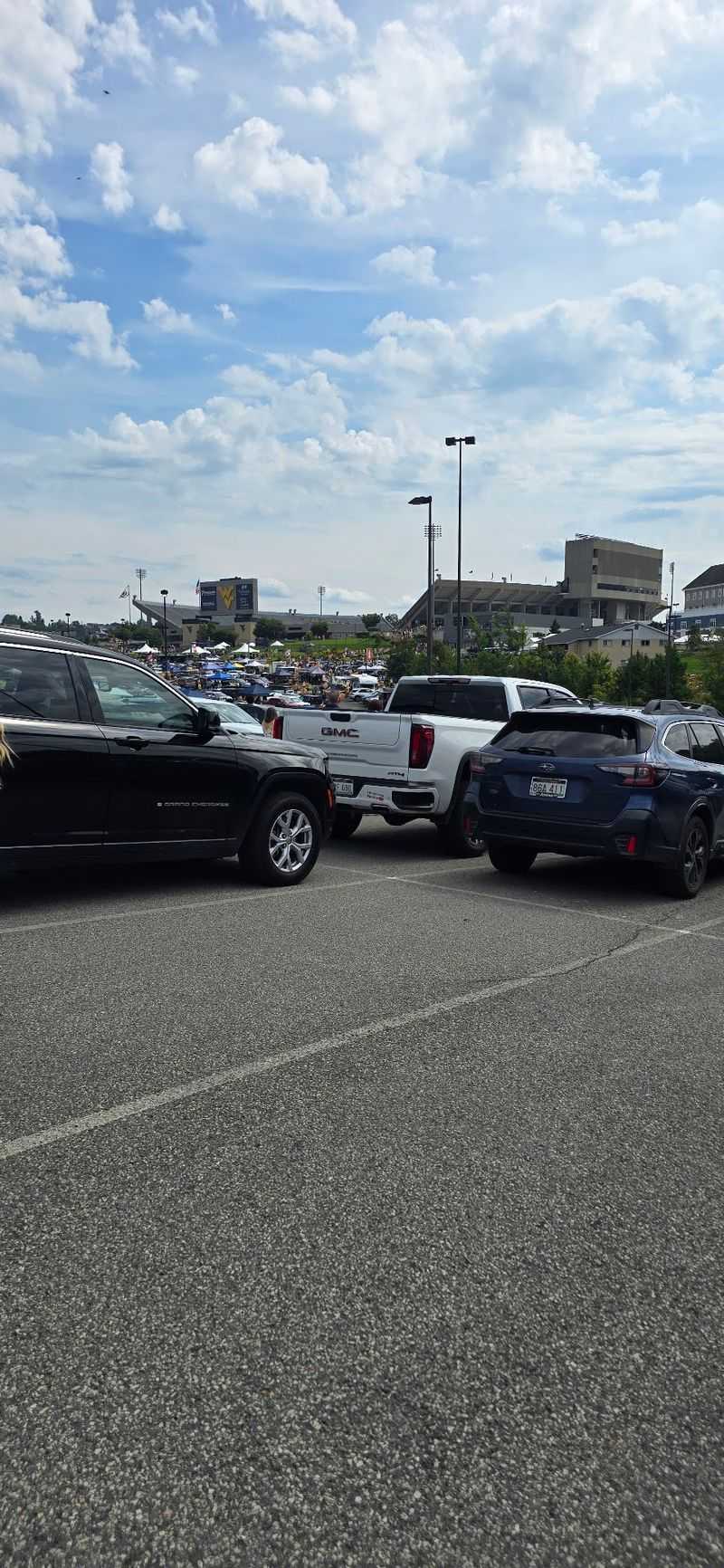
Hours before kickoff, the smell of burgers and hot dogs drifts across the hillside. The Blue Lot, near Ruby Memorial Hospital, is a favorite tailgating hub where fans fire up grills, toss cornhole bags, and wave gold and blue flags.
Bring a folding chair and a good appetite. Pepperoni rolls, chili, and crockpot favorites show up at plenty of setups, and neighbors are often happy to share.
It feels a lot like a church supper that just happens to have a football game attached.
Then comes one of the best traditions anywhere, the Mountaineer Mantrip. Roughly two hours and twenty minutes before each home game, the players, coaches, and the Mountaineer Marching Band walk from the corner of the WVU Medical Center and Don Nehlen Drive to the stadium’s northeast gate.
Fans line the route shoulder to shoulder, cheering and high-fiving. Along the way, the team passes a 350-pound block of coal, a nod to the state’s mining heritage.
For families with miners in their past, that moment can feel deeply personal, linking today’s players to generations who worked underground to build West Virginia.
Country Roads, Sung Arm in Arm
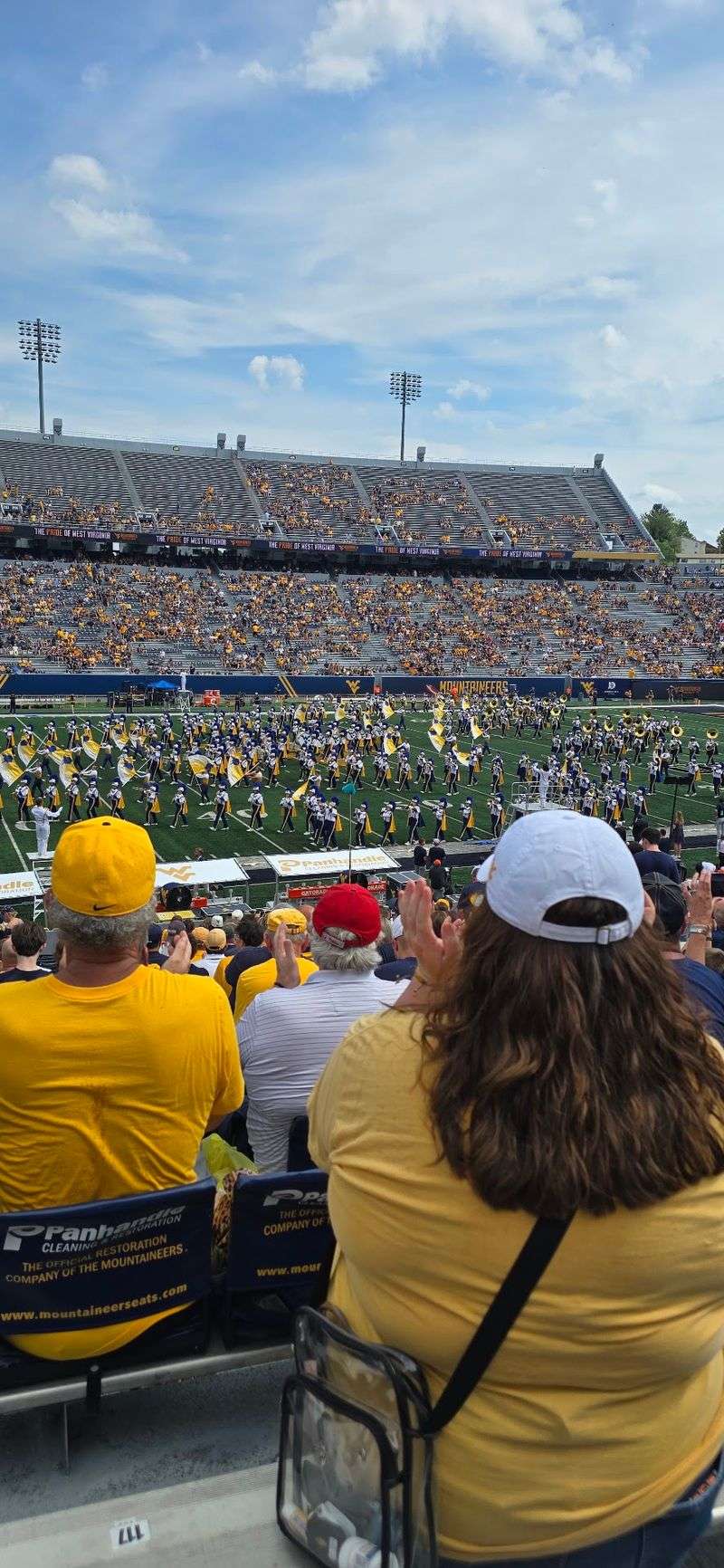
Goosebumps are practically guaranteed. Since 1972, John Denver’s Take Me Home, Country Roads has been part of every home pregame show, and after each home win, players and fans link arms and sing it together.
USA Today has named the tradition one of the top ten in college football. Hearing tens of thousands of voices belt out lines about almost heaven and the Blue Ridge Mountains is something people remember for years.
The music starts well before the final whistle, though. The fight song, Hail West Virginia, rings out before every home game and is considered one of the most recognizable college fight songs around.
The cheers are just as fun to learn.
During the First-Down Cheer, fans raise their hands, drop and lift them three times, clap, and shout W-V-U first down. There is also a rousing Let’s Go Mountaineers call-and-response between the cheerleaders and different sections of the crowd.
Keep an eye out for the Mountaineer mascot, dressed in buckskins and a coonskin cap. Newcomers usually catch on fast, and by the second quarter they are chanting like lifelong regulars.
Afternoons Fans Still Talk About
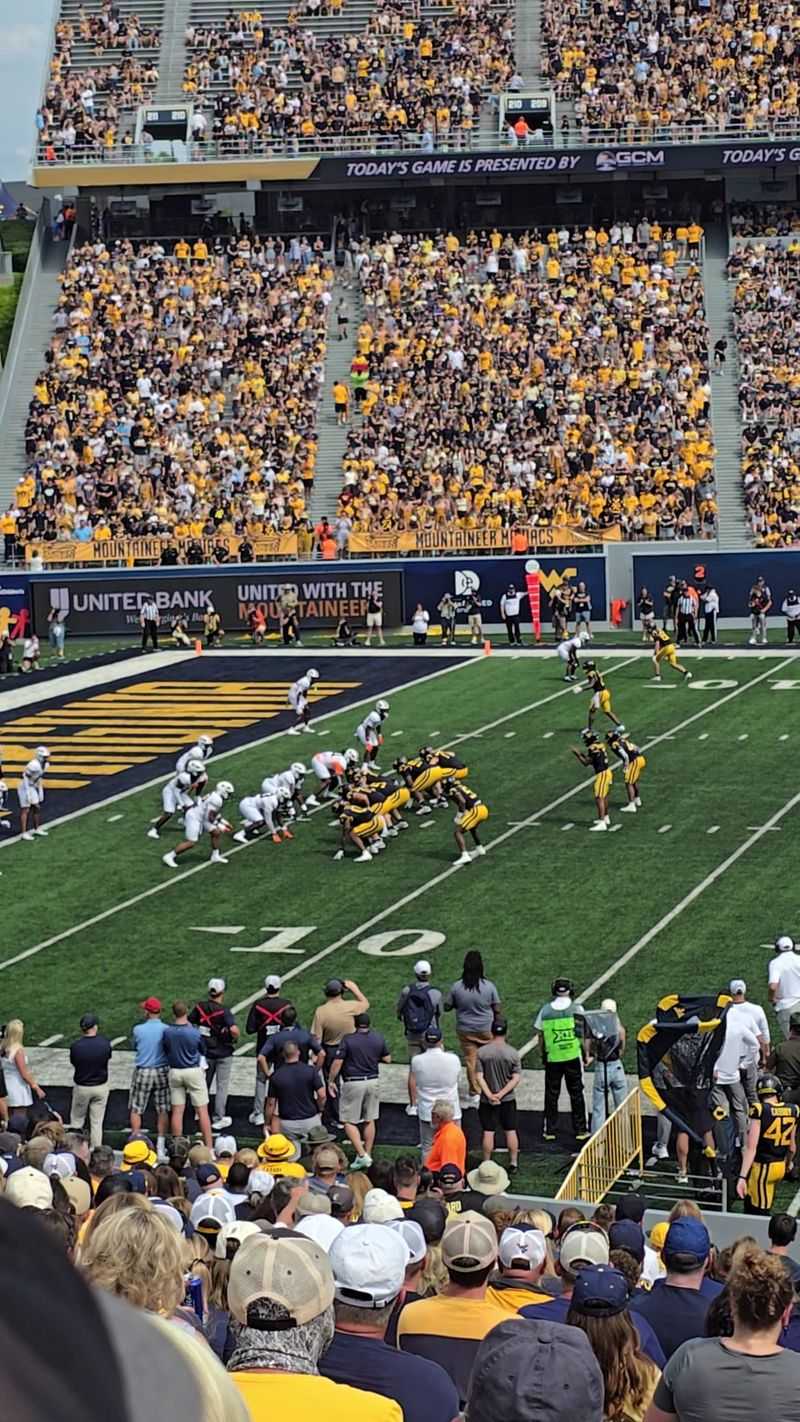
November 20, 1993, remains the gold standard. A record crowd of 70,222 watched the ninth-ranked Mountaineers knock off fourth-ranked Miami 17-14, with Robert Walker’s 19-yard touchdown run providing the lead.
That win clinched the program’s first Big East title during an unbeaten regular season.
The 1988 season had its own magic, too. Major Harris opened the Penn State game with an unforgettable 26-yard touchdown run, a play longtime fans still describe in loving detail.
In 1996, freshman Amos Zereoue broke a 69-yard touchdown run against Pitt on the very first carry of his college career. Then in 2002, the Mountaineers edged third-ranked Virginia Tech 21-18.
Newer fans have favorites of their own. Will Grier’s late touchdown pass and two-point conversion beat Texas on November 3, 2018, and a 23-20 upset of tenth-ranked Oklahoma State came on October 21, 2023.
Even recent visitors seem to leave with stories. Folks mention a great first game here, and one fan happily recalled a 52-7 win over UT Martin.
Do you remember the first game you saw on this field? Plenty of readers likely have a ticket stub tucked away somewhere.
Gold and Blue Dollars for the Mountain State
Money talks, and on game days it speaks with a West Virginia accent. Home football games in fiscal year 2024 reportedly drew an average of about 49,000 fans, filling hotels, diners, gas stations, and gift shops across the region.
WVU Athletics as a whole was estimated to generate around $390 million in total economic activity that year. The program reportedly supported 11,286 jobs statewide, including 676 on campus and more than 10,000 in retail, hospitality, and service work.
State and local tax revenue tied to the program was estimated at $23.8 million.
An older, conservative 2012 study suggested each home game day brought roughly $1.6 million into Monongalia County, or about $11.2 million over a seven-game season. Figures like these can vary by source, but the big picture is clear.
The ripple effect may last well beyond the final score. Many visitors who come for a game reportedly return later just to explore the area.
For small-business owners, retirees on fixed incomes who rent out rooms, and families running local restaurants, a strong home schedule can make a real difference. Football here is part of the paycheck, not just the weekend fun.
Planning Your Saturday at 1 Ira Errett Rodgers Drive
Getting there is the first adventure. Milan Puskar Stadium sits at 1 Ira Errett Rodgers Dr, Morgantown, WV 26505, on the university’s Health Sciences campus near the medical center.
Game day traffic can be heavy, so arriving early is wise. Many fans plan to get in before the Mantrip so they can soak up the pregame atmosphere without rushing.
Comfortable shoes help, since the hilly walk between lots and gates can be a workout.
Schedules, ticket prices, and gate times change each season, so check the official WVU Athletics website before you go. Seats behind the goal posts on the lower level are often among the more affordable options, which suits families and retirees watching their budgets.
Weather in the mountains can shift fast in the fall. Layers, a rain jacket, and a warm blanket for late games are smart choices.
Big changes may be coming, too. A major renovation of the west side and press box, with new club seating, suites, better restrooms, concessions, and improved Wi-Fi and cell service, is expected to begin after the 2026 season and wrap up by 2028.
Visiting before then means seeing the stadium much as generations of fans have known it.
A Verdict from the Upper Deck
Some places earn their reputation slowly, one Saturday at a time. With roots stretching back to 1924 and the current stadium serving fans since 1980, Mountaineer Field has had a long time to build something special.
Recent visitors keep their praise short and sweet, calling it a great environment and a great place for a game. Honestly, that sums it up well.
You do not need to know every rule of football to feel the energy when 60,000 people start singing about country roads.
For lifelong fans, it is a place full of memories, from the old horseshoe in the valley to the record crowd of 1993. For newcomers, it offers a crash course in West Virginia pride, coal heritage, and hospitality.
For grandparents, it may be the perfect place to pass traditions down to grandkids.
Is it worth the drive from anywhere in the state? Most folks who have linked arms in those stands would probably say yes without a second thought.
So pack the cooler, grab your gold and blue, and give yourself a full fall Saturday. When the final note of Country Roads fades, you might just understand why this hillside keeps calling people home.
