I’ve crossed more bridges in New Jersey than I can count on both hands, and every time I drive over one of these massive structures, I find myself marveling at the engineering genius that keeps our communities connected.
Living at a geographic crossroads where rivers, bays, and waterways slice through the landscape, I’ve come to realize that bridges here aren’t just helpful – they’re absolutely essential.
From the Hudson to the Delaware, these towering spans carry millions of vehicles every year, linking neighborhoods, cities, and even entire states in a nonstop flow of commuters and commerce.
Some of these bridges are so iconic they’ve earned a place in pop culture, popping up in movies, songs, and countless photographs.
And I’ll admit, there’s something thrilling about driving across a structure so wide it makes highways look like bike paths.
Come along with me, I’m about to rank ten of the most jaw-dropping, traffic-jamming, and downright legendary bridges New Jersey has to offer.
Spoiler alert: one of them isn’t just busy, it’s literally the busiest motor vehicle bridge on planet Earth.
George Washington Bridge
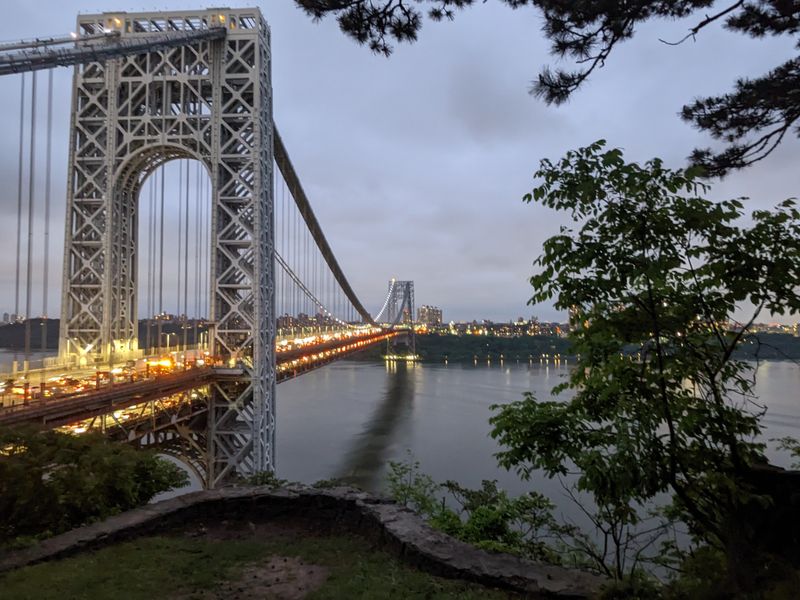
Crossing the George Washington Bridge feels like entering a portal between two worlds, with New Jersey on one side and the endless energy of Manhattan on the other. This colossal double-decker suspension bridge stretches across the Hudson River, connecting Fort Lee to Upper Manhattan in a stunning display of 1930s engineering prowess.
What makes this bridge truly remarkable isn’t just its size or age, but the sheer volume of traffic it handles every single day.
Standing at the base and looking up at those massive steel towers is an experience that never gets old, no matter how many times I’ve done it. The bridge holds the title of the world’s busiest motor vehicle bridge, with roughly 103 million vehicles crossing it annually.
That’s more than 280,000 vehicles per day, making rush hour a spectacle of brake lights and bumper-to-bumper humanity.
Originally, the bridge was designed to have stone cladding over its steel towers, but the Great Depression put those plans on hold indefinitely. Ironically, the exposed steelwork became iconic in its own right, giving the bridge a raw, industrial beauty that architects and photographers adore.
The upper level opened in 1931, while the lower level was added in 1962 to accommodate growing traffic demands.
Driving across on a clear day offers breathtaking views of the Hudson River, the Palisades cliffs, and the New York skyline stretching toward the horizon. At night, the bridge lights up like a necklace of diamonds draped across the river, creating one of the most photographed scenes in the entire New York metropolitan area.
Benjamin Franklin Bridge
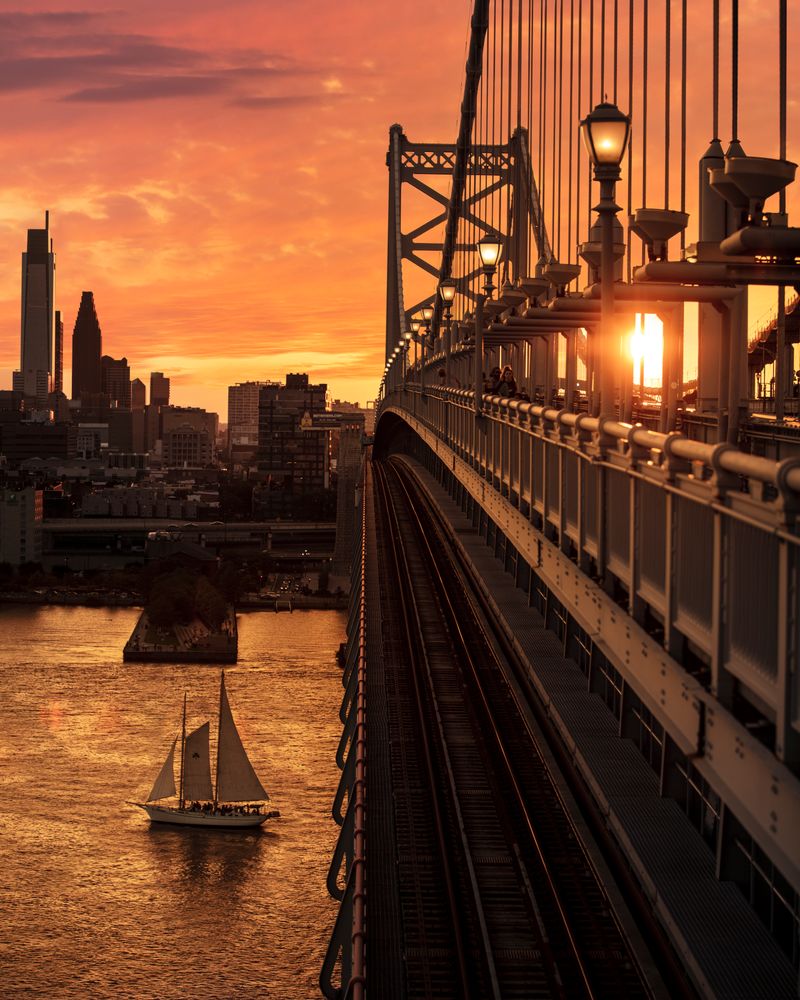
The Benjamin Franklin Bridge commands attention with its striking blue suspension cables that glow against the sky like veins of sapphire stretched across the Delaware River. Linking Camden, New Jersey, to Philadelphia, Pennsylvania, this bridge has been a vital artery between the two states since it opened in 1926.
What sets it apart from other crossings isn’t just its functionality but its transformation into a work of public art through spectacular lighting displays.
I’ve watched this bridge shift through rainbow colors during special events, turning the night sky into a canvas of celebration and civic pride. The lighting system, installed in 1987 and upgraded multiple times since, can display virtually any color combination imaginable, making the bridge a beacon for festivals, holidays, and commemorative occasions.
Driving across it at dusk, with the lights just beginning to flicker on, feels like crossing into another dimension.
The bridge stretches 1.8 miles from end to end and was the longest suspension bridge in the world when it first opened, holding that record until 1929. Its seven lanes of traffic accommodate thousands of daily commuters, while the PATCO Speedline rapid transit system runs beneath the roadway, offering an alternative to driving.
Pedestrians and cyclists can also cross via a dedicated walkway, giving everyone a chance to experience those stunning river views.
Camden’s waterfront has undergone significant revitalization in recent years, and the Benjamin Franklin Bridge serves as both a practical connector and a symbolic link between New Jersey’s past and its evolving future.
Pulaski Skyway
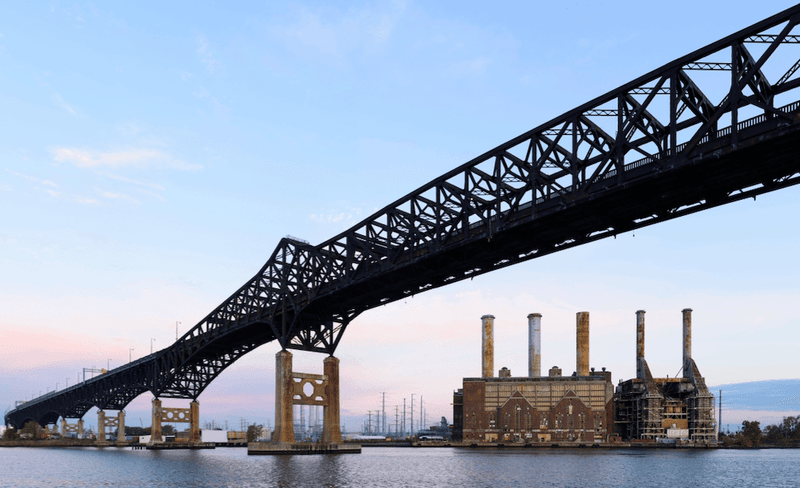
Soaring above the marshlands and industrial zones of Jersey City, the Pulaski Skyway looks like something straight out of a 1930s vision of the future. This elevated highway isn’t technically a traditional bridge, but rather a series of connected cantilever truss bridges that carry US Routes 1 and 9 over the Passaic and Hackensack Rivers.
Its Art Deco design and dramatic elevation make it one of the most distinctive structures in the entire New York metropolitan area.
I remember the first time I drove across it, feeling like I was piloting a spaceship through an industrial wonderland of oil refineries, rail yards, and wetlands stretching in every direction. The Skyway opened in 1932 and was named after Polish Revolutionary War hero Casimir Pulaski, honoring his contributions to American independence.
Its distinctive silhouette has appeared in countless movies and television shows, most famously in the opening credits of “The Sopranos.”
The structure rises as high as 135 feet above ground level in some sections, giving drivers sweeping panoramic views of the surrounding landscape and the distant Manhattan skyline. Recent renovations have modernized the roadway while preserving its historic character, ensuring that future generations can experience this engineering marvel.
The Skyway has been designated a National Historic Civil Engineering Landmark, recognizing its significance in American infrastructure history.
Crossing the Pulaski Skyway at sunrise or sunset transforms the commute into something almost poetic, as golden light reflects off the steel trusses and the industrial landscape below glows with unexpected beauty.
Verrazzano-Narrows Bridge
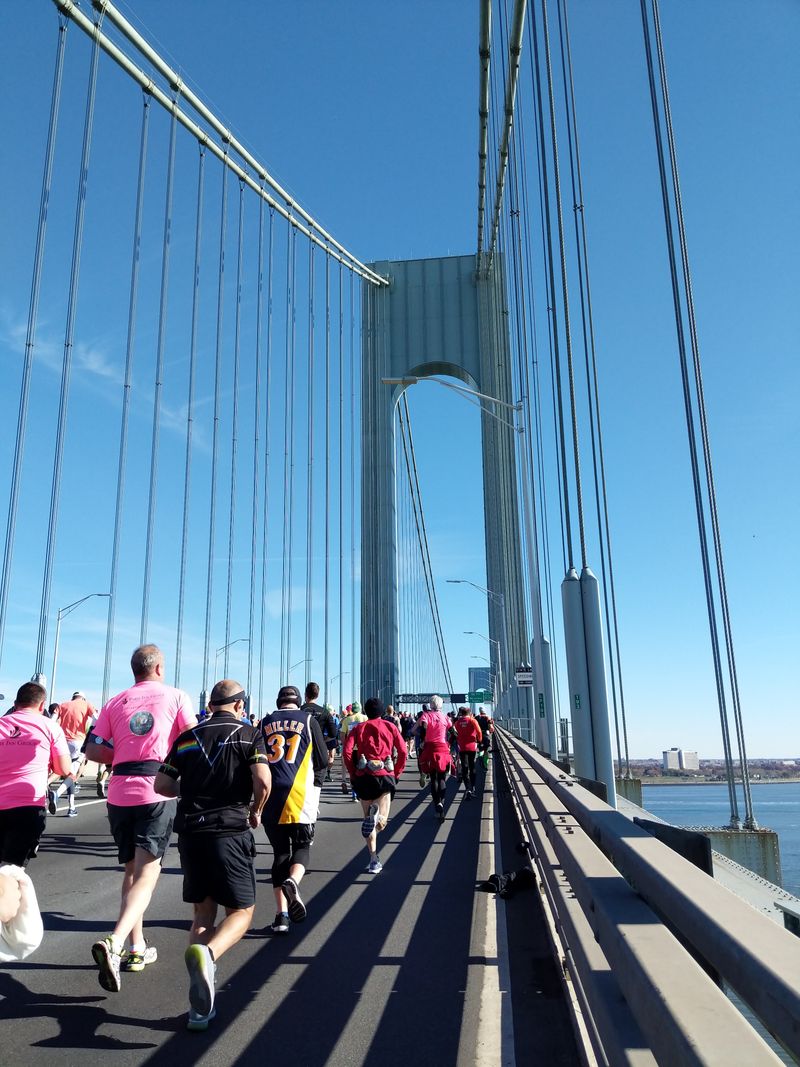
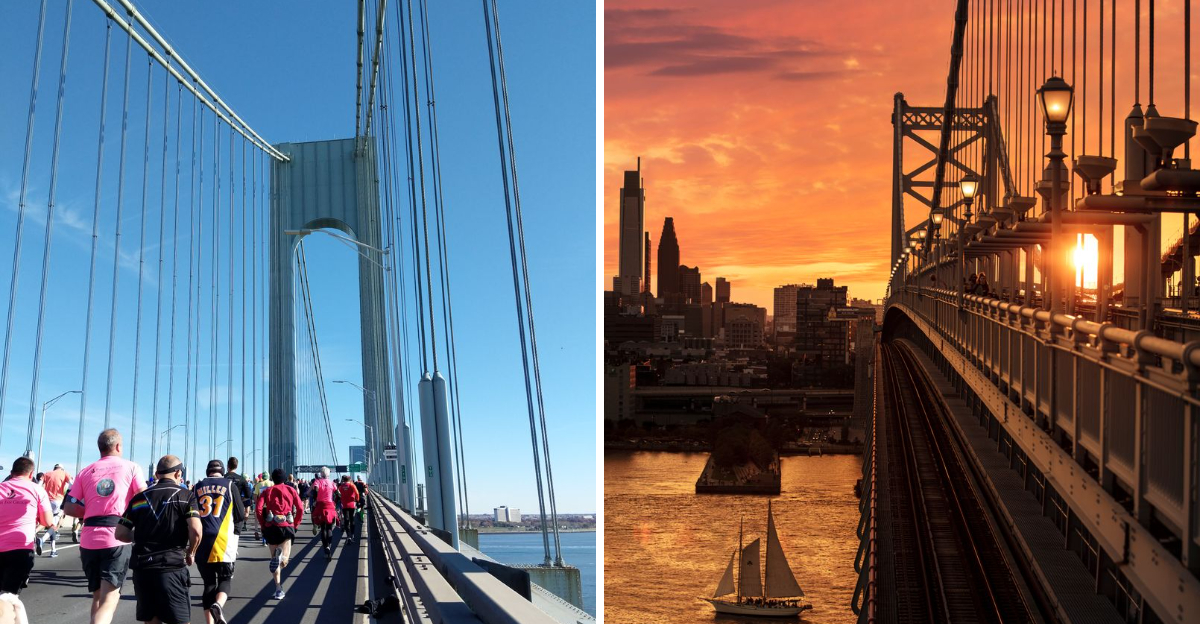
Although the Verrazzano-Narrows Bridge technically connects Brooklyn and Staten Island in New York, it plays a crucial role in New Jersey’s transportation network and deserves recognition on this list. Thousands of New Jersey commuters use this massive suspension bridge daily as a gateway to Long Island, Brooklyn, and beyond.
The bridge’s New Jersey approach in Bayonne funnels traffic from Interstate 278, making it an essential link in the regional highway system.
The sheer scale of this bridge takes my breath away every single time I approach it, with towers that rise 693 feet above the water and a main span stretching 4,260 feet across The Narrows. When it opened in 1964, it was the longest suspension bridge in the world, a record it held until 1981.
The bridge carries approximately 200,000 vehicles per day, making it one of the busiest toll crossings in the entire United States.
Driving across the upper deck offers unobstructed views of New York Harbor, the Statue of Liberty, and the Atlantic Ocean stretching toward the horizon. The lower deck, added in 1969, doubled the bridge’s capacity and helped accommodate the region’s explosive growth in automobile traffic.
The bridge was named after Giovanni da Verrazzano, the Italian explorer who was the first European to enter New York Harbor in 1524.
For New Jersey residents heading to Brooklyn or Long Island, this bridge represents the fastest route, saving countless hours compared to alternative crossings and serving as a vital economic corridor for the entire region.
Delaware Memorial Bridge
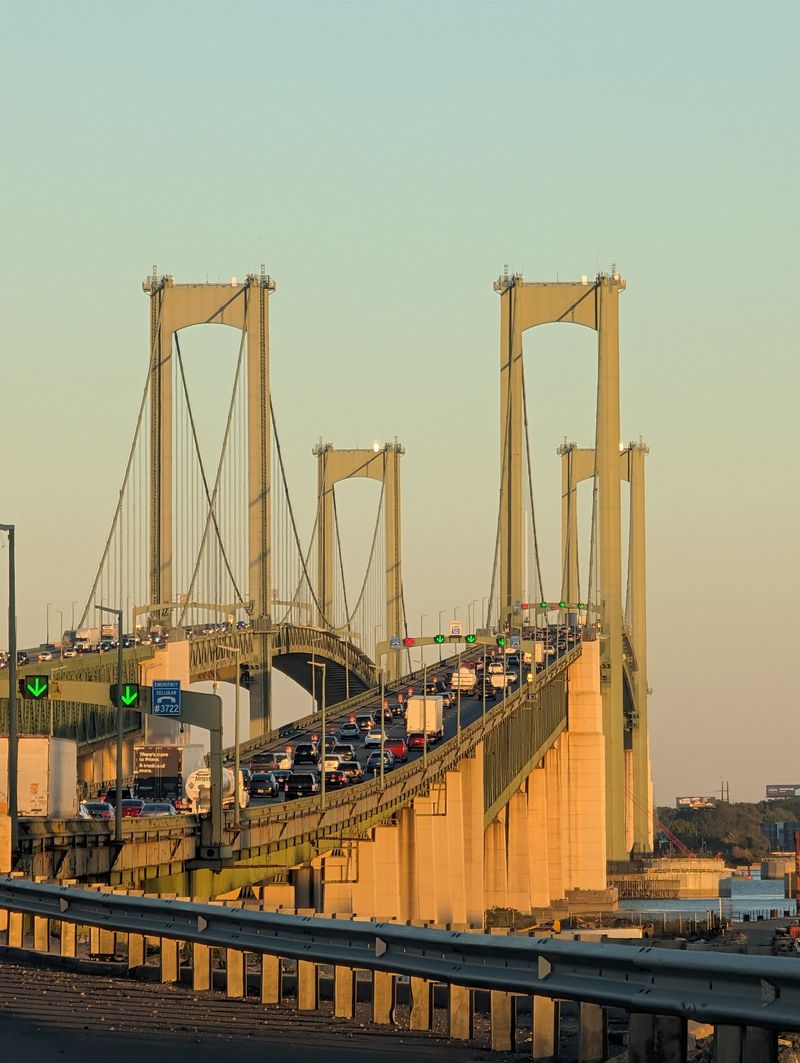
Two identical suspension bridges rise side by side across the Delaware River like synchronized dancers frozen in steel and cable. The Delaware Memorial Bridge holds the distinction of being the world’s longest twin-span suspension bridge, with each structure mirroring the other in perfect symmetry.
Located in Pennsville, New Jersey, these bridges connect the Garden State to Delaware along Interstate 295, serving as a major corridor for East Coast travelers.
I’ve crossed these bridges countless times on road trips south, and there’s something comforting about their twin presence, like having a backup plan built right into the infrastructure. The original span opened in 1951 as a memorial to soldiers from Delaware and New Jersey who died in World War II, Korea, Vietnam, and the Persian Gulf.
The second span was added in 1968 to handle increasing traffic volumes, creating the unique twin configuration we see today.
Each bridge features a main span of 2,150 feet suspended between towers that rise 440 feet above the water, offering expansive views of the Delaware River and the surrounding coastal plains. The bridges carry approximately 80,000 vehicles per day, with traffic typically divided between the two spans based on direction.
A memorial plaza at the New Jersey side honors military veterans, providing a quiet space for reflection amid the constant flow of interstate commerce.
The green-painted towers and cables have become an iconic sight for travelers heading to or from the mid-Atlantic region, marking the transition between New Jersey and points south along the eastern seaboard.
Goethals Bridge
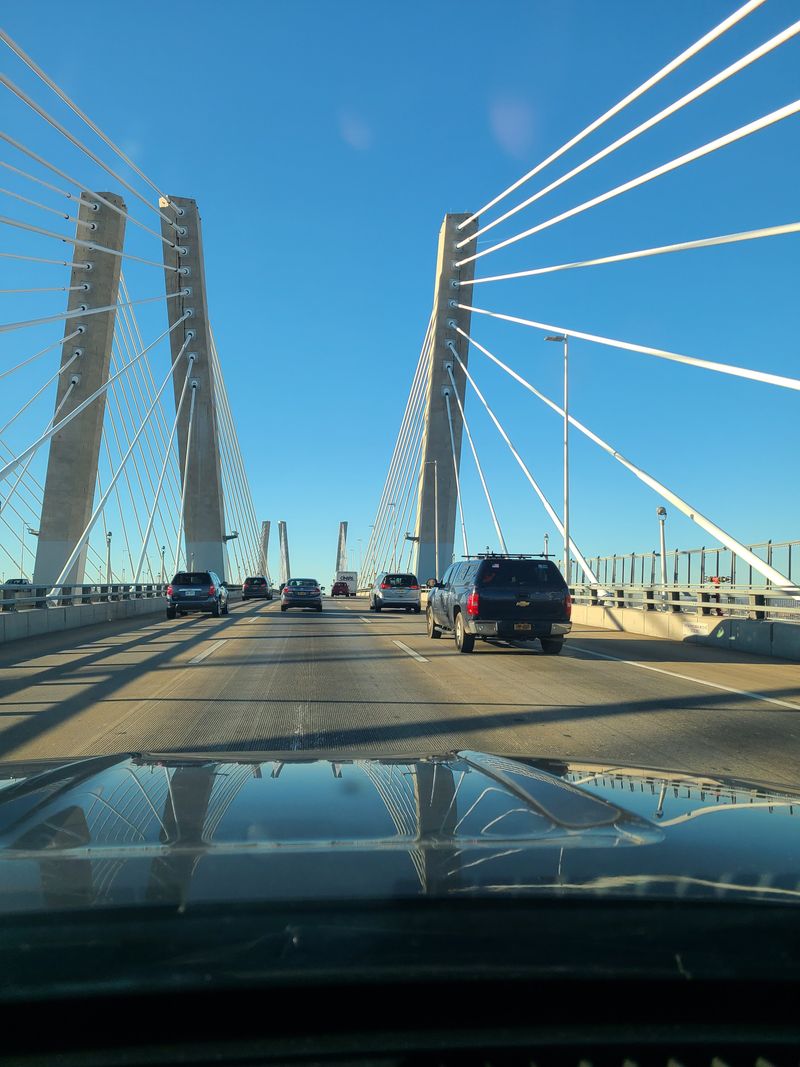
Gleaming white towers and modern cable-stayed design make the new Goethals Bridge a striking contrast to the aging infrastructure that surrounds it. This recently replaced crossing connects Elizabeth, New Jersey, to Staten Island, New York, spanning the Arthur Kill waterway along Interstate 278.
The original cantilever truss bridge, built in 1928, was replaced between 2013 and 2018 with a state-of-the-art structure that dramatically improved traffic flow and safety.
The transformation from old to new was something I watched unfold over several years, and the difference is absolutely night and day. The new bridge features wider lanes, full shoulders, and a dedicated pedestrian and bicycle path, amenities that were completely absent from the original structure.
Traffic congestion has decreased significantly since the replacement, making commutes faster and less stressful for the thousands of drivers who use it daily.
Named after George Washington Goethals, the engineer who supervised construction of the Panama Canal, the bridge serves as a vital link for commercial and passenger vehicles traveling between New Jersey and Staten Island. The cable-stayed design uses a single plane of cables extending from two towers, creating an elegant profile that’s become a new landmark along the Arthur Kill.
The bridge carries approximately 33,000 vehicles per day, with traffic volumes continuing to grow as the region develops.
From certain angles in Elizabeth’s industrial waterfront, the bridge’s white towers and cables create a stunning visual contrast against the older port facilities and warehouses, symbolizing New Jersey’s ongoing infrastructure modernization efforts.
Outerbridge Crossing
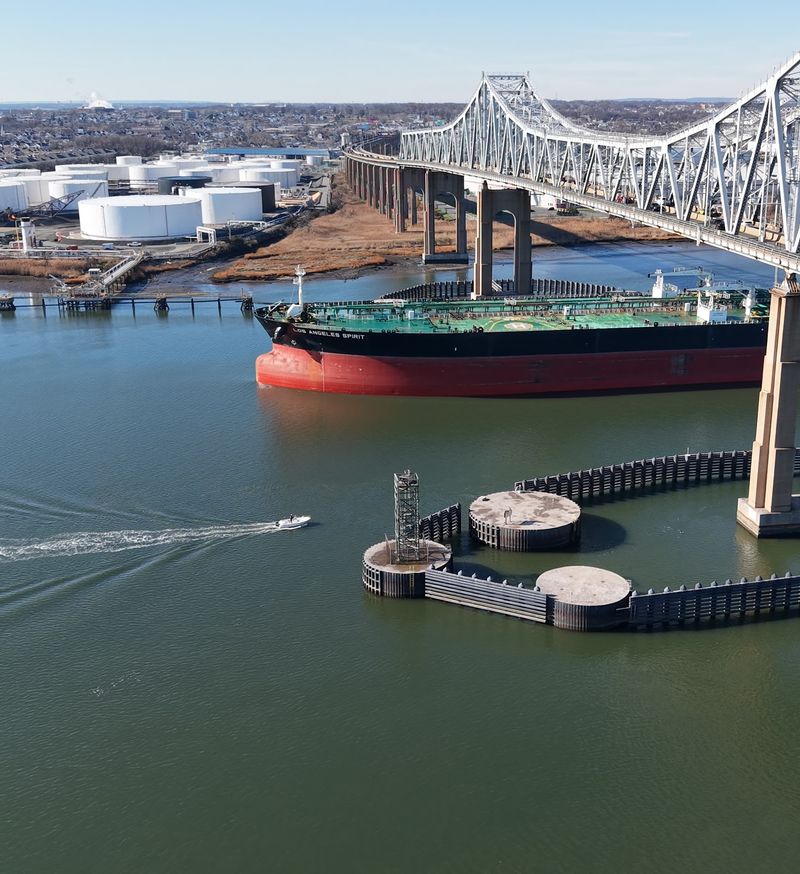
Despite its name suggesting a location at the edge of somewhere, the Outerbridge Crossing is actually named after Eugenius Outerbridge, the first chairman of the Port Authority of New York and New Jersey. This cantilever bridge connects Perth Amboy, New Jersey, to Staten Island, New York, crossing the Arthur Kill waterway along Route 440.
The naming coincidence has confused countless travelers over the decades, but locals know the real story behind this busy crossing.
I always get a kick out of explaining the name’s origin to out-of-town friends who assume it’s called the “outer” bridge because of its geographic position. The bridge opened in 1928, the same year as the Goethals Bridge, as part of a coordinated effort to improve connections between New Jersey and Staten Island.
Its steel cantilever design was common for the era, creating a sturdy structure capable of handling heavy loads and withstanding harsh weather conditions.
The bridge carries approximately 72,000 vehicles per day, making it one of the busiest crossings in the Port Authority system. Recent rehabilitation projects have modernized the roadway and structural components while preserving the bridge’s historic character.
The crossing serves as a vital link for commercial traffic moving between New Jersey’s industrial zones and the broader New York metropolitan area.
Views from the bridge encompass the Arthur Kill’s industrial waterfront, with container terminals, oil refineries, and shipping facilities creating a landscape that tells the story of the region’s economic engine and maritime heritage.
Walt Whitman Bridge
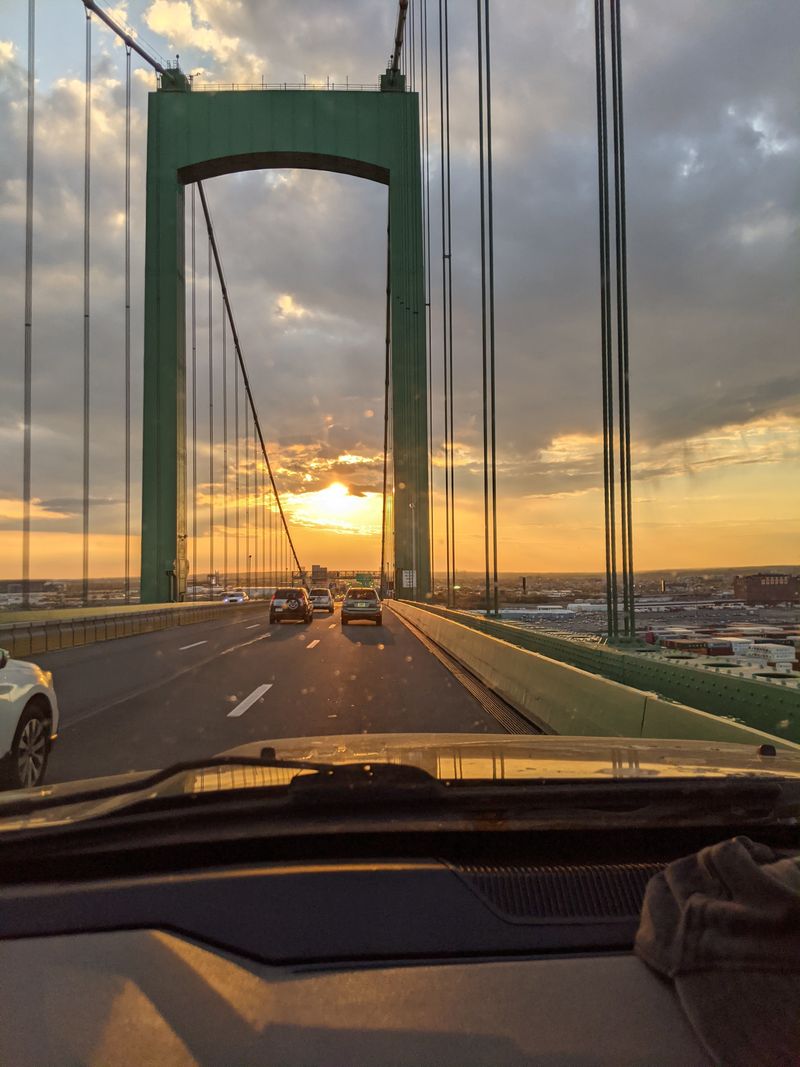
Painted in distinctive red and named after America’s beloved poet, the Walt Whitman Bridge stands as a monument to both engineering achievement and literary heritage. This suspension bridge connects Gloucester City, New Jersey, to Philadelphia, Pennsylvania, carrying Interstate 76 across the Delaware River in a graceful arc of steel and cable.
Walt Whitman spent his final years in Camden, New Jersey, making the naming choice particularly meaningful for the region.
The bridge opened in 1957 and immediately became one of the primary crossings between New Jersey and Pennsylvania, alleviating congestion on the Benjamin Franklin Bridge to the north. Its main span stretches 2,000 feet between towers that rise 378 feet above the water, creating a commanding presence on the Philadelphia skyline.
Seven lanes of traffic flow across the bridge, accommodating approximately 120,000 vehicles per day in a constant stream of commuters, commercial trucks, and travelers.
I’ve crossed this bridge during all seasons and times of day, and it never fails to deliver spectacular views of the Philadelphia waterfront and the Delaware River valley. The red paint scheme makes the bridge instantly recognizable from miles away, serving as a visual landmark for navigation throughout the region.
Recent maintenance projects have ensured the bridge remains structurally sound and capable of handling modern traffic demands.
The bridge serves as a critical economic corridor, connecting New Jersey’s southern counties to Philadelphia’s urban core and facilitating billions of dollars in commerce annually while honoring the memory of a poet who celebrated American democracy and diversity.
Driscoll Bridge
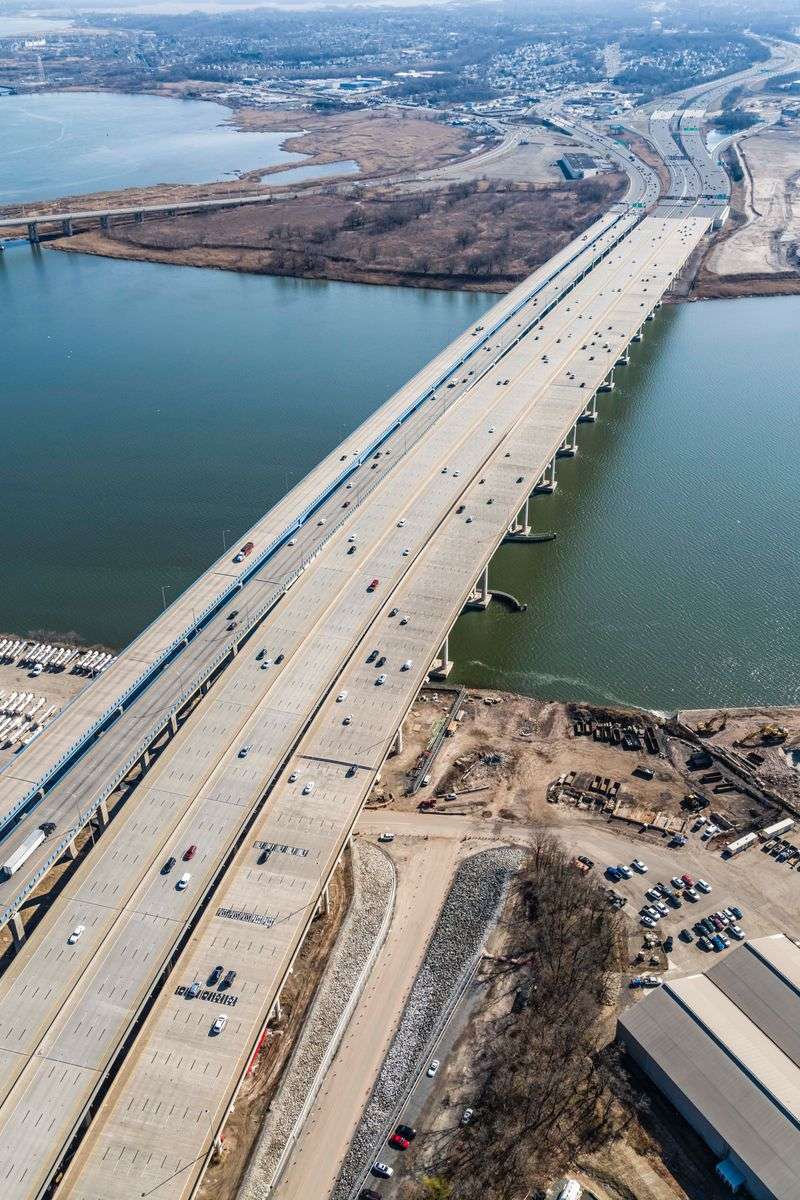
Width is the defining characteristic of the Driscoll Bridge, a structure so wide it looks more like a highway floating on concrete pillars than a traditional bridge. Carrying the Garden State Parkway across the Raritan River between Sayreville and Woodbridge, this bridge holds the distinction of being one of the widest bridges in the world.
With 15 lanes of traffic spread across multiple parallel structures, it handles an absolutely staggering volume of vehicles every single day.
The first time I drove across it, I didn’t even realize I was on a bridge until I noticed the water beneath me, that’s how seamless the transition feels from highway to bridge deck. The original structures were built in the 1950s, with additional spans added over the decades to accommodate the Garden State Parkway’s ever-increasing traffic demands.
The bridge complex now includes 15 lanes total, making it wider than many city blocks.
Approximately 180,000 vehicles cross the Driscoll Bridge daily, making it the busiest bridge on the Garden State Parkway and one of the most heavily trafficked crossings in New Jersey. The bridge was named after Alfred E.
Driscoll, who served as Governor of New Jersey from 1947 to 1954 and championed the Garden State Parkway project. Recent reconstruction efforts have modernized the bridge structures while maintaining traffic flow, a logistical feat considering the volume of vehicles using it.
The bridge’s sheer scale represents New Jersey’s car-dependent culture and the critical role highways play in connecting the state’s densely populated northern and central regions with the Jersey Shore and southern counties.
Commodore Barry Bridge
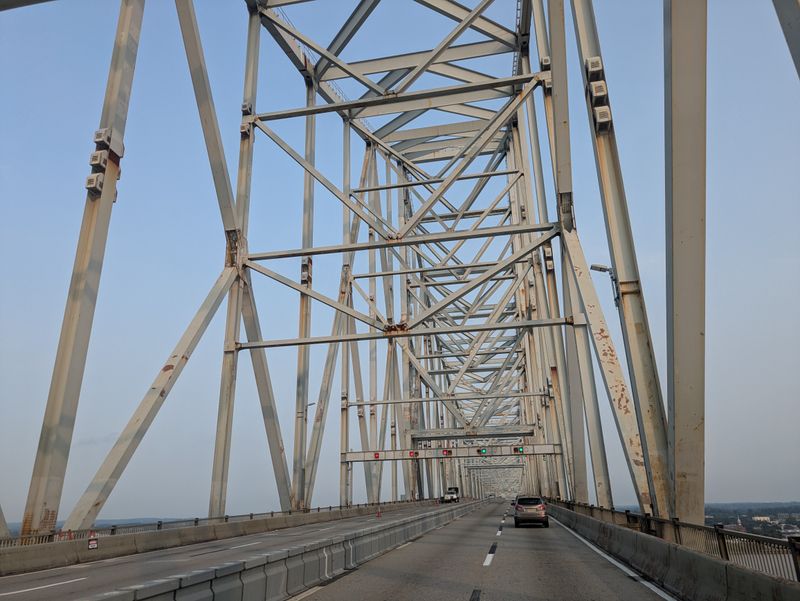
Green steel trusses stretch across the Delaware River in a graceful cantilever design, making the Commodore Barry Bridge the longest cantilever bridge in the United States. Located in Logan Township, New Jersey, this bridge carries US Route 322 between New Jersey and Pennsylvania, serving as a vital crossing for residents and commercial traffic in the southern Delaware Valley.
The bridge opened in 1974 and was named after Commodore John Barry, a Revolutionary War naval hero often called the “Father of the American Navy.”
The main span measures an impressive 1,644 feet, soaring 185 feet above the Delaware River to allow large ships to pass beneath. I’ve driven across this bridge during both calm sunny days and fierce storms, and its sturdy cantilever design inspires confidence no matter what the weather throws at it.
The bridge carries approximately 35,000 vehicles per day, connecting New Jersey’s rural southern counties to the Philadelphia metropolitan area and points west.
Views from the bridge encompass the wide Delaware River, surrounding wetlands, and the industrial facilities that dot the shoreline, creating a landscape that blends natural beauty with human enterprise. The distinctive green paint scheme makes the bridge easily identifiable from a distance, serving as a landmark for travelers navigating the region.
Maintenance crews regularly inspect and preserve the bridge’s structural integrity, ensuring it remains safe and functional for decades to come.
The Commodore Barry Bridge represents southern New Jersey’s connection to the broader mid-Atlantic region, facilitating commerce, commuting, and the daily flow of life between two states separated by one of America’s most historic rivers.
Dear Reader: This page may contain affiliate links which may earn a commission if you click through and make a purchase. Our independent journalism is not influenced by any advertiser or commercial initiative unless it is clearly marked as sponsored content. As travel products change, please be sure to reconfirm all details and stay up to date with current events to ensure a safe and successful trip.
