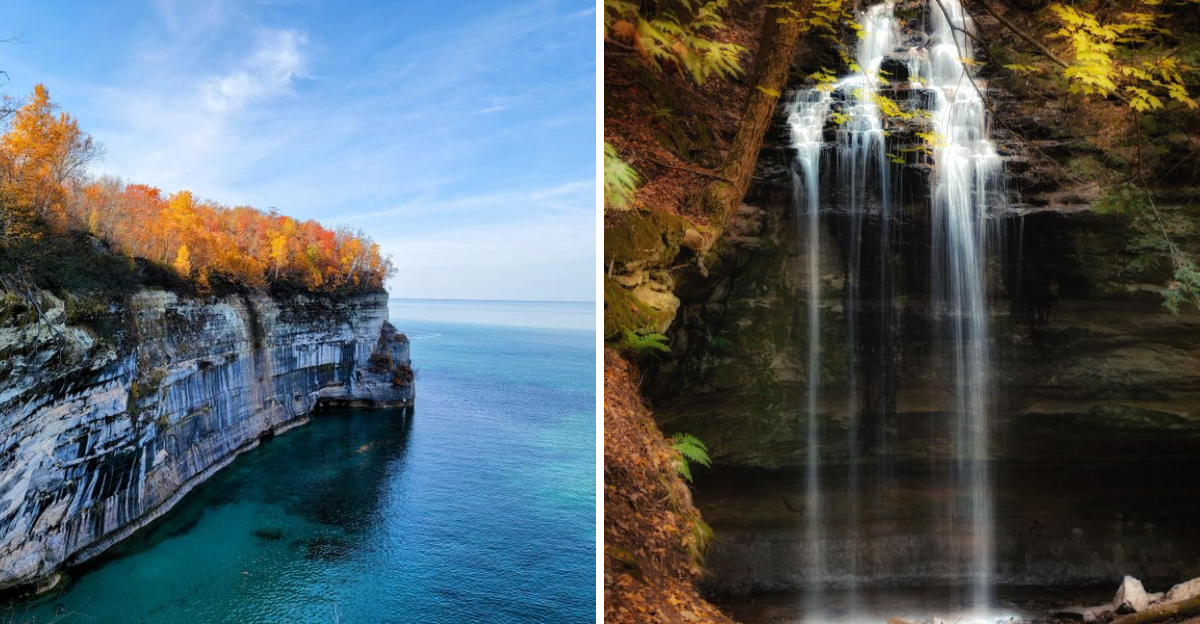
Michigan may be famous for the endless shorelines of its Great Lakes, but there’s a wilder side to its landscape.
Deep in the woods and along the water, sculpted cliffs, winding canyons, and mysterious caves mark the passage of ancient glaciers and restless rivers.
Some of these places are easy to overlook, hidden behind small town streets or tucked away down backcountry trails, but each offers its own chance to connect with Michigan’s dramatic past.
If you’re ready to trade crowds for quiet excitement, here are nine unforgettable spots where Michigan’s geology takes center stage.
1. Canyon Falls (Upper Peninsula)
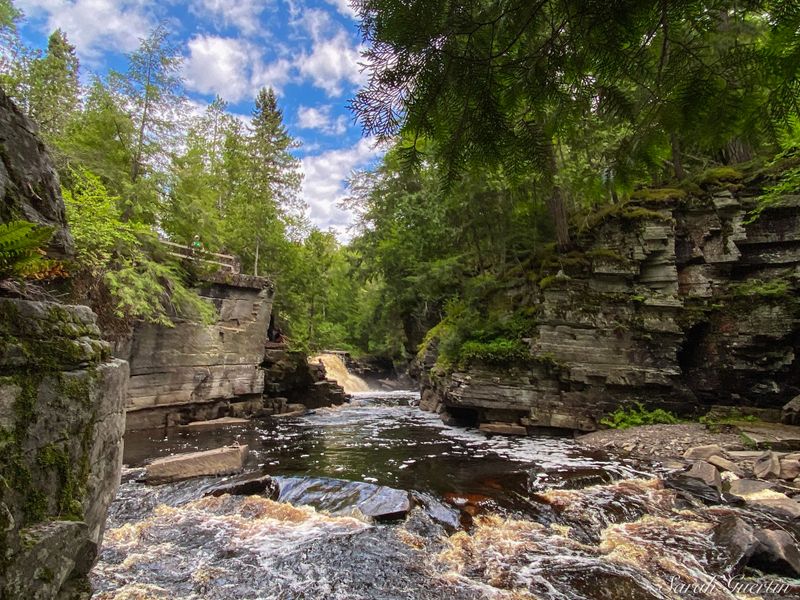
If you ever wanted to step off the highway and stumble onto something unexpected, Canyon Falls delivers.
The locals call it the Grand Canyon of Michigan, and while the scale is smaller, the drama is real.
The Sturgeon River slices through ancient bedrock here, dropping thirty feet into a narrow chasm veiled in mist.
The approach is friendly enough: a short walk from a highway rest stop leads through hardwood forest, with the river growing louder each step.
Suddenly, the land opens up and you’re standing at the rim.
The air feels cool and charged, with water pounding below and moss clinging to every exposed rock face.
Autumn brings out the best here, as maple and birch leaves tumble along the gorge, but spring’s fierce runoff gives the falls their full power.
Even when the parking lot is busy, a visit never feels crowded.
Canyon Falls draws you in with its raw energy and offers a window into Michigan’s restless geological heart.
The trail is well maintained, making it accessible for families, but the view remains nothing short of breathtaking.
Every angle reveals something new, from the sculpted rock layers to the way light dances across falling water.
For anyone seeking natural beauty without the long hike, this spot strikes the perfect balance.
Located near L’Anse, Canyon Falls is a testament to the power of water and time.
2. Sturgeon River Gorge Wilderness
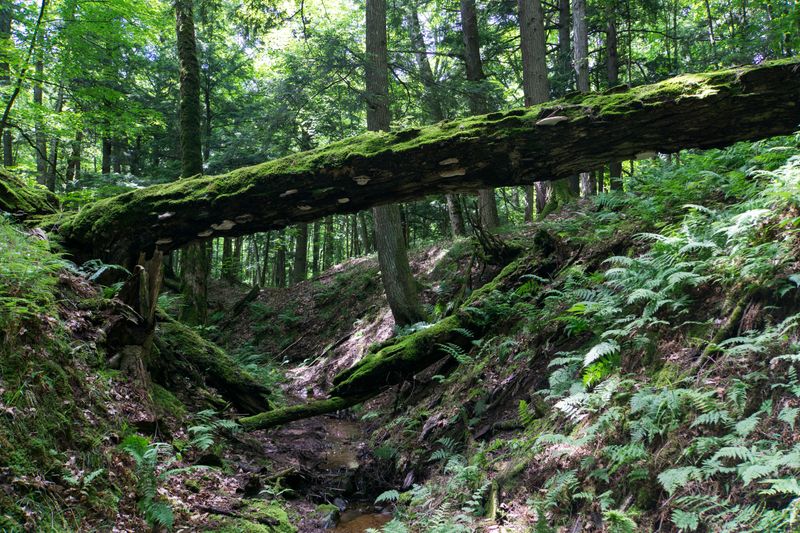
Wander a little farther downstream from Canyon Falls and the crowds melt away.
The Sturgeon River Gorge Wilderness is where the terrain gets serious, this is wild country, with steep descents and thick woods.
The gorge, managed by the U.S. Forest Service, feels surprisingly remote for Michigan, more reminiscent of the Appalachians than the Midwest.
I remember my first visit on a misty morning, boots slipping on roots as the path dipped abruptly into shadowed valleys.
Here, the river takes center stage, carving deep into the earth and leaving walls of exposed bedrock and tumbling boulders.
Solitude is the main draw.
Birdsong echoes off the canyon walls, and the only sounds are your own footsteps and the rush of water.
The scale and quiet of the Sturgeon River Gorge make it a hidden pocket of Michigan wilderness that rewards anyone willing to put in the effort.
Trails vary in difficulty, so hikers should come prepared with sturdy boots and a sense of adventure.
The landscape shifts constantly, from narrow gorges to open clearings where sunlight breaks through the canopy.
Wildlife is abundant, with deer, black bears, and countless bird species calling this area home.
Photographers love the contrasts here, dark rock against rushing white water, vibrant greens against weathered gray stone.
For those seeking true wilderness without leaving the state, the Sturgeon River Gorge delivers in every way.
3. Tannery Falls (Munising Area)
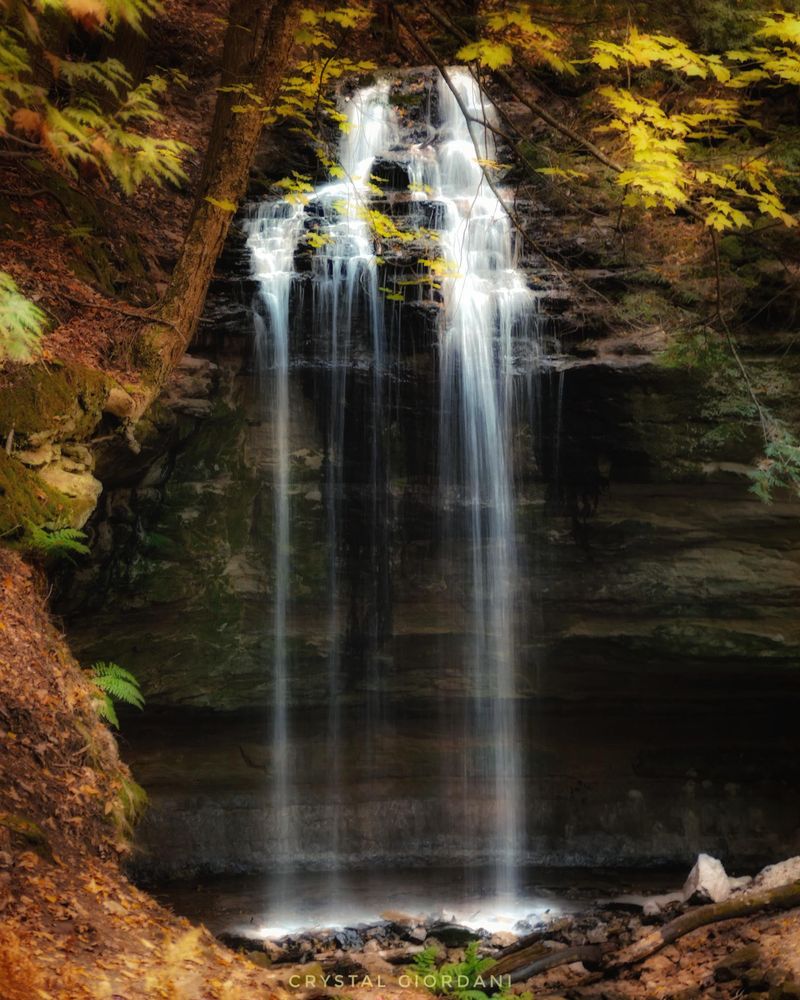
Blink and you’ll miss it, Tannery Falls hides behind a small residential street just outside Munising.
But make the short trek through the trees, and you’ll discover a 40-foot drop where water slips over a smooth sandstone ledge.
The canyon is narrow and shaded, creating an unexpectedly secretive atmosphere.
The most intriguing feature might be the small cave tucked behind the waterfall’s curtain.
On a hot day, stepping behind the falls brings a cool spray and a bit of mystery.
A few locals still remember when the area was less developed, and you can sense the history in the air.
While Munising’s larger falls gather most of the attention, Tannery Falls keeps its magic for those who seek it out.
Its quiet beauty and cave-like alcove offer a gentle reminder that sometimes the most memorable places sit just out of view.
The path leading to the falls is short but can be slippery, especially after rain, so tread carefully.
Once you arrive, the sense of seclusion is immediate.
The surrounding sandstone walls are streaked with iron and mineral deposits, adding subtle color to the scene.
Photographers appreciate the soft, diffused light that filters through the trees, perfect for capturing the falls without harsh shadows.
Families enjoy the easy access, making it a great stop for all ages.
4. Memorial Falls (Near Munising)
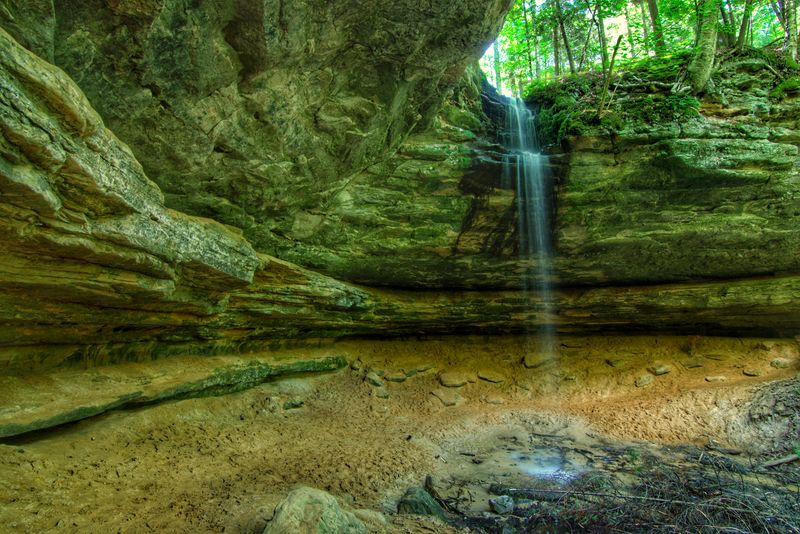
Every so often, a spot feels like your own secret even when it’s marked on a map.
Memorial Falls, just outside Munising, brings that sense to life.
Unlike busier sites, this little gorge hides not one, but two waterfalls tumbling through a sandstone canyon.
A natural stone arch connects the falls, creating what almost feels like a hidden grotto.
I’ve visited on rainy days when the only sound is the water echoing off rock walls, and the place feels impossibly tucked away.
The green of the moss and the golden light filtering through the trees add a sense of stillness.
Less developed than the area’s bigger attractions, Memorial Falls draws those looking for a quiet, contemplative escape.
Its layered rock and humble streams are a study in subtle beauty, rewarding slow walks and a bit of curiosity.
The trail itself is short, but the reward is immediate.
As you approach, the sound of water grows louder, building anticipation.
The stone arch is a geological marvel, shaped by centuries of erosion and weather.
Standing beneath it, you can appreciate the forces that sculpted this landscape.
The falls are modest in height but powerful in presence, especially during spring melt.
Visitors often linger here, soaking in the peaceful surroundings and snapping photos from every angle.
5. Devil’s Kitchen (Mackinac Island)
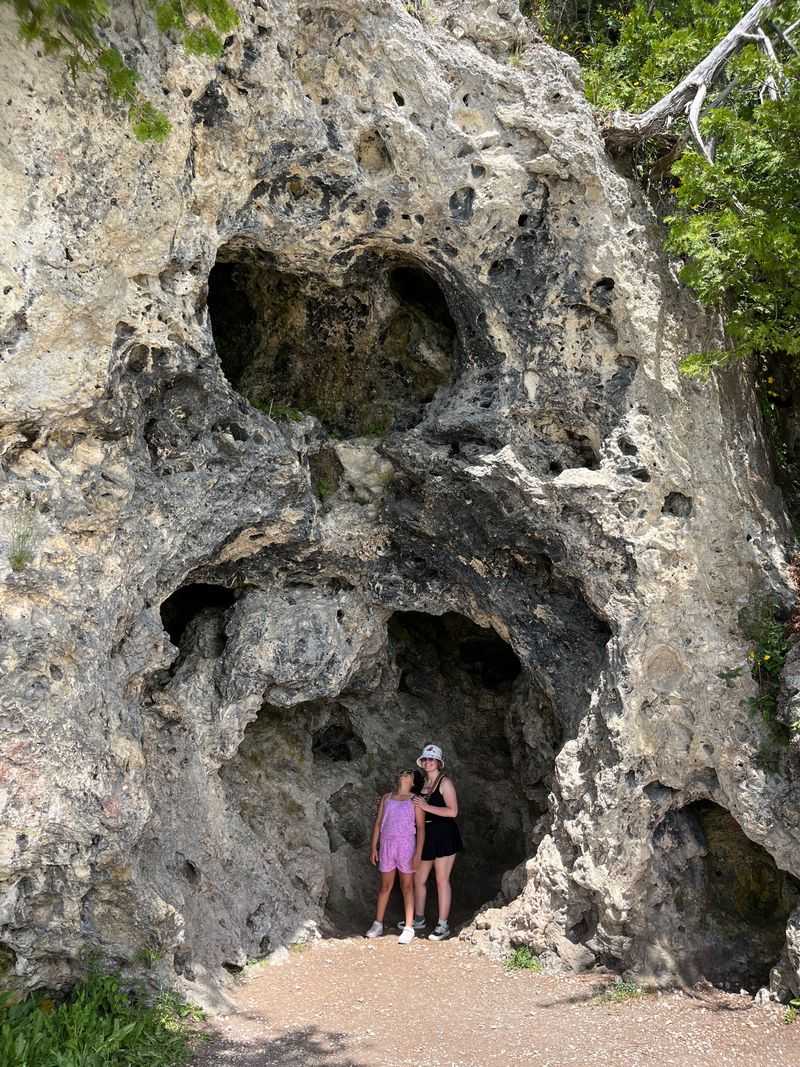
Every island has its share of legends, and Mackinac’s Devil’s Kitchen is no exception.
This shallow limestone cave sits at the base of sheer cliffs, its blackened chamber easy to miss from the carriage road above.
Locals have whispered ghost stories about it for decades, some say it’s haunted, others call it cursed.
Setting the folklore aside, Devil’s Kitchen is geologically fascinating.
The cave was shaped by the same lake-driven erosion that carved the island’s cliffs, and you can see centuries of weathering in every groove.
Though it’s not deep, the wide mouth and sooty interior lend a striking, even eerie, character.
I’ve stopped here on cloudy days when the lake looks silver and the cave feels especially atmospheric.
It’s a perfect reminder that not every beauty spot needs to be grand, sometimes, a little mystery is all the invitation you need.
The surrounding cliffs rise dramatically from the water, offering stunning views of Lake Huron.
Visitors can reach Devil’s Kitchen by bike or carriage, making it an easy addition to any island tour.
The cave’s dark interior contrasts sharply with the bright limestone walls, creating a visual that’s both stark and memorable.
Historians believe the name comes from the cave’s ominous appearance and the stories passed down through generations.
Whether you believe in ghosts or not, the place has an undeniable presence.
6. Sugar Loaf Rock (Mackinac Island)

Few visitors wander inland far enough to see Sugar Loaf Rock, and that’s a shame.
This 75-foot limestone monolith stands alone, a silent witness to millennia of glacial sculpting.
Its shape earns the name, a giant loaf, perched unexpectedly among the maples and oaks.
Native traditions hold Sugar Loaf as a place of spiritual power, and it’s easy to see why.
The light at sunrise paints the stone gold, and wildflowers cluster at its base in summer.
Despite being just a short walk from the road, the air around it feels hushed, almost reverent.
For geology fans, the story is in the layers.
Sugar Loaf’s limestone tells of vanished seas and ancient glaciers, all in one striking formation.
It’s proof that Mackinac Island has more to offer than just waterfront views.
The trail leading to Sugar Loaf is well marked and relatively easy, making it accessible for most visitors.
As you approach, the rock’s sheer size becomes more apparent, towering above the surrounding forest.
Climbing to the top isn’t permitted, but the views from the base are impressive enough.
The rock’s surface is rough and weathered, with grooves and cracks that tell the story of its formation.
Photographers love the way light plays across the limestone, especially during golden hour.
7. Castle Rock (Near St. Ignace)
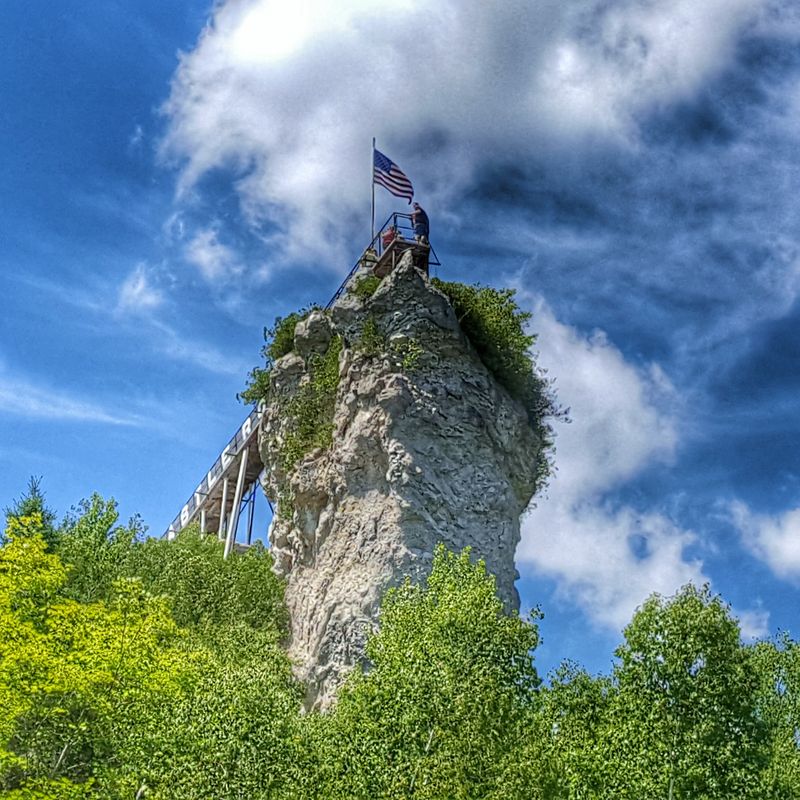
Castle Rock catches your eye long before you reach the base.
Rising nearly 200 feet above the Straits of Mackinac, this limestone stack is one of Michigan’s classic roadside sights.
For a small fee, you can climb to an observation deck and take in a sweeping panorama of forest and water.
What always struck me is how surreal the whole scene feels.
The rock’s sides are scored with grooves from ancient glaciers, and the wind up top rattles your breath.
Even with the trappings of a roadside stop, Castle Rock’s bones are wild and weathered.
While some may see it as a quick detour, geology buffs know it’s a living history lesson.
There’s a legend about Paul Bunyan using the rock as a lookout, but the real story is in the limestone itself, layered, tough, and shaped by ice.
The climb to the top involves more than 170 steps, but the effort is well worth it.
From the observation platform, you can see for miles, with views stretching across the straits and into the surrounding forests.
The rock’s surface is covered in lichen and moss, adding texture and color to the ancient stone.
Interpretive signs along the way explain the geological and cultural history of the area.
Castle Rock remains a beloved landmark, blending natural wonder with local folklore.
8. Spider Cave at Burnt Bluff (Garden Peninsula)
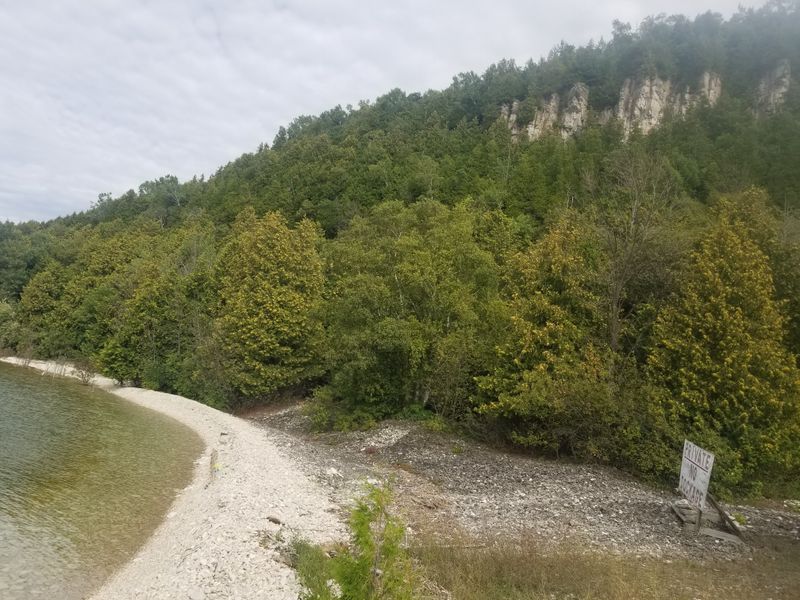
Sometimes geology and history meet in the most unexpected places.
At the base of Burnt Bluff on the Garden Peninsula, Spider Cave remains a rare gem.
This limestone cavity holds ancient pictographs, painted by Native peoples whose stories are fading along with the art.
The cave itself is almost hidden by the bluff’s massive face.
Getting close takes effort, and because it’s a protected site, not everyone can visit.
But knowing it’s there, carved by water, layered with history, adds an extra layer of meaning to the peninsula’s wild landscape.
On cool mornings, sunlight barely reaches the cave’s entrance, highlighting ferns and tangled roots.
Spider Cave stands as both a geological wonder and a quiet tribute to the cultures who called this place home.
The bluff itself towers above the shoreline, its sheer face a testament to the power of erosion.
Visitors who make the journey are rewarded with a sense of stepping back in time.
The pictographs, though faded, are still visible, offering a glimpse into the lives and beliefs of the people who created them.
Archaeologists and historians continue to study the site, hoping to preserve what remains.
The surrounding area is rich with wildlife and natural beauty, making the trip a multifaceted experience.
9. Sandstone Cliffs of the Upper Peninsula (Pictured Rocks National Lakeshore)
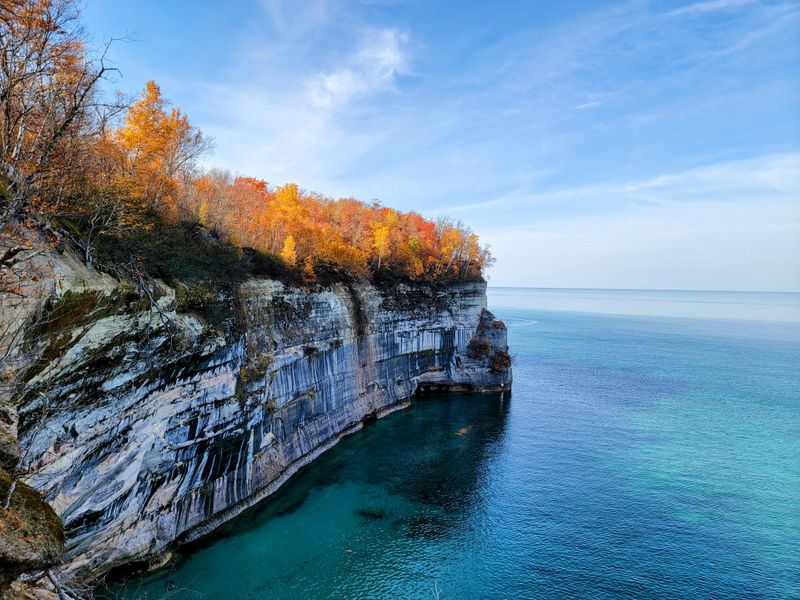
Nothing says Michigan’s wild side quite like the sandstone cliffs along Pictured Rocks National Lakeshore.
These vibrant walls rise up to 200 feet above Lake Superior, their surfaces painted in streaks of red, green, and gold by centuries of mineral-laden water.
The colors are stunning, best seen from a kayak or boat bobbing in the surf below.
Hiking trails snake along the cliff tops, offering glimpses of hidden arches, caves, and wind-shaped formations.
I’ve paddled here in calm water, dwarfed by the towering cliffs overhead, the lake’s blue stretching to the horizon.
Each bend reveals a new mural, the work of geology and time.
Despite the popularity of the park, you can still find quiet moments at sunrise or sunset, when the cliffs glow and the crowds thin.
Pictured Rocks is a reminder that Michigan’s landscape tells its own story, written in stone and water.
The park offers numerous vantage points, from boat tours to scenic overlooks accessible by car.
Kayakers and paddleboarders can get up close, navigating through sea caves and beneath towering arches.
The cliffs change appearance with the light, shifting from warm orange at dawn to cool purple at dusk.
Wildlife is abundant, with bald eagles, peregrine falcons, and black bears frequently spotted in the area.
Dear Reader: This page may contain affiliate links which may earn a commission if you click through and make a purchase. Our independent journalism is not influenced by any advertiser or commercial initiative unless it is clearly marked as sponsored content. As travel products change, please be sure to reconfirm all details and stay up to date with current events to ensure a safe and successful trip.
