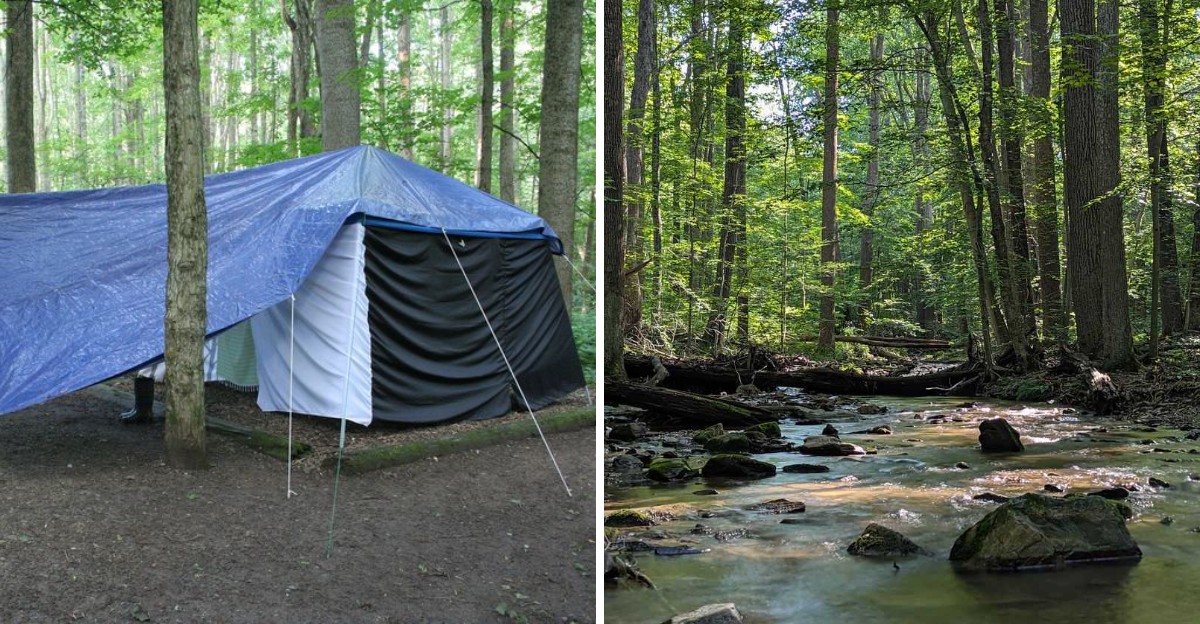
Fall is the perfect season for camping. The summer crowds have thinned, the air is cool and crisp, and the leaves are putting on a show.
This massive Maryland campground is the ideal spot to take it all in. With plenty of space to spread out, you never feel crowded, and there are activities for every age.
You can hike, fish, sit by the fire, or just enjoy the quiet. The grounds are well maintained and offer a range of sites, from tent spots to full hookups.
It is the kind of place where families make traditions and kids run free. A fall weekend here feels like a proper escape.
The kind of trip that reminds you why autumn is the best time to be outside.
Why The Catoctin Foothills Make Fall Camping Worth It
Maryland gets a lot of attention for its coastline, which means the western mountains often stay pleasantly under the radar. That works in a camper’s favor come October.
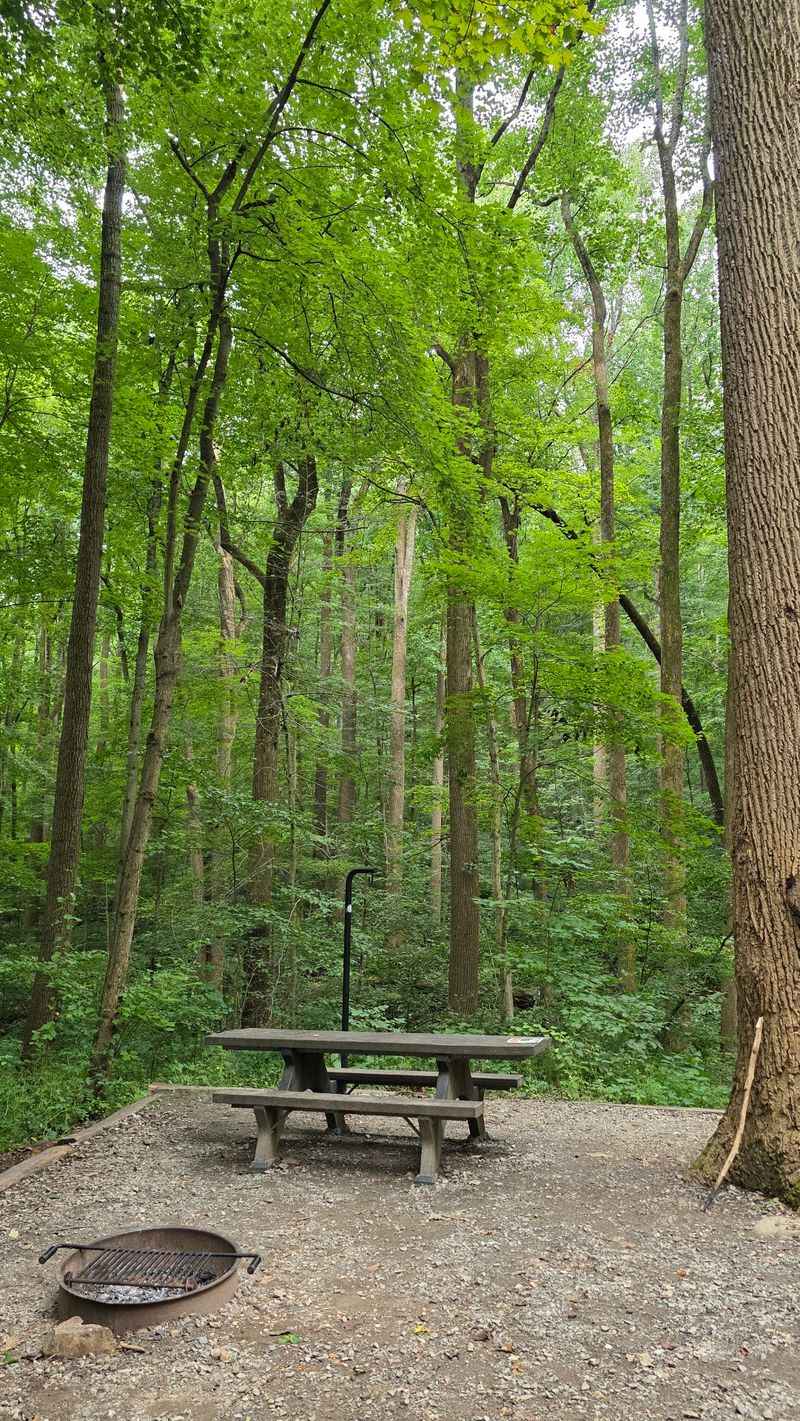
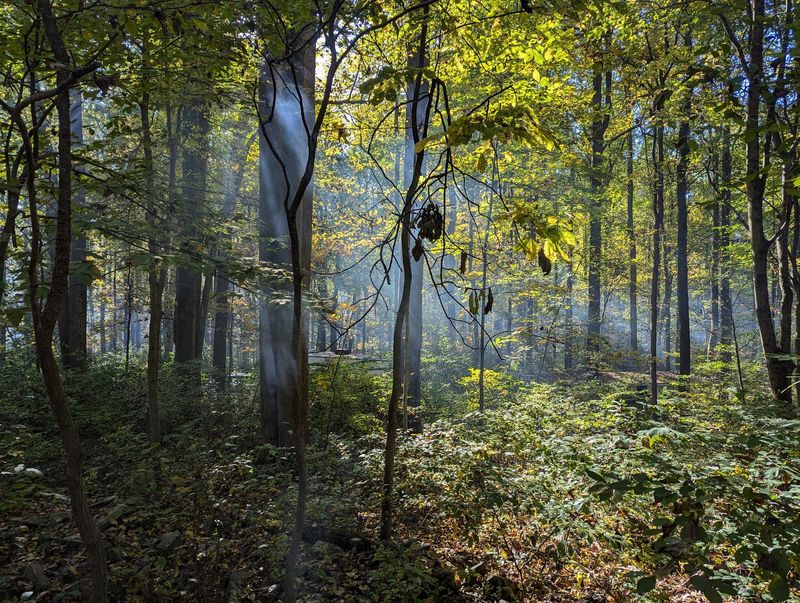
Owens Creek Campground sits inside Catoctin Mountain Park, a National Park Service site spread across the Blue Ridge foothills near Sabillasville. Hardwood forest wraps the entire area, so once the leaves turn, the whole place changes character.
Peak color usually arrives around mid-October, though weather can nudge that earlier or later by a week or two. Reds, oranges, and deep yellows layer across the ridges, and the thinning canopy lets more light reach the forest floor than it does in summer.
Temperatures drop noticeably at this elevation. Days can feel mild and pleasant for hiking, while nights get genuinely cold, which is exactly why the fire ring at each site earns its keep.
There is a quality to the quiet up here that is hard to describe without sounding sentimental. Leaves shuffle.
A creek runs. Somebody two sites over laughs at something.
Traffic noise simply does not exist in this part of the park, and cell service tends to be unreliable, which most visitors treat as a feature rather than a problem.
For families used to weekend trips that involve parking lots and admission lines, the shift feels dramatic in the best way. The mountain does not perform for anyone.
It just sits there being beautiful, and that turns out to be plenty.
Sites Built For Tents, Not Tour Buses
Around 48 to 50 sites make up this campground, and every one of them leans toward simplicity. Nobody is squeezing a luxury coach in here.
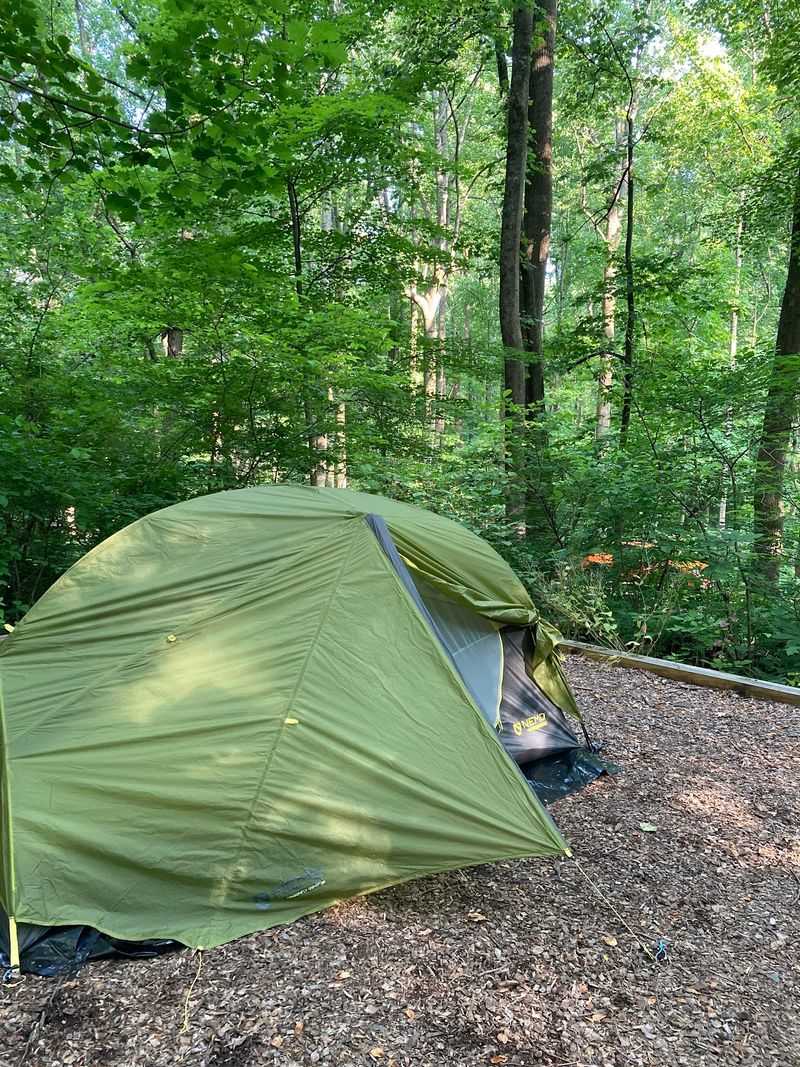
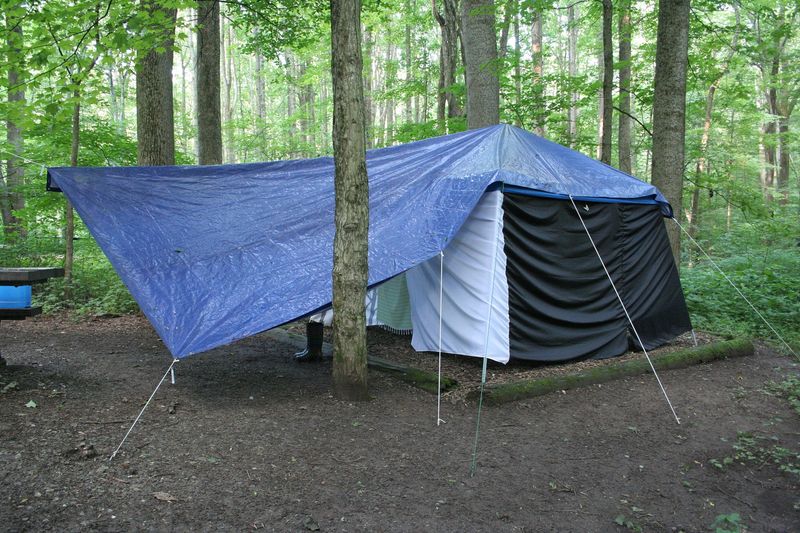
Each spot comes with a designated tent pad, generally at least twelve feet square and topped with soft mulch that campers consistently praise. Sleeping on it beats wrestling with rocky ground, and it drains well after rain.
A picnic table and a sturdy fire ring come standard, along with a post equipped with a hook. That hook works for a lantern, a bag, or holding up a corner of a tarp when the weather turns.
Spacing between sites gets mentioned often by visitors, and for good reason. Trees and distance separate most neighbors, so the campground never develops that shoulder-to-shoulder feeling some places have.
Certain sites accommodate trailers up to twenty-two feet or RVs up to thirty feet, and a handful offer pull-through access. Still, tent campers make up the heart of the place.
There are no electrical, water, or sewer hookups anywhere in the campground. Pack accordingly, charge devices before arrival, and consider it permission to leave the hair dryer at home.
Sites are cozy rather than sprawling, which naturally discourages huge group setups and keeps noise levels low. Families needing more room simply book a second site next door.
Site numbers near the creek, like the low thirties, tend to be the ones repeat campers request first.
Trails That Start Practically At Your Tent Flap
One of the biggest perks here has nothing to do with the campground itself. It is what sits just beyond it.
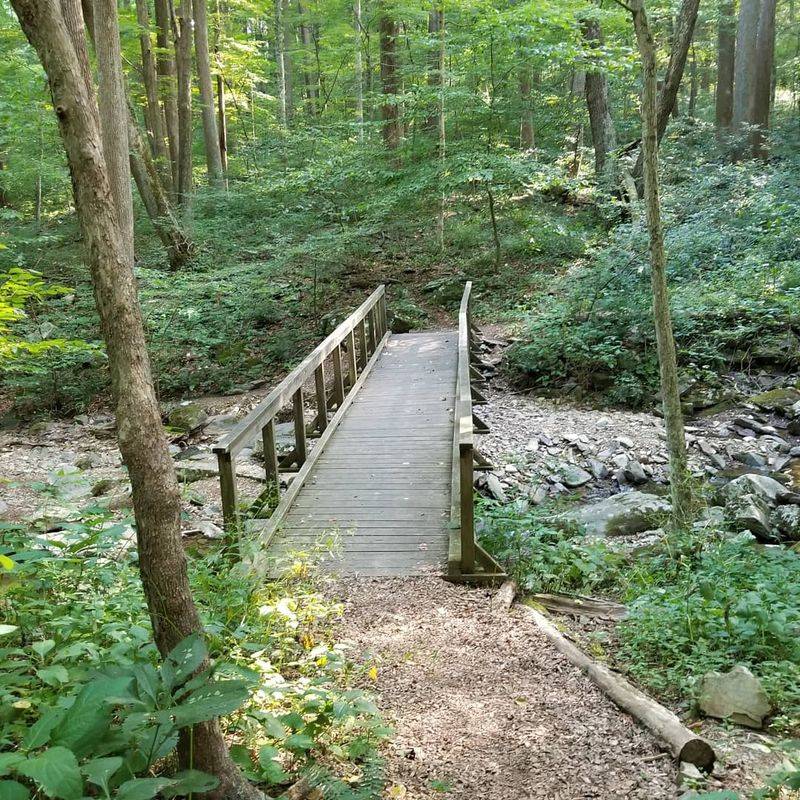
Catoctin Mountain Park holds roughly twenty-five miles of trails, ranging from flat family strolls to genuine ridge climbs. Several connect directly to the campground, so boots go on and the walk begins without anyone starting a car.
The Deerfield Nature Trail makes an easy first choice. At about 1.5 miles, the loop follows Owens Creek and ties into the park’s western trail network, with interpretive themes touching on the natural materials used by Native peoples and early settlers.
Younger hikers do well on the Browns Farm Trail over at the Owens Creek Picnic Area, which features a youth-oriented Track Trail focused on local history and archaeology. It is short, curious, and keeps small legs interested.
Sawmill Trail runs about half a mile to a historic sawmill exhibit, a quick detour with a payoff at the end.
Those wanting a longer day can take on the 4.5-mile Catoctin National Recreational Trail, which links over toward Cunningham Falls State Park.
Autumn hiking here comes with a soundtrack of crunching leaves and a constantly shifting view as the canopy thins. Overlooks open up that summer foliage hides completely.
Bring layers. Ridgetops catch wind that valley campsites never feel, and a warm morning can turn brisk fast once elevation kicks in.
Falling Asleep To The Creek
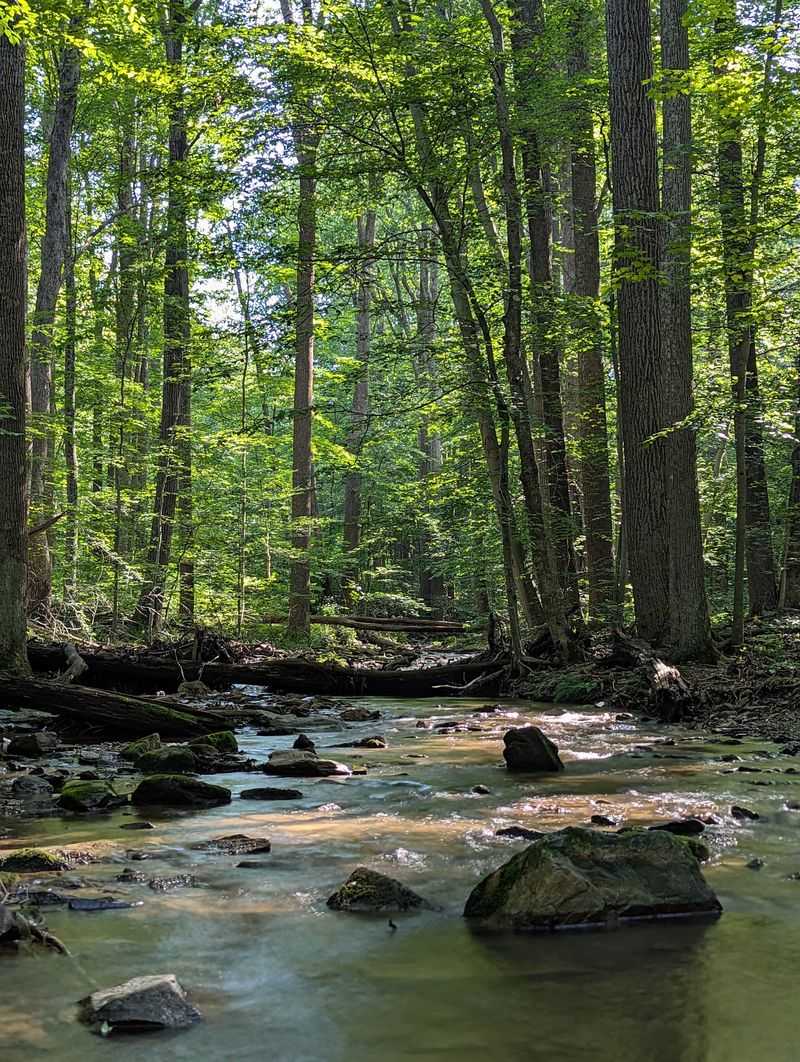
Long-time campers here tend to bring up the same detail when describing their best nights. The water.
Owens Creek runs alongside the campground, and a handful of sites sit close enough that the sound carries straight into a tent after dark. Steady, soft, and completely reliable, it works better than any white noise app.
During daylight, the banks become a low-effort activity all their own. Kids flip rocks looking for tiny aquatic life, toss sticks into the current, and generally stay occupied far longer than anyone predicts.
The creek supports stream fishing, though anglers usually find the more developed fishing opportunities over at nearby Cunningham Falls State Park.
Autumn adds a nice touch to the scene as leaves collect along the edges and drift downstream in slow clusters. Photographers get more out of it than they expect.
Sites near the water, including some in the upper twenties and low thirties, carry a reputation for feeling more secluded. Booking early improves the odds of landing one.
Mornings by the creek come with mist rising off the surface and cold air that makes coffee taste noticeably better. That part is not exaggeration.
Keep an eye on younger children near the banks after rain, when flow increases and rocks turn slick.
Otherwise, this little waterway quietly does more for the atmosphere of the campground than almost anything else on the property.
Clean Bathrooms And Hot Showers In The Middle Of The Woods
Rustic camping gets a reputation for grim facilities. That reputation does not apply here.
The campground provides flush toilets and private hot showers, both located in centrally placed restroom buildings. Campers repeatedly describe them as clean, with daily maintenance noticeably keeping up.
Potable drinking water is available, and utility sinks at the restroom buildings make washing dishes far easier than juggling a basin at the picnic table. Small thing, huge quality-of-life upgrade.
Shower stalls are limited in number, so timing matters. Early morning or mid-afternoon usually beats the post-hike rush.
Trash and recycling dumpsters sit on site and get emptied regularly, which keeps wildlife interest down and the loops looking tidy.
The buildings themselves are older and functional rather than modern, a point some visitors note. Hot water and cleanliness tend to matter more to most people than fresh tile.
Food storage deserves attention regardless. Storing coolers and dry goods in a vehicle overnight is the standard advice, since curious animals will investigate anything left on a table.
For families easing kids into camping, having real toilets and a warm shower removes most of the objections before they start. Nobody is negotiating with a seven-year-old about a pit toilet at midnight.
Navigation tip for arrival day: the address is 15882 Foxville Deerfield Rd, Sabillasville, MD 21780, and occasional road work in the area can affect which entrance is open, so checking conditions ahead pays off.
Evenings Around A Big, Legitimate Campfire
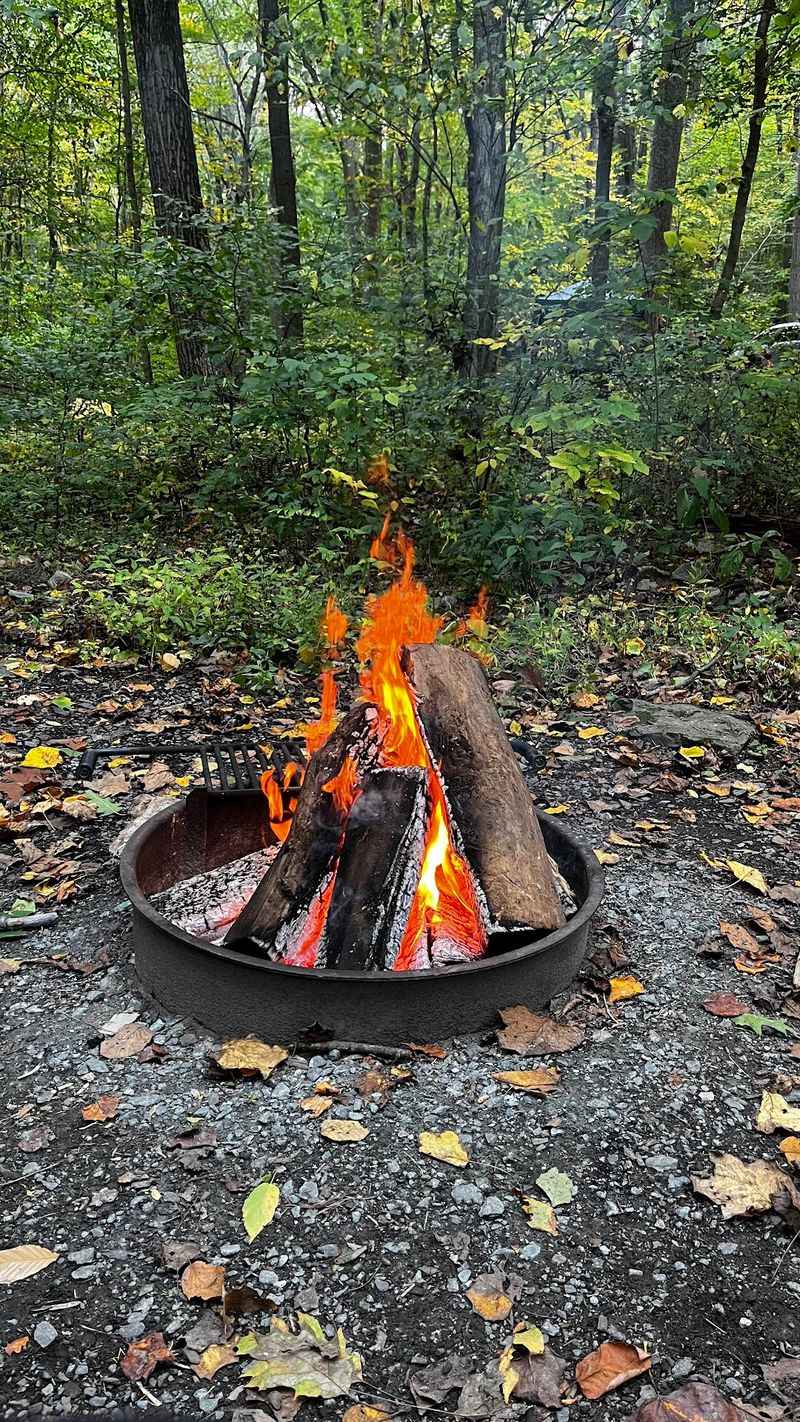
Fire rings here get used properly. Campers note that generous fires are welcome in them, which is not the case everywhere.
Once the sun drops behind the ridge, the temperature follows fast, and the fire stops being decorative. It becomes the entire evening plan.
Firewood can be obtained on site, and the forest floor supplies plenty of dead and downed material for kindling. Starting small and building up works far better than tossing on a big split log and hoping.
Seasoned campers recommend beginning with dry twigs and deadfall over a fire starter, adding progressively larger pieces until a coal bed forms. Skip that step and the night turns into a wrestling match with smoke.
Marshmallows, hot chocolate, foil-wrapped potatoes buried in coals. Kids do not need much convincing.
The tree canopy is dense, but gaps open up in autumn as leaves drop, and clear nights bring impressive stargazing with very little light pollution interfering.
Quiet hours starting at ten keep the whole loop peaceful, so late-evening conversation happens at low volume. Honestly, that suits the setting.
Camp chairs, an extra blanket, and warm socks make the difference between staying out until the fire burns down and retreating to the tent at eight.
Bugs can be present in warmer months, though fall trims that problem considerably. A little repellent still earns its place in the bag.
History Sitting Just Down The Road
Pitch a tent here and you are within easy driving distance of some of the most significant historic ground in the country. That combination is unusual.
The Appalachian National Scenic Trail passes roughly eight miles away, close enough for a day hike on a famous footpath before returning to camp for dinner.
Civil War history stacks up in every direction. Monocacy National Battlefield sits about eighteen miles out, while Gettysburg National Military Park and the Eisenhower National Historic Site are around twenty miles from the campground.
Antietam National Battlefield lies roughly twenty-six miles away, and Harpers Ferry National Historical Park falls within about thirty-seven miles.
The Chesapeake and Ohio Canal National Historical Park, preserving an old transportation corridor along the Potomac, is approximately twenty-eight miles distant.
Nearby towns including Thurmont and Emmitsburg offer supplies, meals, and a break from camp cooking when motivation runs low.
What makes this work so well for families is the pacing. Mornings can be spent on a battlefield or a museum trail, afternoons back among the trees, and nobody spends four hours in the car.
Kids who tune out during classroom history often respond differently standing on actual terrain where events happened. Something about scale does the teaching.
Fall adds another layer, since the surrounding farmland and battlefield fields turn just as colorful as the mountain forest does.
Plan one history day and one woods day. That balance tends to satisfy everybody in the group.
Booking, Packing, And Getting There Without Stress
A little planning separates a smooth trip from a frustrating one, especially in peak leaf season.
Reservations are required, and walk-up sites are not offered. Bookings open up to six months ahead through Recreation.gov, and October weekends disappear quickly.
The campground typically operates from late April through October 31, which makes autumn both the most beautiful window and the final stretch of the season.
Weekends draw more visitors than weekdays, so a Sunday through Tuesday stay often means quieter loops and better site selection.
Pets are welcome but must stay on a leash no longer than six feet and remain attended at all times.
Packing for fall means layering seriously. Cold-rated sleeping bags, warm sleepwear, hats, gloves, and an extra blanket all earn their space, since mountain nights get colder than valley forecasts suggest.
A headlamp per person, refillable water containers, and a compact camp stove round out the basics. Cooking over coals is fun until dinner is two hours late.
Road closures around the park have occasionally caught visitors off guard, with detour signage being thin in spots. Checking the park website before departure and downloading offline maps saves a lot of wandering.
Cell reception is spotty, so print or screenshot the reservation confirmation.
Arrive with enough daylight to set up comfortably. Assembling a tent by flashlight while kids get cold is a rite of passage nobody actually needs to repeat.
