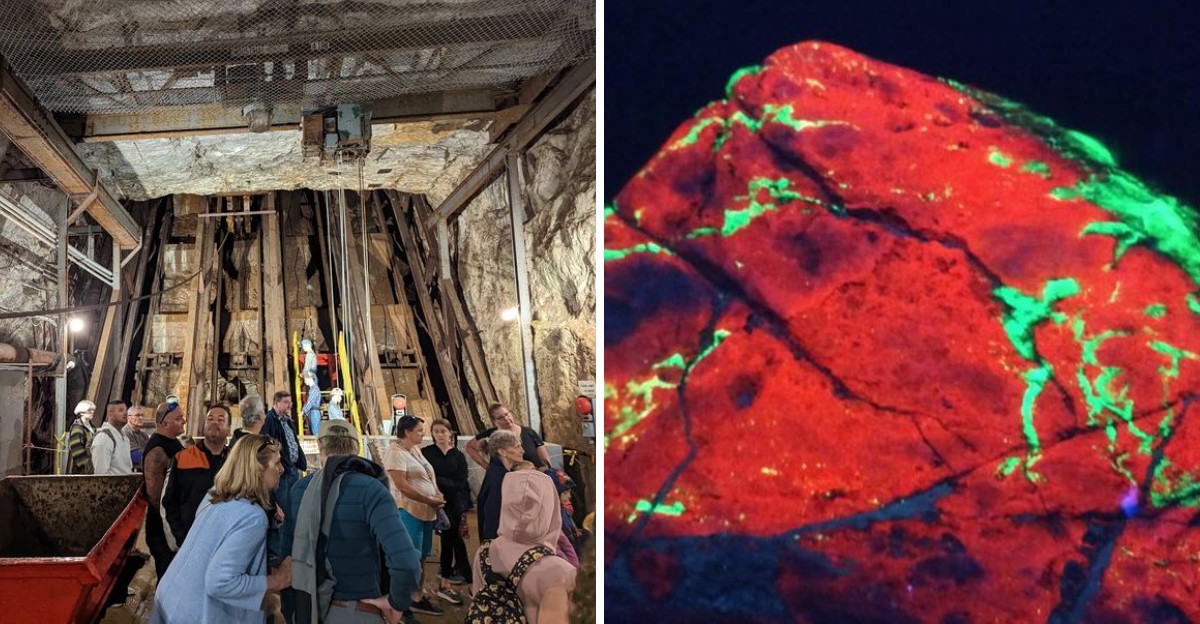
Most museums ask you to look at history behind glass. This one asks you to put on a jacket and head underground.
New Jersey has a museum where the story is not tucked neatly into display cases.
It is built around a real historic mine, with underground tours taking visitors into the workings of a site that once played an important role in the region’s mining history.
Dark tunnels, rugged rock walls, old mining equipment, and colorful minerals make the experience feel less like a traditional museum visit and more like an adventure.
And there is a wonderfully strange twist: some of the most spectacular sights are beneath your feet.
The deeper you go, the more the landscape changes, revealing fluorescent minerals and geological details that would be easy to miss on the surface.
It is history, geology, and a little underground drama rolled into one unforgettable outing. Who says learning can’t be an adventure?
The Last Underground Mine Still Standing In The State
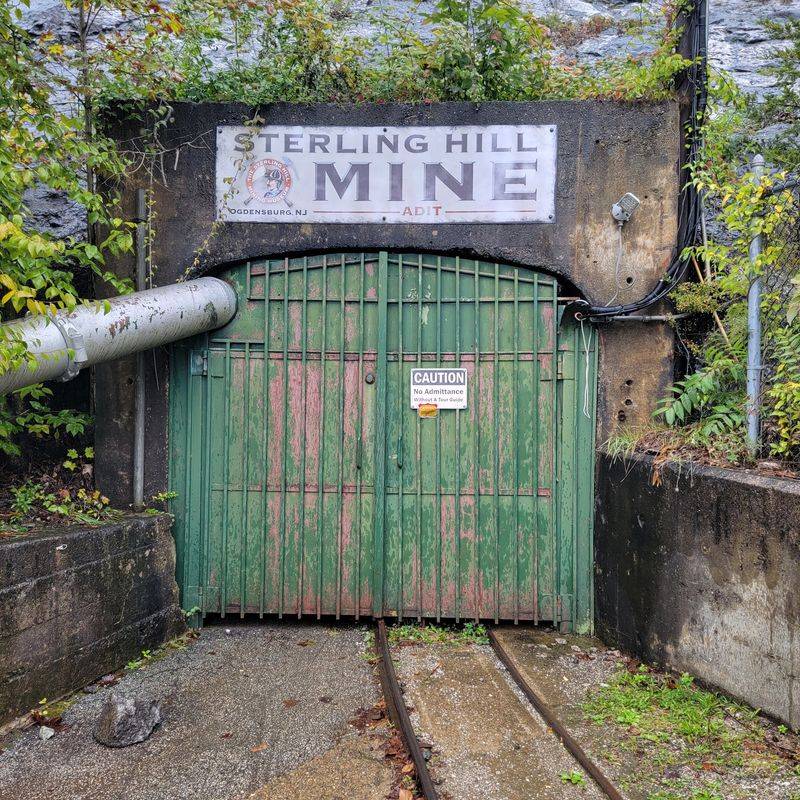
Zinc built this place, and you can feel it everywhere on the property. Sterling Hill was the last working underground mine in New Jersey, and operations stopped here in 1986 after more than a century of serious extraction.
Instead of letting the whole site rot away, two brothers bought it in 1989 and turned it into a non profit educational foundation. By 1990 the doors were open to the public.
What makes that story land is how little was stripped out. The buildings, the rails, the rusting hoppers, the shaft house, all of it stayed in place, which means you are not looking at a reconstruction of a mine.
You are looking at the real one, paused mid breath. It has since been recognized as a National Historic Site, and that recognition feels earned the second you walk the grounds.
Plan for a couple of hours minimum. Between the outdoor equipment, the tunnels, and the exhibit halls, rushing through would be a genuine waste of a very unusual afternoon.
Rainbow Tunnel And Its Wild Color Show
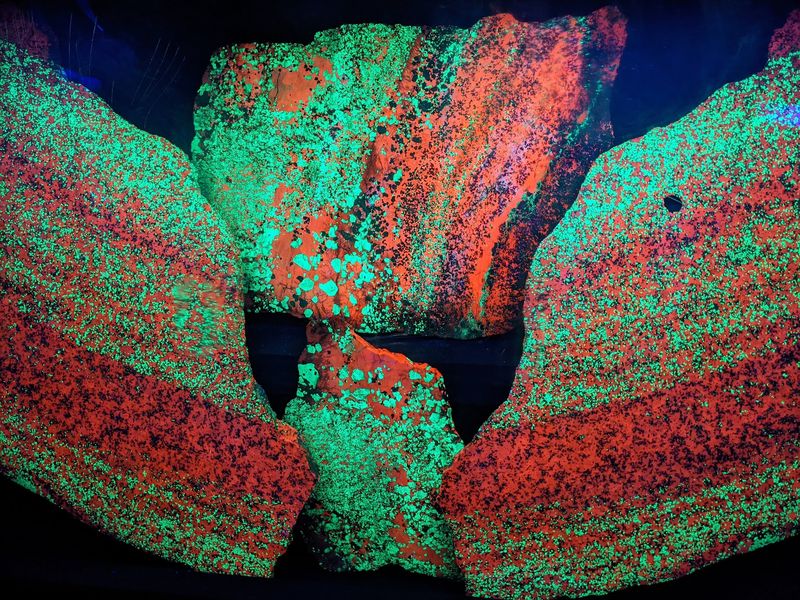
Nothing quite prepares you for the moment the guide kills the lights. One second you are staring at plain gray rock, and the next the entire tunnel erupts in green and red.
That stretch is called the Rainbow Tunnel, and it is the single most talked about part of the whole underground route. The walls there are packed with fluorescent zinc ore, and under shortwave ultraviolet light the willemite blazes green while the calcite burns a deep red.
Photos never capture it properly, which honestly makes seeing it in person even better.
The effect is not a trick of paint or projection. Those minerals genuinely absorb UV light and throw it back as visible color, and the concentration here is unmatched.
Kids tend to gasp. Adults tend to go silent for a beat, then start whispering.
Give your eyes a few seconds to adjust before you try to take it all in, because the detail in the rock face is far richer than the first glance suggests.
A Guided Walk Through A Quarter Mile Of Real Tunnel
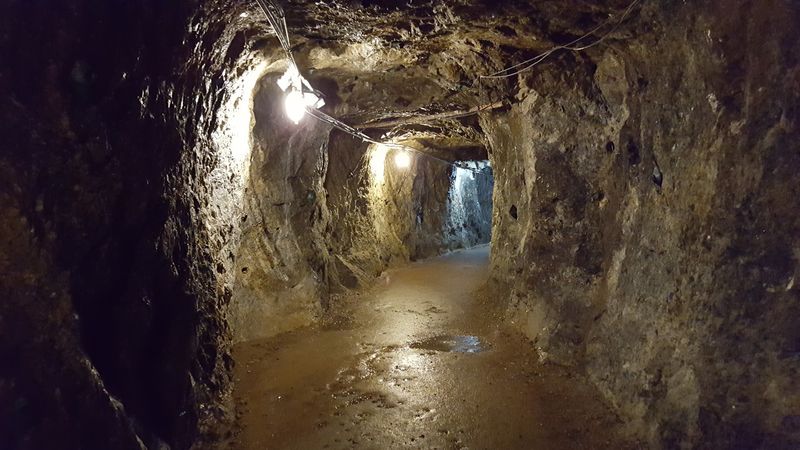
The route underground covers roughly 1,300 feet, about a quarter of a mile, through the upper level of the mine. Good news for anyone worried about scrambling: the path is flat and level, with no climbing involved.
Tours run guided only, so there is no wandering off on your own, and that turns out to be a plus. Guides stop at the lamp room where miners suited up for their shifts, the shaft station, and galleries carved back in the 1830s.
Expect the whole visit to run somewhere between an hour and a half and two and a half hours.
There is also a drilling and blasting demonstration that shows how ore actually came loose from the rock. It is loud, it is memorable, and it explains more in two minutes than a paragraph of text ever could.
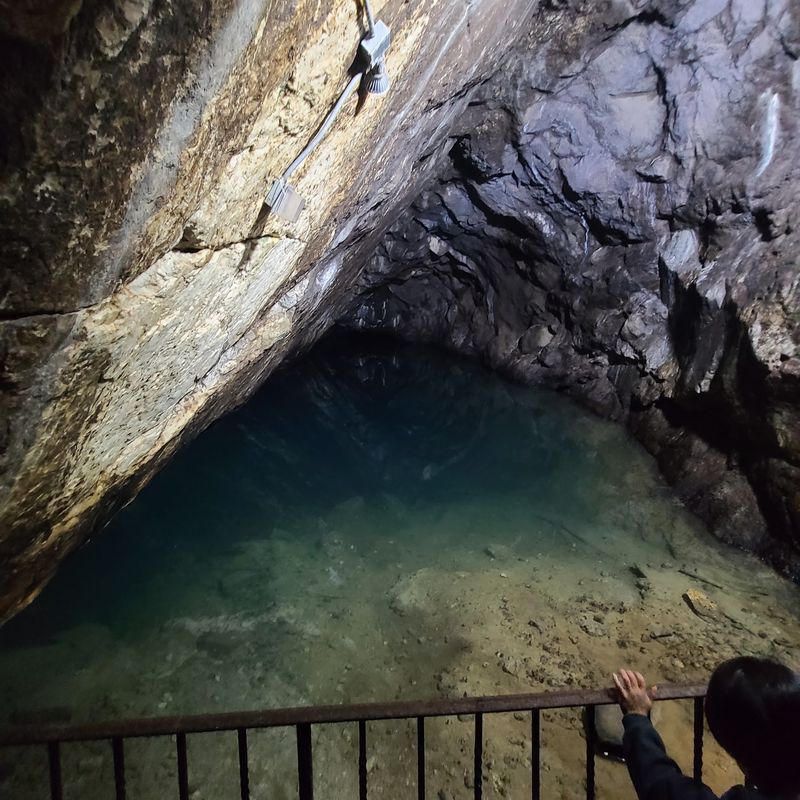
Only the upper level is open, since the lower workings flooded after the pumps shut down. The mine once reached 2,675 feet deep with 35 miles of tunnels.
Pack A Jacket Because It Is Always Sweater Weather Down There
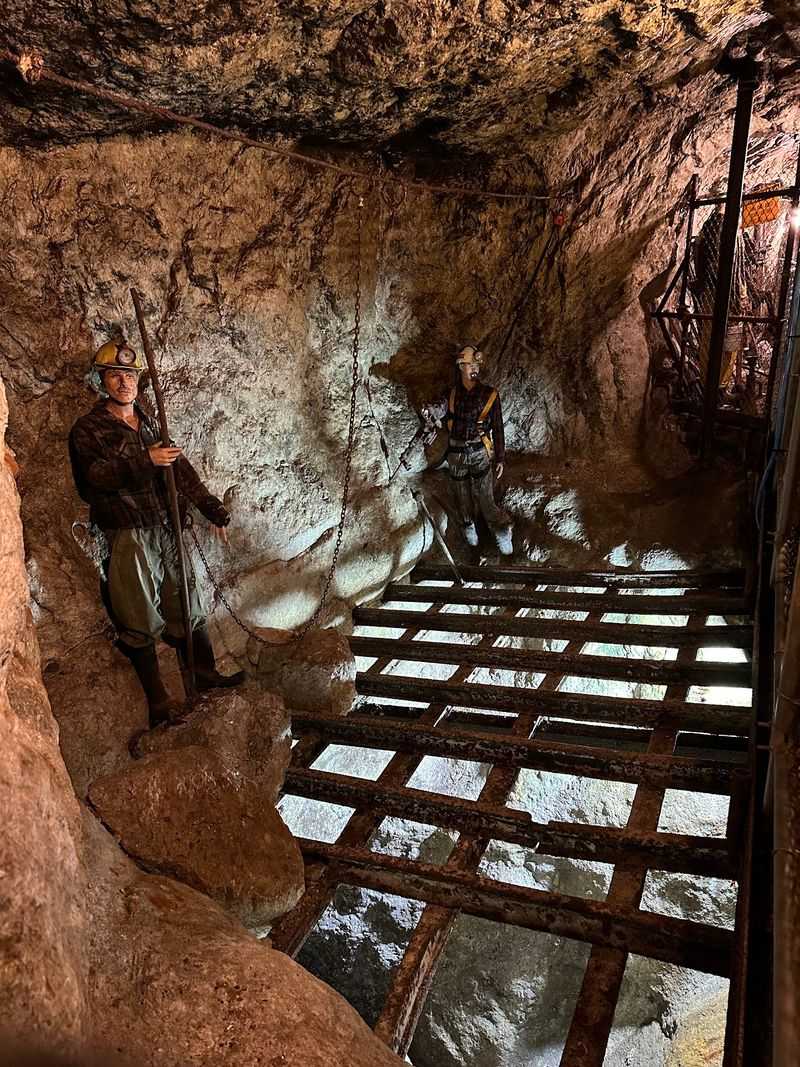
Here is the practical tip that saves the day: bring a layer. The temperature inside the mine holds steady at 56 degrees Fahrenheit all year, summer heat wave or January freeze.
It is also damp. Water seeps through the rock, drips off the ceiling in spots, and the air carries that cool mineral smell you only get underground.
A light jacket or sweatshirt makes the difference between comfortable and shivering.
Closed shoes with decent grip are smart too, since the floor can be slick in places even though it stays level. Nobody needs fancy gear, just sensible choices.
Parents visiting with younger kids should toss an extra hoodie in the bag, because children notice the chill faster than adults do and complain about it louder.
The constant temperature is not a quirk of the ventilation system either. Deep rock simply holds one steady reading year round, which is exactly why miners here worked in the same conditions every single shift, regardless of the season above ground.
Zobel Exhibit Hall And Its Twelve Thousand Treasures
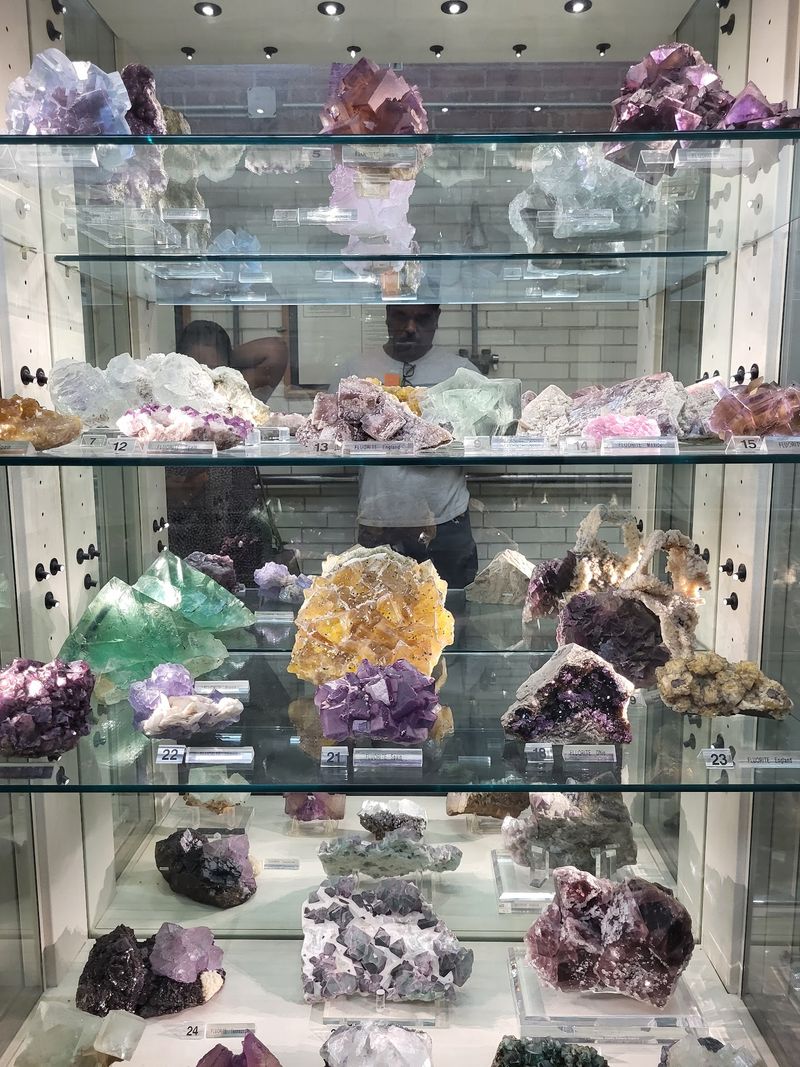
Once upon a time this building was where miners changed clothes before and after their shifts. Today the Zobel Exhibit Hall holds over 12,000 artifacts, and the old change house details are still visible overhead.
Look up and you will spot miners’ baskets and work clothes hoisted high to dry, exactly the way they were left. That small detail hits harder than most polished displays ever could.
Downstairs the cases fill with gems, fossils, giant boulders, and historic machinery.
There is a multi million dollar mineral display featuring specimens gathered from across the globe, plus an interactive Periodic Table of the Elements that turns chemistry class into something you actually want to touch.
A reproduction T Rex skull, Hadrosaur eggs, and a meteorite round things out.
Budget real time for this hall rather than treating it as an afterthought. Plenty of visitors head straight for the tunnels and then realize the surface collection at Sterling Hill Mining Museum could easily hold their attention for another full hour.
Warren Museum Of Fluorescence, Where Even Fabric Glows
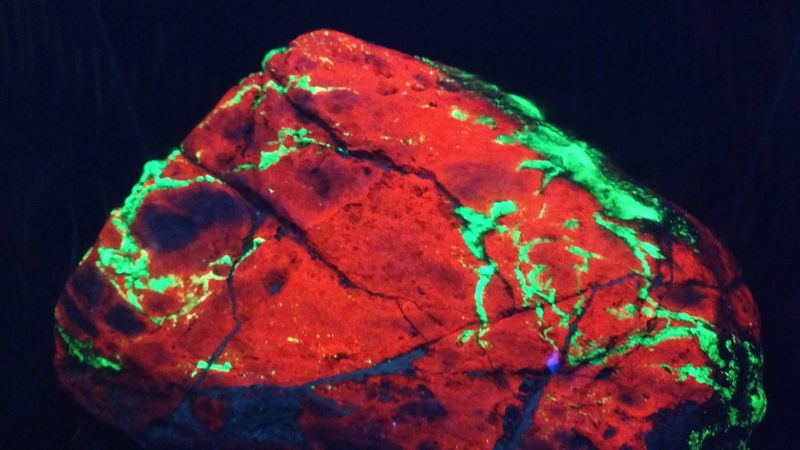
Fluorescent rocks are one thing. Glowing fabric, glass, and concrete are something else entirely.
The Thomas S. Warren Museum of Fluorescence sits inside a 1916 mill building on the property, and it takes the glowing concept far past minerals.
Cases hold crystals, fossils, manufactured glass, textiles, and yes, even concrete samples that light up under UV.
There is also a section devoted to fluorescent rocks and minerals collected in Greenland.
What makes this building worth lingering in is the variety. You start noticing that fluorescence is not some rare mineral quirk but a property showing up in all sorts of everyday materials.
Let your eyes adjust to the darkness before judging any single case, because the colors deepen noticeably after a minute or two.
The surrounding district earned the nickname The Fluorescent Capital of the World for good reason, and this building makes the case better than any sign could. It is quieter than the tunnels, too, which some visitors genuinely appreciate after a busy tour.
Digging Through The Mine Run Dump For Your Own Keepers
Rock hounds, this section is for you. The Mine Run Dump lets adults aged 18 and older pick through piles of excavated rock hunting for fluorescent specimens, crystals, and other finds.
It is genuinely hands on. You crouch, you sort, you knock pieces together, and eventually something catches your eye.
Half the fun is not knowing what you will pull out of the pile.
Younger visitors get their own version through sluicing, sifting sand in a water trough to uncover minerals and fossils. Watching a kid spot their first sparkle in the screen is a small joy worth the trip on its own.
Bring a bucket or bag if you plan to collect seriously, and gloves are not a bad call either since the rock edges can be sharp.
The specimens here come from the same ore body that made this district famous, so what you take home carries real geological weight. Over 340 mineral species have been identified at the site overall.
Geology That Still Puzzles Scientists After Billions Of Years
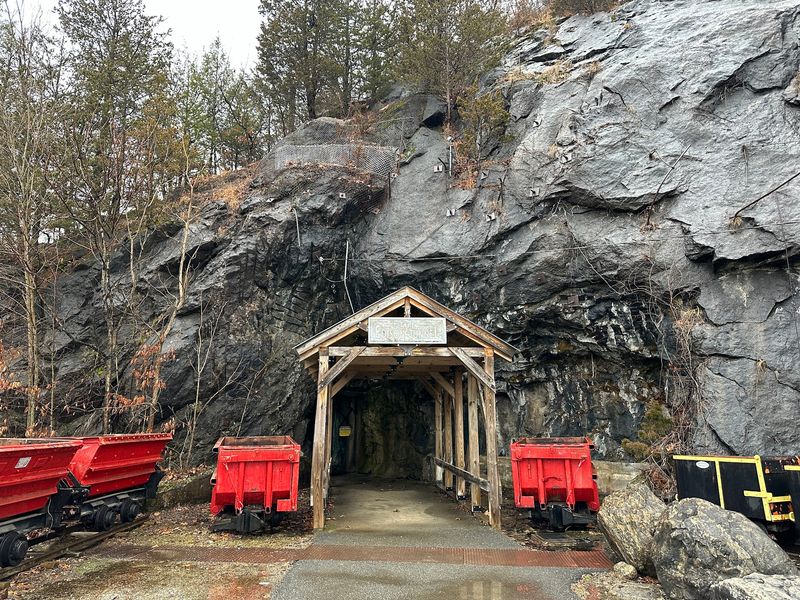
Here is a fact that reframes the whole visit. The zinc deposits here formed roughly 1.3 billion years ago, when hot metal rich fluids poured onto a shallow sea floor and settled into carbonate muds.
Those layers later got buried and cooked, undergoing heavy metamorphosis about 1.15 billion years back. The result is the Franklin Marble, part of the Reading Prong massif, and it is the rock holding the ore bodies.
Geologists still find the chemistry strange.
Zinc veins at Sterling Hill and the nearby Franklin Mine contain oxides and silicates without a sulfur component, which simply does not happen at other zinc mines anywhere on the planet.
That absence remains an open scientific question, which means this hillside is still being studied rather than filed away as solved.
The Franklin and Ogdensburg area ranks among the five most mineralogically complex localities on Earth, with over 365 species found across its mines. Thirty five of those have never turned up anywhere else.
How Mining Here Started With A Very Expensive Mistake
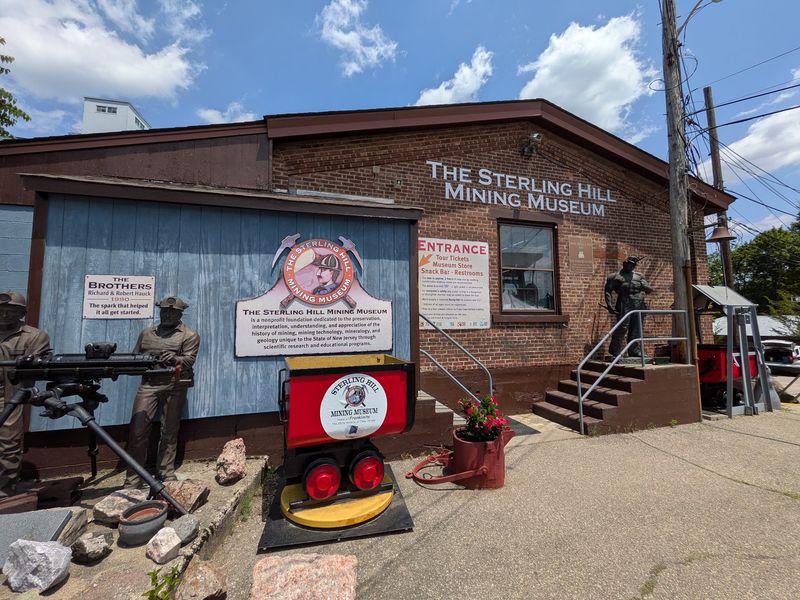
Back in the 1630s, Dutch settlers poked at this hillside convinced they had stumbled onto copper. They were wrong, and it took roughly two centuries for anyone to sort out the confusion.
Not until around 1836 did the dominant mineral get properly identified as zinc. Imagine the collective forehead slap.
Once the chemistry was understood, things moved quickly.
The New Jersey Zinc Company consolidated the scattered mining properties across the area and launched major extraction operations in 1897, kicking off a run that shaped the region’s industry for generations.
Some of the galleries you walk through underground date to the 1830s, the very decade that mystery finally cracked.
That layered timeline is part of what makes the site so compelling. You are moving through tunnels cut by hand tools and tunnels cut by modern machinery on the same visit, and the guides point out where one era gives way to the next.
The Smithsonian Institution in Washington, D.C. thought highly enough of this mine to replicate aspects of it during a building expansion.
Snacks, Souvenirs And Stargazing Before You Head Home
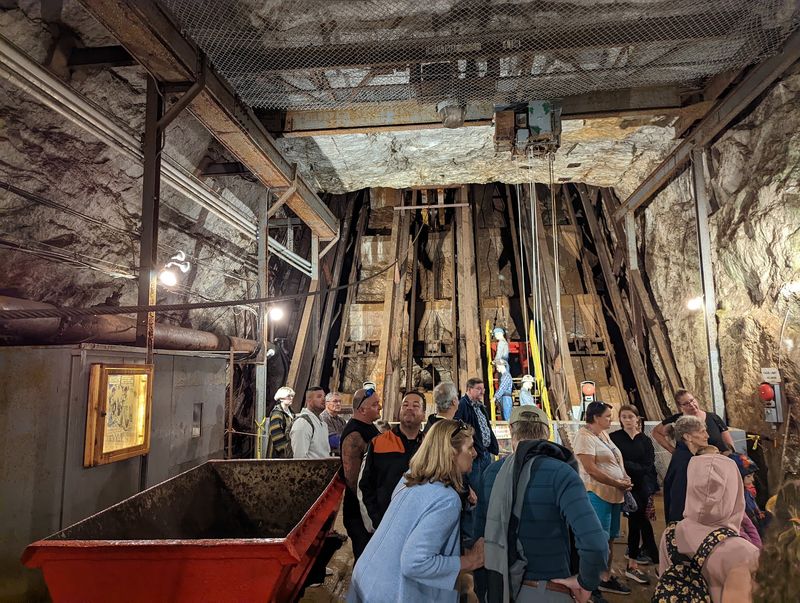
Wrapping up the day is easier than you would think on a site this industrial. The Concession Building, once a working warehouse, now holds a snack bar and a gift shop stocked with mineral specimens and keepsakes.
Grabbing something to eat before or after the tour saves you a drive, and the shop is a solid place to pick up a small fluorescent rock plus a UV light so the glow trick works at home.
The grounds also include the Ellis Astronomical Observatory.
Education runs through everything here, with resources built to match the New Jersey Core Curriculum Content Standards for teachers and students. Earth science, engineering, history, and how we use non renewable resources all get real attention.
Arrive early if you want time to browse before the tour departs, since the walk underground is the anchor of the whole schedule.
You will find Sterling Hill Mining Museum at 30 Plant St, Ogdensburg, NJ 07439, a genuinely one of a kind stop in northern New Jersey.
