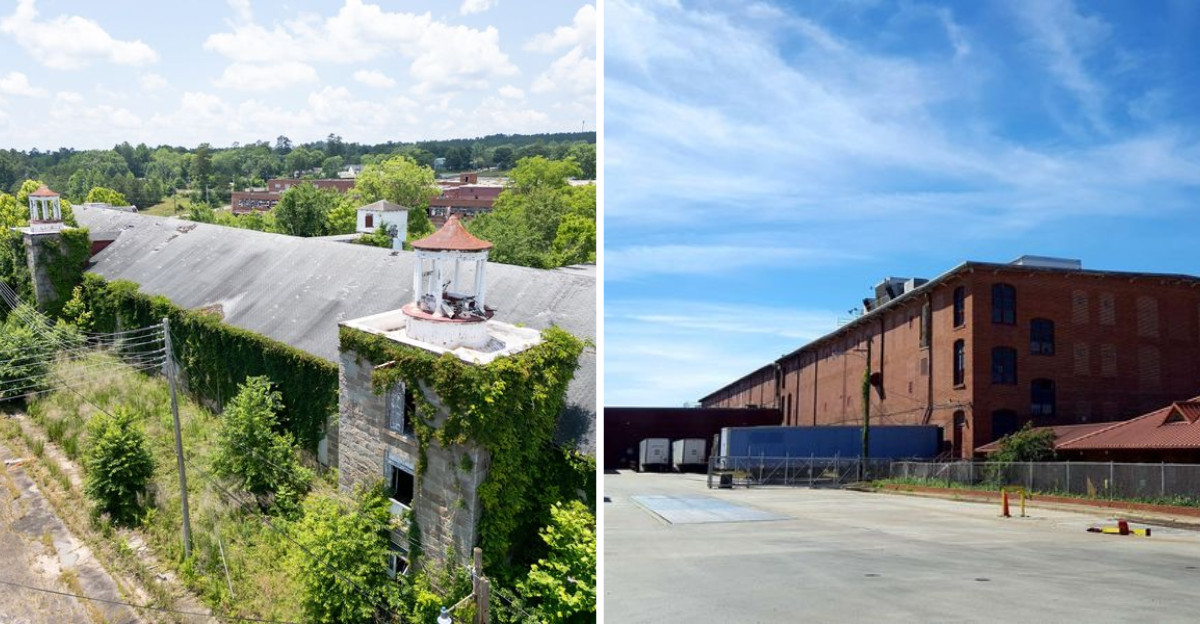
Old blue-gray stone catches the light in a way I did not expect from a quiet South Carolina town, and I had stopped for a quick photo. The afternoon stretched as I walked the same streets mill families walked in the 1840s.
Rows of steep-roofed cottages with wooden trim still stand, still lived in, still holding their shape after nearly two centuries. The canal runs through the middle of it all, calm and lined with trees, where local families bring their grandkids to feed ducks.
What surprised me most was how ordinary it felt, not a museum but a neighborhood that happens to be old. History here is not roped off behind glass.
People still park in front of the same houses and walk the same paths that workers did when the mills were running. The mill itself still stands at the end of the main road, its windows dark but its walls intact, a reminder of what built this place.
The whole district carries a National Historic Landmark designation, and after one visit, the reason is obvious.
The Man Behind the Plan, William Gregg’s Big Idea
Every planned town starts with somebody stubborn enough to imagine it, and here that person was William Gregg. In 1845 he bought a large tract of land near Horse Creek in Aiken County with one goal in mind: build a full-scale textile village in the South.
Gregg had toured New England and studied how mill towns there worked. He came home convinced the same model could take root in South Carolina, with his own adjustments.
What I find interesting is that he did not just want a factory. He wanted houses, a school, churches, and stores, all laid out on purpose rather than growing up by accident.
The name trips people up, and it tripped me up too at first. Graniteville was never a granite products plant.
The mill and several other buildings were built from blue granite quarried right nearby, and that stone gave the town its name.
That choice shaped how the whole place looks today. Stone walls age differently than brick, holding a cool gray-blue tone that shifts with the weather.
Reading about Gregg is one thing. Seeing the actual streets he sketched out, still arranged the way he intended, makes the ambition feel much more real.
Graniteville Mill and the Sound of an Industry Starting
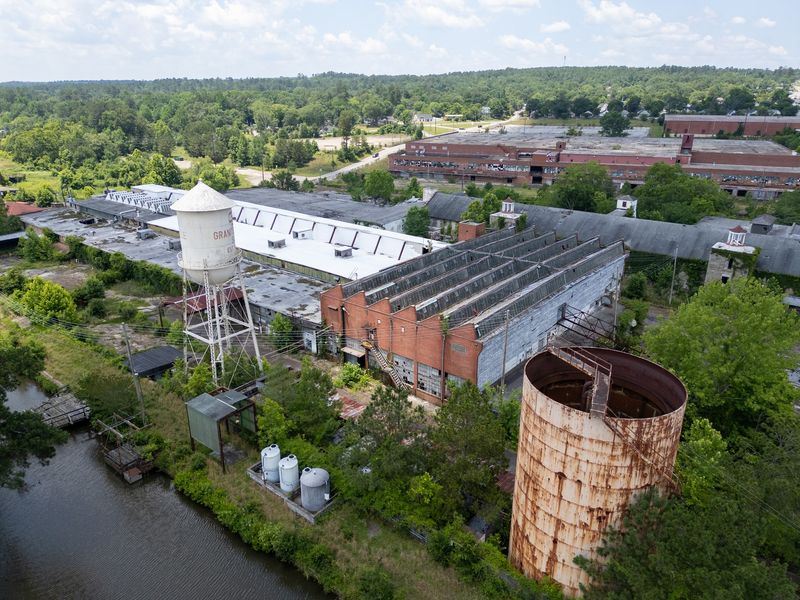
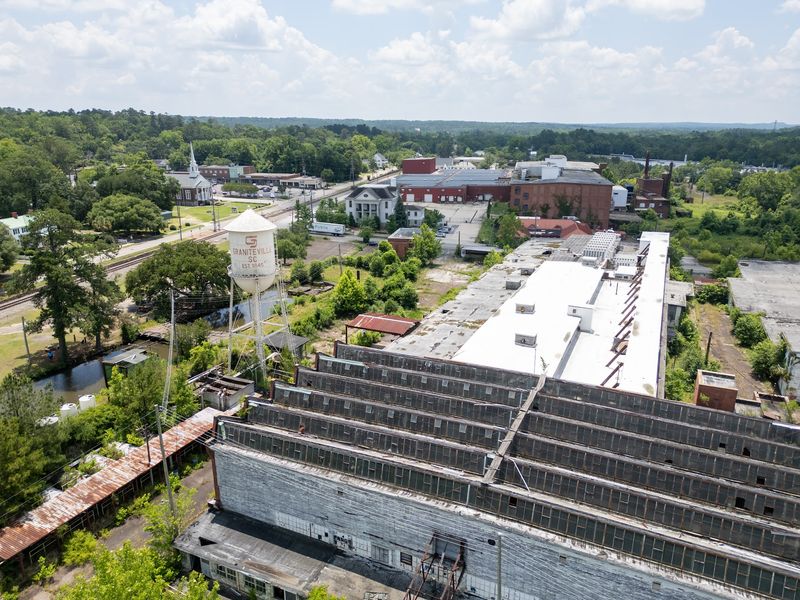
Construction on the mill and the town around it began in 1846, and by 1849 the machinery was running. That made Graniteville one of the very first large-scale textile company towns in the Southern United States, which is a bigger deal than the quiet streets let on.
The original mill building rose two and a half stories, built from that locally quarried granite. Its walls were thick, its windows tall and regular.
Standing nearby, what struck me was the scale. This was not a small workshop tucked behind a house, it was an industrial anchor that set the rhythm of daily life for entire families.
The mill also survived the Civil War, continuing on when plenty of Southern industry did not. Longevity became its signature trait.
In fact the operation ran for close to 160 years, an astonishing stretch for any single factory. That run ended in 2006, after a train derailment and chlorine spill led to the closure of Avondale Mills, which then owned the Graniteville assets.
Knowing that ending gave my visit a different weight. The stone is still here, the story just stopped mid-sentence, and the town carries both parts at once.
Rows of Carpenter Gothic Cottages Along Gregg Street
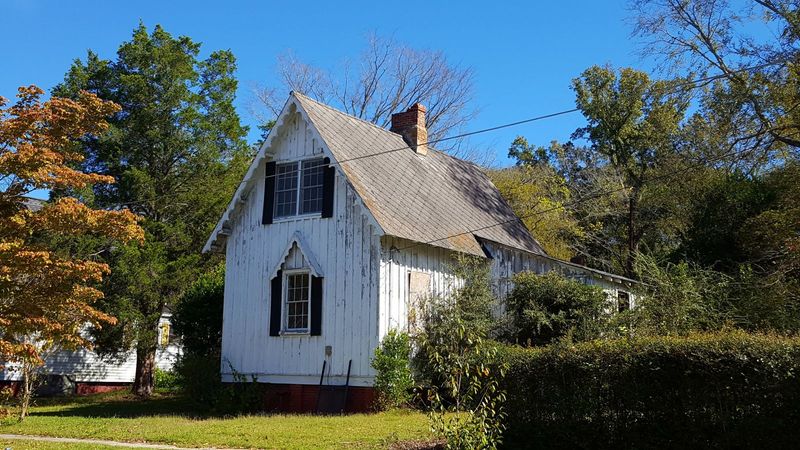
Honestly, the houses are the reason to come. Gregg oversaw the building of close to 100 Carpenter Gothic wood-frame homes for mill workers, and twenty-six of them still stand in good condition, most with exteriors almost unchanged.
Gregg Street is where they line up best. Steep gables, pointed trim, one-and-a-half stories, set back just enough to feel like a neighborhood rather than a row of barracks.
Carpenter Gothic is a style you usually see on country churches, so finding it on workers’ housing feels unusual and a little charming. Somebody clearly cared how these looked.
Families rented their homes from the company, which was standard practice in mill villages of the era. Ownership shifted later, with the houses sold to private buyers through the 1950s and 1960s.
They also picked up a nickname along the way. Because of a light blue wash once applied to them, people came to call them the Blue Row Homes.
I walked slowly here, partly to look at the woodwork and partly because these are still private residences. Admiring from the sidewalk is the respectful way to do it, and the view from there is plenty good.
Blue Granite Up Close, and Why It Matters
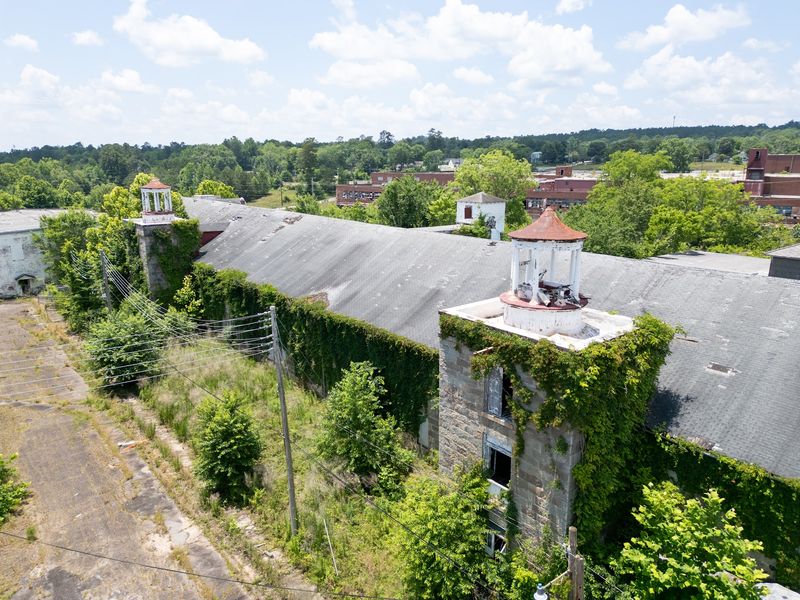
Get close to the stonework and the whole town makes more sense. The blue granite came from local quarries, meaning the buildings were literally made from the ground they sit on.
Run your eyes along the blocks and you can pick out tool marks, slight color shifts, and mortar lines that have weathered at different rates. It looks handmade because it was.
Granite also explains why so much of Graniteville is still upright. Stone does not warp, rot, or burn the way timber does, and that durability bought the district extra decades.
There is a practical lesson in there about building with what is nearby. Hauling materials long distances in the 1840s was expensive and slow, so using the local quarry was both smart and cheap.
The color is the part photographs struggle with. On bright days the walls read pale gray, and under cloud cover they turn genuinely blue, which is when I liked them most.
If you visit, try morning and late afternoon if your schedule allows. The stone behaves differently in each light, and noticing that small shift turned a quick look into something I actually remember.
St. John’s Methodist Church and the Village’s Quiet Center
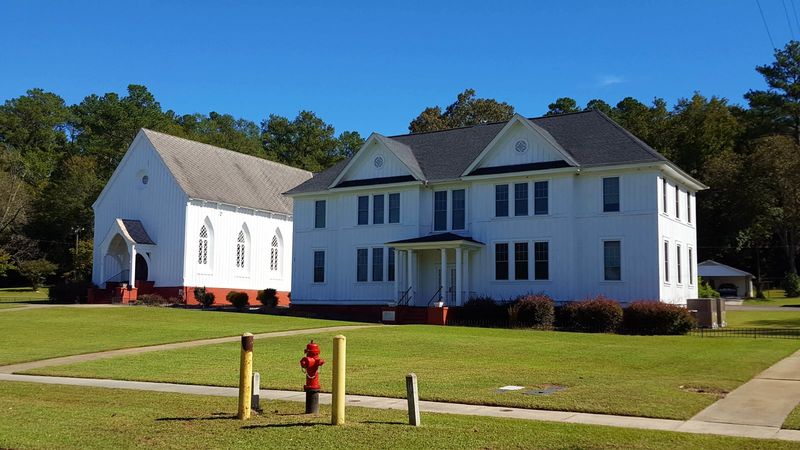
Churches tend to be the buildings a town keeps looking after, and that holds true here. St. John’s Methodist Church was completed in 1849, right as the mill hit full production.
Built in the Early Gothic Revival style, it carries the pointed arches and steep roofline that go with that tradition. Next to the cottages, the family resemblance in the woodwork is easy to spot.
Gregg’s plan always included a spiritual center alongside the school and housing. Work, worship, and learning were meant to sit within the same few blocks.
What I noticed most was how the church grounds slow everything down. Traffic is light, the trees are old, and sound carries differently under them.
It is worth pausing outside for a few minutes even if you are not religious. The building anchors the district visually, giving your eye something vertical among all the low cottages.
Photographing from the street works well, especially with the roofline against open sky. Keep in mind it remains an active place of worship, so timing your visit outside service hours is simply good manners.
Small towns reveal themselves through buildings like this one, and Graniteville is no exception.
The Canal, the Ducks, and Everyday Life Today

Not everything here is about 1845. The canal running through Graniteville is easily the most relaxed spot in the district, and locals use it exactly the way you would hope.
Families bring grandkids to feed the ducks and eat lunch by the water. It is an ordinary, pleasant scene that happens to sit inside a National Historic Landmark district.
Water was the whole point originally. Mills needed reliable power, and channeling Horse Creek made the factory possible in the first place.
So the canal is both infrastructure and park, which I find a satisfying combination. Engineering that once drove looms now just looks pretty on a Saturday.
A word of practical warning from what visitors report: some of the roads down this way are rough. If you are driving something low to the ground, take it slowly and expect a bumpy stretch.
Bring water, wear real shoes, and plan on walking rather than driving between the highlights. Distances are short and sidewalks come and go.
Sitting by the canal for a while was my favorite part of the day, and it cost me nothing but time.
Landmark Status Earned in 1978
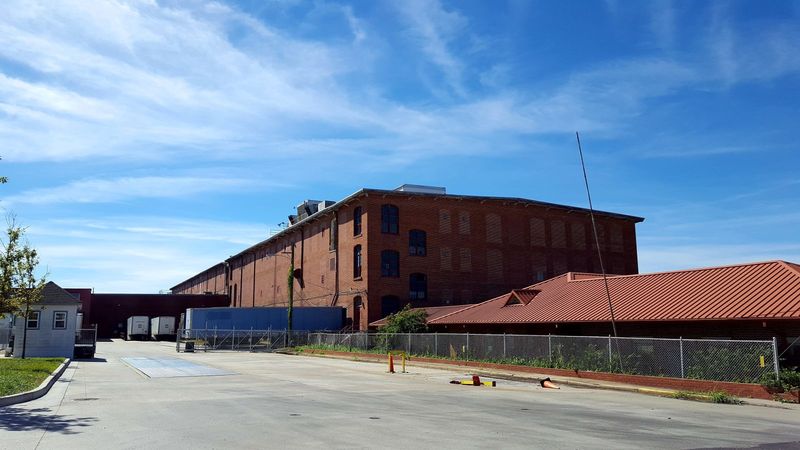
Plenty of old mill villages have vanished into parking lots, which makes what happened in 1978 worth celebrating. Graniteville was designated a National Historic Landmark District that year.
Recognition came because the place kept its integrity. The mill, the houses, the school, and the church all survived as a readable group rather than scattered leftovers.
Gregg’s model also had ripple effects beyond Aiken County. The early success of the Graniteville Manufacturing Company encouraged similar mills across the region, helping set the South on its long path toward textile prominence.
His labor approach was part of that story too, drawing on a white workforce in a region whose economy leaned heavily on enslaved labor. Historians point to it as a turning point in Southern industrial development.
Landmark status does not freeze a town, though. Many buildings are private homes, and preservation happens house by house.
That reality made me appreciate the intact rows even more. Every unaltered porch represents somebody’s choice to keep it that way.
If you care about how American industry actually looked at ground level, this district delivers more than a museum could. It is the real layout, still standing where it was drawn.
Planning a Slow Afternoon in the District
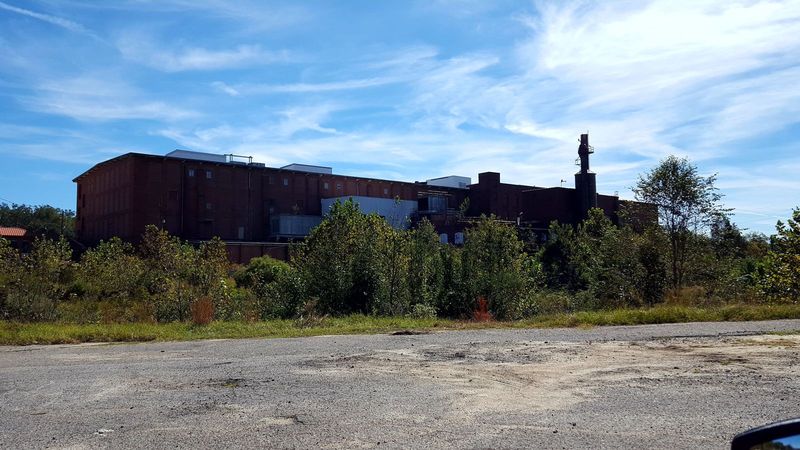
Two hours is enough, but three is better. Graniteville rewards an unhurried pace, and rushing it turns a layered place into a handful of snapshots.
My route was simple. Start near the mill site for scale, walk Gregg Street for the cottages, then finish beside the canal when your legs want a break.
Weekday mornings felt calmest, with less traffic and better light on the stone. Cooler months make the walking easier, since summer humidity in this part of South Carolina is no joke.
Pack sunscreen and a hat, since shade is patchy along some blocks. A refillable water bottle helps more than you would guess.
Remember that people live here. Photograph from public streets, skip the driveways, and keep voices down in residential rows.
Aiken sits close enough for a meal afterward if you want restaurants and a bigger downtown. Combining the two makes a genuinely full day trip.
What sticks with me is how quietly significant this town is. No gift shop, no ticket booth, just a village built with a plan in the 1840s that somehow still shows its bones.
Address: 125 Marshall St, Graniteville, SC 29829
