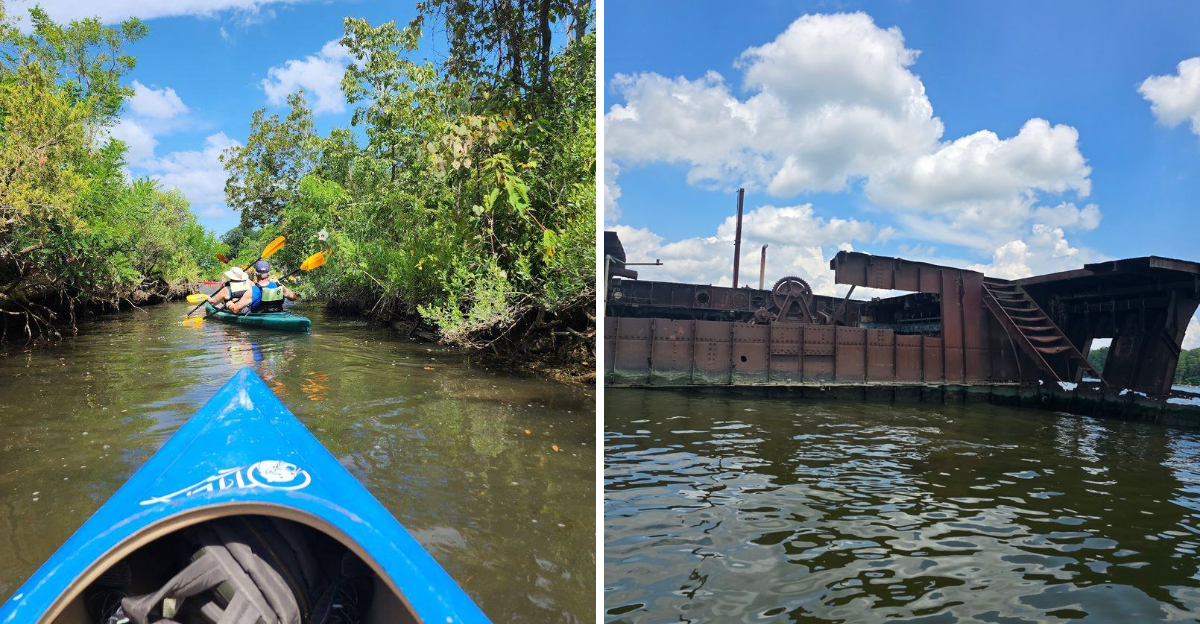
Maryland has ordinary kayak routes, and then it has one where the scenery includes the skeletal remains of more than 100 World War I-era wooden steamships.
The wrecks form the famous Ghost Fleet, part of a national marine sanctuary containing 141 known shipwrecks and more than three centuries of maritime history.
Partially submerged hulls have slowly become habitat for fish, ospreys, herons, bald eagles, and even beavers, making the whole place equal parts history lesson and wildlife outing.
The Maryland park provides water access for paddlers, and the Ghost Fleet remains the attraction that turns an otherwise peaceful stretch of river into something wonderfully strange.
Few day trips let you look across the water and realize you are staring at ships that have been sitting there for roughly a century.
The Ghost Fleet That Never Went to War
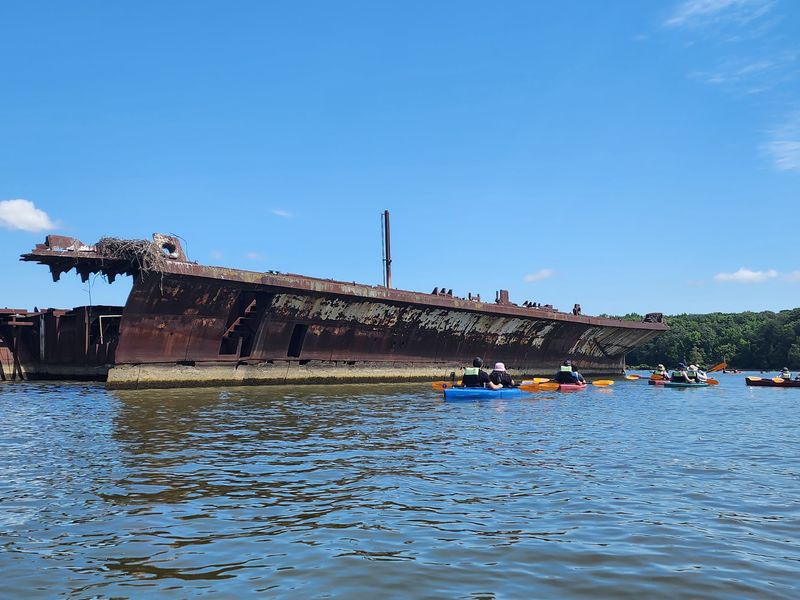
Over a hundred wooden steamships rest in these shallows, and almost none of them ever did the job they were built for. Congress rushed them into existence between 1917 and 1919 as part of the U.S.
Emergency Fleet, a desperate answer to German U-boat attacks that were sinking cargo vessels faster than they could be replaced.
Speed mattered more than quality. Shipyards across the country hammered together wooden hulls with green timber and inexperienced crews, and many of the finished vessels leaked, broke down, or simply proved useless.
Then the war ended before most of them ever carried a load.
What followed was almost comically anticlimactic. The Western Marine and Salvage Company bought the hulls for their metal, hauled them up the Potomac, and stripped out engines, boilers, and propellers.
The gutted wooden shells were towed into Mallows Bay to be burned and beached. On November 7, 1925, thirty-one ships were torched in a single day, still the largest deliberate destruction of ships at one time in American history.
Salvage work eventually collapsed along with the economy during the Great Depression, and scrap metal lost its value. Nobody came back to finish the job.
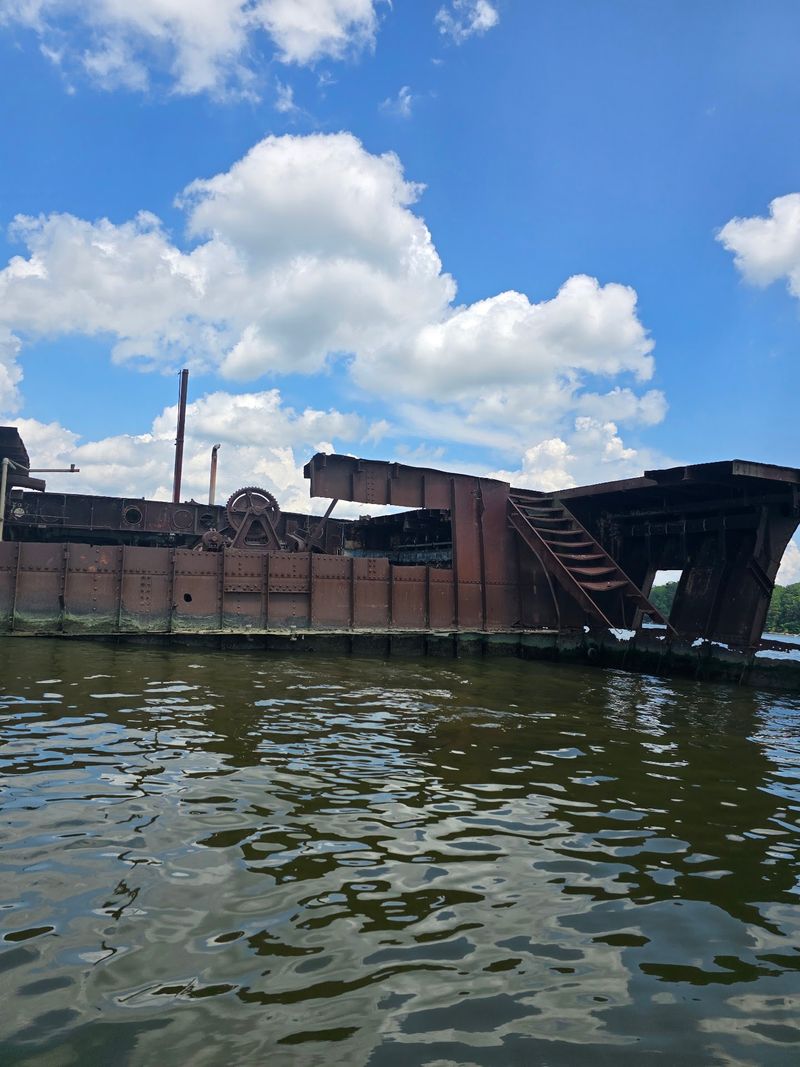
Paddling among them now, the scale sinks in slowly. From water level, a hull looks like a low wooden fence curving through the shallows, until the shape resolves into a bow, a stern, and the outline of a ship that measured well over two hundred feet.
Why Low Tide Changes Everything
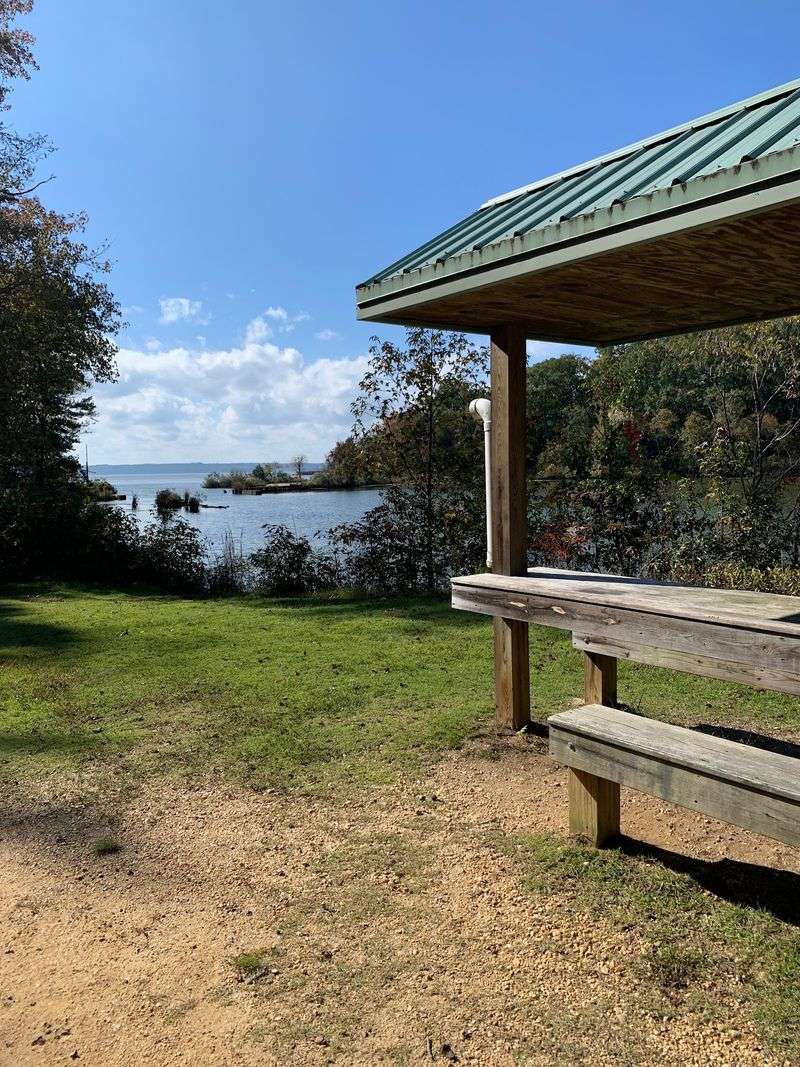
Timing turns this trip from pleasant to unforgettable. At low tide, the wrecks lift out of the water and show off their skeletons, rows of wooden ribs and iron spikes standing proud above the surface like the bones of some enormous fish.
At high tide, much of that vanishes. The hulls sit just under the surface, invisible until a paddle blade clunks against timber.
Check a tide chart for the Potomac before leaving home. Aiming to launch an hour or two before low tide gives the best window, and it also makes navigating far safer since submerged wood and rusted metal can scrape or puncture a boat.
Hard-shell kayaks and canoes handle the environment best. Inflatable kayaks and stand-up paddleboards are discouraged here for exactly that reason, and a properly worn life jacket is always the right call.
May through September brings the friendliest conditions, with warm water, mild currents, and long daylight. Mornings tend to be glassy and still, which makes photographing the reflections a lot easier.
Wind is the main variable worth watching. The bay itself stays fairly protected, but the open Potomac just beyond can kick up chop that catches paddlers off guard on the return leg.
Bring more water than seems necessary, plus sunscreen and a hat, because shade is scarce out on the flats. Shoes that can get muddy make the launch far less awkward.
Launching From the Park and Getting Your Bearings
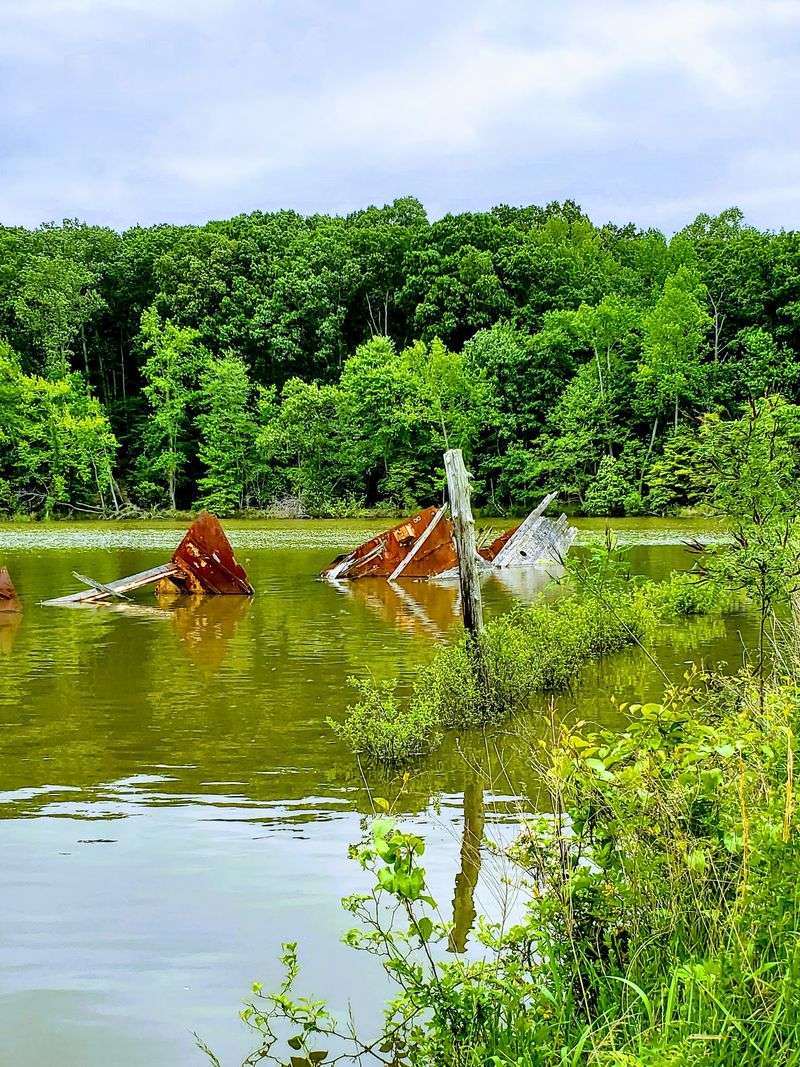
Everything starts at Mallows Bay Park, a modest county park with a surprisingly capable setup. A concrete boat ramp handles motorized craft, while a separate soft launch gives kayakers and canoeists an easy slope down to the water without fighting anyone for space.
Parking is generous by paddling-access standards, and portable toilets are on site.
The park opens daily at 5:30 a.m. and closes at dusk, which rewards anyone willing to arrive early. Sunrise light on the wrecks is genuinely worth the alarm clock.
Groups of ten or more paddlers need to register in advance so the ramp does not turn into a traffic jam. That rule exists for good reason, since weekend mornings in summer can get busy with clubs and tour groups arriving together.
Once on the water, orientation is simple. Head left and hug the shoreline, and the first hulls appear within a few hundred yards, arranged in loose clusters that gradually reveal themselves as the shallows widen.
A rough loop through the main concentration of wrecks takes roughly two to three hours at a relaxed pace, with plenty of stopping to stare.
Cell service can be spotty out here, so downloading a map beforehand is smart. Telling someone the planned return time is smarter still.
Picnic tables near the parking area make a decent finish line for lunch afterward.
Ships That Turned Into Islands
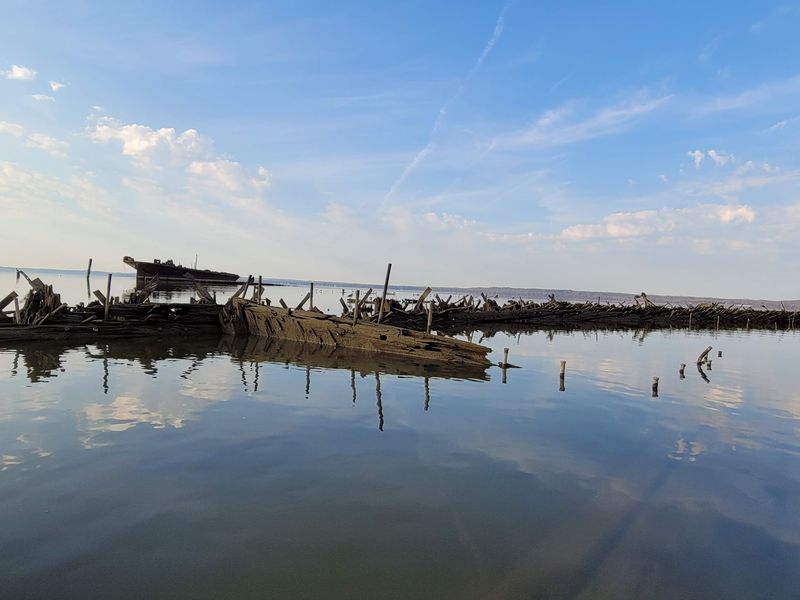
Nature did something unexpected with all that abandoned lumber. Silt and sediment settled inside the open hulls, seeds blew in or arrived by bird, and over the decades entire miniature ecosystems took root inside ships that once measured hundreds of feet long.
The result is a landscape scientists sometimes call ship islands.
Floating past one is oddly moving. A perfect ship outline sits in the water, filled edge to edge with cattails, marsh grasses, shrubs, and young trees, the shape of human industry completely colonized by green.
Underwater grass beds spread out around the hulls too, and those beds matter enormously for the health of the Potomac. They filter water, trap sediment, produce oxygen, and shelter young fish and crabs during their most vulnerable weeks.
Without the wrecks, this section of shoreline would likely be a plain muddy flat with far less life in it.
The decaying wood acts like an artificial reef, giving small creatures crevices to hide in and larger predators reason to visit. Layers build on layers.
Paddling quietly rewards you here, since sudden noise sends everything scattering. Keeping a respectful distance protects fragile nesting areas and keeps the grass beds from being churned up.
Nothing should be removed, either. The wrecks and artifacts are federally protected, and even a loose piece of iron belongs where it fell.
Look, photograph, and float on.
Birds, Crabs and a Ridiculous Amount of Wildlife
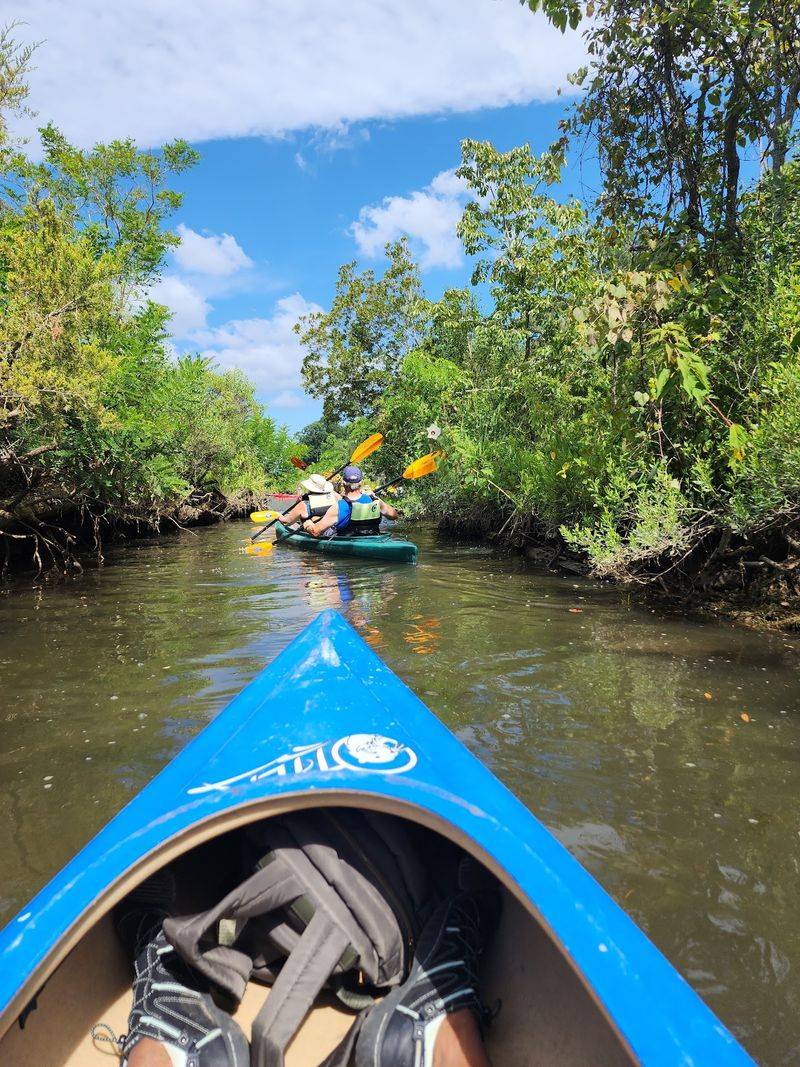
Birders talk about Mallows Bay the way anglers talk about a secret creek. Bald eagles nest in the tall trees along the bluffs and perch on exposed timbers, ospreys build shaggy nests right on old masts, and great blue herons stalk the shallows with that slow, deliberate stride.
Kingfishers rattle past. Cormorants sun themselves on any flat surface they can claim.
Underwater, the cast is just as crowded. Largemouth bass, catfish, bluegill, crappie, striped bass, perch, and carp all use the wrecks as cover, and the long-nosed gar occasionally cruises through looking prehistoric enough to make anyone do a double take.
Blue crabs work the muddy bottom, and river otters turn up now and then, usually as a ripple and a splash before you can get the camera up.
A pair of binoculars earns its place in the boat. So does patience, because most sightings happen when the paddling stops.
Early morning and late afternoon bring the most activity, especially in spring when nesting season is in full swing.
Give nests a wide berth. Ospreys and eagles are protective, and a stressed parent bird is bad for the birds and awkward for you.
Anglers do fish these waters, though everyone should keep clear of protected features and follow Maryland regulations.
Honestly, even a slow wildlife day here beats a busy day almost anywhere else on the river.
A Sanctuary With Serious Credentials
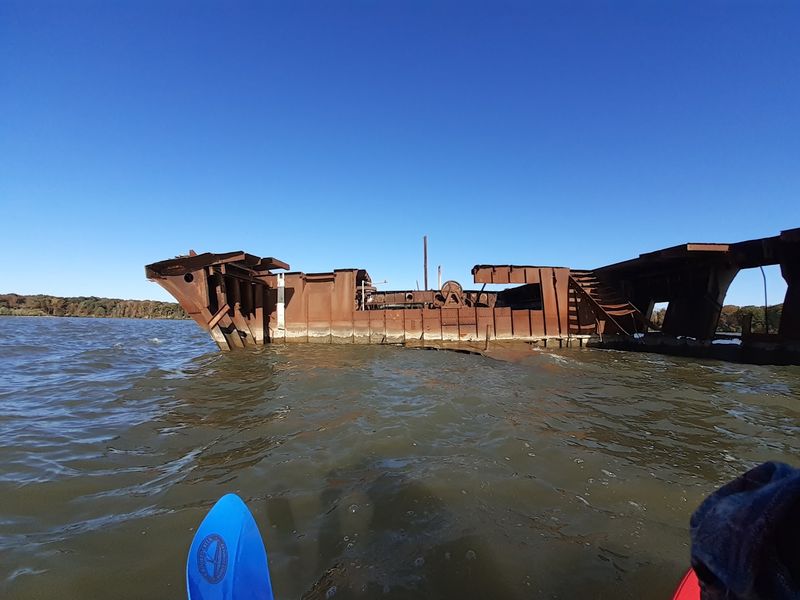
Protection here did not arrive by accident. Local residents, historians, and conservation groups started pushing for national recognition back in 2014, and the effort paid off on September 3, 2019, when Mallows Bay-Potomac River became the fourteenth national marine sanctuary in the United States.
It was also the first in the Chesapeake Bay watershed, which locals still mention with obvious pride.
Management is shared between the National Oceanic and Atmospheric Administration, the State of Maryland, and Charles County. That partnership keeps research, education, and public access moving in the same direction.
The site carries a listing on the National Register of Historic Places, and the National Trust for Historic Preservation named it a National Treasure.
Roughly eighteen square miles of river fall inside the sanctuary boundary. Within it sit more than two hundred documented wrecks, not just the famous wooden steamships.
Vessels connected to the Revolutionary War and the Civil War rest here as well, along with remnants of the Potomac’s commercial fishing industry and its steamboat era.
What makes the designation unusual is how open it stays. There is no gate, no ticket booth, and no lecture hall.
Interpretive signs along the park trails do the teaching instead, with maps and archival photographs that explain what those shapes in the water used to be. Reading a couple before launching makes the paddle far richer.
History and ecology sit in the same frame here.
Trails, Overlooks and the Landlubber Option
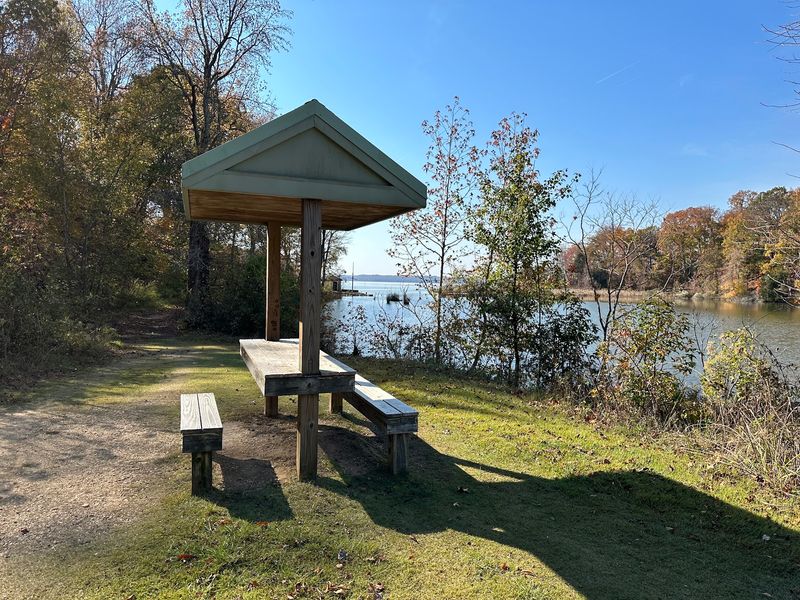
Not everyone wants to get in a boat, and that is completely fine here. Short walking trails wind through the woods above the shoreline, leading to overlooks where the wreck outlines are visible from dry land.
From up there, the ship shapes read almost like a diagram.
The trails are easy, shaded for most of their length, and dotted with interpretive panels covering the salvage operations, the wildlife, and the deeper human history of the area. Reading them takes maybe twenty minutes total.
Bug spray in summer is not optional.
Picnic areas near the parking lot make this a workable half-day outing for families who would rather watch the water than paddle it. Kids tend to get weirdly invested once they realize those bumps in the river are real ships.
Photographers should aim for the overlooks in late afternoon, when low light rakes across the hulls and the outlines sharpen dramatically.
Guided kayak tours run through the Charles County Department of Recreation, Parks and Tourism and through the Atlantic Kayak Company, which suits anyone who wants context along with a rented boat. Guides point out specific vessels and explain what happened to them.
For first-timers, a guided trip removes most of the guesswork around tides and hazards.
Independent paddlers with their own gear will find the launch straightforward. Either way, the fleet does not disappoint.
Older Stories Layered Beneath the Wrecks
Long before any steamship arrived, this bend in the Potomac belonged to other communities. The land and water are part of the traditional homelands of the Piscataway and Patawomeck peoples, and the area holds cultural, historical, and spiritual significance for them today.
That connection is not a footnote. It is the foundation.
Archaeological work within the sanctuary has turned up artifacts dating back as far as twelve thousand years, evidence of people fishing, traveling, and living along these shores across an almost unimaginable span of time.
African American history is woven in as well. African Americans arrived in this region centuries ago, and their labor helped build some of the very steamships that now lie half-buried in the bay.
The sanctuary preserves sites tied to those stories alongside the wrecks themselves.
Knowing all of it changes the paddle. What could feel like a novelty, floating past rotting hulls, instead feels like moving through a place where many different eras happen to overlap in the same few acres of shallow water.
Sit still for a minute out there. Wind moves through the grass inside a hull, a heron lifts off, and the silence does a lot of the talking.
Bring everything back out with you, leave the artifacts alone, and let the place stay as strange and quiet as it is.
Address: 1440 Wilson Landing Rd, Nanjemoy, MD 20662
