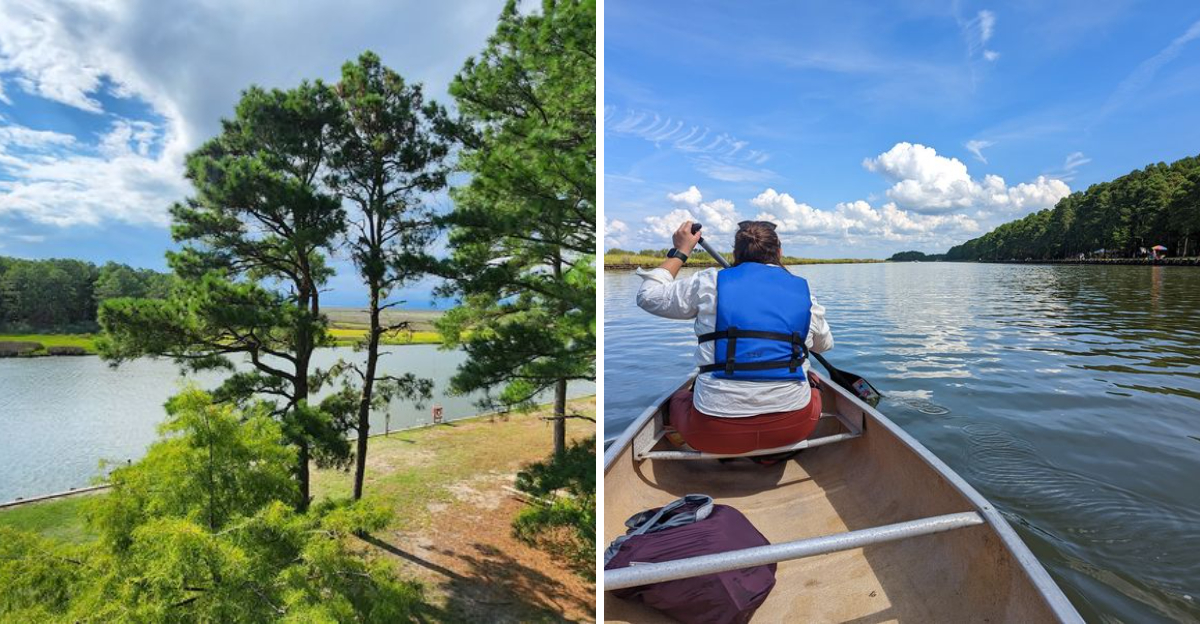
Maryland’s Chesapeake side can feel wonderfully wild when the route ahead is more likely to involve marsh grass and herons than traffic lights.
This protected park combines a wooded mainland with an island of more than 2,900 acres of saltmarsh, over 30 miles of marked water trails, and miles of isolated sandy shoreline that can only be reached by boat.
The paddling routes range from short protected marsh loops to longer open-water adventures, while wildlife includes birds, fish, crabs, and plenty of other creatures that clearly appreciate the quiet too.
There is also an easy woodland walking route on the mainland for visitors who would rather keep their feet dry.
For anyone craving a Maryland escape built around paddling, beachcombing, wildlife watching, and considerably fewer commercial distractions, this place delivers the kind of Chesapeake scenery that feels refreshingly removed from everything else.
Marsh Views From the Observation Tower
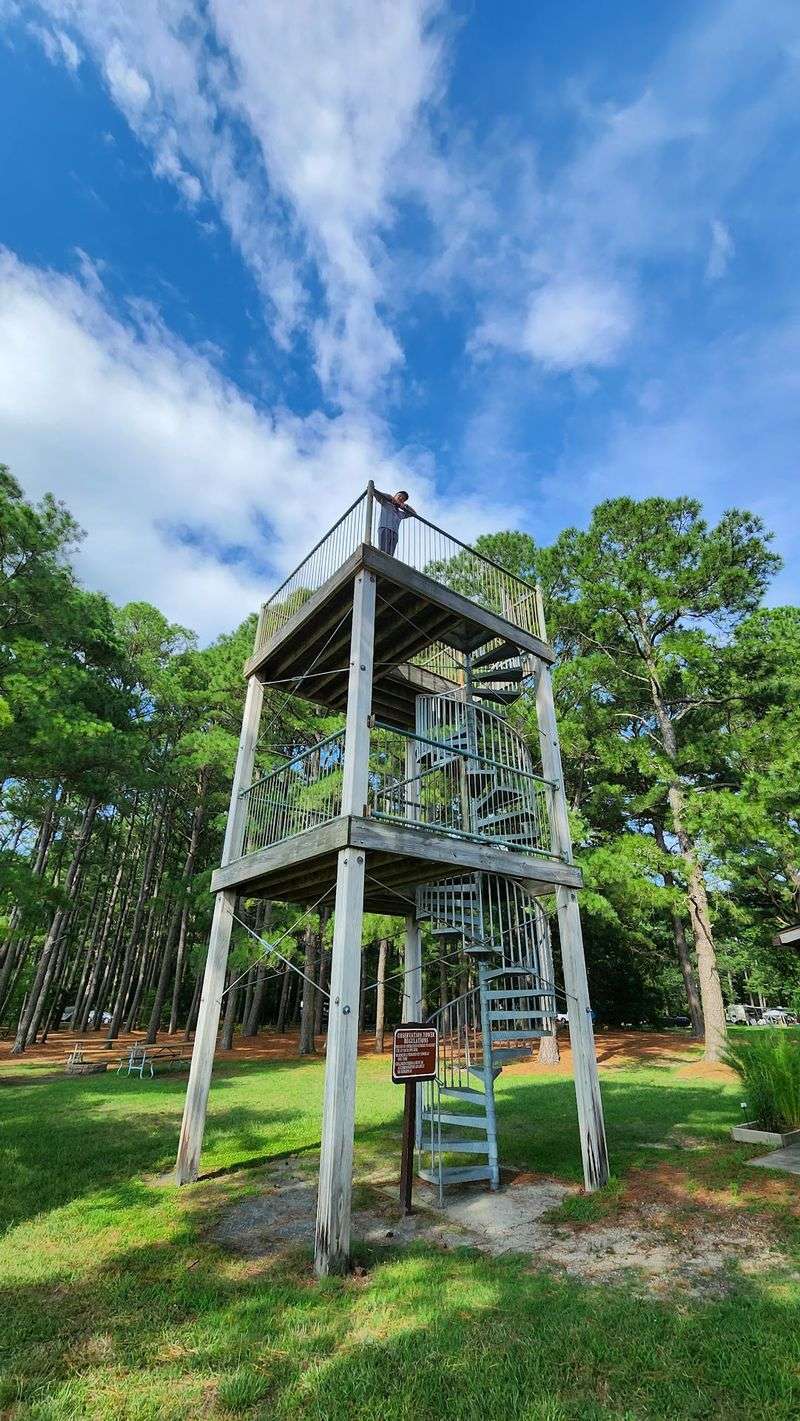
Climbing a few flights of wooden steps near the nature center rewards you with something unexpected: the marsh suddenly makes sense. From ground level, saltmarsh looks like a flat green wall.
From the top of the observation tower, it turns into a maze of silver creeks curling in every direction. You can trace where the water trails go, spot the darker channels, and watch tide lines shift.
I stayed up there longer than planned. A pair of ospreys circled over the grass, and somewhere below, a rail let out that odd clattering call the park is known for.
Bring binoculars if you have them. Herons and egrets stand so still in the shallows that they blend into the reeds until they move.
Morning and late afternoon give the best light, and the breeze up top helps with insects, which can be persistent in warm months. Sunset from the tower feels almost private, since most day visitors have packed up by then.
The tower also works as a good orientation stop before doing anything else. Paddlers can scan the marsh and get a feel for scale, while hikers can see how forest meets tidal edge.
Little detail worth mentioning: the platform is close enough to the nature center that families with restless kids can combine both in one short stop. No long walk required, no admission gymnastics, just stairs and a view that stretches farther than you would expect on Maryland’s Eastern Shore.
Over 30 Miles of Marked Water Trails
Paddling here feels less like a workout and more like exploring a hidden neighborhood built entirely of grass and water. Over 30 miles of marked routes weave through Jane’s Island’s saltmarsh, and the American Canoe Association has named it among the best paddle trails in North America.
Seven distinct trails range from about 1.25 miles up to roughly 12.5 miles. That spread matters, because a first-timer and a seasoned paddler can both find something reasonable.
Routes reach out along Tangier Sound, the Big and Little Annemessex Rivers, and a tangle of smaller creeks. Many channels sit tucked behind marsh banks, which blocks wind and current and keeps things calm.
Markers help enormously. Without them, one grassy bend looks exactly like the last twelve, and the map suddenly becomes very interesting reading.
Canoes, kayaks, and paddleboards can be rented at the park seasonally, weather permitting, and there is a free launch for personal boats. Renting removes the roof-rack hassle if you are driving in from a distance.
Practical notes learned the slightly damp way: check the tide, carry more water than feels necessary, and bring a dry bag for your phone. Long grass offers zero shade, so a hat earns its keep.
What sticks with me is the quiet. Wind hushing through cordgrass, a fish breaking the surface, then nothing at all, which is rare enough in Maryland to feel like a small gift.
Empty Sand Along Tangier Sound
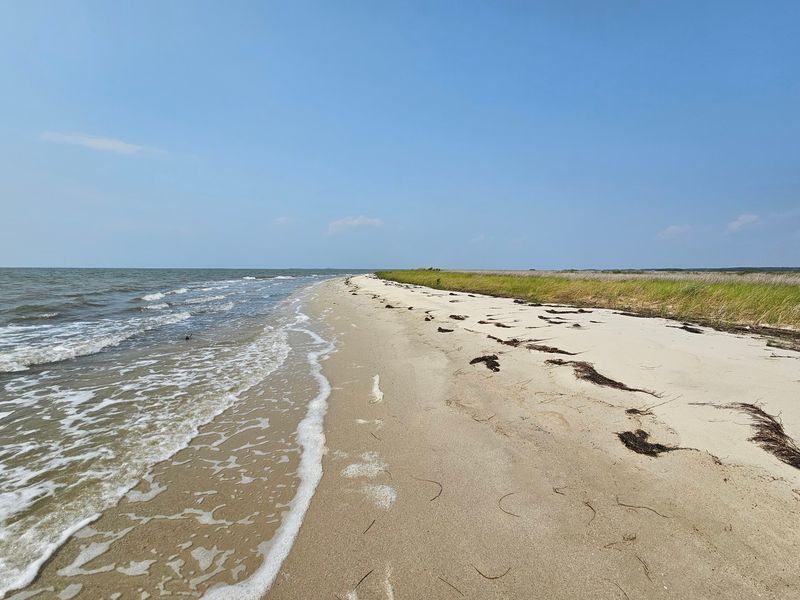
Some people call this stretch the Caribbean of the Chesapeake, and while that sounds like a stretch, the beaches genuinely surprised me. Miles of pale sand line the island’s western shore facing Tangier Sound, and reaching them requires a boat.
That single detail keeps the crowds away. No parking lot, no boardwalk, no lines for anything.
Paddle across, pull the kayak up, and the beach is simply yours for the afternoon. Shells collect in ridges along the tide line, and driftwood shows up bleached silver from sun and salt.
Swimming is allowed here, though beaches are unguarded, so caution and common sense come along for the ride. Water stays shallow for a good distance, which suits waders and shell hunters.
Wind can pick up across the Sound in the afternoon, so planning the return trip earlier rather than later is smart. Sunset over open water from this side is worth timing right, but only if you are camping on the island.
Pack out everything you bring. There are no facilities, no trash cans, and no snack stand, which is exactly why the place still feels untouched.
The reward for a bit of effort is a beach day without competition for space. I sat there listening to water push against sand and honestly forgot what day it was, which almost never happens at a shoreline this close to the mainland.
White Tail Trail and the Mainland Footpaths
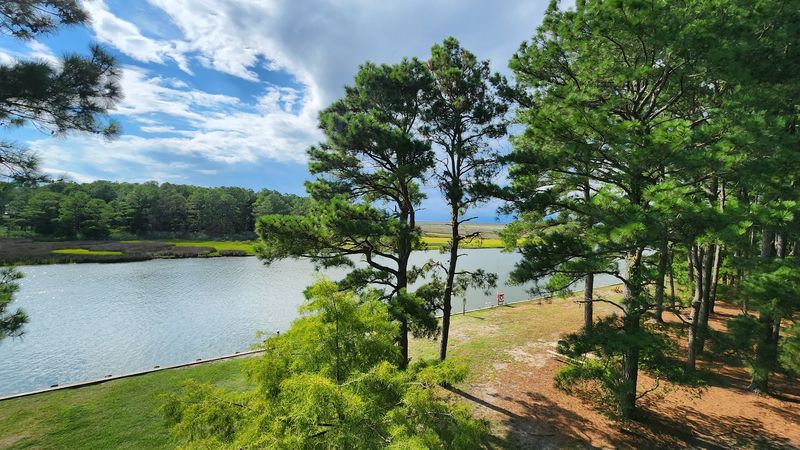
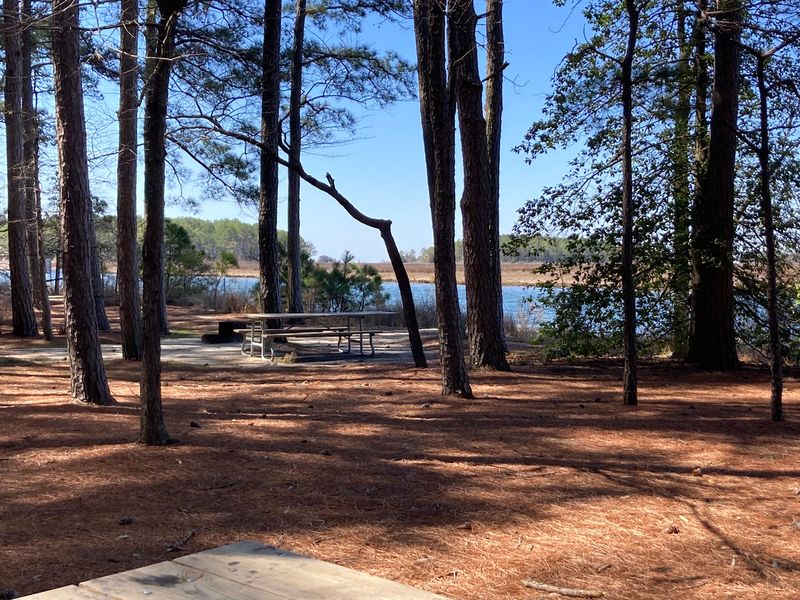
Not every visit needs a paddle. The mainland side holds short, well-marked foot trails that move between pine forest, mixed hardwoods, and the edge of tidal water, and they stay refreshingly flat.
The White Tail Trail runs about a mile as a loop. It threads through loblolly pines, shifts into deciduous woods, then runs alongside Daugherty Creek Canal.
Pine needles soften the path underfoot, and the smell after rain is fantastic. Deer tracks show up in the sandy patches often enough that the trail name feels earned.
Because there are no hills to speak of, these paths suit young kids, older walkers, and anyone who just wants a stretch after driving. Leashed pets are welcome on trails and in day-use areas, which makes road trips easier.
Watch for ticks in warm weather and use repellent before setting out. Long socks are unglamorous but effective.
Views open unexpectedly where woods meet marsh, and those gaps are where wildlife tends to appear. A heron lifting off a creek bank, a turtle sliding off a log, small moments that make you slow down.
Fall, winter, and early spring are the most comfortable seasons for walking here, with fewer bugs and cooler air. Winter especially strips things back, letting you see deeper into the woods and out across the water.
Bikes work well too, with paved campground roads and a five-mile round trip route linking the park to Crisfield.
Birdlife Worth Slowing Down For
More than 185 bird species have been reported around this park, which explains why the National Audubon Society designated it an Important Bird Area. Even a casual walk turns up something interesting.
Ospreys dominate the warm months, nesting on platforms and calling constantly overhead. Bald eagles show up too, sometimes cruising low over the marsh with that unmistakable heavy flap.
Herons and egrets work the shallow creeks with unhurried patience. Brown pelicans appear along the Sound, and colder months bring in waterfowl like Canvasback, Redhead, scaup, Bufflehead, Common Goldeneye, scoters, and mergansers.
Clapper Rails live throughout the marsh, and campers often hear their harsh calls during breeding season. Once you learn that sound, you cannot unhear it.
Weekly bird walks run year-round on the mainland in partnership with the Tri-County Bird Club, which is a genuinely easy way to learn from people who know the local birds well. Beginners are not out of place.
Bring binoculars, a field guide or app, and patience. Early morning delivers the most activity, and the light is kinder for photos.
Winter birding here is underrated. The marsh looks bare and gold, insects have vanished, and rafts of ducks gather offshore in numbers that make the cold worthwhile.
What I appreciated most was the lack of noise competition. Nothing drowns out a wingbeat or a distant call, so the birds set the soundtrack all on their own.
Crabbing and Fishing Along Daugherty Creek Canal
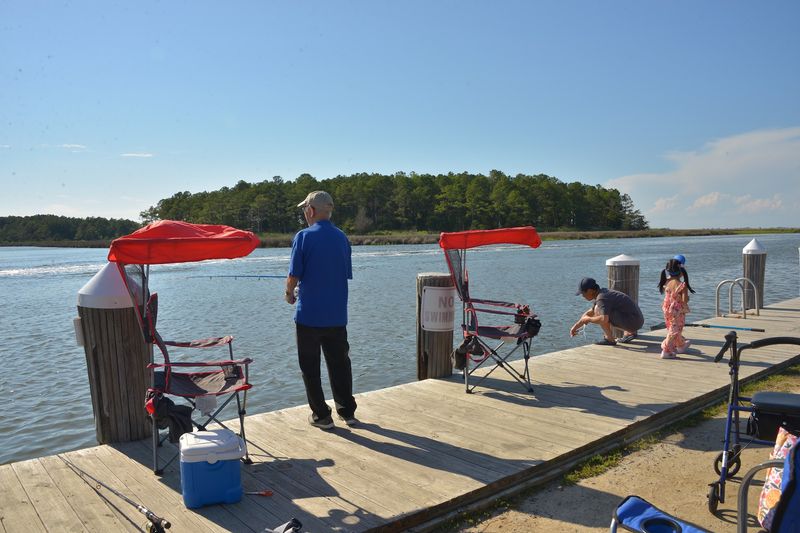
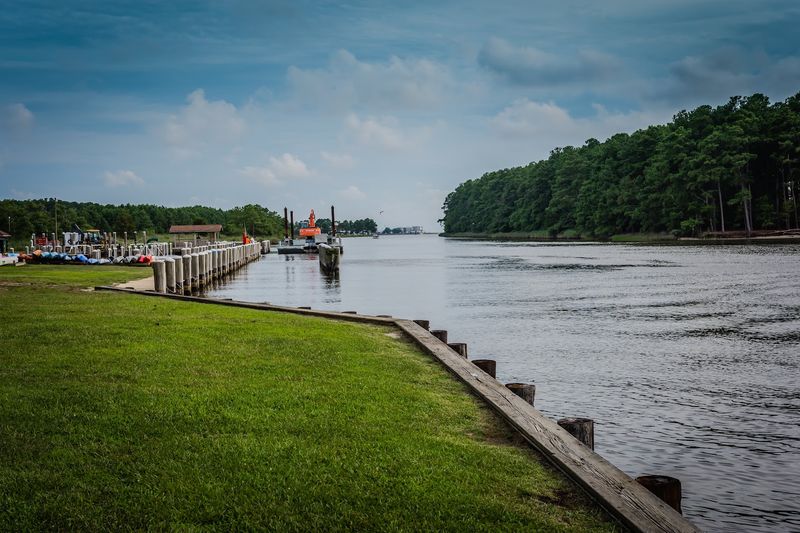
Blue crabs are practically a local institution around Crisfield, and the bulkhead along Daugherty Creek Canal is where visitors can try handline crabbing without a boat. It is simple, patient work.
Drop a baited line, wait, then lift slowly and scoop with a net. The lifting part is where most people, myself included, lose the crab.
Kids tend to love it because the payoff is immediate and slightly dramatic. Adults get quietly competitive.
Fishing here covers a solid range depending on season, including striped bass, sea trout, spot, croaker, flounder, and bluefish. Docks, marshy creeks, and the open water of Tangier Sound all produce.
Maryland fishing regulations and license requirements apply, so check current rules before casting. Rules on crab size and season matter too.
Gear can be minimal. A hand line, a net, a bucket, and something to sit on covers the basics for a crabbing afternoon.
Mornings tend to be calmer on the water, and the canal offers protection when the Sound gets choppy. Shade is limited along the bulkhead, so sunscreen is not optional.
Even without catching much, the canal is a pleasant place to sit. Workboats pass, gulls argue over nothing, and the tide slides by with real purpose.
The whole scene feels tied to how people here have made a living for generations, which gives an ordinary afternoon of crabbing a little extra weight.
Camping From Full Service Cabins to Backcountry Sites
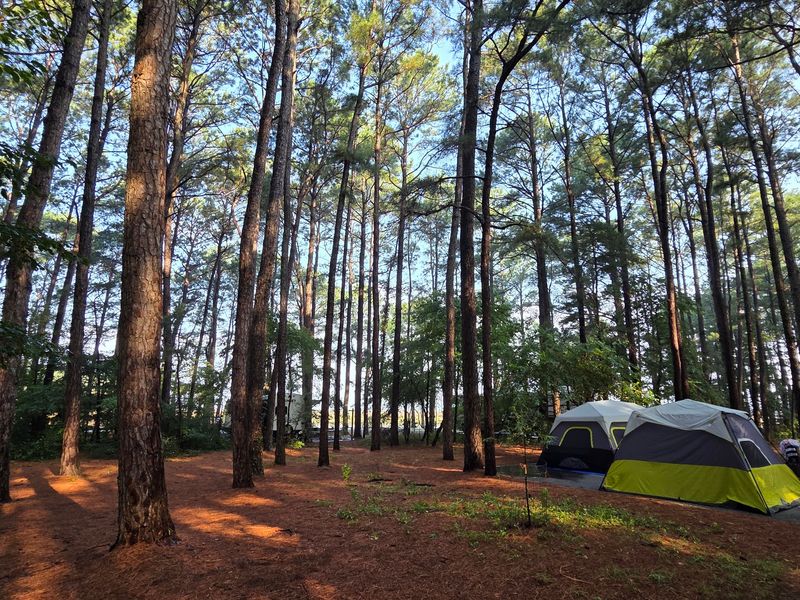
Staying overnight changes the character of this park entirely. Once day visitors leave, the marsh gets loud in a different way, with insects, frogs, and rails filling in the silence.
The mainland campground holds roughly 103 to 105 sites for tents and RVs, with electric hookups at some. Sites sit among pines, which helps with shade and privacy.
Rental cabins offer a step up in comfort, and full-service cabins stay open year-round. Winter cabin stays appeal to birders and anyone who prefers a bug-free experience.
For something wilder, three primitive backcountry campsites sit along the water trails on Jane’s Island itself. Boat access only, no facilities, no neighbors.
Paddling in with camping gear takes planning. Water, food, repellent, and a solid plan for tides all belong on the checklist.
That effort buys something rare though: a night on a Chesapeake island with nothing but stars and water sounds. Light pollution is minimal out there.
Reservations are strongly recommended, especially for cabins and warm-weather weekends. Accessible restrooms, campsites, and facilities are available for visitors with mobility needs.
Bikes are handy in the campground thanks to paved roads, and the five-mile round trip route into Crisfield gives campers an easy morning outing.
My honest take is that one night here is not enough. Between paddling, walking, and simply sitting still, two or three days lets the place actually settle in.
State Wildland Protection and Why It Feels So Untouched
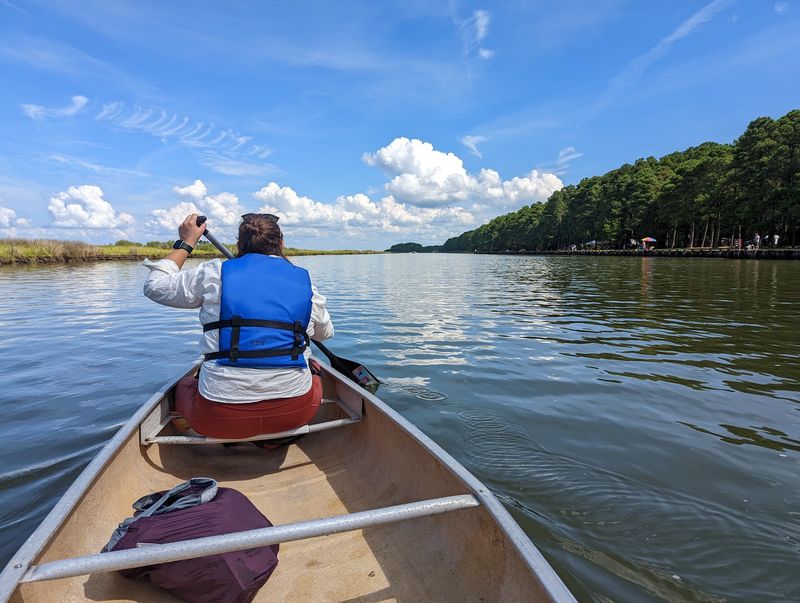
Something felt different about this place before I understood why. Most of Jane’s Island State Park carries State Wildland designation, a protection that limits activity to passive recreation and keeps development out.
No motorized recreation churning through the channels. No new construction creeping across the marsh.
The result is roughly 2,900 acres of island that looks close to how it always has, dominated by saltmarsh, tidal creeks, and sand. That is unusual anywhere along the Chesapeake.
Passive recreation still covers plenty: paddling, hiking, birding, fishing, swimming, and camping. It simply means the land sets the pace rather than the other way around.
Marsh does serious work behind the scenes, filtering water, buffering storms, and feeding nurseries for crabs and fish. Watching it up close makes that role feel less abstract.
Visiting responsibly is straightforward. Stay on marked trails and channels, carry out trash, keep distance from nesting birds, and resist rearranging driftwood into art projects.
The park splits neatly into two experiences, a developed mainland with a nature center, picnic areas, marina, and boat launch, and the protected island reachable only by water. That contrast is part of the appeal.
Knowing the wildland status made the quiet feel intentional rather than accidental. Someone decided this stretch of Maryland should stay wild, and generations of visitors get to paddle through the results.
Planning Tips That Make the Visit Better
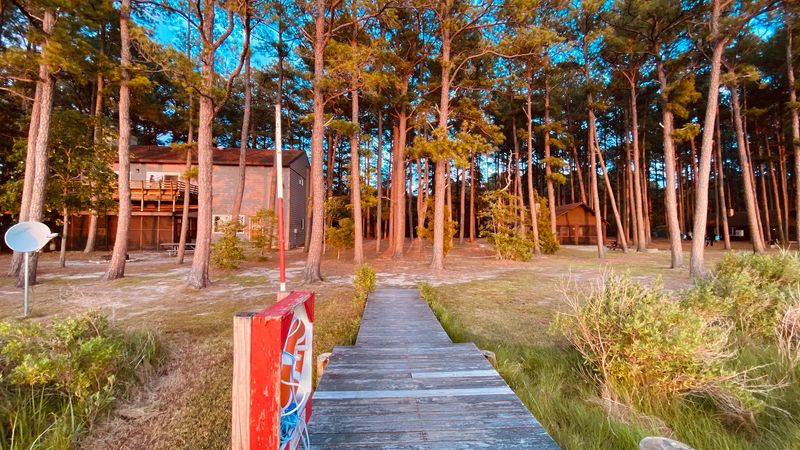
A few practical details make the difference between a great day here and a slightly itchy one. Biting insects rank first on that list.
Mosquitoes, black flies, and ticks are common during warm weather. Repellent, long sleeves, and a tick check afterward are genuinely worth the trouble.
Because of that, fall, winter, and spring tend to be the most comfortable seasons. Cooler months also bring waterfowl and clearer views across the marsh.
Day-use hours generally run sunrise to sunset, though the park operates year-round for various activities. Checking current conditions and rental availability before driving out saves disappointment, since paddling rentals are seasonal and weather dependent.
Leashed pets are welcome in day-use areas, on trails, and in parts of the campground. Accessible restrooms, campsites, and facilities are available.
Pack water, snacks, sunscreen, and a hat. Shade disappears fast once you leave the pines.
Crisfield sits just up the road for meals and supplies, and the five-mile round trip bike route connects the two. Combining a paddle with a town stop makes a full, easy day.
Start early if the goal is quiet water. Wind usually builds through the afternoon on Tangier Sound.
Above all, leave time to do nothing. Some of the best moments here involved sitting on a bank, watching the tide creep in, and letting the marsh do its slow thing.
Address: 26280 Alfred J Lawson Dr, Crisfield, MD 21817
