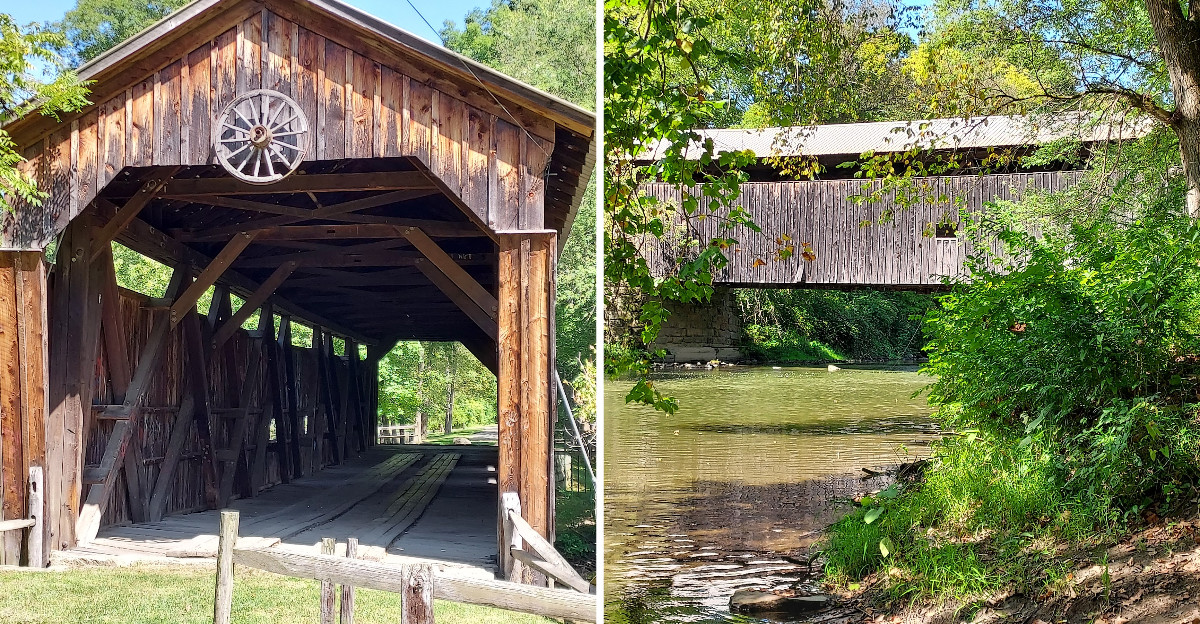
Pennsylvania backroads are good at making you wonder what is waiting around the next bend. Sometimes it is another farmhouse or a stretch of woods.
Other times, a roofed wooden structure appears beside the river and suddenly the brakes feel necessary. That happened here.
At first glance, it looked like another charming relic built for photographs and quiet afternoon stops, but the closer I got, the more interesting the engineering became. Beneath that familiar covered exterior is a design with a much bigger story than its modest setting suggests.
It was created during an era when bridge builders were experimenting, competing, and trying to prove wood could still hold its own as iron construction gained ground.
Add the river, shady parkland, and surprisingly unusual construction, and this little Pennsylvania detour earns more time than its size suggests.
The Frame Is Wood, Not Iron
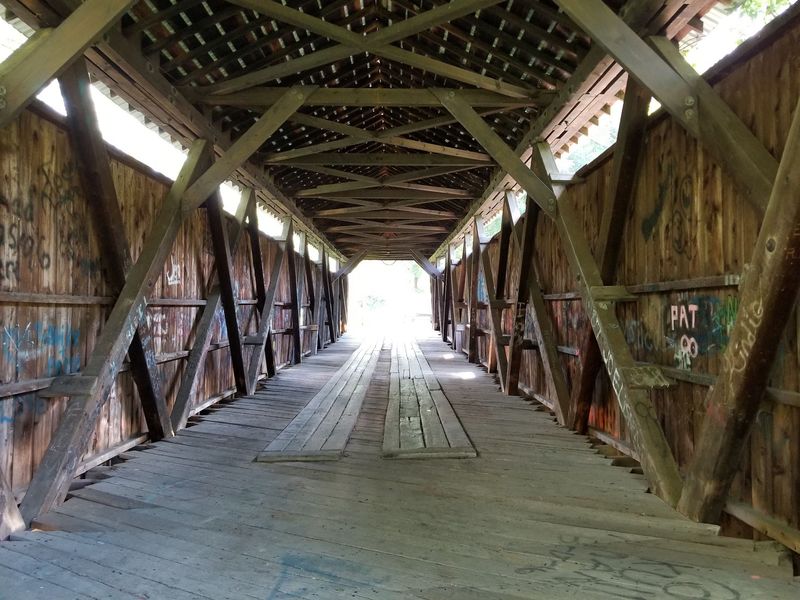
The first surprise waits inside the bridge. Its beams form a bold pattern overhead and along the sides, but they are wood, not the iron frame promised by the title.
Kidd’s Mill Covered Bridge uses a Smith truss, a design built to make timber work efficiently at a time when iron bridges were becoming serious rivals.
That difference is more than a small correction. Both the truss members that pull and those that push are wooden, making this a useful place to see what skilled builders could do without an all-metal frame.
Look along the sides as you cross on foot. The pieces meet in a pattern that helped carry the weight of the old roadway across the Shenango River.
I like that the answer is visible without a long lesson. You can pause, follow one beam with your eyes, and see how it connects to the next.
Keep your hands off the historic wood, and give other walkers room to pass. If you are visiting with children, ask them to spot repeating shapes rather than treating the bridge as a quick photo stop.
The name of the design may be new to them, but the idea is familiar: strong parts working together.
For a clear look, visit during daylight. Light from the openings helps reveal the frame that makes this bridge unusual.
A Bridge Built After a Flood
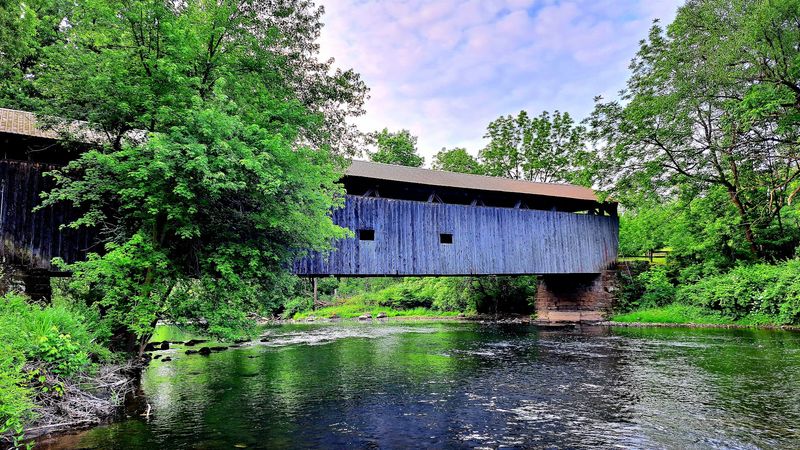
The river looks peaceful beside the bridge, which makes its earlier history easy to miss. A covered bridge already stood at this crossing before a flood destroyed it in February 1867.
The bridge visitors see today was built the following year, giving the community a replacement at a place where crossing the Shenango River mattered.
Smith Bridge Company of Tipp City, Ohio, built the new structure in 1868. Its wooden truss followed a design patented by Robert W.
Smith in 1867, so the bridge came from a period of fresh ideas about how to build strong spans. From the bank, I find it easier to picture the basic challenge: people needed a way across moving water, and the builders needed that crossing to last.
The roof and siding are not just there to make the bridge look charming. Covering a wooden bridge helps shelter important parts from rain and snow.
Weather still affects the site, of course, and the river deserves respect. Stay on established paths, especially when the ground is wet or the water is high.
For a simple visit, look at the bridge from outside before crossing it. You can see how the enclosed span reaches between the banks, then compare that broad view with the close look at its frame inside.
That small change in viewpoint makes the bridge’s purpose easier to understand.
The Last of Its Kind in Pennsylvania
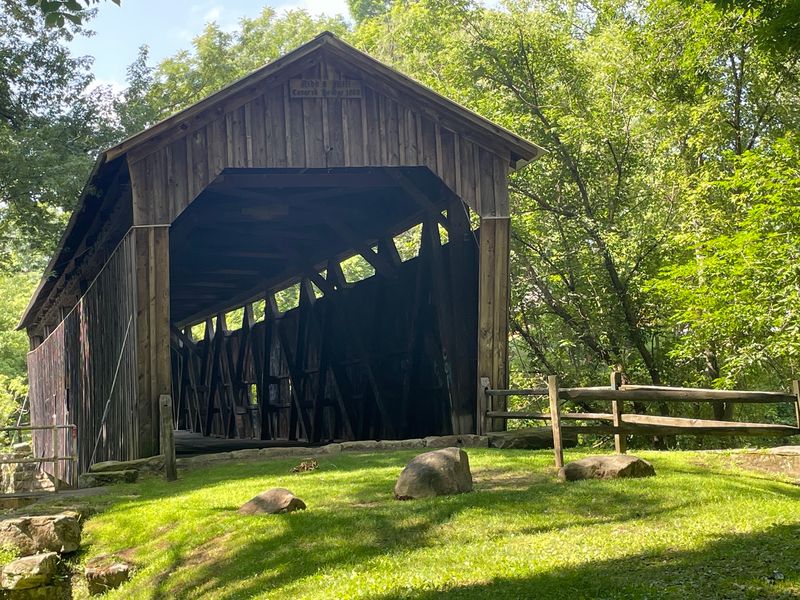
One number changed how I looked at this quiet crossing: one. Kidd’s Mill is the only remaining covered bridge with a Smith truss in Pennsylvania.
It is also the last historic covered bridge in Mercer County, so a visit offers a close look at something the region cannot simply replace.
Its story stretches beyond state lines. Among the roughly 20 surviving Smith trusses in the United States, Kidd’s Mill is described as the oldest and easternmost.
It is also the sole surviving Type 2 Smith truss. You do not need to memorize those labels to enjoy the place.
They explain why a modest wooden bridge beside a river draws attention from people who study bridge design.
Try taking a moment at each end of the span. From one side, notice the shape of the entrance and how the roof protects the structure.
From the other, watch how the bridge sits within the trees and river corridor. Photos are welcome, but leave marks off the wood so the next visitor can see the structure rather than fresh scratches.
The bridge was added to the National Register of Historic Places in 1974. That recognition tells part of its story; being here fills in the rest.
It is small enough to study at a comfortable pace, with no need to rush past the details.
A Road Crossing That Became a Walk
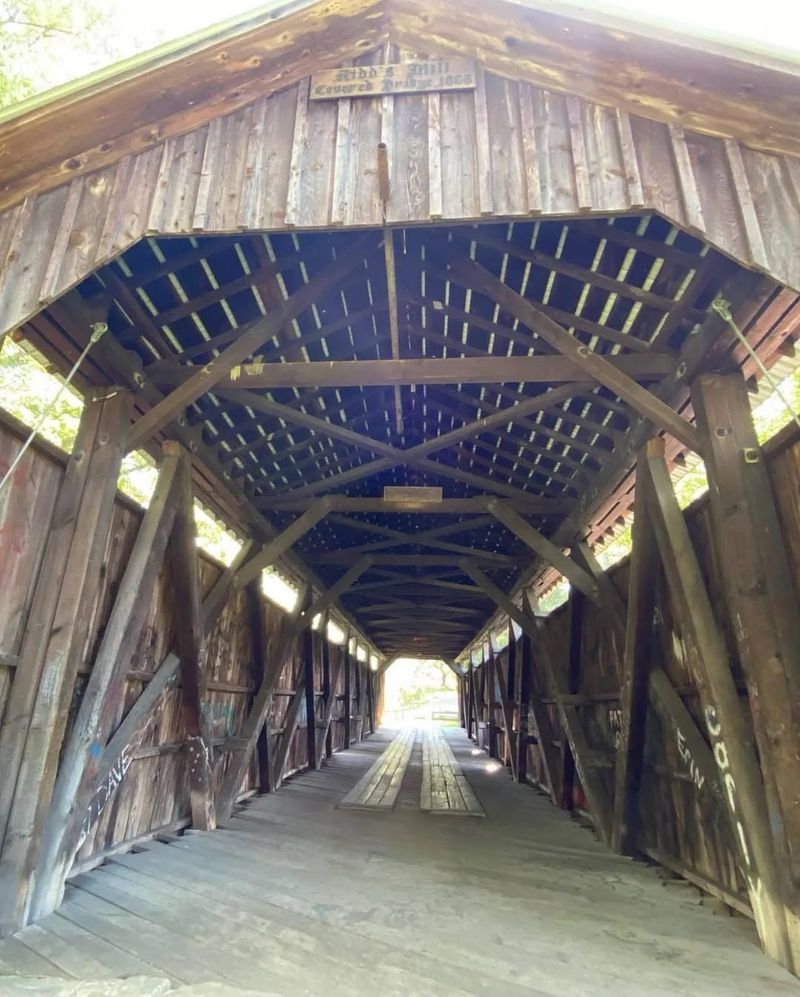
The quiet inside the bridge makes it hard to imagine road traffic passing through. Kidd’s Mill once carried vehicles, but a new route bypassed it in 1963.
Demolition was considered, then a resolution helped preserve it as a historic landmark instead. That change gave the old crossing a different future.
Traffic still caused serious harm years later. In 1979, an overloaded truck damaged several truss members, and the bridge closed to vehicles.
Today it is open for foot traffic only. I think that slower pace suits the place: you can notice the length of the passage, the boards beneath you, and the patches of daylight ahead without watching for a car.
Walking across is also a good way to understand its size. The whole bridge measures about 124 feet, with a main span of about 118 feet.
It is long enough for the sounds around you to change as you move from the open air into the covered space and back out again.
Follow any posted notices when you arrive, and keep bicycles at a careful pace around walkers. An old bridge is best treated as a shared historic space, not a shortcut.
If you bring a child, stay together near the edges and take time to look at the truss from a safe spot. The crossing is brief, but it rewards an unhurried walk.
The Work That Kept It Here
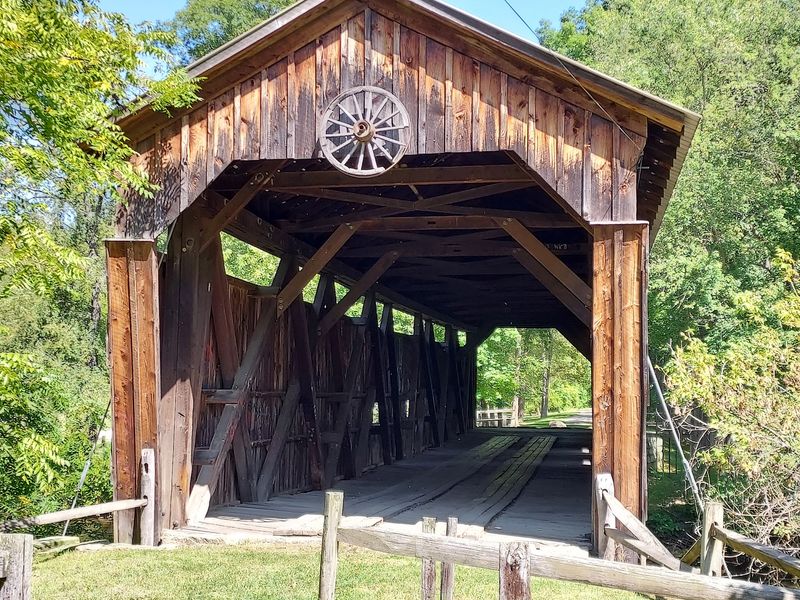
Old bridges do not stay standing through good luck alone. At Kidd’s Mill, preservation became urgent after vehicle damage and years of wear.
A 1984 study pointed to the bridge’s poor condition, and the Shenango Conservancy formed in 1986 to help protect it. Mercer County leased the bridge to the group for 99 years in 1989.
The Conservancy rehabilitated the structure in 1990 and developed a park around it in 1991. I find that timeline encouraging because it shows what can happen when people choose repair over losing a landmark.
The work did not turn the bridge back into a busy road. Instead, it gave visitors a chance to experience its history on foot.
As you look around, remember that preservation is not the same as leaving everything untouched. A historic structure needs attention, and a park needs ongoing care.
Small choices from visitors help, too. Keep food wrappers with you, stay out of closed areas, and avoid carving or writing on the wood.
There is something satisfying about seeing the bridge still serve a purpose, even though that purpose has changed. It connects the riverbanks for walkers and connects the present to an older way of building.
Give yourself a few minutes to read any signs on site; they can add context to what you have just seen.
The River Beyond the Siding
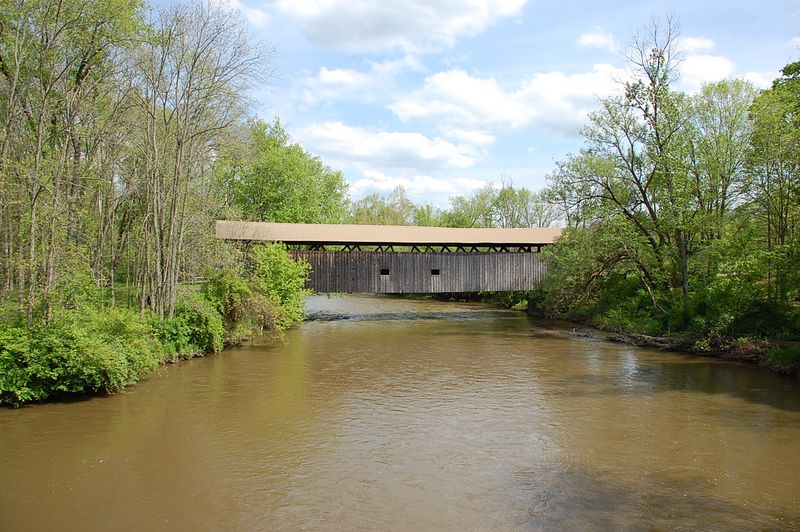
The bridge is the reason to stop, but the Shenango River kept drawing my attention back outside. Water passes beneath the wooden span, and the open view from the park shows how closely the crossing fits its setting.
The scene is worth a pause before heading for a trail or returning to the road.
Kidd’s Mill Park includes a canoe launch, giving paddlers a way to reach the river. If you plan to go on the water, check current conditions and weather before leaving home, bring proper safety gear, and make sure you know where you will finish.
River levels can change, so a pleasant view from shore is not a promise of easy paddling.
You do not need a boat to enjoy this part of the visit. Listen for the water, look for reflections beneath the bridge, and take a few steps to find a view that includes both banks.
From outside, the covered walls look simple. After seeing the wooden truss within, you know how much is hidden behind them.
Keep to public access areas and watch your footing near the launch, where the ground may be damp. A photograph from a safe spot can capture the bridge and river together without stepping onto an uncertain bank.
That pairing is the heart of the place: a practical crossing shaped by the water it had to span.
A Trail That Extends the Visit
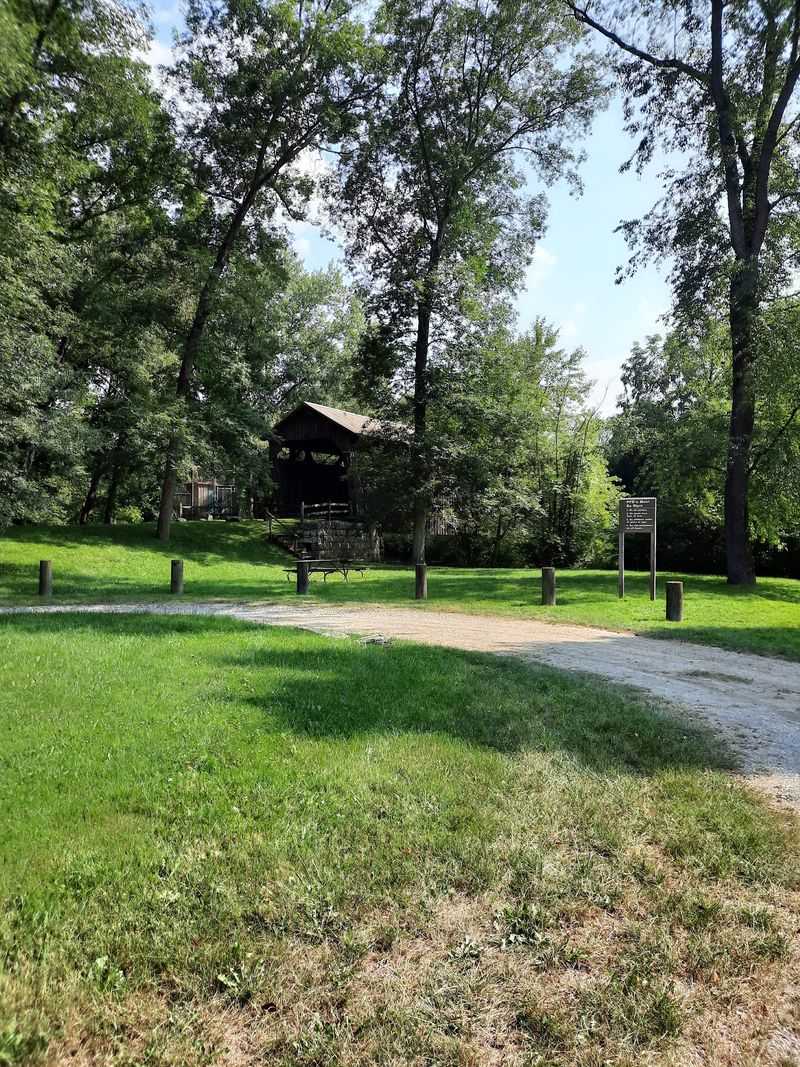
A short bridge visit can easily turn into a longer outing here. Kidd’s Mill Park has access to a hiking trail along the Erie Canal Extension, so you can leave the road behind and spend more time in the river corridor.
The shift from wooden boards to a natural path gives the day a different rhythm.
I would start by checking the trail information posted at the site, then choosing a walk that fits the time and energy I have. Trail routes can vary, and it is easier to enjoy the trees when you know which way brings you back.
Bring water, wear shoes that can handle uneven ground, and turn around before you feel tired rather than after.
The canal connection adds another layer to the setting. The bridge tells a story about crossing a river, while the nearby trail points toward the area’s older transport routes.
You can notice both without turning the outing into a history lesson. Even a brief walk offers a chance to hear the wind in the leaves and see the bridge from farther away.
After rain, expect soft or muddy patches and give plants along the path some space. Stay on marked routes and check for current conditions before a longer hike.
Back at the bridge, its roof is easier to pick out among the trees, a fitting end to a walk centered on one unusual survivor.
How to Make the Most of a Small Stop
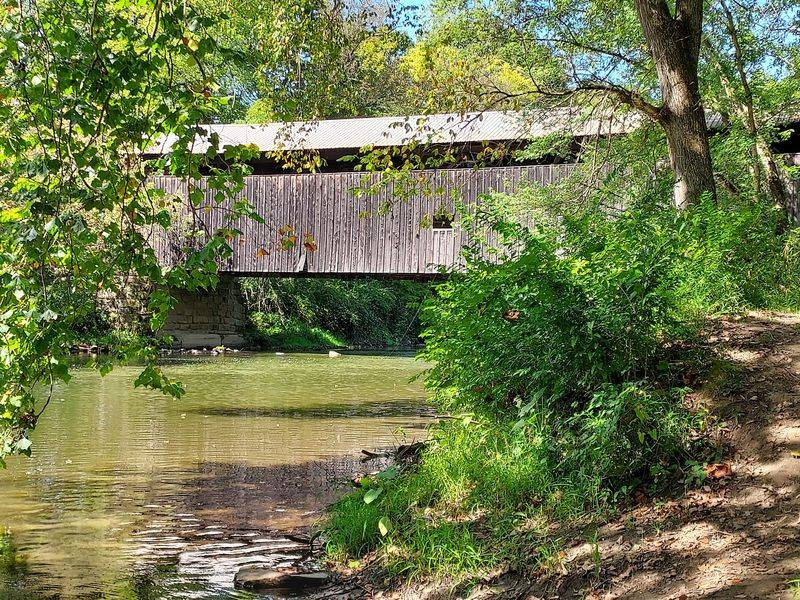
What stayed with me was not a grand view but the chance to look closely. Kidd’s Mill Park is a small historic stop, and that works in its favor.
You can see the bridge, cross it on foot, and spend a little time beside the Shenango River without trying to fit an entire day around one landmark.
Arrive in daylight if examining the truss matters to you. Start outside for a full view of the covered span, then cross slowly enough to see how the wooden pieces fit together.
Afterward, head toward the river access or trail if conditions and your schedule allow. Check posted guidance on site, since access and facilities can change.
The title may lead you to expect iron inside the bridge. What you will find is more specific and, to me, more interesting: an 1868 wooden Smith truss that survived when many similar bridges did not.
It is a good reminder that a memorable travel stop does not have to match the story you first heard about it.
Leave the park as you found it, with the wood unmarked and the riverside clear of litter. Give other visitors space to look, and let the bridge’s real design be the conversation starter.
Before leaving, take one last look from outside. The plain siding now hides a frame you know a little better.
Address: W Kidds Mill Rd, Transfer, PA 16154.
