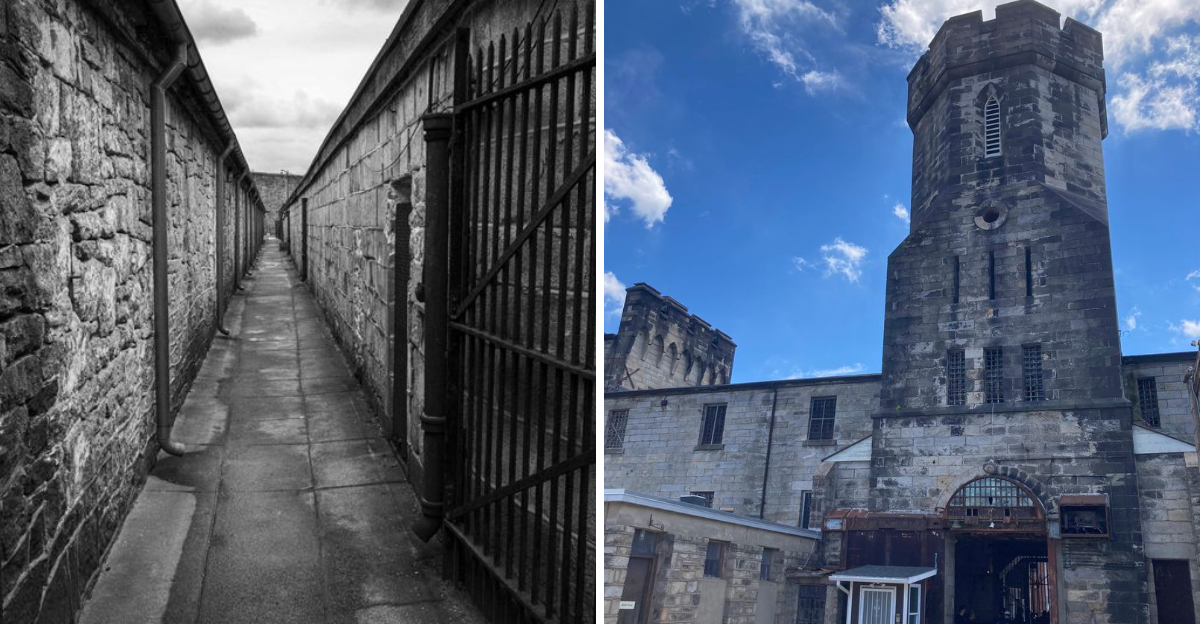
Step inside a fortress of stone where whispers seem to cling to the walls, and you will understand why Eastern State Penitentiary still pulls crowds year after year.
This Gothic landmark in Pennsylvania mixes chilling history with thoughtful exhibits, creating a rare space where curiosity and goosebumps walk side by side.
You can trace the evolution of incarceration in America while standing in the same echoing corridors that once held notorious figures.
The cellblocks feel frozen in time, yet the programming is fresh, smart, and surprisingly personal.
By the time you step back onto Fairmount Avenue, you will have stories to tell and questions that linger.
The fortress facade and first glimpse
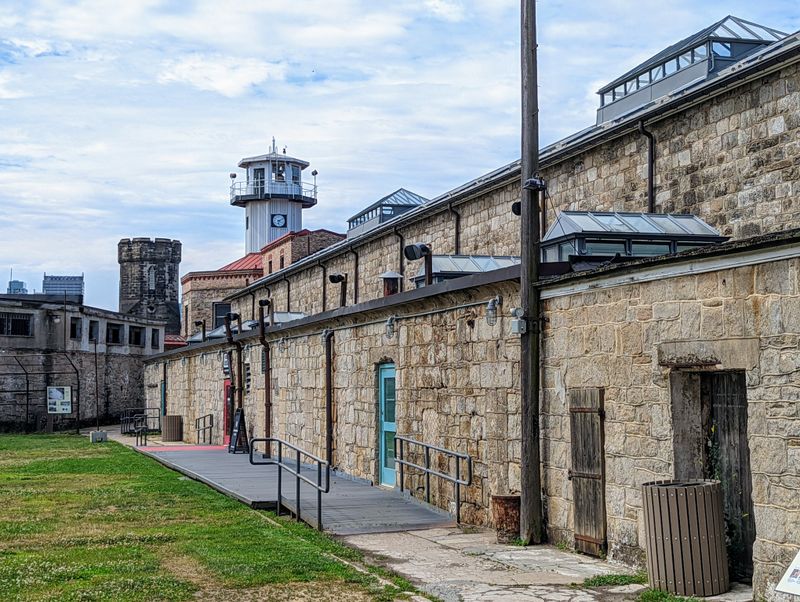
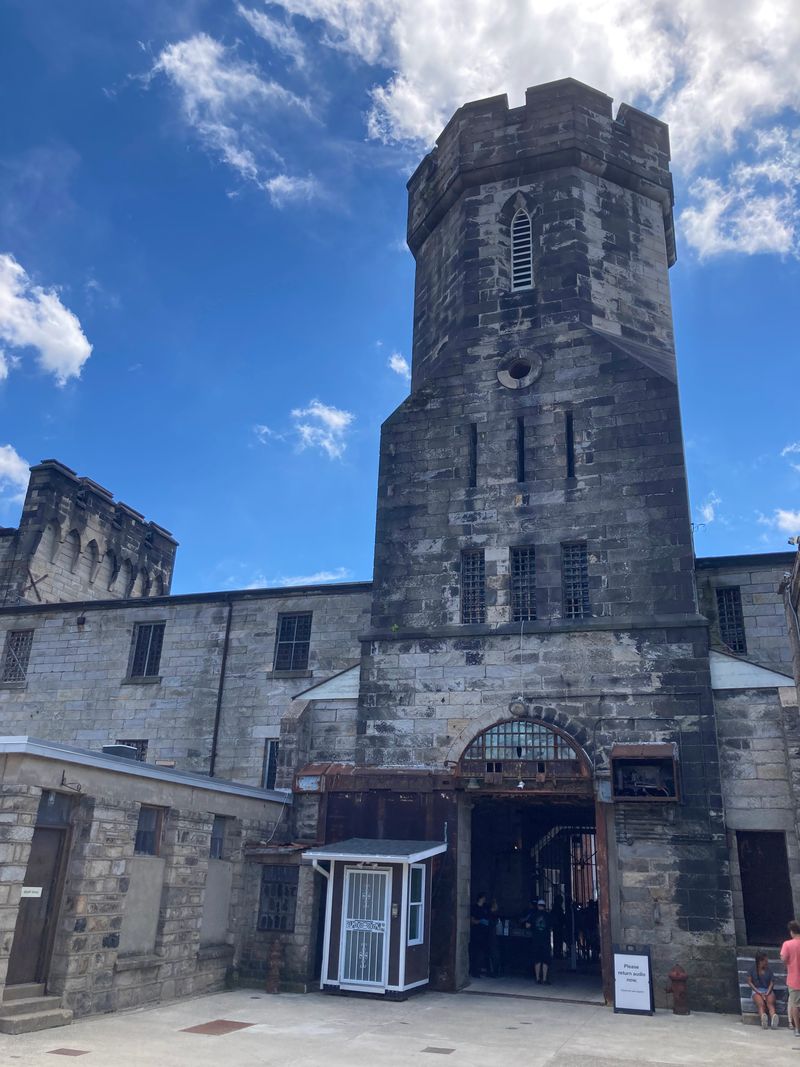
Your first look at Eastern State Penitentiary hits with a cinematic punch as the castle-like walls loom over Fairmount Avenue and cast long shadows across the sidewalk.
The Gothic design reads like a warning and a promise, setting a mood that stays with you from the entry gate to the last cellblock.
The stones feel cold even in summer and the arrow slit windows suggest a world built to watch more than welcome.
The museum entrance sits at 2027 Fairmount Ave, Philadelphia, PA 19130 and staff guide you through ticketing with an easy flow that keeps lines moving without losing the suspense.
Audio tours hand you context right away and the narration helps decode the harsh beauty of the architecture.
You start understanding how Pennsylvania reform ideals took physical shape in these tall walls and tight corridors.
Every detail at the threshold encourages you to slow down, look up, and notice the wear patterns that centuries carved into iron and limestone.
You can feel the city just outside yet the gate forms a clear boundary between modern Philadelphia and a strict 19th-century vision of order.
The exterior becomes a statement piece that frames everything you will see inside.
Photography-friendly angles are everywhere so plan a few minutes to capture the crenellations, entry portal, and guard towers.
Morning light flatters the facade and reveals cracks that tell stories without words.
Rain adds a moody sheen that heightens the texture of the stone.
I recommend glancing at the posted hours before your visit since Tuesday closures can catch travelers by surprise.
The museum typically opens at 10 AM and closes at 5 PM on most days listed.
Arrive a little early to enjoy the facade before tours begin in earnest.
The radial design that reinvented a prison
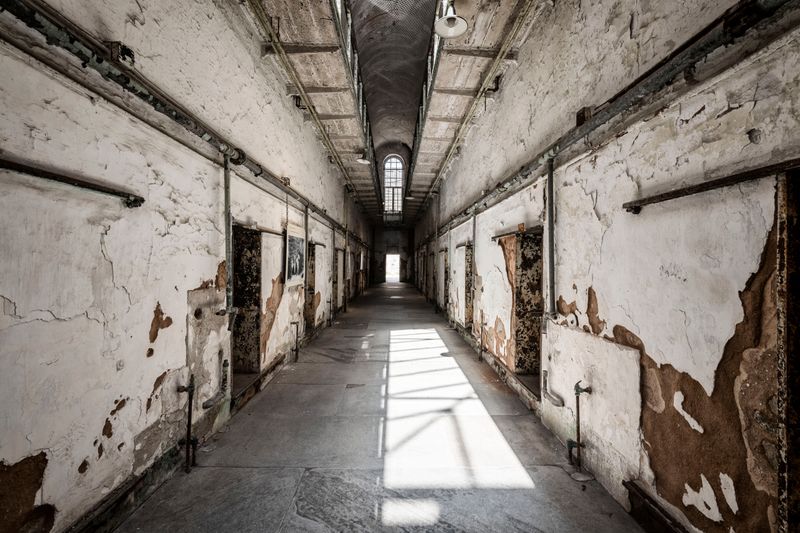
Step through the hub and the vision becomes clear as the cellblocks shoot out like spokes from a central wheel.
This radial plan aimed to support surveillance, efficiency, and a belief in solitary reflection that shaped early Pennsylvania prison reform.
The geometry still feels bold even after decades of decay.
Standing in the center, you can rotate slowly and see straight sightlines that once made one guard feel everywhere at once.
The ceilings lift with arches and skylights that soften the gloom and lay calm shafts of light across the floor. That mix of grandeur and control says as much as any wall text.
Interpretive panels explain how designers believed architecture could influence behavior and turn punishment into correction.
You can compare the ideal with the reality as you notice wear, patchwork repairs, and the heavy doors that speak to harsher outcomes.
The result feels like a living diagram of ideas meeting limits.
Audio headsets add human voices to the geometry, placing you in a moment when silence was policy and solitude was the treatment.
You hear how meals, exercise, and worship were orchestrated to reduce contact while promising moral improvement.
The space echoes with that contradiction in unforgettable ways.
Photographers love the strong lines, repeating arches, and vanishing points that appear with every small pivot.
Bring a wider lens if you can because the hub rewards big frames and clean curves.
Early in the day gives you the best chance at quiet vistas and patient light for careful shots.
Al Capone’s cell and the power of celebrity
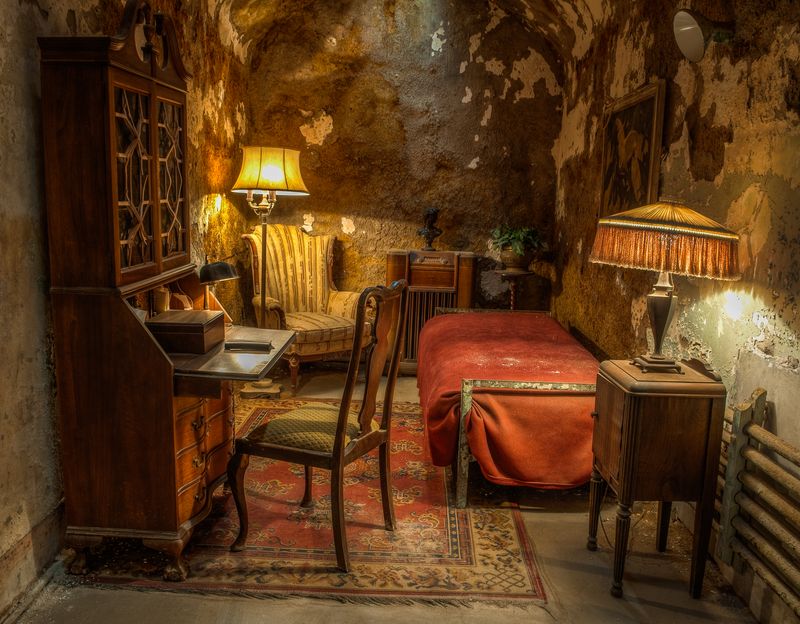
One of the most talked about stops is Al Capone’s cell, which blends myth with careful staging that reflects period comfort and public fascination.
You step into a space with furnishings and soft lamplight that contrast sharply with the austerity outside the doorway.
The room feels like a stage where history and perception negotiate every detail.
Docents and signage underline what is confirmed and what remains debated so you can separate lore from evidence.
The display highlights how press coverage shaped public views of incarceration and privilege in Pennsylvania during the 1920s.
You leave thinking about status, spectacle, and fairness more than glamorous crime stories.
Photographs are welcome and the textures pop in low light if you hold steady or raise ISO modestly.
The peeling plaster surrounds polished wood and patterned fabric, creating a striking composition that invites patient framing.
Crowds usually gather here, so give yourself time for a clear angle.
This stop also functions as a lens on media, since newspapers once turned Capone into a daily headline that shadowed the prison halls.
The museum handles that legacy with measured tone and solid sourcing that respects complexity.
You may find the quiet in the cell more telling than the props themselves.
If you visit on a weekday, you will likely have a calmer look at the room and more chances for detail shots.
Even during busy hours, lines move as visitors keep a respectful pace and share space thoughtfully.
The experience lands as a moment where fame, design, and policy intersect in one evocative scene.
Cellblock Seven and timeworn textures
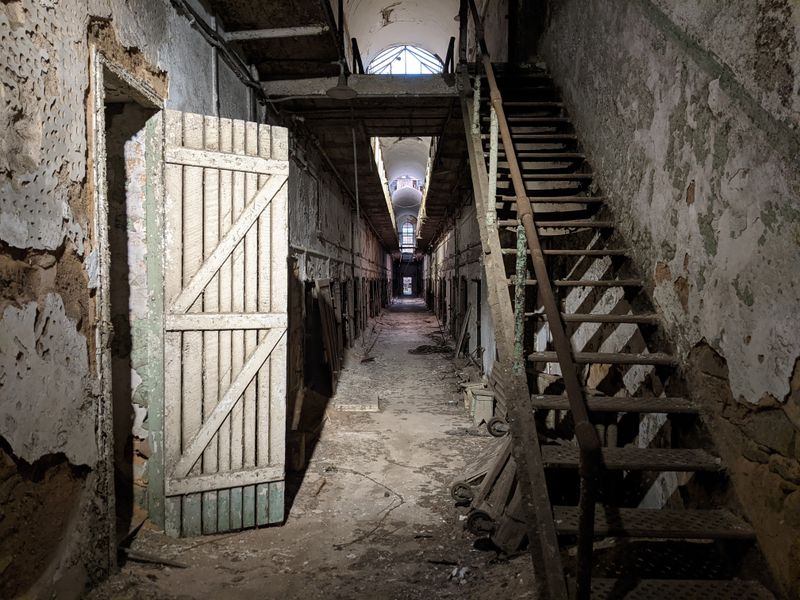
Walk into Cellblock Seven and the building speaks through surfaces that record a century of weather, repairs, and routines.
The peeling paint curls like old leaves and the metal hardware shows layers of color beneath rust.
Light slips in from above and lands in uneven patches that guide your steps.
The effect is not staged so much as preserved with restraint that lets age do the storytelling.
Interpretive notes explain conservation choices that keep authenticity while ensuring safety.
You sense the difference between curated ruin and careless neglect.
When you pause here, you can hear tiny sounds carry along the corridor, making even a whisper feel larger than it should.
That acoustic quirk adds atmosphere without any special effects.
The building itself produces mood with simple physics and long halls.
Photography thrives on the contrasts between bright roof slots and shadowed doorways that pull your eye deeper.
Try a centered frame for symmetry, then switch to oblique angles for rhythm and scale.
Every few steps reveals a new pattern formed by decay and maintenance.
The space also grounds discussions about daily routines, from opening heavy doors to tracking light for work and rest.
You start imagining footsteps, keys, and cleaning rounds that once punctuated the day.
The corridor becomes a calendar laid out in stone, metal, and dust.
Voices of Eastern State audio tour
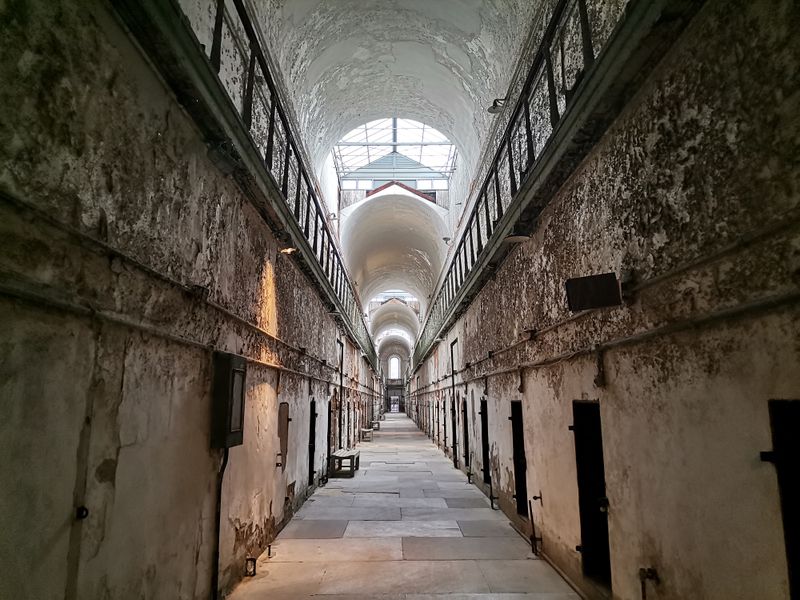
The audio tour at Eastern State Penitentiary shapes your visit with storytelling that feels intimate and thoughtfully paced.
Narration blends historian insights with first-person memories collected over years of careful oral history work.
The result is a layered journey that deepens as you move.
You can start and stop anywhere, which makes the experience flexible for families and solo travelers.
The route adapts to curiosity, letting you linger in a cellblock or jump ahead to an exhibit that caught your eye.
Helpful markers keep you oriented without breaking the narrative thread.
Headphones also make it easier to appreciate quiet details like footsteps, distant echoes, and the scratch of keys in old locks. You may find yourself standing still as a voice paints a scene from decades ago.
Those small pauses become the soul of the visit.
Content updates continue each year so exhibits stay current with research and community input.
Sensitive topics are handled with care, with space for reflection and context.
The approach prioritizes accuracy while leaving room for feeling and questions.
Families often appreciate the way the tour allows different speeds while staying connected at the next hub.
Teens tend to respond to true stories and the raw space around them, which makes conversation flow after the headphones come off.
You leave with facts in your pocket and impressions that last.
The Big Graph and mass incarceration context
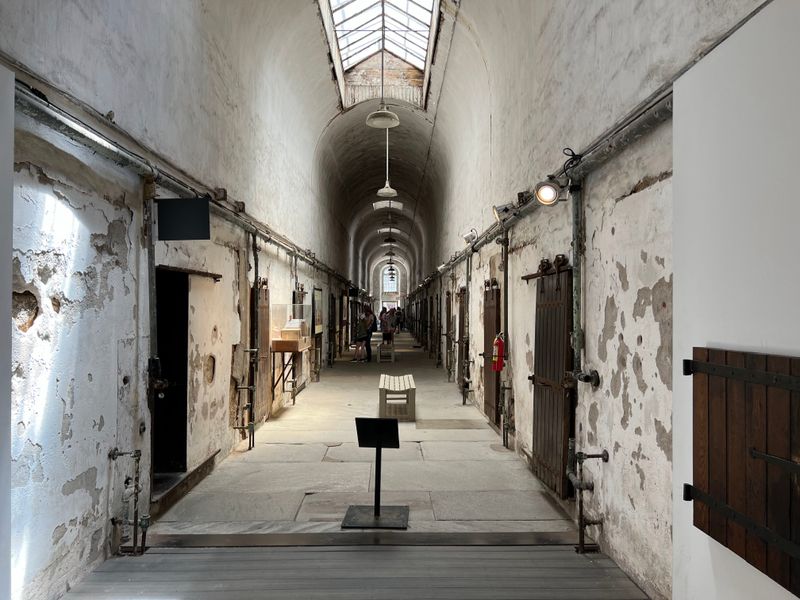
Outside among the walls, The Big Graph turns statistics into a physical structure that you can walk around and absorb slowly.
The installation compares incarceration rates across decades and countries, translating abstract numbers into height and scale.
It invites thoughtful conversation without simplifying hard truths.
Panels explain the methods and sources while asking visitors to consider causes and outcomes.
You learn how policy shifts and social factors led to changes that still shape lives today in Pennsylvania and beyond.
The piece avoids sensation and focuses on clarity and empathy.
Teachers and students often gather here because the visual language works across ages and backgrounds.
The design encourages you to circle, pause, and consider each angle before moving on.
That rhythm feels respectful and lets the message sink in.
Seasonal programs sometimes use this space for talks or small group reflection that link past to present.
Staff keep the conversation grounded in data while making room for local perspectives.
The balance feels careful and constructive.
Photos of the installation capture bold lines and balanced color that play well in natural light.
Morning tends to reduce glare so the forms read cleanly for wider shots.
Give yourself time to connect the sculpture back to the building that surrounds it.
Night programs and seasonal chills
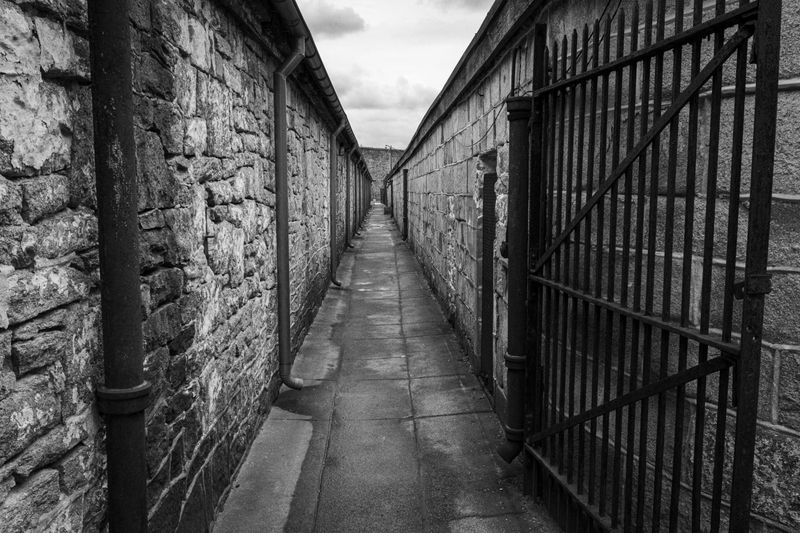
Evening programs bring a different energy as the penitentiary glows softly against the twilight and the city hums just beyond the gate.
Seasonal events change year to year so it is smart to check the official calendar before planning a special trip.
The ambience tilts toward suspense without crossing into chaos.
Staff manage flows carefully so groups move smoothly and safety remains a priority throughout the experience.
Clear signage and attentive guides keep you oriented even when corridors feel shadowy and long.
The tone stays respectful of history while acknowledging the thrill that darkness can add.
Some nights include enhanced storytelling, live elements, or limited access zones that feel exclusive.
Details vary and are announced on the website to keep information accurate and current.
That flexibility keeps returning visitors engaged with fresh reasons to come back.
Neighbors and the museum collaborate to maintain good community relations during busier seasons.
You will notice considerate crowd control that preserves the quiet of nearby streets.
It is a thoughtful balance that benefits visitors and locals alike in Pennsylvania.
Photography at night rewards patience and a steady hand since low light challenges every sensor.
Tripods may be restricted, so confirm rules in advance and adapt with higher ISO and careful framing.
The payoff is a moody set of images that honors the site without sensationalism.
Planning your visit and practical tips
Start by confirming hours since Tuesday is typically closed and other days run from 10 AM to 5 PM with last entry windows listed online.
The phone number is +1 215-236-3300 and the website posts updates that help you time your day around special programs.
Booking tickets ahead helps you avoid lines on peak weekends.
The site is at 2027 Fairmount Ave, Philadelphia, PA 19130 and sits near transit lines and rideshare zones for easy access.
Street parking can be competitive around the Fairmount neighborhood so consider a garage or plan extra time.
Accessibility features are outlined online and staff can suggest routes with fewer obstacles.
You can expect a thoughtful visitor flow with clear maps, helpful docents, and audio guide pickup near the entrance.
Restrooms and a small gift area are positioned to keep your route simple and efficient.
Water fountains are available and seasonal outdoor seating gives you a quick break.
Photography policies favor non-commercial use and encourage respect for other visitors who seek quiet moments.
Flash can flatten the mood so try natural light when possible for richer tones and depth.
Always follow posted rules inside delicate or restricted spaces.
Families will find plenty of conversation starters in exhibits that blend design, history, and civic questions.
Teens often appreciate the frank approach to complex topics that feel timely in Pennsylvania and nationwide.
Leave time for one last loop to the hub so your visit ends with a complete picture.
Dear Reader: This page may contain affiliate links which may earn a commission if you click through and make a purchase. Our independent journalism is not influenced by any advertiser or commercial initiative unless it is clearly marked as sponsored content. As travel products change, please be sure to reconfirm all details and stay up to date with current events to ensure a safe and successful trip.
