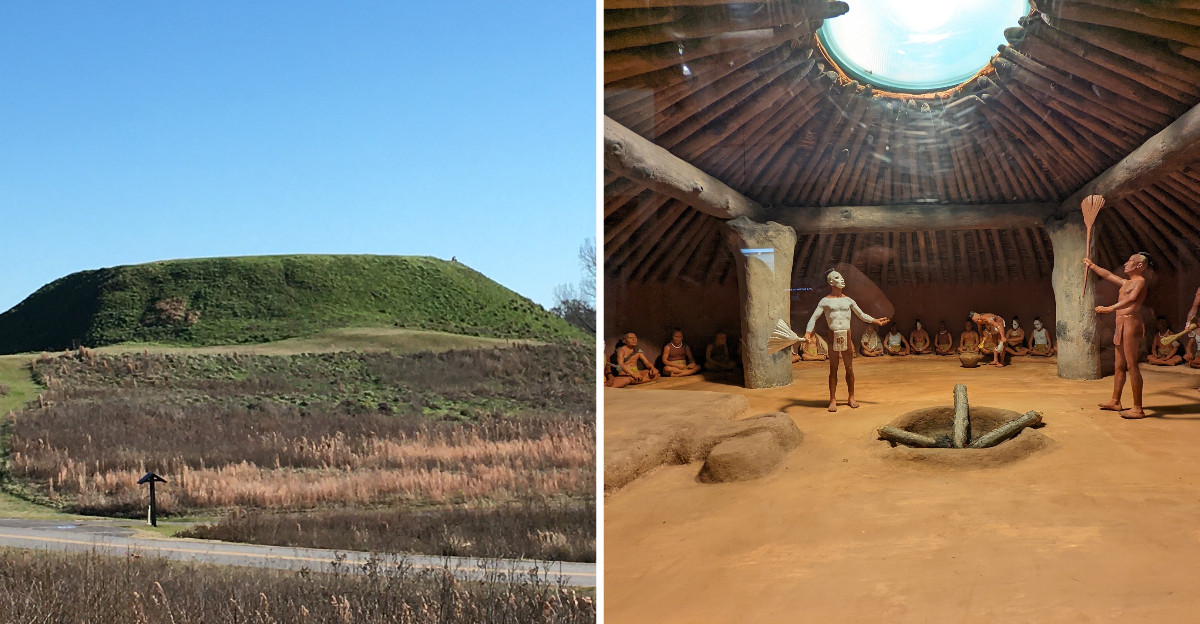
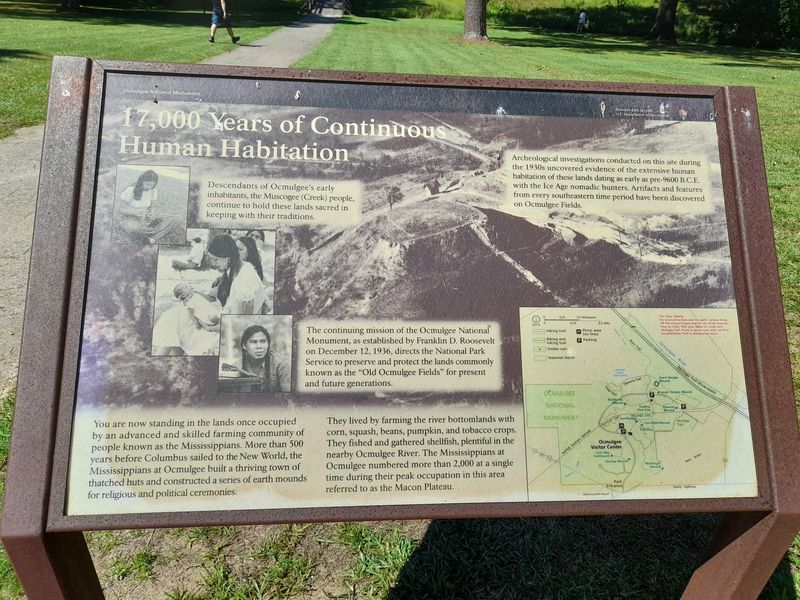
Grassy hills under a wide blue sky feel quiet at this Georgia site, but the history beneath them is anything but. People have been gathering on this patch of land for more than 12,000 years, from Ice Age hunters to the Muscogee (Creek) people who still call it their ancestral home.
The famous earthworks drew the visit, yet something bigger came home in the end. Those giant mounds, as impressive as they are, arrived fairly late in the story.
A whole day disappeared while tracing layers along trails, inside a thousand-year-old council lodge, and on top of a mound taller than most houses. Each stop revealed another chapter, and the timeline kept stretching back further than expected.
Here is what was found, one layer at a time.What surprised me most was how naturally those different eras overlap here. You can walk a single trail and cross thousands of years of history.
Ice Age Hunters Came First
My first stop was the visitor center museum, and I am so glad I went there before touching a single trail. A glass case full of stone spear points quietly rearranged my sense of time.
Some of the oldest objects tell the story of Paleo-Indians, hunters who roamed this area more than 12,000 years ago, near the end of the last Ice Age.
Georgia looked very different back then. The weather was cooler, the forests were a different mix of trees, and huge animals wandered through river valleys that people followed for food.
Hunters moved often, carrying their tools and knowledge with them.
Nobody built mounds during this time. Instead, small groups likely camped on high ground near the Ocmulgee River, where fresh water, stone, and game were easy to find.
That idea stuck with me as I looked out the museum windows at the rolling fields. The ground I was about to walk on had been a stopping place for families long before anyone planted a single seed here.
Here is my advice for first-timers. Spend at least half an hour with the early exhibits and the short film in the theater, because they make every mound you see later feel far more meaningful.
Kids especially seem to love the arrowhead displays, which show how point shapes changed over thousands of years.
Archaic and Woodland Families Settled In
Honestly, the Archaic period became my favorite surprise of the day. As the Ice Age faded and the climate warmed, people here learned to live off an amazing variety of foods.
Archaic groups used the Macon Plateau to hunt deer, catch fish, and gather nuts, berries, and roots. They shaped stone into grinding tools for cracking and mashing plant foods, along with sharper points for hunting.
Think of it as the ancient version of a well-stocked kitchen.
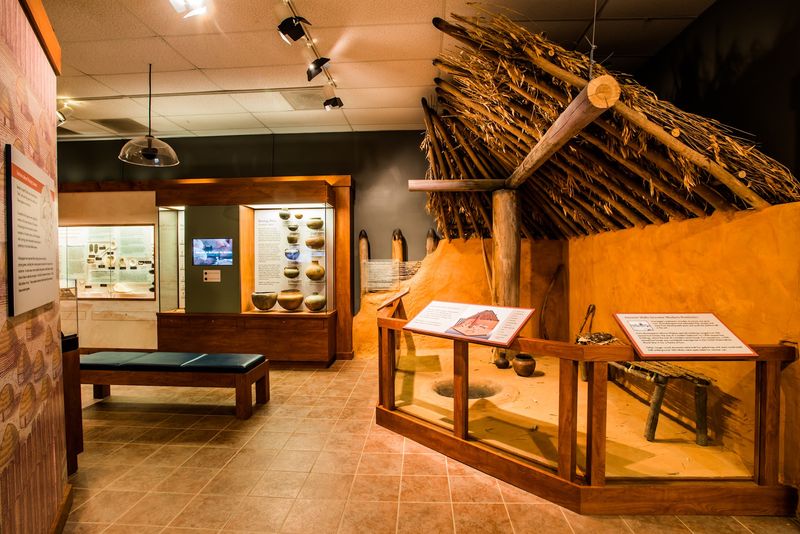
Later came the Woodland period, and life slowed down in a good way. Families began building the first semi-permanent villages, staying in one place for longer stretches instead of always packing up and moving on.
They also started growing small crops, including sunflowers, which gave them seeds to eat and store. Pottery became more common too, which makes sense when you have a home base and food to keep.
I found myself picturing smoke rising from cooking fires along the river bluffs while children played nearby.
For visitors, the trails near the creek and wetlands are a great way to connect with this chapter. The same plants and animals that fed Archaic and Woodland families still live here, and I spotted birds darting through the trees along the boardwalk.
Bring binoculars if you have them, and walk slowly.
Mississippian Newcomers Reshaped the Land
Around 900 CE, something big happened on this plateau. Archaeologists believe a new group of people arrived in central Georgia, bringing a way of life linked to the Mississippi River Valley.
These Mississippians were skilled farmers who grew corn, beans, squash, and pumpkins in the rich soil of the river floodplain. Steady harvests meant they could build large, settled towns and feed a growing population.
And then they started moving dirt, a lot of it.
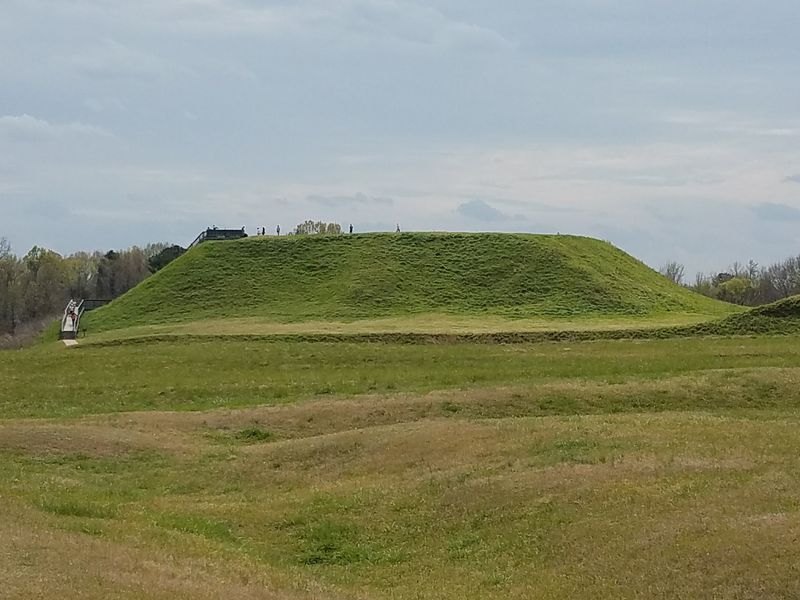
Between about 900 and 1100 CE, they built the flat-topped mounds, council buildings, and defensive ditches that make the park famous today. Every basket of soil was carried by hand, since they had no metal tools, wheels, or work animals.
When I stood near the base of one mound and tried to imagine that effort, my arms got tired just thinking about it. It took planning, leadership, and a whole community working together over many years.
The town on the Macon Plateau became a center for ceremonies, politics, and trade. People likely traveled from surrounding villages to gather here, which fits perfectly with the long history of this place as a meeting ground.
A helpful tip: look for the remains of the old defensive trenches along the trails. They are easy to miss, but they show that this busy town also needed protection.
Earth Lodge Floor Over 1,000 Years Old
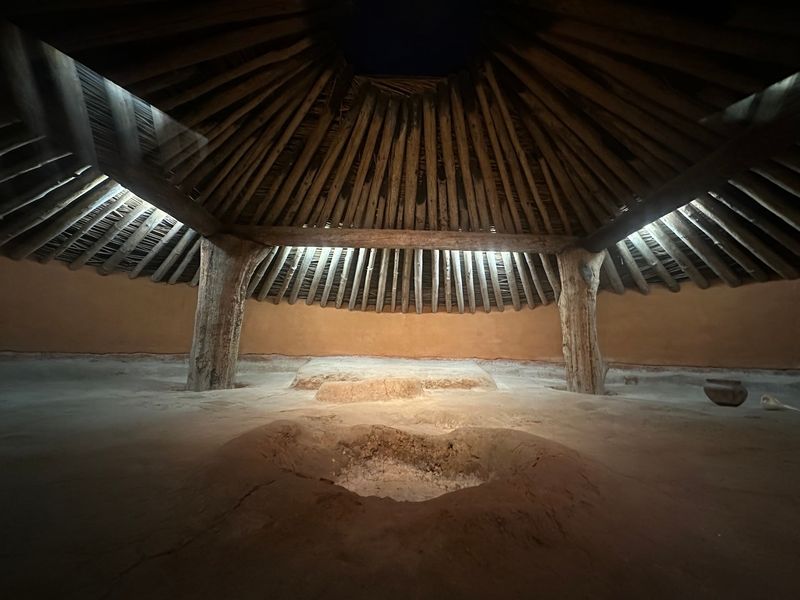
Duck your head, seriously. The entrance tunnel to the Earth Lodge is low, and I almost learned that the hard way.
Once inside, though, the ceiling rises into a dome, and the air feels cool and calm. In front of you sits something incredible: an original clay floor that scientists have dated to around 1015 CE.
That means people stepped on this exact surface more than a thousand years ago.
The lodge you enter is a reconstruction built over the original floor, which was uncovered during excavations in the 1930s. Around the edge, a raised clay bench has molded seats, and a platform shaped like a large bird faces the central fire pit.
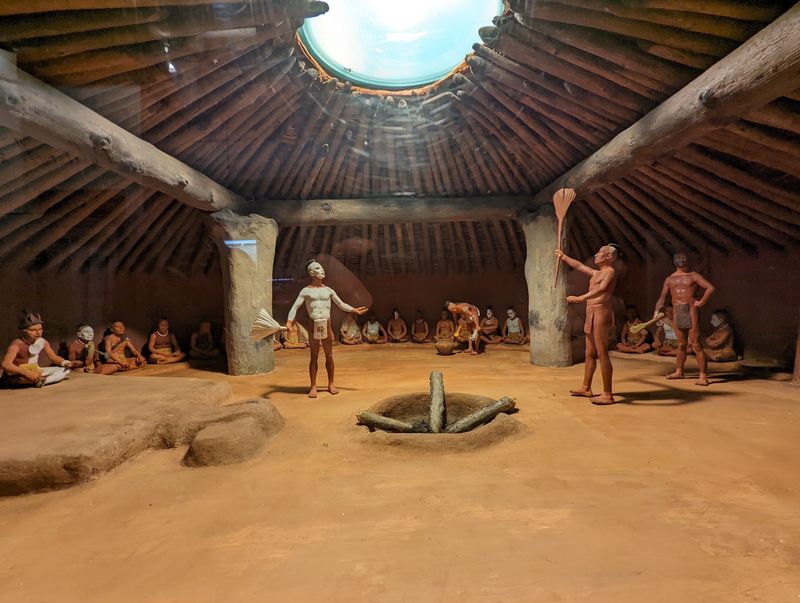
Archaeologists believe it was a council chamber where leaders met to talk, make decisions, and hold ceremonies. Sitting quietly and looking at those seats made the past feel surprisingly close, almost like a meeting had just ended.
The space is small, so visitors often take turns. Be patient, speak softly, and give yourself a few minutes to really look around, because the details are easy to miss at first glance.
Afterward, visit the museum diorama that shows how people may have been seated inside. Seeing both together helped the whole place click for me, and it gave me a new appreciation for how organized this community must have been.
Later Cultures and a Spiral Mound Nearby
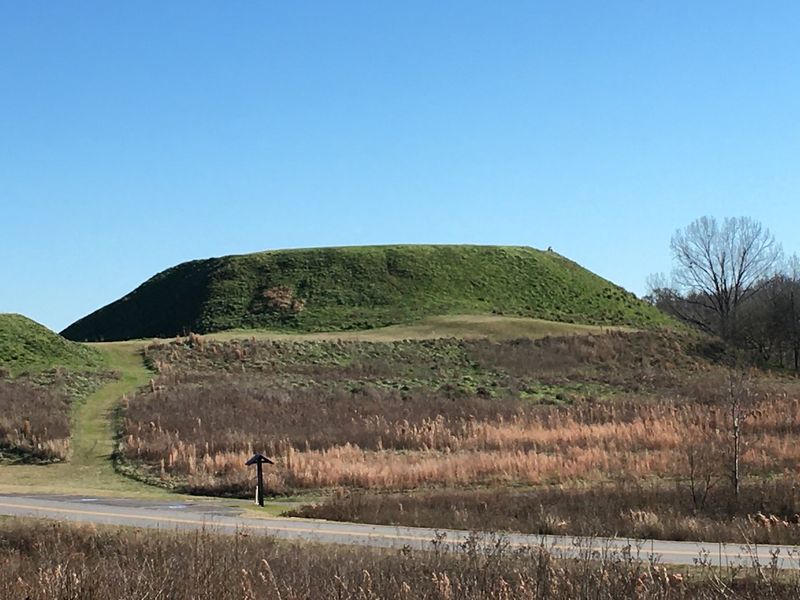
History here did not stop when the big plateau town quieted down. A few miles downriver, in the swampy lowlands, sits the Lamar site, and it adds a whole new chapter.
During the Late Mississippian period, roughly 1350 to 1600 CE, the Lamar culture grew in this region. These people farmed, hunted, and made pottery decorated with stamped and cut designs that archaeologists now use to identify their villages.
One of their mounds has a spiral ramp winding around it, an extremely rare shape that makes it stand out from mounds across the country.
Spanish explorer Hernando de Soto passed through the Southeast in 1540, and villages like these were part of the world his group encountered. That meeting marked the start of huge and often painful changes for Native people.
I will be honest, the Lamar area is not always open to casual visitors. Access has usually been limited to special ranger-led events, so check the park website before your trip if you hope to see it.
Even without going there, the museum shows Lamar pottery and explains how these later communities fit into the bigger timeline. I liked seeing how designs changed over the centuries, a bit like fashion trends in clay.
Knowing about Lamar reminded me that Ocmulgee was never frozen in one moment. Different cultures kept arriving, changing, and building on the past.
Digging Up the Past and a Living Legacy
Some of the park’s most important stories come from a surprising era: the Great Depression. From 1933 to 1941, hundreds of workers hired through New Deal programs carefully dug at Ocmulgee under archaeologist Arthur Kelly.
It became the largest archaeological project in Georgia’s history and uncovered roughly 2.5 million artifacts. Many of the objects I saw in the museum came from those digs, even though railroad construction in the 1800s had already cut through parts of the site.
Still, this place is far more than a collection of old things. The Muscogee (Creek) Nation considers Ocmulgee its ancestral homeland, and its traditions describe this area as a place where their people first sat down after a long migration.
In 2019, the site became a national historical park, and it now covers more than 3,300 acres. About eight miles of trails wind through woods and wetlands, where I spotted birds and heard frogs calling from the water.
Each fall, the Ocmulgee Indigenous Celebration brings music, dance, crafts, and storytelling to the grounds. It is a joyful reminder that people are still gathering here after 12,000 years.
Plan on at least half a day, wear comfy shoes, and arrive early since the park is open from 8 am to 5 pm daily.
Address: 1207 Emery Hwy, Macon, GA 31217
