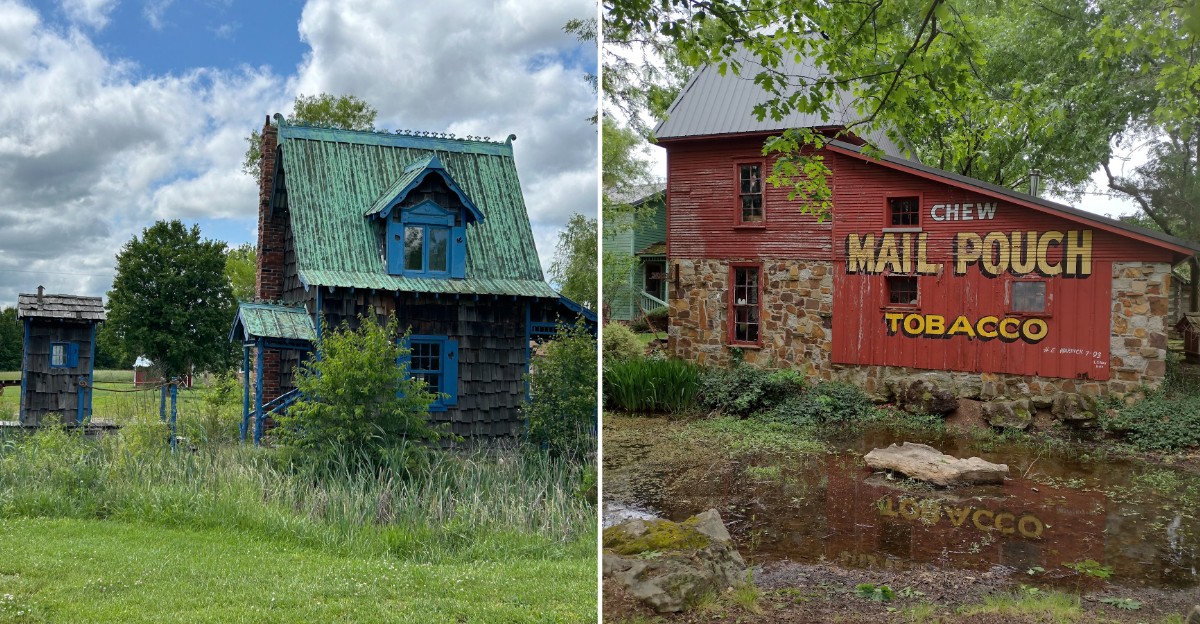
Most people would probably accept that their old hometown was gone. This Missouri artist had a different idea.
After returning to the place where he grew up and finding little left, he started moving old buildings onto his family farm and rebuilding the town piece by piece.
A general store, one-room schoolhouse, church, town hall, and vintage gas station all became part of the new village.
Today, visitors can wander the gravel paths and see what became one man’s very unusual way of saving the past. It feels part art project, part roadside attraction, and part small-town time capsule.
The whole thing is quirky, personal, and much more interesting than simply looking at old photographs of what used to be there.
The Man Who Painted Country Life
People used to call Lowell Davis the Norman Rockwell of rural art, and honestly, once you learn his story, that nickname makes a whole lot of sense. He grew up in the original town of Red Oak, Missouri, and he spent his life turning barnyards, farm animals, and small-town moments into artwork that folks all over the world collected.
What I love about him is that his art never tried to be fancy or distant. He painted and sculpted the kind of everyday country scenes that most people just walked right past, like a rooster on a fence post or an old truck sitting in tall grass.
His whole goal seemed to be reminding us that simple living had real beauty in it.
So when you think about it, building an entire town was really just a bigger version of what he already did in his studio. He once described the place as a mix of a painting and a sculpture made from things other people threw away, which is such a lovely and honest way to put it.
Davis passed away at his home right there in the village he created, and his gentle spirit still seems to hang over every porch and gravel path you will wander past today.
Getting Yourself Out To The Farm
Here is the good news, because this place is really easy to reach if you are already cruising through southwest Missouri. You will find it a few miles northeast of Carthage, tucked just off the historic Mother Road, so it slides right into a classic road trip without much of a detour.
Plug this into your map app and you are set: 12275 Kafir Rd, Carthage, MO 64836. The drive out there takes you along quiet country roads, and I think that stretch actually helps set the mood before you even arrive.
By the time the old buildings start popping up, you already feel like you have left the busy world behind.
Once you pull in, a gravel road loops through the whole town, so you can take it slow and look around at your own pace. There is no admission charge, but there is a spot for donations, and tossing something in is a kind way to help keep the place looking sharp.
It is generally open for visitors every day, which makes it easy to squeeze in whenever your plans allow. My best tip is to give yourself plenty of daylight, because the details here are the whole point and you will want good light to catch them.
When Red Oak Went Quiet
Picture a small farm town where everybody knew each other, and then imagine coming back years later to find it almost completely empty. That is exactly what happened to Lowell Davis when he returned to the area and found that his beloved Red Oak had basically turned into a ghost town.
It was not anything dramatic that caused it, either. After the big war, loads of rural families packed up and moved to cities looking for work, and little communities all across the country slowly thinned out.
Stores closed, houses sat empty, and the places that once buzzed with neighbors just sort of faded into the fields.
You can probably imagine how that would sting if it were your own hometown. The original Red Oak sat a good drive northwest of where the new version stands today, so this was not some random spot to him, it was the backdrop of his whole childhood.
Instead of letting those memories disappear along with the buildings, he decided to save what he could.
Knowing this backstory really changes how you see the place when you visit. Every building you pass is not just a cute old structure, it is a piece of a real town that almost vanished for good.
Rescuing Buildings Piece By Piece
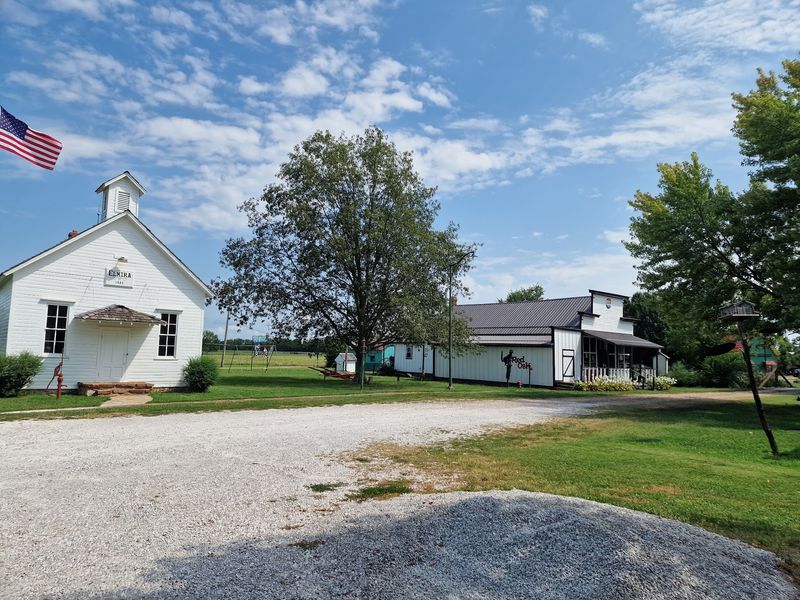
Can you imagine hauling an entire house down a country road just because you could not stand to see it rot? Lowell Davis did that again and again, buying homes and businesses from the original Red Oak and other fading rural towns and carefully moving them onto his farm near Carthage.
Moving the buildings was really just the beginning, though. He restored each of them with patience, fixing up the wood, the windows, and the little details so they looked the way they did back in their busy days.
The result feels less like a museum and more like a neighborhood that skipped a few generations.
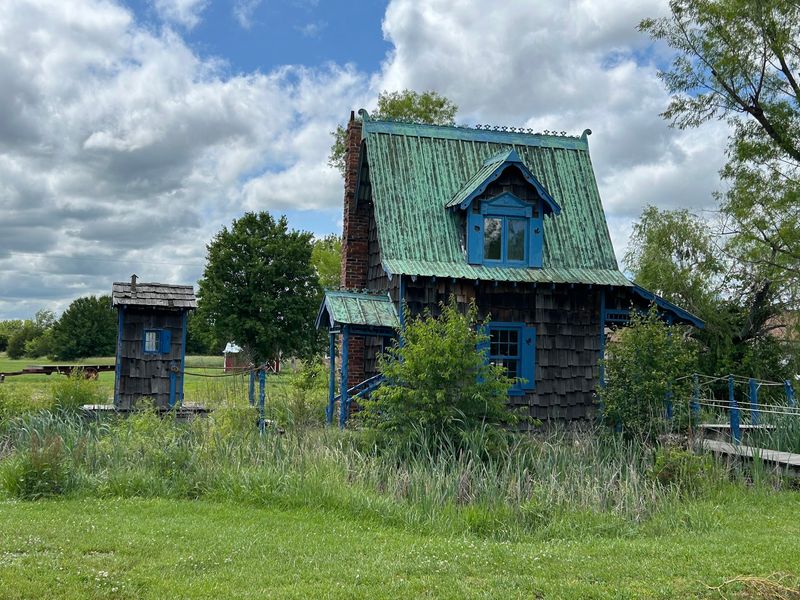
People describe the place in all sorts of ways, like a curated ghost town, an open-air museum, or a giant art project, and each of those labels fits a little bit. What makes it so interesting is that it was built by someone with an artist’s eye, so the way the buildings sit together along the road feels thoughtfully arranged.
You can tell he was thinking about how the whole scene would look, not just each structure by itself.
So as you roll along the gravel loop, try to notice how the pieces fit together. It really does feel like stepping inside a Lowell Davis painting.
The General Store That Started It All
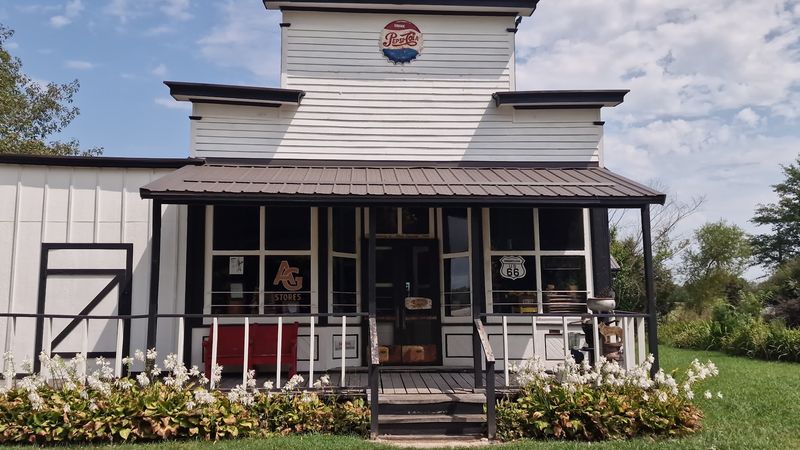
Of all the buildings in town, the general store might carry the most heart. It was once run by Lowell Davis’s father, and it is the very place where young Lowell first started sculpting and painting, which is kind of amazing when you think about where his career went from there.
General stores used to be the center of everything in a small town. Folks stopped in for flour, nails, fabric, and gossip, and kids probably hung around hoping for a piece of candy.
Having this particular store standing in the new town is like keeping the heartbeat of the old town alive.
When you look at it from the road, picture a curious kid sketching behind the counter while his dad helped customers. That early spark, which grew into a lifetime of rural artwork, really started right inside these walls.
It gives the building a sweet, personal feeling that is hard to find at most roadside attractions.
Take a moment to check out the storefront and the old signs around it, because the details are charming. If you love stories about where creative people got their start, this is the building that will probably stick with you the longest after you head home.
Great-Grandpa’s Old Blacksmith Shop
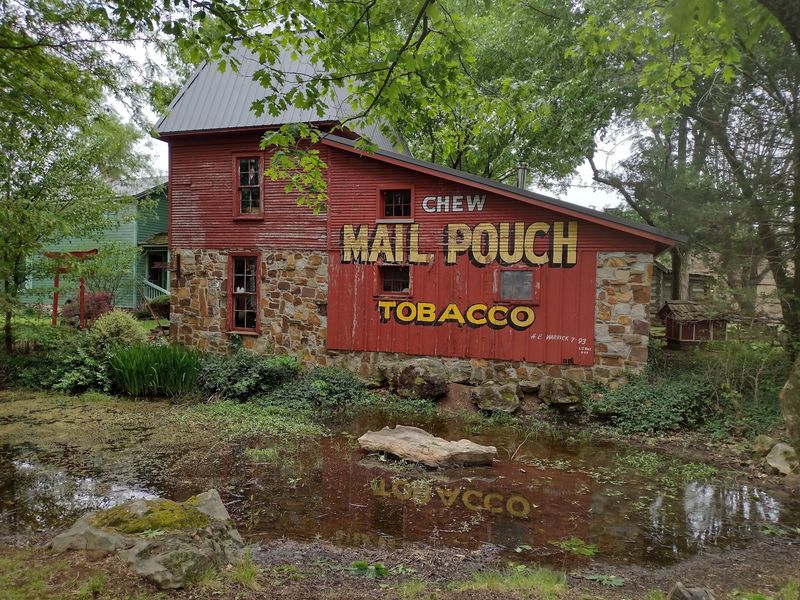
Family history runs deep here, and the blacksmith shop proves it better than anything else in town. It belonged to Lowell Davis’s great-grandfather, and it was among the very first buildings he moved to his farm, which tells you how much it meant to him.
Back in the day, a blacksmith was about as important as it got in a farming community. That was the person who fixed plows, shaped horseshoes, and repaired just about every metal tool a family depended on.
Without a good blacksmith nearby, a lot of daily farm work would have come to a grinding halt.
By saving this shop, Davis was not only protecting a building but also honoring a whole family trade that had been passed down through the years. That kind of connection to your roots is something a lot of us wish we had, especially as old family places get sold off or torn down.
Walking past it, you can almost hear the clang of a hammer on an anvil, even though the forge has been quiet for a long time.
If you have kids with you, this is a great spot to talk about how people made and fixed things before big stores existed. It turns a quick look into a fun little history lesson.
Schoolhouse, Jail, And Town Hall
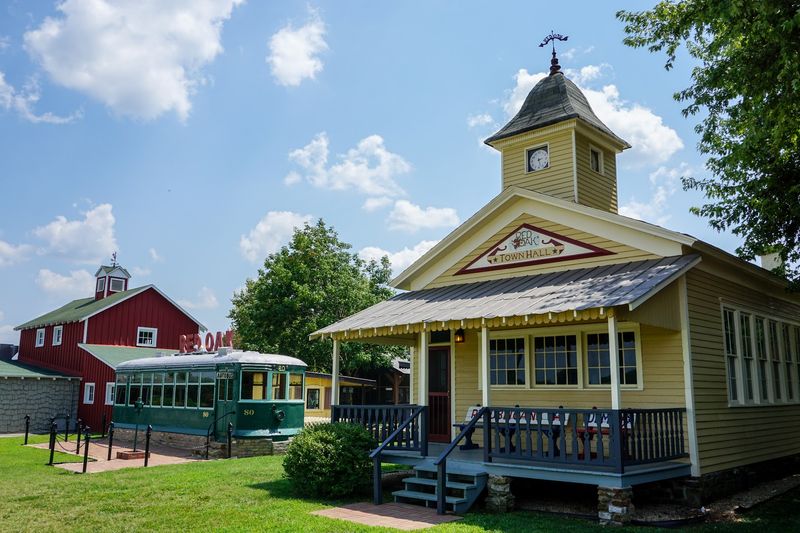
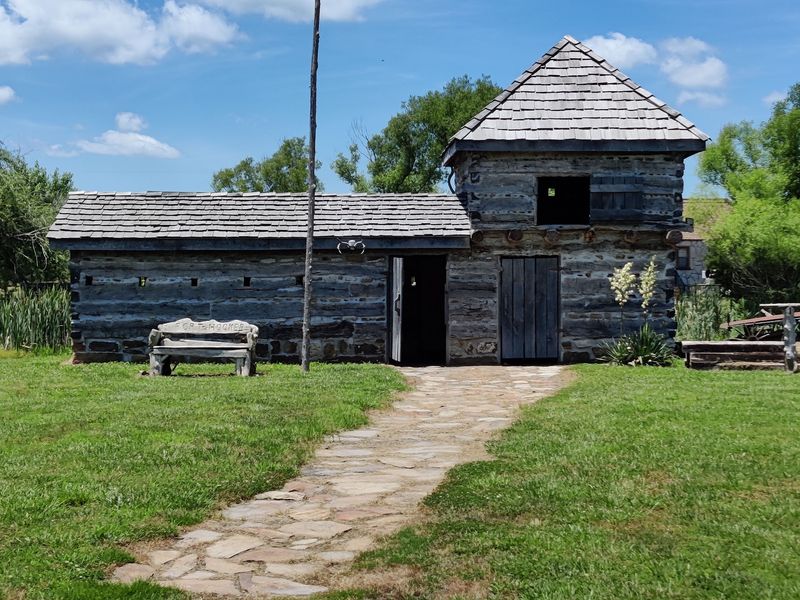
Every proper small town needs a place to learn, a place to make decisions, and a place to cool off troublemakers, and this little village has all of them. The old schoolhouse, the town hall, and the tiny jail sit here together, and seeing them side by side gives you a real sense of how a rural community worked.
The schoolhouse is probably the most nostalgic of the bunch. Kids of all ages often learned together in buildings like this, with the same teacher handling every subject and a wood stove keeping everyone warm in the winter.
It is fun to imagine what a school day looked like without screens, buses, or cafeteria lunches.
Then there is the jail, which is small enough to make you chuckle. In towns this size, the jail was more about keeping the peace for a night than locking anyone away for long, so it makes sense that it looks so modest.
The town hall rounds out the group as the place where neighbors would have gathered to talk through local business.
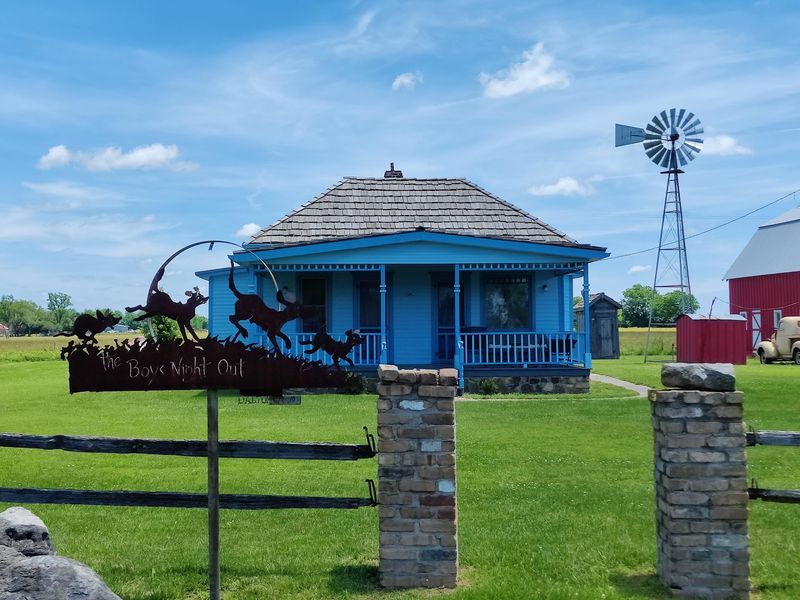
Along with these, you will spot a feed store, a church, a diner, several homes, and even an old cemetery. Together they make the town feel complete instead of a random pile of buildings.
Sculptures And Old Cars Around Every Bend
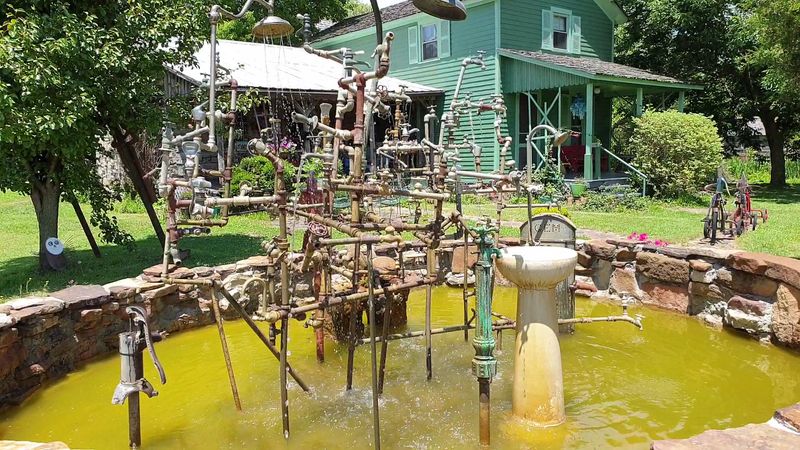
Keep your eyes moving as you drive, because Lowell Davis tucked his own sculptures all over the property, and they pop up in places you might not expect. Mixed in with those are old cars and trucks parked here and there, which makes the whole town look like the owners just stepped inside for lunch.
These little touches are what really turn the place from a building collection into a work of art. The sculptures carry the same warm, down-home feeling as his paintings, so they fit right in with the weathered wood and old storefronts.
It almost feels like a scavenger hunt, trying to spot every piece as you roll along the loop.
The vintage vehicles add a lot of character, too. Rusty fenders, rounded hoods, and faded paint give off a lived-in charm that brand-new props could never copy.
A good approach is to drive the loop slowly just to take everything in, and then circle back for another look at your favorites. Just remember to snap pictures from the gravel road instead of wandering onto private yards, since real people live here.
You will probably be surprised by how many little details you missed on your earlier pass.
