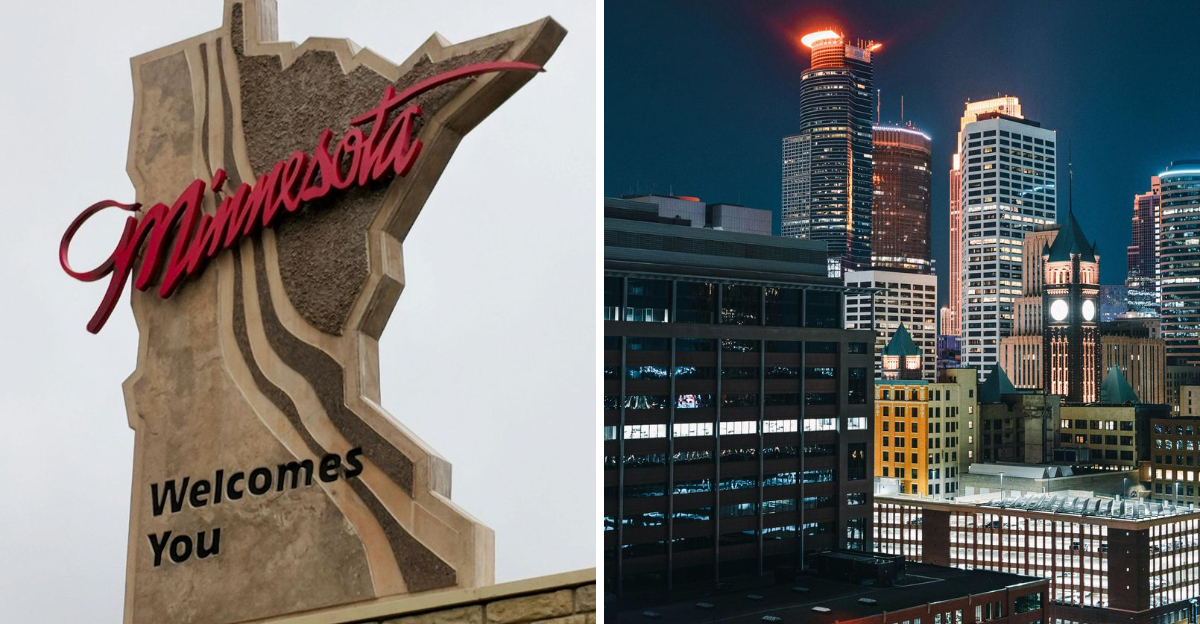
There is a whole state where sorry is a greeting, not an apology. People will wave you into traffic and then complain about you later in the garage.
The locals have a running joke about their own famous friendliness. They insist it is not real niceness at all.
What looks like warmth is just passive aggression bundled up in fleece and good manners. You will hear “that’s different” and spend three hours wondering what it meant.
The mittens come off the second you drive away. Someone will bring you a hot dish to your face and roll their eyes about it to their spouse.
It is a place where everyone asks how you are doing but nobody actually stops for the answer. And somehow, that fake warmth still beats the real cold anywhere else.
1. The Origin of Minnesota Nice: Scandinavian Roots Run Deep
Long before Minnesota Nice became a cultural punchline, it was a survival strategy. Thousands of Scandinavian and German immigrants settled Minnesota in the 1800s.
They brought with them a deep cultural value: keep the peace, work hard, and never make a scene.
In Norway and Sweden, there is a concept called “Janteloven,” which roughly means do not think you are better than anyone else. It discourages bragging, loud opinions, and open conflict.
Sound familiar? That philosophy took root in the Minnesota soil right alongside the corn and soybeans.
These immigrant communities built tight-knit towns where social harmony was essential for survival. Harsh winters meant you needed your neighbors.
You could not afford to burn bridges when the temperature dropped to minus twenty.
Over generations, this value of polite restraint became deeply embedded in the regional personality. Children were taught to be agreeable, helpful, and never cause discomfort to others.
The result is a population that genuinely wants to be kind, but also learned early that expressing negative feelings directly is simply not done.
Understanding this history makes Minnesota Nice feel less like a quirk and more like a cultural inheritance. The mittens covering the passive aggression were knitted a very long time ago, and the pattern has been passed down with great care ever since.
2. The Art of the Passive-Aggressive Compliment

“That is certainly one way to do it.” If a Minnesotan says this to you, congratulations. You have just been criticized without a single harsh word being used.
The passive-aggressive compliment is perhaps the crown jewel of Minnesota Nice. It allows the speaker to express disapproval while technically remaining polite.
The listener is left wondering whether they just received praise or a subtle takedown.
Common examples include phrases like “You are so brave for wearing that,” “I could never eat that much, good for you,” and the classic “Interesting choice.” Each one lands with a soft thud that takes a moment to register.
What makes this so uniquely Minnesotan is that the person delivering the comment is often completely sincere in their belief that they are being kind. There is no malice intended.
They genuinely want to acknowledge you without causing discomfort. The fact that it stings slightly is just a side effect.
Visitors from more direct-communication cultures, like New York or Texas, often miss these cues entirely. They walk away thinking everyone loves them.
Meanwhile, the Minnesotan has said everything they needed to say and feels quite good about the interaction.
Learning to decode these layered compliments is practically a rite of passage for anyone who moves to the state. Consider it your first fluency test in Minnesotan.
3. “Oh, That Is Just Fine” and Other Famous Lies

Four words that mean absolutely nothing in Minnesota: “Oh, that is fine.” When a Minnesotan tells you something is fine, begin investigating immediately. Something is almost certainly not fine.
This particular phrase is a cornerstone of Minnesota Nice communication. It allows a person to signal dissatisfaction without actually voicing a complaint.
The speaker maintains their pleasant reputation. The listener is technically informed.
Everyone moves on, and nothing is ever resolved.
Linguists who study regional American dialects have noted that Minnesotans use hedging language at remarkably high rates. Words like “a little,” “kind of,” “maybe,” and “I suppose” appear constantly in everyday speech.
They soften statements so thoroughly that the original meaning often disappears entirely.
“I am a little bit frustrated” in Minnesota translates to “I am furious.” “Maybe we could think about it” means “Absolutely not.” “I suppose that could work” is the most reluctant agreement you will ever receive from a human being.
For newcomers, this can create genuine confusion. You might spend weeks thinking a relationship is going great, only to discover through a third party that the other person has had concerns since day one.
The trick is to listen not just to what Minnesotans say, but to the small hesitations, the tight smiles, and the pauses that do all the heavy lifting in a conversation.
4. The Uff Da Phenomenon: Frustration With a Cozy Sound
“Uff da” is one of the most versatile expressions in the Minnesotan vocabulary. Borrowed from Norwegian, it can mean surprise, exhaustion, mild frustration, or quiet resignation.
It is the sound a Minnesotan makes instead of saying what they actually mean.
Think of it as an emotional Swiss Army knife. Spill your coffee?
Uff da. Car won’t start in January?
Uff da. Someone cuts in line at the State Fair?
A very pointed uff da indeed.
The beauty of this expression is that it releases emotional pressure without causing social disruption. Nobody has raised their voice.
Nobody has made a scene. The feeling has been acknowledged and immediately tucked back under a wool blanket.
You will find “uff da” on bumper stickers, coffee mugs, and refrigerator magnets across the state. Minnesotans wear it as a badge of cultural identity.
It is both self-aware and completely sincere at the same time.
Linguist experts note that expressive sounds like uff da serve important social functions in tight communities. They allow people to bond over shared frustrations without escalating tension.
It is conflict avoidance with a charming accent.
Visitors to Minnesota often pick up the phrase within days of arriving. There is something deeply satisfying about having a sound that says everything and nothing at the same time.
Uff da, indeed.
5. The Minnesota Goodbye: A 45-Minute Exit Strategy
You have decided it is time to leave the party. You announce this to your host.
Forty-five minutes later, you are still standing by the door, coat on, keys in hand, discussing the weather forecast for next Tuesday.
Welcome to the Minnesota Goodbye, one of the most beloved and bewildering social rituals in the Upper Midwest. Leaving a gathering in Minnesota is not a single event.
It is a multi-stage process with its own unwritten rules and timeline.
Stage one involves announcing your departure. Stage two is a second round of conversation that has nothing to do with leaving. Third stage moves the group to the doorway. Stage four takes everyone outside to the driveway.
Stage five involves rolling down the car window for one final exchange.
The whole process can easily stretch past the length of a feature film. Nobody seems bothered by this.
In fact, cutting the goodbye short would be considered rude. You simply do not rush a Minnesota farewell.
Sociologists suggest this behavior reflects a genuine reluctance to end positive social connections. Minnesotans deeply value community and belonging.
Saying goodbye feels like a small loss, so the process is extended as long as possible.
If you are ever in a hurry to leave a Minnesota gathering, budget extra time. The goodbye is not optional, and it has its own schedule entirely separate from yours.
6. Hotdish and Hospitality: Food as a Love Language
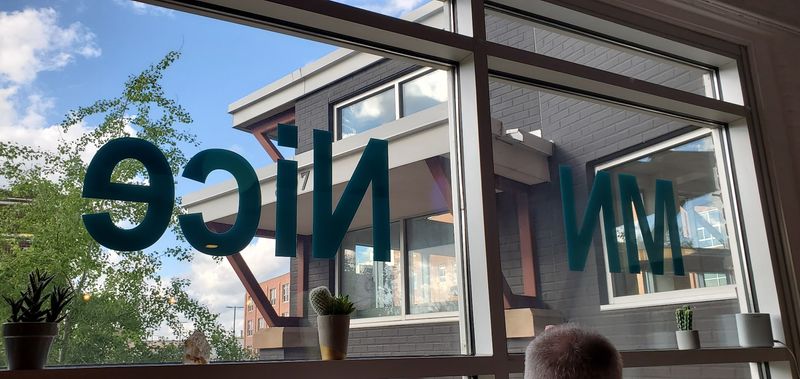
In Minnesota, bringing food to someone is the highest form of emotional expression available. Joy, sympathy, celebration, apology, and support all arrive in a casserole dish.
Specifically, they arrive as hotdish.
Hotdish is Minnesota’s signature comfort food, a hearty casserole typically made with a starch, a protein, a vegetable, and a creamy sauce, often topped with tater tots or crispy onions. It is warm, filling, and completely unpretentious.
Much like the people who make it.
When a neighbor has a baby, there is hotdish or when someone loses a job, hotdish appears.
When a friend moves into a new home, you guessed it, hotdish on the doorstep. The dish carries meaning that Minnesotans sometimes struggle to say out loud.
This food-as-care tradition is deeply tied to Minnesota Nice. Rather than saying “I love you” or “I am worried about you,” a Minnesotan will show up with a 9×13 pan and let the tater tots do the talking.
Church basements across the state have been fueled by this tradition for over a century. Community potlucks remain a genuine social institution in small towns and suburbs alike.
There is something quietly beautiful about a culture that expresses its deepest feelings through a casserole. The warmth is real, even if the words are slow to follow.
Hotdish never lies.
7. The Nod: Minnesota’s Most Efficient Form of Communication

Words are optional in Minnesota. A single nod can communicate hello, I see you, I agree, good point, let us move on, and have a nice day, all depending on the angle and timing.
The Minnesota Nod is an art form. It is brief, controlled, and deeply meaningful within its cultural context.
Outsiders might mistake it for indifference. Locals understand it as a complete and satisfying social interaction.
In rural Minnesota especially, the nod functions as the default greeting between strangers. Two people passing on a gravel road will exchange a nod and consider themselves thoroughly acquainted.
No names needed. No small talk required.
The nod has handled everything.
There are variations, of course. The slow single nod means general acknowledgment.
The double nod signals agreement or encouragement. The slight chin-up nod is a casual hello between people who know each other.
The barely perceptible nod at a public meeting means “I heard your concern and I am choosing not to respond.”
The nod also allows Minnesotans to avoid the verbal acrobatics of polite disagreement. Rather than saying something uncomfortable, you simply do not nod.
The absence of the nod speaks volumes.
For a culture that values harmony and efficiency in equal measure, the nod is a perfect tool. It keeps things pleasant, keeps them brief, and keeps everyone from having to say too much.
8. Sisu and Stubbornness: The Quiet Toughness Underneath the Nice
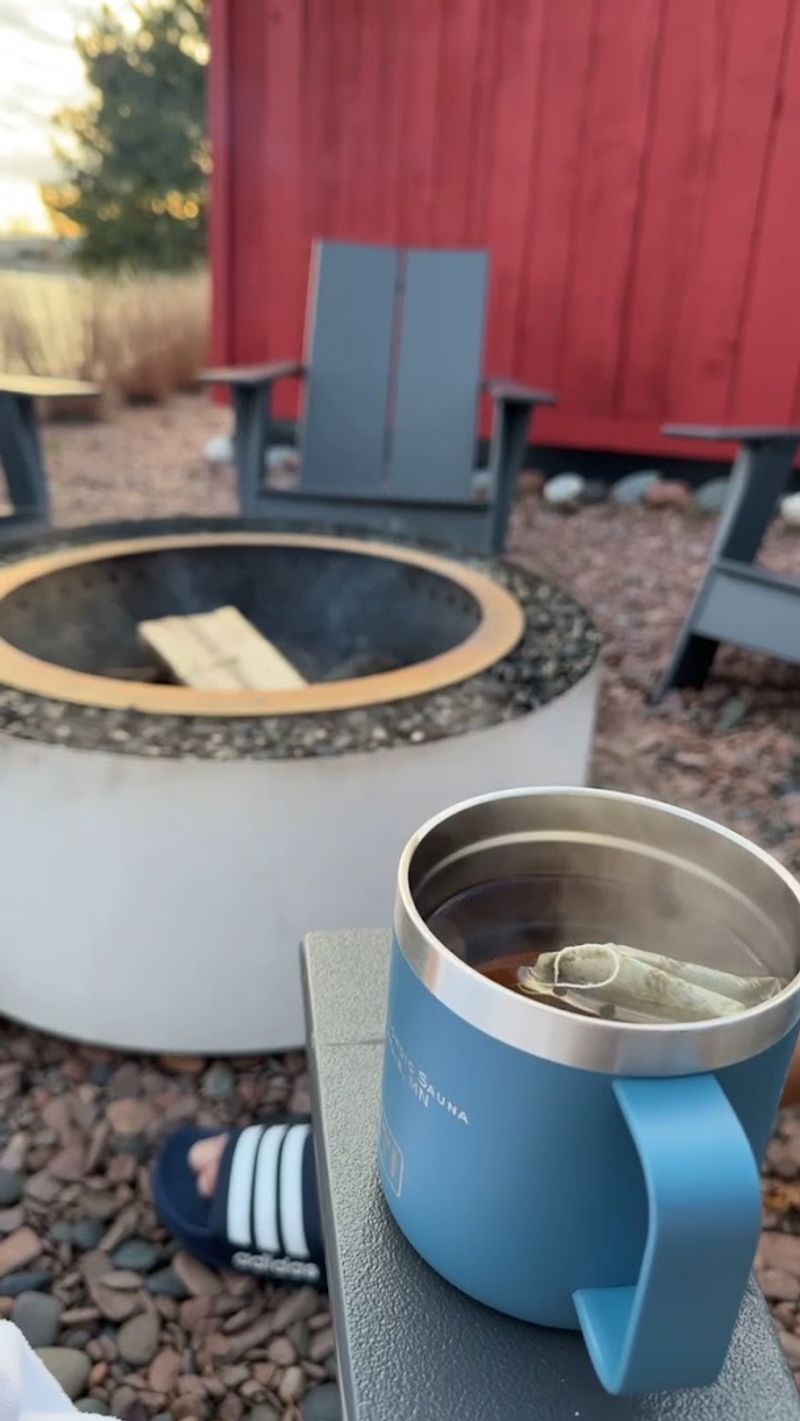
Underneath all the warmth and casserole deliveries, there is a layer of iron. Minnesotans are quietly, fiercely tough.
They just do not advertise it.
The Finnish concept of “sisu” is the best word for it. Sisu means grit, resilience, and the ability to push through difficulty without complaint.
It is not the loud, chest-pounding toughness you see in movies. It is the kind that gets up at five in the morning to shovel a driveway in a blizzard and then shows up to work on time without mentioning it.
This toughness is part of why Minnesota Nice can feel so disorienting. The same person who smiles through every inconvenience is also the person who drove through a whiteout to deliver soup to a sick friend.
The kindness is not weakness. It is a choice made by someone who knows how hard things can actually get.
Minnesota has one of the harshest winter climates of any populated region in the continental United States. Temperatures regularly drop below minus twenty with wind chill.
People here do not just survive that. They build ice fishing houses, host outdoor festivals, and ski to work.
Cheerfully.
The passive aggression in Minnesota Nice is real, but so is the backbone behind it. The mittens are soft on the outside.
Inside, there is a very firm grip.
9. The State Fair: Where Minnesota Nice Goes Public
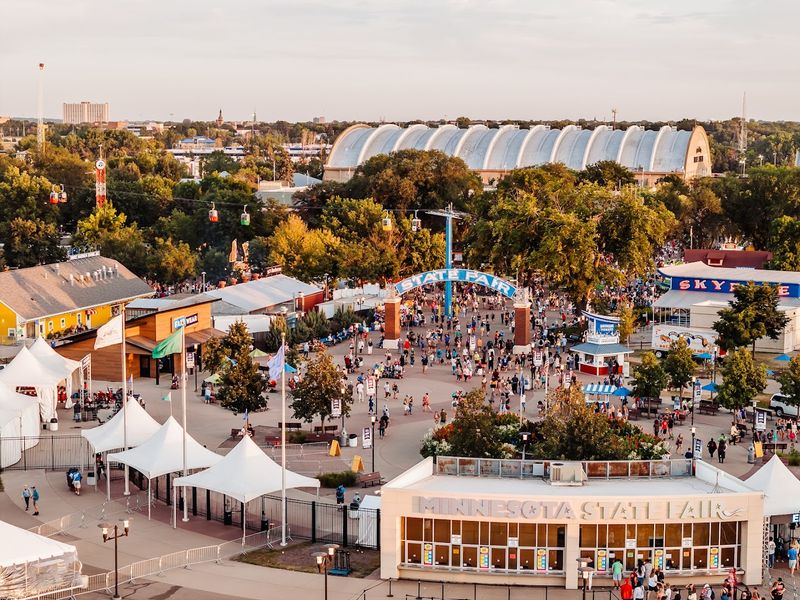
Every August, something remarkable happens in St. Paul, Minnesota. Over one million people gather in a single fairground over twelve days, eat food on sticks, pet farm animals, and treat each other with extraordinary patience and courtesy.
The Minnesota State Fair is the second-largest state fair in the United States by attendance. It is also, arguably, the most polite large public gathering in the country.
People hold doors. They apologize for bumping into strangers.
They wait in line for forty minutes for a cup of Sweet Martha’s chocolate chip cookies and somehow remain cheerful the entire time.
The fair is a showcase of everything Minnesota Nice represents at its best. Community pride, shared enjoyment, generosity of spirit, and an almost theatrical commitment to having a good time together.
Even the disagreements are handled quietly.
There is also something deeply egalitarian about the fair. Politicians, farmers, teachers, and teenagers all eat the same pronto pup and stand in the same lines.
Status takes a back seat to shared experience. That is very Minnesota.
The food alone could fill its own article. Deep-fried everything, cheese curds, roasted corn, and the iconic Sweet Martha’s cookies served in a bucket.
It is glorious, slightly overwhelming, and entirely worth it.
If you want to understand Minnesota Nice in its natural habitat, attend the State Fair.
10. Moving Here: The Frozen Tundra of Social Acceptance
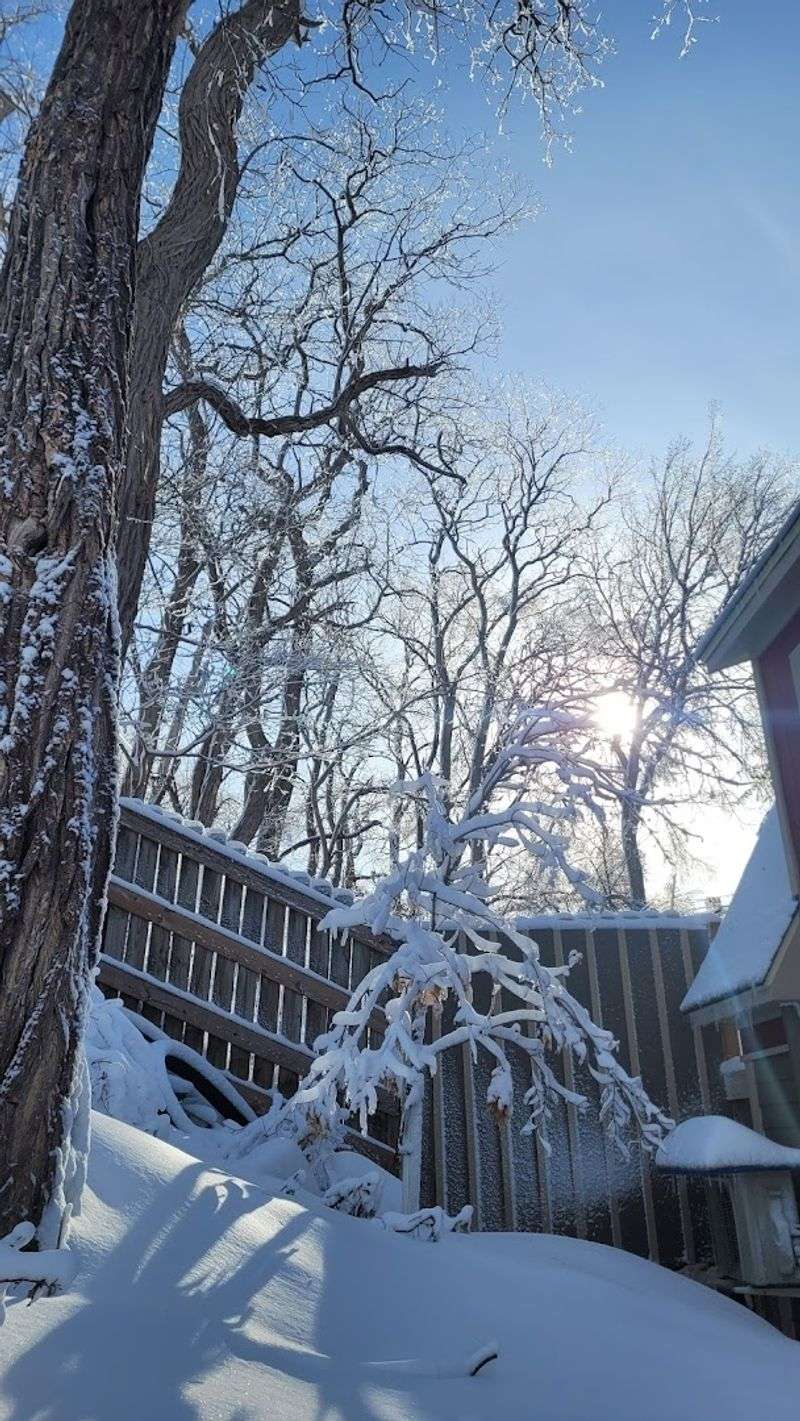
People who move to Minnesota from other states often describe the same experience. Everyone is incredibly friendly.
And yet, somehow, making real friends takes forever.
This is known among sociologists and Minnesotan transplants alike as the “Minnesota Freeze.” It is distinct from unfriendliness. Neighbors will wave, coworkers will chat, and strangers will help you carry groceries.
But getting past the surface layer of niceness into genuine closeness? That can take years.
Minnesotans tend to have deep, long-standing friendships formed in childhood or early adulthood. These social circles are warm and tight, but not always easy to enter.
The politeness newcomers receive is real. The invitation into the inner circle comes more slowly.
Part of this is the Scandinavian cultural inheritance again. Relationships are taken seriously.
Trust is built gradually. You do not rush a Minnesota friendship any more than you rush a Minnesota goodbye.
For transplants, this can feel lonely at first. The warmth is visible but somehow just out of reach, like a lit window on a cold night.
Many newcomers spend their first winter wondering if they are imagining the distance.
The good news is that once you are in, you are in for good. A Minnesotan friend who has accepted you fully will show up for you in ways that feel almost old-fashioned in their loyalty and consistency.
Patience is the price of admission.
