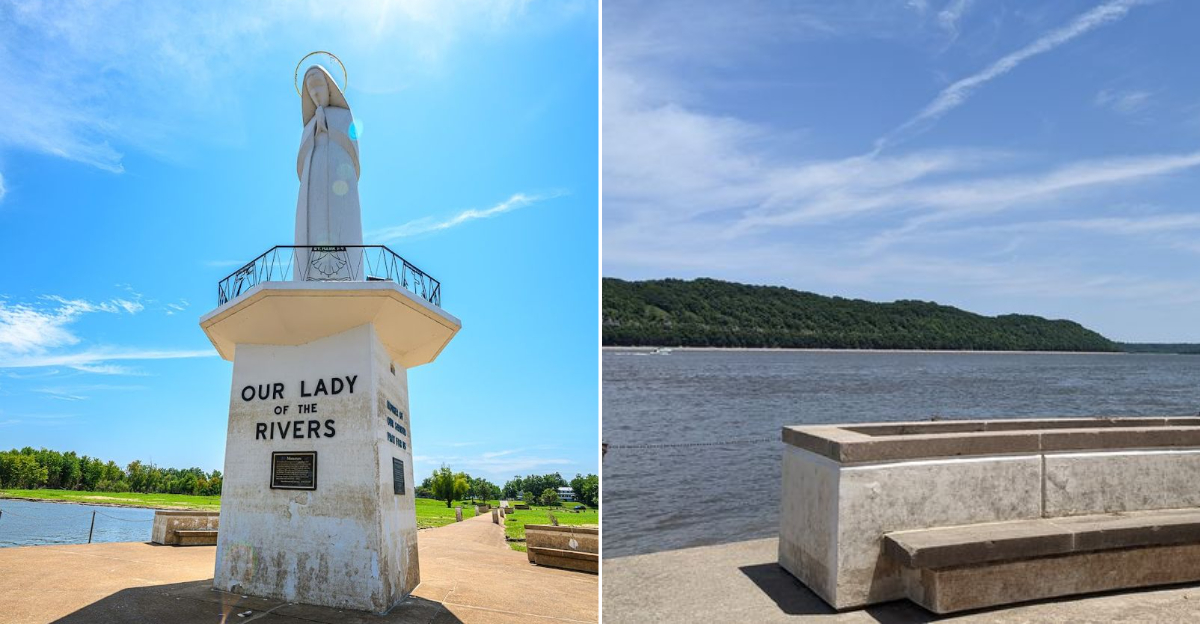
Two massive rivers collide below a Missouri bluff, and the view is anything but peaceful. Churning currents, swirling debris, and the raw power of moving water make this meeting point feel alive and restless.
A small shrine perches above all that chaos, offering a front row seat to nature’s muscle. You climb a short path and suddenly understand why people have visited this spot for generations.
The shrine itself is modest, just a simple white building that seems to hold its ground against the wind. What draws you in is the energy below, the way brown water meets blue water and refuses to blend nicely.
Locals come here when they need perspective, watching barges fight the current and birds ride the updrafts. You will not find sleepy silence at this overlook.
You will find something far more interesting. Missouri does not advertise this place loudly, but the people who know about it keep coming back.
Stand at the railing and feel the bluff hum beneath your feet.
Why The Setting Stops You Cold
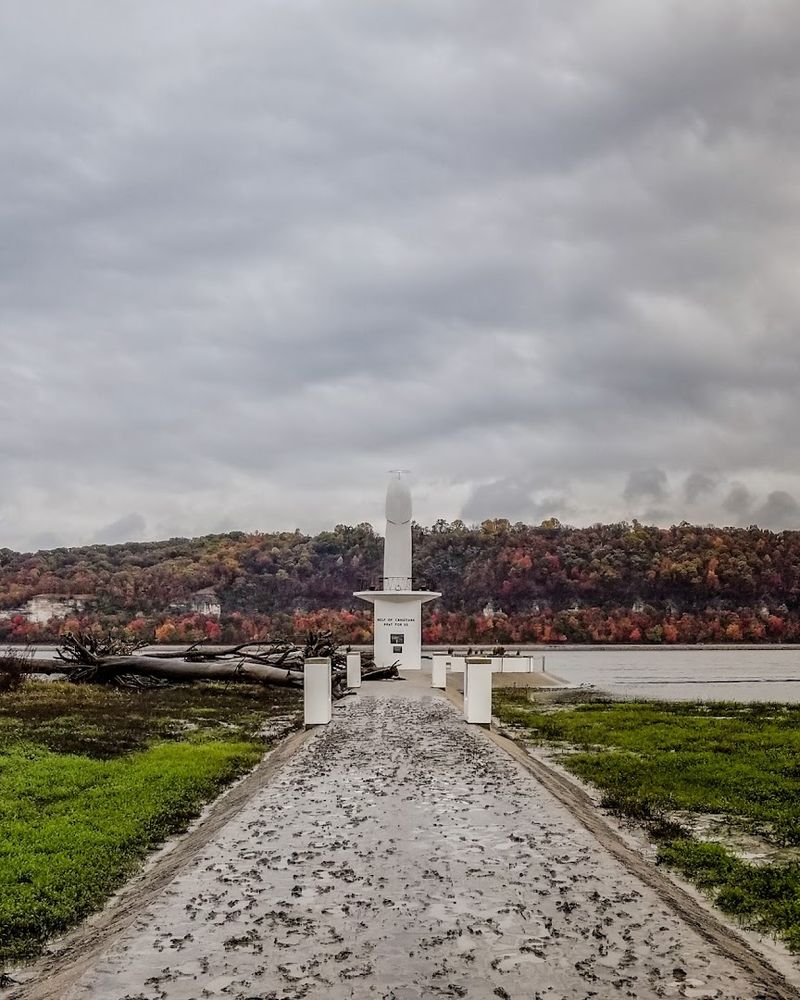
The first thing that gets you is not even the statue itself, although it is beautiful, bright, and impossible to miss once you look up. It is the way the whole bluff seems to hover above the water, like somebody found the exact right spot to make you slow down and breathe.
You stand there for a minute, and the Mississippi looks wide enough to swallow whatever noise you brought with you.
Then your eyes start moving around, and the scene gets even better because this is not just one river doing its thing. You are near the meeting place of the Mississippi and the Missouri, with the Illinois River close by too, and that gives the whole area a kind of gravity you can actually feel.
It is quiet, but it is not empty, and that difference matters more than you expect.
I liked that nothing about it felt overworked or staged for visitors with a camera and five spare minutes. Missouri has plenty of big attractions, but this one works on you in a steadier way, mostly because the land and water are already doing the talking.
If you like places that make you feel smaller in a good way, this one absolutely does that.
Getting There Feels Like Part Of It
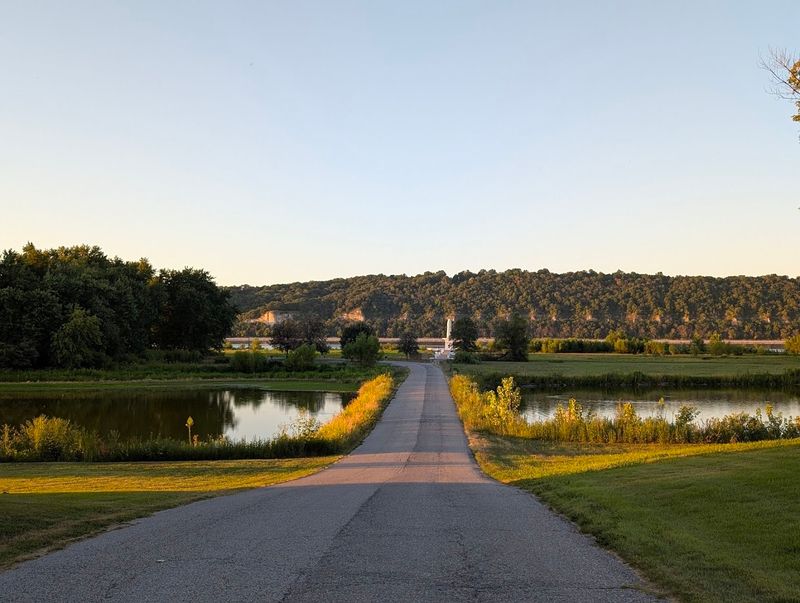
I always love when the drive into a place starts setting the mood before you even park, and that absolutely happens here. Portage des Sioux feels old in the best possible way, with roads that seem to lean gently toward the river and a pace that tells you to quit rushing.
By the time you reach Our Lady of the Rivers Shrine, St. Francis Lane, Portage des Sioux, Missouri, you already feel like the day has softened a little.
There is something nice about arriving somewhere that does not greet you with noise, flashy signs, or a bunch of pressure to do anything fast. You step out, look around, and the shrine just sort of settles into view without trying too hard.
That calm approach fits the place, because the whole experience is more about noticing than checking things off.
And honestly, the town matters here as much as the overlook, because this stretch of Missouri carries a lot of history under its quiet surface. You can feel that this community has lived with the rivers for a long time, and the shrine makes more sense when you arrive slowly enough to notice the setting around it.
I would not rush the last part of the drive if you can help it.
The Statue Looks Simple Until It Does Not
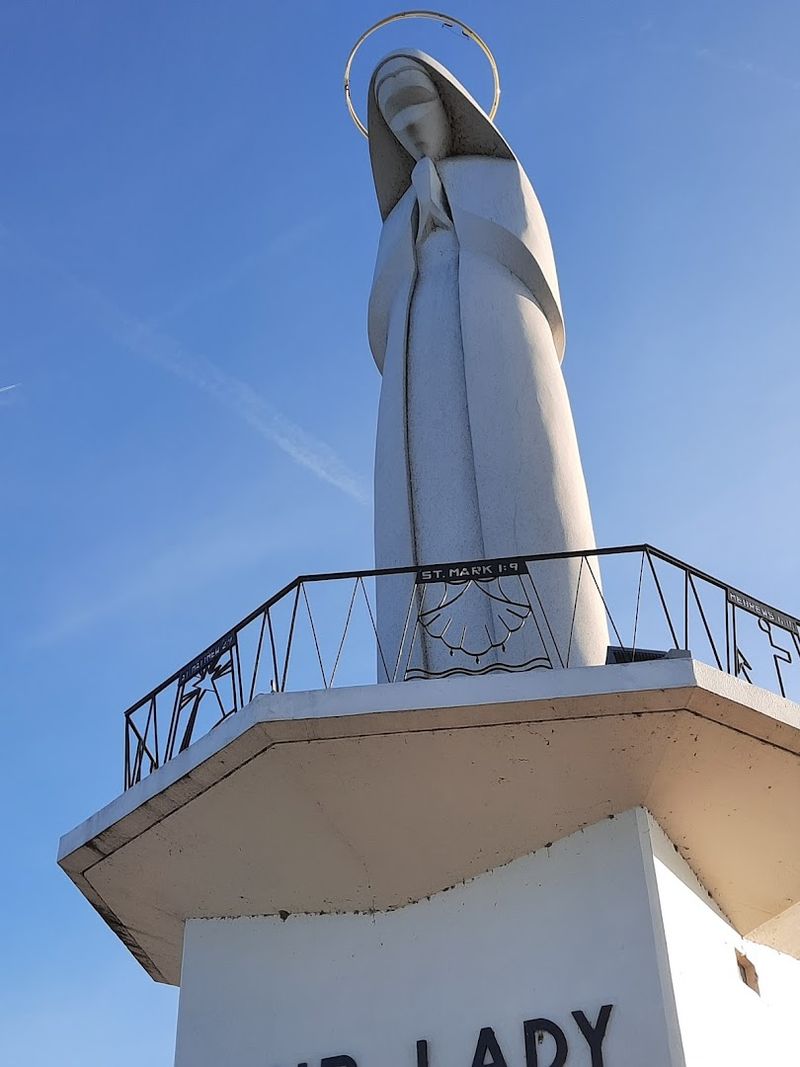
At first glance, you might think the statue is straightforward, maybe even a little plain compared with more ornate shrines. Then you keep looking, and that simplicity starts feeling very intentional, almost like the whole point is to let the landscape stay part of the experience instead of competing with it.
The bright white figure stands above everything with a steadiness that feels calm rather than dramatic.
That balance is what I kept coming back to while I was there, because the setting could easily overpower almost anything placed on it. Instead, the shrine holds its own without getting fussy, and that restraint actually makes it more memorable.
It watches over the water in a way that feels protective, but also deeply rooted in the everyday life of this river town.
I think that is why the place sticks with people, even if they are not arriving for specifically religious reasons. You do not need a long explanation to understand what the statue means to the community once you see where it stands and what it faces.
Missouri has a lot of landmarks, but not many carry this combination of spiritual meaning, river history, and plainspoken presence all at once.
You Can Feel The Flood Story In The Air
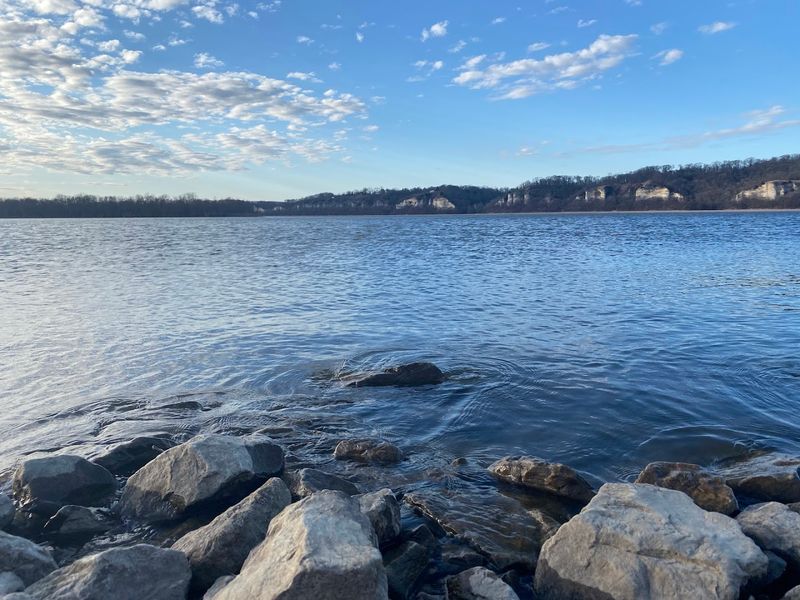
Even before you read much about the shrine, the place has that feeling of being tied to something bigger than a pretty view. It grew out of a flood story and a local act of faith, and you can sense that background in the way people talk about it and care for it.
Nothing about the site feels casual, even though it stays open and welcoming.
What moved me most was how the story belongs to a town, not just a statue on a hill. Portage des Sioux has lived with the rivers long enough to understand that water can nourish, guide, and unsettle the same place all at once.
The shrine carries gratitude, but it also carries memory, and those two things together give it a lot of emotional weight.
I liked that this history is not pushed at you with heavy-handed drama or too much interpretation on the spot. You sort of absorb it while looking out across the floodplain, and that makes it land harder than a polished museum panel ever could.
When you leave, you are not just thinking about a landmark in Missouri, but about the people who asked for protection here and believed they received it.
The River View Keeps Changing On You
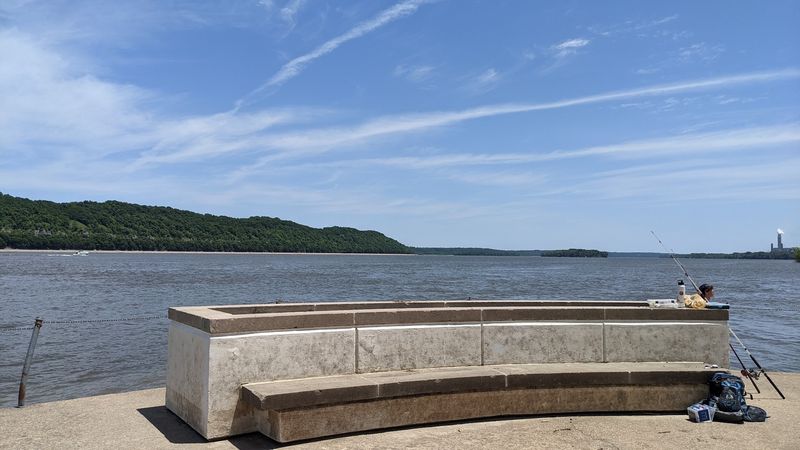
One thing I did not expect was how long I would keep standing there just watching the water shift under the light. The view is broad, but it never feels flat, because the river keeps changing tone, texture, and mood depending on clouds, wind, and whatever the day is doing.
You can look up, look away, then look back and feel like the scene has quietly rearranged itself.
That is part of the magic here, especially if you are the kind of traveler who likes places that reward patience. Across the river, the Illinois side adds shape to the horizon, and the openness of the floodplain makes everything feel even larger than it first appears.
It is not a dramatic canyon or some jagged mountain outlook, but it has its own version of grandeur that sneaks up on you.
I think that is why the shrine works so well as a place to pause rather than perform being impressed. You do not need a big itinerary or a long speech about why the rivers matter when the landscape is already making the point for you.
Just give yourself enough time to stand there and let Missouri, the water, and the sky do their thing.
Portage Des Sioux Gives The Shrine Its Soul
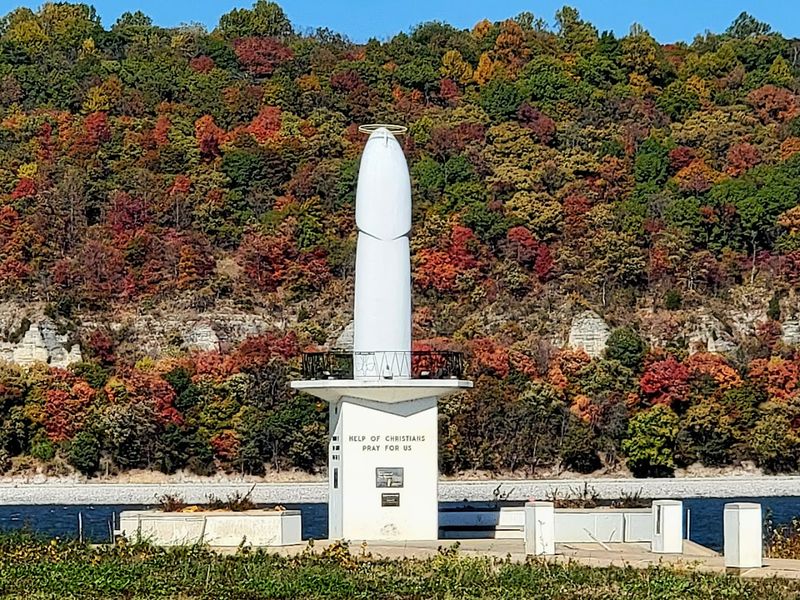
A lot of places like this would not hit nearly as hard without the town around them, and that is definitely true here. Portage des Sioux is one of those river communities that still feels connected to the land in a way you cannot fake with signs and landscaping.
The shrine sits above it all, but the town gives it context, texture, and a human heartbeat.
As you move through the area, you get this sense that the rivers are not just scenery here, but part of daily life and memory. That matters, because it keeps the shrine from feeling isolated or ornamental, like something dropped in for effect.
Instead, it feels like it grew naturally from the history, faith, and practical reality of living beside powerful water.
I always appreciate places where the surroundings deepen the main stop instead of distracting from it, and this is one of those. If you only came for the statue, you would still leave impressed, but you would miss some of what makes it feel so grounded.
Missouri has old towns with plenty of character, and this one adds a quiet sincerity that makes the overlook feel even more meaningful.
This Is A Place To Linger A Little
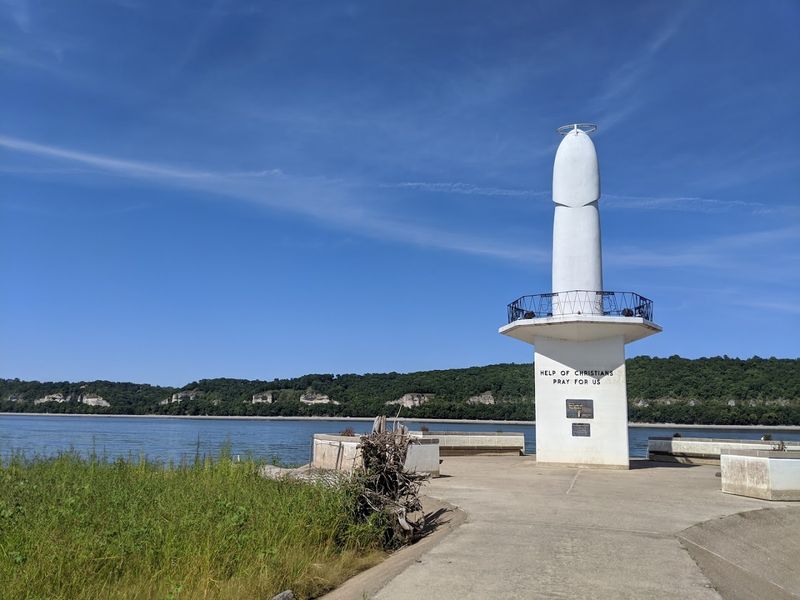
If you are anything like me, you will think you are stopping briefly, then realize you have been there much longer than planned. The shrine has that rare quality where doing almost nothing still feels like you are fully experiencing the place.
You look at the water, shift your angle, take another breath, and suddenly the clock matters a lot less.
Part of that comes from the view, of course, but part of it comes from the emotional pace of the site itself. It does not rush you toward a single focal point and then send you back to the car.
Instead, it unfolds slowly, with the town below, the river beyond, and the statue holding everything together while your mind catches up.
I would honestly encourage you to leave a little blank space around this stop if it fits your day. Not because there is a huge checklist waiting, but because this is the kind of place that gets better when you stop trying to extract a quick payoff from it.
Let Missouri stretch out around you for a while, and the shrine will make more sense with every quiet minute you give it.
It Works Whether You Are Religious Or Not
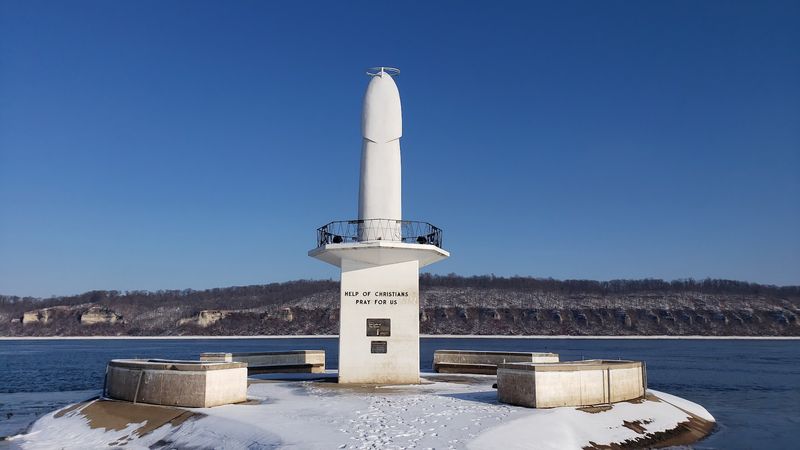
I think this is important to say plainly, because some people hear the word shrine and immediately wonder whether the stop will feel too specific or closed off. In reality, the place has a wide kind of welcome, and its meaning comes through on several levels at once.
You can arrive through faith, history, curiosity, or a love of river landscapes and still feel fully connected to what you are seeing.
That is probably because the site is both deeply local and visually universal, which is not an easy balance to pull off. The statue speaks to devotion, but the setting speaks to anyone who has ever stood above moving water and felt a little humbled by it.
You do not need a matching background to understand why this overlook matters to the people who built, maintained, and cherish it.
Honestly, I love places that trust you to bring your own response instead of prescribing one. Our Lady of the Rivers Shrine does exactly that, and it ends up feeling more generous because of it.
If you want quiet, it gives you quiet, and if you want a deeper story about Missouri, rivers, memory, and community, that story is right there too.
Why I Would Tell You To Go
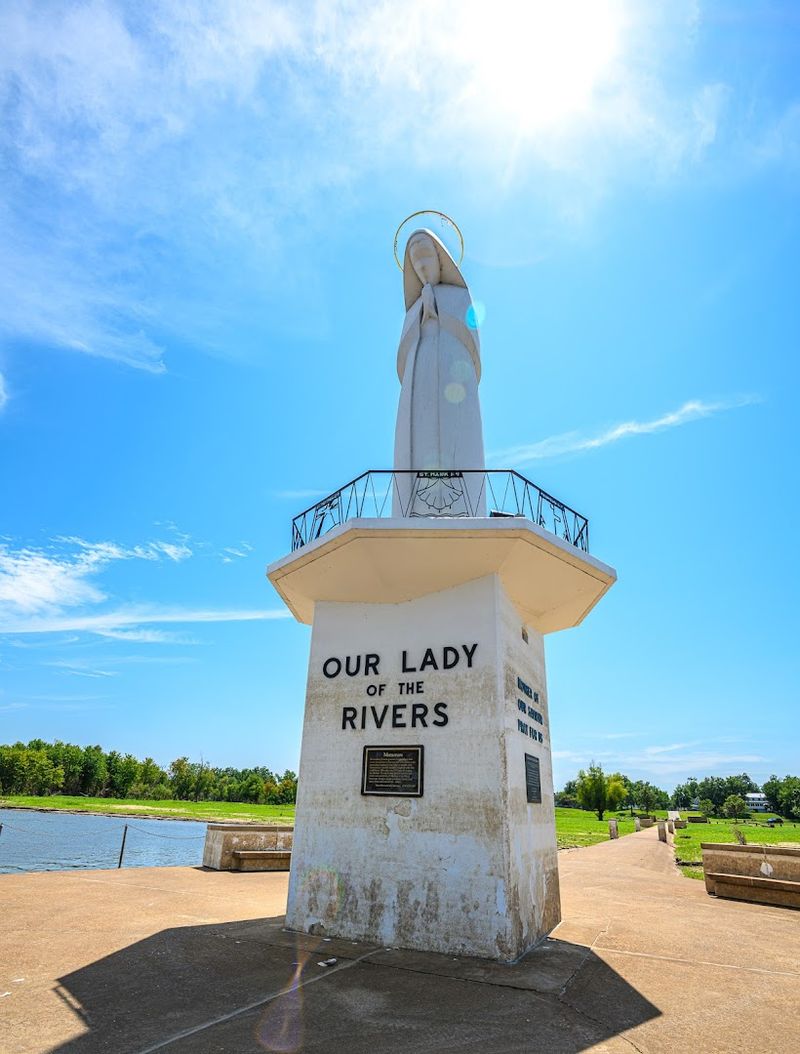
If a friend asked me why they should make the drive, I would not start with a list of facts or dramatic claims. I would say it is one of those places where the setting, the story, and the feeling all line up in a way that is harder to find than people think.
You go for the shrine, sure, but you leave remembering the water, the height, the town, and the stillness.
There is also something satisfying about a place that remains memorable without needing to overwhelm you. It does not depend on spectacle, and it never feels like it is trying to force a reaction out of anybody.
Instead, it earns your attention honestly, by standing where it stands and letting the rivers and history do their work around it.
So yes, I would absolutely tell you to go, especially if you enjoy the kinds of stops that feel human, grounded, and a little bit moving without becoming sentimental. Missouri has louder attractions, but this one stays with you for quieter reasons, and sometimes those are the reasons that last.
If you make the trip, I have a feeling you will understand that within minutes of stepping out of the car.
