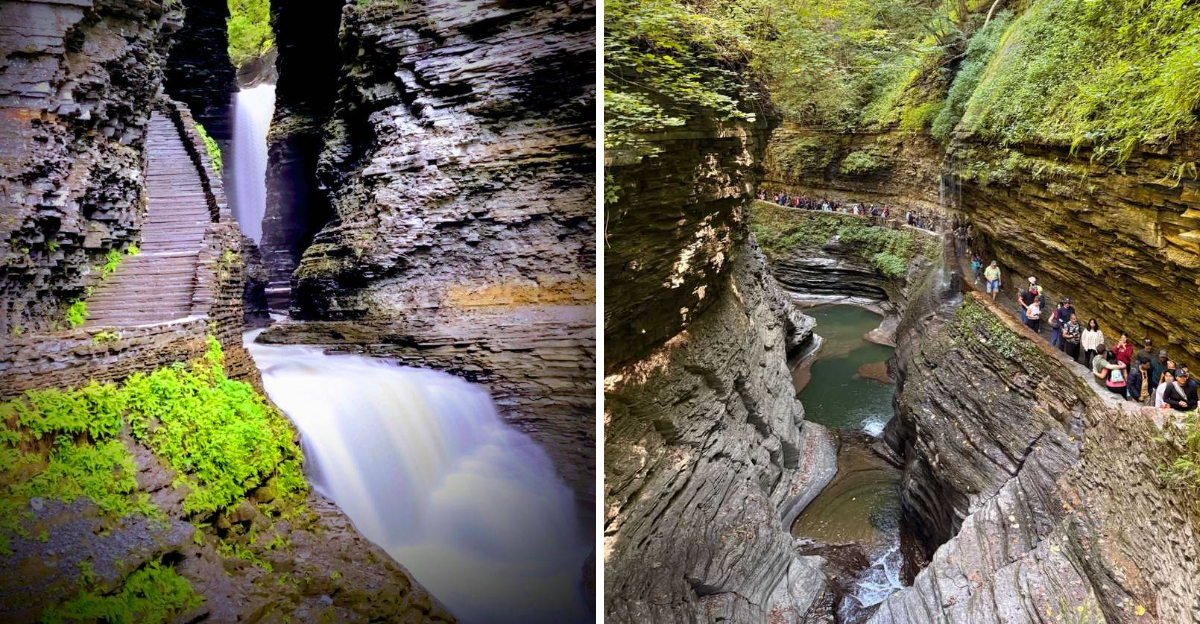
You are here for gorge drama, and Watkins Glen State Park delivers with sculpted cliffs, whispering spray, and staircases that climb into misty light.
Photographers chase these trails for textures that shift by the minute, from mirror calm pools to rushing curtains of water.
New York puts on a brilliant show in every season, and the park translates it into frames that pop with color and motion.
You will find scenes that feel intimate yet grand, where a single droplet catches light like a jewel.
Stay curious, keep moving, and the gorge will give you a reel of surprises that feels made just for you.
Gorge Trail sunrise glow
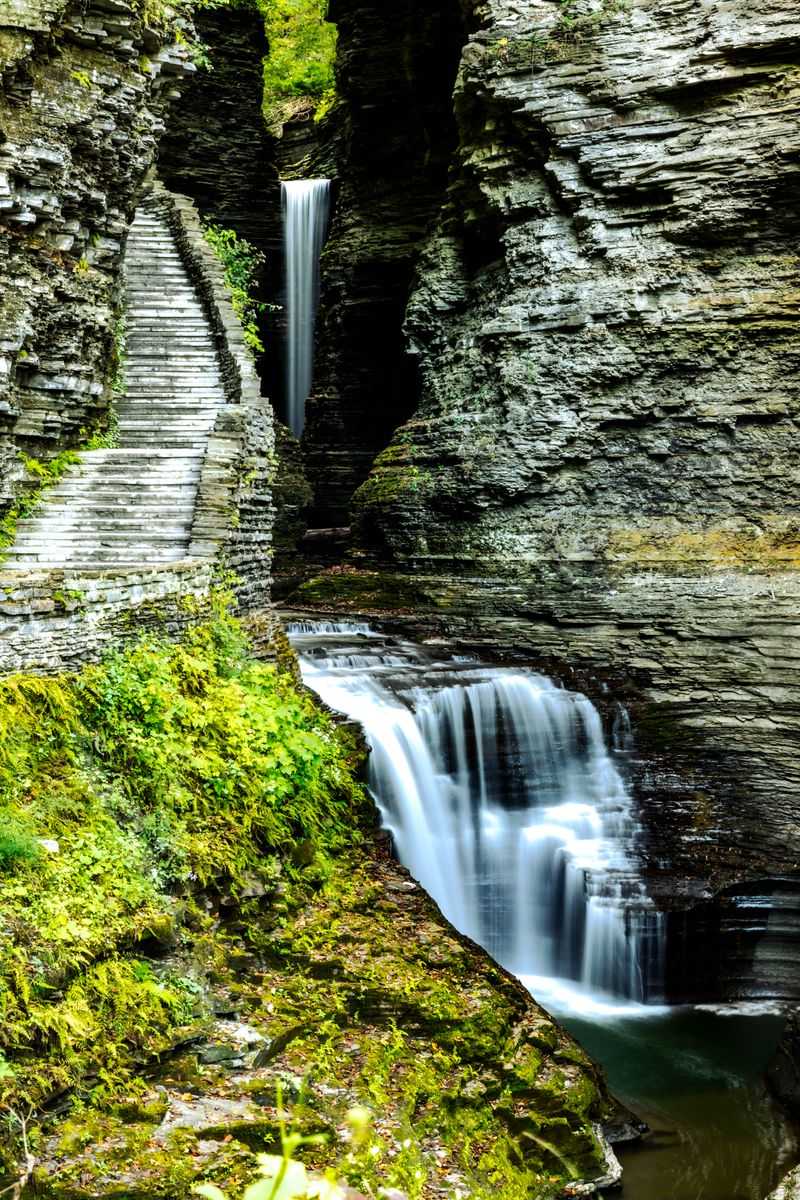
Start early and slip onto the Gorge Trail while the park still holds its breath.
Sunrise slides down the chasm and paints the shale with a warm sheen that a camera sensor loves.
Your frames gain depth as glowing edges highlight the curves of the stream and the steps.
Use a tripod on the stone landings and anchor the legs wide for stability without blocking the path.
A two to three stop neutral density filter calms the flow into silky threads while keeping textures crisp.
Keep ISO low and nudge shutter speed until the water feels alive rather than blurred into fog.
New York mornings can shift quickly, so meter for the highlights and protect detail in the spray.
Compose with the staircase as a gentle line that leads the eye toward the light.
Angle slightly upward to frame the canyon lips and leave room for the sky glow.
Watch your footing because wet stone can turn into a stealthy slide within a step.
Stick to marked areas and never climb onto railings for a better angle.
Rangers maintain the route so visitors can move safely and keep the gorge healthy.
Pack a microfiber cloth to clear droplets from the lens between takes.
Switch to manual focus when mist confuses autofocus and grabs on moving rivulets.
When people arrive, embrace motion by dragging the shutter for soft figures that add scale.
Frame a vertical image that stacks the steps, the veil of water, and the cliff textures like layered pages.
Rainbow Falls natural arch
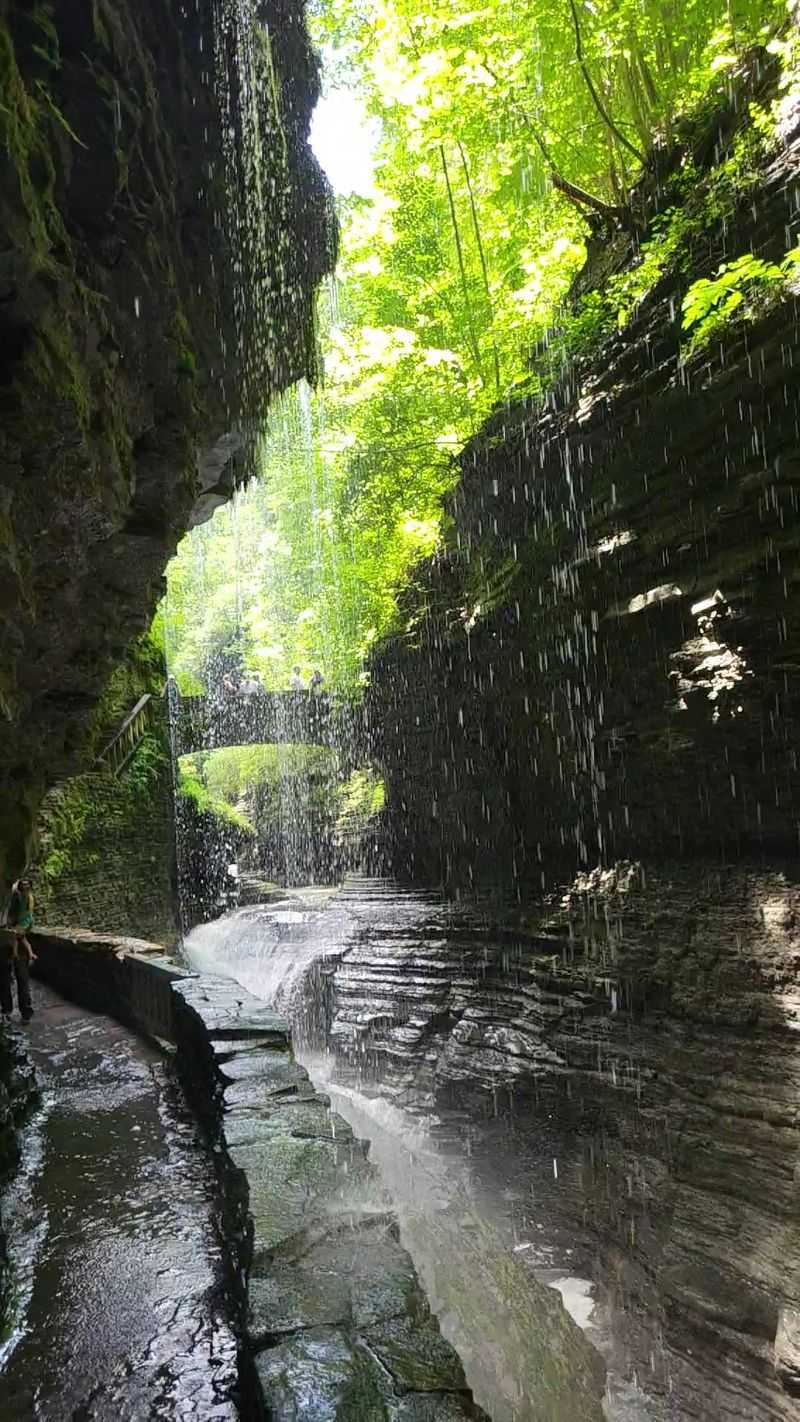
Rainbow Falls brings the classic Watkins Glen moment where water folds like silk under a stone arch.
Arrive midmorning on a clear day and backlight can ignite faint colors in drifting spray.
Long exposure smooths the curtain while moss clings bright to the gorge walls.
Stand well within the trail boundary and use the bridge as a frame that anchors the scene.
New York weather often flips fast, so pack a rain shell and a lens hood to cut stray droplets.
A circular polarizer removes glare from wet rock yet keep an eye on exposure shifts.
Shoot from low height to lengthen the waterfall and pull reflections across the pool.
Bracketing helps balance the dark undercut with the luminous cascade overhead.
Clean your front element often because mist gathers faster than you expect.
Step aside between bursts so others can pass and enjoy the view without delay.
Use a moderate wide angle for context and then a short telephoto to abstract patterns.
Check histogram rather than the preview because bright spray can trick your eyes.
Work patience into your rhythm and wait for wind lulls that settle the water threads.
Respect posted signs and stay off slick ledges that invite risky footing.
Follow park guidance and leave room for maintenance crews who tend the stone steps.
When light fades, lean into mood with slower shutters that turn the arch into a glowing portal.
Cavern Cascade underpass
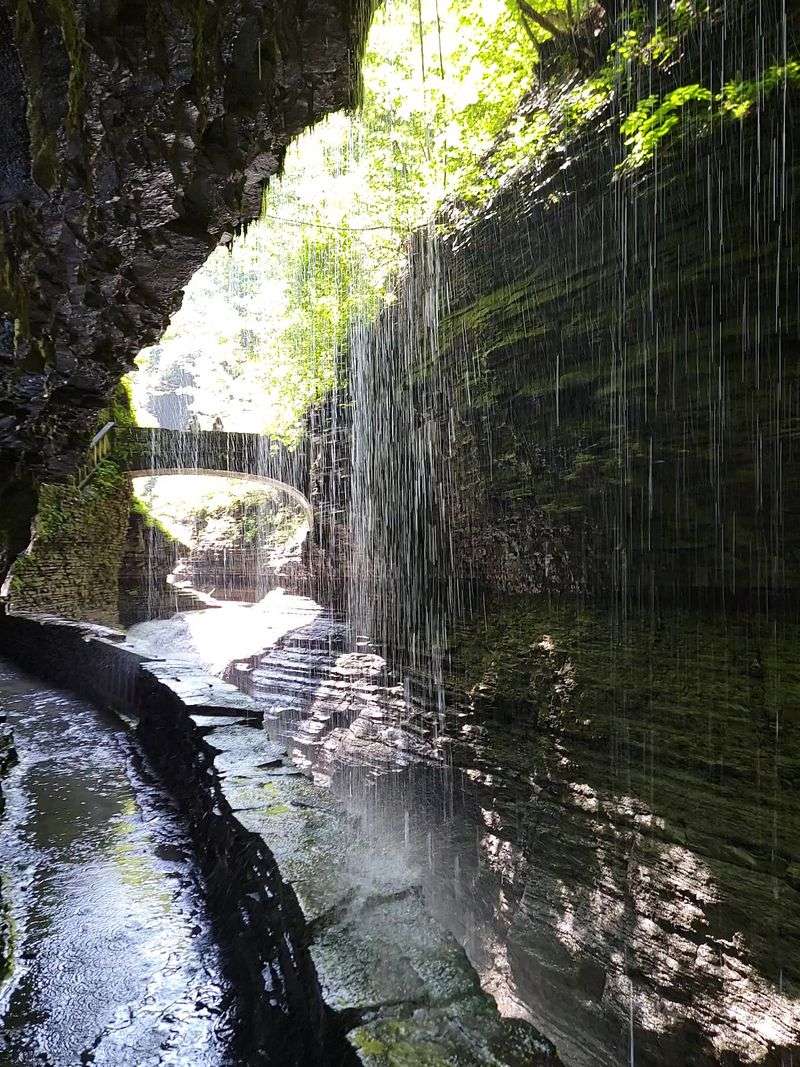
Cavern Cascade lets you pass behind a veil and listen to the gorge speak in echoes.
The walkway hugs the rock and curves into a thin sheet of falling water that glows in bright light.
Set exposure for the highlights and let the shadows carry mood and texture.
Grip your camera strap because droplets bounce and find every open seam in your kit.
Use a fast wipe routine with a cloth tucked into a jacket pocket for quick cleaning.
Try a half second shutter and watch the sheet transform into fine ribbons.
Switch to a faster speed if you want to capture separate strands in the cascade.
Compose with the arc of the walkway to anchor the foreground and add scale.
A polarizer helps control glare on the drenched rock shelves when the sun finds the gap.
Respect signs and avoid leaning out where the railing ends at narrow turns.
New York park crews set the rules to keep visitors safe in slick spaces.
Look for reflected light bouncing off the pool and lifting color onto the cavern walls.
Bracket a few frames and merge gently to protect natural contrast.
Include a vertical composition to emphasize height and the gentle curve of the path.
When crowds grow, angle tight to isolate abstract textures in the falling water.
Leave only dry footprints and carry out any trash that sneaks into your bag.
Spiral Tunnel textures
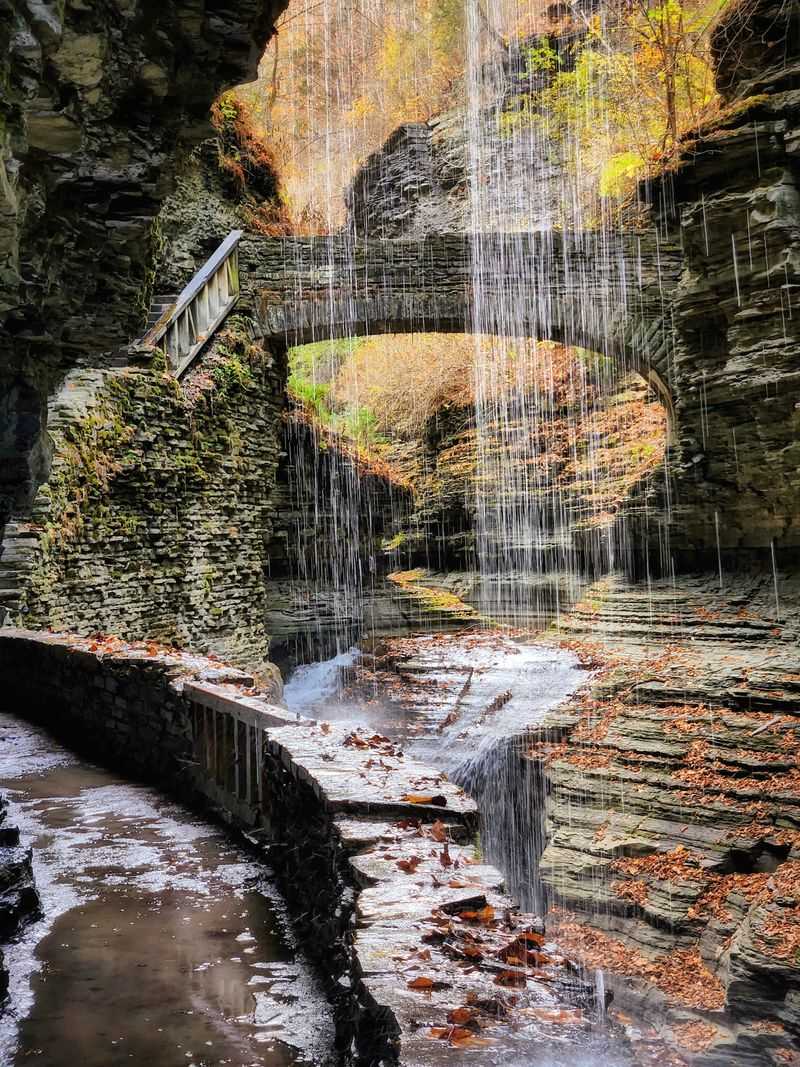
Spiral Tunnel winds like a stone ribbon and tightens your frame into elegant lines.
Shale layers stack in curves that read beautifully in side light and soft shade.
A wide lens exaggerates the bend and pulls attention toward the bright exit.
Wait for a lull and place the center line of the steps slightly off middle for energy.
Keep shutter fast enough to freeze trickling drips that sparkle under rim light.
A small aperture deepens focus so textures remain sharp from toe to crown.
Mind condensation that can fog glass when humid air meets cool lenses.
Store your camera in the shade before shooting to help stabilize temperature.
New York humidity often climbs in summer which adds shine to the rock surfaces.
Use that added gloss to draw soft highlights across the curve.
Focus manually when the tunnel goes dim and contrast drops to a whisper.
Carry a tiny flashlight to check footing without blinding others.
Do not set tripods where walkers need the rail for steady balance.
Look for diagonal fractures that create interesting cross rhythms in the composition.
Convert a copy to black and white to emphasize geometry and tone.
Return in late day when reflected light warms the tunnel with golden edges.
Central Cascade power
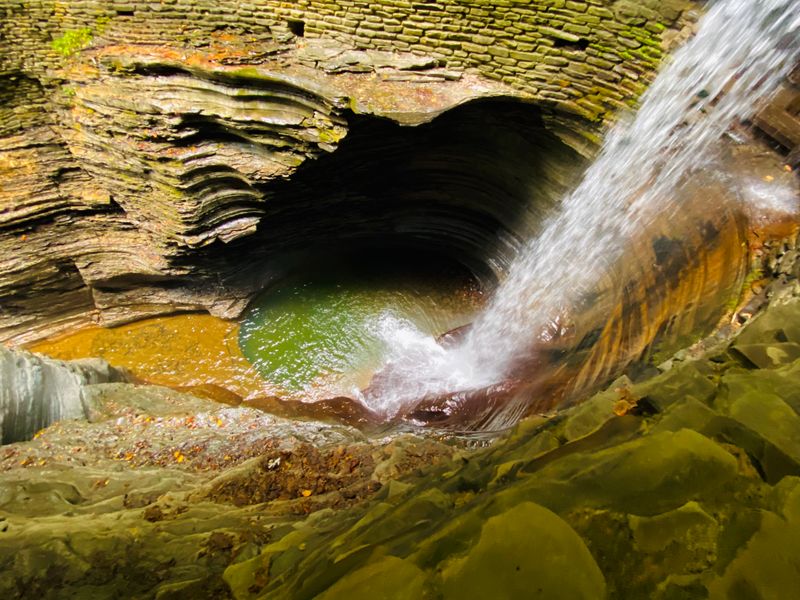
Central Cascade muscles through the gorge with a firm drop and constant roar that fills the air.
Overcast skies turn the scene into an even studio that flatters wet rock and moss.
A three shot bracket covers dark corners without crushing the white plumes.
Frame from a safe turnout where the stairs bend and create a clean diagonal.
Use mid focal lengths to avoid distortion that can spoil the vertical feel.
Hold the camera just above railing height to keep metal lines out of the frame.
Stabilize by pressing elbows against your vest when tripods are not practical.
New York park rules restrict leaving marked paths for good reason here.
Spray rises and plates the steps with a thin gloss that hides slippery spots.
Let shutter speed hover around one second to capture energy without pure blur.
Adjust white balance to a cooler tone and then warm up to taste in editing.
Look for small ferns that peek from cracks and add organic accents.
Add a human silhouette only if space allows safe distance and flow of visitors.
Turn around after each shot because reverse angles can surprise with layered pools.
Respect quiet moments and share the ledge fairly with those waiting.
Pack extra batteries because the cool damp air drains power faster than expected.
Rim Trail overlook frames
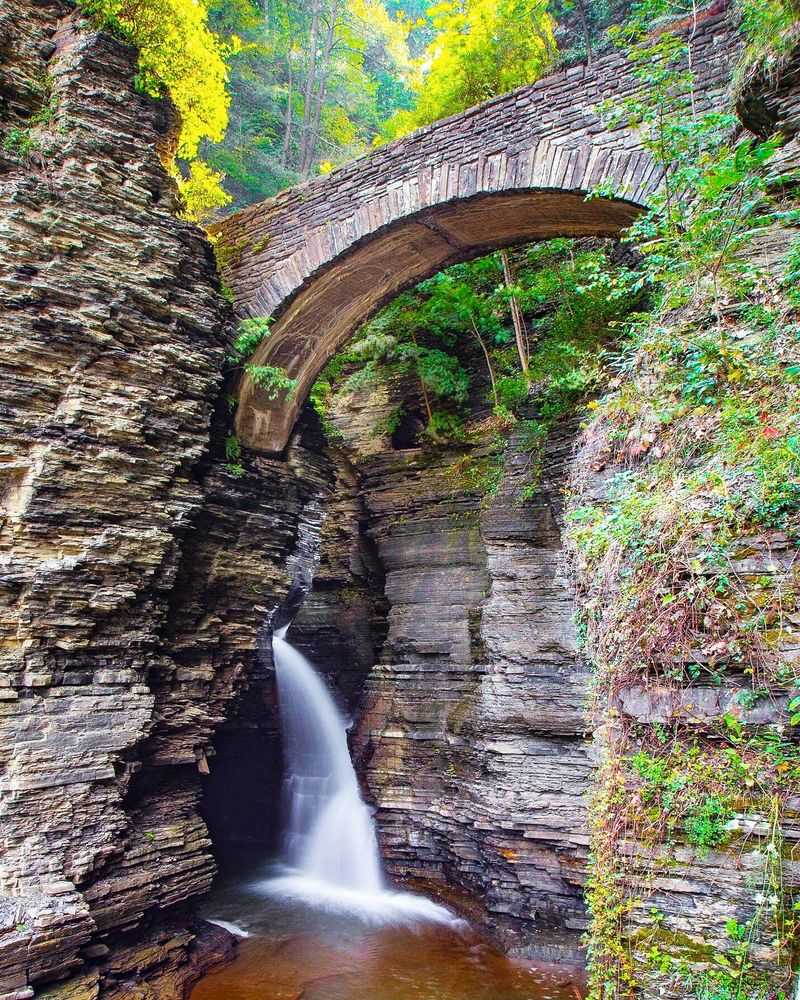
The Rim Trail gifts perspective that stretches the gorge into a layered story.
Stand at overlooks where trees frame the chasm and the creek curls far below.
Late afternoon sun filters through leaves and paints gentle patterns on the stone.
Compose with foreground branches or the guardrail to ground the scale of the drop.
Keep a safe stance and never lean beyond the barrier for a cleaner angle.
A polarizer deepens the greens and pulls glare off the water vein.
Bring a longer lens to stitch a compressed panorama of terraces and pools.
New York fall color loads the scene with maple reds and oak gold that sing in print.
On quiet days you can hear the falls below and time shots to the pulse of the spray.
Bracket exposures to protect both sky and shaded ravines under the canopy.
Mind gusts that push branches into the frame and wait for calmer seconds.
Shift your footing a few inches to dodge stray trunks that clutter edges.
Balance compositions with a triangle of land, water, and sky for harmony.
Carry light shoes with good tread because roots cross the path in places.
Review images in the shade so screens do not mislead your judgment.
Leave the overlook better than you found it and stay courteous to others.
Entrance tunnel and Sentry Bridge
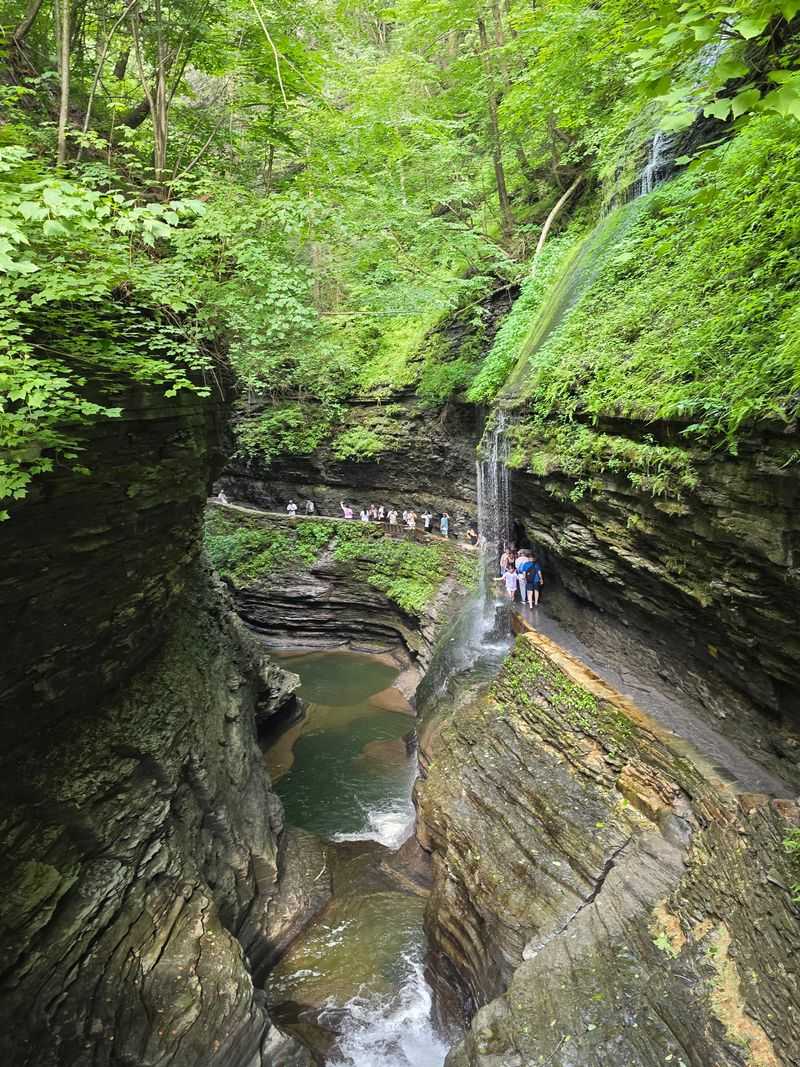
The lower entrance sets the tone with a stone tunnel that funnels you toward Sentry Bridge.
Lines converge in a way that cameras adore and footprints echo under the arch.
Arrive early to capture empty frames where geometry speaks without distraction.
Use a low angle to stretch the tunnel height and let light spill across the floor.
Switch to a normal lens and keep verticals straight for a classic look.
A gentle crop later can polish symmetry without forcing it too hard.
New York park masonry shows craft that reads beautifully in side light.
Wait for soft clouds to avoid harsh patches on the stone blocks.
Place the bridge near the upper third and pull viewers along the path.
Keep shutter quick if visitors enter the frame and you want crisp figures.
When the scene crowds, lean into abstracts of chisel marks and joints.
Work quietly and step aside for families who want a souvenir portrait.
Avoid tripods at narrow spots because space grows tight and flow slows fast.
Check for puddles that mirror the arch and add depth without clutter.
Protect your gear from spray that drifts up from nearby falls on breezy days.
Move on with fresh angles waiting deeper inside the gorge trail.
Stone stairways and leading lines
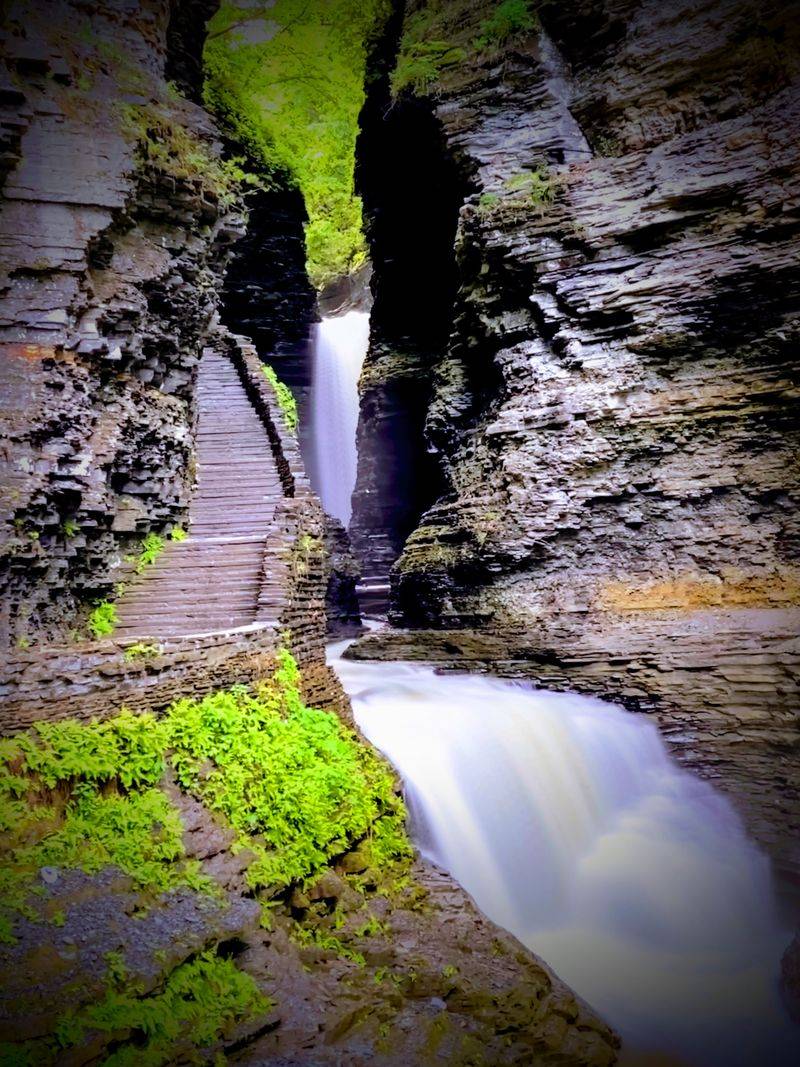
Stairways thread the gorge with rhythm and lend strong lines to almost any frame.
Look for curves where steps hug the wall and draw the eye toward a pool or bend.
Side light from morning or late day makes risers glow with a pleasing edge.
Keep compositions clean by trimming stray branches that creep into corners only in post.
On location you must leave plants untouched and follow Leave No Trace ethics.
Shutter speeds around one tenth can blur passing feet for a soft sense of motion.
For crisp details raise speed and stabilize against the rail without blocking traffic.
New York rain brings slick surfaces so wear grippy soles and step with care.
Use the staircase as a visual timeline that guides viewers through the scene.
Try a vertical format that stacks steps, wall textures, and a slice of sky.
Focus a third into the frame to keep both near and far sharp at mid apertures.
Polish contrast gently to avoid halos along the bright step edges.
When mist floats in, embrace the haze and let it soften distant details.
If crowds gather, pivot to tight patterns of wet stone and lichen.
Release the shutter during a quiet gap and then wave the next hiker through.
Thank the trail crew in spirit because their work shapes these graceful lines.
Seasonal moods and weather
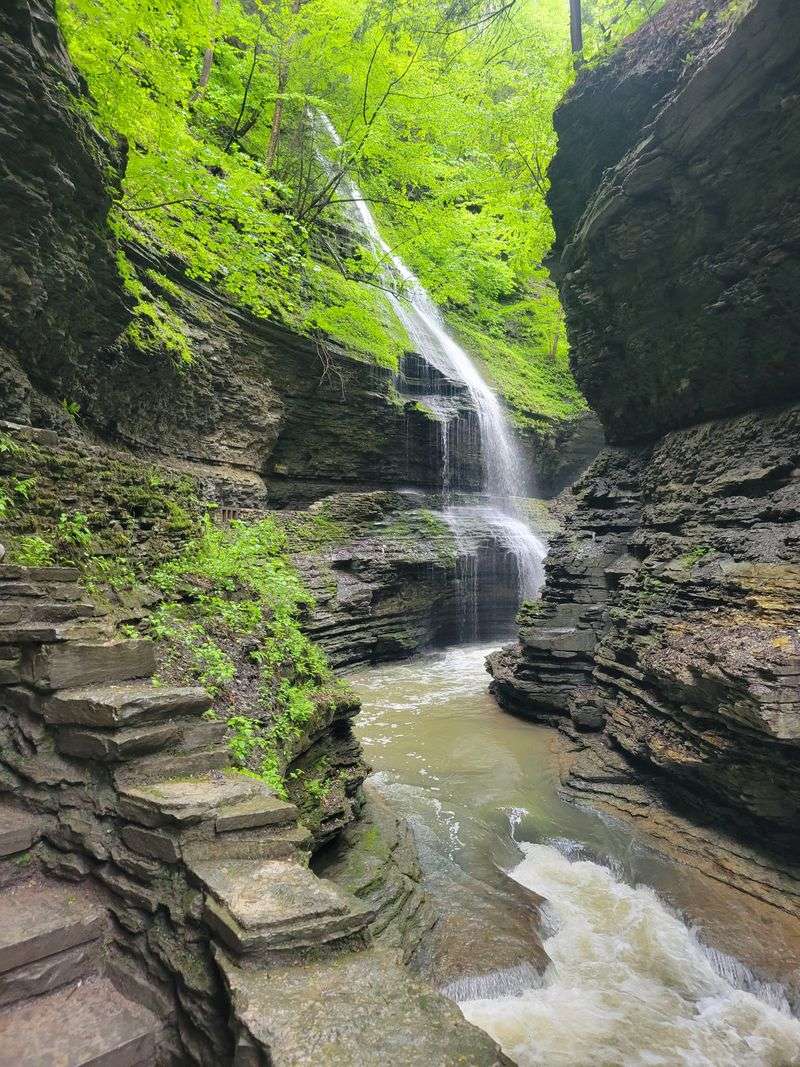
Watkins Glen changes character with the calendar and each season writes different light on the rock.
Spring surges fill channels and color the moss a bold lively green that photographs well.
Summer brings shade that cools frames and balances midday brightness in the gorge.
Autumn in New York turns the canopy into a warm canopy that glows above the stone.
Leaves drift onto water and create painterly swirls that shine with a slow shutter.
Winter sometimes adds ice curtains though access can be limited for safety reasons.
Check official notices and respect closures that protect visitors and staff.
Weather apps help but the gorge often makes its own conditions within minutes.
Carry a light layer and a sealed pouch for your camera when clouds thicken.
Shift white balance season to season to match the mood you want viewers to feel.
Use a lens cloth often because cold breath can fog glass fast in shaded bends.
Look for small changes like new foam patterns that hint at a recent rainfall.
Capture the same composition across months to build a tidy personal series.
Share images with friends who plan visits so they can time the vibe they prefer.
Work gently around puddles and avoid splashing mud that could stain the trail.
Stay flexible and let weather guide a creative plan rather than fight the forecast.
Accessibility, safety, and stewardship
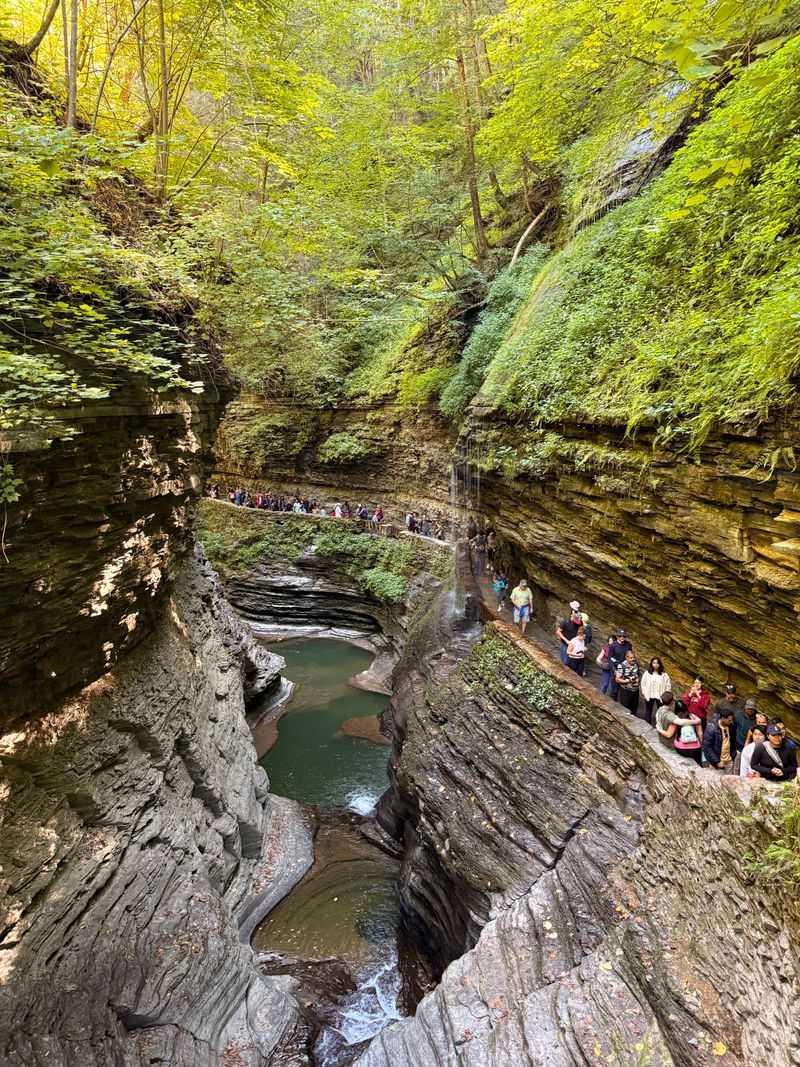
Photography here works best when safety and stewardship sit at the core of each plan.
Stay on the trail and keep fingers away from cliff edges that hide fragile layers.
Railings mark the safe zones and give context that frames scenes without risk.
Use crossbody straps so your hands remain free on wet steps and narrow turns.
Pack light because heavy rigs grow awkward on long climbs through spray.
Share the gorge with others by pausing at landings for careful setups.
New York state guidance asks visitors to respect closures and changing conditions.
Tell a friend your route and return time if you wander solo with a camera.
Carry a small first aid kit and a whistle that can cut through the roar.
Protect wildlife by never feeding birds or scattering snacks that attract pests.
Tripod legs should avoid fragile seams where plants take hold in thin soil.
Pack out every wrapper and lens wipe so the gorge stays clean for the next visitor.
Use inclusive framing by capturing rail grades and wider paths that welcome many abilities.
Ask a ranger for current notes on stairs and sections that may challenge mobility.
If storms rise, turn back and save the shot for a calmer hour.
Leave with gratitude and a plan to share practical tips that help others enjoy the park.
Dear Reader: This page may contain affiliate links which may earn a commission if you click through and make a purchase. Our independent journalism is not influenced by any advertiser or commercial initiative unless it is clearly marked as sponsored content. As travel products change, please be sure to reconfirm all details and stay up to date with current events to ensure a safe and successful trip.
