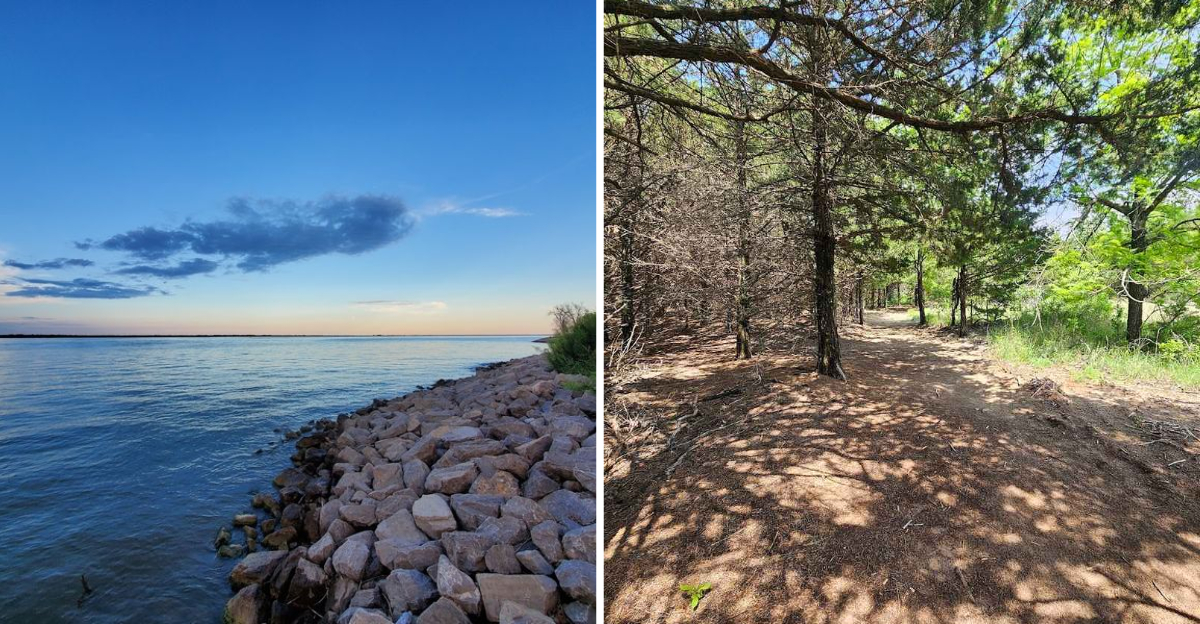
Places that surprise you in the best way possible. This Oklahoma town, with a population of just a few hundred, punches well above its weight when it comes to charm, history, and natural beauty. A shimmering lake that stretches across thousands of acres, the echoes of frontier military posts and missionary settlements, this little crossroads town has layers that most travelers would never expect. The drive in alone sets the mood, wide open sky, golden grasslands, and a quietness that instantly slows you down.
There is something deeply satisfying about finding a place this genuine, where the history is real, the scenery is unhurried, and the food feels like it belongs to the land. This is the kind of stop that turns a road trip into an actual memory.
The Road Into Canton Sets the Whole Tone
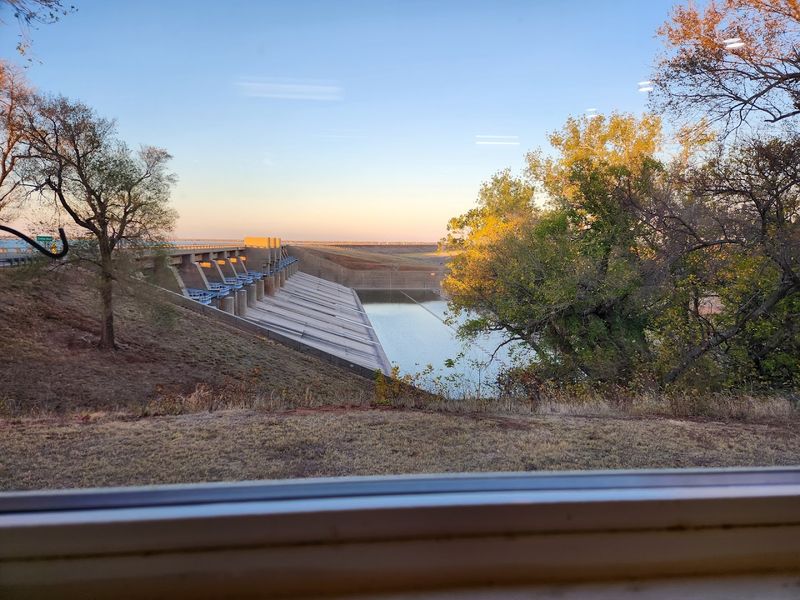
The moment you turn off the main highway and head toward Canton, something shifts. The landscape opens up in that particular western Oklahoma way, flat but never boring, with grass that moves in slow waves and sky that seems to go on forever.
It is the kind of drive that makes you put your phone down.
Canton sits at the crossroads of Oklahoma State Highways 51 and 58, right on the south side of the North Canadian River. That geography alone tells a story.
Rivers meant settlements, and settlements meant history, and Canton has plenty of both packed into its small footprint.
The town was formally founded in 1905 after the Kansas City, Mexico and Orient Railway crossed the river, sparking a land sale that drew settlers eager to plant roots. Before that, early homesteaders had already been working the soil after the Land Run of 1892.
Wheat, corn, and cotton defined those early years. Getting here today is easy, but the feeling of arriving somewhere genuinely off the beaten path stays with you from the first mile in.
Cantonment: Where the Frontier Story Actually Began
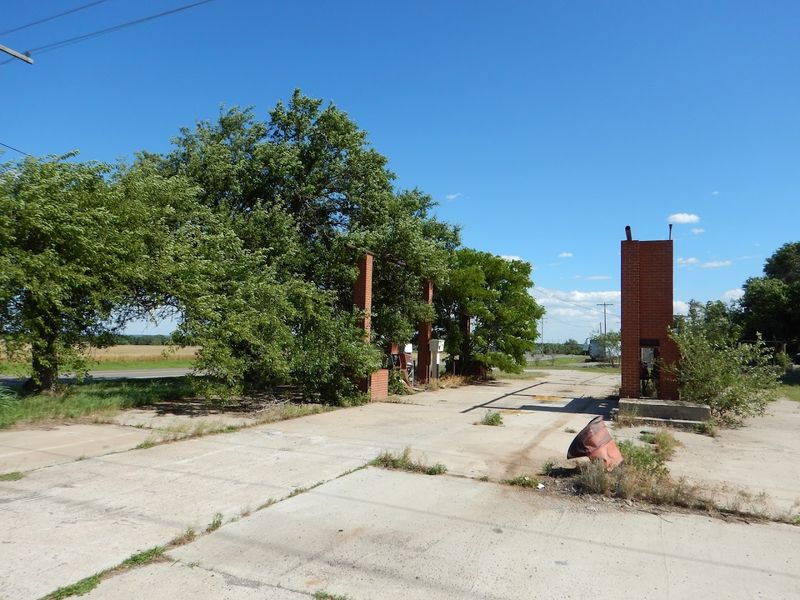
Canton did not get its name by accident. The town takes its identity from a military post called Cantonment on the Canadian River, established on March 6, 1879, by the U.S.
Army. It served as a strategic halfway point between Fort Reno and Fort Supply during a turbulent period in the settlement of the American West.
Troops withdrew in June 1882, and Mennonite missionaries moved in shortly after, repurposing the buildings into a boarding school for Cheyenne and Arapaho children. That detail alone reframes the whole site.
It went from military outpost to place of learning in the span of a few years.
Colonel Richard I. Dodge wrote his book “Our Wild Indians” while stationed at Cantonment.
Reverend Rodolphe Peter, a Mennonite missionary, authored the “Cheyenne Dictionary” there. An Indian cemetery southwest of the Project Office holds the burials of several Cheyenne and Arapaho chiefs, making the area sacred ground in the most literal sense.
The restored building still stands just off the west shore of Canton Lake, quiet and easy to miss if you are not looking. But it is absolutely worth finding.
Canton Lake: 7,910 Acres of Pure Western Oklahoma Beauty
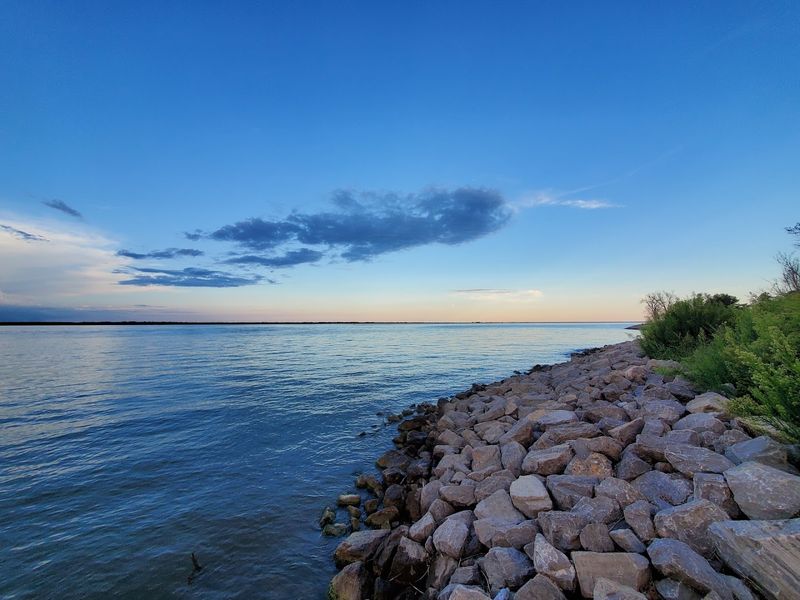
Canton Lake did not exist until 1948, when the U.S. Army Corps of Engineers completed the dam on the North Canadian River.
Congress had authorized it a decade earlier, in 1938, primarily for flood control and water supply for Oklahoma City. What they built ended up becoming one of western Oklahoma’s most beloved outdoor destinations.
The lake covers 7,910 acres and has a shoreline that stretches 45 miles. That is a lot of water for a town of fewer than 500 people to claim as a neighbor.
Five developed recreation areas ring the lake, offering boat ramps, picnic areas, RV and tent campsites, restrooms, showers, and a swimming beach at Sandy Cove near the north end of the dam.
Driving the 2.5-mile stretch of State Highway 58A across the Canton Dam gives you some of the best lake views in the region. Three parking pullouts with fishing jetties line the dam, making it easy to stop and just take it all in.
There is a real stillness out here that feels earned, like the landscape is rewarding you for making the trip. The views are genuinely spectacular on a clear day.
Walleye Capital of Oklahoma: A Fishing Reputation Hard Earned
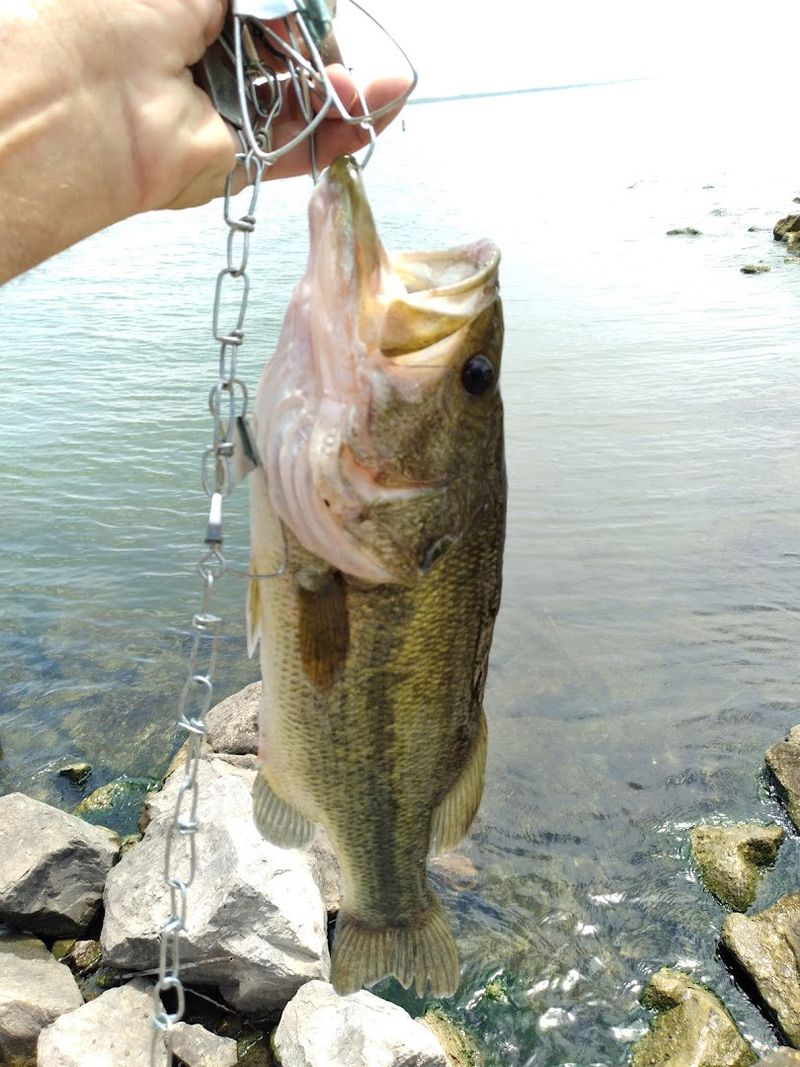
Canton Lake carries a serious reputation among anglers, and it is completely deserved. The lake is widely known as a walleye hotspot, so productive that it has become the primary source of walleye eggs for stocking other lakes across the entire state of Oklahoma.
That is not a small distinction.
Every mid-May, the Walleye Rodeo fishing derby draws thousands of visitors to Canton. It is Oklahoma’s oldest and largest fishing tournament, a title that speaks to how deeply this lake is woven into the state’s outdoor culture.
Families, serious competitors, and first-time anglers all show up, turning the quiet town into a lively gathering point for a few days each spring.
Beyond walleye, the lake supports a healthy mix of other species, making it a reliable destination year-round. The Canton Public Hunting Area covers nearly 15,000 acres along the north and west portions of the lake, offering hunting for deer, waterfowl, wild turkey, squirrel, dove, and bobwhite quail.
Whether you come with a rod or a pair of binoculars, the wildlife activity around Canton Lake has a way of reminding you how rich this part of Oklahoma really is.
The Overlook Cafe: Comfort Food With a View
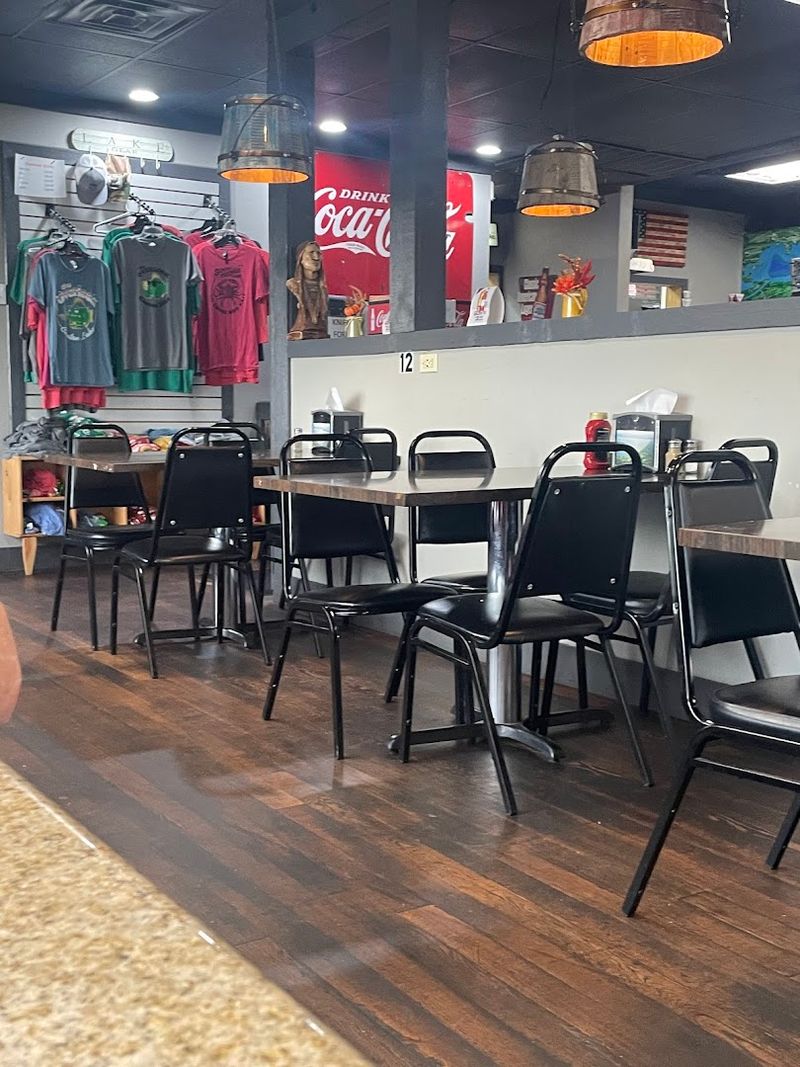
Perched at the south end of the Canton Dam, the Overlook Cafe is the kind of place that feels perfectly matched to its surroundings. Nothing fancy, nothing overworked.
Just honest food served in a spot where the view does half the heavy lifting.
The menu leans into comfort. Sloppy Joes, hamburgers, and breakfast plates are the backbone of what they serve, and each one hits in that satisfying, unpretentious way that only small-town diners seem to pull off consistently.
A sloppy Joe eaten with a lake view on a breezy Oklahoma afternoon is a hard experience to top.
Places like this exist at the intersection of food and atmosphere, where the meal is good but the full experience is what you actually remember. The Overlook Cafe earns its name.
It is a commercial concession rather than a sit-down restaurant in the traditional sense, but that only adds to the casual, come-as-you-are energy of the place. Grabbing breakfast here before a morning on the water, or a burger after a long hike on the Frank Raab Nature Trail, turns a simple meal into something that feels like part of the adventure.
That is exactly the point.
Frank Raab Nature Trail: A Walk Through Living Prairie
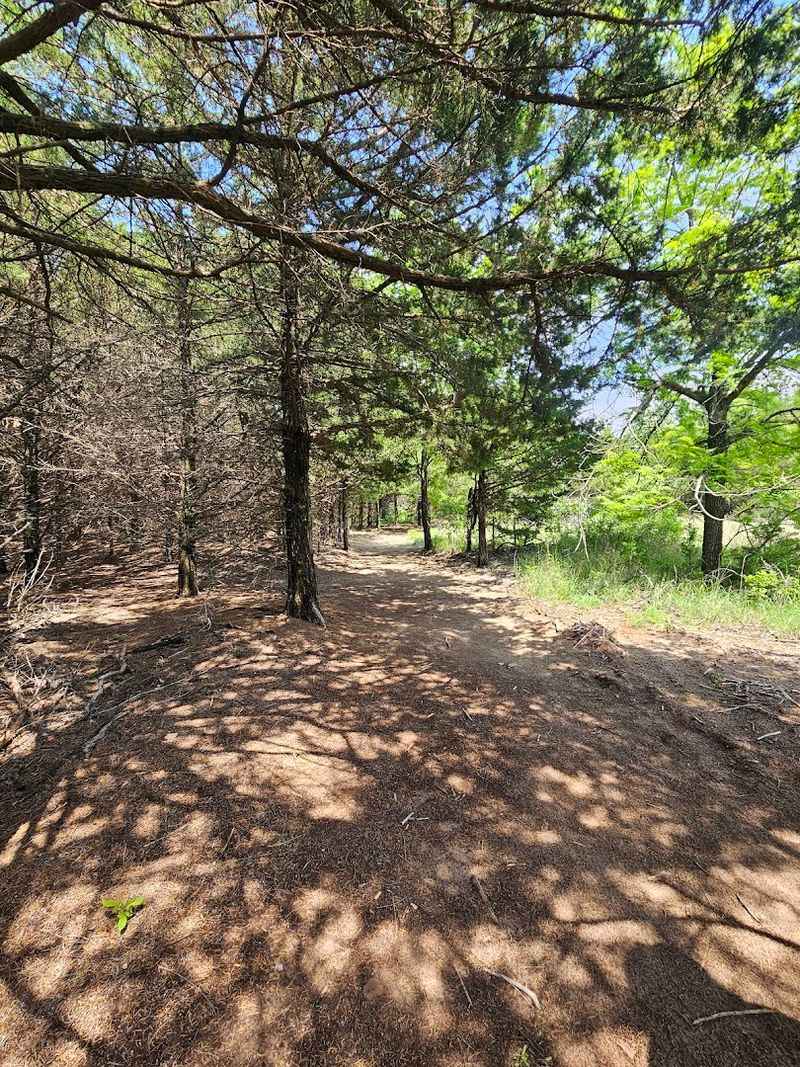
Not every great thing about Canton involves sitting still. The Frank Raab Nature Trail, located in Blaine Park on the lake’s edge, is a 1.6-mile registered National Trail that winds through three distinct loops, each offering a slightly different look at the surrounding landscape.
It is short enough to do casually but varied enough to stay interesting the whole way through.
Prairie grass, native plants, and the occasional glimpse of the lake make this trail feel like a quiet conversation with the land. It is the kind of walk that does not demand anything from you.
No gear, no experience, no agenda. Just a pair of comfortable shoes and a willingness to slow down for an hour.
The trail is especially rewarding in the early morning when the light is low and the air still carries a cool edge. Birds are active, the grass is bright, and the whole park feels like it belongs to you alone.
Canton Lake’s five recreation areas each have their own personality, but Blaine Park and the nature trail give the place a contemplative, unhurried quality that balances perfectly against the more active pursuits like boating and fishing happening just a short distance away.
Why Canton, Oklahoma Deserves a Spot on Your Road Trip Map
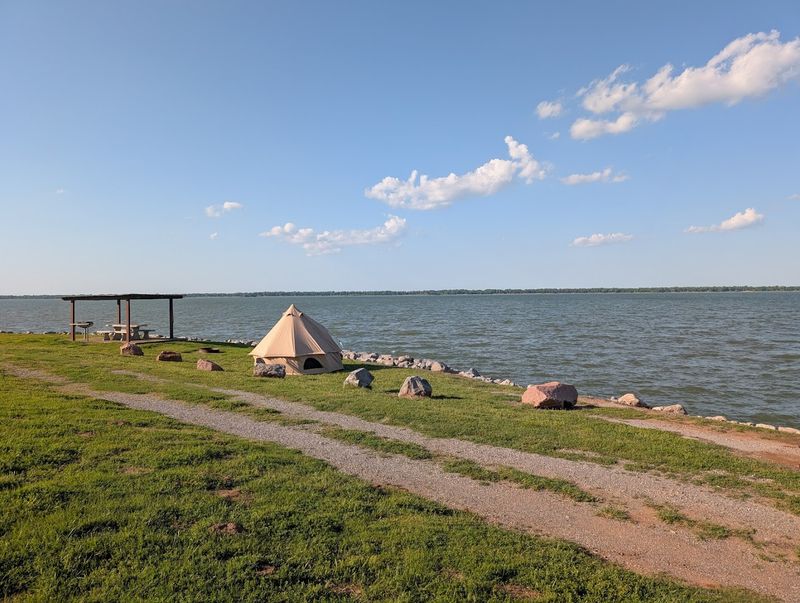
Canton does not advertise itself loudly, and that is part of what makes it work. With a population of 468, it is the kind of place where everything feels intentional and nothing feels manufactured for tourists.
The history is real, the lake is real, and the welcome is genuine.
Road trips through western Oklahoma often follow the same familiar corridors, bypassing the smaller towns in favor of faster routes. Skipping Canton means missing a place where a 140-year-old military post, a walleye-stocked lake, a nature trail, and a lakeside diner all coexist within a few miles of each other.
That combination is rarer than it sounds.
The town also holds its own during the Great Depression and Dust Bowl years, a chapter of resilience that shaped its character in ways still visible today. There is a toughness underneath the quiet that you sense without anyone having to tell you about it.
Whether you are passing through on a weekend drive or planning a full camping trip at the lake, Canton rewards the curious traveler with something genuinely worth the detour. It earns every mile you spend getting there.
Address: Oklahoma 73724, Canton, Oklahoma
