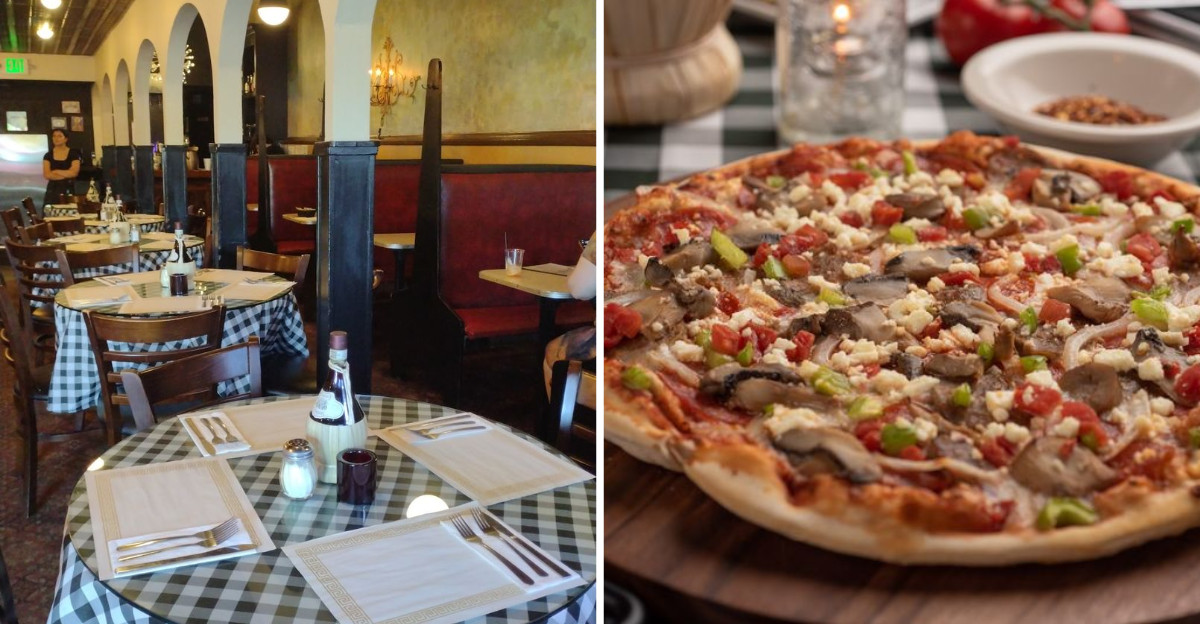
A tin ceiling, a painted mural of old Venice, and booths with little jukeboxes bolted to the wall, that is what I found when I walked into a small dining room on a main street in Georgia.
The ceiling is stamped tin, original to the building, and the mural of Venice was painted by a local artist decades ago, its colors still holding strong after all these years.
A small bar sits off to the side with a few stools that have been there since the beginning. I had heard about this place long before I ever pulled up, mostly because people in the city talk about it the way you talk about a favorite relative.
The whole thing started in the late 1940s with a Greek immigrant who put mostly Italian food on the menu because that was what people recognized back then.
Somewhere in those early years, pizza showed up in town for the first time, and a few confused customers apparently ordered it for dessert.
I sat there with a plate of spanakopita in front of me, doing the math on how many decades this family has been feeding this city.
Decades later, they are still at it, and honestly, it feels like nothing important has changed.
A Greek Immigrant’s Gamble That Turned Into Augusta, Georgia’s Oldest Family Restaurant
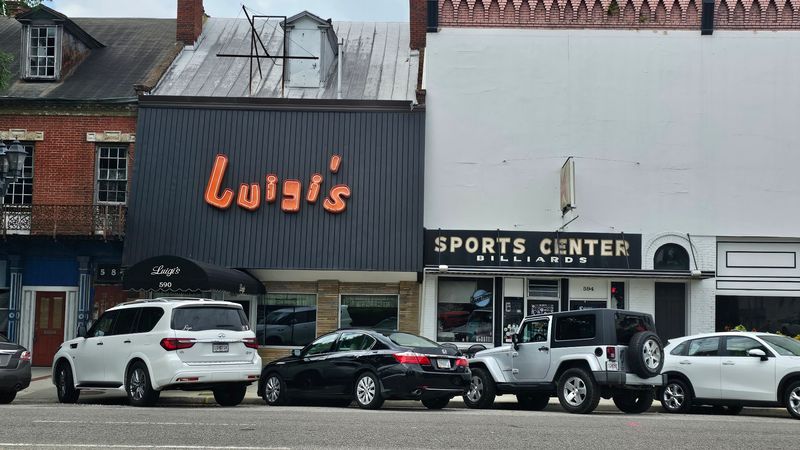
Nicholas Ballas, known to his family as Papou Nick, was born on the Greek island of Lesvos and came to the United States around 1920. He worked his way south from New England, spent time in catering, and eventually opened his own place on Broad Street in 1949.
Here is the part I find fascinating. He was Greek, but he built an Italian menu, because Greek food simply was not familiar to most Americans back then.
So he named it Luigi’s, hung up an Italian mural, and let the food do the convincing. It worked well enough that the restaurant is now considered Augusta’s oldest family-owned dining room, and it has never left the family.
Nick’s son Chuck and his wife Penny took the reins, then Chuck Jr. and Debi carried it forward. Today Penelope Ballas, Nick’s great-granddaughter, is part of the story too.
Sitting in one of those booths, I kept thinking about how many big decisions were made in this small room. Most restaurants do not make it five years.
Reaching seventy-five under one family name is a completely different kind of achievement.
Tin Ceilings, a Venice Mural, and Booths That Remember Everything
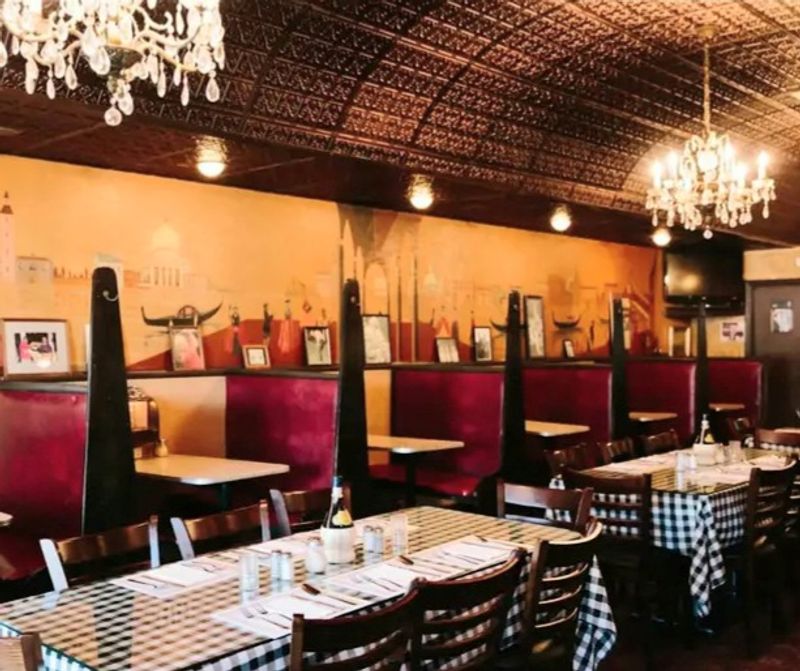
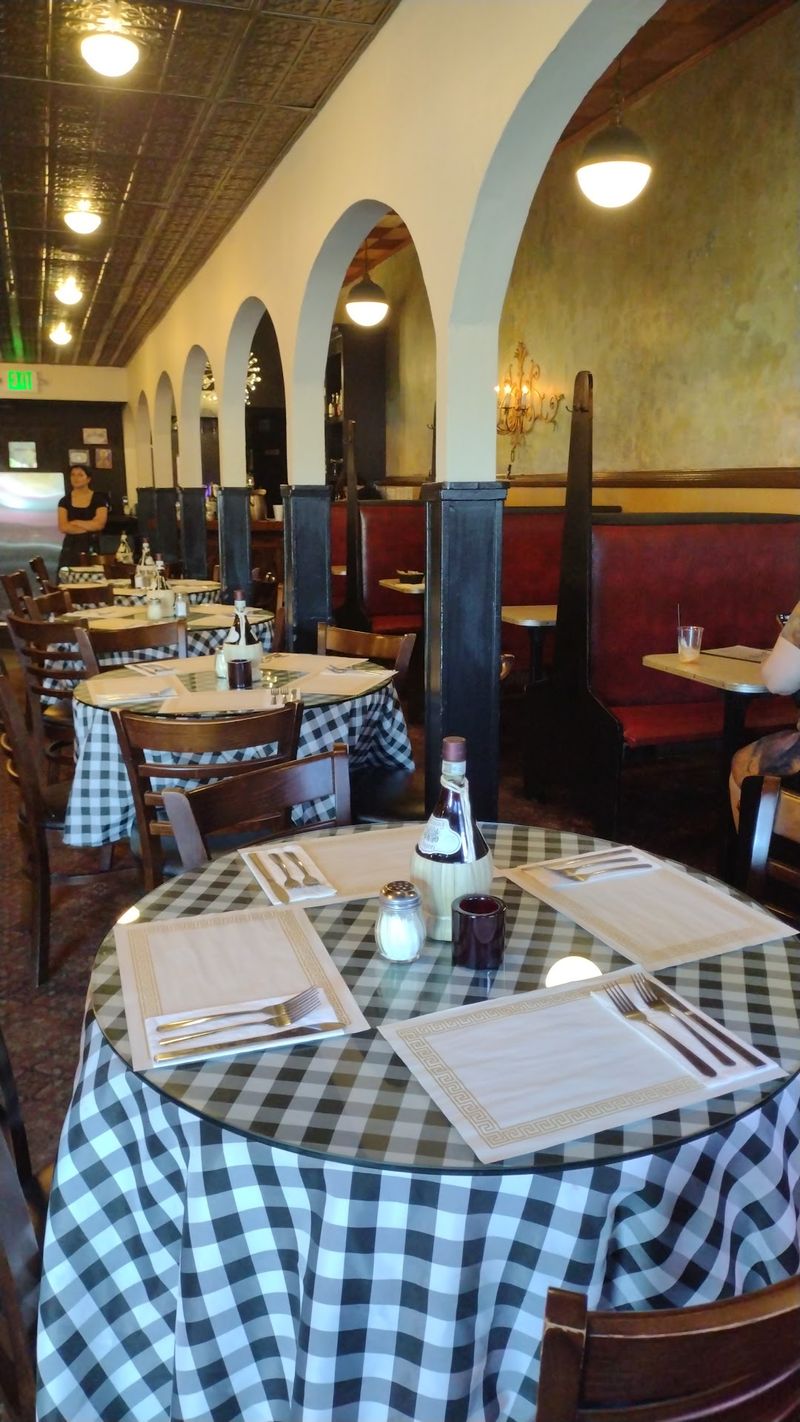
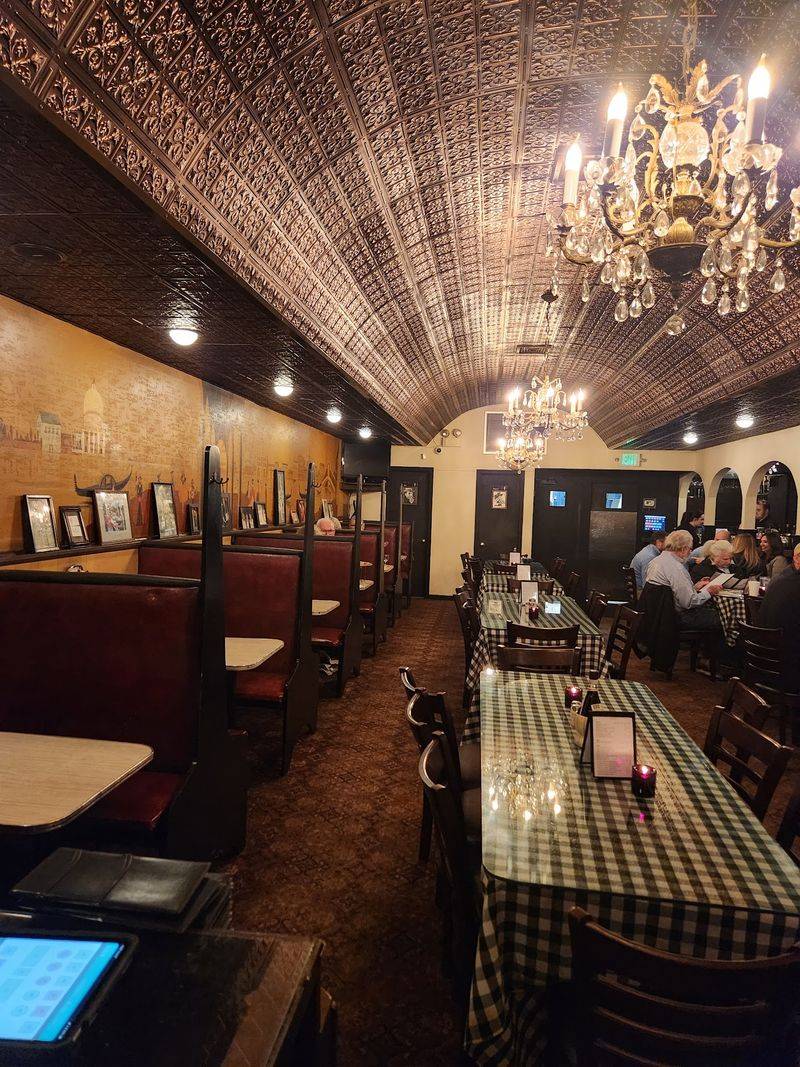
The dining room is small, and I mean genuinely small, which is a big part of why it works. Pressed tin covers the ceiling, and a hand-painted mural of old Venice stretches along the wall like a postcard someone never mailed.
Every booth once had its own Wall-O-Matic jukebox mounted at the table. Most of them no longer play, but they are still there, chrome and buttons and all.
Period music drifts through the room while you eat, and the combination makes the years blur a little. One guest described walking in as stepping out of a time machine, and I understand exactly what they meant.
The booths are cozy and comfortable, better suited to two or four people than a party of twelve. If you are bringing a big group, know going in that the charm comes with tight quarters.
What I appreciated most is that nothing looks staged. These are not props bought to create a retro mood.
They are simply the fixtures that were installed decades ago and never taken down, which is far more convincing than any designed nostalgia.
The Pizza That Augusta Mistook for Dessert
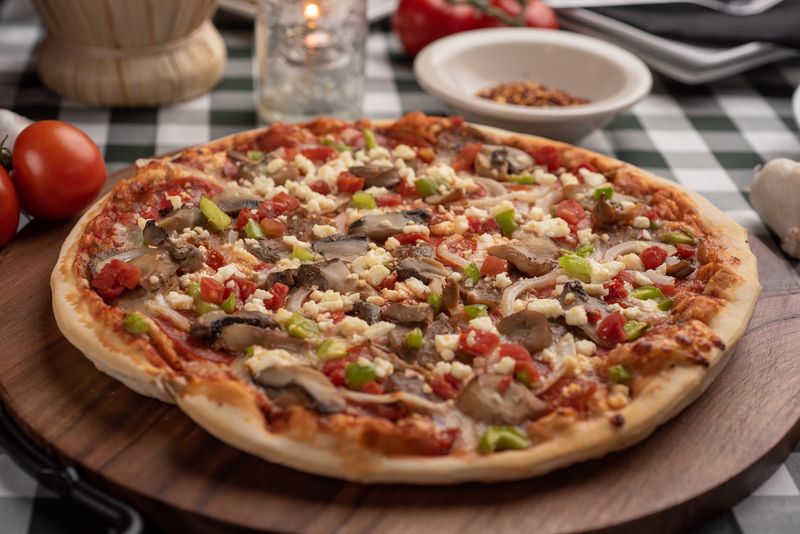
Imagine being handed a slice of pizza in the late 1940s in Georgia and having absolutely no reference point for it. That is essentially what happened when Luigi’s added pizza pie to the menu, and the story goes that some early customers assumed it belonged at the end of the meal.
Pizza as dessert. Honestly, I love that detail.
Today the menu still calls it Augusta’s Original Pizza, which is a bold claim that the history actually backs up. The version I would point anyone toward is the Greek combination, topped with feta, because it perfectly captures the mixed identity of this place.
It is not a thick, heavy, modern pizza. It is an old-school pie made the way it was made when nobody in town had tasted one before.
What struck me is that the recipe has not been reinvented to chase trends. There is no truffle drizzle or fancy sourdough crust talk here.
You are eating a piece of local food history, served in the same building where it first appeared. That is worth ordering at least once.
Where the Menu Quietly Reveals Its Greek Accent
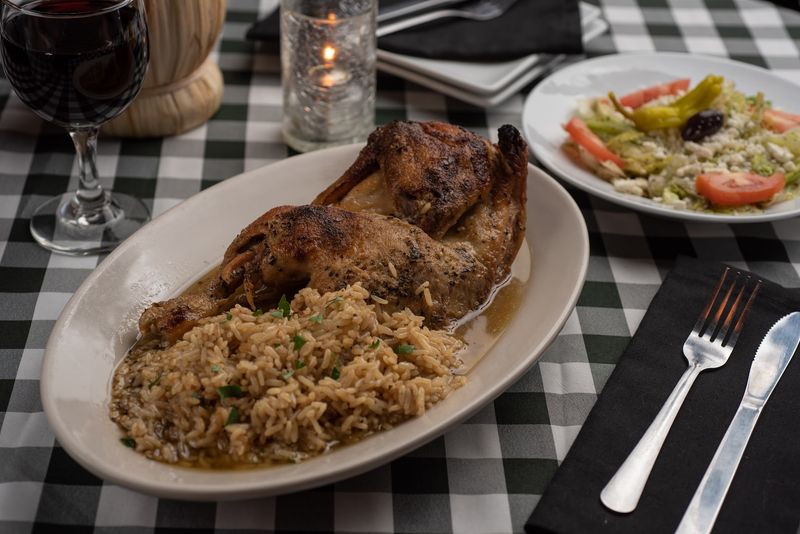
Order a few things here and the family’s real background starts showing through the Italian wrapping. Moussaka sits on the same page as lasagna, and spanakopita, those flaky spinach puffs, shares space with toasted ravioli.
There is also Spaghetti Greek-style, which is pasta tossed in brown butter with grated Romano and no garlic at all. It sounds almost too simple to be memorable, and then you taste it.
The Greek salad comes out fresh and generous, and the baked Greek chicken with lemon is the kind of dish that regulars order without glancing at the menu. Tiropittes, the cheese puffs, are worth adding to any table.
The Luigi sandwich is another local signature, built on French bread with garlic spread, chicken and eggplant cutlets, fresh mozzarella, roasted red peppers, greens, and pesto mayo.
What makes this menu interesting is that the two traditions never feel like they are competing. Papou Nick led with Italian because that is what sold, then slipped his heritage in through the side door.
Three generations later, both halves belong equally.
Golf Photos on the Walls and a Masters Week Tradition
Look up from your plate and you will find framed, autographed photos of golf figures covering the walls. Augusta being Augusta, that makes perfect sense.
For decades, Luigi’s has been one of the places people head to during the Masters Tournament, and that includes players, club members, and plenty of visiting celebrities. One diner told me they picked the restaurant simply because everyone in town for the tournament wanted to go there.
During that week in April, the small dining room turns into one of the busiest spots downtown. If you are visiting then, plan around it and expect company.
The rest of the year, those photographs sit there quietly as a reminder of how much history has passed through such a modest room. Nobody makes a fuss about them, which somehow makes them more interesting.
I ended up circling the walls before I left, reading signatures and dates like a scrapbook. It is a small ritual that fits the place well.
Consider it a free museum tour that happens to come with dinner attached.
Baklava Cheesecake and the Dessert Named After Penny
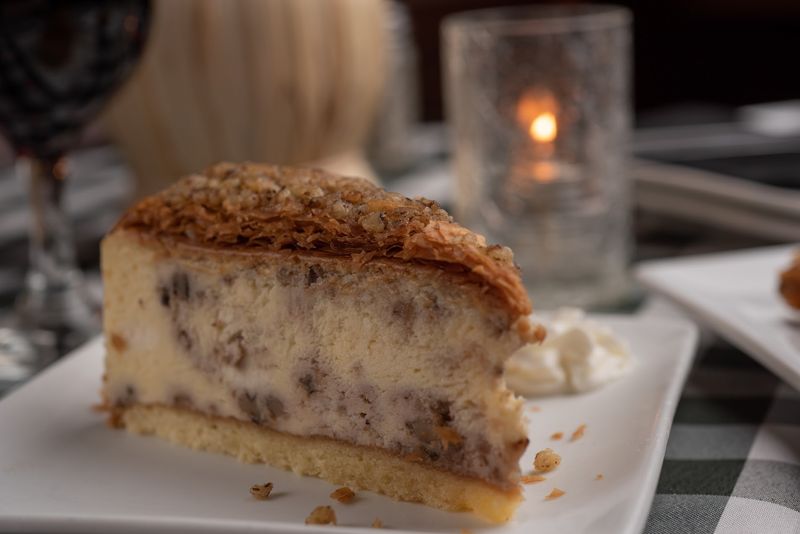
Skipping dessert here would be a genuine mistake, and the baklava cheesecake is the reason. Honeyed, nutty baklava layered onto cheesecake sounds like too much on paper, and in practice it lands beautifully balanced.
Guests call it a must-order more consistently than almost anything else on the menu. After trying it, I am not going to argue.
Then there is Penny’s Delight, baklava crumbled over ice cream, named for Penny Ballas from the second generation of the family. Something about eating a dessert named after a real person in the family who ran the place makes it hit differently.
The tiramisu gets serious praise for not being overly rich, and there is also cannoli, tartufo, and straight-up traditional baklava if you want to keep it classic.
Portions run large enough to split, though several people have admitted they did not actually share. Fair enough.
My advice is to order slightly lighter on the entree so you have room. Between the Greek and Italian dessert options, this is the part of the meal where the two traditions collide in the most delicious way possible.
Planning Your Visit Without Getting Caught in the Wait
Timing matters more than usual at a restaurant with this few tables. Doors open at 5 PM Tuesday through Saturday, and the kitchen runs until 9 PM, with an extra lunch service on Friday from 11:30 AM to 2 PM.
Sunday and Monday they are closed, so build your trip around that. I would show up right at opening or just before 5:30.
Arrive early and you will likely be seated immediately, then watch the room fill up around you within the hour. Come on a busy Saturday, especially before an event at the nearby James Brown Arena, and a wait of forty minutes or so is realistic.
Because the dining room is intimate, parties of two to four fit best. Larger groups can be accommodated, but the historic space stays snug no matter what.
Prices land in reasonable territory for the portion sizes, and the homemade bread that arrives at the table is a strong opening act.
Address: 590 Broad Street, Augusta, Georgia
