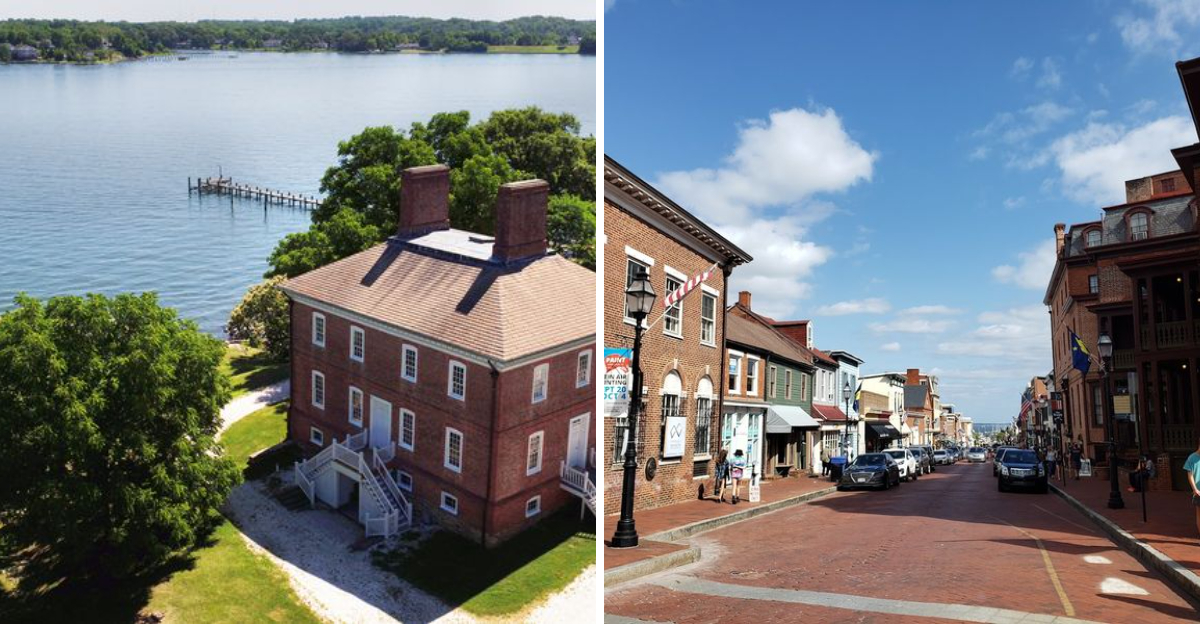
You know that travel magic where you step somewhere and suddenly forget what state you are in? These spots pull that off without a passport or an overpriced flight.
One minute you are driving past strip malls, and the next you are wandering through landscapes that look like a postcard from somewhere far more exotic. Cobblestone corners, coastal cliffs, or villages that seem plucked from a European daydream.
None of the jet lag, none of the currency exchange, and definitely none of the suitcase fees. It is the kind of strange and wonderful that makes you text your friends “guess where I am” just to watch them fail.
Pack a snack and a little sense of disbelief. You will need both.
1. Fells Point, Baltimore
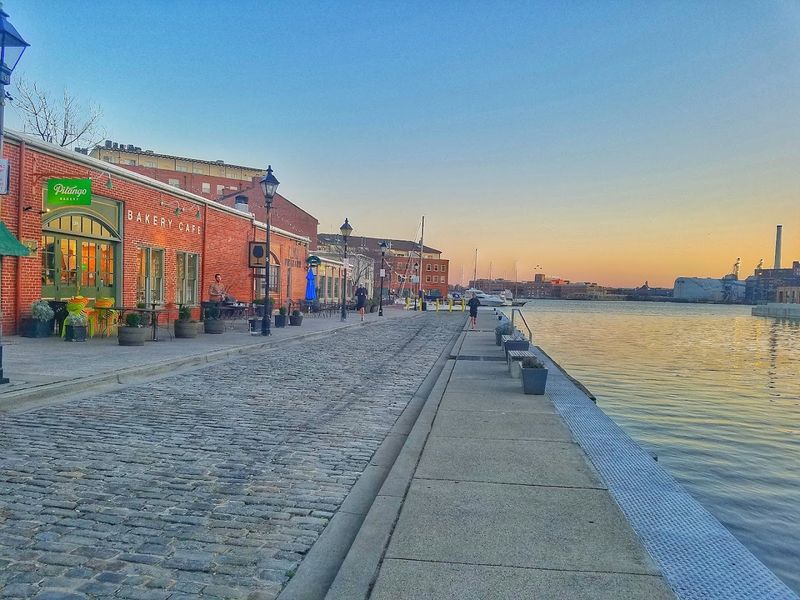
Cobblestone streets have a particular sound when you walk them, a rhythmic uneven tap that no smooth pavement can replicate.
Fells Point delivers that sound in full, and it sets the mood before you even look up to notice the vibrant orange, green, white, and blue buildings crowded together in that distinctly European harbor-town way.
This neighborhood has been thriving since the 1700s, and you can feel that age in the way the buildings lean slightly toward one another, as if sharing a centuries-old secret. The waterfront location only strengthens the illusion of being in some forgotten port town along the North Sea or the Baltic coast.
Boats bob in the harbor, and the whole scene has an unhurried, lived-in quality that tourist-facing areas rarely manage to hold onto.
What makes Fells Point special is that real people actually live and work here. It never feels like a museum piece or a theme park version of history.
The energy is authentic, a little worn at the edges in the best possible way, and completely unlike anything else Baltimore has to offer. Coming here on a quiet morning is an experience worth repeating.
2. Annapolis Historic Main Street
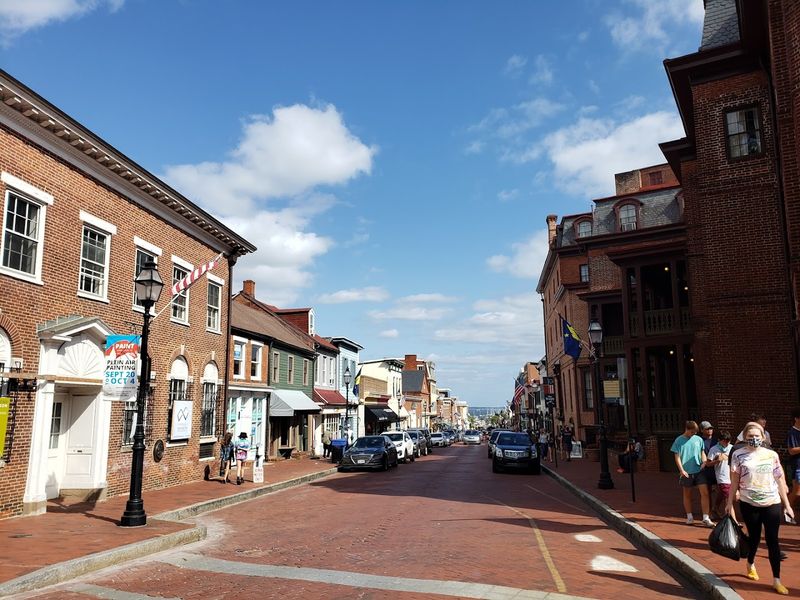
There is something about the way Annapolis Historic Main Street slopes gently toward the water that makes your brain quietly whisper “Europe.”
The brick walkways, the centuries-old facades, the international flags swaying overhead; it all adds up to an atmosphere that feels borrowed from Copenhagen or Amsterdam rather than the mid-Atlantic coast of America.
Founded back in 1649, Annapolis is one of the oldest cities in the country, and the architecture reflects that long history with pride. Colonial Baroque and Georgian styles line the street in a way that feels genuinely preserved rather than artificially restored.
The details matter here: the texture of old brick underfoot, the proportions of doorways, the gentle hum of harbor life at the bottom of the hill.
Leisurely strolling this street on a weekday morning, with the water glinting at the end of the road, feels like being somewhere far more famous than it actually is. It is the kind of place where you stop mid-stride just to take it all in.
Annapolis rewards slow walkers and curious eyes above everything else.
3. Historic London Town and Gardens, Edgewater
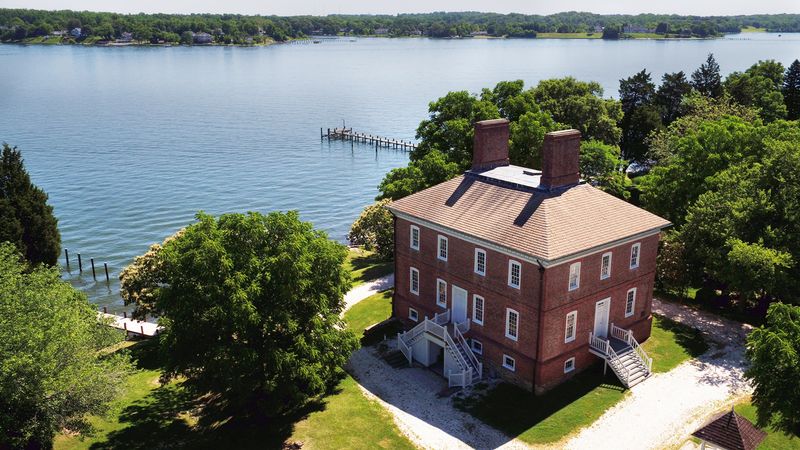
Approaching Historic London Town and Gardens for the first time, there is a moment where the tree line opens up and a handsome Georgian brick building appears beside the water, and your first instinct is to wonder which English county you have wandered into.
The Flemish bond brickwork, the elegant proportions, the formal gardens arranged in precise geometric patterns; all of it belongs to a very specific English aesthetic that Maryland somehow pulled off flawlessly.
The main building reads like an English country manor that decided to take up permanent residence on the South River, and the surrounding grounds reinforce that impression at every turn. Trimmed hedges frame pathways that invite slow, thoughtful walking.
The whole property has a quietness to it that feels deliberate, as if the landscape itself is asking you to slow down.
History runs deep here too. This site dates back to colonial times when it served as a bustling ferry crossing and tavern stop.
Learning that context makes the experience richer, because suddenly the building is not just pretty architecture but a genuine witness to centuries of American and English cultural overlap. It is one of Maryland’s most underrated destinations.
Address: 839 Londontown Road, Edgewater, MD
4. Mount Vernon Place, Baltimore
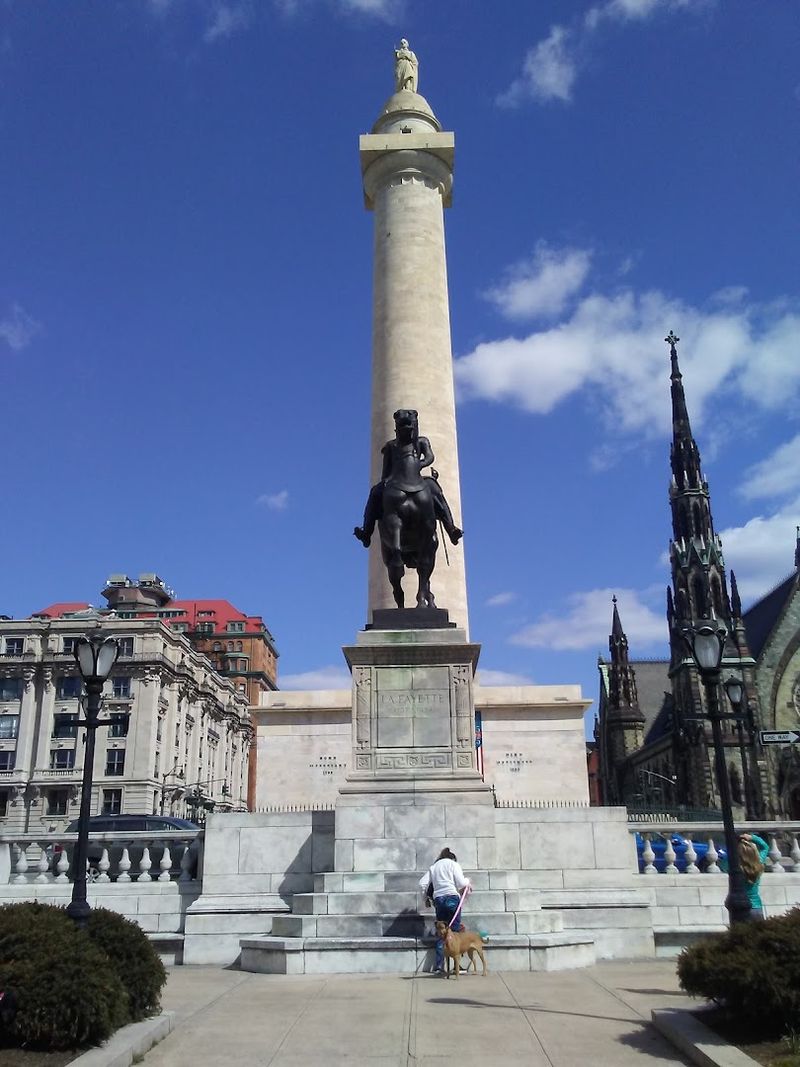
Baltimore’s most European side lives in Mount Vernon Place, and the comparison to a Continental capital is not a stretch at all.
Grand architecture rises around a central monument in a way that echoes the kind of civic design you find in Paris or Vienna, where the city itself seems to have been built to impress and inspire in equal measure.
The original Washington Monument anchors the space with quiet authority, surrounded by old libraries, museums, and institutional buildings that give the neighborhood its serious, cultured character. This is not a place that rushes you.
Mount Vernon Place has the energy of somewhere that expects you to linger, to sit on a bench and look up, to notice the details carved into stone facades that most people walk past without a second glance.
I found myself doing a slow loop around the monument more than once, just absorbing the scale and the symmetry of it all. The neighborhood functions as Baltimore’s cultural hub, and that role suits it perfectly.
There is a sense of civic pride embedded in every building here, the kind of pride that European cities wear openly and American cities sometimes forget to celebrate. Mount Vernon Place remembers.
5. Oakland B&O Railroad Station, Oakland
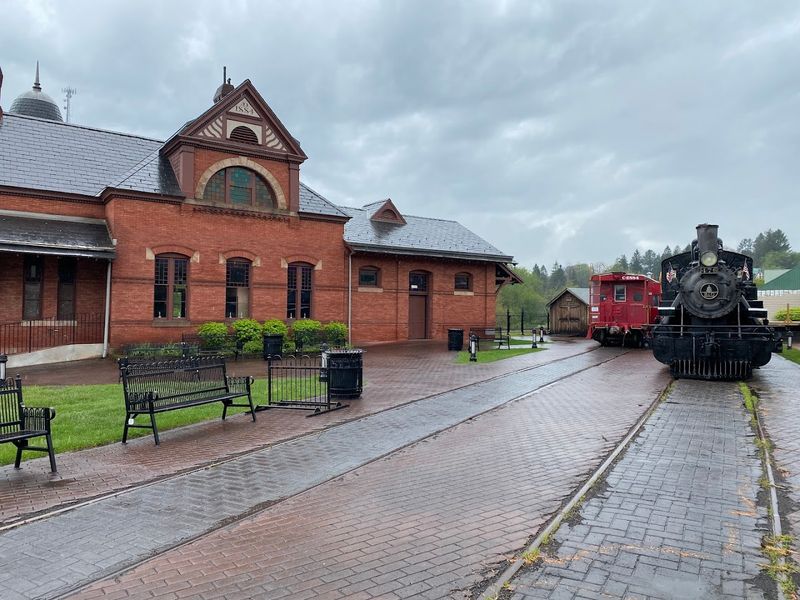
Red brick, a peaked roofline, decorative Victorian flourishes, and a steam locomotive parked outside like it is waiting for a passenger who never quite arrived.
The Oakland B&O Railroad Station looks like it was lifted directly from a small town in the German countryside or hidden somewhere into the foothills of the Alps.
The building carries that particular European railway museum energy where everything feels both functional and theatrical at the same time. Victorian-era train stations across Europe share this DNA: ornate enough to signal importance, sturdy enough to mean business.
Oakland’s version fits that mold with surprising precision for a small Maryland mountain town.
What I appreciate most about this spot is how unpretentious it is. There are no grand signs announcing its significance, no over-curated visitor experience demanding your attention.
The station simply exists, aged and dignified, in a plaza setting that enhances its European character rather than competing with it. The surrounding landscape of western Maryland, with its rolling hills and cooler mountain air, only adds to the feeling that you have somehow ended up somewhere far from home.
It is a quiet discovery that sticks with you.
Address: 1 Depot Street, Oakland, MD
6. Greenbelt Historic District
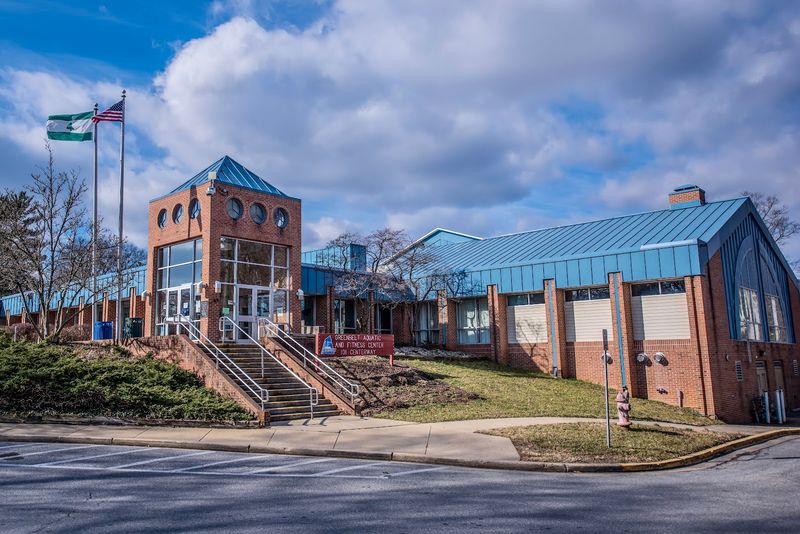
Not every place that feels foreign looks like a postcard from Paris. Greenbelt Historic District has a quieter, more intellectual kind of European energy, the kind you find in a carefully planned garden city in England or a mid-century modernist community in Scandinavia.
Built in the 1930s as part of a New Deal experiment in community planning, Greenbelt reflects the European garden city philosophy in its bones. Buildings are positioned to encourage human connection rather than isolation.
Green spaces are organized and intentional. Pedestrian paths wind through the community in a way that makes walking feel natural and pleasurable rather than an afterthought squeezed between parking lots.
The architecture itself is a mix of Art Deco and International Style, characterized by clean lines, practical proportions, and a complete absence of unnecessary decoration. It is the kind of design that ages gracefully because it was never trying too hard in the first place.
Spending an afternoon here feels genuinely different from anywhere else in Maryland, a reminder that thoughtful urban planning can create something that transcends its time and its geography.
Greenbelt is not flashy, but it is fascinating in a way that rewards curious visitors who take the time to simply walk and observe.
7. Berlin, Maryland
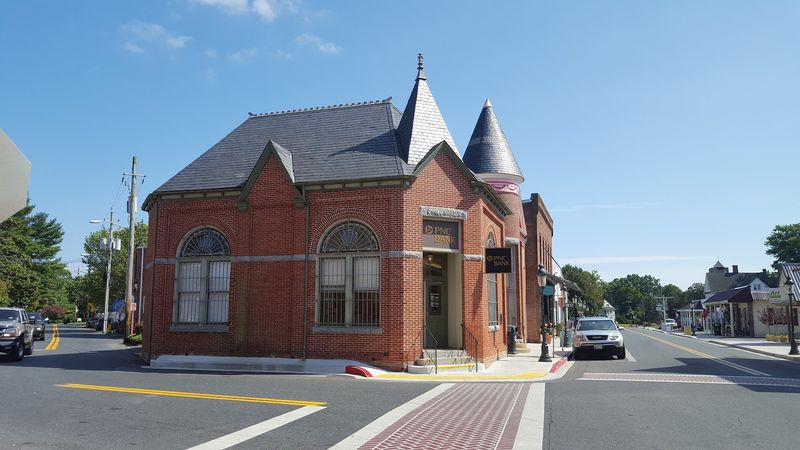
Berlin, Maryland earned the title of “America’s Coolest Small Town,” and spending even a short afternoon there makes it easy to understand why.
The historic commercial district has a finesse that feels more European than mid-Atlantic American, with storefronts that have genuine character rather than the generic chain-store sameness that swallows so many small towns whole.
The arts scene here adds a layer of vitality that keeps the town from feeling like a preserved relic. Local galleries, independent shops, and year-round festivals give Berlin a pulse that is very much alive in the present tense.
There is a festive quality to the place that shifts with the seasons but never fully disappears, and the community clearly takes pride in maintaining that spirit.
Wandering the streets here, you notice the kind of small architectural details that European towns take for granted: carved cornices, wide sidewalks, buildings that face each other with a sense of civic intention. Berlin does not announce itself loudly.
It simply invites you in, offers you something genuinely pleasant to look at, and lets you discover its character at your own pace. That restraint is part of what makes it so memorable and so easy to return to.
8. Ellicott City Koreatown
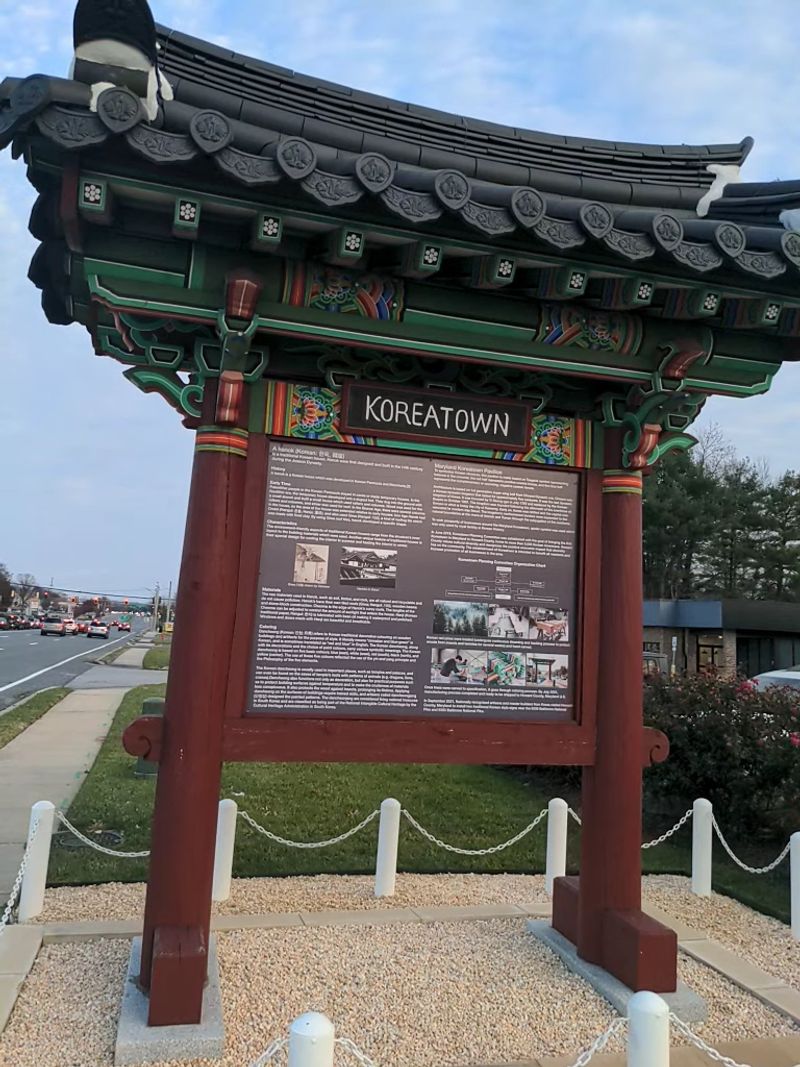
Maryland’s Koreatown does not announce itself with a dramatic gateway or a tourist map. It simply exists, vivid and self-assured, in a stretch of Ellicott City that buzzes with the kind of energy you associate with neighborhoods in Seoul rather than suburban Maryland.
Korean-language signs, the aroma of sesame and gochujang drifting from restaurant kitchens, karaoke studios glowing from second-floor windows; the sensory experience here is immediate and transportive.
Dishes like bibimbap and japchae appear on menus alongside items that require a bit of adventurous ordering, which is honestly half the fun.
The food alone justifies the trip.
Beyond the restaurants, the cultural texture of this area is genuine and community-driven rather than performance-based for outside visitors.
Korean grocery stores stock ingredients you will not find in a standard supermarket, and the rhythm of daily life here has a distinctly different cadence from the surrounding neighborhoods.
It is the kind of place where you realize Maryland’s cultural range runs much deeper than its colonial history suggests. Showing up hungry and curious is the best possible approach, and leaving with a full stomach and a new favorite dish is practically guaranteed.
9. St. Michaels
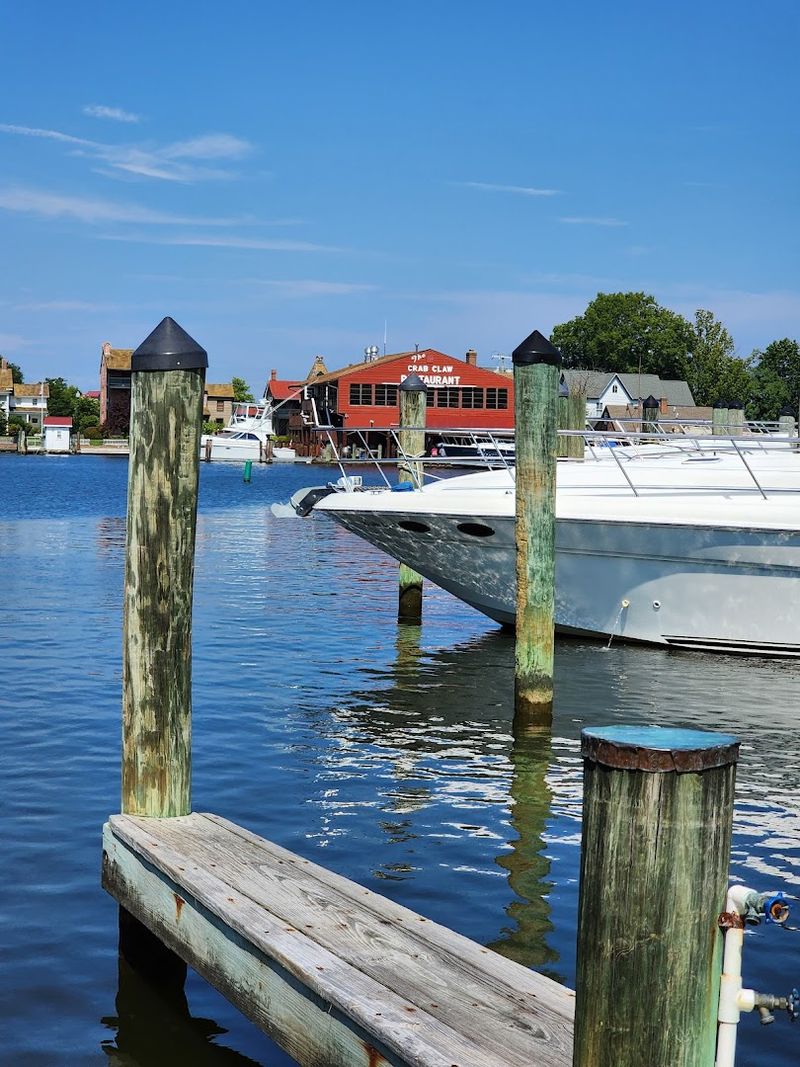
Some places earn their reputation quietly, through decades of being exactly what they are without apology or exaggeration. St. Michaels is that kind of place, a waterfront community on Maryland’s Eastern Shore that carries the soul of a European port town without ever having to try too hard to prove it.
The historic buildings, the working harbor, the streets sized for walking rather than driving; all of it adds up to an atmosphere that would not feel out of place in Portsmouth or Marseille.
St. Michaels grew up around shipbuilding, and that maritime identity still shapes everything from the architecture to the pace of life along the water.
Boats are not decoration here. They are part of the living landscape.
What I find most compelling about St. Michaels is how complete it feels as a destination. The seaport, the walkable streets, the coastal views, the sense of history embedded in every weathered building; none of it feels staged or assembled for visitors.
It evolved organically over centuries, and that organic quality is precisely what gives it its European coastal character. Arriving by water, if you have the option, makes the whole experience even more cinematic and genuinely unforgettable.
