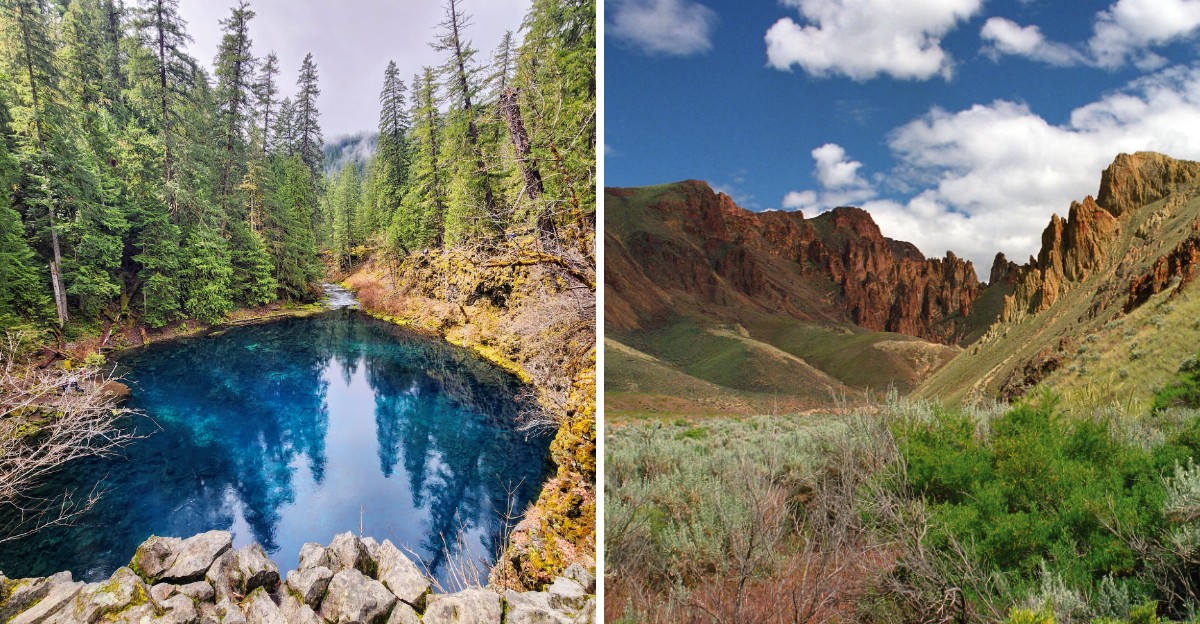
Somewhere in the Oregon high desert, you can walk down into a crack in the earth where the air can run 20 to 30 degrees cooler than the ground above. That alone made me sit up.
Then I kept finding more. There are striped hills that look painted, a dry lake bed that resembles Nevada, and a turquoise pool fed by water that runs underground.
I love that a state famous for rain and moss hides so many places that seem borrowed from somewhere else.
Each stop on this list made me double-check the map.
1. Painted Hills
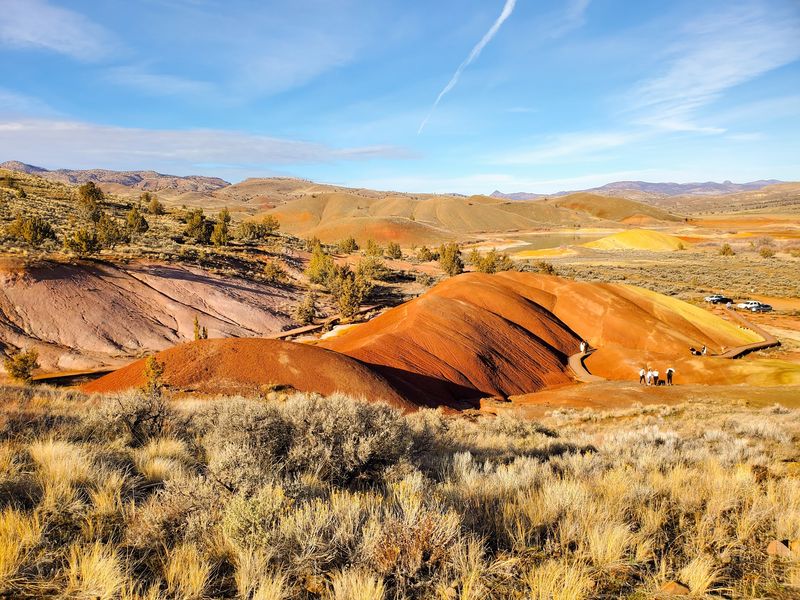
Mother Nature apparently owns a paint set, and she used it on a bunch of hills in Wheeler County. The stripes run red, tan, orange, and black across rounded slopes.
These hills belong to the Painted Hills unit of John Day Fossil Beds National Monument. You’ll find them northwest of the small town of Mitchell.
So what makes them look so wild? The colorful layers formed as weathering pumice and ash broke down over a very long time.
The result looks more like Mars than the Pacific Northwest. Plenty of folks also compare it to the desert Southwest.
Here’s a fun twist for photographers. The colors shift with the time of day, the seasons, and the weather.
Sunset is the classic time to visit. That’s when the soft light makes the yellows and reds really pop.
You don’t need to be a serious hiker to enjoy the view. Easy trails and scenic lookouts let you see the stripes up close.
Stick to the trails, though. Those delicate clay slopes are part of what makes this place special, so footprints don’t belong on them.
Plan ahead before you go, since this corner of Oregon is rural. Pack water and snacks so you can linger without rushing back to town.
Bring a camera with a full battery. You’ll likely take far more photos than you planned, and each one will look a little different.
Honestly, the hardest part might be explaining to friends that these pictures came from Oregon. Expect a few raised eyebrows.
Address: Painted Hills, Mitchell, OR 97750
2. Oregon Dunes National Recreation Area
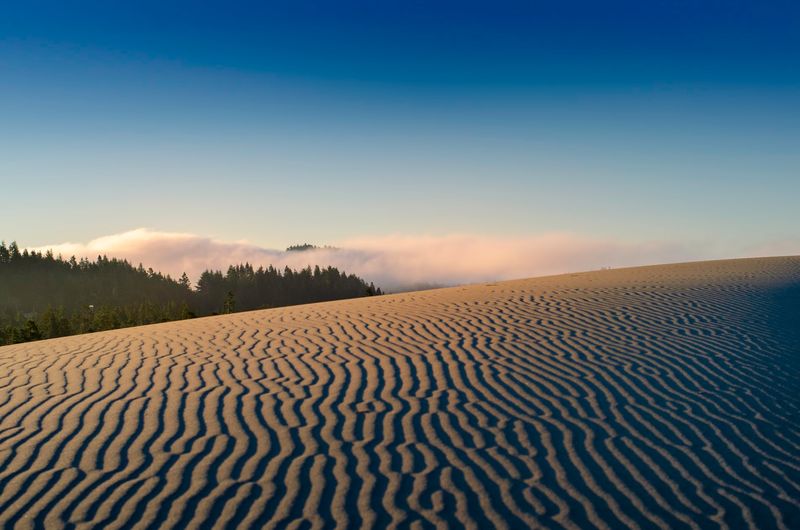
Sahara, meet the Oregon coast. Along Highway 101, about 40 miles of wind-sculpted sand dunes stretch beside the ocean.
Some of those dunes reach hundreds of feet high. That’s a lot of sand for a state known for evergreen trees.
The strangest part is the neighbor. These giant sandy hills sit right next to temperate coastal forest.
One minute you’re surrounded by green trees. The next, you’re staring at what looks like a desert movie set.
The recreation area centers near Winchester Bay and Reedsport in Douglas County. It’s protected federal land, so it’s set up for visitors.
You can choose how you want to explore. Designated hiking trails wind through the area for people on foot.
Like engines more than boots? Off-road vehicle routes let riders cruise across the sand in permitted zones.
Campgrounds are part of the mix too. That means you can stay overnight and catch the dunes in morning light.
A quick tip from the sand itself: walking on dunes is a workout. Each step slides back a little, so pace yourself on the climbs.
Wear shoes you don’t mind filling with sand. You’ll be shaking grains out of them for days anyway.
The wind does the sculpting here, so the shapes keep changing. Come back later, and the view may not look quite the same.
If anyone claims Oregon is only rain and moss, this is your comeback. Just send them a photo.
Address: Oregon Dunes National Recreation Area, Winchester Bay, OR 97467
3. Alvord Desert
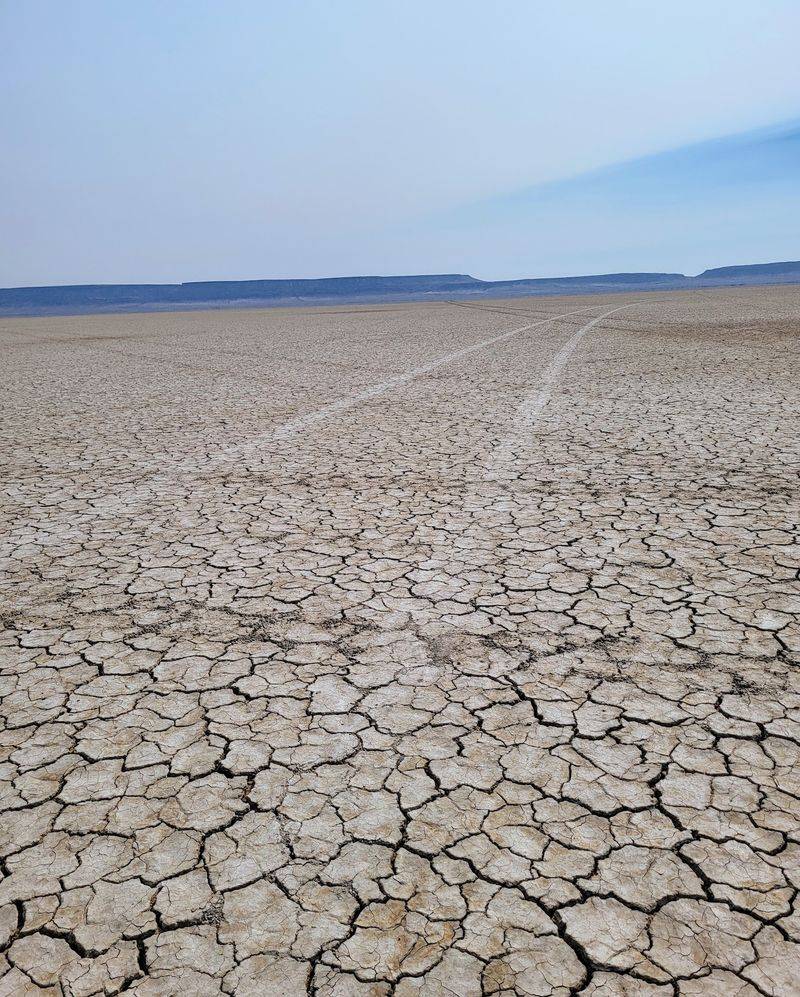
Flat. Really, truly flat. The Alvord Desert is a dry lake bed, or playa, with cracked pale mud stretching toward the horizon.
It sits in remote southeastern Oregon. You’ll find it east of Fields and south of Princeton.
Behind it rises Steens Mountain, and that mountain matters. The playa lies in its rain shadow, which keeps this land so dry.
Many people compare it to Nevada’s Black Rock Desert. Others think of the Bonneville Salt Flats in Utah.
Daytime brings huge, open views. Sunsets here can paint the whole sky in big, sweeping colors.
Night is the real headliner, though. Dark skies make this one of the best stargazing spots you could ask for.
On a clear night, the Milky Way can stretch right over your head. Bring a blanket and plan to stay up late.
Camping is popular for exactly that reason. You get stars, silence, and a break from the modern world.
Remote means remote, so prepare like it. Pack plenty of water, food, and fuel before you head out.
Don’t count on quick help nearby. Let someone know your plans, and download maps before you lose signal.
Hot springs also dot the surrounding area. They add one more surprising twist to an already odd landscape.
Want to feel very small in the best way? Stand on that playa at night and look up.
Address: Alvord Desert, Fields, OR 97721
4. Smith Rock State Park
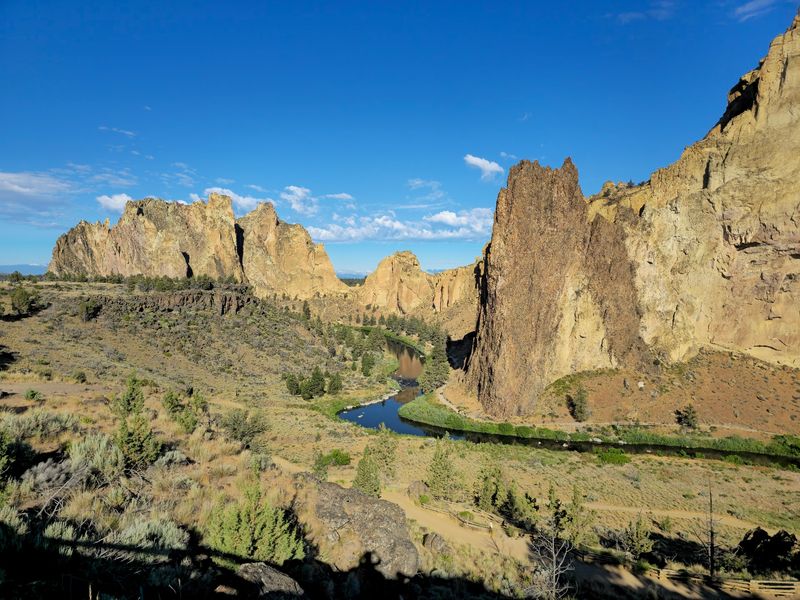
Southern Utah called, and it wants its canyon back. Smith Rock State Park looks like it wandered north and decided to stay.
The Crooked River cuts deep through this high-desert park in Terrebonne. Soaring spires of volcanic tuff and basalt rise above it.
The park covers about 650 acres in Central Oregon. Its dramatic canyon and sheer rock faces draw people from far away.
Climbers know this place well. It’s a world-class rock climbing destination with plenty of cliffs to test your grip.
Not into ropes and harnesses? No problem, because the trail system offers options for different skill levels.
Families can relax too. There are kid-friendly hikes, a playground, picnic tables, and public restrooms.
Dogs are allowed, which makes it a favorite with hikers who bring a four-legged buddy. Keep yours close on narrow paths.
Primitive campsites let you stretch the visit into an overnight stay. Morning light on those spires is worth the early alarm.
Timing helps a lot here. Saturday and Sunday afternoons tend to be the busiest stretches.
Arriving earlier gives you more breathing room on the trails. Parking is paid, so plan for that before you go.
Bring water, sun protection, and sturdy shoes. High-desert sun can feel stronger than you expect.
Watching climbers inch up those walls is a show all by itself. Bring snacks, grab a picnic table, and enjoy the view.
Address: 9241 NE Crooked River Dr, Terrebonne, OR 97760
5. Lan Su Chinese Garden
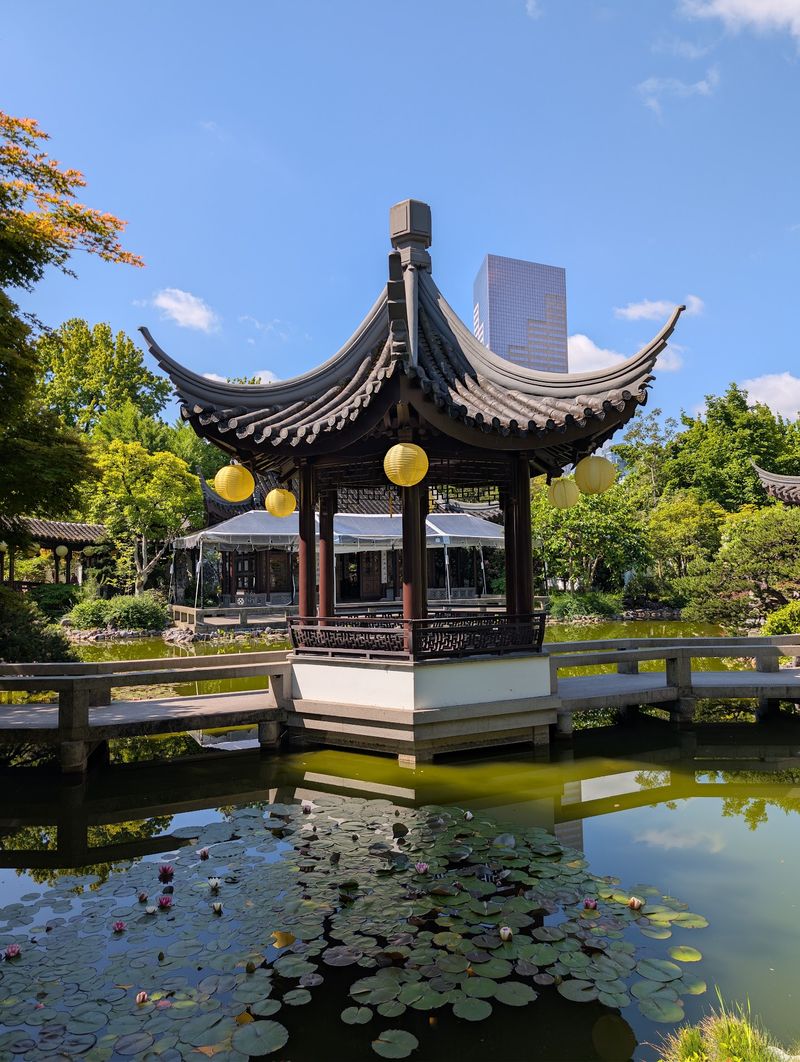
A few steps off a busy downtown street, Portland suddenly turns into a Ming dynasty retreat. Lan Su Chinese Garden pulls off that trick inside its walls.
The garden came from a partnership between Portland and Suzhou, its sister city in China’s Jiangsu province. Suzhou is famous for its classical gardens.
Artisans from Suzhou built Lan Su. It’s considered one of the most authentic Chinese gardens outside of China.
The design mirrors a scholar’s retreat from the 16th century. That’s a lot of history packed into one city block.
Look down as you stroll. The decorative stone walkways are detailed works of art in their own right.
Rare plants native to China fill the space. A mapped plant guide helps you figure out what you’re looking at.
The architecture deserves slow attention too. Rooflines, windows, and carvings show careful craftsmanship.
Need a break? The garden has a teahouse, so you can sip something and soak in the calm.
The garden opens daily from 10 a.m. to 4:30 p.m. during the colder months and from 10 a.m. to 5:30 p.m. during the warmer months. Weekday mornings, especially Tuesday through Thursday, tend to be quieter.
Weekend afternoons draw bigger crowds. If peace and quiet is your goal, plan around them.
Bringing kids along? Discounts for children make it easier on the family budget.
It’s wild that this calm world sits in Portland’s Chinatown. Step outside, and the city noise rushes right back.
Address: 239 NW Everett St, Portland, OR 97209
6. Crack in the Ground
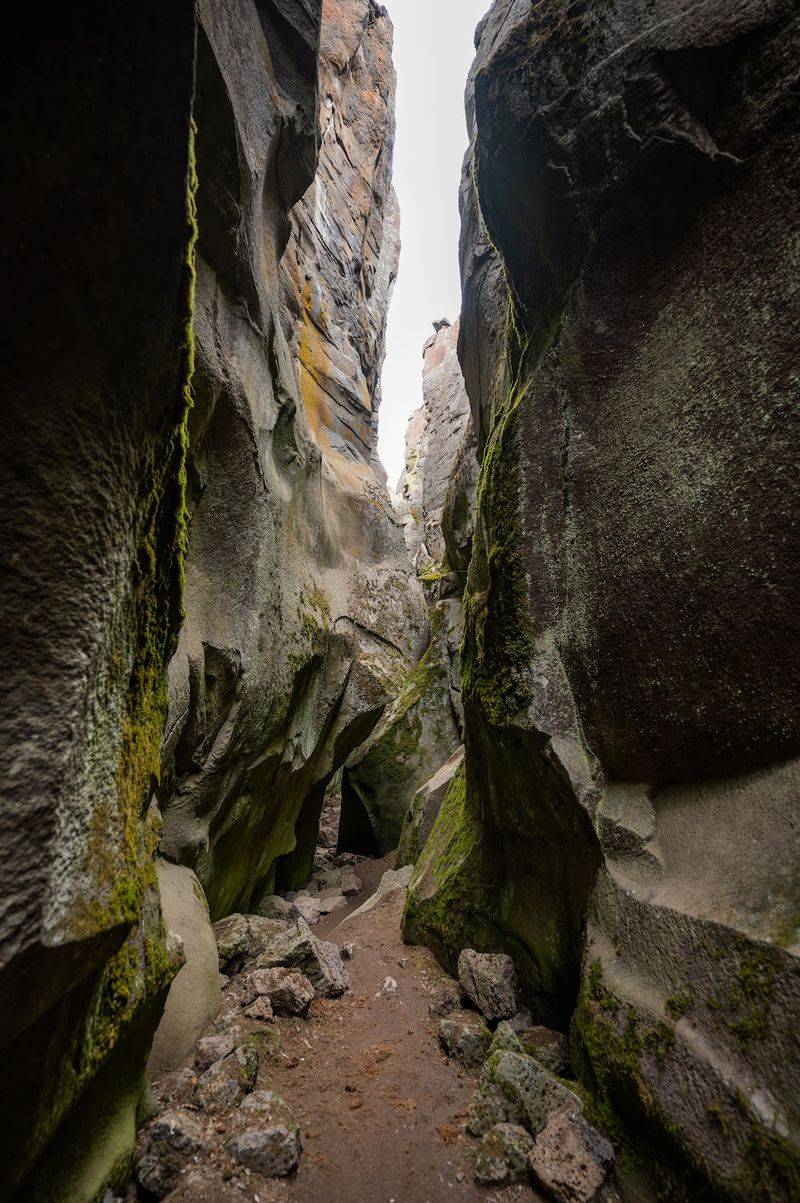
Yes, that’s the real name, and it’s refreshingly honest. Crack in the Ground is exactly what it sounds like.
This volcanic tension fracture splits the high desert in northern Lake County. It sits just north of the small community of Christmas Valley.
The Bureau of Land Management looks after the site. A hiking trail lets you walk right down into the narrow corridor.
Inside, the rock walls close in around you. It feels a bit like a desert slot canyon, or maybe a sci-fi movie set.
Here’s the coolest part, literally. Temperatures inside the crack can be as much as 20 degrees Fahrenheit cooler than at the surface.
That makes it a smart pick on a hot summer day. Still, bring a light layer if you plan to linger inside.
The road out there gets a little bumpy. Access requires traveling on rugged dirt roads that can become impassable, and the Bureau of Land Management strongly recommends a four-wheel-drive vehicle.
Pack plenty of water before you leave town. This is open high desert, and services are scarce.
Good shoes help on the uneven ground. Rocks inside the fissure can be tricky to navigate.
Kids usually love the adventure of exploring a giant gap in the earth. Keep a close eye on them in tight spots.
It’s one of the strangest short hikes in the state. Where else can you walk inside a crack and come out cooler?
Address: Crack in the Ground, Christmas Valley, OR 97638
7. Fort Rock State Natural Area
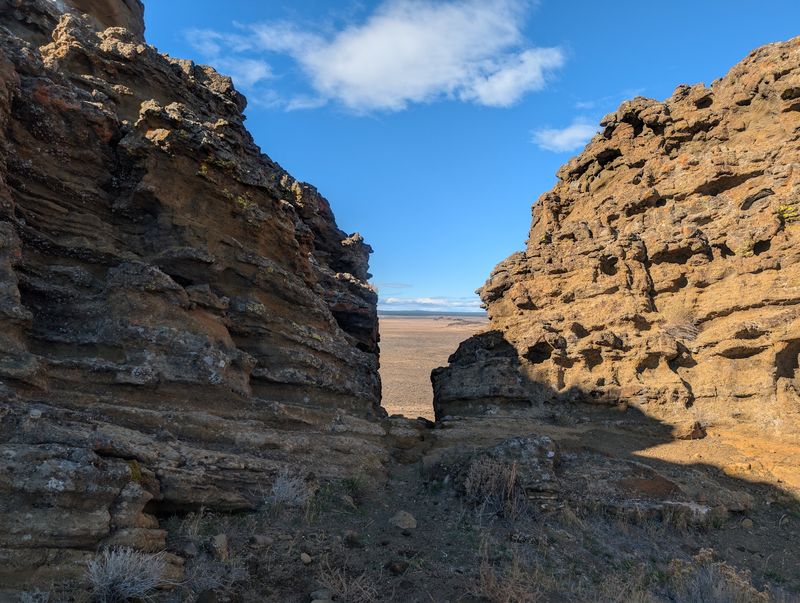
From a distance, it looks like someone dropped a giant stone castle onto a flat plain. Up close, it’s even stranger.
Fort Rock is a massive circular tuff ring rising over 300 feet. It stands above the high desert near the tiny town of Fort Rock.
The shape reminds people of an ancient fortress. Some even compare it to an impact crater.
Easy trails lead you around and into the formation. The paths work well for families and casual walkers.
Climb a bit higher for big views of the valley. You can also spot the flat floor of an old, extinct lake bed.
That lake bed tells part of the story. This landscape looked very different a long, long time ago.
Caves in the area have their own claim to fame. Ancient artifacts have been found in caves around this geological wonder.
The park keeps things simple and practical. Picnic tables and public restrooms make a longer stay comfortable.
Dogs are welcome too, so your pup can join the exploring. Keep water handy for both of you.
Shade is limited in open high desert. A hat and sunscreen will save you some regret later.
Photographers, take note of the rock’s curves and textures. Different angles make it look like a whole new place.
It’s the kind of stop that turns a road trip into a story. You’ll want to tell people about the castle in the desert.
Address: Fort Rock Rd, Fort Rock, OR 97735
8. Leslie Gulch
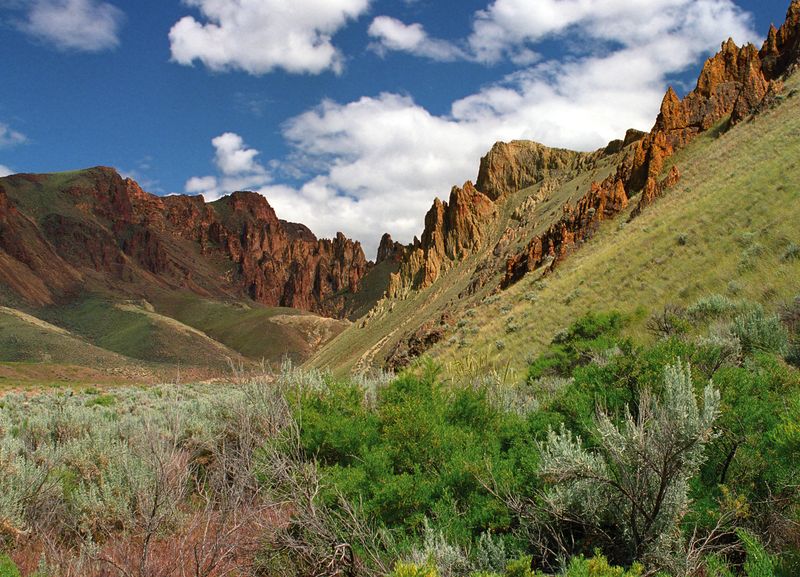
Think of it as a city of rocks with no traffic lights. Leslie Gulch packs towering stone shapes into a remote canyon near the Owyhee Reservoir.
These formations came from volcanic ash. Over time, weathering carved them into spires and honeycomb patterns.
The cliffs glow in orange and red tones. Many people say they look like Bryce Canyon or the Arizona desert.
Getting there is part of the adventure. The route covers more than 20 miles of rugged dirt road into the canyon.
Plan your vehicle and supplies with care. Fill up on fuel and water before heading out from Jordan Valley.
Wildlife adds a fun bonus. Bighorn sheep roam this area, so keep your eyes on the slopes.
The land is protected as an Area of Critical Environmental Concern. That status helps preserve its unusual features.
Hiking trails lead into side canyons and among the rock towers. Several routes work well for kids.
Want to stay overnight? A primitive campground gives you a chance to see the cliffs at dawn.
Picnics are a great way to slow down here. Pick a spot and let the quiet sink in.
Dogs are allowed, so your furry co-pilot can come along. Watch for heat and rough ground on their paws.
Oregon rarely gets this orange. Bring a camera, because your friends may not believe where you went.
Address: Leslie Gulch Rd, Jordan Valley, OR 97910
9. Tamolitch Falls (Blue Pool)
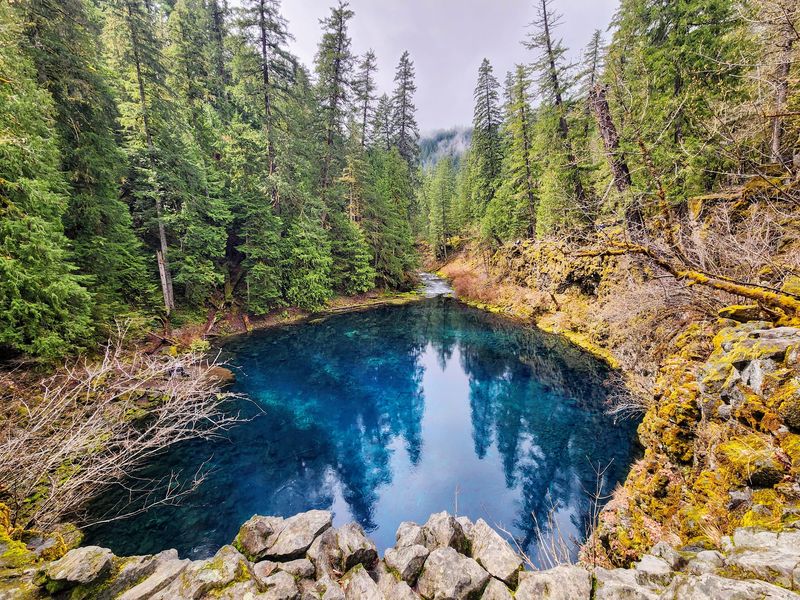
Caribbean blue, in the middle of a mossy Oregon forest? That’s the surprise waiting at Tamolitch Falls, better known as Blue Pool.
The water glows in shades of turquoise and sapphire. It’s so clear that people compare it to a tropical cenote or Mediterranean cove.
So where does that color come from? Here, the McKenzie River flows underground through volcanic rock, then bubbles back up into the pool.
The pool sits in the Willamette National Forest near McKenzie Bridge. Reaching it means a scenic hike through old-growth forest.
The trail runs about 2.1 miles each way. The hike is rated moderate, with rough, rocky terrain that can be challenging for some visitors.
Don’t let the tropical color fool your toes. The water is frigid, even on warm days.
Some people jump off the cliffs into the pool. Cliff jumping at Blue Pool is extremely dangerous and should be avoided because of the steep cliffs, near-freezing water, and limited emergency access.
Honestly, looking may be the best part. The color shifts as sunlight moves across the water.
This trail gets busy, especially on Saturday afternoons. Weekday visits or early mornings tend to be calmer.
Dogs are allowed outside, so your pup can enjoy the walk. Bring a leash and pack out any trash.
The site is open for day use from 6 a.m. to 10 p.m. Still, daylight is your friend on forest paths.
It’s a fitting end to the list. Few places look less like the Oregon you expect and more like a postcard from far away.
Address: National Forest Road 2672-655, McKenzie Bridge, OR 97413
