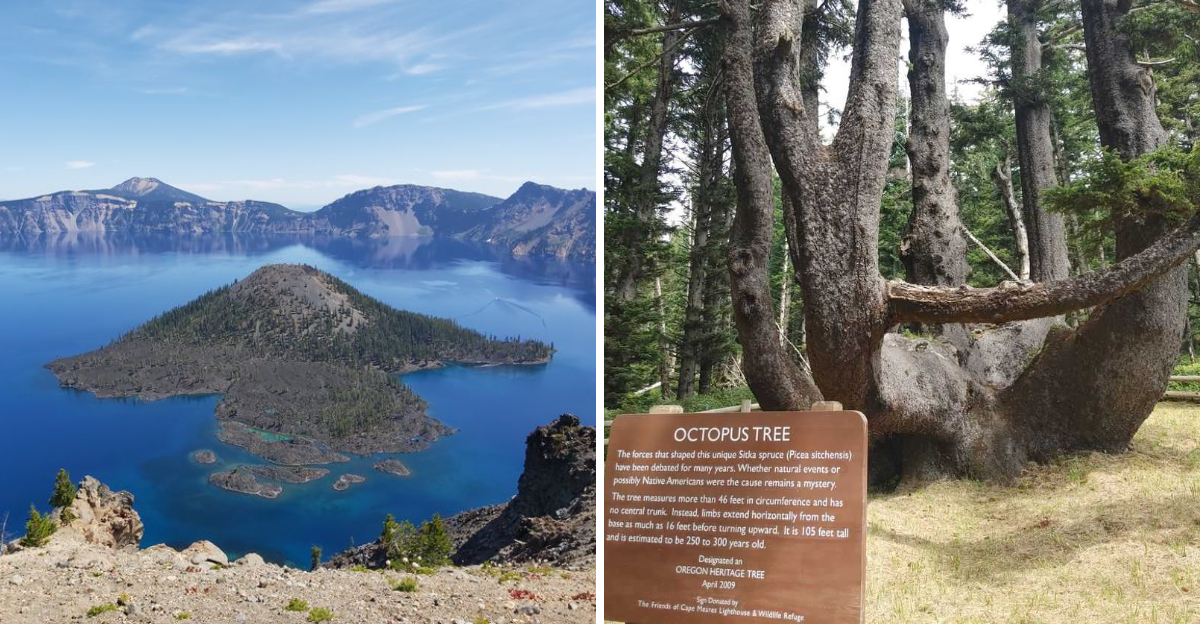
Oregon looks calm at first glance, yet the ground beneath those forests and shores remembers fire, shipwrecks, and improbable fortunes.
You stroll past postcard scenes, then a guide mentions a vanished mountain, a stranded steel skeleton, or a town that thrived on wool and whispers.
Curiosity starts to tug, because the everyday beauty hides turning points that shaped communities, beliefs, and the way travelers move through the state.
Keep reading, and the map of Oregon unfolds like a story you cannot put down, each stop revealing secrets that change how you see the landscape.
1. Crater Lake National Park
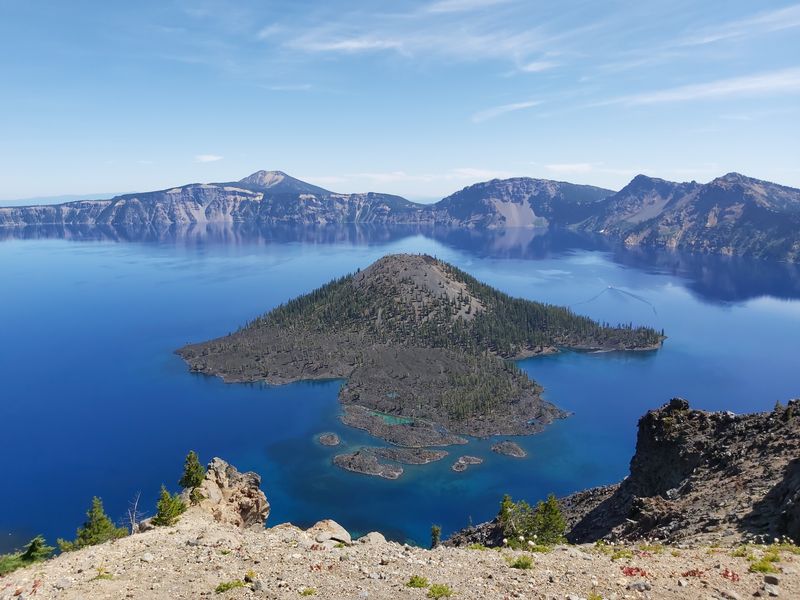
Crater Lake dazzles with color that seems unreal, a calm blue disk filling a basin so steep it looks carved by design.
The truth is more dramatic, because Mount Mazama collapsed after a massive eruption, and the lake is the breath held by a vanished summit.
Stand at Rim Village, 565 Rim Village Dr, Crater Lake, OR 97604, and the wind feels like a quiet witness to that ancient upheaval.
Wizard Island rises from the water like a final footnote, a cinder cone hinting that the story did not end when the crater filled.
Local tribes tell of a cataclysm, a battle between forces tied to the mountain, and that memory threads through the view with reverence.
Look closely at the clarity, because no rivers feed this bowl, only snow and rain, and the purity deepens the tone to luminous sapphire.
Hike along the rim and you sense edges, layers, and silence, the scale bending your sense of time and distance.
In winter, the park turns spare and white, and every sound lands softly, as if the volcano still sets the rules.
Summer opens boat tours to Wizard Island, when schedules allow, and the shoreline turns into a ring of bright basalt.
You think of Oregon as gentle and green, then remember that beauty here often arrives after the earth remakes itself.
2. Painted Hills, John Day Fossil Beds
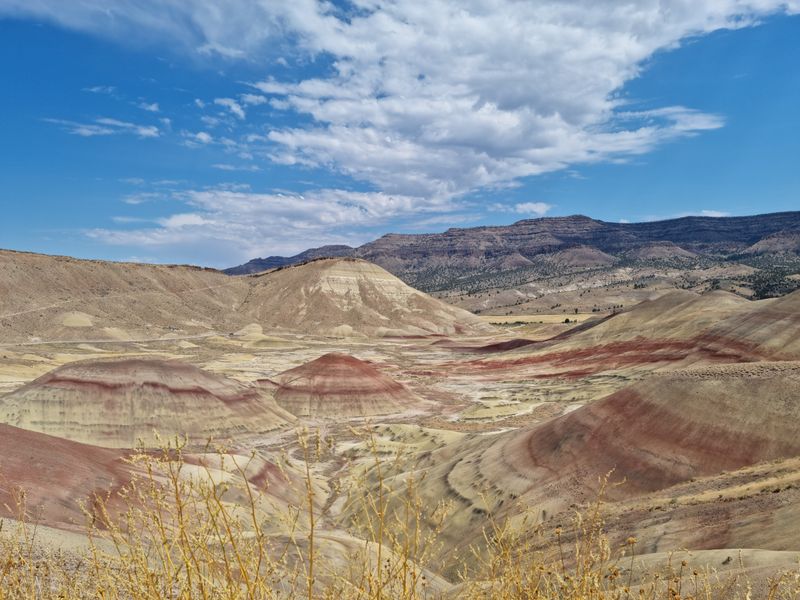
The Painted Hills look like someone brushed the earth with warm stripes, but the palette is really time stacked in quiet layers.
Iron, clay, and ancient ash settled in bands, then weather teased out reds, golds, and blacks that shift tone after rain.
Walk the boardwalk at 6720 Badger Creek Rd, Mitchell, OR 97750, and the rules ask you to stay on trail to protect fragile soils.
Each color signals a climate chapter, from lush periods to drier eras, a climate diary written in patient handwriting.
Sunrise softens the ridges with pastel light, while late afternoon deepens contrasts, pulling shadows like careful underlining.
You expect quiet hills, yet you are traveling across fossils and stories preserved in the John Day Fossil Beds complex.
Nearby overlooks keep your eyes moving, because every angle uncovers a new pattern and a different rhythm of stripes.
Clouds pass and the scene rewrites itself, turning the hills into breathing pages that never truly settle.
Interpretive signs ground the view with context, and the small details help you read the landscape like a slow novel.
Oregon holds many gorgeous places, but these hills change how you imagine color, history, and the patience of geology.
3. Wolf Creek Inn State Heritage Site
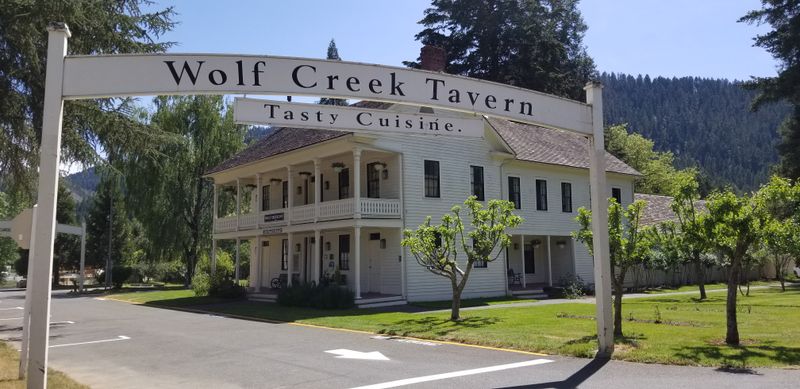
Wolf Creek Inn looks like a gentle stop along the highway, yet the walls carry footsteps and stories that refuse to rest.
Writers stayed, travelers passed through, and some say certain guests never quite left, turning quiet evenings into whispered tours.
Pull into 100 Front St, Wolf Creek, OR 97497, and the porch seems to watch the road with patient curiosity.
Rooms preserve period furnishings, creaking floors, and a sense of time that moves at a slower, steadier pace.
Guides share moments from old ledgers, a splash of celebrity lore, and sightings that give the inn its gentle notoriety.
You notice details, framed photographs, and stairways that angle toward shadow, and the mood feels theatrical but respectful.
The surrounding grounds settle you, trees shading the clapboard exterior and the breeze folding past open eaves.
Even skeptics lean in when the lights dim, because history has a way of sounding close when the house grows quiet.
Exploring here pairs well with nearby trails and small town stops, giving you a full day inside southern Oregon rhythm.
Leave with the sense that hospitality can hold a century, and that travel sometimes includes listening for what you cannot see.
4. Fort Stevens and the Wreck of the Peter Iredale
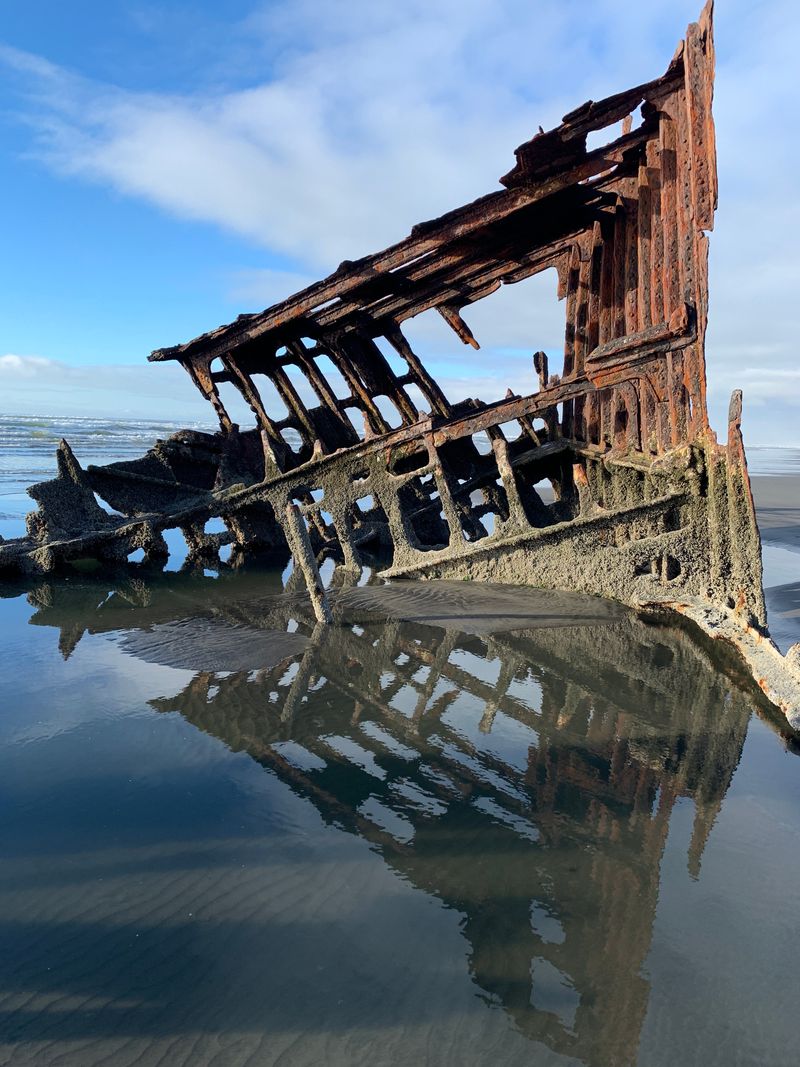
Fort Stevens feels like a pleasant coastal park until the sand unveils the iron spine of the Peter Iredale, a ship that never left.
Its ribs point toward the horizon, a patient reminder that the Columbia Bar has teeth and bad weather can end a voyage quickly.
Navigate to 1675 Peter Iredale Rd, Hammond, OR 97121, and follow signs to the beach access where the wreck rests in view.
Bunkers, batteries, and old gun emplacements sit inland, a patchwork of concrete where moss now keeps the watch.
Tour the grounds and you feel the coastline shrink and widen, depending on wind, tide, and the mood of the sky.
Families wander around the hull at low tide, tracing rivets and reading plaques that ground the romance in real events.
Birds nest in dune grass and the ocean throws light that flickers across the metal like moving silver.
It looks like sculpture, but the story is work and risk, because maritime trade built communities along this rim of Oregon.
Storms still rearrange the beach, burying and revealing pieces, and every visit becomes a conversation with change.
As you leave, the surf carries the final word, and the fort returns to quiet, resolute under a wide coastal sky.
5. Shaniko Ghost Town
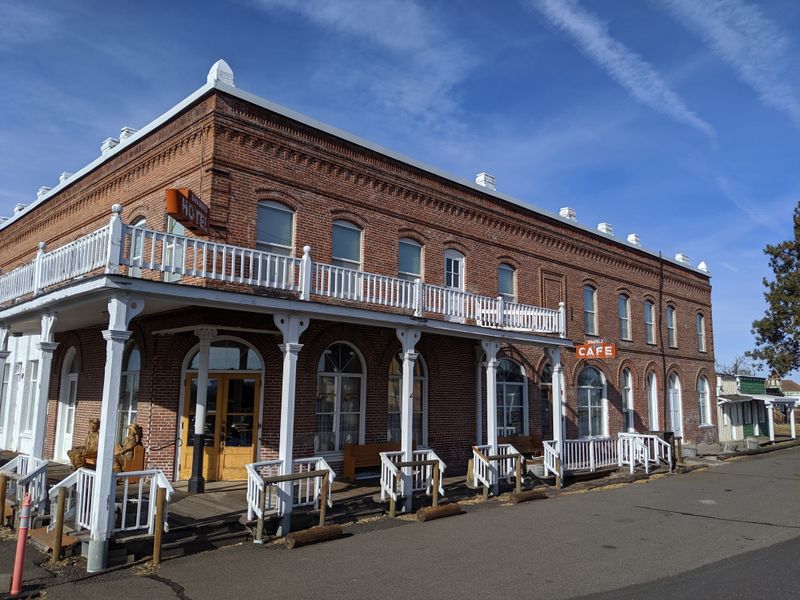
Shaniko sits on an open plateau where wind moves freely, and the buildings look paused between seasons.
Once a humming hub for wool shipping, the town now wears its history on front porches, weathered siding, and empty streets.
Point your map to Main St and 4th St, Shaniko, OR 97057, and you will find restored structures and a historic hotel facade.
Storefronts hold small exhibits, old tools, and nods to the rail era that pushed money and news through the high desert.
On quiet days, the clap of a door echoes, and you wonder how many deals and promises crossed these thresholds.
Events bring life back in pulses, and the contrast makes the silence feel like part of the show.
Signs describe booms, busts, and the routes that bypassed the town when progress chose a different path.
The sky here never crowds you, and the light turns late afternoons into sepia frames without trying.
Oregon holds many ghost towns, yet Shaniko pairs accessibility with a visible backbone of boards and brick.
Walk slowly, read everything, and let the town set the pace so the past can speak without rushing.
Sumpter rests in a high desert valley, where the Sumpter Valley Railroad and dredge tell stories of gold, grit, and patience.
The Sumpter Valley Dredge State Heritage Area at 46150 Oregon 7, Sumpter, OR 97877, anchors gentle walks along water and tailings.
Main Street at 160 Mill St shows wooden sidewalks, weathered signage, and facades that still hold seasonal color.
A short ride on the historic railroad at 211 Austin St reveals pine flats, trestles, and the quiet cadence of a town shaped by mining rhythms.
Evening light warms the dredge hull, the creek reflects soft sky tones, and the valley exhales a calm that matches history’s slower pace.
6. Pittock Mansion, Portland
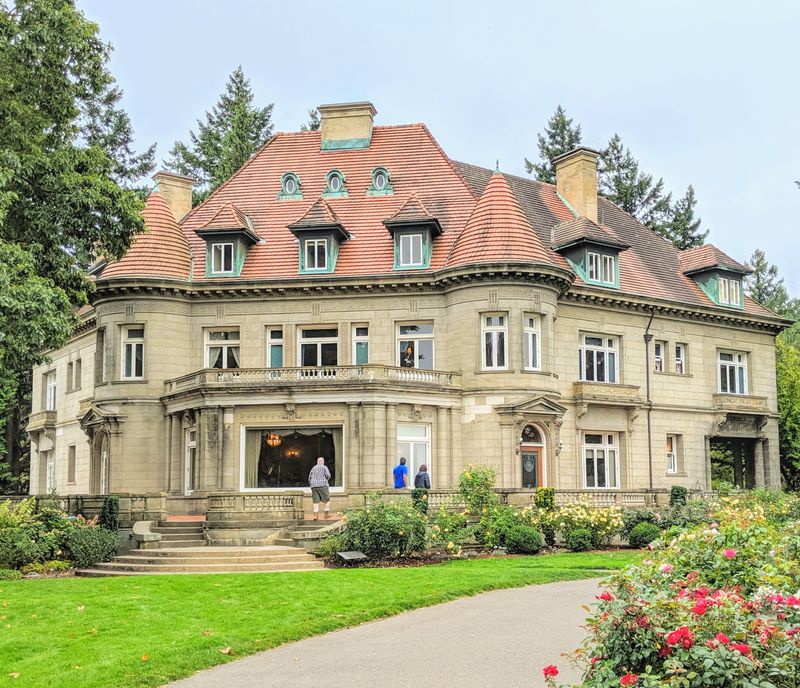
Pittock Mansion crowns a forested hill that seems built for a picnic, yet its rooms reveal the ambitions that shaped a young city.
Arrive at 3229 NW Pittock Dr, Portland, OR 97210, and the driveway opens to a view that strings bridges and towers together.
Inside, tiled baths, hidden systems, and forward looking conveniences show how comfort and technology walked hand in hand.
Galleries explain the family’s enterprises, civic projects, and the social networks that spun Portland into a regional center.
Every window frames a new angle on the city, a reminder that wealth can purchase perspective as well as privacy.
Gardens roll down toward the forest, where trails connect to Washington Park and birds stitch sound through the trees.
The mansion seems serene, but its construction speaks to power, taste, and the way new money tried to look established.
Volunteers share anecdotes that ground the elegance, lifting the rooms out of museum stiffness and into lived space.
When clouds lift, Mount Hood floats beyond downtown, and that final note turns the visit into a full Oregon panorama.
You leave with a map in your head, tracing how influence and innovation built comfort, view by view and room by room.
7. Silver Falls State Park
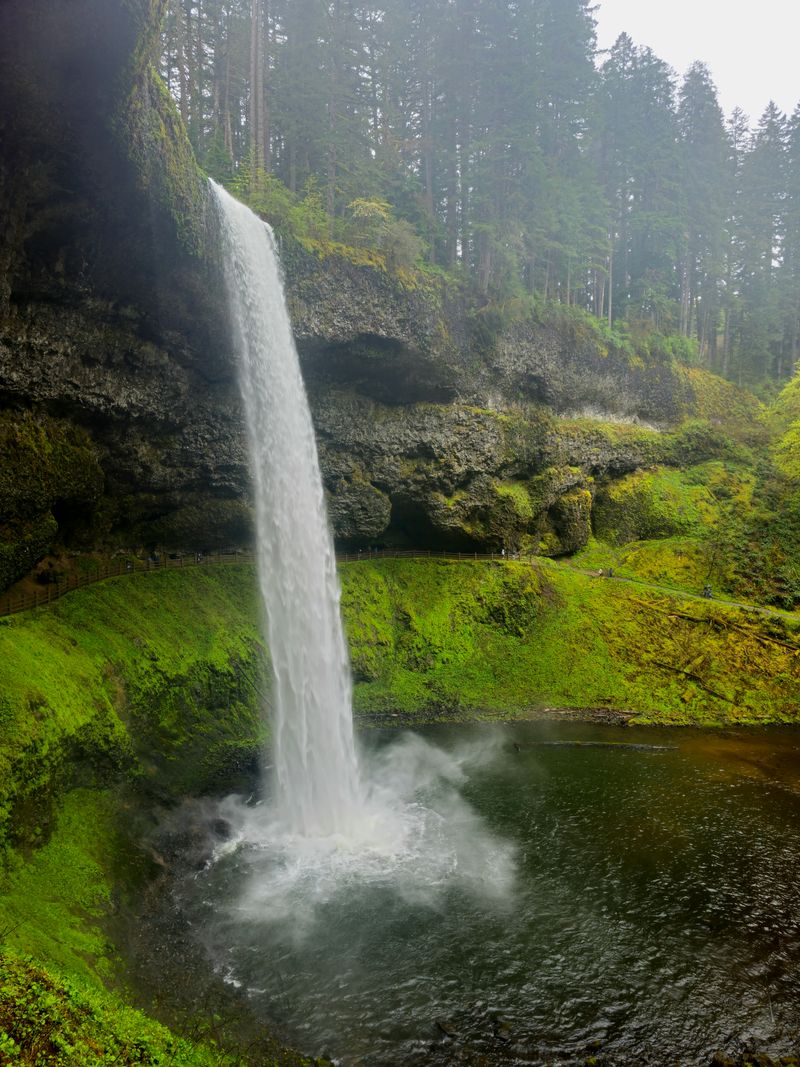
Silver Falls looks like a lush postcard, and then you realize people carved careful paths to choreograph your steps around water.
The Trail of Ten Falls threads canyons and basalt ledges, guiding you behind curtains of spray and along mossy amphitheaters.
Set your GPS to 20024 Silver Falls Hwy SE, Sublimity, OR 97385, and start at the lodge area for maps and trailheads.
Signs honor crews who built footbridges and viewpoints, a legacy of labor that turned wilderness into a welcoming loop.
Stand behind South Falls and the roar becomes a steady drum that clears the mind and cleans the air around you.
Ferns, bigleaf maples, and nurse logs flank the trail, making every turn feel like a small green reveal.
Seasonal changes reorder the soundtrack, from spring crescendo to autumn hush, and winter adds sparkling edges.
History here hides in the craft of stonework and the decision to preserve rather than cut, a choice that still pays dividends.
Oregon wears its rain proudly, and this park translates that weather into motion, rhythm, and soft light.
You finish tired in a satisfied way, grateful for the hands that made beauty easier to reach without taming it too much.
8. The Grotto, Portland
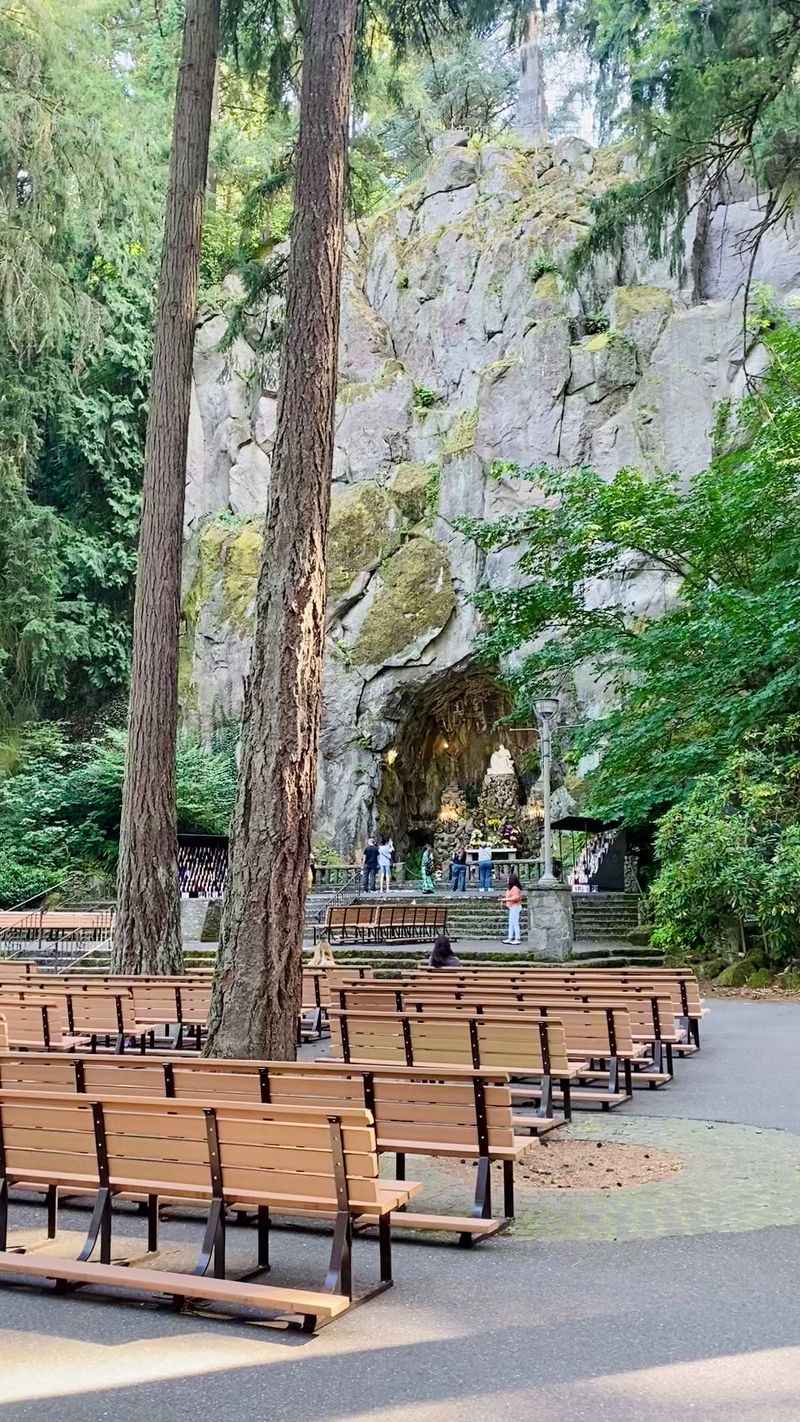
The Grotto feels like a quiet garden at first, but the cliffside sanctuary was carved from intention and careful community effort.
A lower level plaza holds the shrine within a natural niche, and paths lead upward toward a hilltop with sweeping views.
Enter at 8840 NE Skidmore St, Portland, OR 97220, where the gate welcomes you into an unexpectedly spacious retreat.
Stonework, statuary, and shaded benches turn the grounds into an outdoor chapel that invites slow walking and slower breathing.
The elevator ride to the upper gardens surprises newcomers, delivering you to a canopy of trees and curated plantings.
Chapels and pathways feel distinct but connected, with pockets of silence that belong to the visitor who lingers.
Events and music sometimes fill the air, yet even on busy days you can find corners that cradle the hush.
The story behind the sanctuary includes a vow, a parcel of basalt, and a city willing to make room for contemplation.
Portland reveals another face here, gentler and spacious, with the bustle tucked just beyond the fence.
Leave when you are ready, not rushed, carrying a calmer tempo back into the rhythm of Oregon streets.
9. Cape Meares Lighthouse and Octopus Tree
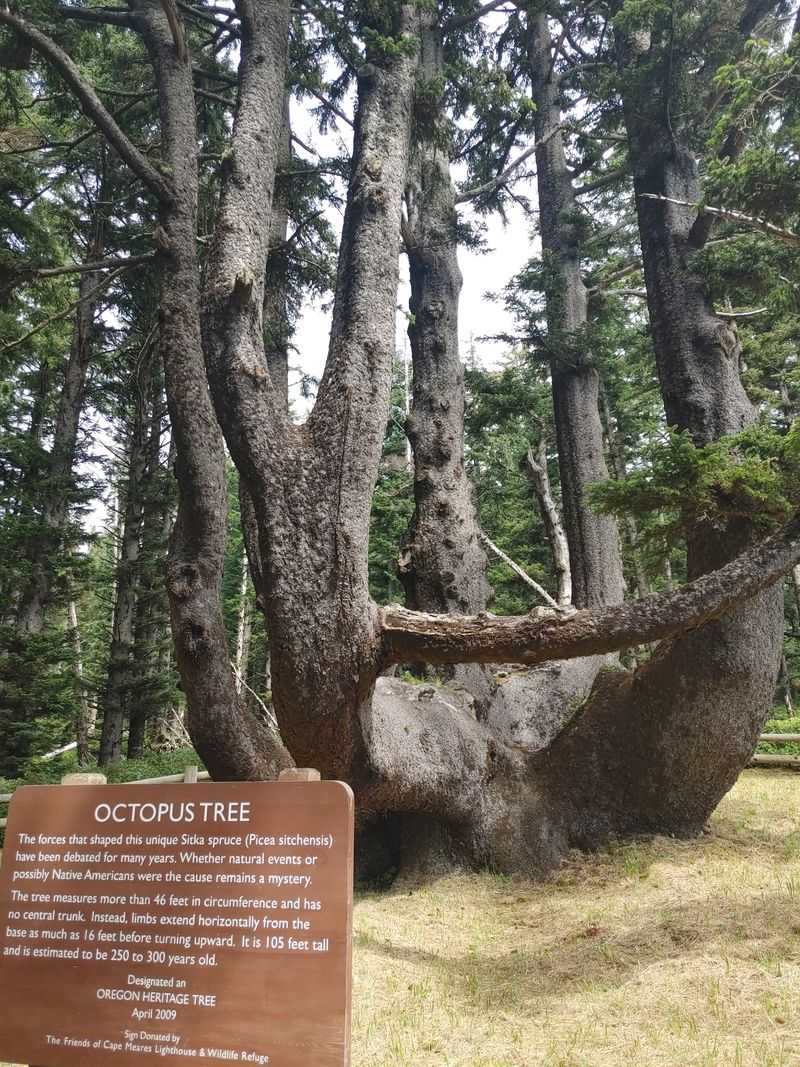
Cape Meares looks like a simple headland with a small lighthouse, but the site layers navigation, caretaking, and botanical oddity.
The lighthouse sits short and stout above waves, and its lens once stitched a safe corridor through coastal night.
Drive to 3500 Cape Meares Loop, Tillamook, OR 97141, then follow the paved path to the overlook and tower.
Nearby, the Octopus Tree spreads limbs like a candelabrum, a Sitka spruce shaped by time and cultural practice.
Wind presses the bluff, and seabirds echo off the cliffs while the horizon draws a straight line across your sight.
Interpretive panels connect keepers, storms, and the maritime routes that braid communities along the Oregon coast.
Lookouts frame coves and sea stacks, and the water shifts from slate to teal as clouds shift overhead.
The tower’s interior feels compact yet dignified, a workspace built for reliability rather than grand gestures.
Trails weave to viewpoints where the tree commands attention, roots gripping bedrock like a confident stance.
Leave with salt in your hair and a fresh respect for small structures that guided countless safe arrivals.
10. Columbia River Gorge Historic Viewpoints
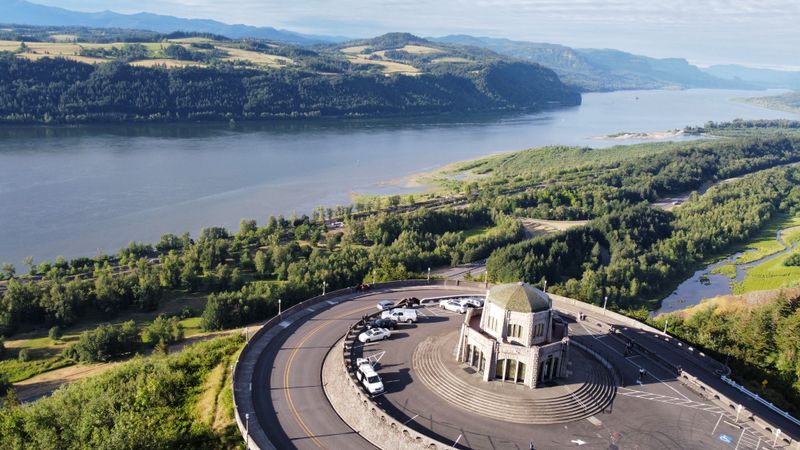
The Columbia River Gorge feels like an oversized hallway of waterfalls, yet the walls record migrations, trade, and epic travel.
Pull off at Vista House, 40700 Historic Columbia River Hwy, Corbett, OR 97019, to read the landscape from a classic perch.
Each overlook along the historic highway tells a segment of engineering history, tying graceful curves to stubborn cliffs.
Water keeps falling, even in dry spells, where basalt remembers lava flows that set the shape long before people arrived.
Tribal histories hold place names and fishing traditions, anchoring the river as a living corridor rather than a backdrop.
Old stone guardrails and bridges invite slow driving, a pace that rewards patient eyes and unhurried stops.
Trails fork toward viewpoints where wind can lift your jacket and nudge you a step sideways.
Look down at barge traffic and rail lines, and you see modern threads woven into a very old route.
Oregon shares this river, and every turnout reminds you that borders here follow water and work.
By the time you descend, the cliffs feel friendlier, like hosts who warmed up after seeing you respect their house.
Multnomah Falls drops in two elegant tiers, a silver ribbon that threads basalt walls and forested slopes.
The overlook bridge at 53000 East Historic Columbia River Highway, Bridal Veil, OR 97010, frames the lower cascade perfectly for photographs and quiet contemplation.
Trails wind upward through switchbacks scented with wet cedar and moss, rewarding patience with ever-changing views.
Spray catches sunlight on bright days, turning mist into a temporary rainbow that flecks the canyon.
Foot traffic is steady but respectful, and even busy hours feel softened by the continuous roar of falling water.
Park, hike, and pause with attention – the falls demand neither rush nor loudness, only a willingness to watch and listen.
Dear Reader: This page may contain affiliate links which may earn a commission if you click through and make a purchase. Our independent journalism is not influenced by any advertiser or commercial initiative unless it is clearly marked as sponsored content. As travel products change, please be sure to reconfirm all details and stay up to date with current events to ensure a safe and successful trip.
