Virginia is like a time machine you can drive through without ever leaving the present. Cobblestone streets meet coffee shops with Wi-Fi, colonial architecture frames trendy boutiques, and centuries-old battlefields sit next to bustling business districts.
This state knows how to honor its roots while keeping pace with the modern world, creating a fascinating blend that’s hard to find anywhere else.
From Revolutionary War sites turned Instagram hotspots to historic neighborhoods buzzing with craft breweries and tech startups, Virginia offers a unique experience where past and present don’t just coexist but actually enhance each other. Whether you’re a history buff, a foodie, or just someone who loves discovering cool places, you’ll find spots here that make you feel like you’re living in two eras at once.
Pack your curiosity and get ready to explore where tricorn hats meet touchscreens!
1. Colonial Williamsburg
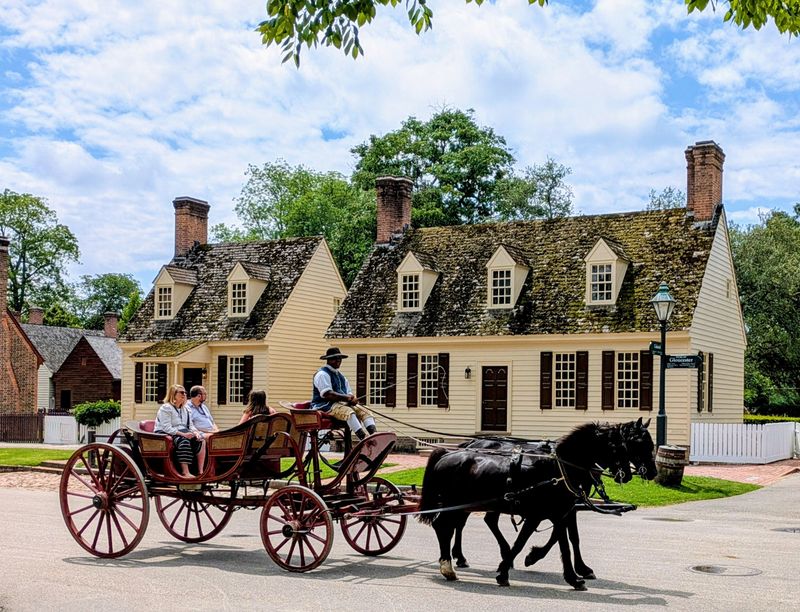
Step into America’s largest living history museum and you’ll quickly realize this isn’t your typical dusty attraction. Colonial Williamsburg brings the 1700s roaring back to life with costumed interpreters who stay in character while discussing everything from blacksmithing techniques to the philosophical debates that sparked a revolution.
But here’s where it gets interesting: right alongside these historical reenactments, you’ll find modern amenities that make your visit comfortable and connected.
The restored area spans over 300 acres and features authentic colonial buildings where craftspeople demonstrate traditional trades. Watch a wigmaker create elaborate hairpieces, see a silversmith hammer out intricate designs, or chat with a printer using an actual colonial-era press.
These aren’t just demonstrations; they’re conversations with passionate experts who bridge centuries with their knowledge.
Yet step into one of the many visitor centers or museums, and you’re instantly back in the 21st century with interactive touchscreens, virtual reality experiences, and climate-controlled galleries. The Art Museums of Colonial Williamsburg showcase priceless decorative arts alongside cutting-edge exhibition technology.
You can even download an app that enhances your experience with GPS-guided tours and augmented reality features.
The surrounding area perfectly captures this temporal fusion too. Historic taverns serve period-inspired cuisine prepared with modern culinary techniques and safety standards.
Shops sell handcrafted goods made using traditional methods but packaged for contemporary travelers. Streets that once heard horse hooves now accommodate strollers and mobility scooters.
Evening programs might include a trial reenactment followed by a discussion about how colonial legal principles influence today’s justice system. Educational programs connect students via video conference to interpreters demonstrating colonial life.
This seamless blend makes history feel relevant and alive rather than distant and forgotten.
Address: 101 Visitor Center Drive, Williamsburg, VA 23185
2. Old Town Alexandria
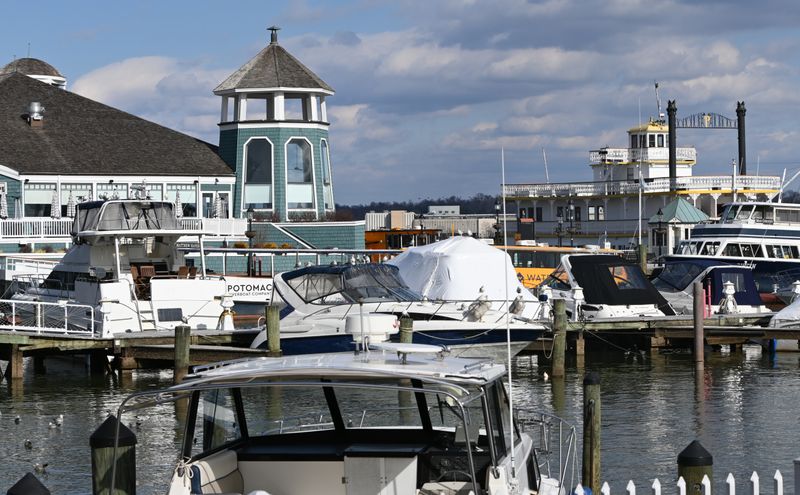
Wander through Old Town Alexandria and you’ll swear you’ve stumbled onto a movie set, except everything here is genuinely authentic. Brick sidewalks from the 1700s lead past Georgian townhouses that George Washington actually visited, yet these same streets buzz with yoga studios, tech company offices, and farm-to-table restaurants that wouldn’t look out of place in Brooklyn.
This waterfront neighborhood has mastered the art of preservation without becoming a museum piece.
King Street serves as the neighborhood’s beating heart, stretching from the Potomac River inland through blocks of carefully maintained historic buildings. Boutiques occupy structures that once housed tobacco merchants and ship chandlers.
Art galleries display contemporary works in spaces with original crown molding and heart pine floors. The architecture tells stories spanning three centuries, but the businesses inside are thoroughly modern.
The waterfront area showcases this collision beautifully. Historic Torpedo Factory Art Center, once an actual naval munitions plant, now houses over 80 artist studios where you can watch painters, sculptors, and jewelers create contemporary art.
Right outside, the promenade fills with joggers, cyclists, and families enjoying river views while seaplanes land nearby, just as boats have docked here for hundreds of years.
Gadsby’s Tavern Museum preserves the dining and lodging experience of colonial America, while just doors down, trendy eateries serve international fusion cuisine to crowds making reservations through smartphone apps. Historic homes display plaques noting their construction dates in the 1700s, yet many have been converted into thriving businesses or updated residences with smart home technology hidden behind period-appropriate facades.
Evening ghost tours share tales of Revolutionary War spirits, then participants head to rooftop bars for craft cocktails with Potomac views. Farmers markets occupy the same market square used since colonial times, though vendors now accept contactless payments.
History lives here not as a relic but as a foundation for vibrant contemporary life.
Address: King Street, Alexandria, VA 22314
3. Richmond’s Canal Walk
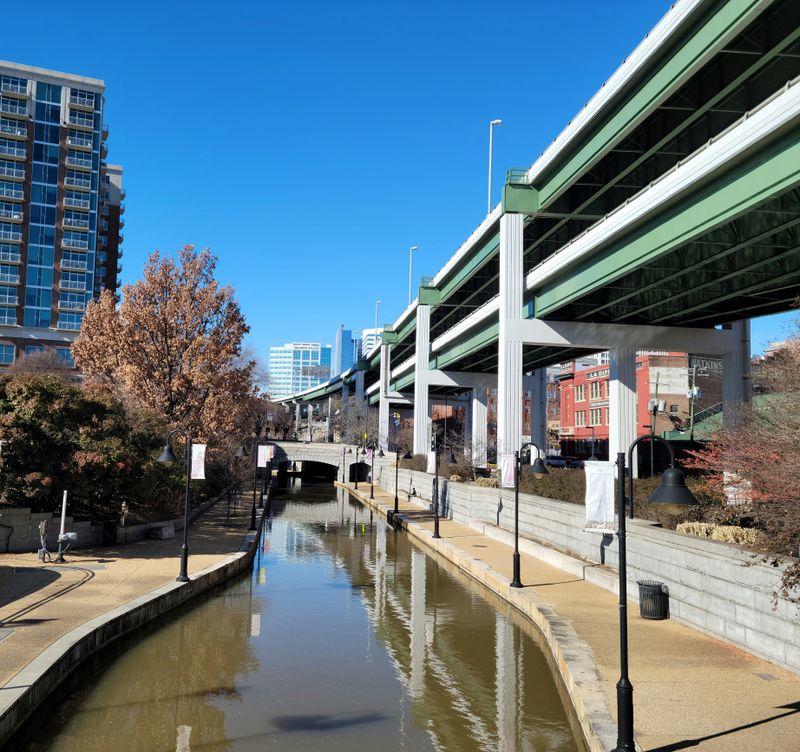
Richmond’s Canal Walk proves that industrial history doesn’t have to gather dust in textbooks. This mile-long urban park follows the route of the historic James River and Kanawha Canal, transforming what was once the backbone of Virginia’s 19th-century commerce into a stunning pedestrian pathway that connects downtown to the river.
Stone walls and locks from the original canal system remain visible, creating a timeline you can literally walk through while surrounded by the city’s modern skyline.
The canal once transported goods and passengers between Richmond and western Virginia, playing a crucial role in the state’s economic development. Today, those same waterways reflect glass office towers and contemporary public art installations.
Interpretive signs explain the canal’s historical significance, while nearby restaurants and entertainment venues keep the area buzzing with activity that would have amazed the 19th-century lock operators.
Brown’s Island, accessible from the Canal Walk, hosted Civil War prison camps and industrial operations but now serves as a premier outdoor concert venue and festival space. Thousands gather here for modern music performances where Confederate soldiers once marched.
The juxtaposition feels surreal yet somehow perfectly natural, as if the island simply evolved with the times rather than abandoning its past.
Pedestrian bridges span the canal at regular intervals, some incorporating original stonework into contemporary designs. One moment you’re examining 200-year-old engineering marvels, the next you’re crossing a sleek modern footbridge designed for maximum accessibility.
The entire walkway accommodates joggers, cyclists, and strolling couples, making history part of daily life rather than a special destination.
Public art installations along the route range from historical markers to contemporary sculptures, creating a dialogue between eras. Restored tobacco warehouses lining the canal now house apartments, offices, and restaurants with waterfront patios.
Evening lighting transforms the historic locks and bridges into atmospheric focal points, perfect for romantic walks or photography that captures Virginia’s ability to honor its past while embracing its future.
Address: Canal Walk, Richmond, VA 23219
4. Manassas National Battlefield Park
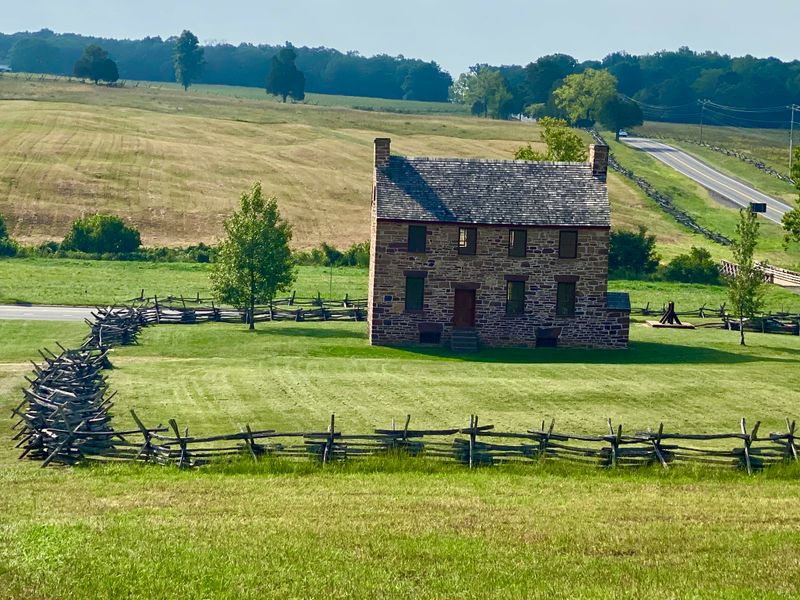
Driving through suburban Northern Virginia, you suddenly encounter rolling fields where two major Civil War battles unfolded, preserved as if time stopped in the 1860s. Manassas National Battlefield Park sits surrounded by modern development, creating one of the most striking contrasts between past and present you’ll find anywhere.
Housing developments and shopping centers border these sacred grounds where thousands of soldiers fought, making history feel immediate and impossible to ignore.
The battlefield itself remains remarkably unchanged, with open fields, split-rail fences, and historic structures carefully maintained to reflect their wartime appearance. Walking trails take you across the same terrain where Union and Confederate forces clashed, with interpretive markers explaining troop movements and battle strategies.
Yet look up from reading about 1860s military tactics, and you’ll see airplanes overhead heading to nearby Dulles Airport, cars streaming along adjacent highways, and suburban rooftops in the distance.
This collision of eras actually enhances the experience rather than diminishing it. The contrast reminds visitors that history didn’t happen in some distant, disconnected realm but on land that continues to be part of living communities.
Modern families picnic on hills where artillery once thundered. Joggers follow paths that trace historic troop movements.
School groups learn about the Civil War while watching commuters rush past on their way to 21st-century jobs.
The visitor center employs cutting-edge museum technology to explain the battles, with interactive maps, digital displays, and a fiber-optic battle map that illuminates troop movements. Step outside, though, and you’re standing on authentic battlefield ground where the only sounds might be birdsong and distant traffic, creating a meditative space for reflection despite the surrounding suburban bustle.
Park rangers lead programs that connect Civil War history to contemporary issues, helping visitors understand how events here shaped modern America. The preserved landscape serves as both memorial and classroom, proving that history and modern life don’t have to be separate experiences but can inform and enrich each other.
Address: 6511 Sudley Road, Manassas, VA 20109
5. The Frontier Culture Museum
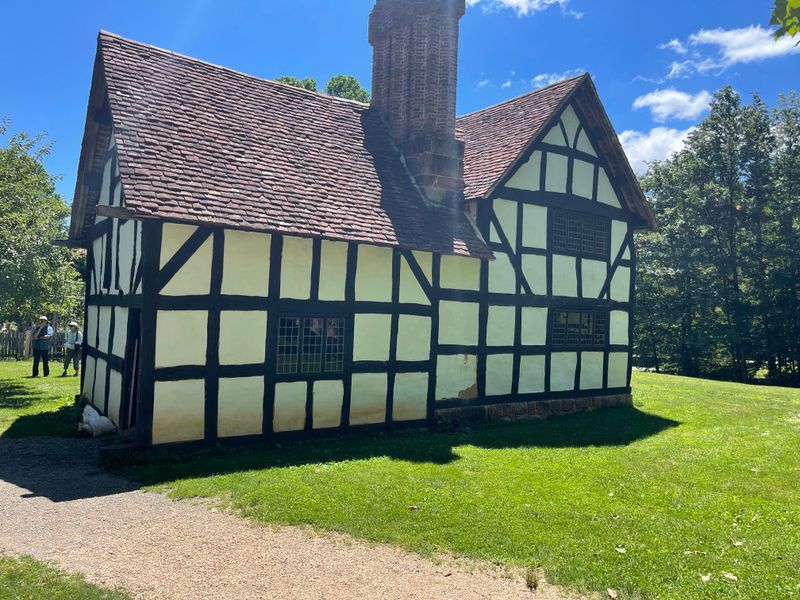
Ever wondered what it would be like to literally walk through centuries of immigration and settlement patterns? The Frontier Culture Museum in Staunton makes that possible by bringing together authentic farmsteads from different countries and eras, creating a living timeline of how diverse cultures shaped Virginia’s development.
Original buildings were dismantled overseas, shipped to Virginia, and meticulously reconstructed, allowing you to step from a 17th-century German farm directly into an 18th-century Irish cottage, then forward to an American frontier homestead.
Each farmstead functions as it would have during its original era, with costumed interpreters demonstrating daily tasks using period-appropriate tools and techniques. Watch someone cook over an open hearth using colonial recipes, see livestock breeds that haven’t changed in centuries, or learn about agricultural methods that sustained families before modern machinery.
These aren’t static displays but working farms that change with the seasons, just as they would have hundreds of years ago.
Here’s where it gets fascinating: the museum seamlessly integrates modern educational technology without disrupting the historical immersion. Audio guides provide detailed information through your smartphone.
QR codes at various stations link to additional resources and videos. The visitor center features interactive exhibits using touchscreens and multimedia presentations that help contextualize what you’re seeing in the historic areas.
Special events throughout the year highlight specific aspects of frontier life while connecting them to contemporary issues. Sustainable farming demonstrations show how historical techniques inform modern organic agriculture.
Craft workshops teach traditional skills that are experiencing renewed interest today. The museum proves that historical knowledge isn’t just academic but practically relevant to current conversations about sustainability, immigration, and cultural preservation.
The grounds themselves reflect this temporal blend, with meticulously maintained historical structures surrounded by modern landscaping and accessibility features. Paved pathways ensure everyone can explore these farmsteads regardless of mobility, while careful design keeps modern necessities from intruding on the historical atmosphere.
You’re simultaneously in the past and present, experiencing history through a decidedly contemporary lens.
Address: 1290 Richmond Road, Staunton, VA 24401
6. Norfolk’s Freemason District
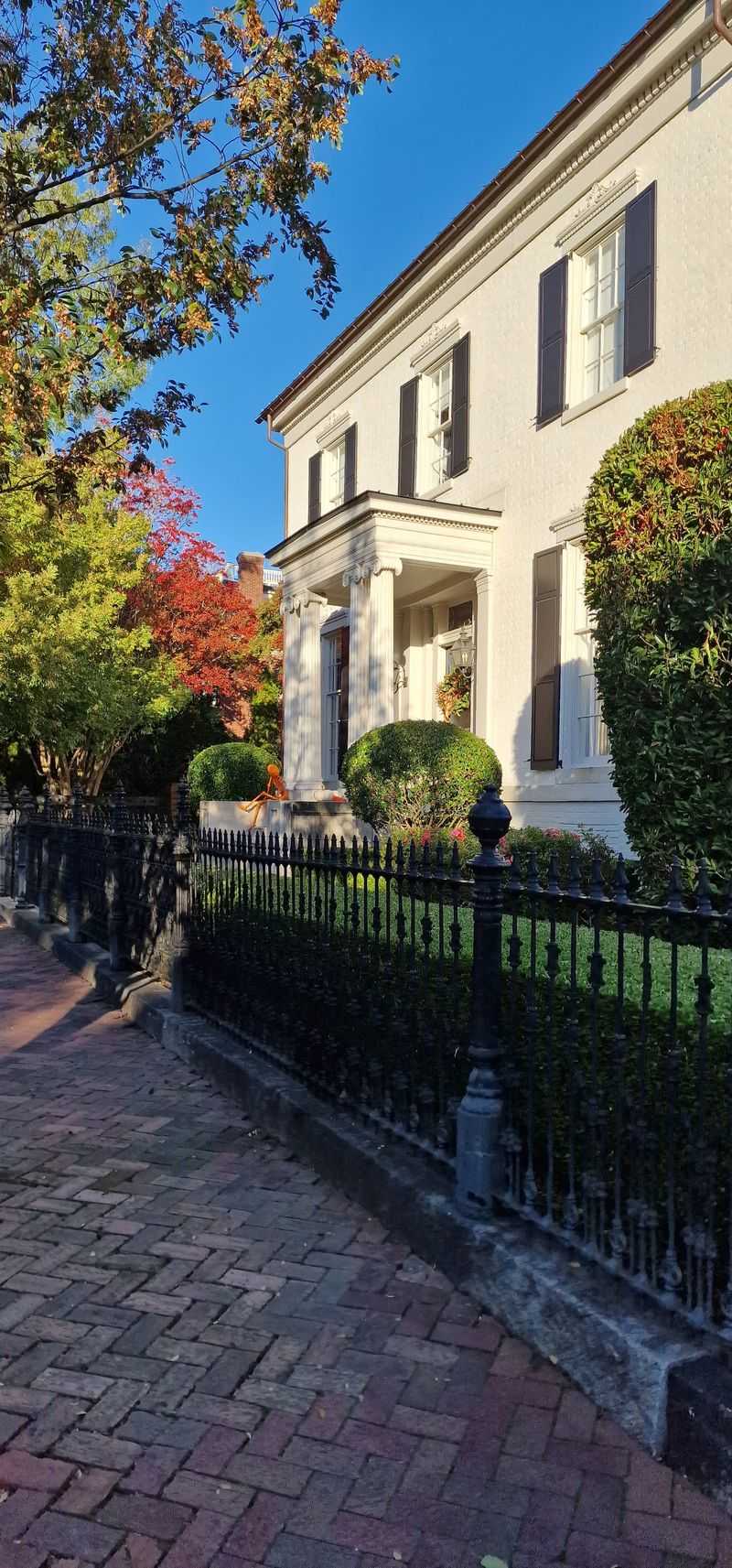
Picture a neighborhood where Federal-style townhouses from the early 1800s host design firms, tech startups, and creative agencies. That’s Norfolk’s Freemason District, where preservationists and modernists found common ground decades ago, creating one of Virginia’s most successful examples of adaptive reuse.
The district takes its name from the Freemason Street Baptist Church, and the entire area feels like an architectural time capsule that someone opened and filled with contemporary energy.
Walking these tree-lined streets feels surreal in the best way possible. A perfectly restored 1794 townhouse might house a digital marketing company.
An 1850s Greek Revival mansion could be home to a law firm with glass-walled conference rooms hidden behind historic facades. The exteriors remain meticulously maintained according to strict preservation standards, while interiors have been completely modernized to meet current commercial and residential needs.
The Moses Myers House, one of the district’s crown jewels, operates as a museum showcasing early 19th-century life for Norfolk’s merchant class. Original furnishings, artwork, and architectural details remain intact, offering a pristine snapshot of Federal-period elegance.
Yet step outside, and you’re immediately back among contemporary residents and workers going about their daily routines in buildings from the same era that have been adapted for modern use.
Restaurants throughout the district master this balance particularly well. Historic dining rooms feature original mantels, crown molding, and hardwood floors, but kitchens use state-of-the-art equipment and menus reflect current culinary trends.
Outdoor patios occupy historic courtyards and gardens where 19th-century residents once strolled, now filled with diners scrolling through phones between courses.
The district proves that preservation doesn’t mean freezing a neighborhood in time but rather respecting its character while allowing evolution. Modern additions like sidewalk improvements, street lighting, and public art installations enhance rather than detract from the historic atmosphere.
Residents and businesses clearly value their connection to the past while fully participating in contemporary life, creating a neighborhood that honors both.
Address: Freemason Street, Norfolk, VA 23510
7. Charlottesville’s Downtown Mall
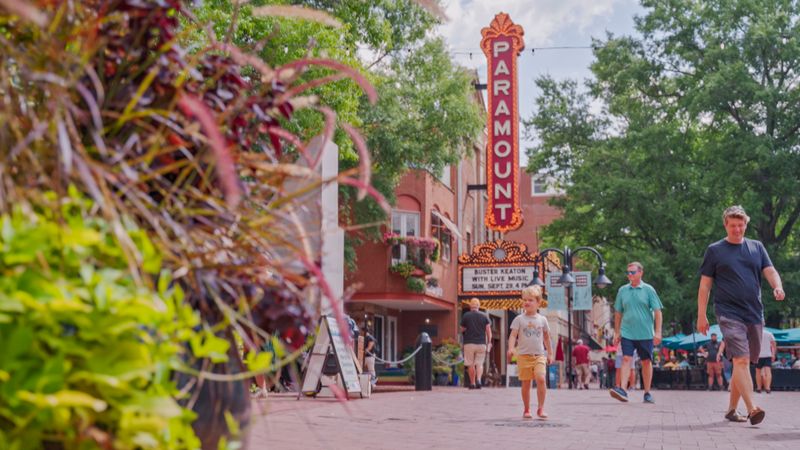
Imagine a pedestrian mall where Thomas Jefferson might have shopped for books, now hosting outdoor concerts, food festivals, and tech entrepreneurs sipping lattes while coding the next big app. Charlottesville’s Downtown Mall achieves this effortless blend by transforming eight blocks of historic Main Street into a vibrant pedestrian zone that respects its architectural heritage while embracing contemporary urban culture.
Brick buildings from the 1800s house everything from indie bookstores to virtual reality arcades.
The mall stretches from the historic Paramount Theater, a restored 1931 movie palace that now hosts live performances, to the modern Charlottesville Pavilion, an outdoor amphitheater where free concerts draw crowds throughout warmer months. Between these anchors, you’ll find an eclectic mix of locally-owned businesses occupying storefronts that have served the community for generations.
Original architectural details remain visible on nearly every building, creating visual continuity with the past.
What makes this space special is how naturally different eras coexist. Street performers entertain crowds in front of buildings where Civil War veterans once conducted business.
Outdoor dining areas with modern furniture fill historic alleyways. Public art installations range from classical sculptures to contemporary pieces, creating an outdoor gallery that spans artistic movements and centuries.
The pedestrian-only design encourages lingering and exploration in ways that car-dominated streets never could. Families with strollers, skateboarding teenagers, business professionals on lunch breaks, and university students all share the space comfortably.
Seasonal events transform the mall into festival grounds, farmers markets, or holiday celebration zones, proving that public spaces can adapt to changing needs while maintaining their essential character.
Nearby, the University of Virginia’s historic campus, designed by Jefferson himself, creates additional layers of temporal collision. Students carrying laptops and smartphones walk through grounds and buildings that look much as they did two centuries ago.
The entire area demonstrates how thoughtful preservation and adaptive use can create vibrant urban spaces that honor the past without being trapped by it.
Address: Downtown Mall, Charlottesville, VA 22902
8. Petersburg’s Old Towne
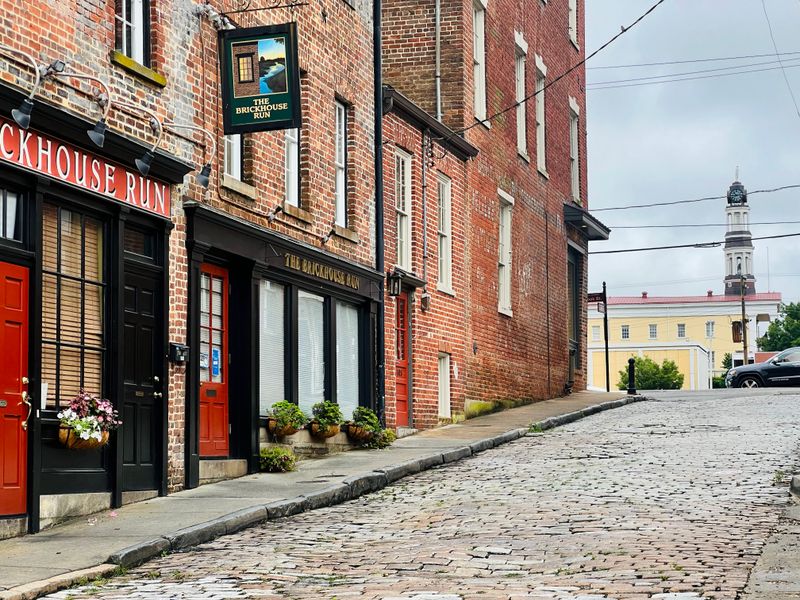
Petersburg’s Old Towne neighborhood tells a complex story about American history that textbooks often oversimplify. This area witnessed pivotal Civil War events during the lengthy siege of Petersburg, served as a center of African American commerce and culture during Reconstruction, and now undergoes revitalization that respects its multilayered past while creating space for contemporary businesses and residents.
Walking these streets means encountering history from multiple perspectives simultaneously.
Architectural treasures line the streets, representing styles from Federal to Victorian to early 20th century commercial buildings. Many stood empty for decades as economic challenges hit the city hard, but recent restoration efforts have breathed new life into structures that nearly disappeared.
The result is a neighborhood where beautifully restored buildings stand alongside works-in-progress, creating a visible timeline of urban renewal.
The Siege Museum occupies an 1839 building and tells the story of Petersburg’s crucial role in the Civil War’s final campaign. Exhibits use both traditional displays and modern interpretive techniques to explain how the siege affected military strategy and civilian life.
Step outside, and you’re in a district where contemporary artists, entrepreneurs, and residents are writing new chapters in the city’s ongoing story.
Several blocks showcase adaptive reuse at its finest. Historic commercial buildings now house art galleries, studios, and small businesses that honor the structures’ original character while meeting current needs.
Original pressed tin ceilings, brick walls, and hardwood floors provide character that new construction simply can’t replicate, while modern updates ensure functionality and comfort.
The neighborhood’s revitalization includes new public spaces, improved infrastructure, and cultural programming that draws visitors and engages residents. Historic preservation grants help building owners restore facades to their original appearance while completely modernizing interiors.
The balance isn’t perfect yet, but the commitment to respecting history while building a viable future is evident everywhere you look. Petersburg proves that even cities facing serious challenges can find paths forward that honor their past.
Address: Old Street, Petersburg, VA 23803
9. Abingdon’s Historic District
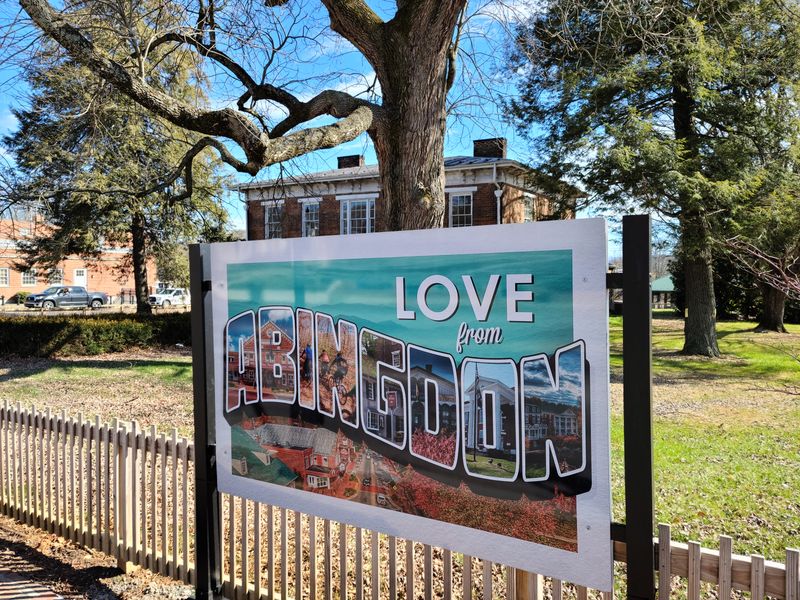
Tucked into Virginia’s southwestern mountains, Abingdon feels like a town that time treated gently rather than forgetting entirely. The entire downtown area functions as a historic district where buildings from the late 1700s onward remain in active use, creating an unusually intact example of a small Virginia town’s evolution.
Main Street looks remarkably similar to photographs from a century ago, yet the businesses inside reflect thoroughly contemporary tastes and needs.
The Barter Theatre, founded during the Great Depression when patrons could trade produce for admission, remains one of the nation’s longest-running professional theaters. The building itself dates back even further, and attending a performance here means experiencing live theater in a space steeped in entertainment history.
Productions range from classic plays to contemporary works, maintaining the theater’s relevance across generations.
Historic homes throughout the district showcase architectural styles from Federal to Victorian, many converted into bed and breakfasts, galleries, or professional offices. The Martha Washington Inn and Spa occupies a building that has served as a private residence, college, and Civil War hospital before becoming a luxury hotel.
Guests sleep in rooms with historical significance while enjoying modern amenities and spa services that would astonish previous occupants.
The Virginia Creeper Trail, a rails-to-trails conversion that’s become one of the region’s premier outdoor recreation destinations, begins right in downtown Abingdon. This perfectly captures the area’s approach to progress: taking infrastructure from one era and adapting it for contemporary recreational use while preserving the historical context.
Cyclists and hikers start their journey surrounded by 18th and 19th-century architecture before heading into mountain scenery.
Local shops and restaurants occupy historic storefronts but cater to modern tastes, from farm-to-table dining to artisan crafts that blend traditional techniques with contemporary design. The town hosts festivals celebrating everything from traditional music to contemporary arts, using historic venues and public spaces that have hosted community gatherings for centuries.
Abingdon proves that small towns can maintain their character and charm while remaining vibrant and economically viable.
Address: Main Street, Abingdon, VA 24210
10. Roanoke’s Historic City Market
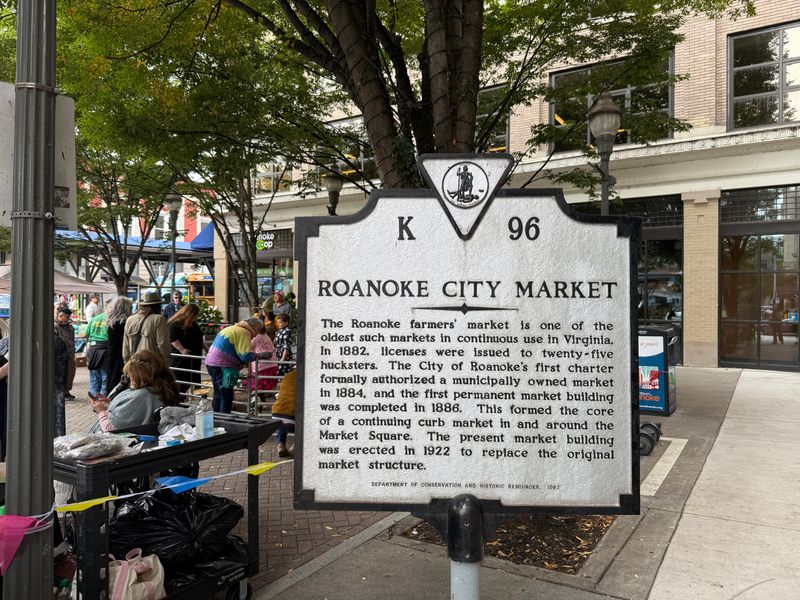
Operating continuously since the 1880s, Roanoke’s Historic City Market claims the title of oldest continuously operating open-air market in Virginia. That’s not just a fun fact; it’s a living demonstration of how traditional community gathering spaces can remain relevant across centuries.
The same basic function that brought farmers and shoppers together over a century ago continues today, though the vendors now accept credit cards and customers arrive on electric scooters as often as in pickup trucks.
The market building itself, with its distinctive red roof and open-air design, has become a Roanoke landmark visible from the surrounding mountains. Inside and around the structure, vendors sell everything from farm-fresh produce to handmade crafts, much as they always have.
What’s changed is the diversity of offerings and the integration of modern food culture, with artisan producers selling items that didn’t exist when the market opened.
Surrounding the market, the entire district has evolved into Roanoke’s downtown hub, with the historic market as its anchor. Restaurants, galleries, and shops occupy buildings that once served different purposes, their historic facades preserved while interiors have been completely reimagined.
Outdoor dining areas fill the streets during warmer months, creating a European-style plaza atmosphere in the heart of Appalachia.
The market hosts special events throughout the year that blend tradition and innovation. Traditional music performances might share space with contemporary art shows.
Seasonal festivals celebrate both historical agricultural traditions and current food trends. The flexibility of the space allows it to transform from morning farmers market to evening entertainment venue seamlessly.
What makes this collision of old and new particularly successful is that neither element tries to dominate. The historic market building doesn’t pretend to be a museum, and modern additions don’t apologize for being contemporary.
Vendors using time-tested sales techniques work alongside those leveraging social media and online ordering. Shoppers seeking traditional produce shop next to foodies hunting for specialty ingredients.
The result is a authentic community space that feels simultaneously timeless and completely current.
Address: 32 Market Square SE, Roanoke, VA 24011
11. Fredericksburg’s Historic District
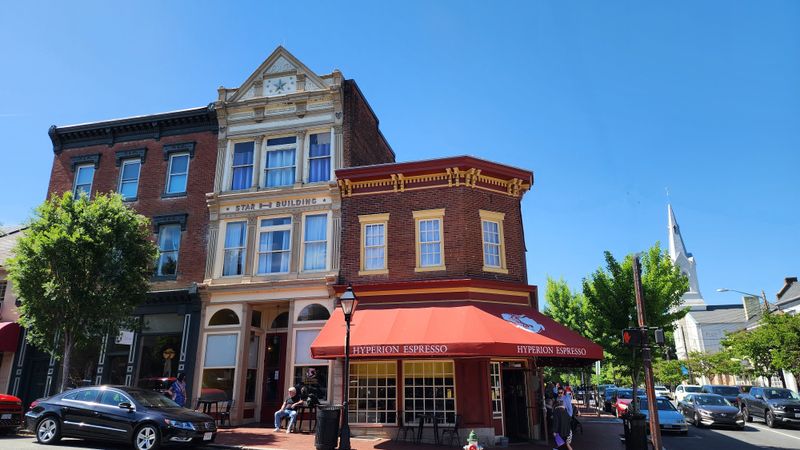
Fredericksburg packs an astonishing amount of history into a relatively compact downtown area, with over 350 original 18th and 19th-century buildings still standing and actively used. Walk these streets and you’re literally surrounded by structures that witnessed the Revolutionary War, Civil War, and everything since.
Yet this isn’t a preserved museum district but a thriving downtown where people live, work, and play among buildings that have stories spanning centuries.
The downtown waterfront along the Rappahannock River showcases this temporal blend beautifully. Historic warehouses and commercial buildings now house restaurants, breweries, and entertainment venues with river views.
The same docks that once received colonial trade goods now welcome kayakers and paddleboarders. Historic walking trails connect battlefield sites to contemporary parks and greenways, making history part of recreational infrastructure rather than separate from it.
Caroline Street, the main downtown corridor, demonstrates how preservation and progress can coexist. Building facades maintain their historic appearance thanks to strict design guidelines, but businesses inside cater to contemporary tastes.
You might browse antiques in a colonial-era building, then grab coffee next door in a space that’s been updated with industrial-modern design elements while respecting the original architecture.
Several house museums scattered throughout the district, including those associated with George Washington’s family, offer glimpses into specific historical periods. These preserved homes stand in stark contrast to neighboring buildings from the same era that have been adapted for modern commercial or residential use, highlighting different approaches to historic structures and creating an unintentional but fascinating comparison.
The district’s success comes from treating history as a living asset rather than a burden. Yes, building owners face restrictions on exterior changes, but these guidelines maintain the visual character that makes the area special and attracts visitors and residents alike.
Modern life flows through historic spaces naturally, proving that respecting the past doesn’t mean rejecting the present. Fredericksburg found the sweet spot where history and contemporary life enhance each other rather than competing.
Address: Caroline Street, Fredericksburg, VA 22401
Dear Reader: This page may contain affiliate links which may earn a commission if you click through and make a purchase. Our independent journalism is not influenced by any advertiser or commercial initiative unless it is clearly marked as sponsored content. As travel products change, please be sure to reconfirm all details and stay up to date with current events to ensure a safe and successful trip.
