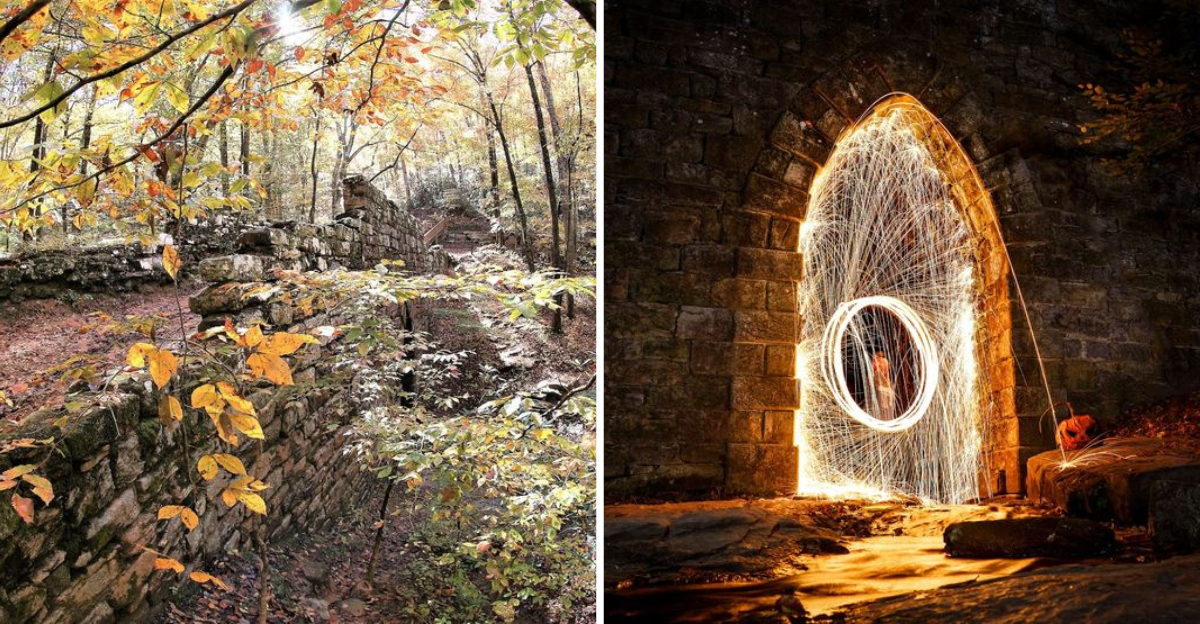
South Carolina has old bridges. But this one is different.
Built way back in 1820, the stone structure looks like something out of a European fairy tale, with a gothic arch that would be worth seeing even without the ghost stories . But the stories are what keep people coming back after dark.
Locals will tell you that something lingers here, something that does not like to be alone. At 3 AM, when the roads are empty and the woods have gone quiet, visitors report hearing whispers. Not words exactly, just soft sounds coming from under the arch.
A few people have seen a figure standing near the bridge before disappearing into the trees. The masonry is stunning, sure. But the real reason you drive out here has nothing to do with architecture.
It is the chance to hear something whisper your name when no one else is around.
The Oldest Bridge in the Southeast and Why That Matters
Most bridges get replaced every few decades. Poinsett Bridge has been standing since 1820, and that fact alone is enough to stop you in your tracks the moment you see it.
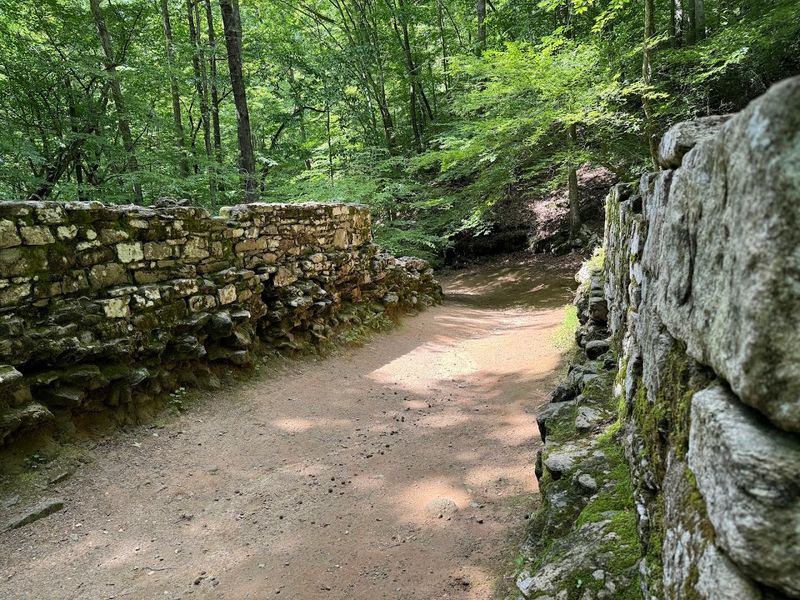
Constructed from local fieldstone without concrete, the bridge was built as part of the State Road connecting Charleston, Columbia, and North Carolina. It served travelers on horseback and wagon, crossing Little Gap Creek at a time when these mountains were wild and largely unmapped.
The bridge is widely considered the oldest surviving bridge in South Carolina, and possibly in the entire southeastern United States. That kind of age carries weight, literally and figuratively.
Robert Mills, the architect credited with designing the Washington Monument, is believed to have designed this structure. The 14-foot Gothic arch is not just functional.
It is a deliberate artistic choice that gives the bridge an almost cathedral-like quality.
Added to the National Register of Historic Places in 1970, the bridge now sits within the 396-acre Poinsett Bridge Heritage Preserve. Knowing you are touching the same stones that travelers touched two centuries ago makes the whole experience feel surprisingly personal and profound.
What the Gothic Arch Tells You About the People Who Built It
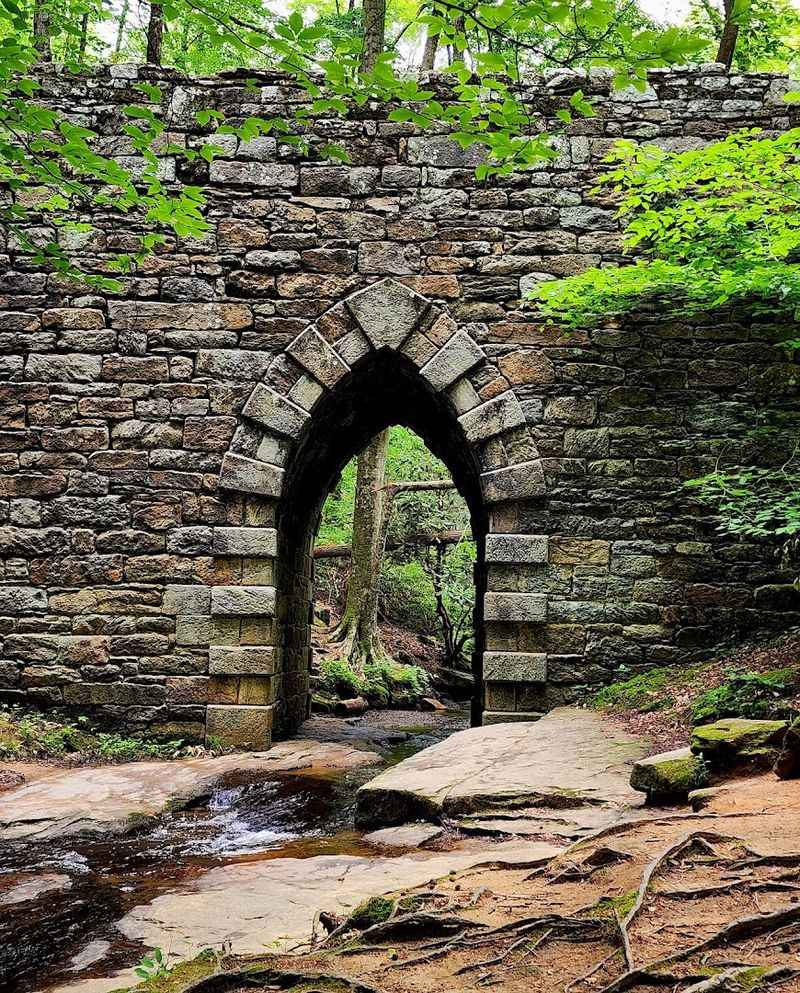
The Gothic arch on Poinsett Bridge is not what you expect to find in a South Carolina forest. It has the kind of pointed, dramatic shape you associate with old European cathedrals, not a rural creek crossing in Greenville County.
That design choice says something important. Whoever planned this bridge cared about more than function.
The arch style suggests a builder who wanted the structure to feel permanent, even noble, in a landscape that was still being settled.
Robert Mills, thought to be the designer, brought that same ambition to everything he touched. His work on the Washington Monument tells you he was not someone who did things halfway.
The stones themselves are irregular, sourced locally, and fitted together with impressive precision. No two look exactly alike, and yet the whole thing holds together with a kind of stubborn elegance that has outlasted storms, floods, and two centuries of weather.
Looking up at the arch from the creek bed below is genuinely one of the more quietly spectacular things you can do in this part of South Carolina. The scale surprises you.
It is bigger than photos suggest, and far more beautiful in person.
Joel Roberts Poinsett and the Name Behind the Bridge
Not many people realize that the same man who gave his name to this bridge also gave his name to the poinsettia plant. Joel Roberts Poinsett was a South Carolina statesman, diplomat, and amateur botanist with a remarkably busy life.
He served as the director of the South Carolina Board of Public Works during the bridge’s construction in 1820, which is how the crossing came to carry his name. His role involved overseeing the development of the State Road, a major infrastructure project for the region at the time.
Poinsett later became the United States Secretary of War and served as the first U.S. Ambassador to Mexico.
While in Mexico, he came across a flowering plant and brought it back to the United States. That plant eventually became the holiday staple we now call the poinsettia.
It is a strange and satisfying piece of history, knowing that a bridge in a quiet South Carolina forest and a plant found on nearly every December doorstep share the same origin story.
The bridge is a physical reminder of Poinsett’s lasting impact on the region, one that has outlasted almost everything else connected to his name in this part of the state.
The Ghost Stories That Have Followed This Bridge for Generations
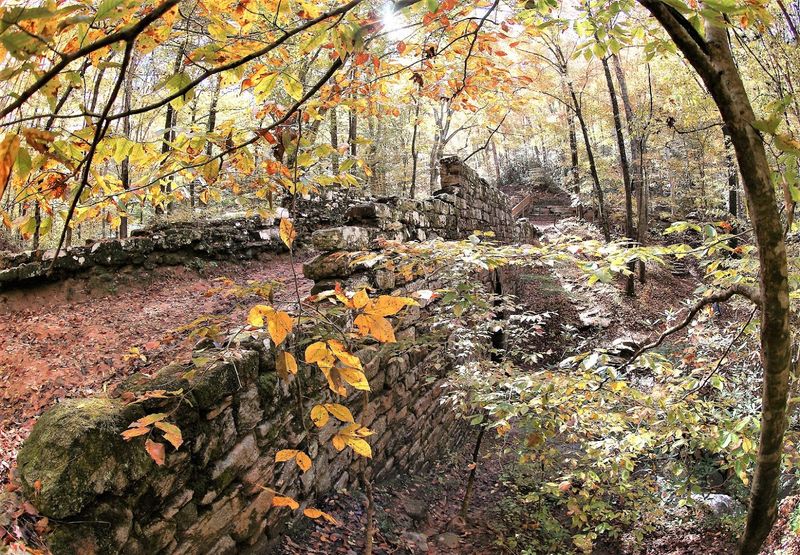
Few places in South Carolina carry as many ghost stories as this one, and the legends here are not the kind invented for tourist brochures. They have been passed down through local families for generations, changing slightly with each telling but always circling back to the same dark core.
One of the most repeated stories involves workers who passed during the bridge’s construction, possibly from illness or brutal conditions, whose spirits are said to linger near the water. Visitors have reported hearing strange wails, rattling sounds, and footsteps from beneath the arch when nobody else is around.
Another legend describes a headless figure said to appear on rainy nights near the bridge, connected to a man reportedly shot in 1861. Some visitors claim their cars stall or refuse to start after dark, which is the kind of detail that tends to stick with you on the drive home.
Local folklore also ties the site to an ancient Cherokee burial ground, suggesting the land itself holds a restless energy that predates the bridge entirely.
Paranormal investigators have documented unexplained EMF readings and captured what they describe as a mist of man-sized proportion near the arch. Believe what you like, but the stories here feel genuinely rooted in place.
What a Daytime Visit to Poinsett Bridge Actually Feels Like
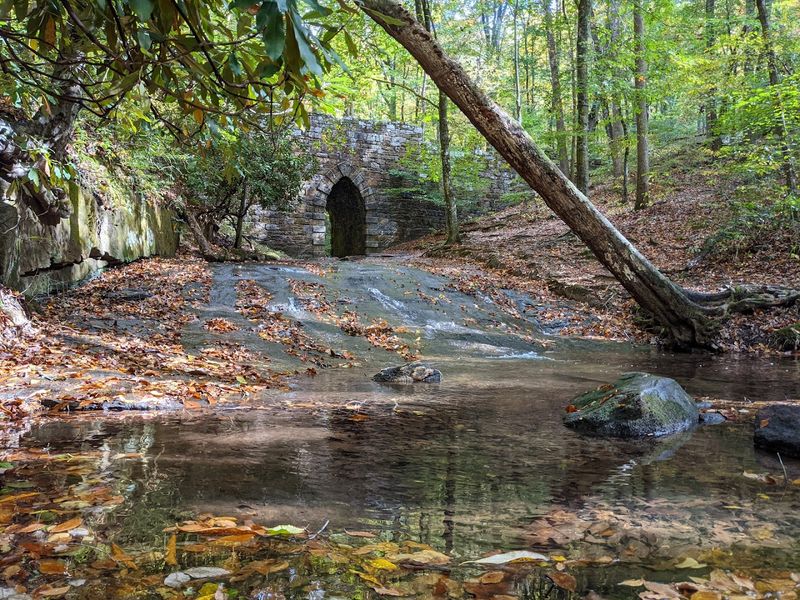
Arriving at Poinsett Bridge on a clear morning feels completely different from everything the ghost stories suggest. The creek is cold and clean, the trail through the preserve is shaded and peaceful, and the only sounds are birds and moving water.
Parking is in a small gravel lot across the road from the entrance. From there, you walk down a short set of stairs and the bridge appears almost immediately, framed by trees on both sides.
The approach is genuinely satisfying.
Families bring their dogs here. People wade in the shallow creek.
Photographers set up near the arch for portraits, and it is easy to see why. The stonework and the surrounding woodland create a backdrop that is hard to replicate anywhere else in the region.
The trail itself is relatively easy, though the ground is rocky and rooted in places, so sturdy shoes make a real difference. There are no restrooms or picnic tables, but flat rocks near the water are perfect for sitting and eating something you packed from home.
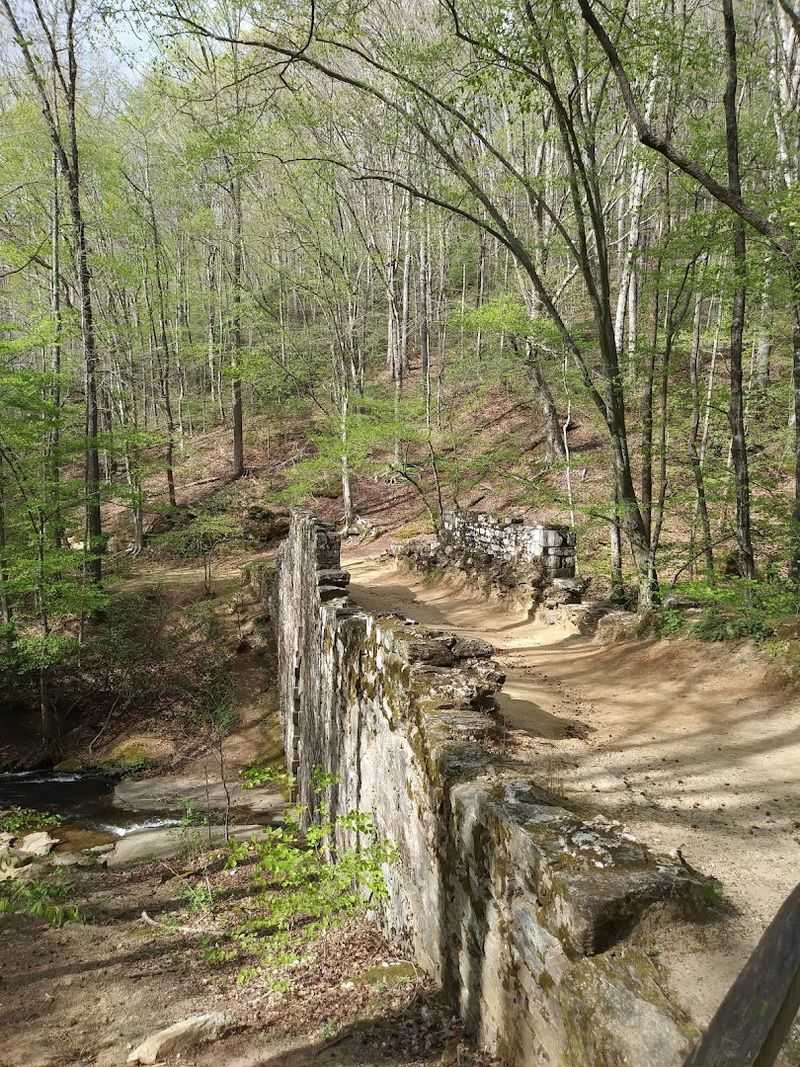
There is also a quiet sense of discovery here, especially if you follow the smaller side trails that lead to ruins and little waterfalls tucked into the forest. The place rewards slow exploration more than a quick photo stop.
After Dark at Poinsett Bridge: The 3 AM Question
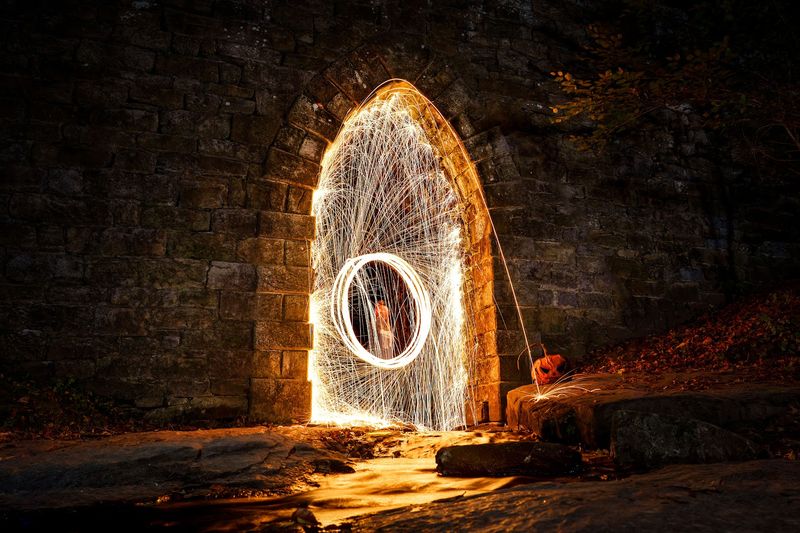
One reviewer put it simply: do not come at night. That short warning, tucked into an otherwise glowing five-star review, says more than a paragraph of explanation ever could.
The bridge after dark is a completely different experience from its daytime self. The forest closes in.
The creek sounds louder. The Gothic arch, so beautiful in sunlight, becomes something harder to read in the dark, like a doorway to somewhere you are not entirely sure you want to go.
Teenagers in the 1980s used to dare each other to cross the bridge alone after midnight. At least one person who took that dare described the return trip as a full-speed sprint back to the car.
That detail has a kind of honest humor to it, but also tells you something real about how the place feels when the light is gone.
The 3 AM hour specifically comes up in ghost hunting circles as a time when reported activity spikes near the bridge. Whether that reflects something supernatural or simply what happens to human perception in a dark, isolated forest is a question worth sitting with.
Nobody is forcing an answer either way. The bridge keeps its secrets, and honestly, that might be exactly what makes it worth visiting in the first place.
Planning Your Visit to Poinsett Bridge Heritage Preserve
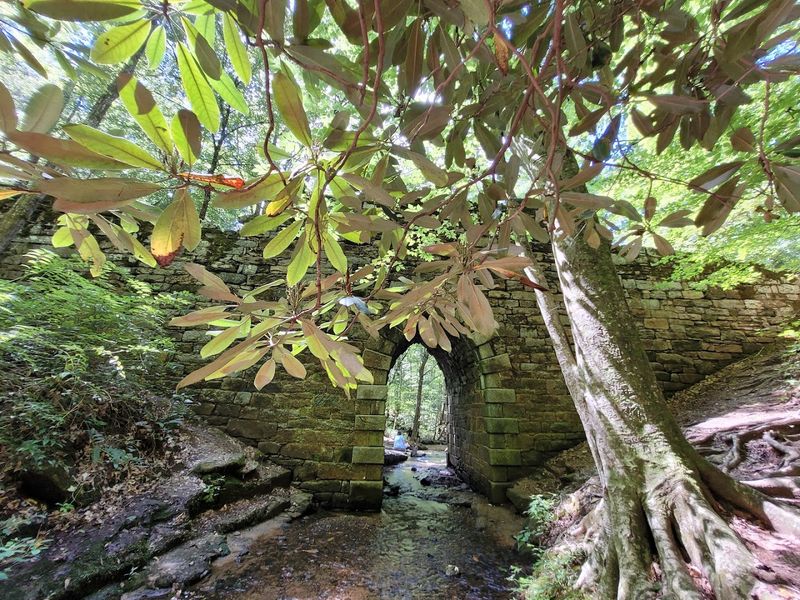
Getting to Poinsett Bridge is straightforward once you know where to look. The preserve sits off Callahan Mountain Road in Landrum, South Carolina, and the small parking area is easy to miss if you are driving fast, so slow down as you approach.
There is no entry fee, which makes it an easy stop whether you are making a dedicated trip or passing through on a longer drive along Highway 11. The bridge is just a short walk from the road, so even a 30-minute visit gives you a real sense of the place.
Keep in mind that the trails are not paved and can get slippery after rain. The terrain is not wheelchair accessible beyond the main landing area, so plan accordingly if mobility is a concern for anyone in your group.
The preserve is dog-friendly, and the creek is shallow enough in warmer months for both kids and dogs to splash around without any worry. Fall is a particularly stunning time to visit, when the leaves turn and the stone bridge seems to glow against the orange and gold of the surrounding trees.
Check local updates before heading out, since storm damage from recent years has occasionally led to temporary closures. A quick call to confirm access can save a wasted trip.
Address: 580 Callahan Mountain Rd, Landrum, SC 29356
