Tall windows and cream-colored brick make a historic building look more like a mansion than a place where people were once locked up. In South Carolina, the morning light catches the stucco and makes the whole corner glow.
Walk downstairs and the temperature drops, the light goes amber, and visitors lower their voices without being asked. The basement beneath this elegant eighteenth-century structure served as a military prison during the Revolution, its arches still intact after centuries.
Stories of gunpowder schemes and ratified constitutions cling to the air. The upper floors once hosted grand gatherings, while the cellar held prisoners of war.
Guides point out the brickwork and the iron bars, and the stories come alive. The building has stood through wars and weather, witnessing debates that shaped a nation.
An hour inside leaves a head full of history that the city does not sugarcoat. History you can actually stand inside is hard to beat.
A Customs House Built for a Booming Port City
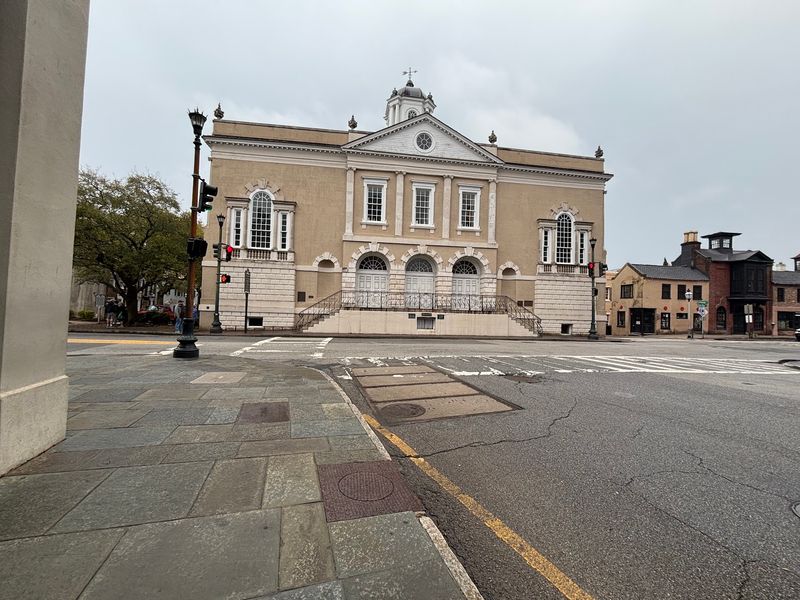
Back in 1767, Charles Town was one of the busiest ports in British North America, and the merchants wanted a building to match. Construction of the Exchange wrapped up in 1771, with William Rigby Naylor drawing the design and brothers Peter and John Horlbeck handling the building work.
The style copies the English exchange and town hall idea, which basically means business downstairs and big public rooms upstairs. Arched openings, careful symmetry, and those Palladian windows all say the same thing: this city had money and wanted you to know it.
Customs officers worked here, ships’ paperwork moved through here, and a public market operated in the open arcade below. I liked standing across the street first, just taking in how the building anchors the end of Broad Street like a full stop.
Look closely at the brickwork and you can see the craftsmanship that survived hurricanes, war, and centuries of humidity. It earned National Historic Landmark status in 1973.
Small tip from my visit: give yourself a few minutes outside before buying a ticket, because the exterior tells half the story on its own.
Down the Stairs Into the Provost Dungeon
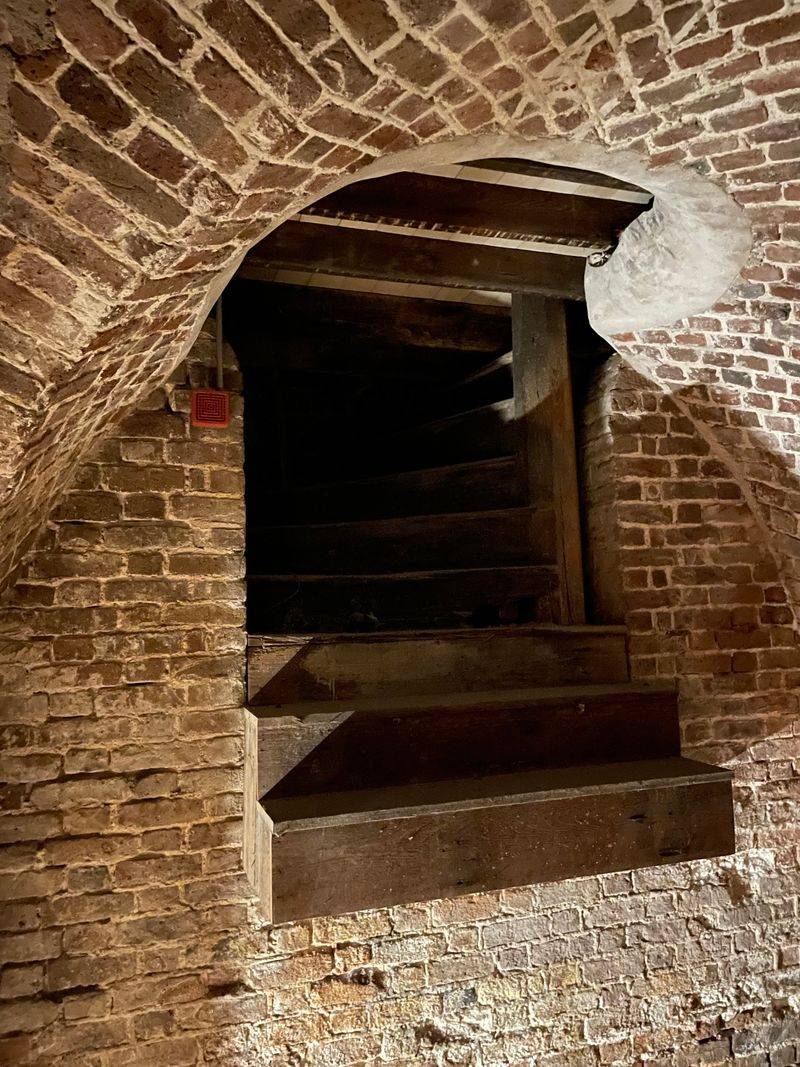
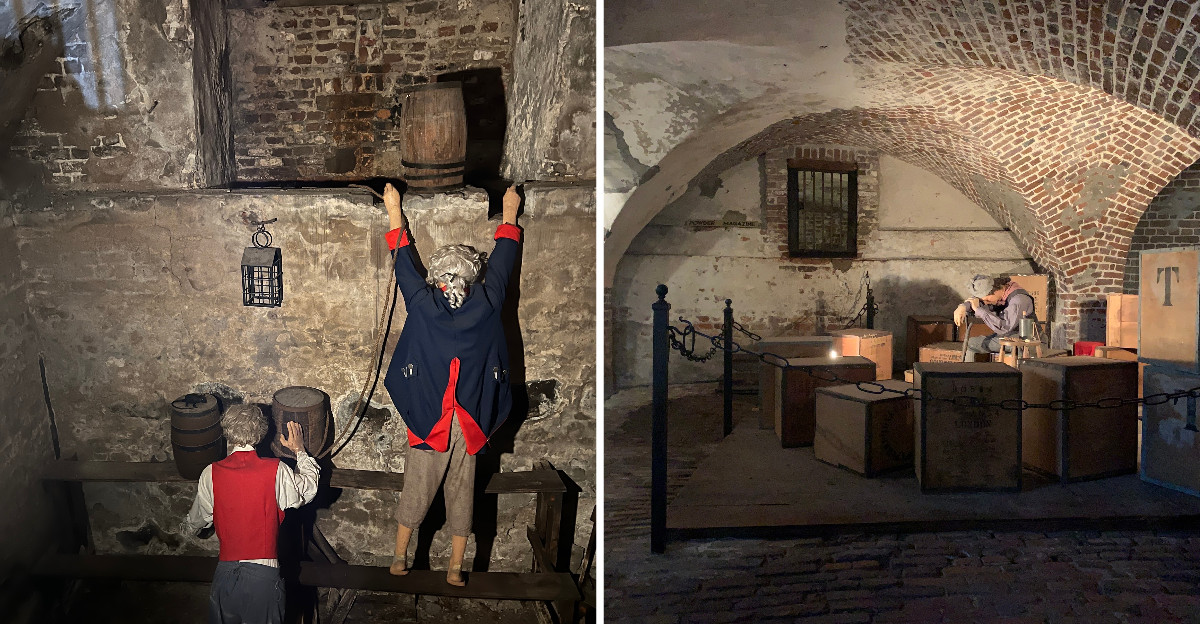
The steps down feel narrow, and the air changes fast. Cool, slightly damp, with that unmistakable smell of old brick and sand that no museum can fake.
After the British captured Charleston in 1780, they turned this basement into a military prison called the Provost. Prisoners of war were held here alongside British soldiers being punished, ordinary citizens, accused criminals, and enslaved people, all crowded into vaulted chambers with almost no light.
Our guided walk lasted about twenty five minutes, which sounds short until you realize how much ground gets covered. Tours run through the day, and you join one as part of general admission.
What struck me most was how low the arches sit overhead. You instinctively duck, and that small physical reaction does more than any display board could.
The presentation stays grounded in documented history rather than leaning on ghost story theatrics, and I appreciated that restraint. Nobody needs sound effects when the walls themselves are this heavy.
Wear closed shoes, since the flooring shifts between brick, wood, and packed earth as you move through the chambers.
Signers of the Declaration Locked in the Basement
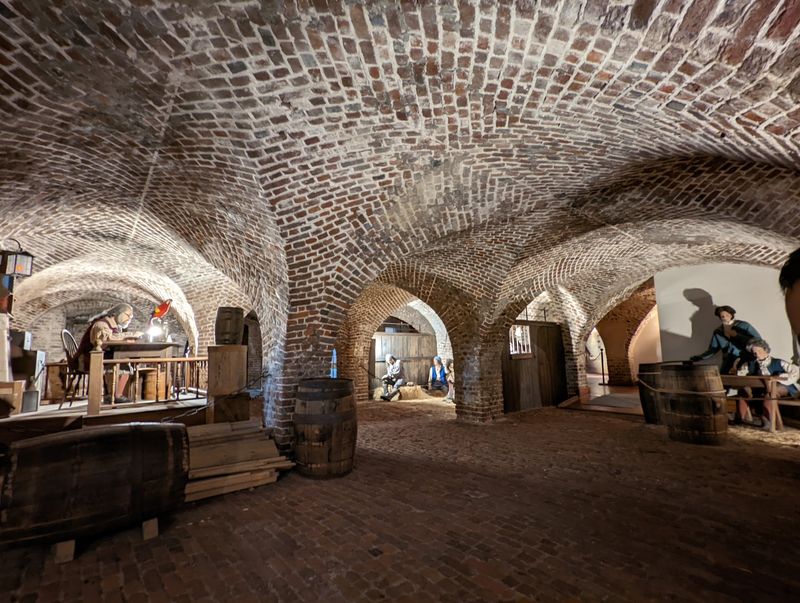
Here is the detail that made me stop mid-sentence: three men who signed the Declaration of Independence were imprisoned right under this building. Arthur Middleton, Edward Rutledge, and Thomas Heyward, Jr. all spent time in the Provost after the British took the city.
Lieutenant Governor Christopher Gadsden was held here too, and Colonel Isaac Hayne was confined before being executed for treason against the Crown.
Reading those names on a plaque is one thing. Hearing them while standing in the same brick room is something else entirely, and it reframes the Revolution as something that happened to actual individuals rather than to textbook chapters.
I found myself thinking about how quickly fortunes flipped. These were wealthy, influential men who had signed their names to a document, and within a few years they were prisoners in their own city.
There is also an older layer of legend attached to the site, since a dungeon at this location before the current building reportedly held pirates including Blackbeard and Stede Bonnet.
Ask the docents questions, because they know the details behind every name.
The Hidden Gunpowder Trick of 1780
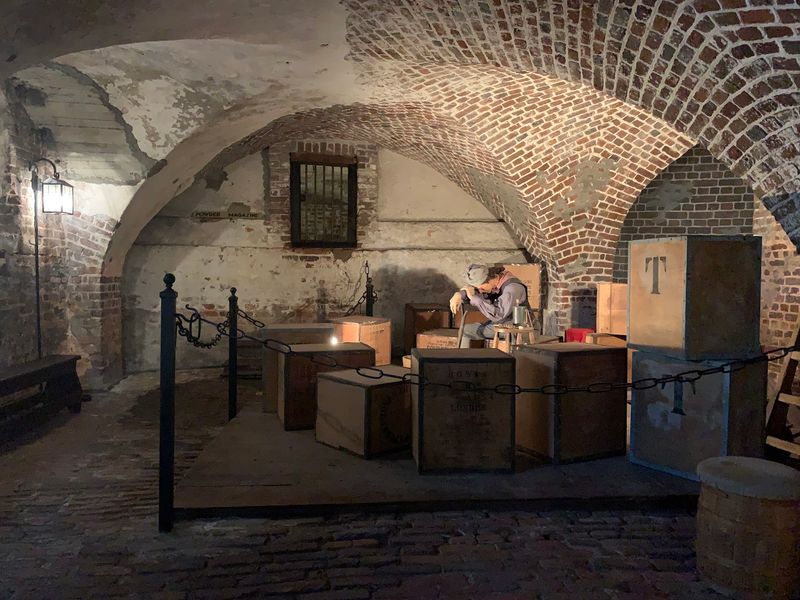
Some war stories are all cannons and shouting. My favorite one from this building involves bricklayers and a very good secret.
During the 1780 siege of Charleston, General William Moultrie had roughly 10,000 pounds of gunpowder moved from the Powder Magazine into the Exchange’s basement. Workers then sealed it behind a wall, creating a hidden chamber the British never discovered while they occupied the building above.
Think about that for a second. Soldiers ran a prison in this basement for more than two years, walking past a wall with tons of explosives behind it.
The guides tell this part with obvious enjoyment, and honestly, so would I. It is the kind of cleverness that sticks with you long after you have forgotten dates.
Visitors on the dungeon tour get to see where the powder was concealed, which turns an anecdote into something you can point at. My group let out a collective laugh of disbelief.
Little moments like this are why I recommend the guided portion rather than only reading the upstairs panels on your own.
The Half-Moon Battery Uncovered Beneath the Floor
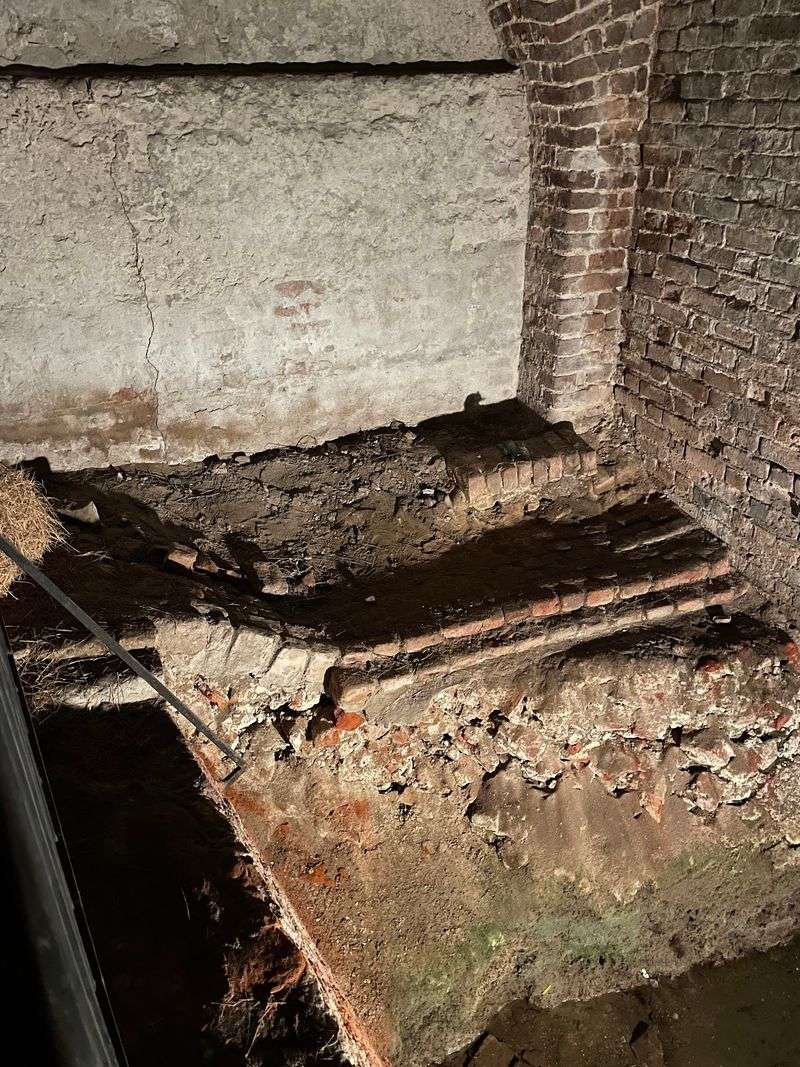
Charleston was once a walled city, fortified against attacks from the French and Spanish. That fact surprised me more than anything else on the visit, mostly because almost nothing of those defenses remains above ground.
An excavation in 1965 uncovered part of the Half-Moon Battery beneath the Exchange, a curved section of the early 1700s fortifications. It is the only surviving piece of Charleston’s colonial city walls, and you can see it right there in the basement.
The masonry is rough and irregular compared to the tidy Georgian brick upstairs, which makes the age difference easy to spot even without a guide explaining it.
I liked how this section quietly rewires your mental picture of the old city. Instead of pastel houses and flower boxes, you start imagining watchmen, cannon, and a harbor edge much closer than it is today.
One visitor in our group kept circling back to photograph the stonework, and I understood the impulse completely.
Give this area a few extra minutes before heading back upstairs, since it is genuinely one of a kind.
Where South Carolina Declared Independence and Ratified the Constitution
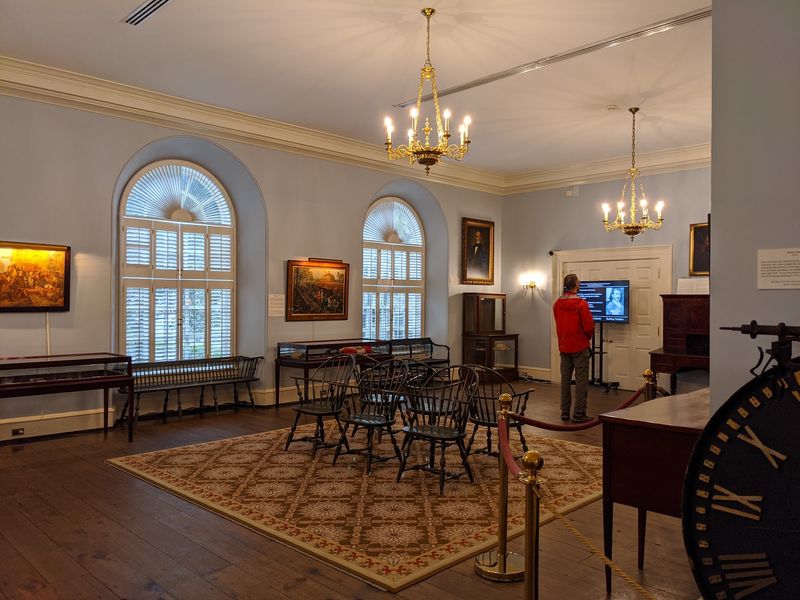
Upstairs, the mood lifts. Light pours through the tall windows into the Great Hall, and the whole space feels ceremonial rather than confined.
Plenty happened in and around these rooms. Citizens gathered in December 1773 to protest the British tea tax, with confiscated tea ending up stored in the basement, and delegates to the First Continental Congress were chosen here in 1774.
South Carolina declared its independence from Great Britain from this building on March 28, 1776, and the Declaration of Independence was read aloud from the steps on August 5 of that same year.
Then in 1788 the state’s Constitutional Convention met in the Great Hall, and on May 23 South Carolina ratified the United States Constitution, becoming the eighth state to do so.
Only three original buildings where the Constitution was ratified still stand in the country, and this is one of them. The Exchange sits in the same conversation as Faneuil Hall and Independence Hall.
President George Washington was also entertained here in 1791 during his Southern Tour with dinners, concerts, and dancing.
Facing the Building’s Hardest Chapter
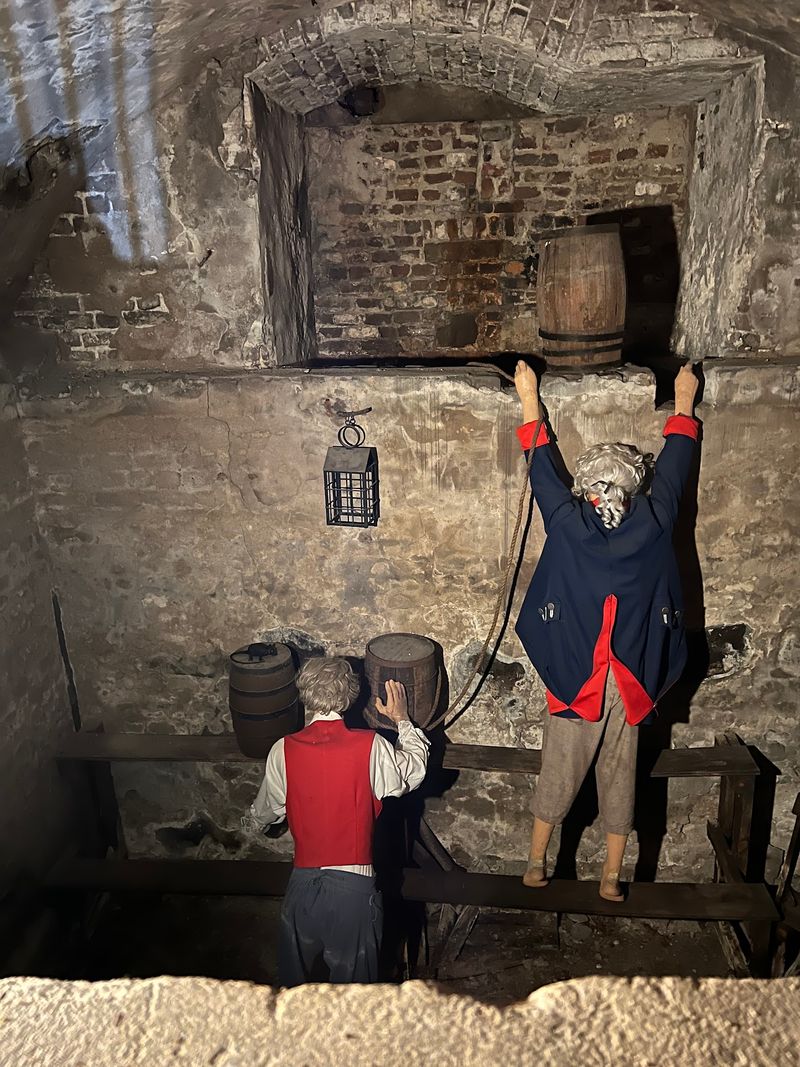
Not every part of this visit is comfortable, and the museum does not pretend otherwise. Between the Revolution and the Civil War, the Exchange was the main site in Charleston for public slave auctions, held on the north side of the building until they moved elsewhere in the city after 1856.
The exhibits address this directly, placing it alongside the patriotic milestones rather than tucking it away in a corner.
Standing where both things happened, the reading of the Declaration and the sale of human beings, is a lot to hold at once. It made me quieter for the rest of the afternoon.
Many visitors pair this stop with the Old Slave Mart Museum a few blocks away, and combination tickets are available. Doing both gives the story a fuller, more honest shape.
The building saw other turning points too, including townspeople climbing to the rooftop to watch the shelling of Fort Sumter at the start of the Civil War.
History here is layered, sometimes contradictory, and the site trusts you to sit with all of it.
Planning Your Visit Without the Rush
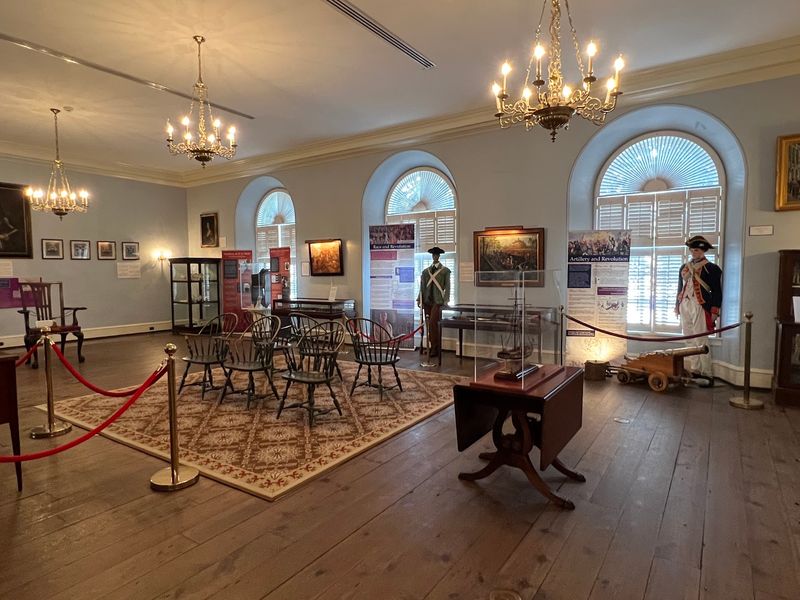
A bit of practical advice saved my visit, so I will pass it along. Explore the top two floors first, then take the guided dungeon tour, because the self-guided exhibits set up everything the guide talks about downstairs.
Dungeon tours run regularly through the day and last around twenty five minutes, and admission covers both the guided portion and the self-guided galleries.
Most people spend forty five minutes to an hour here, though history lovers easily stretch it longer. Arriving late in the afternoon can cut things short, so mid-morning worked well for me.
Staff and docents in period clothing are stationed throughout the building, and they are happy to answer questions or explain the muskets on display. Signing the replica Declaration of Independence is a small thrill that kids and adults both enjoy.
An elevator reaches all three floors, making the site accessible, and a small gift shop sits near the entrance. Street parking is limited, so nearby public garages are the safer bet.
The site is run as a nonprofit by the Daughters of the American Revolution.
Address: 122 East Bay Street, Charleston, South Carolina
