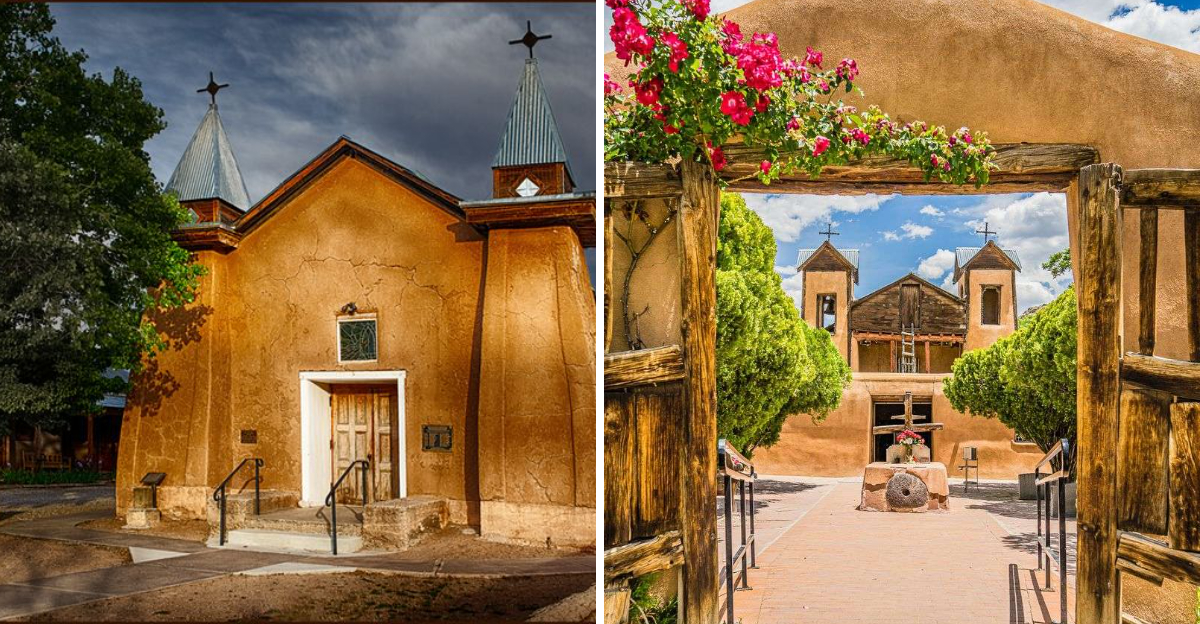
New Mexico’s desert landscape holds treasures that whisper stories from centuries past.
Tucked away in remote villages and ancient pueblos, these sacred spaces stand as living witnesses to faith, survival, and cultural blending.
Adobe walls warmed by the sun carry prayers spoken in Spanish, English, and Native languages.
Many of these churches still welcome worshippers today, their thick walls offering cool refuge from the desert heat.
From the oldest church structure in the continental United States to missions perched atop towering mesas, each sanctuary tells a unique tale.
Pilgrims travel from around the world to visit these humble buildings, seeking healing, peace, and connection to something greater.
Artists have immortalized their striking forms in paintings and photographs.
Communities gather annually to preserve these structures with traditional methods passed down through generations.
Whether you seek spiritual reflection or simply appreciate history and architecture, these quiet churches offer a window into New Mexico’s rich and layered past.
1. San Miguel Chapel
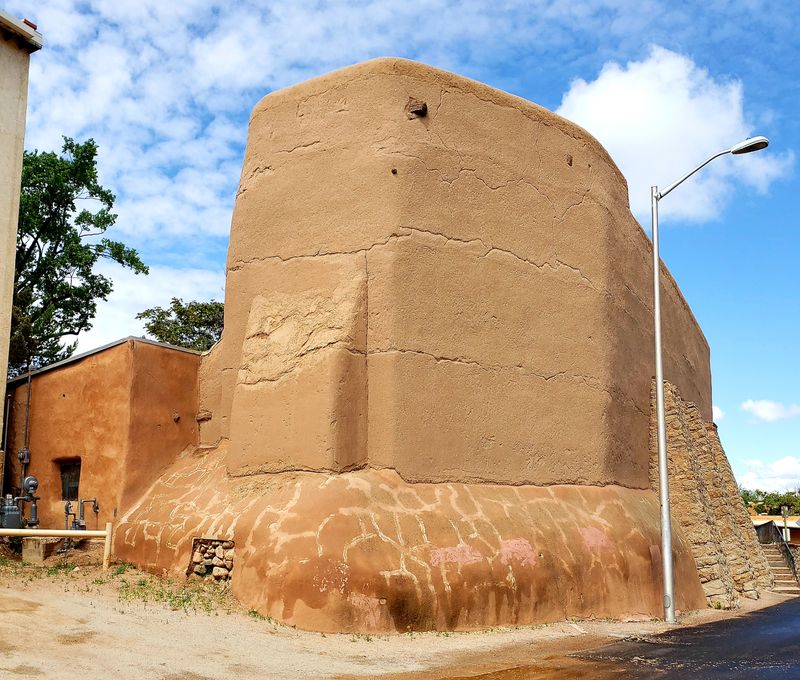
Stepping through the doors of San Miguel Chapel feels like entering a time capsule that has survived nearly four centuries.
Built somewhere between the years marking the early colonial period, this humble structure claims the title of the oldest church building in the continental United States.
Located in Santa Fe’s historic Barrio de Analco neighborhood, the chapel has weathered storms both literal and figurative.
The Pueblo Revolt brought destruction, yet the community rebuilt these sacred walls.
Multiple reconstructions over the centuries have preserved the essence of Spanish Colonial design.
Thick adobe bricks form walls that keep the interior cool even during scorching summer days.
Sunday masses still echo through the small sanctuary, connecting modern worshippers to countless generations before them.
Visitors often comment on the chapel’s intimate scale and authentic atmosphere.
Unlike grander cathedrals, this space invites quiet contemplation rather than overwhelming awe.
The chapel stands at 401 Old Santa Fe Trail, easily accessible yet somehow maintaining its peaceful character despite nearby tourist activity.
Original artwork and religious artifacts line the walls, each piece telling its own story of devotion and survival.
For anyone interested in American history or spiritual architecture, San Miguel Chapel represents an irreplaceable link to the earliest days of European settlement in what would become the southwestern United States.
2. Santuario de Chimayo
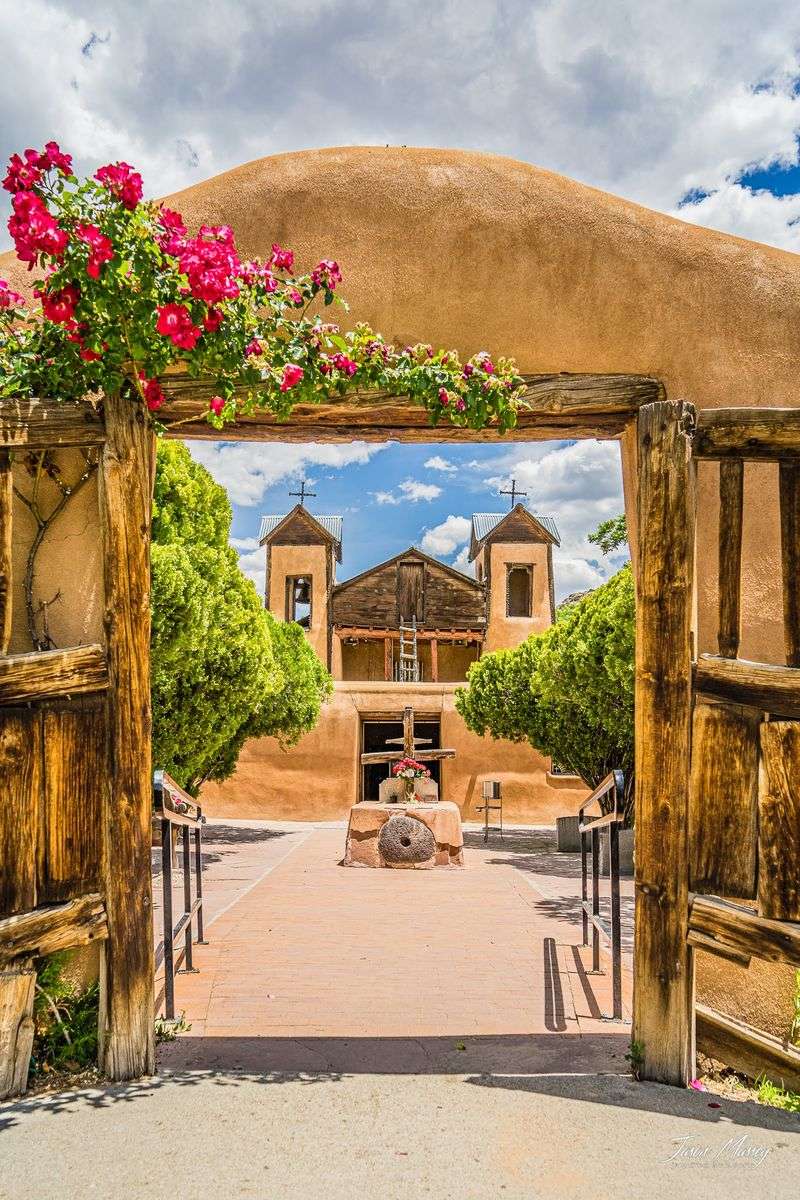
Thousands of pilgrims make their way to a small village each year, drawn by stories of miraculous healings.
The Santuario de Chimayo has earned the nickname “Lourdes of America” for good reason.
Built in the early nineteenth century, this National Historic Landmark sits nestled in Chimayó along the scenic High Road to Taos.
What makes this shrine truly unique is the pocito, a small pit inside the church containing sacred dirt that believers credit with healing powers.
Visitors from across the globe scoop small amounts of this earth, carrying it home as a tangible connection to their prayers.
The church’s twin bell towers rise against the backdrop of the Sangre de Cristo Mountains, creating a scene that photographers find irresistible.
Inside, the intimate sanctuary glows with candlelight and displays countless testimonials from those who experienced healing.
Crutches, photographs, and handwritten notes cover the walls, each representing a personal story of faith.
During Holy Week, tens of thousands walk to Chimayó, some traveling many miles on foot as an act of devotion.
The address is 15 Santuario Drive, though many pilgrims know the way by heart.
Even skeptics find themselves moved by the palpable sense of hope that permeates this space.
The surrounding village maintains its traditional character, with local weavers and artisans keeping centuries-old crafts alive.
3. San Francisco de Asís Catholic Mission Church
Georgia O’Keeffe couldn’t resist painting it.
Ansel Adams captured its sculptural beauty in black and white.
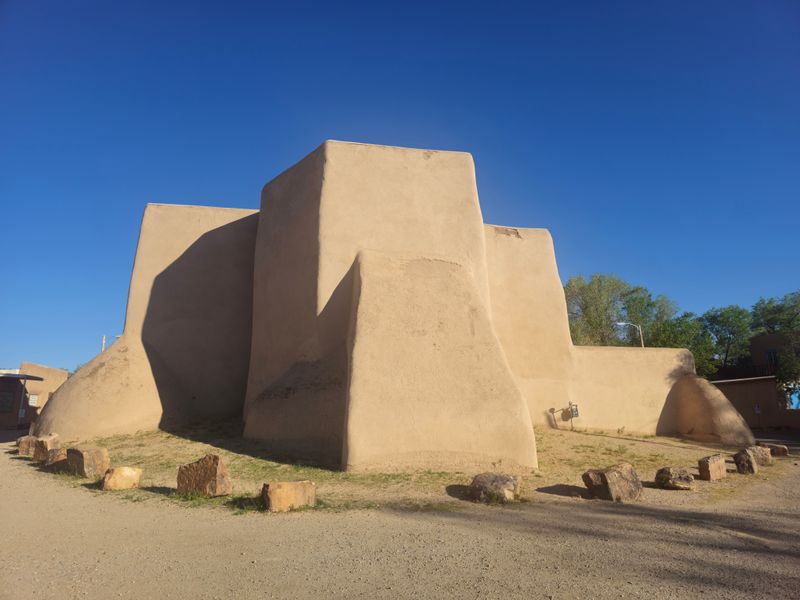
San Francisco de Asís Catholic Mission Church in Ranchos de Taos has inspired countless artists with its striking adobe form.
Massive buttresses support the rear walls, creating dramatic shadows that shift throughout the day.
Built during the late colonial period, the church represents adobe construction at its most impressive and functional.
The thick earthen walls regulate temperature naturally, keeping the interior comfortable year-round.
What truly sets this mission apart is the community’s continued dedication to traditional preservation methods.
Each year, neighbors gather for the enjarre, a ritual re-mudding of the exterior walls.
Volunteers mix mud, straw, and water by hand, then apply this plaster to the aging adobe surface.
This ancient technique has protected the structure for generations and strengthens community bonds.
Located at 60 St Francis Plaza, the church anchors a small plaza that feels worlds away from modern life.
Inside, the sanctuary features hand-carved wooden beams and religious art that spans centuries.
Visitors should take time to walk around the entire building, appreciating how the massive buttresses create an almost abstract sculptural quality from certain angles.
4. San José de Gracia Church
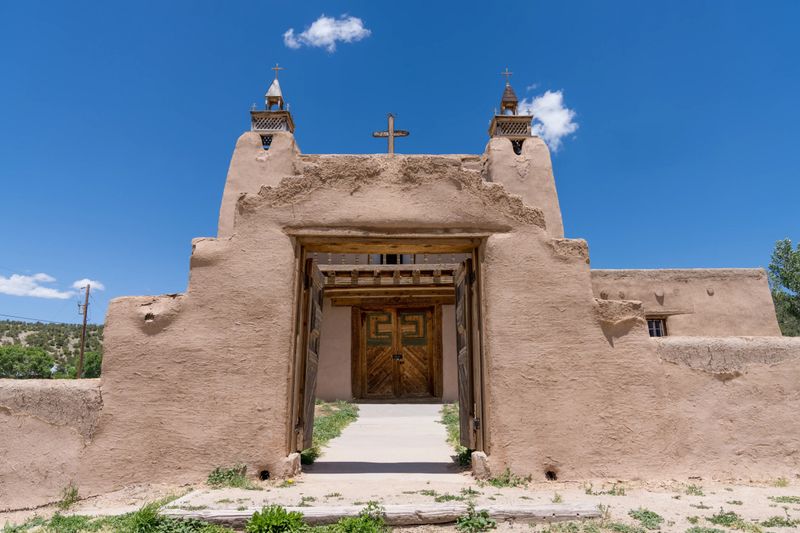
Remote mountain valleys sometimes preserve what busier places lose to time and change.
San José de Gracia Church stands in Las Trampas as one of the finest examples of Spanish Colonial church architecture remaining in New Mexico.
Built during the mid to late eighteenth century, the structure has earned designation as a National Historic Landmark.
Experts praise its exceptional state of preservation and architectural integrity.
The church sits at 2377-2381 Highway 76, serving a small community that has maintained its traditional way of life.
Thick adobe walls rise from the earth, topped by a simple bell tower that calls the faithful to worship.
Inside, original wooden beams span the ceiling, hand-hewn by craftsmen who learned their skills from Indigenous and Spanish traditions.
The altar features intricate woodwork and religious paintings that have survived centuries.
Visiting this church requires a bit of effort, as Las Trampas lies off the main tourist routes.
That isolation has helped protect both the building and the community’s character.
The surrounding landscape of high desert and pine-covered mountains creates a setting of profound beauty and solitude.
Historians and architecture students make pilgrimages here to study construction techniques that are rarely seen elsewhere in such authentic form.
5. San Felipe de Neri Catholic Church
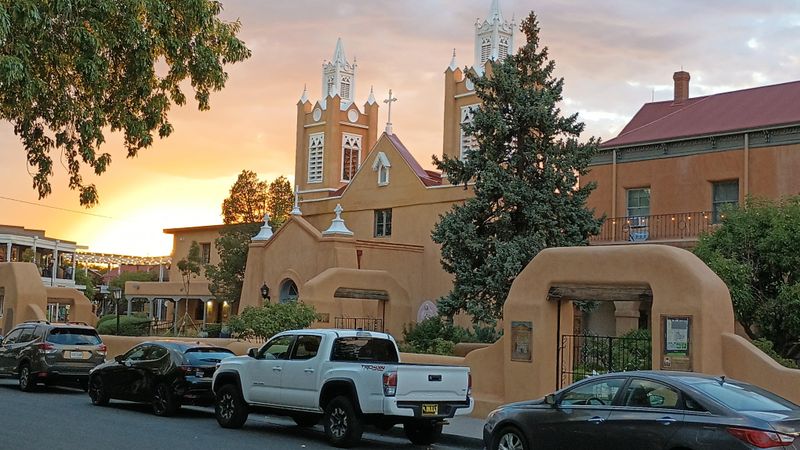
Albuquerque’s heart beats in Old Town Plaza, where San Felipe de Neri Catholic Church has stood watch since colonial times.
The current adobe structure dates back to the late eighteenth century, built after the original church collapsed.
That first building went up shortly after the city’s founding, making this site one of Albuquerque’s oldest continuously used locations.
Located at 2005 North Plaza Street Northwest, the church anchors a plaza surrounded by shops, galleries, and restaurants.
Despite the commercial activity nearby, the church grounds maintain a sense of sacred space.
Cottonwood trees provide shade in the courtyard, offering respite from the desert sun.
The church’s twin towers frame a simple facade that speaks to the practical beauty of Territorial style architecture.
Inside, the sanctuary features painted wooden ceiling beams and religious artwork collected over centuries.
Mass is celebrated daily, continuing an unbroken tradition of Catholic worship that spans more than three hundred years.
Visitors often discover the church while exploring Old Town, then find themselves returning for its peaceful atmosphere.
The adjacent garden and stations of the cross provide space for prayer and reflection.
For residents of New Mexico’s largest city, San Felipe de Neri serves as a reminder of Albuquerque’s origins as a small agricultural community along the Rio Grande.
6. San Estévan del Rey Mission Church Historic Site
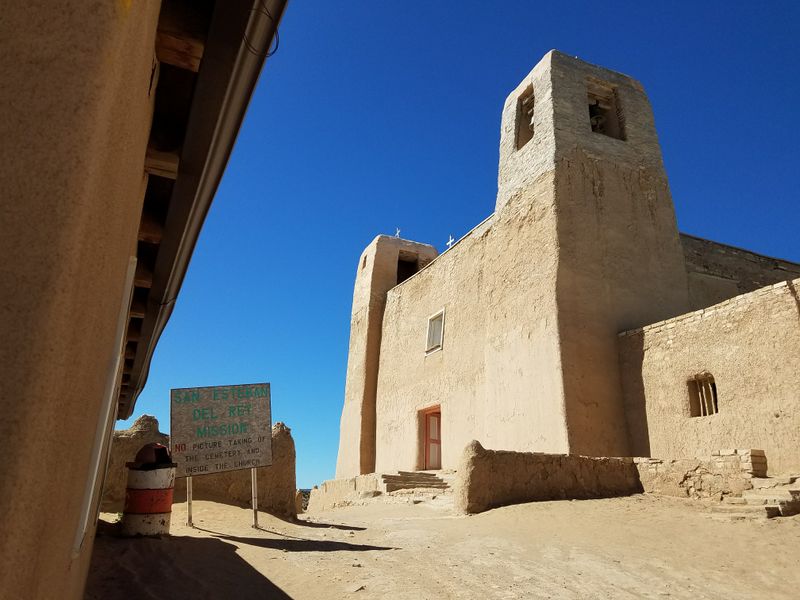
Imagine carrying timber beams thirty miles across desert terrain, then hauling them up a sheer cliff face.
That’s exactly what the Acoma people did to build San Estévan del Rey Mission Church atop their ancient pueblo.
Perched on a mesa that rises more than three hundred feet above the valley floor, this mission represents an extraordinary feat of construction.
Built during the mid-seventeenth century, the church blends Spanish Colonial and Puebloan architectural traditions.
Adobe walls measure seven feet thick at the base, providing structural stability and climate control.
The location at Acoma Pueblo makes visiting this church an unforgettable experience.
Access to the mesa top requires either climbing ancient stone steps or taking a guided tour via shuttle.
The pueblo itself is one of the oldest continuously inhabited communities in North America.
Walking through the mission, visitors encounter hand-painted ceiling beams, massive wooden doors, and religious artwork that tells the complex story of cultural collision and adaptation.
The cemetery beside the church overlooks vast stretches of desert, offering views that extend for miles in every direction.
Photography restrictions apply out of respect for the Acoma people’s privacy and sacred traditions.
This mission stands as testament to both the ambitions of Spanish missionaries and the resilience of Indigenous communities who maintained their identity despite enormous pressure to assimilate.
7. Old San Ysidro Church
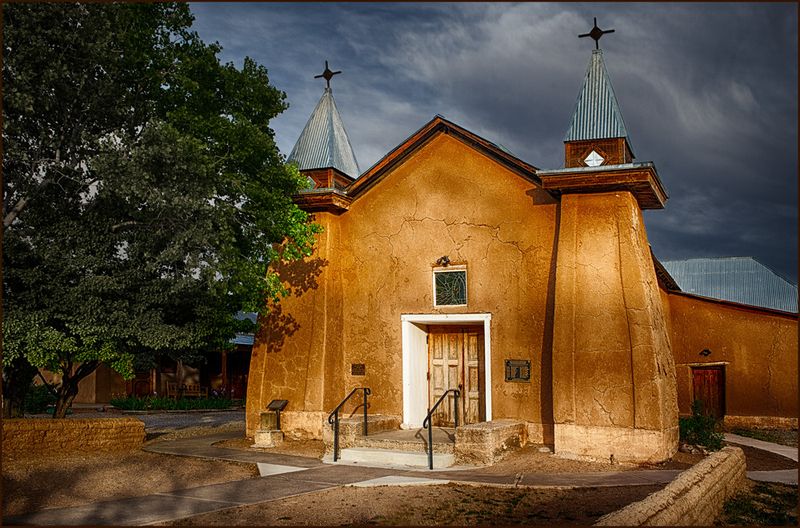
Not every historic church remains a place of worship, but that doesn’t mean it loses its value to the community.
Old San Ysidro Church in Corrales dates back to the mid-nineteenth century and has been carefully maintained through the decades.
After being de-sanctified, the building found new purpose as a community center.
Concerts, lectures, art exhibitions, and cultural events now fill this space with life and activity.
The address is 966 Old Church Road, in a village that has managed to retain its agricultural character despite urban growth nearby.
Adobe walls and traditional construction methods give the building authentic historical character.
Local residents take pride in preserving this structure as a symbol of Corrales’ identity and heritage.
The church’s transformation demonstrates how communities can adapt historic buildings to meet contemporary needs while respecting their past.
Musicians particularly appreciate the acoustic qualities of the thick adobe walls and high ceilings.
Visiting during an event offers the best opportunity to experience the building’s interior and atmosphere.
The surrounding village features cottonwood-lined lanes, small farms, and a slower pace of life that feels increasingly rare.
Old San Ysidro Church proves that preservation doesn’t require freezing a building in time, but rather finding ways to keep it relevant and loved by each new generation.
8. St Joseph Apache Mission
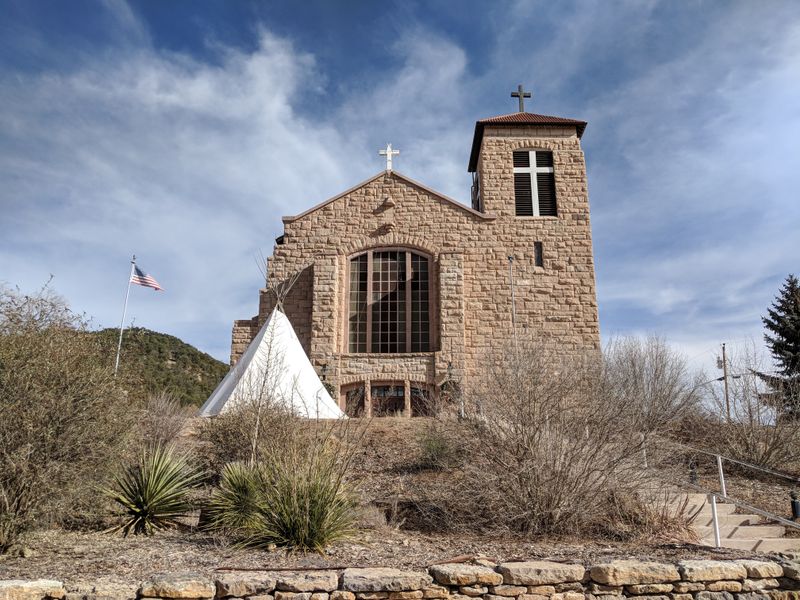
High in the Sacramento Mountains, a church stands where two cultures meet and merge.
St Joseph Apache Mission serves the Mescalero Apache Reservation, weaving Indigenous traditions throughout its structure and services.
Unlike the adobe missions found elsewhere in the state, this church features neo-Gothic architecture with pointed arches and vertical lines.
What makes it truly special is how Apache cultural elements have been incorporated into the Catholic framework.
Services are conducted in the Native language, connecting spiritual practice to linguistic heritage.
Religious artwork throughout the church depicts sacred figures with Apache features and traditional clothing.
The mission sits at 636 Mission Road, surrounded by pine forests and mountain peaks.
This setting differs dramatically from the desert landscapes associated with most New Mexico churches.
Cool mountain air and the scent of ponderosa pines create an atmosphere distinct from lower elevation missions.
The church represents a complex history of forced conversion and cultural adaptation, but also the resilience of the Apache people in maintaining their identity.
Visitors should approach with respect, understanding that this remains an active place of worship for a living community.
The Mescalero Apache Reservation offers stunning natural beauty and opportunities to learn about Indigenous culture and history in the American Southwest.
9. Monastery of Christ in the Desert
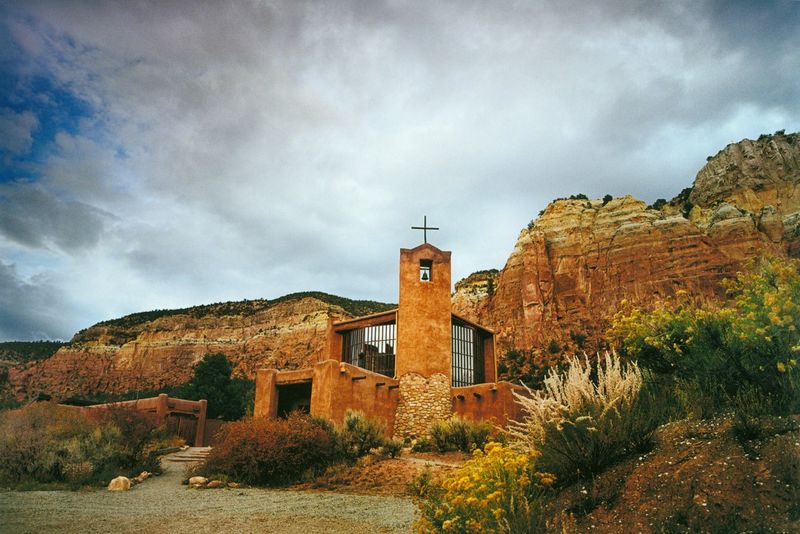
Thirteen miles of rough dirt road lead to one of the most remote monasteries in the Western Hemisphere.
Founded in the latter half of the twentieth century, the Monastery of Christ in the Desert occupies a spectacular canyon in northern New Mexico.
Benedictine monks live here in prayer, work, and contemplation, following a rule established more than a thousand years ago.
The monastery’s architecture blends traditional adobe construction with modern design sensibilities.
Clean lines and simple forms echo the austere beauty of monastic life.
Located at 1310 Forest Road 151, the monastery sits surrounded by wilderness that stretches in every direction.
No cell phone service penetrates this canyon, creating genuine disconnection from the outside world.
Visitors are welcome to attend services in the chapel, where Gregorian chant rises to wooden beams and stone walls.
The monks support themselves through various enterprises, including brewing craft beer and operating a small guesthouse for retreatants.
Those seeking deeper spiritual experience can arrange to stay for several days, participating in the rhythm of monastic life.
Silence pervades much of the day, broken only by the call to prayer and the sounds of the natural world.
The canyon’s red rock walls glow in the morning and evening light, creating a setting of extraordinary beauty and peace.
10. San Albino Basilica
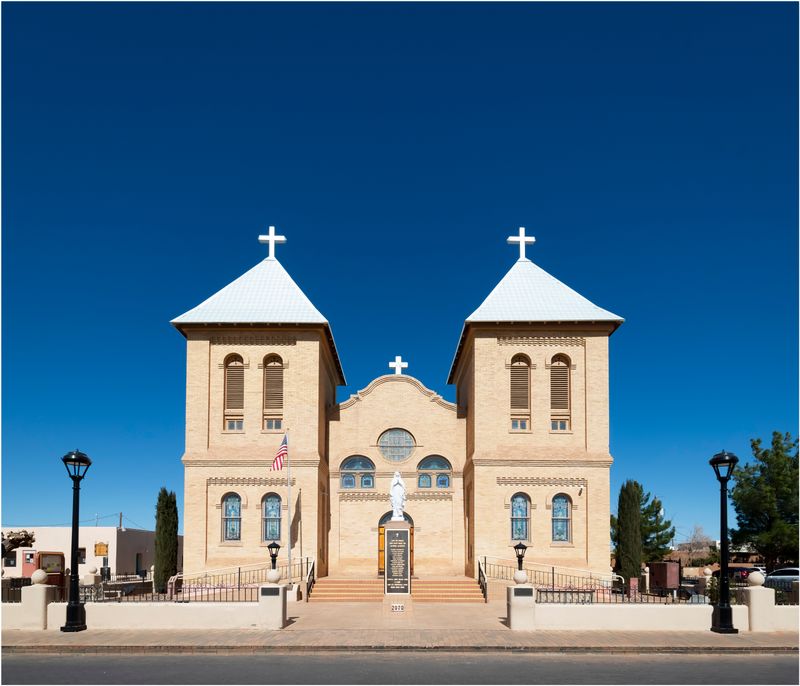
Geography and politics intertwined to give San Albino Basilica a unique place in history.
Established by order of the Mexican government in the mid-nineteenth century, this mission became part of the United States through the Gadsden Purchase.
That transaction shifted international borders, making the church and surrounding Mesilla Valley American territory.
The basilica stands at 2270 Calle Principal in the historic village of Mesilla, just outside Las Cruces.
This location near the border with Mexico has always been a crossroads of cultures and commerce.
The church’s architecture reflects its era, with elements of Territorial style that differs from earlier Spanish Colonial designs.
Inside, the sanctuary features stained glass windows that cast colored light across wooden pews and tile floors.
The basilica designation recognizes the church’s historical and spiritual significance within the Catholic hierarchy.
Mesilla Plaza surrounding the church maintains its nineteenth-century character, with shops and restaurants occupying historic buildings.
The village played an important role in the region’s development, serving as a stop on the Butterfield Overland Mail route.
Billy the Kid was tried and sentenced to hang in the nearby courthouse, adding to the area’s Wild West legend.
Today, San Albino continues serving the faithful while welcoming visitors interested in the complex history of the borderlands.
Dear Reader: This page may contain affiliate links which may earn a commission if you click through and make a purchase. Our independent journalism is not influenced by any advertiser or commercial initiative unless it is clearly marked as sponsored content. As travel products change, please be sure to reconfirm all details and stay up to date with current events to ensure a safe and successful trip.
