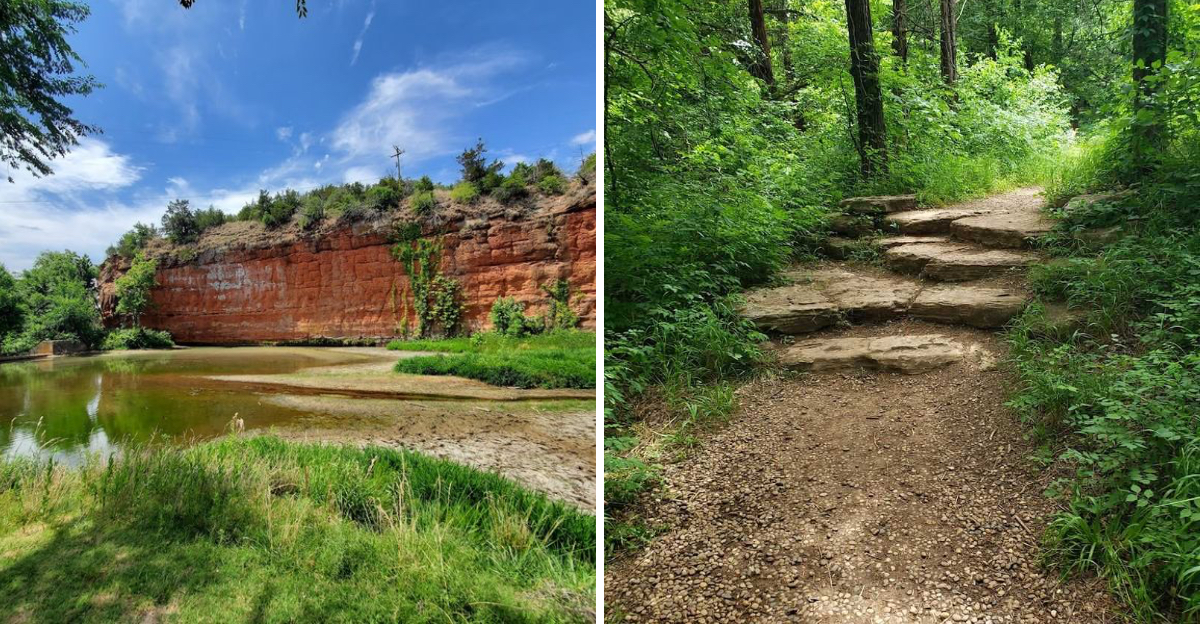
Oklahoma has a secret identity. By day it plays the humble prairie state, all gentle hills and quiet farm roads.
But slip off the main highways and lace up your hiking boots, and a wilder personality emerges. Twelve quirky hikes crisscross the Sooner State, each one leading to something unexpected and wonderful.
One trail ends at a waterfall that should not exist in this landscape, a curtain of cold water dropping into a pool so clear you will question your own eyes. Another squeezes you through a narrow canyon where the rock walls glow orange and pink like a desert sunset.
A third scramble takes you to a balancing rock that has defied gravity and every strong wind for thousands of years. Some paths lead to swimming holes.
Others lead to quiet overlooks where the only sound is your own breathing.
These are not the crowded, paved, family friendly kind of hikes. They are the surprising kind, the ones that make you feel like the first person to ever discover them.
1. Bluestem Falls, Pawhuska, Oklahoma
Five minutes from the parking area, the world changes completely.
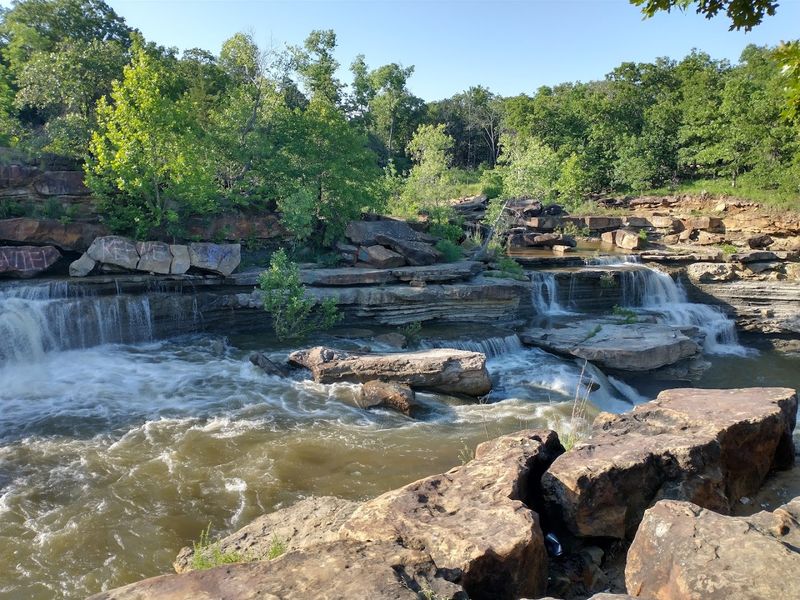
The trail at Bluestem Falls near Pawhuska, in the rolling Osage Hills of northeastern Oklahoma, narrows into a tight squeeze between mossy rock walls that genuinely makes you feel like you are discovering something rather than visiting a posted attraction.
When rain has been generous, water cascades over wide, layered rock shelves and drops into a pool below with a satisfying rush. Even during dry stretches, the exposed canyon walls and ledges reveal Oklahoma’s geology in a way that stops you mid-step.
The real surprise here is the natural sinkholes. Scattered near the falls, these bowl-shaped depressions hold water long after the main cascade dries up, and the first one closest to the falls runs deep enough for a solid summer swim.
Local tradition includes cliff jumping from a natural rock ledge above the sinkhole pool, and watching brave visitors take the plunge adds a layer of entertainment to the whole experience.
Families with young kids tend to stick to the shallower edges, while older hikers often find a flat rock to sit on and simply absorb the scene.
Late spring is the sweet spot for visiting, especially within a day or two of heavy rainfall. The hike itself is short and accessible, making it one of the easiest waterfall payoffs in the entire state.
Come early on weekends to snag a good spot before the crowds arrive, because Pawhuska locals clearly know this place is worth the short drive.
2. Crab Eyes Trail, Charon’s Garden Wilderness, Wichita Mountains Wildlife Refuge
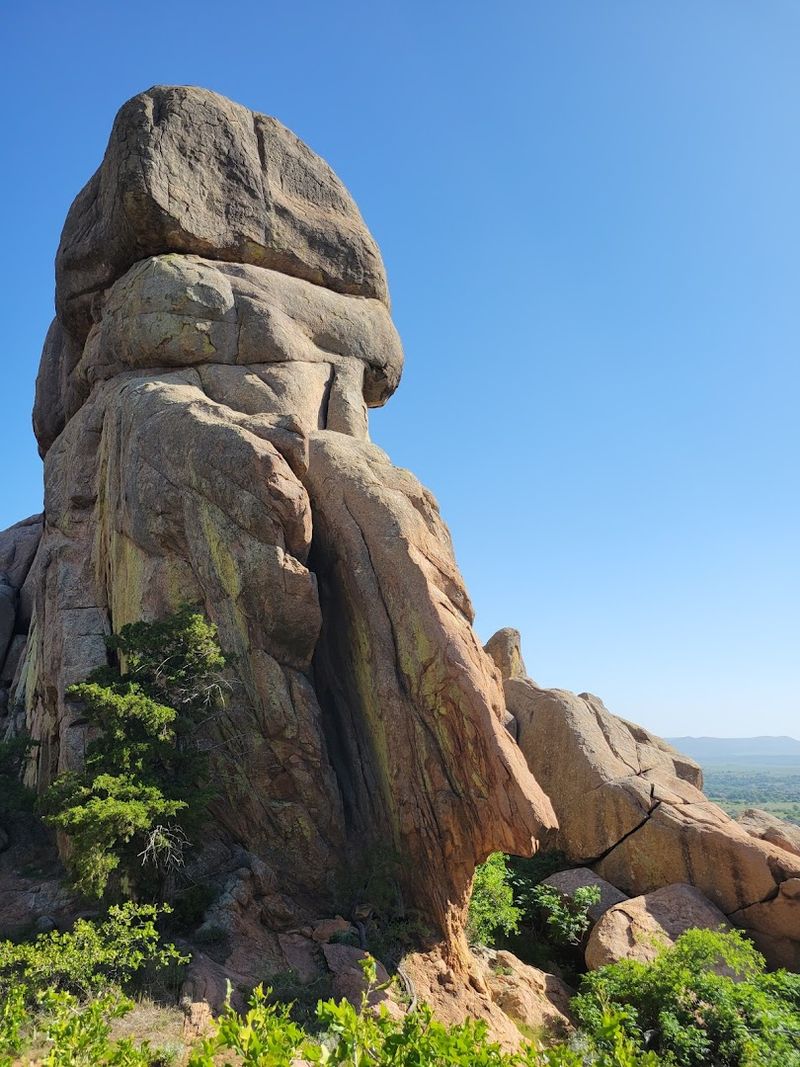
There is something wonderfully absurd about hiking 3.7 miles through boulder fields in a landlocked state only to find a rock formation shaped like a sea creature.
That is exactly what waits at the end of the Crab Eyes Trail inside the Charon’s Garden Wilderness area of Wichita Mountains Wildlife Refuge near Indiahoma, in southwestern Oklahoma.
The trail begins at a creek edge and immediately sets the tone with rough terrain, creek crossings, a literal tunnel carved through rock, and footbridges that feel like something out of an adventure story.
The 406-foot elevation gain is spread across the route in a way that keeps things interesting without ever becoming brutal.
Reaching the two massive, slightly rounded granite boulders at the summit brings an involuntary laugh. They really do look like the wide-set eyes of a crab staring up at the sky.
The payoff view from up there stretches across Elk Mountain, Mount Lincoln, Granite Mountain, and several other peaks in the refuge.
Ancient granite dominates this landscape, some of it among the oldest exposed rock in the central United States.
The boulders you scramble over and squeeze between formed deep underground hundreds of millions of years ago, and standing on top of them while looking at that panorama puts that timeline into sharp perspective.
Spring and fall are the ideal seasons, when temperatures stay comfortable enough to enjoy the full scramble without overheating. Rangers at the refuge can point you toward the correct trailhead, since the Crab Eyes starting point is not always obvious on standard mapping apps.
3. The Narrows Canyon Scramble, Near Cache, Oklahoma
No parking lot. No ranger station.
No gift shop. The Narrows, tucked into the Wichita Mountains near Cache in southwestern Oklahoma, is the kind of place locals know about and rarely post online, and that secrecy is a big part of its appeal.
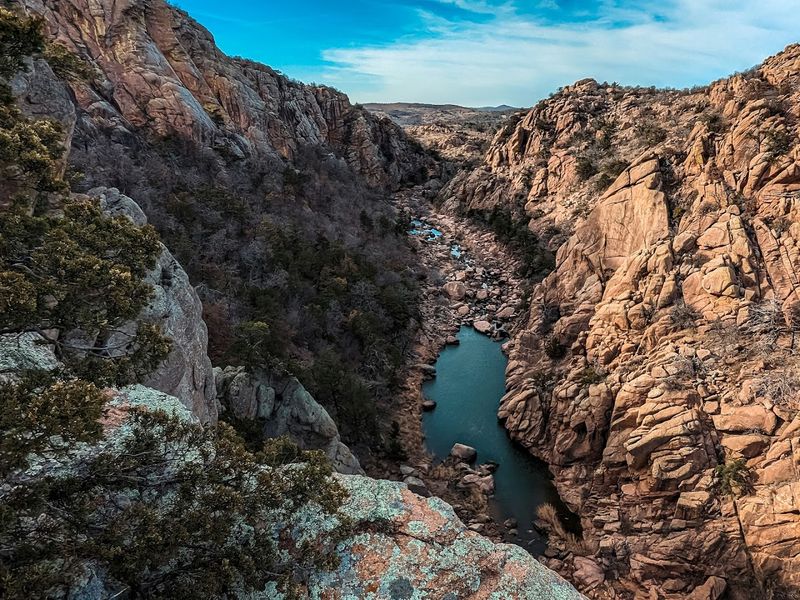
A faint path off Highway 115 leads toward the canyon entrance, and once you step inside, the walls rise on both sides in sheets of ancient granite and gabbro that formed deep beneath the Earth long before the first dinosaur walked the planet.
The scale of those walls makes you feel appropriately small in the best possible way.
This is not a casual stroll. Hands get involved early, gripping rock faces and pulling your body up and over sections where the route goes more vertical than horizontal.
Small waterfalls and gentle cascades appear after good rainfall, tucked into corners of the canyon where the light hits the wet rock and turns everything briefly golden.
The most talked-about feature along the route is Sofa Rock, a natural boulder shaped with such uncanny precision that it genuinely resembles a comfortable couch, complete with what looks like armrests and a backrest.
Tired hikers have been using it as a rest stop for years, and sitting on it mid-scramble feels like nature decided to install furniture specifically for this trail.
Spring and fall visits after recent rainfall offer the most dramatic experience, with water flowing through the canyon’s lower sections. Download offline maps before you go, since cell service in this area can disappear without warning, and always tell someone where you are headed.
4. Osage Hills State Park Trail System, Pawhuska, Oklahoma
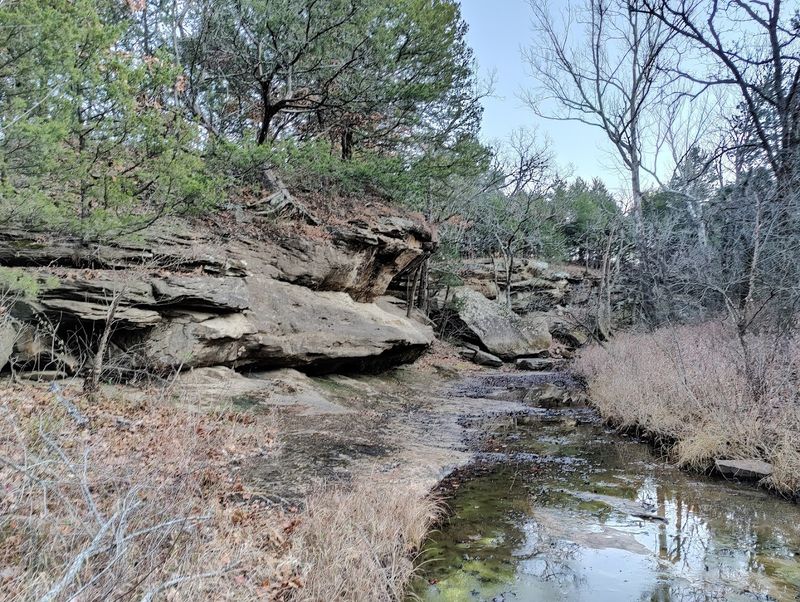
Walking into Osage Hills State Park near Pawhuska in northeastern Oklahoma feels like stepping onto a film set that nobody told you about.
Massive sandstone boulders balance on impossibly narrow bases, some forming natural archways, others creating low caves just wide enough to crawl through, all of it shaped by millions of years of wind and water working quietly and relentlessly.
The colors shift throughout the day in a way that rewards patience. Early morning light turns the orange and red stone almost amber, while late afternoon brings out deep rust tones that contrast sharply against the green canopy overhead.
Moss-covered oak branches twist above the trail in shapes that belong in a storybook.
More than ten miles of trails wind through the park, ranging from gentle walks suitable for most fitness levels to climbs that require careful footing on loose rock. The variety means you can tailor the experience to exactly how much adventure you want on any given day.
Geologists visit Osage Hills regularly to study how these sandstone formations developed, which tells you something about how genuinely unusual this landscape is.
For younger hikers, the boulders become instant playgrounds, sparking imagination about alien cities or ancient monuments left behind by a civilization nobody remembers.
Spring brings wildflowers that soften the rocky terrain with color, while fall turns the oak canopy into a warm patchwork of gold and red.
Either season makes the short drive from Pawhuska feel completely worthwhile, and the park rarely feels crowded, which only adds to the sense of private discovery the whole place inspires.
5. Keystone Ancient Forest Falls Trail Loop, Sand Springs, Oklahoma
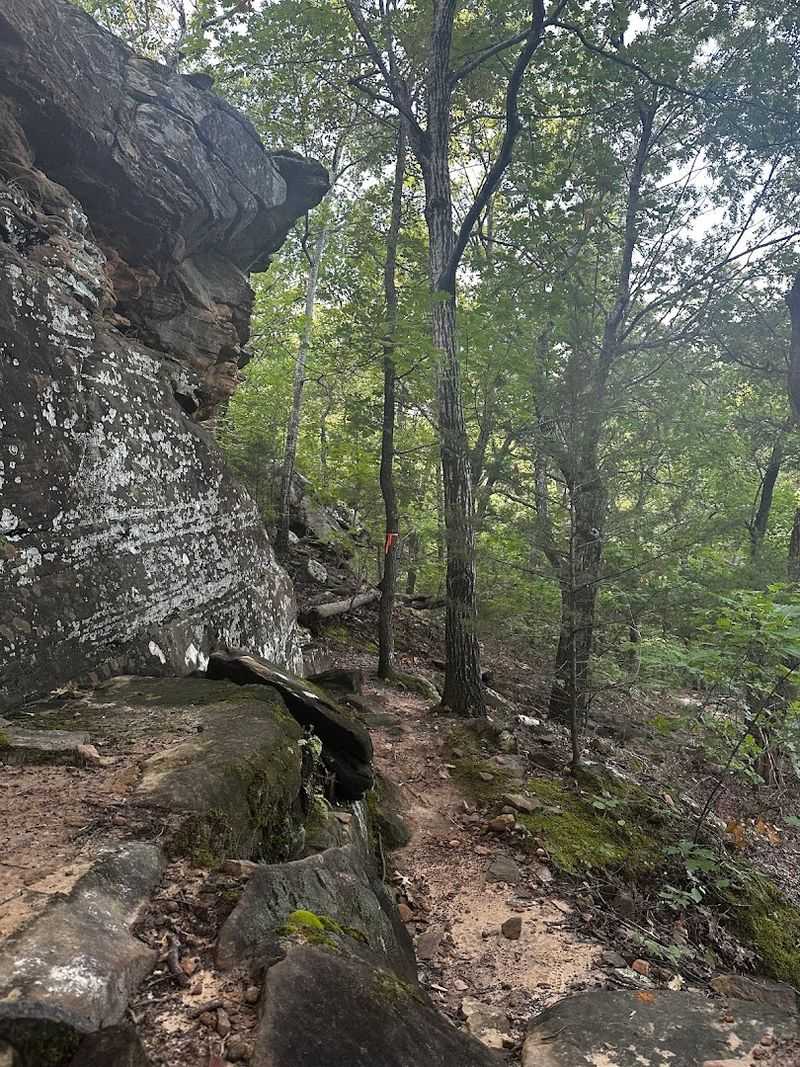
Thirty minutes west of Tulsa, Keystone Ancient Forest Preserve near Sand Springs in northeastern Oklahoma holds trees that were already old when the United States was still a British colony.
Post oaks exceeding 300 years in age and cedar trees older than 500 years line the 4.5-mile moderate loop, giving the whole hike a slow, heavy sense of time that is hard to shake.
The trail mixes wide fire roads with singletrack descents into ravines, keeping the terrain varied and the legs guessing.
Around 500 feet of elevation gain carries you through creek crossings, along small canyon edges, and past rock walls with low overhangs that require genuine attention to avoid a forehead collision.
Two intermittent waterfalls appear on the route after significant rainfall, and when they run, they transform the hike from a pleasant forest walk into something genuinely memorable.
Both creek crossings become true wades when water is high, so waterproof boots or a willingness to accept wet socks are both valid strategies.
The preserve is managed jointly by the City of Sand Springs and The Nature Conservancy, which means the trails stay well-maintained and the environment stays protected. Gates close promptly at the posted hour, so planning your departure time before you start is not optional.
Fall visits after rainstorms offer the best combination of flowing water and comfortable temperatures. Spring works beautifully too, when the ancient oaks push out new leaves and the whole forest floor brightens up with fresh growth.
Either way, this hike earns its place on any Oklahoma outdoor list without question.
6. Coon Creek Canyon System, Robbers Cave State Park, Wilburton, Oklahoma
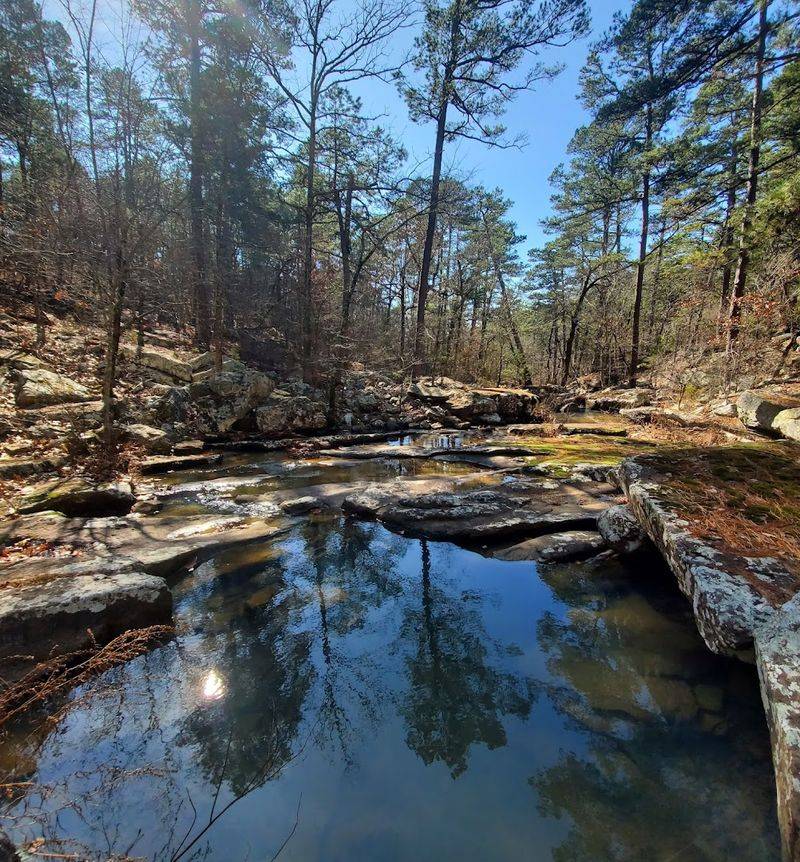
Southeastern Oklahoma has a way of making you forget you are in the same state as the panhandle.
The Coon Creek Canyon System inside Robbers Cave State Park near Wilburton feels more like the Ozarks than the plains, with dense hardwood forest giving way to dramatic boulder fields and canyon overlooks that stretch across rolling woodland valleys.
More than twenty miles of interconnected trails wind through the system, offering everything from easy canyon walks to longer routes that demand stamina and good footwear.
Rock walls have weathered into smooth curves and natural overhangs that create sheltered alcoves throughout the canyon, and exploring them one by one becomes an afternoon project on its own.
The cave that gives the park its name sits high on a canyon wall and holds a genuinely interesting history.
Jesse James, Belle Starr, and the Dalton Gang all reportedly used this region as a hideout during the late 1800s, and standing inside that cave with the canyon spread out below makes those outlaw legends feel surprisingly plausible.
Whether every story about this place is historically airtight is something historians still debate, but the atmosphere of the canyon does most of the convincing work on its own.
Spring brings wildflowers and running streams that fill the canyon with sound and color, making it the most rewarding season for a full exploration of the trail network.
Robbers Cave State Park sits close enough to Wilburton to make a full day trip practical, and the combination of history, geology, and trail variety makes it one of southeastern Oklahoma’s most underrated outdoor destinations by a significant margin.
7. McGee Creek Natural Scenic Trail System, McGee Creek State Park, Farris, Oklahoma
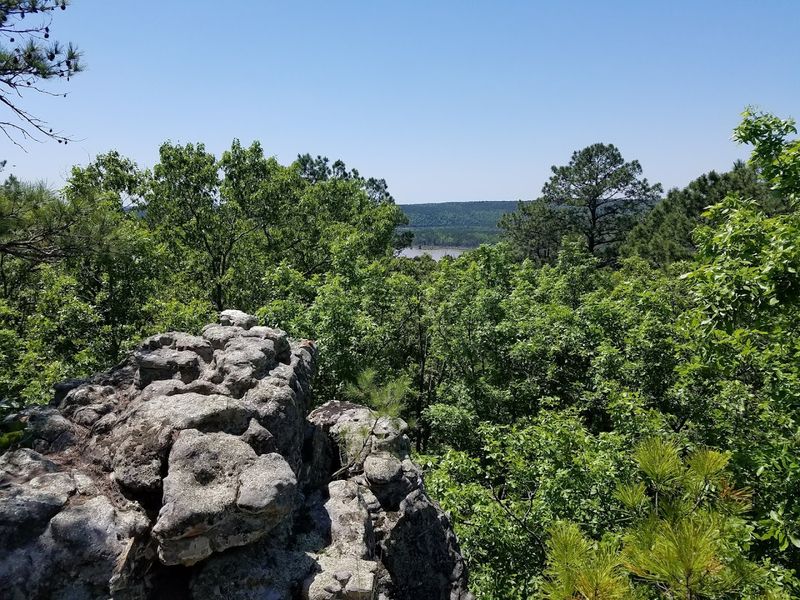
Getting into McGee Creek State Park’s Natural Scenic Recreation Area near Farris in southeastern Oklahoma requires a free permit from the park office, and that single requirement changes everything about the experience. You are not wandering into a casual day-use area.
You are committing to a real wilderness adventure, and the trail system rewards that commitment generously.
Over 25 miles of trails with 11 distinct routes spread across the recreation area, weaving through creek beds, past rock formations, along canyon overlooks, and through stretches of pristine forest that feel genuinely untouched. The variety keeps every visit feeling different from the last.
The Little Bugaboo Trail stands out as the most challenging option, with a 1,069-foot elevation gain that earns serious respect from hikers who underestimate it.
Reaching the overlooks on that route reveals views of McGee Creek Lake and surrounding wilderness that justify every uphill step without argument.
Camping spots near the lake allow overnight stays that turn the experience from a day hike into a full backcountry retreat.
Waking up beside that water with no crowds and no noise except birds is one of those experiences that genuinely recalibrates your sense of what outdoor recreation can feel like.
Autumn is the standout season here, with peak fall color typically arriving between mid-October and late November. The combination of red and gold foliage against the rocky canyon walls creates scenery that photographs beautifully but honestly looks even better in person.
Plan the permit pickup into your schedule before leaving home so the logistics stay smooth from start to finish.
8. Roman Nose State Park Canyon Loop, Watonga, Oklahoma
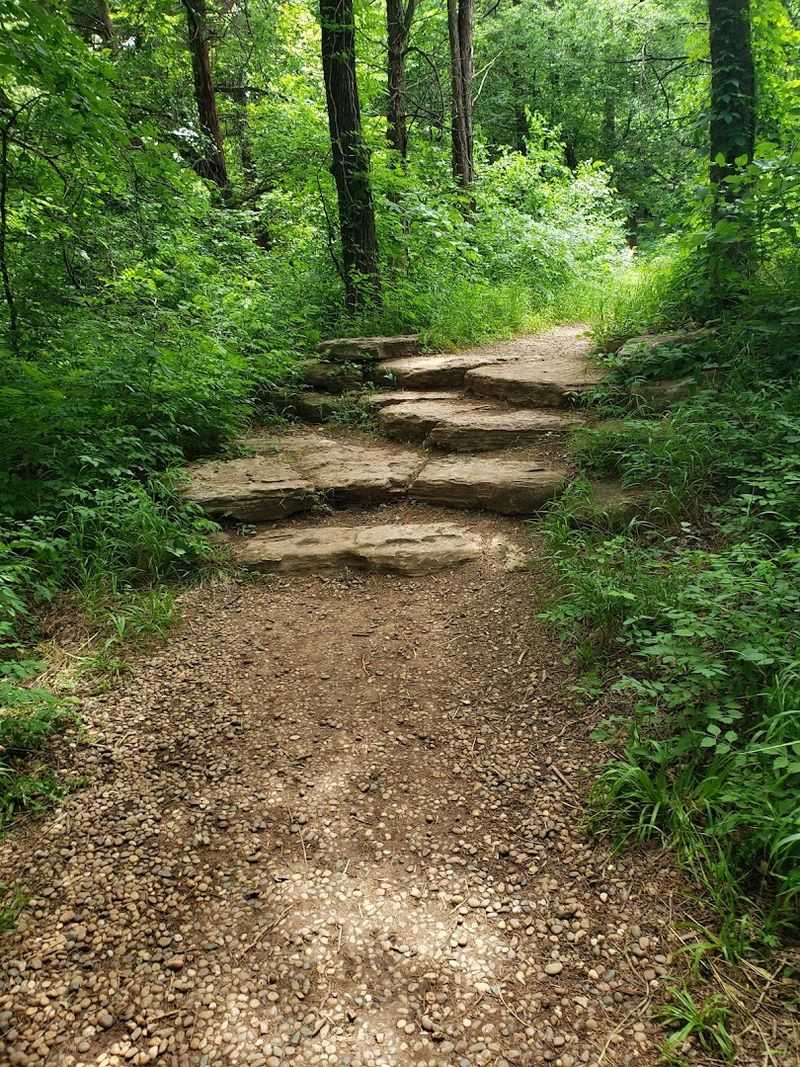
Northwestern Oklahoma is not where most people expect to find canyon drama, but Roman Nose State Park near Watonga delivers exactly that across 600 acres of gypsum rock cliffs, winding canyon trails, and one of the most unusual natural springs in the entire state.
The landscape here surprises people who arrive expecting flat prairie and leave planning a return visit.
The Canyon Loop Trail covers 0.9 miles and works perfectly for beginners or anyone short on time, offering a quick but genuinely scenic taste of the canyon terrain.
For a more complete experience, the Inspiration Point Loop stretches 4.8 miles and climbs 347 feet, rewarding hikers with sweeping canyon views and close-up looks at the gypsum formations that define this park’s character.
The Spring of Everlasting Waters is the park’s most curious feature. Pumping 600 gallons per minute from somewhere deep beneath the canyon floor, this spring has maintained steady flow for as long as anyone in the area can remember.
Nobody fully understands the hydrology behind it, but hikers are grateful for the cooler microclimate the constant water creates along the lower canyon sections.
Gypsum rock weathers differently from sandstone, creating softer, rounder formations that glow white in direct sunlight and turn almost silver in overcast conditions.
The visual effect shifts dramatically depending on the time of day, which makes the park worth visiting more than once just to see the light change.
September and October bring the most comfortable temperatures for exploring the full trail network, and the canyon walls hold onto warmth long enough to make evening hikes pleasant well into autumn.
9. Natural Falls State Park Hidden Trails, Colcord, Oklahoma
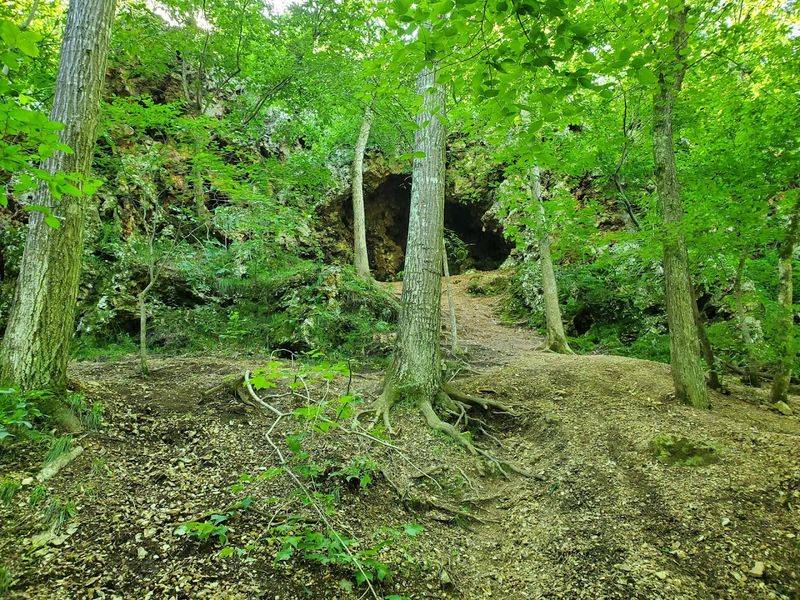
On the Oklahoma-Arkansas border near Colcord, Natural Falls State Park holds a 77-foot waterfall that drops through a narrow V-shaped valley with a roar you hear long before you see it.
The Dripping Springs Trail covers 1.1 miles and opens with a paved section wide enough for wheelchairs, making the first part of the experience accessible in a way that not many Oklahoma waterfall hikes can claim.
The real depth of this park comes from its lesser-traveled routes. Ghost Coon Trail wanders 1.4 miles through prairie and bluff terrain that shifts the mood entirely from the lush canyon near the falls.
Fox Den Trail covers 1.1 miles alongside limestone cliff views that feel more like Arkansas hill country than Oklahoma flatland.
A lower observation deck sits right at the waterfall’s base, close enough that the mist reaches your face on humid days. Sitting there with the constant sound of falling water surrounding you is one of those simple experiences that stays with you longer than expected.
The descent to that lower deck involves 88 steps down, which sounds manageable until you remember the return trip. Coming back up is where the waterfall earns its keep as a fitness motivator, and most visitors arrive at the top of those stairs with a healthy new appreciation for flat ground.
This is a natural waterfall, not a dam-release. It flows when rainfall decides it should, which means spring visits after heavy rain offer the most dramatic experience.
The park sits close enough to the Arkansas border to make a combined day trip with nearby Arkansas attractions an easy and rewarding option.
10. Black Mesa Summit Trail, Kenton, Oklahoma
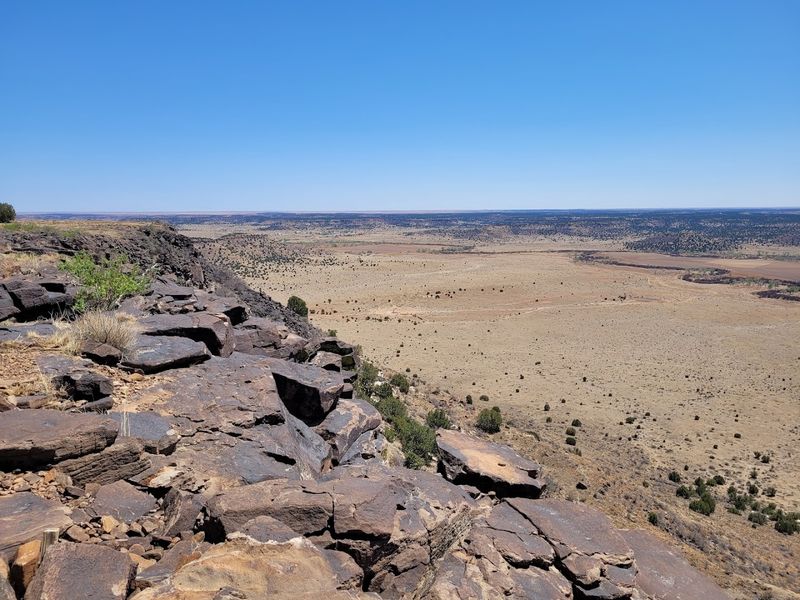
The Oklahoma Panhandle near Kenton looks nothing like the rest of the state, and Black Mesa Summit Trail makes that clear within the first quarter mile.
High desert stretches in every direction, juniper trees dot the landscape, and dark volcanic cap rock covers the mesa top like a lid placed there by some ancient geological event that had no interest in subtlety.
The trail follows an old ranch road for about 4.2 miles one way, keeping the grade gentle enough that the climb to Oklahoma’s highest point at 4,973 feet above sea level never feels like a struggle. The deception is part of the experience.
You keep walking on what feels like flat ground until you turn around and realize how far below the starting point now sits.
On clear days, the summit view reaches into Colorado and New Mexico, making this the only hike in Oklahoma where you can see two other states from a single spot. A marker at the top confirms the elevation and gives you something concrete to photograph as proof you made it.
The mesa’s dark volcanic cap rock gets its color from basalt deposited by ancient lava flows, and it contrasts sharply with the lighter sedimentary layers visible on the mesa’s sides.
That geological contrast makes the landscape look almost painted, especially in morning light when shadows are still long and the colors are most saturated.
Late spring and early fall are the ideal windows for this hike. Summer sun on an exposed mesa with limited shade turns the walk into something far less enjoyable, so timing matters considerably more here than on most Oklahoma trails.
11. Red Rock Canyon Rim Trail, Hinton, Oklahoma
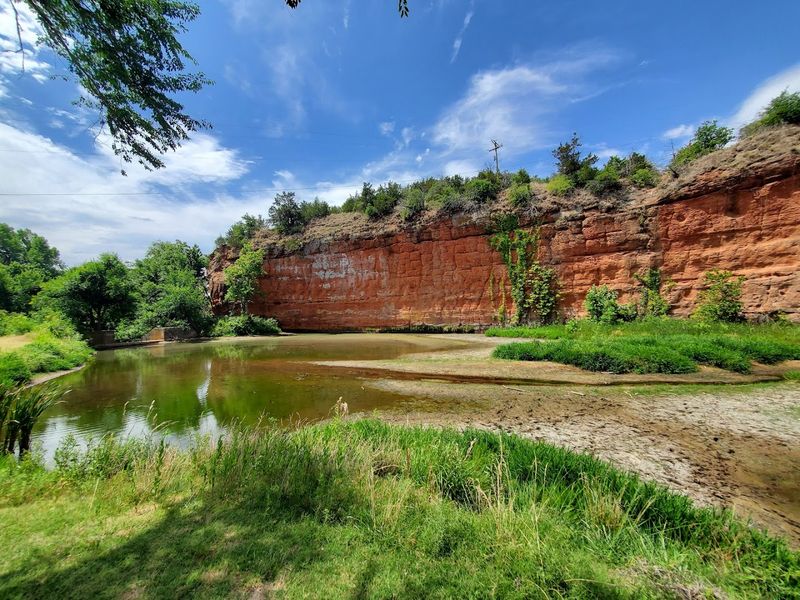
Central Oklahoma holds a canyon that could pass for southern Utah on a good photography day, and the Red Rock Canyon Rim Trail near Hinton is where that comparison earns its credibility.
The 3.8-mile signature route at Red Rock Canyon Adventure Park runs along cliff edges above formations of Aztec Sandstone that glow in shades of deep red and bright orange depending on the hour and the angle of the sun.
Cross-bedding patterns in the rock face tell a story of ancient wind deposits. Layer by layer, grain by grain, sand accumulated over thousands of years. Those sweeping diagonal lines you see throughout the canyon walls are the result of that slow, patient process.
Iron oxide in the sandstone produces the vivid color, and the effect is striking. First-time visitors often stop mid-trail just to stare.
The park has six trails total, including the Red Rock Canyon Outer Loop at 4.8 miles and the California Road Nature Trail at 3.5 miles. That variety makes it possible to spend a full day here without repeating the same views twice, which is a rare luxury in a state park of this size.
Here is the geological detail that earns a genuine double-take: the Aztec Sandstone at Red Rock Canyon in Oklahoma is the same formation found in Red Rock Canyon National Conservation Area in Nevada.
Geologists believe the two were once connected before continental forces separated them, meaning you are hiking on a piece of ancient landscape that drifted away from the American Southwest and stayed put in Oklahoma.
Spring and fall visits are strongly recommended, since summer heat in this exposed canyon becomes intense by midmorning and the shade options along the rim are limited.
12. Medicine Park and Wichita Mountains Wildlife Refuge, Medicine Park, Oklahoma
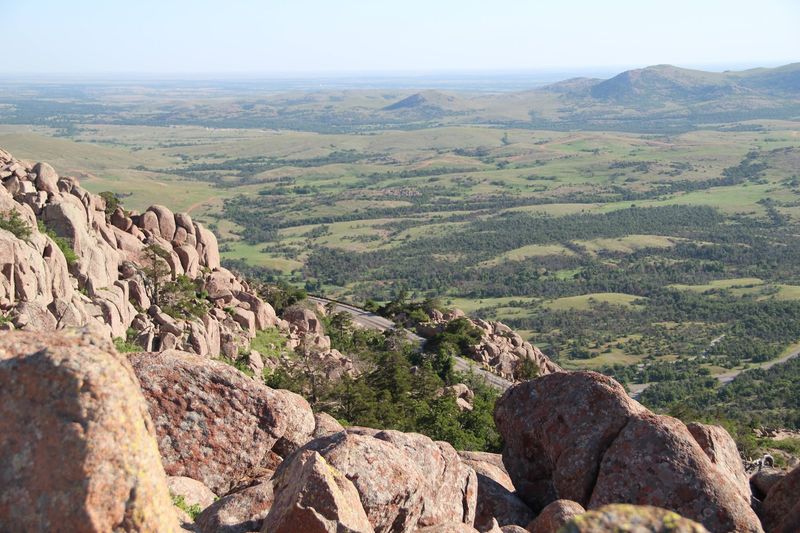
Medicine Park is the kind of town that makes you stop the car and look twice.
Built almost entirely from cobblestones pulled directly out of nearby creeks, this small community in southwestern Oklahoma near the Wichita Mountains Wildlife Refuge has the architectural feel of a tiny European mountain village that somehow ended up on the Oklahoma prairie, and nobody questioned it.
Founded in 1908 as one of the state’s first resort destinations, Medicine Park serves as the ideal base for exploring the 60,000-acre Wichita Mountains Wildlife Refuge surrounding it.
Ancient granite mountains rise from the flat prairie in shapes that look more like Colorado than anything most people associate with Oklahoma.
Free-roaming bison, longhorn cattle, elk, and prairie dogs share the refuge with hikers, and encountering any of them at close range on a trail recalibrates your sense of what a wildlife encounter actually feels like.
Mount Scott Road climbs to the refuge’s highest accessible point, where panoramic views stretch across the granite peaks and surrounding plains in every direction.
Hiking options range from easy nature walks to challenging scrambles up rocky peaks like Elk Mountain, meaning the refuge works for every fitness level without requiring anyone to compromise on scenery.
The granite formations throughout the refuge belong to some of the oldest exposed rock in the central United States, adding a quiet geological weight to every trail you walk.
Spring brings wildflower blooms that soften the rocky landscape with color, while fall offers mild temperatures and noticeably thinner crowds. Starting any visit at Bath Lake in Medicine Park puts you at the center of everything worth exploring in this corner of Oklahoma.
