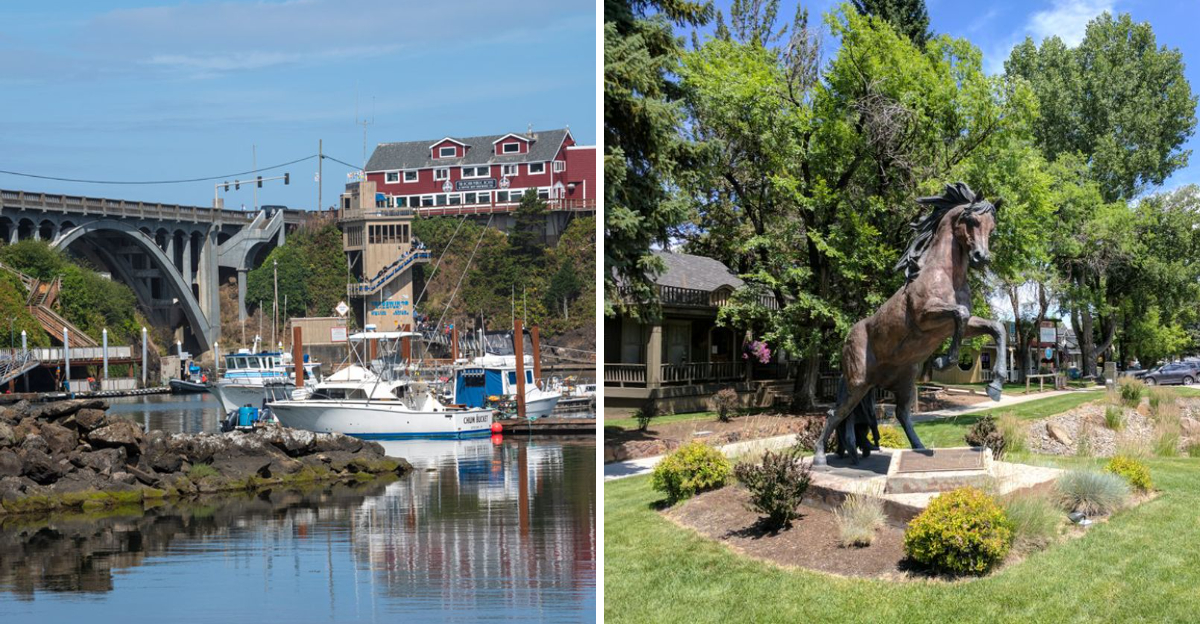
Oregon stretches far beyond Portland’s food carts and Crater Lake’s tourist crowds. Tucked into valleys, perched on cliffs, and scattered across high desert plains, the state hides dozens of small towns that feel like they’ve stepped out of another era or another dimension entirely.
Some celebrate UFO sightings with annual festivals, while others cling to ghost town status with populations you can count on two hands.
A few boast dramatic coastlines where the ocean swallows sinkholes at high tide, and others are filled with bronze sculptures and alpine charm that rivals the Swiss Alps.
Ready to trade the same old highway stops for something truly unforgettable? Pack your sense of adventure and a healthy dose of curiosity, because these quirky Oregon destinations are about to hijack your itinerary in the best way possible.
Will you stumble upon a town with a wild cult history, or watch whales breach from the world’s smallest harbor?
Spoiler alert: your road trip is about to get a serious upgrade.
1. Joseph: Little Switzerland in the Wallowa Mountains
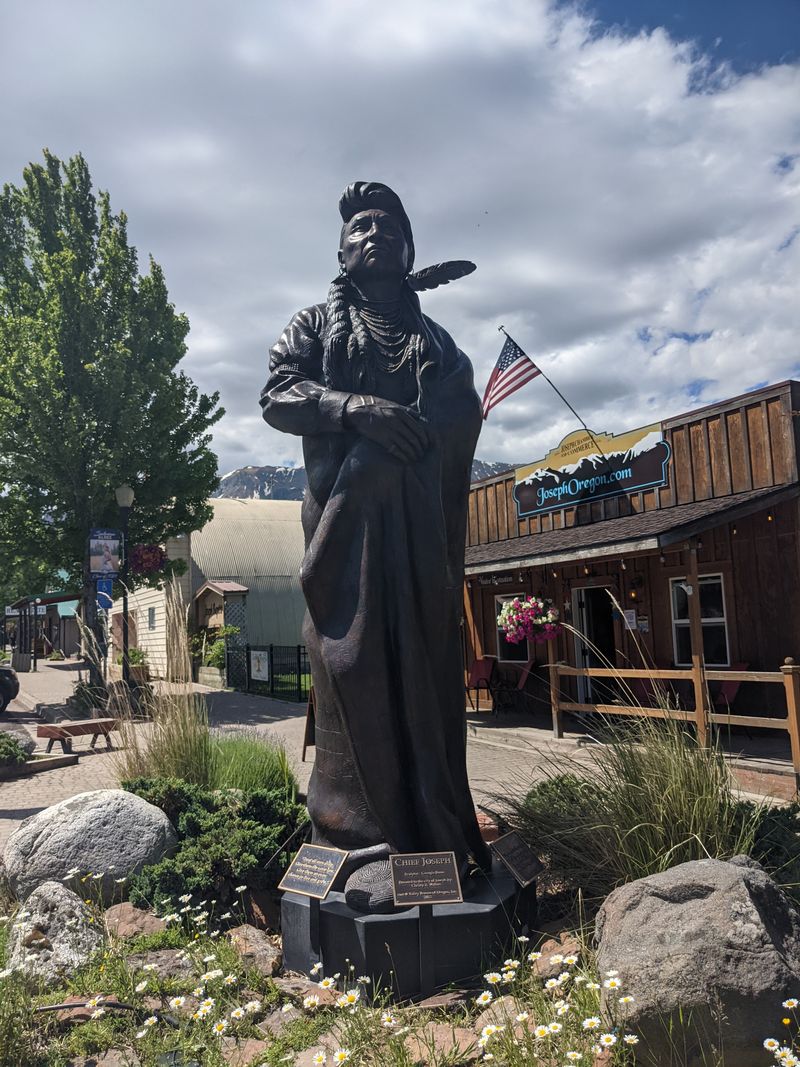
Nestled at the base of the breathtaking Wallowa Mountains, Joseph earns its nickname “Little Switzerland” through dramatic alpine scenery that rivals anything you’d find in Europe. This remote northeastern Oregon town sits at over 4,000 feet elevation, surrounded by peaks that scrape the sky and meadows that burst with wildflowers each summer.
The landscape alone justifies the long drive, but Joseph’s thriving art scene and quirky personality make it truly unforgettable.
Bronze sculptures dot the streets and parks throughout town, created by world-class artists who’ve made Joseph their home and creative hub. The Valley Bronze Foundry attracts sculptors from around the globe, and you can often watch artisans at work pouring molten metal into intricate molds.
Galleries line Main Street, showcasing everything from Western-themed paintings to contemporary abstract works, while boutique shops offer handcrafted jewelry and locally made goods.
Outdoor enthusiasts find endless adventures here, from hiking the nearby Eagle Cap Wilderness to fishing pristine mountain lakes and rivers. Wallowa Lake, just a few miles south, offers boating, swimming, and a historic tramway that whisks visitors up 3,700 vertical feet for panoramic views that stretch across three states.
Winter transforms the area into a snowy playground perfect for cross-country skiing and snowshoeing.
Joseph’s small population of around 1,000 creates a tight-knit community vibe where visitors are welcomed like old friends. Cafes serve hearty breakfasts, local breweries pour creative craft beers, and the pace of life slows to a refreshing crawl, reminding you that Oregon’s beauty extends far beyond its famous coast.
2. Shaniko: The Living Ghost Town Frozen in Time
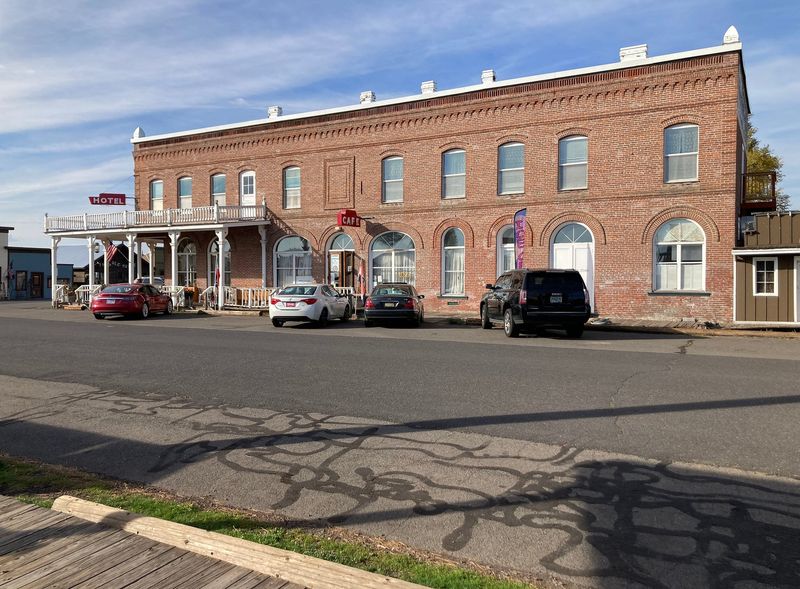
With a population hovering around 30 hardy souls, Shaniko stands as one of Oregon’s most authentic ghost towns, offering visitors a haunting glimpse into the Old West without the theme park gloss. Weathered wooden buildings line the dusty main street, their facades preserved exactly as they appeared during the town’s heyday as a wool-shipping center in the early 1900s.
Walking through Shaniko feels like stepping onto a movie set, except everything here is genuinely historic and wonderfully eerie.
The Shaniko Hotel, a three-story landmark built in 1900, anchors the tiny downtown with its classic Western architecture and wraparound porch. Although operations have varied over the years, the building remains a striking focal point and photo opportunity for travelers exploring Oregon’s high desert.
The old schoolhouse, jailhouse, and water tower still stand as silent witnesses to a boom-and-bust cycle that left this town suspended between past and present.
Shaniko’s remote location on Highway 97 makes it a perfect pit stop for road trippers heading between Bend and The Dalles, offering a stark contrast to Oregon’s lush forests and coastal landscapes. The surrounding high desert stretches endlessly in every direction, dotted with sagebrush and juniper under impossibly big skies.
Photographers love the golden hour light that bathes the old buildings in warm, nostalgic tones.
Despite its tiny population, Shaniko maintains an active preservation effort, with volunteers and part-time residents working to keep the historic structures from crumbling into complete ruin. Visiting this living ghost town offers a rare chance to experience authentic Western history without crowds or commercialization, just wide-open spaces and the whisper of stories long past.
3. Yachats: Where the Ocean Swallows Thor’s Well
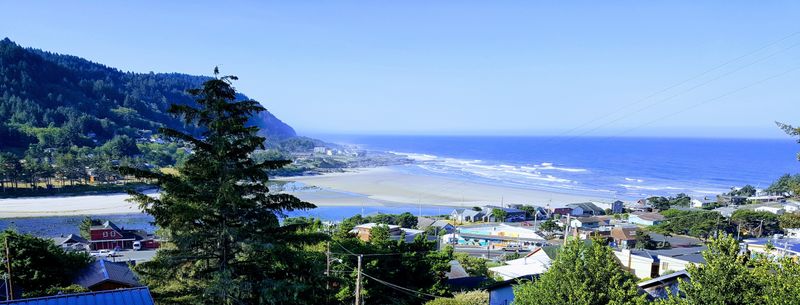
Perched on one of Oregon’s most dramatic stretches of coastline, Yachats offers natural spectacles that border on the supernatural, none more mesmerizing than Thor’s Well. This gaping sinkhole in the rocky shore appears to drain the Pacific Ocean itself, swallowing waves in violent, foaming torrents before spitting them skyward in explosive geysers.
At high tide during winter storms, the display becomes downright apocalyptic, drawing photographers and thrill-seekers who brave the spray-soaked rocks for that perfect shot.
Beyond Thor’s Well, Yachats charms visitors with its laid-back vibe and stunning coastal access along the 804 Trail, a paved path that hugs the shoreline for miles. Tide pools teem with starfish, anemones, and tiny crabs, while seabirds wheel overhead and sea lions bark from offshore rocks.
The town itself maintains a refreshingly low-key atmosphere, with locally owned galleries, cozy cafes, and shops that reflect the artistic, nature-loving community that calls this place home.
Cape Perpetua Scenic Area lies just south of town, offering hiking trails through old-growth forests and viewpoints that overlook the crashing surf from dizzying heights. The Spouting Horn, another wave-powered phenomenon, shoots seawater through a natural rock formation like a giant blowhole.
Yachats sits right in the heart of Oregon’s most rugged and beautiful coastline, where the mountains meet the sea in a collision of ecosystems.
Small but mighty, this coastal gem proves that you don’t need a big population to offer big adventures and unforgettable natural wonders that will make you question why you ever considered skipping the Oregon coast on your road trip.
4. Sisters: Western Charm with Alpine Flair
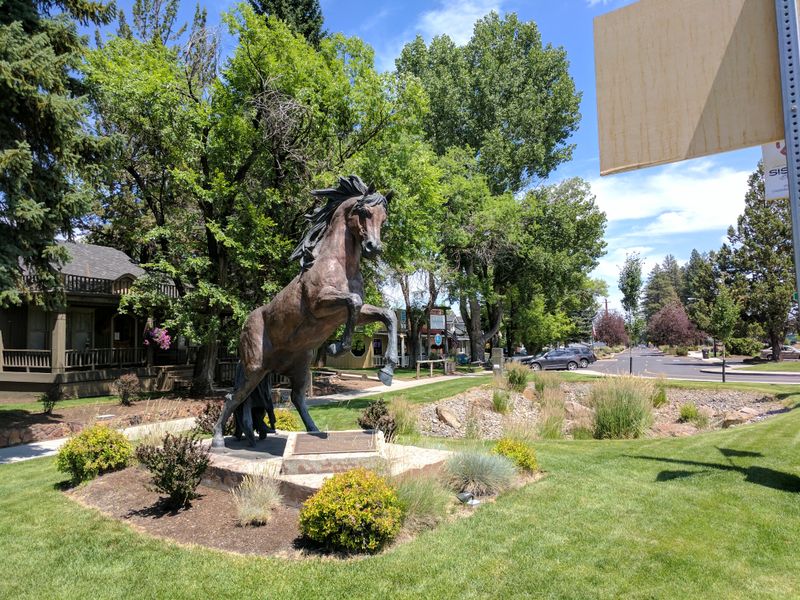
Sisters wears its Western heritage proudly, with every building in the downtown core designed to evoke the frontier spirit through wooden facades, covered boardwalks, and rustic signage. This isn’t manufactured theme park nostalgia but rather an authentic celebration of the town’s ranching and logging roots, blended seamlessly with a thriving arts community and modern amenities.
The result is a place that feels both timeless and vibrant, where cowboy culture meets contemporary creativity against a backdrop of stunning alpine scenery.
The Three Sisters mountains loom majestically to the west, their snow-capped peaks providing a dramatic skyline that reminds visitors they’re in the heart of Oregon’s Cascade Range. Outdoor recreation opportunities abound, from hiking and mountain biking in the summer to cross-country skiing and snowshoeing when winter blankets the high country.
The nearby McKenzie Pass offers one of the most spectacular scenic drives in the state, winding through ancient lava fields and old-growth forests.
Downtown Sisters buzzes with activity year-round, its streets lined with art galleries, boutique shops, cozy cafes, and day spas that cater to visitors seeking relaxation after outdoor adventures. The annual Sisters Rodeo draws crowds each June, showcasing authentic rodeo competition in a town that takes its Western identity seriously.
Local restaurants serve everything from hearty burgers to farm-fresh cuisine, often featuring ingredients sourced from nearby ranches and farms.
Sisters strikes a perfect balance between rugged outdoor appeal and refined small-town charm, making it an ideal basecamp for exploring central Oregon’s volcanic landscapes and alpine wonders while enjoying creature comforts that include excellent coffee, creative dining, and welcoming hospitality that reflects the best of Pacific Northwest culture.
5. Depoe Bay: Whale Watching from the World’s Smallest Harbor
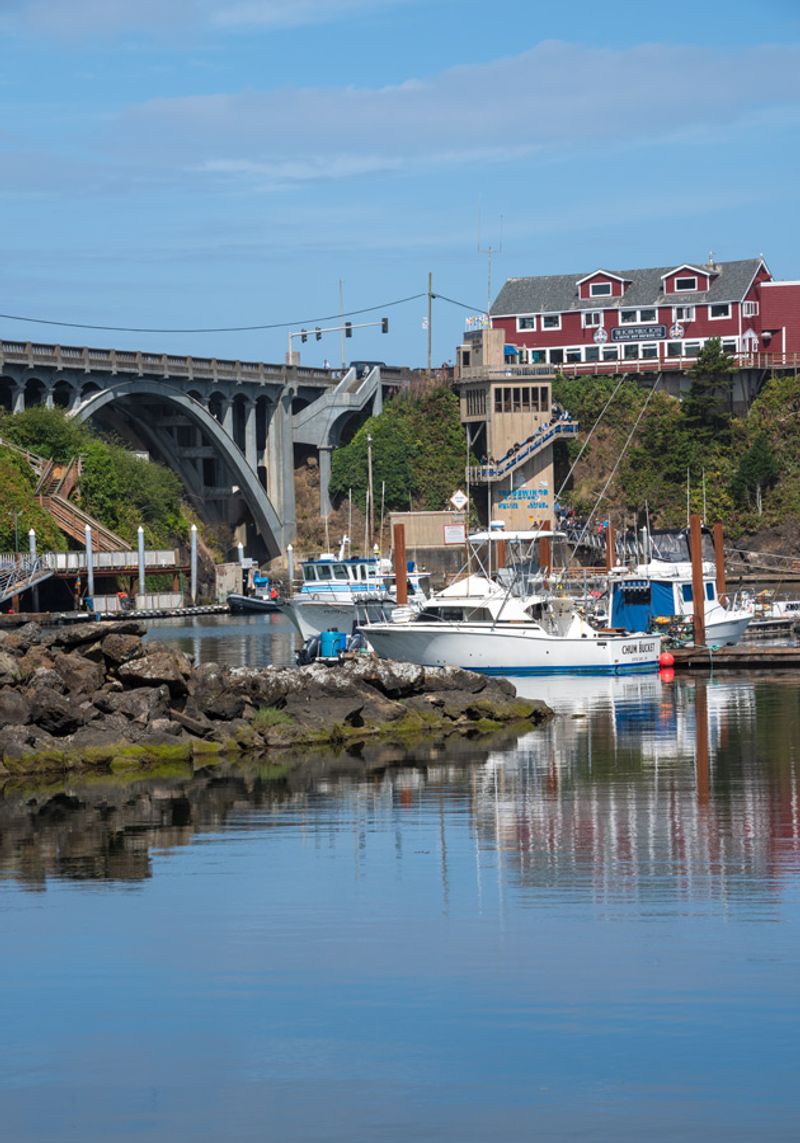
Claiming the title of “whale watching capital of the Oregon coast,” Depoe Bay delivers on that promise with gray whales visible from shore nearly year-round as they migrate or feed in the nutrient-rich waters just offshore. The town’s most famous feature, however, is its incredibly tiny harbor, officially recognized as the world’s smallest navigable harbor at just six acres.
Watching fishing boats and charter vessels squeeze through the narrow, rocky entrance is entertainment in itself, especially when swells are running and captains must time their approach perfectly.
The Depoe Bay seawall offers front-row seats to the Pacific’s raw power, with waves crashing against the rocks and occasionally sending spray high into the air through natural blowholes called “Spouting Horns.” During winter storms, the spectacle becomes truly dramatic, with massive swells exploding against the basalt formations in thunderous displays that drench anyone standing too close. Whale watching tours depart regularly from the tiny harbor, taking visitors just offshore for closer encounters with these magnificent marine mammals.
Downtown Depoe Bay packs a surprising amount of charm into a small footprint, with restaurants, galleries, and gift shops lining Highway 101 as it winds through town. Fresh seafood is the specialty here, with several spots offering ocean views alongside their fish and chips or clam chowder.
The town’s rocky coastline lacks sandy beaches, but the dramatic scenery more than compensates, providing endless photo opportunities and a distinctly rugged Oregon coast experience.
Depoe Bay’s combination of thrilling natural phenomena, accessible whale watching, and compact charm makes it a must-stop destination for anyone cruising Oregon’s spectacular coastline, proving that the smallest harbor can offer some of the biggest thrills.
6. Silverton: Artistic Spirit Near Silver Falls
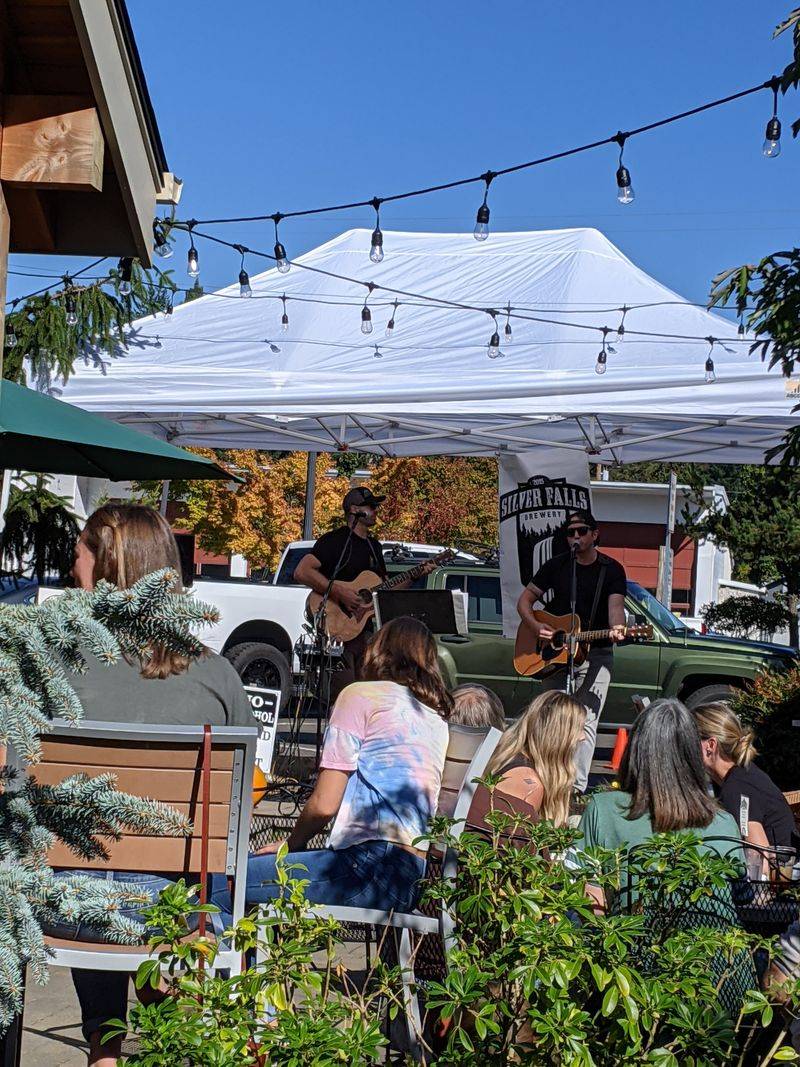
Just minutes from Silver Falls State Park and its famous Trail of Ten Falls, Silverton has cultivated an identity as a creative, artistic community that celebrates both natural beauty and human imagination. The town’s compact downtown bursts with murals, sculptures, and quirky public art installations that reflect a population deeply invested in cultural expression.
Local galleries showcase everything from traditional landscape paintings to cutting-edge contemporary works, while boutique shops offer handcrafted goods that make perfect souvenirs or gifts.
The Oregon Garden, a sprawling 80-acre botanical garden on the edge of town, features over 20 specialty gardens showcasing plants from around the world alongside native Oregon species. Visitors can spend hours wandering through themed areas including a wetlands garden, conifer garden, and sensory garden designed for visitors with visual impairments.
The garden also houses the only Frank Lloyd Wright designed structure in Oregon, a modest but architecturally significant home relocated to the site.
Silverton’s horticultural heritage runs deep, with many residents maintaining elaborate gardens that contribute to the town’s reputation as a haven for plant lovers and landscape enthusiasts. The annual Silverton Fine Arts Festival draws artists and collectors from across the Pacific Northwest, transforming downtown into an open-air gallery each summer.
Farm-to-table restaurants emphasize locally sourced ingredients, and the town’s small-batch food producers include chocolatiers, bakers, and specialty food artisans.
Silver Falls State Park remains the main draw for many visitors, offering Oregon’s most concentrated collection of waterfalls along a single hiking trail that loops through old-growth forest and behind several stunning cascades. Silverton serves as the perfect home base for exploring this natural wonder while enjoying the creative energy and horticultural beauty that make this town uniquely charming.
7. Bandon: Face Rock Legends and Coastal Treasures
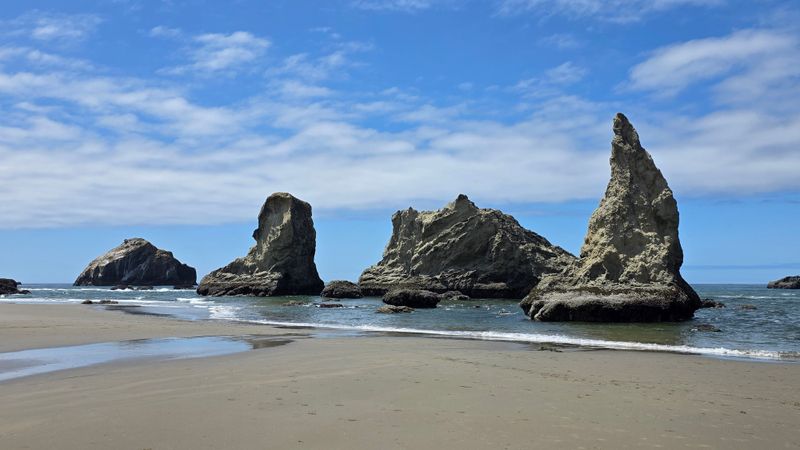
Bandon’s coastline ranks among Oregon’s most photogenic, with massive rock formations rising from the sand like ancient sculptures shaped by millennia of wind and waves. The most famous of these monoliths is Face Rock, a distinctive formation that resembles a woman’s profile gazing skyward, complete with nose, lips, and forehead clearly visible.
Local legend tells of an Indian princess turned to stone by an evil sea spirit, adding mythological intrigue to an already captivating natural feature that draws photographers during every golden hour.
Old Town Bandon clings to a hillside above the harbor, its boardwalk and waterfront buildings offering views across the Coquille River and out to the Pacific beyond. Galleries, gift shops, and seafood restaurants line the compact downtown, creating a walkable destination that balances tourist appeal with authentic coastal character.
The Coquille River Lighthouse, accessible via a short drive across the river, stands as a photogenic sentinel at the harbor entrance, especially atmospheric when fog rolls in from the ocean.
Beachcombers flock to Bandon’s beaches to search for agates, jasper, and other semi-precious stones tumbled smooth by the relentless surf. Low tide reveals tide pools teeming with marine life, while the dramatic sea stacks and rock formations create constantly changing compositions as light and weather shift throughout the day.
Bandon Dunes Golf Resort has put the town on the map for golf enthusiasts worldwide, but you don’t need to play a round to appreciate the stunning coastal setting.
Bandon combines natural drama with small-town hospitality, offering visitors a chance to experience Oregon’s rugged southern coast without the crowds that flock to more famous destinations further north, making it a hidden gem worth the detour on any coastal road trip.
8. Vernonia: Forest-Wrapped Former Logging Hub
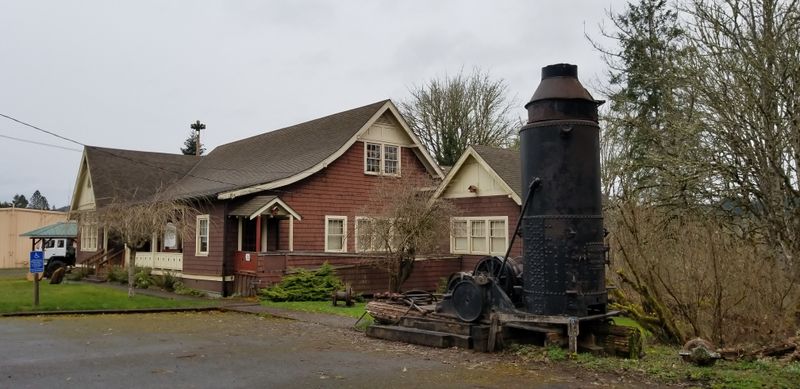
Tucked into the Coast Range foothills of northwest Oregon, Vernonia embodies the quiet resilience of former logging towns adapting to new identities while honoring their timber heritage. Dense forests of Douglas fir, western hemlock, and red cedar surround the town on all sides, creating a canopy of green that filters sunlight and maintains the cool, moist climate that defines this corner of the state.
The nearby Vernonia Lake and Anderson Park offer peaceful spots for fishing, picnicking, and simply enjoying the profound stillness that only deep forests provide.
The Banks-Vernonia State Trail, a 21-mile paved rail-trail following an abandoned railroad grade, has become the town’s biggest draw for cyclists, runners, and walkers seeking car-free recreation through stunning forest scenery. The trail crosses high trestles, tunnels through dense woods, and connects Vernonia to the town of Banks, creating a linear park that showcases the best of Oregon’s coastal mountain landscapes.
Local businesses cater to trail users with bike rentals, cafes, and lodging options that make Vernonia a welcoming basecamp.
Historic downtown Vernonia retains its small-town character, with locally owned shops, diners, and the beautifully restored Vernonia Theatre providing entertainment and community gathering spaces. The town has faced challenges including devastating floods, but the community’s determination to rebuild and preserve their home shines through in the maintained historic buildings and active civic engagement.
Vernonia’s population of around 2,000 creates a close-knit atmosphere where neighbors know each other and visitors receive genuine, unforced hospitality.
For travelers seeking an authentic Oregon forest experience away from tourist crowds, Vernonia offers quiet trails, clean air, and the kind of natural beauty that reminds you why the Pacific Northwest inspires such devotion among those lucky enough to call it home.
9. Antelope: Surreal History in High Desert Isolation
Few Oregon towns can match Antelope’s bizarre and intense history, which reached international attention during the 1980s when followers of guru Bhagwan Shree Rajneesh essentially took over the tiny community and surrounding ranch land. The Rajneeshpuram commune grew to thousands of members, built an entire city from scratch, and engaged in conflicts with locals that escalated to bioterror attacks and attempted murder plots.
When the commune collapsed in 1985 amid criminal investigations, Antelope slowly returned to its original character, but the legacy of those strange years lingers in local memory and occasional documentaries.
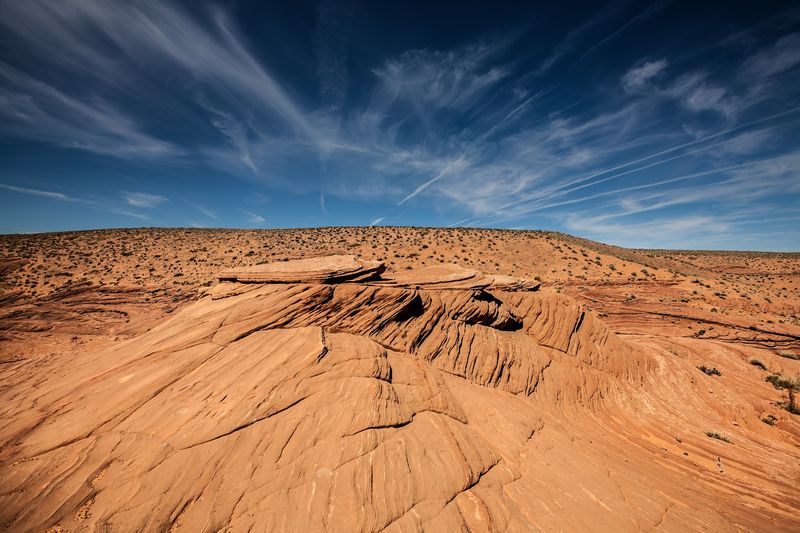
Today’s Antelope is a sleepy, almost ghostly high desert hamlet with a population under 50, its few remaining buildings clustered along a short main street that feels frozen in time. The landscape stretches endlessly in all directions, marked by sagebrush, juniper, and the dramatic colors of Oregon’s arid interior, where golden hills contrast with impossibly blue skies.
Visitors who make the detour to Antelope usually come seeking the surreal history or simply to experience the profound isolation of Oregon’s emptiest corners.
The town offers virtually no services or attractions in the traditional sense, but that’s precisely the point for travelers interested in offbeat destinations and quirky American history. A small cafe operates sporadically, and a handful of weathered structures serve as reminders of both the Old West ranching era and the more recent cult chapter.
Standing in Antelope’s silent streets, surrounded by vast high desert emptiness, creates a reflective, almost meditative experience that contrasts sharply with Oregon’s bustling cities and tourist hotspots.
Antelope represents the weird, wild, and occasionally dark threads woven into Oregon’s cultural tapestry, offering road trippers a chance to contemplate how quickly landscapes can transform and how resilient small communities can be when facing extraordinary circumstances.
Dear Reader: This page may contain affiliate links which may earn a commission if you click through and make a purchase. Our independent journalism is not influenced by any advertiser or commercial initiative unless it is clearly marked as sponsored content. As travel products change, please be sure to reconfirm all details and stay up to date with current events to ensure a safe and successful trip.
