Texas highways stretch across endless miles of varied terrain, connecting bustling cities with quiet towns and wide-open spaces.
Along these routes, travelers discover unusual landmarks that capture the state’s playful spirit and creative energy.
Many of these spots remain hidden gems known mostly to residents who pass them regularly and share stories about their origins.
From towering sculptures to unexpected art installations, these roadside attractions offer memorable breaks from long drives and reveal the character that makes Texas so distinctive.
Whether you’re a lifelong local or a first-time visitor, these nine quirky stops provide perfect excuses to pull over, stretch your legs, and experience something wonderfully offbeat.
1. Cadillac Ranch (Amarillo)
Cruising along Interstate 40 near Amarillo, drivers encounter an unforgettable sight that stops traffic and sparks curiosity.
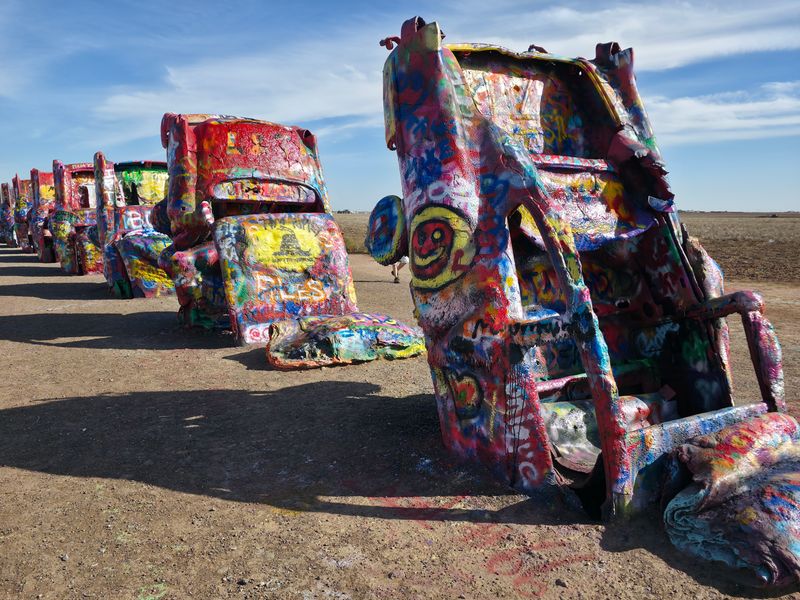
Ten vintage Cadillacs stand buried nose-down in the earth, their tail fins pointing skyward like metallic flowers blooming from the plains.
The art collective Ant Farm created this installation, and it has evolved into a living canvas where every visitor becomes part of the artwork.
Spray paint cans litter the ground, left behind by travelers who added their own colorful marks to the ever-changing display.
Layers upon layers of graffiti cover every inch of metal, creating a rainbow patchwork that shifts with each passing week.
What makes this stop special is the invitation to participate rather than just observe from behind a velvet rope.
Families arrive with bags of spray paint, couples leave their initials, and solo travelers add philosophical quotes or simple doodles.
The Cadillacs represent models spanning from tail-fin glory days, chosen specifically for their iconic automotive designs.
Weather has battered these cars for decades, yet they remain standing as testament to both artistic vision and community involvement.
Photographers circle the installation at golden hour, capturing the way sunlight transforms the painted surfaces into glowing mosaics.
Local Amarillo residents consider it a point of pride, often bringing out-of-town guests to witness the spectacle firsthand.
The site relocated once but found its permanent home along the highway where it continues attracting curious souls.
No admission fees or operating hours restrict access, making spontaneous visits possible any time inspiration strikes.
Address: 13651 I-40 Frontage Rd, Amarillo, Texas.
2. Stonehenge II (Ingram)
Hidden among the rolling hills near the Guadalupe River sits a surprising tribute to ancient wonders with unmistakable Texas charm.
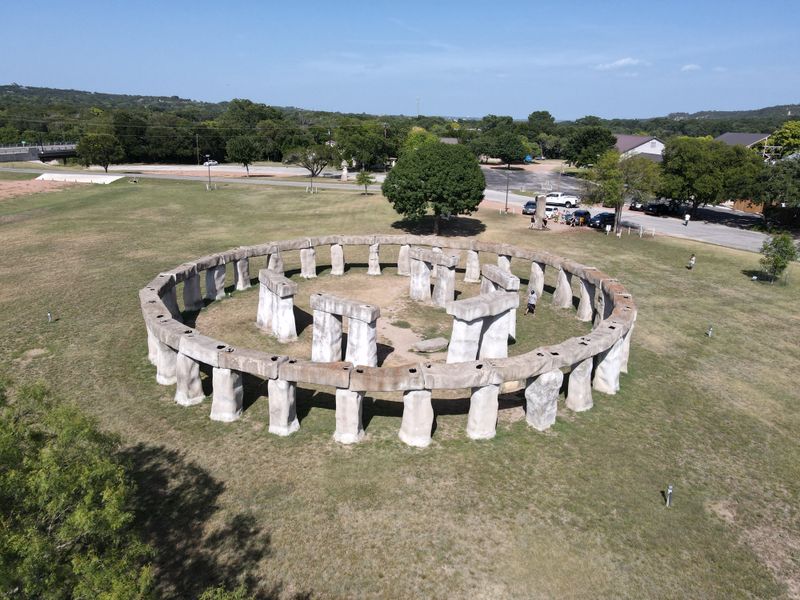
Stonehenge II emerged from a backyard dream project that grew beyond its creators’ original vision into something the whole community embraced.
Al Shepperd and Doug Hill constructed this smaller-scale homage using plaster, metal, and concrete instead of massive sarsen stones.
The structure may be more modest than its British counterpart, but it commands attention against the peaceful rural backdrop.
Adding to the surreal atmosphere, several Easter Island-style moai heads stand nearby, creating an unexpected archaeological mashup.
Unlike the heavily guarded original, this version welcomes visitors without ropes, tickets, or crowds blocking the view.
Locals use the grounds for impromptu picnics, engagement photos, and quiet moments of reflection under the Texas sky.
The Hill Country Arts Foundation now hosts the monument after it relocated, ensuring its preservation for future generations.
Families wander freely around the stones, touching the surfaces and marveling at the dedication required to build such a tribute.
Children climb on the smaller rocks while parents snap photos that always prompt questions from friends back home.
The installation proves that Texas embraces the eccentric and celebrates those willing to turn ambitious ideas into reality.
Shaded areas and open spaces make it comfortable to linger, especially during cooler morning hours when the light is softest.
Community events occasionally take place here, transforming the site from roadside curiosity into gathering place.
Address: 120 Point Theatre Rd S, Ingram, Texas.
3. Eiffel Tower with Cowboy Hat (Paris, Texas)
Paris, Texas decided its French namesake deserved a monument, but with a twist that nobody could mistake for anywhere else.
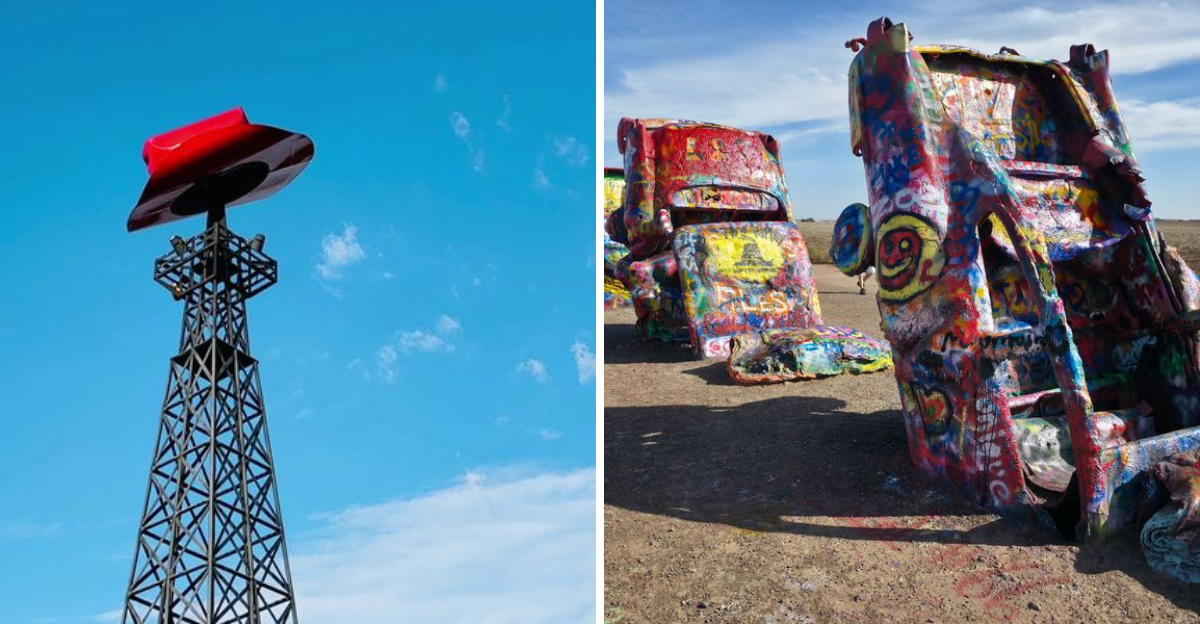
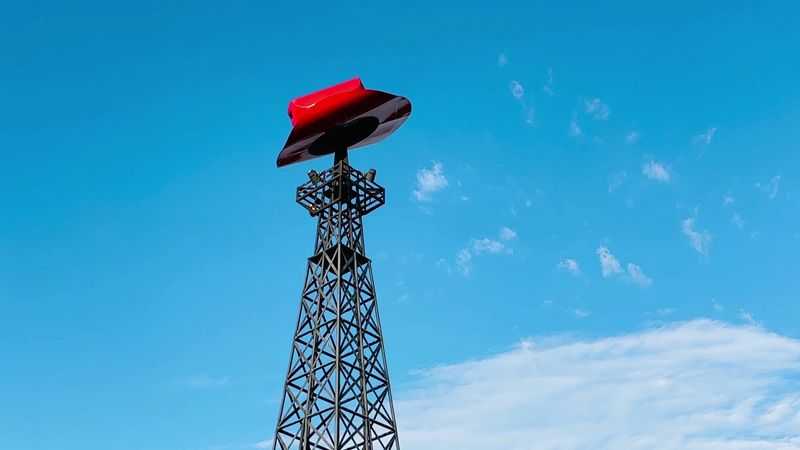
Standing tall at the city park, a replica Eiffel Tower wears a massive red cowboy hat perched proudly on its peak.
This playful combination of Parisian elegance and Western swagger perfectly captures the spirit of small-town Texas creativity.
Constructed from welded steel, the tower reaches skyward while the oversized hat adds both humor and regional identity.
Locals gather here for festivals, holiday celebrations, and casual weekend strolls through the surrounding green space.
The tower serves as a beloved backdrop for prom photos, family portraits, and tourist snapshots that always generate smiles.
Residents enjoy sharing the backstory with visitors, explaining how the community decided to honor both their name and their heritage.
The structure gets decorated seasonally, sometimes sporting lights or banners that mark special occasions throughout the year.
Benches positioned nearby offer shaded rest spots where travelers can sit and admire the whimsical landmark.
An informational plaque provides historical context, though the monument speaks for itself about Texas pride and good humor.
Children play on the grass while parents relax, making it more than just a photo opportunity but an actual community space.
The tower proves that roadside attractions can be both functional gathering places and sources of civic pride.
Road-trippers often plan their routes specifically to include this stop, drawn by the novelty and the charm.
Address: 2025 S Collegiate Dr, Paris, Texas.
4. Prada Marfa (Valentine)
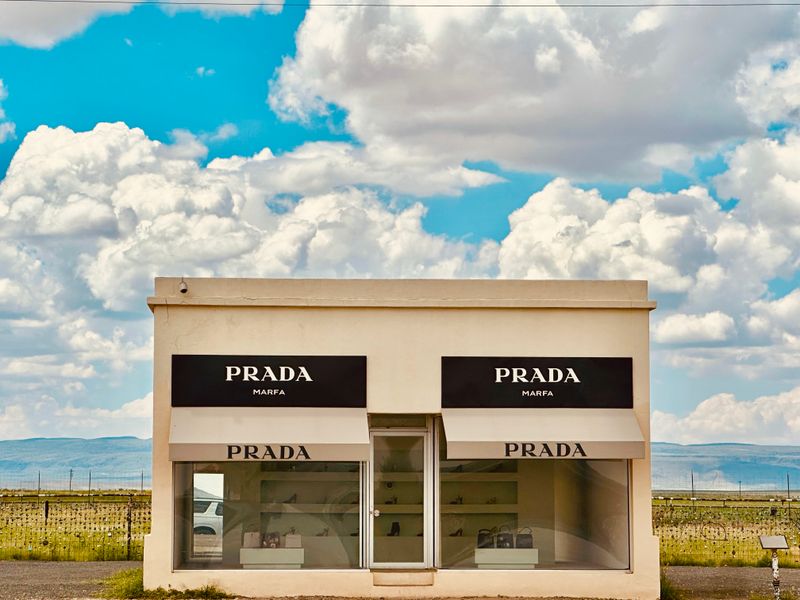
Traveling along a remote stretch of highway, drivers suddenly spot something that seems impossibly out of place.
A pristine luxury boutique stands alone in the desert, its windows displaying designer shoes and handbags behind glass.
Prada Marfa is not a functioning store but rather an art installation that challenges ideas about consumerism and landscape.
Artists Elmgreen and Dragset created this piece, stocking it with authentic merchandise that will never be sold to anyone.
The building remains permanently sealed, transforming retail space into sculpture and commentary on modern consumer culture.
Desert elements have weathered the exterior over the years, adding character and a sense of timelessness to the structure.
Photographers travel from distant cities specifically to capture this juxtaposition of high fashion against stark emptiness.
The installation has survived vandalism attempts and continues drawing international attention despite its isolated location.
Art enthusiasts treat visits here like pilgrimages, eager to experience the surreal disconnect between setting and subject.
Local stewards help maintain the site, recognizing its cultural value and the tourism it quietly generates.
The piece raises questions without providing answers, leaving interpretation open to each visitor who stops to contemplate it.
Some see critique of materialism, while others simply appreciate the visual oddity of luxury goods displayed for tumbleweeds.
The remoteness adds to the experience, making the journey part of the artwork itself.
Address: 1 Prada Marfa, Valentine, Texas.
5. World’s Largest Bowie Knife (Bowie)
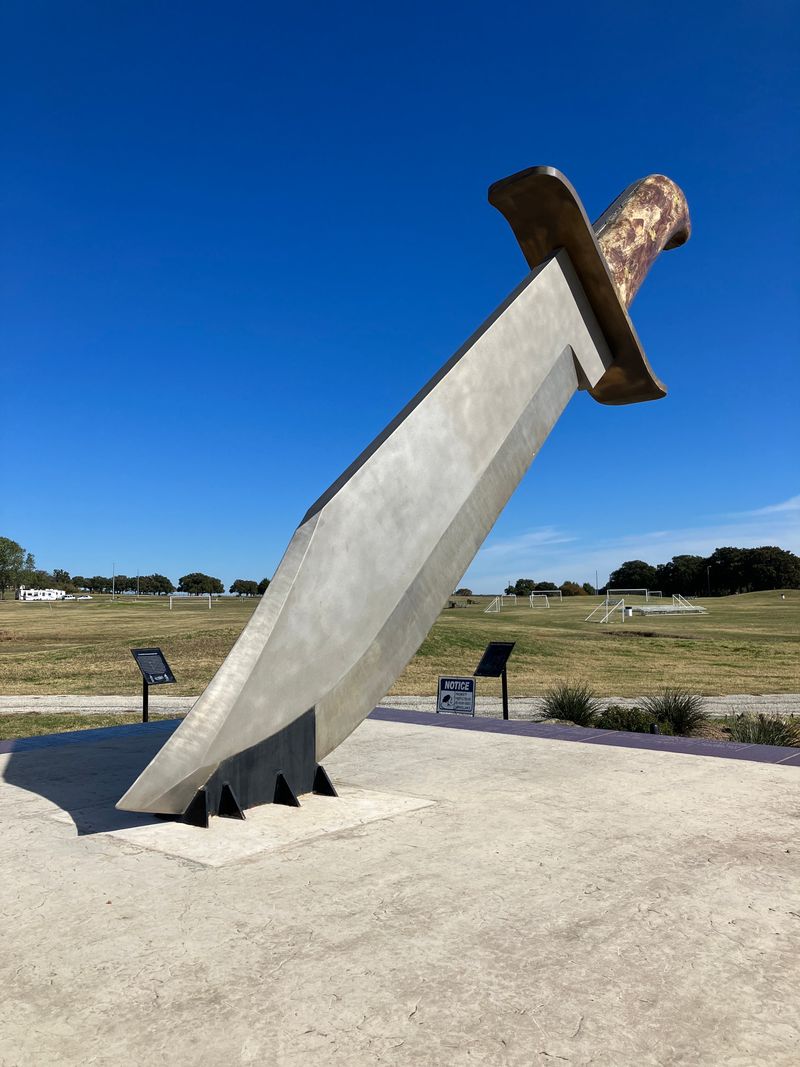
Bowie, Texas honors its namesake with a monument that towers overhead and gleams in the sunlight.
The world’s largest Bowie knife rises more than twenty feet high, a steel tribute to Jim Bowie and frontier legacy.
Local artisans worked together to create this oversized sculpture, which quickly became a source of community pride.
The blade’s polished surface reflects clouds and sky, creating a striking visual that draws attention from passing motorists.
Knife collectors and history enthusiasts make special trips to see this record-holding roadside attraction up close.
Informational plaques surrounding the base provide context about Jim Bowie’s life and the knife’s place in Texas history.
Unlike many novelty monuments that feel disconnected from their locations, this one roots itself firmly in regional storytelling.
Business owners nearby recommend the stop to customers, recognizing how it puts their small town on the map.
Families pose for photos at the base, with the massive blade creating dramatic shadows that shift throughout the day.
The sculpture represents the Texas tradition of going big, celebrating figures and symbols with supersized enthusiasm.
Travelers appreciate how the town embraced its connection to frontier history through creative public art.
The knife stands as both landmark and conversation starter, prompting discussions about the past and present.
Seasonal decorations sometimes appear near the monument, showing how the community continues engaging with the installation.
Address: 1200 US-81, Bowie, Texas.
6. Kettle House (Galveston)
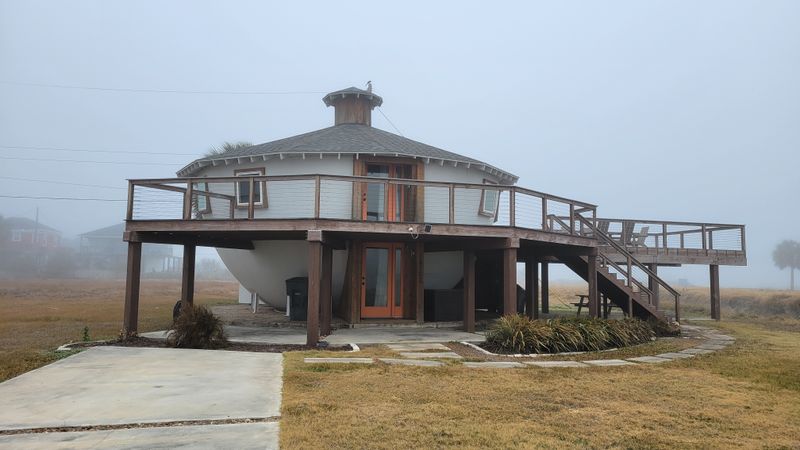
Galveston Island features many unusual buildings, but one stands out for its completely unexpected shape and origin story.
The Kettle House began life as an industrial storage tank before someone recognized its potential as a residence.
Its rounded steel dome resists hurricanes and salt air, proving that unconventional materials can create lasting homes.
The structure’s silhouette breaks the typical beachside architecture pattern, catching eyes from both road and shore.
Recent updates added comfortable living spaces inside while preserving the distinctive exterior that defines its character.
A modern porch extends from the entrance, softening the industrial aesthetic without erasing its unique history.
Island residents use the house as a landmark when giving directions, a testament to its memorable presence.
Visitors often slow down to photograph the building, puzzled and delighted by its form.
The Kettle House represents coastal ingenuity and the creative problem-solving that island living sometimes requires.
Its weather-resistant design has outlasted many conventional structures, enduring storms that damaged neighboring buildings.
Vacationers sometimes seek it out specifically, adding it to their Galveston sightseeing lists alongside better-known attractions.
The building sparks conversations about adaptive reuse and thinking beyond traditional housing designs.
Local lore includes stories about the house’s construction and the people who transformed industrial equipment into livable space.
The structure proves that Texas embraces the unconventional, celebrating those who see possibility where others see only scrap metal.
Address: 1627 Winnie St, Galveston, Texas.
7. Beer Can House (Houston)
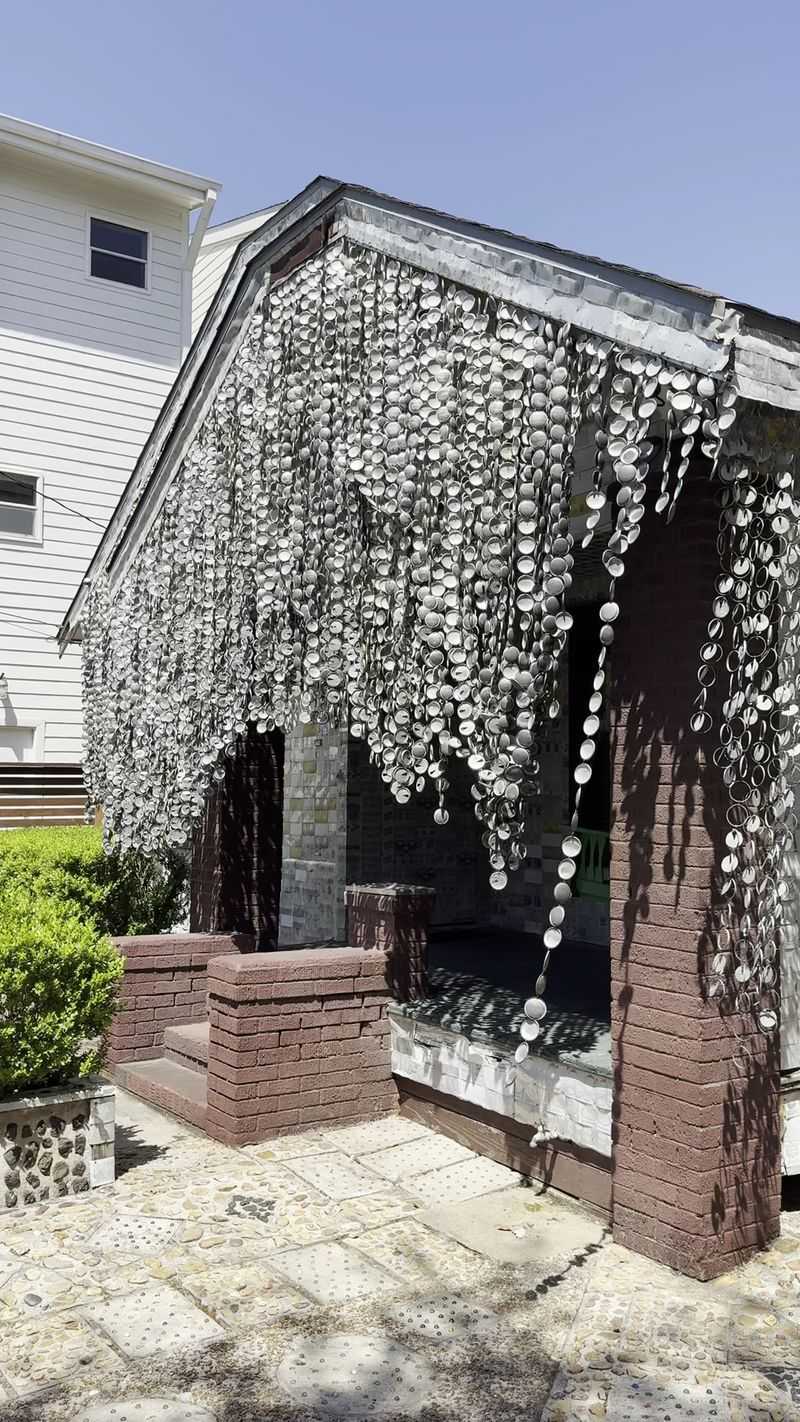
Houston’s folk art scene includes a residence that shimmers and chimes, transformed by decades of patient decoration.
John Milkovisch began covering his home with flattened aluminum cans, eventually using tens of thousands to create a glittering facade.
What started as a simple project grew into an obsession that turned an ordinary house into a neighborhood landmark.
The Beer Can House now operates as a museum, preserved for visitors who want to appreciate this example of outsider art.
Wind chimes crafted from can lids dangle throughout the property, creating gentle music when breezes pass through.
Every surface tells a story of resourcefulness, creativity, and one man’s determination to transform his surroundings.
Guided tours reveal intricate details that might be missed from the street, including the patterns and techniques Milkovisch developed.
The installation blends humor with artistry, proving that inspiration can come from everyday materials most people discard.
Visitors often arrive skeptical but leave impressed by the dedication and craftsmanship evident in every aluminum panel.
The house has become a symbol of Houston’s appreciation for unconventional creativity and individual expression.
Art students study the techniques, while tourists simply enjoy the spectacle of a home that sparkles in the Texas sun.
The preservation effort ensures that future generations can experience this unique example of residential transformation.
Locals recommend the stop to anyone interested in folk art, recycling innovation, or simply seeing something completely unexpected.
Address: 222 Malone St, Houston, Texas.
8. Giant Sam Houston Statue (Huntsville)
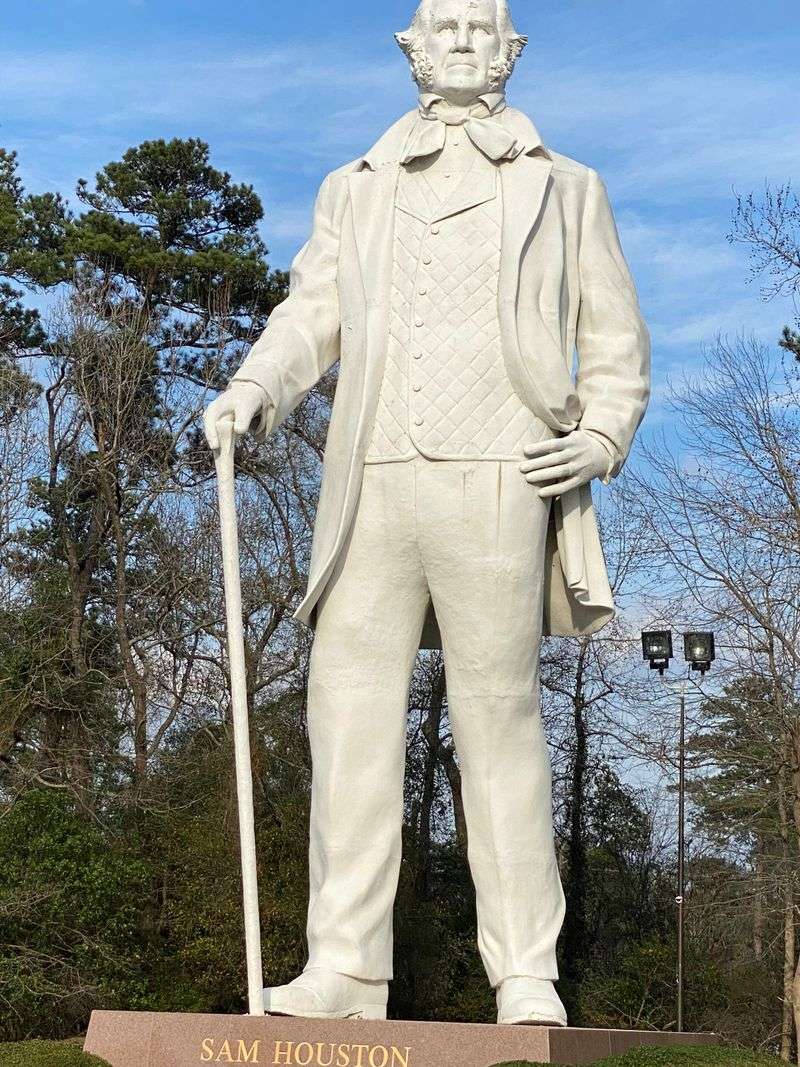
Rising above the piney woods, a colossal figure dominates the landscape and commands attention from miles away.
The statue of Sam Houston reaches skyward, standing as the world’s tallest tribute to an American hero.
Artist David Adickes sculpted this towering monument to honor Texas’s first president and independence leader.
Big Sam, as locals affectionately call it, serves as both landmark and gathering place for the Huntsville community.
Highway travelers spot the statue long before reaching it, using the figure as a navigation point across the forested terrain.
A visitor center at the base provides historical context about Houston’s life and his crucial role in Texas history.
Picnic areas surrounding the monument make it a practical rest stop for families on long drives through the state.
Educational plaques detail Houston’s military service, political career, and lasting impact on the region.
The statue’s scale reflects Texas’s tendency to celebrate its heroes with supersized enthusiasm and unabashed pride.
Community events sometimes take place here, transforming the site from tourist attraction into active public space.
Photographers capture the monument from various angles, seeking compositions that convey its impressive height and presence.
The white concrete surface changes appearance throughout the day as sunlight shifts and shadows lengthen.
Visitors often underestimate the statue’s size until standing directly beneath it, craning their necks to see the top.
Address: 7600 TX-75, Huntsville, Texas.
9. Luckenbach General Store (Luckenbach)
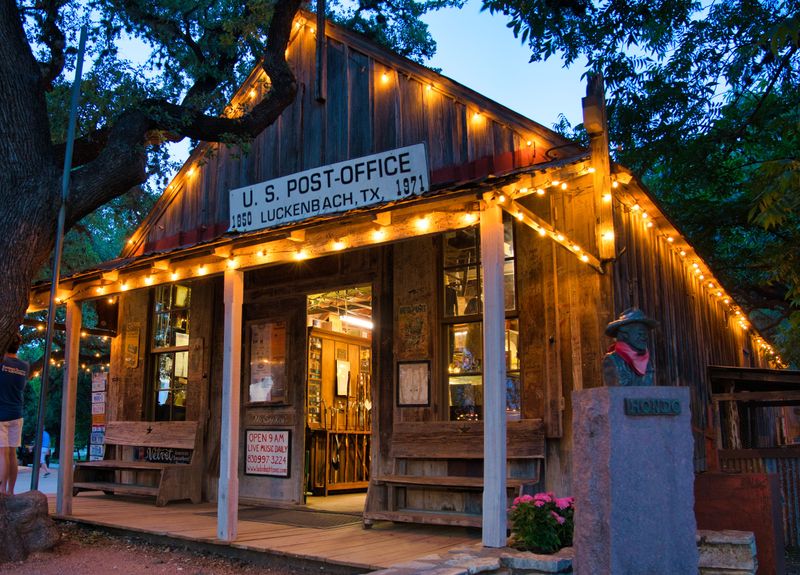
Tucked into the Hill Country, a weathered general store continues serving as the heart of a tiny community.
Luckenbach General Store has stood since the mid-nineteenth century, evolving from simple mercantile to cultural gathering spot.
The building now hosts regular music sessions where songwriters and pickers gather under the shade of ancient oak trees.
Its timeworn interior maintains authentic character, with shelves stocked with Texas-made goods and local souvenirs.
Visitors planning quick stops often find themselves staying longer, drawn by the relaxed atmosphere and impromptu performances.
The store’s rustic facade and aged wood tell stories of generations who passed through these doors.
Live music echoes across the grounds most afternoons, creating a soundtrack that defines the Luckenbach experience.
Travelers of all ages appreciate the unpretentious welcome and the sense that this place exists outside normal time.
A famous country song brought national attention, but the real magic lies in the genuine hospitality and musical tradition.
Locals and tourists mingle freely, sharing benches and conversation while guitars and fiddles play nearby.
The store represents rural Texas culture at its most authentic, preserving traditions while remaining accessible to newcomers.
Snacks and cold refreshments are available inside, though most people come for the atmosphere rather than shopping.
The surrounding grounds invite exploration, with shaded spots perfect for listening to music or simply enjoying the scenery.
Address: 412 Luckenbach Town Loop, Fredericksburg, Texas.
Dear Reader: This page may contain affiliate links which may earn a commission if you click through and make a purchase. Our independent journalism is not influenced by any advertiser or commercial initiative unless it is clearly marked as sponsored content. As travel products change, please be sure to reconfirm all details and stay up to date with current events to ensure a safe and successful trip.
